Making Purees That Don’t Suck: Gourmet Baby Food on a Budget
Here’s something nobody tells you when you’re standing in the baby food aisle at 2 PM on a Tuesday, overwhelmed and slightly panicking: choosing purees for your baby doesn’t make you less of a parent. It makes you smart.
I remember the exact moment I stopped apologizing for my feeding choices. My daughter was six months old, and I’d spent the morning blending sweet potatoes while simultaneously doom-scrolling through parenting forums that made me feel like I was somehow failing because I wasn’t doing baby-led weaning. Then my grandmother called from Trinidad. “You know what I fed your mother?” she said. “Mashed up food. And she turned out just fine.” Sometimes the simplest truths hit the hardest.
But here’s where it gets interesting—and why you’re here. Between 2021 and 2025, we discovered that some commercial baby foods contained lead levels up to 177 times higher than bottled water standards, arsenic 91 times higher, and cadmium 69 times higher. That’s not a typo. The very thing we trust to nourish our babies has been quietly contaminated. Yet nobody’s talking about how to make purees that actually rival those expensive organic pouches while keeping heavy metals out of the equation.
This isn’t just another recipe post. This is about taking back control, saving serious money (we’re talking $1,200+ per year), and creating restaurant-quality baby food that makes those $3 pouches look like amateur hour. Ready? Let’s transform your kitchen into a gourmet baby food operation.
The Heavy Metal Truth Nobody Wants to Talk About
Let’s cut through the noise. The FDA finally issued lead limits in January 2025—10 parts per billion for most baby foods, 20 ppb for root vegetables—but here’s the kicker: that’s still significantly higher than what we allow in bottled water. California went rogue first with Assembly Bill 899, forcing manufacturers to test monthly and slap QR codes on packaging. Transparency? Yes. Reassuring? Not exactly.
Research from 2023 found that 95% of tested commercial baby foods contain detectable heavy metals. The worst offenders? Rice-based products carry 60% of the heavy metal load, primarily arsenic. Those cute organic puffs? Rice rusks? They contain 93% more toxic heavy metals than grain alternatives. Testing on baby teeth of children with autism showed hazard index values between 2.68 and 6.83—anything above 1.0 is considered unsafe.
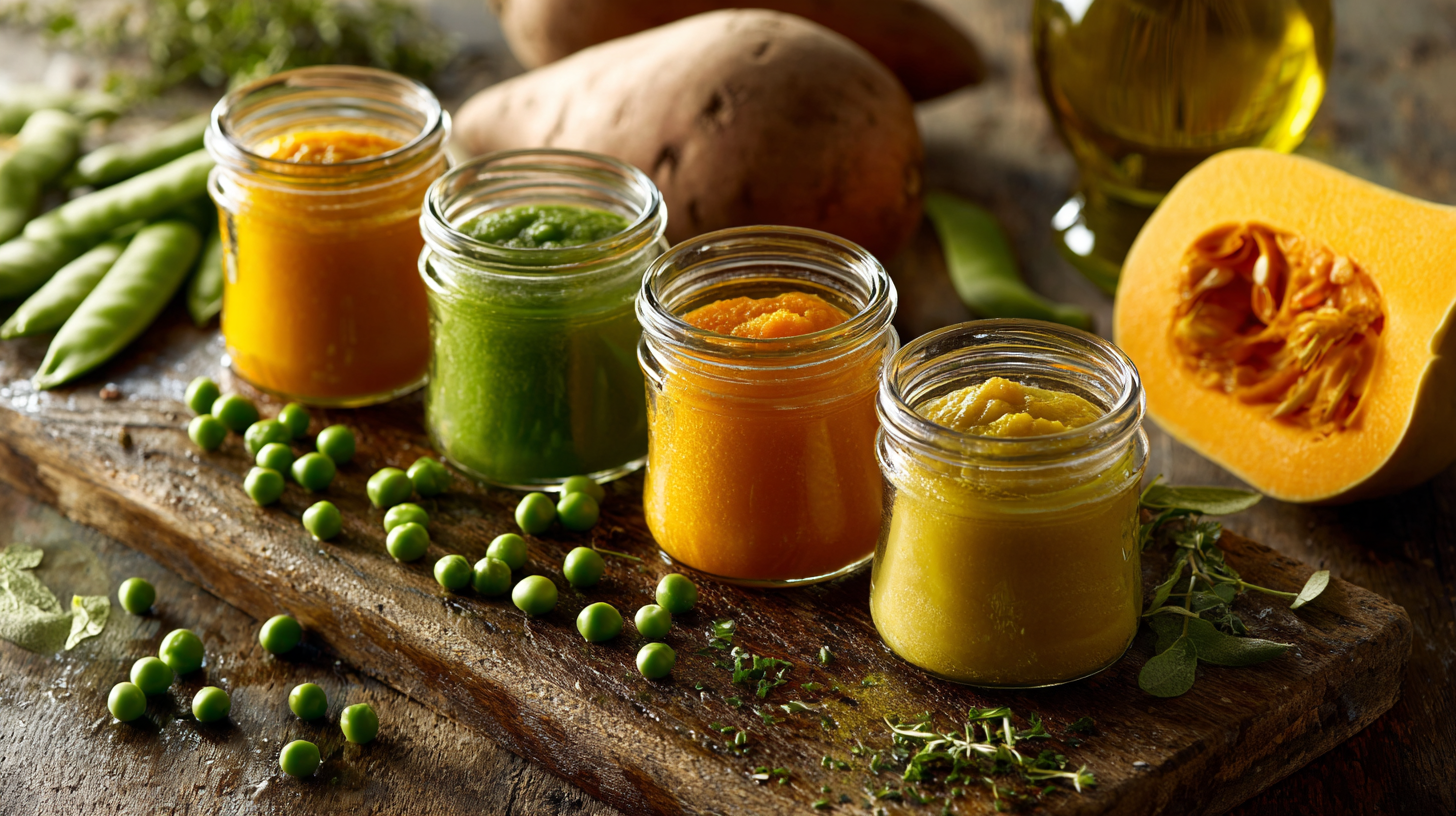
But here’s what changed everything for me: you can drop heavy metal exposure by 84% just by switching from rice cereal to oatmeal, barley, or quinoa. Simple ingredient swaps—peas instead of sweet potatoes as your daily vegetable, butternut squash instead of carrots, green beans instead of rice—cut exposure dramatically while maintaining nutrition. The goal isn’t perfection; it’s strategic reduction.
The Gourmet Puree Revolution: Flavor Without Compromise
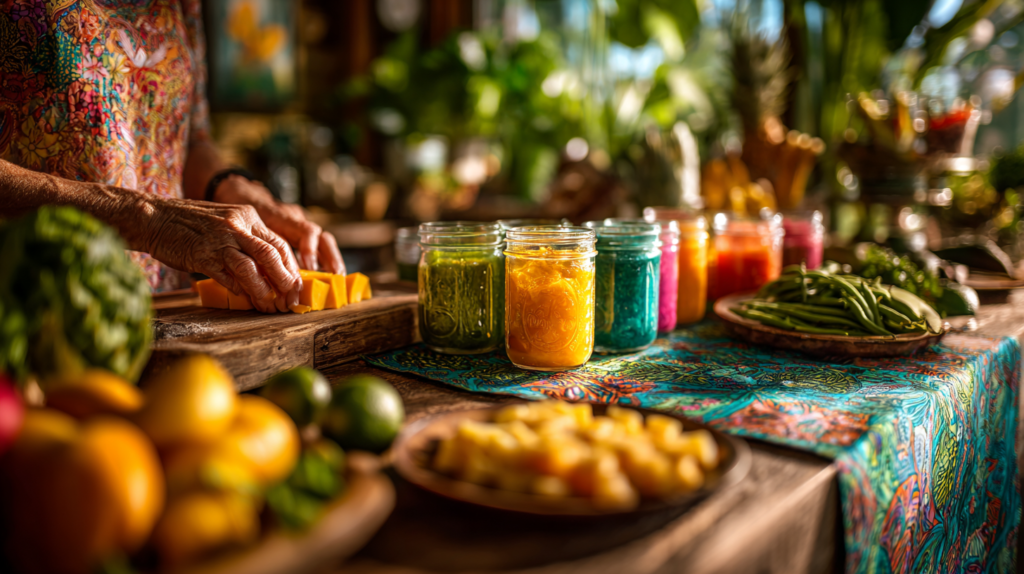
This is where puree-making becomes an art form. Forget those bland, single-vegetable mush jars. We’re building flavor profiles that would make a Caribbean grandmother proud—because that’s exactly where I learned this.
My Trini relatives taught me that food should always have soul, even for a six-month-old. A basic sweet potato puree? Boring. Sweet potato with a whisper of cinnamon, a touch of coconut milk, and properly roasted (not steamed) to caramelize the natural sugars? That’s the difference between eating to survive and eating to thrive. Similar techniques appear in recipes like the Calabaza con Coco and Sweet Potato & Callaloo Rundown that layer traditional Caribbean flavors into baby-appropriate textures.
Here’s the secret: roasting vegetables at 400°F instead of steaming them concentrates flavors and reduces water content, meaning you need less liquid when blending. This creates naturally thicker, creamier purees without additives. For a summer peach-mint puree (8+ months), blanch and peel peaches to remove any pesticide residue, then blend with fresh mint—the natural pairing is phenomenal. Fall butternut squash with maple and cinnamon tastes like dessert but delivers vitamin A, fiber, and potassium. Winter pear-ginger with optional yogurt adds probiotics and creates complex flavor depth.
The game-changer: healthy fats. Olive oil isn’t just for adults. A drizzle in zucchini-basil puree (6+ months) or carrot with orange zest delivers essential fatty acids for brain development. Avocado blended with banana and a pinch of nutmeg? Pure magic. These additions teach your baby’s palate to appreciate diverse, sophisticated flavors while supporting cognitive growth.
⏰ Your Weekly Time-Savings Calculator
hours saved per month with batch cooking
That’s 0 hours back in your life every year!
Batch-Cooking Like a Boss: Your Sunday Afternoon Strategy
The truth about homemade baby food? It’s only time-consuming if you’re doing it wrong. Batch cooking transforms this from a daily chore into a once-weekly rhythm that actually saves time.
Here’s my exact Sunday routine that takes 90 minutes and yields two weeks of meals: Start by cooking 2-3 pounds of single-ingredient produce—that’s approximately 8-12 servings depending on your baby’s age. Younger babies (6-8 months) eat 2-4 tablespoons per serving; older babies (8-10 months) consume 4-6 tablespoons; toddlers (10-12 months) take 1/4 to 1/2 cup. Calculate backward from there.
Blending technique matters more than your equipment. Place cooked produce in any blender—high-speed is nice but not necessary. Start on low, gradually increase to highest setting. Add liquids (water, breast milk, or formula) in 1/4 cup increments. Root vegetables need up to 1 cup of liquid; fruits need minimal. Here’s the critical part everyone misses: blend for a full 1-2 minutes, scraping sides as needed. This duration is non-negotiable for achieving truly smooth, lump-free consistency suitable for beginning eaters. Underbending creates texture issues that frustrate babies and create feeding resistance.
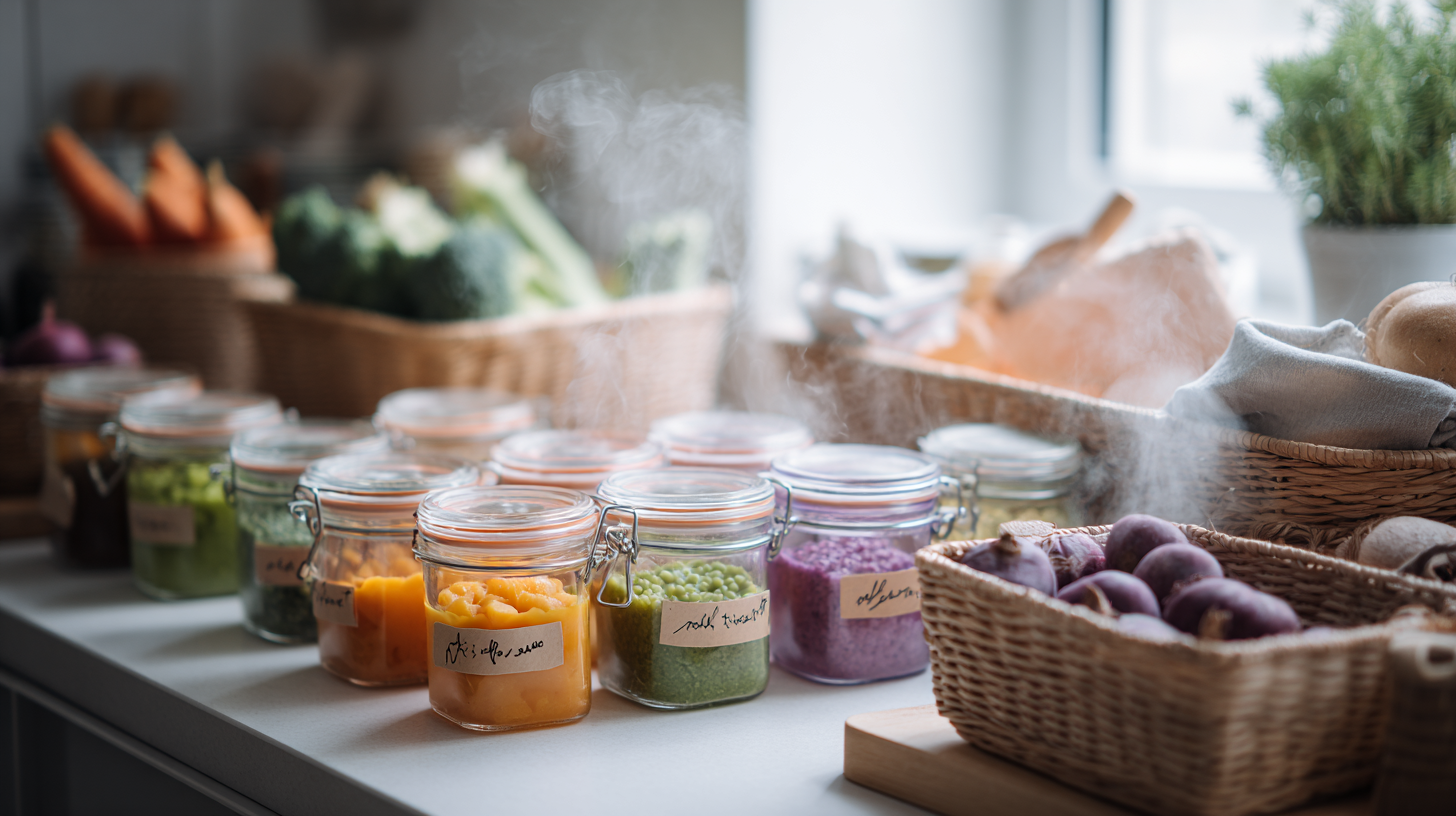
Storage is where you either win or lose the nutrition game. Vacuum sealing beats traditional containers hands-down—it preserves nutrients for 6-8 months frozen (optimal quality within 3-4 months) versus 2-3 months with regular containers. Allow purees to cool completely before sealing; steam compromises seal integrity. Label everything with food type, date, and portion size. Store frozen purees on refrigerator shelves, not doors, to maintain consistent temperature. This systematic approach mirrors the storage guidelines in professional resources like the Caribbean Baby Food Recipe Book, which includes detailed freezing and safety protocols.
Never feed directly from storage containers—always portion into separate bowls to prevent bacterial transfer from saliva. Discard any uneaten puree that contacted baby’s spoon. Refrigerate freshly made purees at 40°F or lower for maximum 3-5 days when vacuum-sealed, or 3 days for standard containers. Never leave purees at room temperature for more than 2 hours.
Strategic Ingredient Sourcing: The Low-Heavy-Metal Shopping List
This is where you outsmart the system. Not all produce carries equal contamination risk. Testing data from 2024-2025 reveals clear patterns you can exploit.
Your safest base ingredients—the ones you rotate through daily: peas, green beans, butternut squash, bananas, oatmeal, barley, quinoa, and apples. These consistently test lowest for heavy metals across multiple studies. Build your weekly rotation around these foundations.
Moderate-risk ingredients to limit, not eliminate: sweet potatoes and carrots are nutritious but absorb arsenic and lead from soil. Restrict to 4.5 servings per day maximum, and always rotate with low-risk vegetables. When you do use them, peel thoroughly and roast at high heat—roasting at 400°F can reduce heavy metal bioavailability compared to boiling, which may concentrate contaminants.
Complete elimination list: rice cereals, rice rusks, rice puffs, any rice-based snacks (84% higher arsenic on average), apple juice, grape juice (contains arsenic and lead without nutritional benefit before 12 months). The data is unequivocal here—there are superior alternatives for every single one of these.
Geographic sourcing makes a difference. Brands like Amara specifically source from regions with documented lower soil contamination. You can approximate this by choosing organic produce from areas with newer agricultural development or those that specifically test for heavy metals. Farmers’ markets are hit-or-miss—ask vendors directly if they test soil. Many small farms do and are proud to share results.
The Caribbean advantage: ingredients like malanga, dasheen, breadfruit, green bananas (green figs), and cassava traditionally show lower heavy metal accumulation than conventional potatoes and rice. They’re also nutrient-dense powerhouses. Recipes like Crema de Malanga Amarilla and Simple Metemgee Style Mash introduce these safer alternatives while delivering complex carbohydrates and essential minerals. If you have access to Caribbean markets, exploit this advantage.
Build Your Custom Gourmet Puree
Choose Your Base (select one):
Add Flavor Enhancement (select one):
Boost Nutrition (optional):
Your Custom Recipe:
Texture Progression: From Silk to Substance
Here’s where most parents either rush or stall—both create problems. Texture progression isn’t about your baby’s age alone; it’s about developmental readiness combined with systematic exposure.
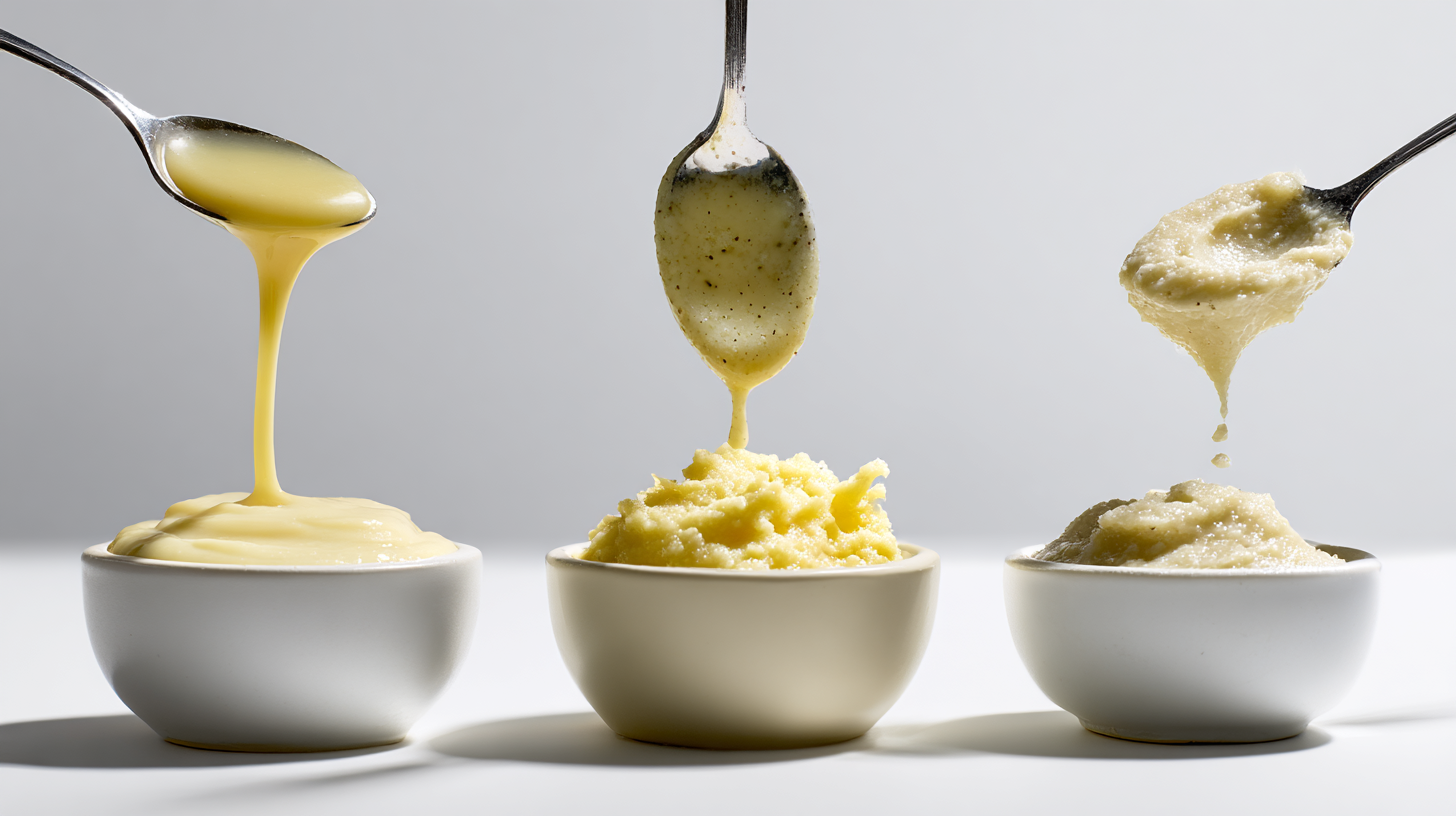
Phase 1 (6-7 months): Completely smooth, lump-free single-ingredient purees. Blend 1-2 minutes minimum, strain through fine mesh if needed to remove any remaining skins. Consistency should resemble thin yogurt, easily dripping from spoon. This isn’t just about safety—it’s about building trust. Your baby is learning that food is safe, that swallowing works, that flavors can be pleasant. Rushing this phase creates texture aversion that haunts you for years.
Phase 2 (7-9 months): Chunkier purees created by reducing liquid, blending for shorter duration (30-45 seconds), or combining multiple ingredient purees. Texture progresses to mashed potato consistency. Here’s the technique: blend your base ingredient fully smooth, then add a second ingredient and pulse briefly. This creates variation within the same bite—crucial for sensory development. A smooth pea base with briefly pulsed carrots, or silky butternut squash with slightly textured pears.
Phase 3 (9-11 months): Thicker mashes with soft lumps, achieved by mashing with fork rather than blending. Introduce naturally soft foods alongside purees—ripe avocado, banana, steamed apple. This stage bridges to finger foods and family meals. The critical mistake: parents abandon purees entirely too quickly. Continue offering smooth purees even after introducing textured foods. Variety prevents rigidity.
Maintain diversity within each phase. Continuing to offer smooth purees alongside textured foods builds confidence and prevents the dreaded “only smooth food” or “only finger food” trap. Your baby should experience the full spectrum.
Test Your Storage Safety Knowledge
Question 1: How long can refrigerated homemade purees safely last?
Question 2: What’s the maximum time purees should sit at room temperature?
Question 3: How should you feed from stored purees?
The Real Budget Breakdown: Homemade vs. Store-Bought
Let’s get granular with the numbers, because this is where you’ll feel the impact in your wallet.
Homemade purees cost approximately 13.4 cents per ounce when you factor in initial equipment ($10-15 for basic blender and storage containers) and ingredient costs. Store-bought jarred varieties average 12.3 cents per ounce. That’s only a 1.1 cent difference—which sounds negligible until you realize that calculation includes the equipment investment that you only pay once.
After month two, when equipment costs are absorbed, homemade drops to around 8-9 cents per ounce. Over a year of primary puree feeding (6-12 months), you’ll spend approximately $520 on homemade versus $1,100+ on premium organic store-bought. That’s $580 in savings, or $1,160 if you extend to 18 months while incorporating purees alongside table foods.
But here’s the hidden multiplier: batch cooking means you’re also prepping family meals. Those 2-3 pounds of roasted butternut squash? You blend half for baby, cube and freeze the other half for your own soup, risotto, or side dishes. The coconut rice and peas you made for baby is identical to the Caribbean staple your whole family eats—just with adjusted texture. Suddenly you’re looking at $200+ monthly grocery savings when you account for shared ingredients and parallel meal prep.
Premium pouches run $2.49-$3.99 each. If your baby consumes three pouches daily (standard for 8-10 months), that’s $224-$359 monthly, or $2,688-$4,308 annually. Homemade for the same period: $520-$780 annually. The savings fund a college account, a family vacation, or just breathing room in your budget.
Your Personalized Savings Calculator
Select your current baby food choice:
Premium Organic Pouches
per serving
Standard Jarred Food
per serving
Homemade (Your Cost)
per serving
With 3 servings daily, you’ll save:
per month by making homemade purees
That’s $0 back in your pocket annually!
Advanced Techniques: Making Purees That Actually Rival Premium Brands
This is where you separate from amateur hour and enter professional territory. Premium brands spend millions on texture optimization and flavor profiles—here’s how to replicate it at home.
Secret #1: Cook vegetables in their skins when possible, then peel after cooking. This preserves more nutrients and creates deeper flavor. Sweet potatoes, beets, and butternut squash all benefit from this technique. The natural sugars caramelize at the skin interface, creating complexity.
Secret #2: Layer aromatics appropriately for age. At 6 months, introduce single herbs—fresh basil with zucchini, thyme with peas, mint with pear. At 8+ months, combine aromatics—ginger with butternut squash and cinnamon, cumin with lentils and carrots. At 10+ months, introduce curry blends, garlic (cooked), and more robust flavor profiles that mirror family meals. This progression builds sophisticated palates while respecting digestive development.
Secret #3: Acid balances sweetness. A few drops of fresh lime juice in mango puree, lemon in pear-apple blend, or orange zest in carrot puree brightens the entire flavor profile and prevents that cloying, one-note sweetness of commercial products. This is standard in Caribbean cooking—everything benefits from a citrus accent.
Secret #4: Temperature matters for blending. Slightly warm (not hot) produce blends smoother than cold. If you’re reheating frozen puree, bring to just above room temperature before serving—this releases aromatic compounds that enhance flavor perception. Cold puree from the fridge tastes flat; gently warmed puree tastes vibrant.
Secret #5: Strain fibrous vegetables after blending. Peas, green beans, and leafy greens contain cellulose that doesn’t break down completely even with extended blending. After initial blend, press through fine-mesh strainer for ultra-smooth texture that matches premium brands. Save the fiber-rich remnants for older babies or mix into family meals.
Your Baby’s Texture Progression Tracker
Click each stage to see details and know when to progress:
Technique: Blend 1-2 minutes, strain if needed
Goal: Build trust and swallowing confidence
Examples: Single-ingredient purees (banana, peas, butternut squash)
Technique: Reduce liquid, blend 30-45 seconds, combine purees
Goal: Introduce texture variation within safe parameters
Examples: Smooth peas with pulsed carrots, butternut with textured pears
Technique: Fork-mash instead of blending, introduce soft finger foods
Goal: Bridge to family meals while maintaining puree options
Examples: Mashed avocado, fork-mashed banana with oatmeal, chunky vegetable medleys
Your New Normal: Puree-Feeding Without Apology
Here’s what nobody prepares you for: the judgment. The side comments about “taking the easy way out” or “missing critical developmental windows.” The unsolicited advice from parents whose babies eat steak at seven months (or so they claim).
I learned to respond with data instead of defensiveness. Puree-feeding done strategically builds the exact same oral motor skills as baby-led weaning—the research shows no significant developmental differences by 18 months. What matters is variety, progression, and responsiveness to your baby’s cues. Not the method.
Your baby doesn’t care about parenting trends. They care about feeling safe, trying new flavors, and developing a healthy relationship with food. Purees offer control, reduce choking anxiety, and allow you to introduce complex flavors earlier than finger foods typically permit. They’re also culturally relevant—most of the world’s babies are fed purees and mashed foods. The Western obsession with baby-led weaning is exactly that: Western and recent.
The Caribbean approach offers wisdom here: food is both nutrition and culture. When you make Cornmeal Porridge Dreams or Plantain Paradise purees, you’re not just feeding your baby—you’re passing down heritage, building flavor memories, and creating food confidence that extends into childhood. That’s not “taking the easy way out.” That’s intentional parenting.
So here’s your permission slip: choose purees. Make them gourmet. Make them in batches. Make them with ingredients that minimize heavy metals and maximize flavor. Make them your own.
Because at the end of this journey, when your toddler requests “the butternut-cinnamon mash like you used to make,” you’ll know you did something right. You took a feeding method, optimized it, elevated it, and made it work for your family. That’s not settling. That’s mastery.
Start with one batch this weekend. Choose a low-risk ingredient—butternut squash, peas, banana. Roast or steam it. Blend it smooth. Add one flavor element that makes it special. Store it properly. Feed it with confidence.
Then watch your baby discover that food can be both safe and exciting, nutritious and delicious, simple and sophisticated—all at once. That’s the magic of purees that don’t suck.

Kelley's culinary creations are a fusion of her Caribbean roots and modern nutritional science, resulting in baby-friendly dishes that are both developmentally appropriate and bursting with flavor. Her expertise in oral motor development and texture progression ensures that every recipe supports your little one's feeding milestones while honoring cultural traditions.
Join Kelley on her flavorful journey as she shares treasured family recipes adapted for tiny taste buds, evidence-based feeding guidance, insightful parenting anecdotes, and the joy of celebrating food, culture, and motherhood. Get ready to immerse yourself in the captivating world of Kelley Black and unlock the vibrant flavors of the Caribbean for your growing baby, one nutritious bite at a time.
- The Feeding Revolution: Why Your Everyday Meals Are Changing the World - October 13, 2026
- Your Feeding Story Matters More Than The “Perfect” One Online - October 12, 2026
- Looking Forward: Stepping Into Your Confident Feeding Future - October 11, 2026