How to Talk to Grandparents About Modern Feeding Without Starting World War III
Here’s a truth nobody tells you before you become a parent: the hardest conversation you’ll have isn’t with your toddler about why they can’t eat cookies for breakfast. It’s with your own mother about why you’re not forcing your child to clean their plate.
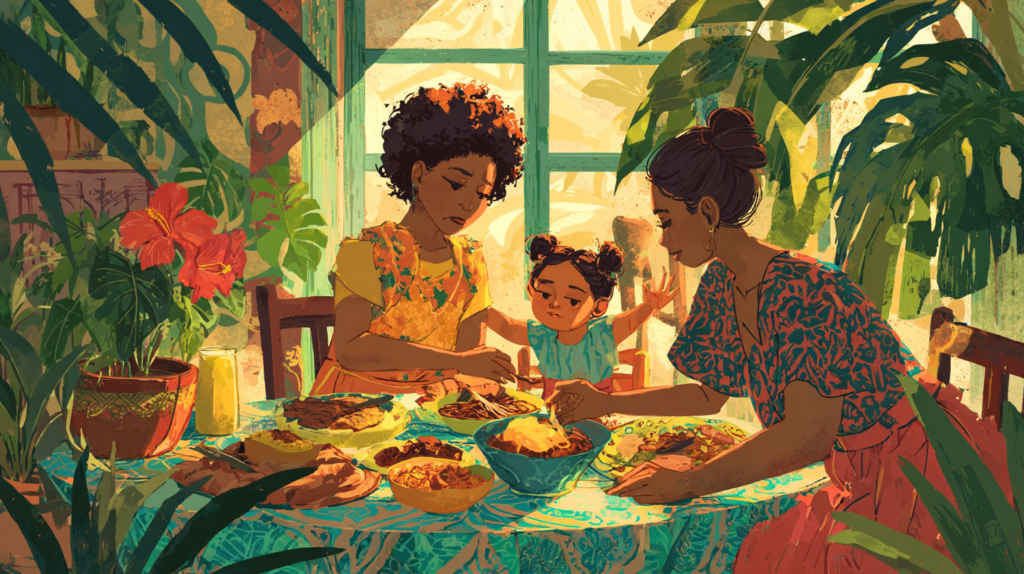
Last week, I watched my mother-in-law sit cross-legged on my kitchen floor for ninety minutes, hand-feeding spoonfuls of rice to my two-year-old long after he’d said he was full. When I gently suggested we stop, she looked at me like I’d suggested we stop breathing. “But he barely ate anything,” she whispered, as if my child’s appetite was a personal failure we both shared.
And here’s the thing—I get it. Because in her world, in the world she raised her children in, a clean plate meant love. A full belly meant safety. Refusing food was disrespect, and a mother who let her child leave the table hungry was neglectful.
But we know differently now. And that knowledge—that beautiful, evidence-based, child-respecting knowledge—is tearing families apart faster than you can say “responsive feeding.”
So how do we bridge this gap? How do we honor the generation that raised us while protecting the generation we’re raising? How do we have these conversations without turning Sunday dinner into a war zone?
Stick with me. Because what you’re about to discover isn’t just communication scripts (though we’ve got plenty of those). It’s a completely different way of thinking about intergenerational conflict—one that might just save your relationship with the people who taught you how to love in the first place.
Discover Your Grandparent-Conflict Pattern
Before we dive in, let’s identify which pattern you’re dealing with. Click the situation that sounds most familiar:
Why This Matters More Than You Think
Here’s what the research reveals: nearly half of all parents—43% to be exact—report conflicts with grandparents over feeding practices. That’s higher than conflicts over screen time, sleep schedules, or discipline. And when these conflicts remain unresolved, 15% of families limit grandparent time, rising to 42% when grandparents outright refuse to respect boundaries.
But here’s what breaks my heart: in most cases, both sides are operating from love. Your mother isn’t trying to undermine you when she sneaks your daughter a cookie before dinner. She’s trying to be the magical grandmother she always dreamed of being. And you’re not being controlling when you ask her to stop. You’re trying to raise a child who trusts their own body.
The tragedy isn’t that we disagree. The tragedy is that we’re speaking different languages about the same thing: keeping our children safe, loved, and healthy.

The Generational Divide Nobody Prepared You For
Your parents raised you in an era when children were seen but not heard, when “because I said so” was considered good parenting, and when a child leaving food on their plate was considered wasteful at best and disrespectful at worst.
Many of our parents and grandparents grew up during times of genuine food scarcity. My grandmother survived on ration cards in the Caribbean. For her generation, every grain of rice mattered. Finishing your plate wasn’t just polite—it was survival. It was gratitude. It was honoring the sacrifice of everyone who worked to put that food on the table.
And here’s what we miss when we dismiss their concerns as “old-fashioned”: they’re not wrong about their experience. They’re just applying solutions to problems that no longer exist.
Today, in most Western contexts, the challenge isn’t food scarcity—it’s abundance. Childhood obesity rates have tripled since the 1970s. The new threat isn’t that our children won’t eat enough; it’s that they’ll lose the ability to recognize when they’ve had enough. That they’ll learn to ignore their body’s signals in favor of external rules. That food will become a battlefield instead of nourishment.
This is why responsive feeding matters. Research from 2025 shows that children who are allowed to self-regulate their food intake have better relationships with food, lower rates of selective eating, and improved ability to recognize hunger and fullness cues throughout their lives.
But try explaining that to someone who once went to bed hungry, and you’ll understand why this conversation requires more than facts. It requires empathy for a worldview shaped by entirely different circumstances.
The Generation Translation Tool
Understanding breeds empathy. Let’s translate what they hear when we use modern parenting terms:
They mean: “I showed love through feeding, and now you’re telling me that was wrong.”
Bridge statement: “Responsive feeding honors all the care you put into nourishing us. It takes that same love and adds new research about helping kids trust their bodies. You taught me to pay attention to my children—this is just a different way of doing that.”
They mean: “I was being a responsible parent making sure you had nutrition.”
Bridge statement: “I know you always made sure we had enough to eat, and I’m so grateful for that. What’s changed is that doctors now know that pressuring kids to eat actually makes them like food less. I want to carry on your legacy of good feeding in a way that works for this generation.”
They mean: “This looks dangerous and chaotic compared to how I did it.”
Bridge statement: “I know this looks different from purees, and it definitely felt scary for me at first too. The research shows babies develop better motor skills and have less picky eating when they feed themselves. Would you like to watch a short video with me about how it works? I really value having you feel confident when you’re caring for [baby].”
The Scripts That Actually Work
Here’s what most parenting advice gets wrong: they give you scripts that sound like you’re reading from a corporate HR manual. “I statements” and “non-violent communication” are lovely in theory, but when your father-in-law is shoving mashed plantain into your baby’s mouth while making airplane noises, you need something that works in real time.
These scripts are different. They’re based on what actually worked for hundreds of families navigating this exact situation. They validate, they educate, and most importantly—they preserve the relationship.
“Mom, I can see how much you love [child] and want to make sure they’re eating enough. That care means everything to me. But when we pressure them to eat past fullness, research shows it teaches them to ignore their body’s signals, which can lead to weight issues later. I know that’s the opposite of what you want. Can we try letting them decide when they’re done, even if it feels uncomfortable? I promise to show you their growth charts so you can see they’re thriving.”
“I need to talk to you about something that’s been bothering me. When you give [child] cookies after I’ve said no, especially when you tell them not to tell me, it puts them in an impossible position. They love you and they love me, and now they have to choose or keep secrets. I’m not trying to be the fun police—I’m trying to make sure snacks don’t replace meals and that we’re teaching them that adults in their life are trustworthy and consistent. Can we agree on some snacks that work for both of us?”
“You’re absolutely right that I survived childhood, and I’m grateful for how you raised me. But I actually have some hard memories around food—feeling anxious at mealtimes, learning to hide food, always feeling like I had to finish everything even when I was full. I don’t blame you for any of that; you did what everyone did back then. But now that we know that pressure around eating can create these issues, I have a chance to do something different. I’m not rejecting how you parented me—I’m building on it with new information.”

When Culture Makes It Complicated
If your family is like mine—Caribbean roots running deep—then you know that food isn’t just nutrition. It’s identity. It’s heritage. It’s how we show up for each other.
In many Caribbean families, a full plate is abundance after generations of scarcity. Feeding someone until they’re practically groaning is love language. Refusing food is refusing connection. And the grandmother who lets a child leave the table without eating her callaloo isn’t just permissive—she’s breaking an unspoken cultural contract.
This is where the Caribbean Baby Food Recipe Book becomes more than just recipes—it’s a bridge between worlds. When you’re introducing your baby to family flavors like Stewed Peas Comfort or Cornmeal Porridge Dreams, you’re honoring tradition while adapting it for tiny bodies and modern understanding. You’re saying “yes” to culture and “yes” to autonomy at the same time.
The key is distinguishing between cultural food traditions (what we eat) and cultural feeding practices (how we make people eat). We can preserve the former while updating the latter.
Instead of: “Stop forcing him to eat ackee.”
Try: “I love that you want him to grow up loving ackee like we do. Let’s make it together and let him explore it at his own pace. The flavors will still be there, but he’ll learn to love them on his terms. That way, these foods become joy instead of pressure.”
When your mother wants to pass down recipes for Geera Pumpkin or Plantain Paradise, involve her in baby-friendly versions that respect your child’s appetite. Let her teach your baby to love the tastes she grew up with, while you manage the “how much” and “how pressured.” This honors her expertise while protecting your child’s relationship with food.
⚖️ The Stand-Firm vs. Compromise Decoder
Not every battle is worth fighting. Select each situation to see where it lands on the negotiation spectrum:
This is about your child’s bodily autonomy and psychological safety. Stand absolutely firm. Script: “I need you to stop right now. When we force eating during distress, we teach them that adults don’t respect their boundaries. This is non-negotiable.”
Explain that this makes kids like vegetables less and obsess over dessert more. Suggest serving dessert with the meal instead. If they can’t do that, maybe grandparent time doesn’t include meals for now. You’re protecting long-term relationship with food, which matters more than short-term peace.
If baby’s self-regulation is intact (they’re allowed to leave food), portion size variation between caregivers is fine. Your child’s internal regulation can handle this. Save your energy for bigger battles. Script: “I know you like to make sure they have plenty. As long as they can stop when they’re full, that works for me.”
Special occasions can have different rules without undermining daily practices. Script: “I love that you want to share this tradition. Let’s make [cultural food] together, and they can have as much as they want. For everyday meals though, we’re sticking to our regular approach.”
The Shocking Truth About What Really Changes Minds
Here’s something that will save you months of frustration: facts don’t change behavior. Not with grandparents, not with anyone.
You can email research studies until your fingers cramp. You can quote pediatricians until you’re blue in the face. You can show them growth charts and articles and TikTok videos from child psychologists. And your mother will still sit on that floor with that spoon because information doesn’t transform deeply held beliefs about love and safety.
What does change minds? Three things, and three things only:
1. Seeing it work. When grandparents watch your “picky eater” suddenly try new foods because there’s no pressure, something shifts. When they see your child naturally stop eating when full and then ask for food later when genuinely hungry, the theory becomes reality.
2. Feeling respected. The fastest way to entrench resistance is to make someone feel stupid or bad about their past choices. The moment you say “That’s wrong” or “You’re hurting my child,” their defenses go up and their ears close. But when you say “Your way worked in your time, and this is what works now,” you create space for evolution instead of revolution.
3. Being invited in, not pushed out. Grandparents who feel replaced double down on old methods to prove they’re still valuable. Grandparents who feel like trusted members of your parenting team become your biggest advocates.
This is why the most successful strategy isn’t education—it’s collaboration. “Mom, I’m learning this new approach and I’m finding it hard. Would you help me figure out how to make it work?” is worth a thousand research papers.
Build Your Personalized Peace Plan
Drag and drop these strategies into your action plan. We’ll create a customized approach based on your selections:
What To Do When Nothing Works
Let’s talk about the scenario nobody wants to discuss: what happens when you’ve tried everything, and grandparents still won’t budge?
You’ve had the gentle conversation. You’ve shared the research. You’ve invited them into the process. You’ve compromised where you could. And still, every visit ends with your child being pressured to eat, bribed with dessert, or force-fed past fullness.
This is where the conversation shifts from “how do we make this work?” to “how much access is healthy for everyone involved?”
Here’s a truth that will feel harsh but needs saying: your first responsibility is to your child, not to your parents’ feelings. If your child is developing anxiety around mealtimes with certain grandparents, if they’re learning that their “no” doesn’t matter, if they’re being taught to distrust their body’s signals—then limiting that exposure isn’t cruel. It’s protective.
“Mom, I love you, and I know you love [child]. But we’ve talked about this three times now, and it keeps happening. When you continue to pressure [child] to eat after I’ve asked you to stop, it shows me that you either don’t understand how serious this is to me, or you don’t respect my role as [child’s] parent. Neither of those feels good. So here’s what needs to happen: for the next month, I’m going to be present for all meals when you’re with [child]. This isn’t punishment—it’s me protecting my child while we figure out if we can get on the same page. After a month, if things have improved, we can revisit. But I’m not going to keep putting [child] in situations where their boundaries aren’t respected. I hope you understand this is coming from the same protective instinct you had when you were raising me.”
For some families, this reset period creates the wake-up call needed. For others, it becomes the new normal: supervised visits, meal-free hangouts, shorter stays. And yes, that’s sad. But do you know what’s sadder? A child who grows up believing their body’s signals don’t matter because keeping Grandma happy is more important.
Finding Joy in the In-Between
Here’s what surprised me most on this journey: the moments of breakthrough don’t always look like we imagine them.
My breakthrough with my mother-in-law didn’t come during one of our carefully scripted conversations. It came on a random Tuesday when she watched my son push away his lunch after three bites, play for an hour, and then return to the table asking for the food he’d left. “His body told him when to eat,” she whispered, more to herself than to me. “I never knew they could do that.”
That moment—that small, witnessed miracle of self-regulation—did more than six months of articles ever could.
Sometimes bridge-building looks like inviting your mother to help you create baby-friendly versions of her recipes. There’s something beautiful about a grandmother who learns that her Coconut Rice & Red Peas recipe can be adapted for a six-month-old, that her culinary legacy doesn’t have to be lost to modern feeding practices. The Caribbean Baby Food Recipe Book offers over 75 recipes that do exactly this—honoring traditional flavors like Stewed Peas Comfort, Plantain Paradise, and Cornmeal Porridge Dreams while adapting them for responsive feeding principles.
Sometimes it looks like letting grandparents have their “thing” that’s just theirs with your child—but making it about connection, not food. My father now takes my kids to the park every Sunday morning. No meals involved. Just time. And somehow, removing food from the equation removed the battleground.
Sometimes it looks like recognizing that your parents will never fully understand or agree, but they love your children enough to follow your rules even when those rules feel wrong to them. That’s not perfect. But it’s enough.
Your Grandparent Relationship Progress Tracker
Track your journey from conflict to collaboration. Where are you today?
The Long Game: What Your Kids Will Remember
Here’s what keeps me going on the hard days, the days when I’m exhausted from repeating myself, when I wonder if I’m being too rigid, when I question whether maintaining these boundaries is worth the family tension:
Your children are watching everything.
They’re watching to see if their “no” matters. They’re watching to see if the adults in their life can disagree and still love each other. They’re watching to see if tradition is more important than their comfort. They’re watching to see if you’ll protect them even when it’s hard.
And decades from now, they might not remember the specific meals or the conversations or the conflicts. But they’ll remember this: that their body was their own. That mealtimes felt safe. That the adults in their life could evolve. That love and boundaries coexisted.
That’s the legacy we’re building. Not perfect family harmony (that was never the goal). But something better: a family that can handle hard conversations because the relationship is strong enough to weather them.
My son is four now. Last week, he told my mother-in-law, “I’m full, thank you,” and pushed his plate away after eating exactly three dumplings. She looked at me, looked at him, and said, “Okay, darling. You listened to your belly.”
Then she stood up and cleared his plate without another word.
It’s not perfect. Some days she forgets and starts with “just one more bite.” Some days I have to remind her. Some days we dance around it with carefully chosen words and held breath.
But we’re dancing together instead of fighting. And that’s what matters.
✍️ Your Commitment to Change
Knowledge without action is just information. Let’s turn insight into impact:
I commit to taking these 3 actions in the next 7 days:
You’ve just taken the first step toward transforming your grandparent feeding conflicts into collaboration. Remember:
✅ Progress is not linear
✅ Setbacks are learning opportunities
✅ Your consistency teaches more than your words
✅ The relationship is worth the work
Come back to this article whenever you need a script, a reminder, or reassurance that you’re not alone in this journey.
Your Next Steps Start Now
If you take nothing else from this article, take this: the conversation you’re avoiding isn’t going to get easier with time. That tension you’re feeling isn’t going to resolve itself. And every day you wait is another day of mixed messages for your child and growing resentment in your family.
But here’s the beautiful part: you don’t have to fix everything at once. You don’t need the perfect words or the perfect timing or the perfect plan.
You just need to start.
Start with one conversation. One boundary. One moment of honest dialogue that says “I see you, I love you, and we need to do this differently.”
And when you’re ready to back up your words with action—when you want to show your family that modern feeding doesn’t mean abandoning cultural food traditions—the Caribbean Baby Food Recipe Book is waiting. Over 75 recipes that bridge the gap between grandma’s kitchen and evidence-based feeding. From Sweet Potato & Callaloo Rundown to Yellow Yam & Carrot Sunshine, every recipe honors tradition while respecting tiny appetites and developing autonomy. It’s not just a cookbook—it’s a peace offering, a teaching tool, and proof that evolution and tradition can coexist beautifully.
Because here’s the truth nobody tells you: this isn’t really about food at all.
It’s about whether we can love each other across generational divides. Whether we can honor the past while protecting the future. Whether we can disagree about methods while agreeing about what matters most: raising children who feel safe, loved, and free to trust their own bodies.
The conversation won’t be easy. But neither was learning to parent in the first place. Neither was standing up for what you believe in when everyone questioned you. Neither was any of this.
And you did it anyway.
So take a breath. Pull up your mother’s contact. And start with this: “Mom, I want to talk to you about something that’s been weighing on me. I know we see feeding differently, and I want us to find a way through this that honors both of us. Can we talk?”
That’s all it takes. One brave beginning.
Your child is watching. Your family is waiting. And somewhere in the middle of that difficult, necessary, relationship-saving conversation is the peace you’ve been searching for.
Now go start World War III.
And then show everyone how to build a lasting peace.

Kelley's culinary creations are a fusion of her Caribbean roots and modern nutritional science, resulting in baby-friendly dishes that are both developmentally appropriate and bursting with flavor. Her expertise in oral motor development and texture progression ensures that every recipe supports your little one's feeding milestones while honoring cultural traditions.
Join Kelley on her flavorful journey as she shares treasured family recipes adapted for tiny taste buds, evidence-based feeding guidance, insightful parenting anecdotes, and the joy of celebrating food, culture, and motherhood. Get ready to immerse yourself in the captivating world of Kelley Black and unlock the vibrant flavors of the Caribbean for your growing baby, one nutritious bite at a time.
- The Feeding Revolution: Why Your Everyday Meals Are Changing the World - October 13, 2026
- Your Feeding Story Matters More Than The “Perfect” One Online - October 12, 2026
- Looking Forward: Stepping Into Your Confident Feeding Future - October 11, 2026