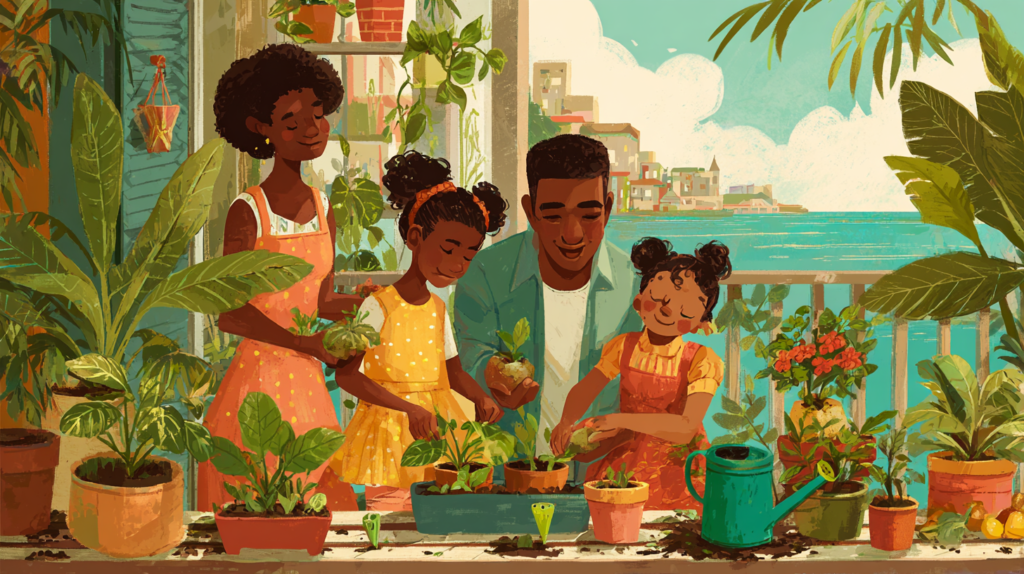
Growing Gardeners: How to Raise Food-Literate Children From Seed to Supper
Before we dig in, let’s uncover what you already know about growing food with kids. Tap each card to reveal a surprising truth about children and gardening:
Tap to reveal →
Tap to reveal →
Tap to reveal →
Tap to reveal →
The Science Behind Soil and Acceptance
Here’s what the research reveals, and it’s more powerful than most parents realize: Garden-based nutrition programs—whether in schools, childcare centers, or on home balconies—consistently produce measurable shifts in children’s food knowledge, preferences, and actual intake. A comprehensive 2023 systematic review analyzed dozens of gardening interventions and found that approximately 89% of gardening-only programs and 88% of cooking-only programs reported at least one significant improvement in fruit and vegetable outcomes among children. When gardening and cooking are combined, the results become even more dramatic.
But let’s break down what “significant improvement” actually means in real life. Studies tracking elementary school children involved in sustained garden programs (typically 15-20 lessons over a school year) report increases of roughly 1 additional serving of fruit and 1 to 1.5 additional servings of vegetables per day compared to control groups. For context, most children fall woefully short of recommended intake targets—the average American child consumes less than one serving of vegetables daily. Adding even a single extra serving represents a 100% increase in vegetable consumption, a change that compounds over years to dramatically reduce risk of chronic diseases like obesity, type 2 diabetes, and cardiovascular disease in adulthood.
The mechanisms driving these changes are fascinating. When children actively participate in planting, tending, and harvesting food, several powerful psychological and sensory processes converge:
- Repeated exposure without pressure: Traditional advice tells parents to offer new foods 10-15 times before a child accepts them. Gardening accelerates this timeline because children interact with vegetables at every growth stage—touching seeds, smelling soil, watching leaves unfold, tasting baby greens—accumulating dozens of low-pressure exposures before a single “eat this” moment arrives at the dinner table.
- Ownership and pride: Psychological research on the “endowment effect” shows that people value things more highly when they own or create them. Children who grow tomatoes don’t see “a tomato”—they see their tomato, nurtured through their effort. This emotional investment translates directly into willingness to taste and preference ratings that consistently exceed those for store-bought produce.
- Reduced neophobia: Food neophobia—the fear or rejection of unfamiliar foods—is a major barrier to dietary variety in childhood. Garden-based interventions have been shown to significantly reduce neophobic responses, with some studies reporting children becoming three times more willing to try novel vegetables after participating in growing activities.
- Sensory-rich learning: Gardens engage all five senses simultaneously. Children don’t just see carrots in a book—they smell the earthy sweetness when pulled from soil, hear the snap of a fresh bean, feel the fuzzy texture of basil leaves, and taste the difference between sun-ripened and refrigerated produce. This multisensory engagement creates deeper neural pathways and longer-lasting food memories than passive learning ever could.
Perhaps most compelling is emerging evidence that gardening doesn’t just change what children eat at school or during program activities—it transforms entire family food environments. A 2023-2024 study examining school gardening combined with home activities found that interventions increased not only the availability of vegetables in participating families’ homes but also the frequency and quality of food-related conversations between parents and children. Kids became “change agents,” requesting garden vegetables at grocery stores, asking to replicate school recipes at home, and teaching younger siblings what they’d learned about seasons and growing cycles.
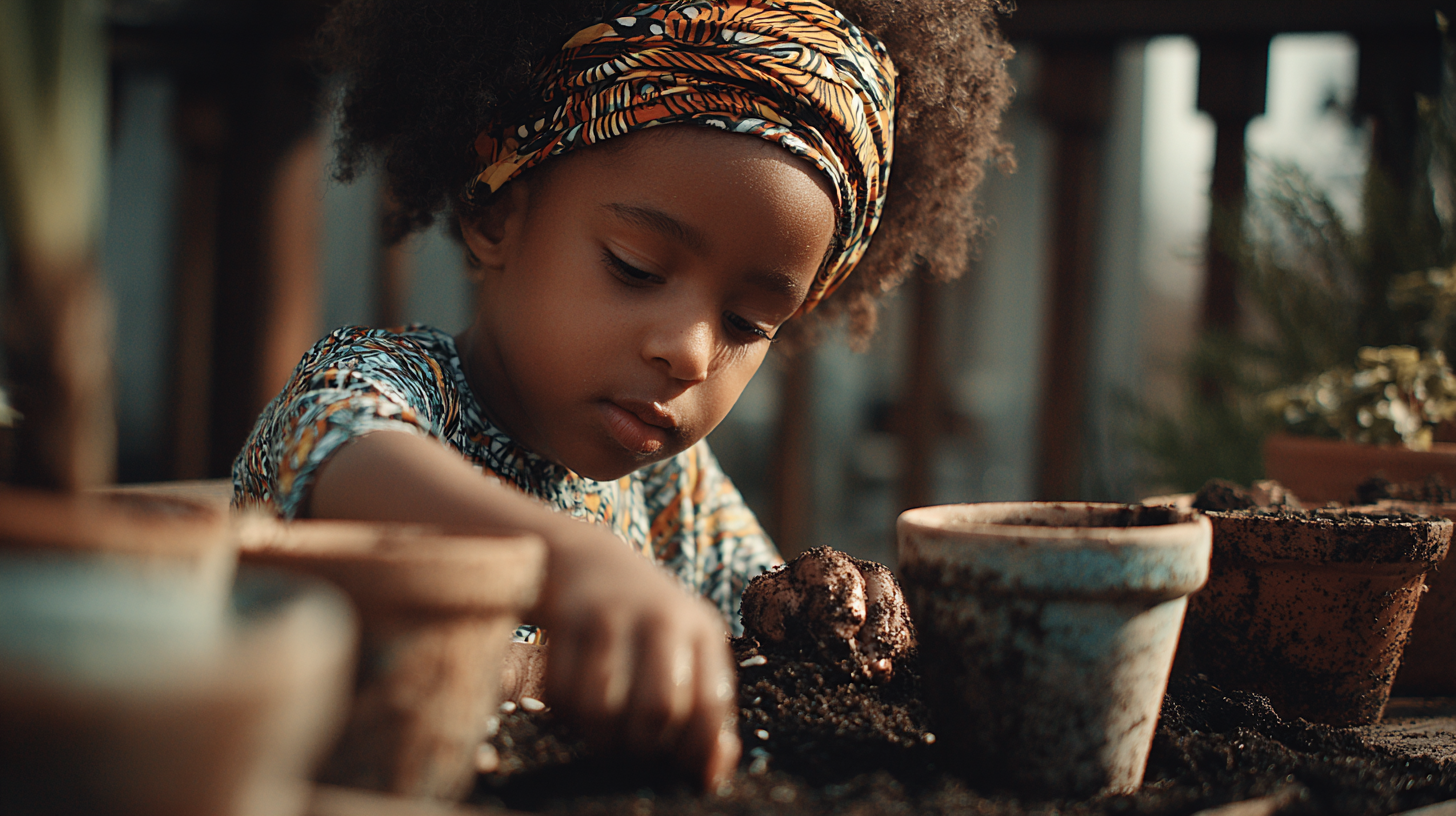
Container Gardening: The Apartment Dweller’s Secret Weapon
One of the most persistent myths about food gardening is that it requires substantial land, perfect sunlight, and rural or suburban privilege. The truth? Some of the most successful child-focused gardening interventions have taken place in urban childcare centers using nothing more than repurposed containers, a sunny windowsill, and fast-growing crops adapted to small spaces.
Container gardening offers several distinct advantages for families wanting to connect children to food sources:
- Accessibility: No yard? No problem. Balconies, fire escapes, stoops, windowsills, and even well-lit indoor shelves can support productive container gardens. Research confirms that container gardens on apartment balconies can be just as effective as traditional ground gardens when children are actively involved in planting, maintenance, and harvest activities.
- Control: Containers allow precise management of soil quality, drainage, and plant spacing—reducing the trial-and-error frustration that can discourage novice gardeners. You can also move containers to optimize sunlight exposure or protect tender plants from extreme weather.
- Child-scaled engagement: Small pots are perfectly sized for small hands. A preschooler can carry, water, and tend a container garden independently—building not just food literacy but also motor skills, responsibility, and self-efficacy.
- Fast wins: Container gardens favor quick-growing crops that deliver results in weeks rather than months. This rapid feedback loop is critical for maintaining children’s enthusiasm and demonstrating cause-and-effect relationships between care and harvest.
Best container crops for young gardeners (tested and proven):
- Radishes: The undisputed champion of instant gratification. Many varieties mature in just 25-30 days, providing colorful, crunchy rewards before children’s attention wanes. The entire growing cycle—from seed to harvest—fits comfortably within a month, making radishes ideal for teaching seasons and growth stages.
- Salad greens (lettuce, arugula, spinach): Baby leaves can be harvested in as little as 3 weeks. The “cut and come again” nature of leafy greens means children can harvest multiple times from the same plants, reinforcing the abundance mindset and providing repeated tasting opportunities.
- Cherry and grape tomatoes (dwarf varieties): While tomatoes take longer to fruit (60-80 days), their sweetness and child-friendly size make them worth the wait. Compact “patio” or “window box” varieties thrive in containers and produce prolifically. Watching green tomatoes slowly ripen to red teaches patience and the passage of time in tangible ways.
- Herbs (basil, mint, chives, cilantro, thyme): Herbs are virtually indestructible, grow quickly, and provide endless opportunities for sensory exploration. Children can pinch leaves to release fragrance, snip stems for cooking, and learn that “fresh” and “dried” herbs are the same plant in different forms. Caribbean families especially appreciate growing thyme, chives, and hot peppers—staple flavors that connect children to cultural food heritage.
- Strawberries: Compact, productive, and irresistibly sweet. Strawberries in hanging baskets or window boxes combine flowers, fruit, and a built-in reward system that few children can resist.
- Beans (bush or pole varieties): Beans grow rapidly, produce heavy yields in small spaces, and offer fascinating opportunities to observe flowers transforming into edible pods. Snap peas and yard-long beans (bora) are particularly child-friendly.
- Carrots (short varieties): Choose “Thumbelina” or other round/short cultivars bred for container growing. The magic moment when children pull carrots from soil—revealing the hidden treasure underground—is unmatched for sheer delight and understanding of root vegetables.
Answer these quick questions to discover the perfect starter crops for YOUR family:
Teaching Food Origins and Seasonal Awareness
One of the most profound gifts gardening offers children is a visceral understanding of where food comes from—not the abstraction of “farms” or “grocery stores,” but the lived experience of seed becoming sustenance. This knowledge, once commonplace, has become rare in industrialized food systems where produce appears year-round, pre-washed and shrink-wrapped, disconnected from soil, season, or human labor.
Children who grow food develop what researchers call “food literacy”—a complex web of knowledge encompassing agricultural basics (plants need sun, water, and soil), seasonal rhythms (strawberries fruit in spring, tomatoes in summer), ecological relationships (bees pollinate flowers), and the effort required to produce meals. This literacy fundamentally reshapes their relationship with food in several ways:
- Appreciation and gratitude: When children understand the weeks of care required to grow a single cucumber, they’re less likely to waste food or dismiss vegetables as worthless. Garden-based programs consistently report increased expressions of gratitude among young participants—not just for their own harvests, but for farmers, parents, and anyone involved in food preparation.
- Reduced “magical thinking”: Young children often believe food simply “appears” at stores, disconnected from natural processes. Gardening corrects this misconception, teaching cause-and-effect relationships, patience (plants can’t be rushed), and the basic biology of life cycles in concrete, observable ways.
- Environmental stewardship: Children who grow food develop early ecological awareness—understanding that healthy soil, clean water, beneficial insects, and biodiversity are prerequisites for food production. These early environmental values predict adult conservation behaviors and climate concern.
- Cultural and family food heritage: Growing heritage crops or vegetables central to family cultural traditions (callaloo, okra, scotch bonnet peppers, yam, breadfruit, ackee) allows children to connect to ancestral food knowledge. This is particularly powerful for immigrant and diaspora families wanting to pass down food traditions that may not be readily available in mainstream grocery stores.
Practical strategies for teaching food origins and seasons through gardening:
- Create a seasonal planting calendar together: Use seed packets, library books, or online resources to map out when different crops can be planted in your climate zone. Let children color-code the calendar by season and choose which crops to grow when. This visual tool reinforces that food production follows natural rhythms, not supermarket convenience.
- Compare garden to store: Conduct taste tests pitting homegrown produce against store-bought versions. Have children rate flavor, texture, and appearance. Discuss why sun-ripened tomatoes taste sweeter (sugars develop fully on the vine) and why grocery cucumbers have thicker skins (bred for shipping durability). These comparisons teach that industrial food systems prioritize different qualities than home gardens.
- Track “food miles”: For foods you can’t grow locally, create a world map showing where bananas, coconuts, cacao, and other tropical ingredients originate. Calculate the distance from farm to table. This geography lesson builds appreciation for global food systems while highlighting the special value of locally-grown food.
- Document the growing process: Keep a garden journal with photos, drawings, and measurements. Children can draw seeds, sprouting seedlings, flowering plants, and mature produce—creating a visual timeline that reinforces sequential thinking and documentation skills. Older children can measure plant height weekly and graph growth rates, integrating math and science learning.
- Visit farms and farmers’ markets: Complement home gardening with field trips to local farms, u-pick operations, or farmers’ markets. Meeting farmers who grow food commercially helps children understand that gardening isn’t just a hobby—it’s how the world eats. Many children are shocked to discover that “real people” grow the food they eat, not factories or corporations.
- Explore preserved and processed foods: Use garden harvests to teach food preservation—freezing herbs in ice cube trays, making simple jams, drying tomatoes, or pickling cucumbers. These activities demonstrate how seasonal abundance gets extended through human ingenuity, connecting past and present food cultures.
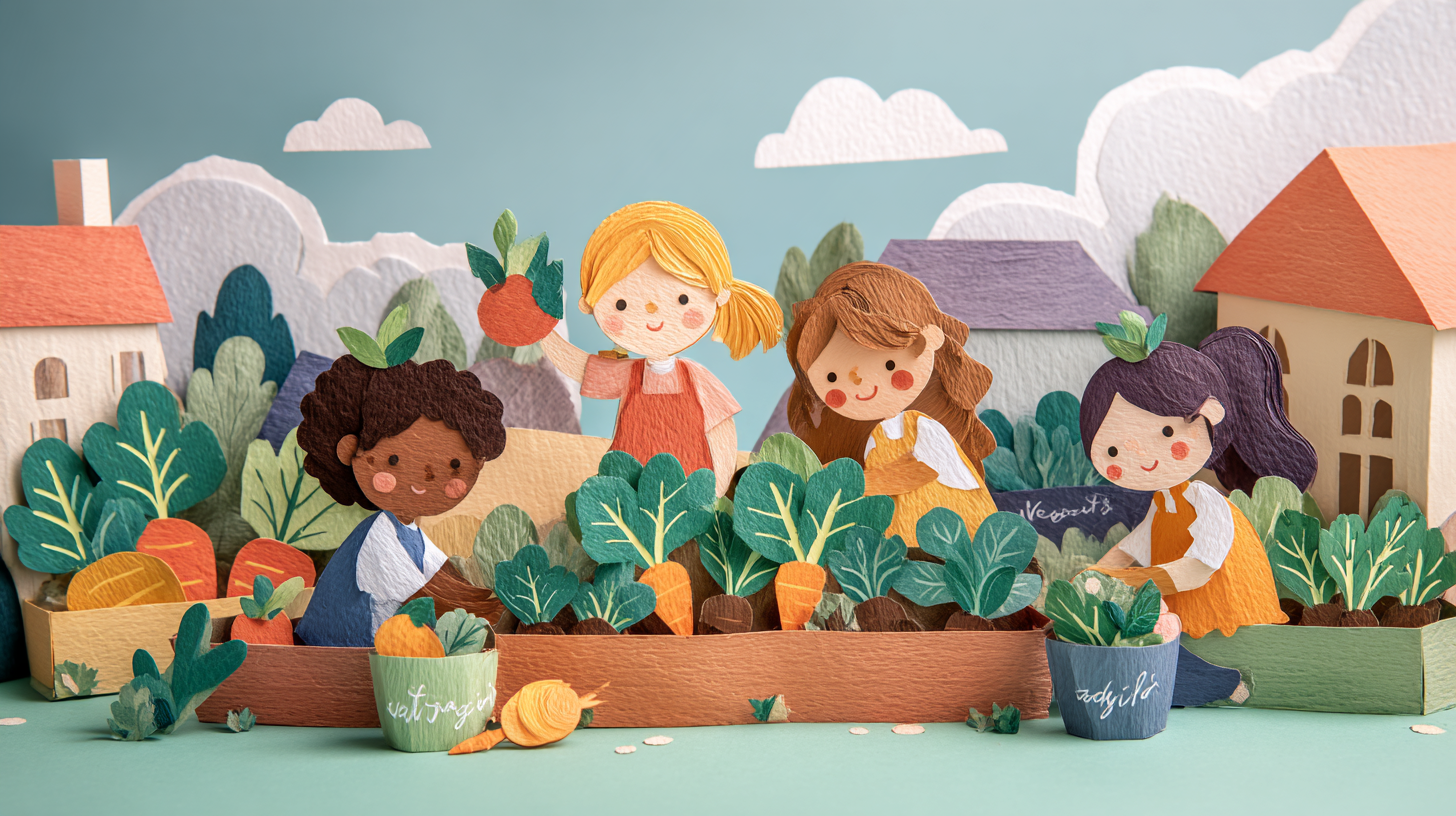
Test (and build) your family’s seasonal food knowledge. Which season matches each crop?
From Garden to Plate: The Caribbean Connection
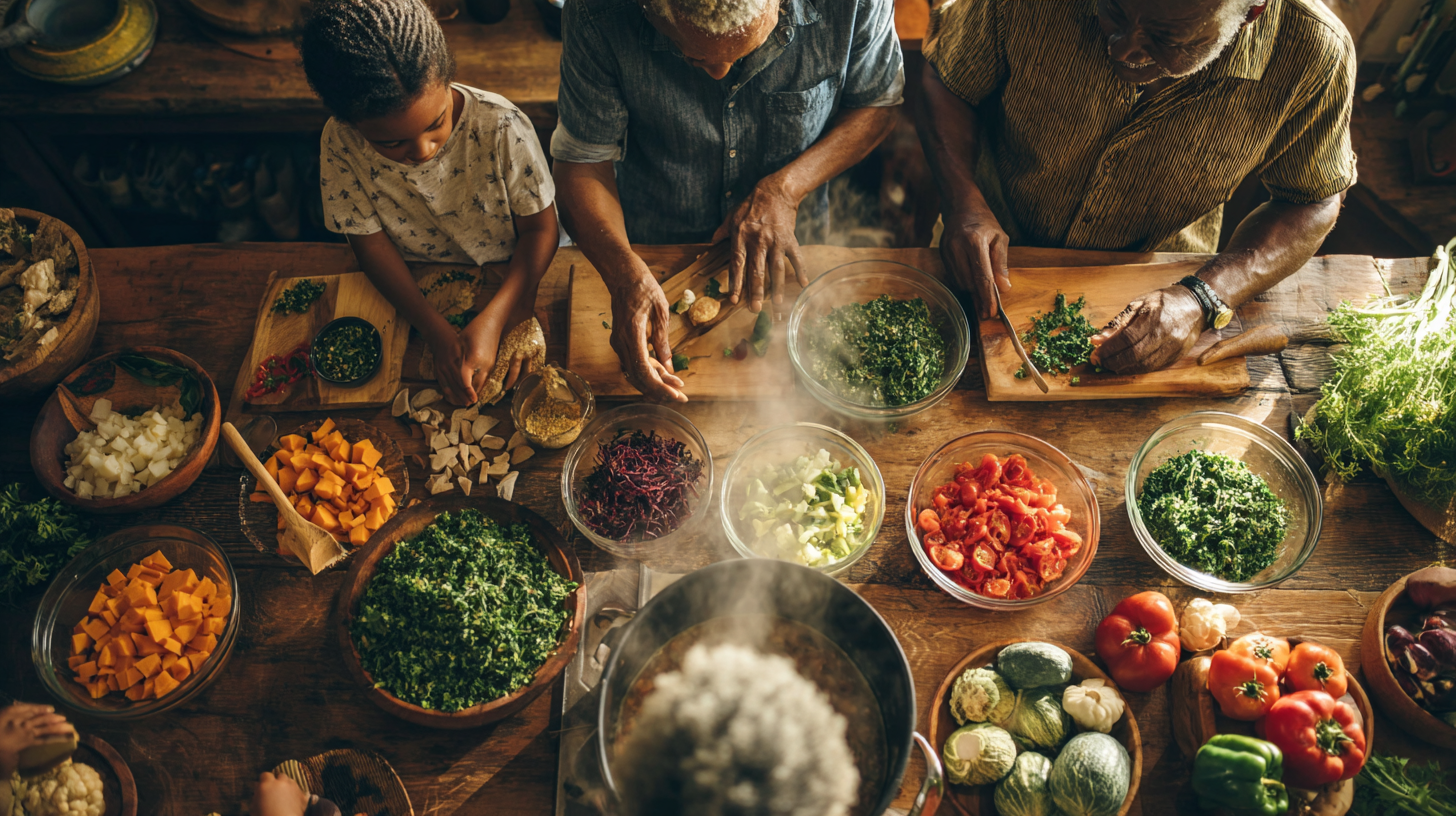
Here’s where theory meets deeply personal practice—where gardening transcends nutrition education and becomes cultural preservation, family storytelling, and the transmission of food heritage across generations. For families with Caribbean roots, growing traditional crops and cooking them using ancestral recipes creates a multisensory bridge between past and present, island and diaspora, elder knowledge and children’s lived experience.
I’ll never forget the afternoon my daughter and I dug our first sweet potato harvest from a recycled barrel garden on our balcony. The tubers came up caked in rich, dark soil—smaller than store-bought, more varied in shape, but infinitely more precious because they were ours. We washed them under the tap, marveled at the purple-white gradient under the skins, and within an hour had transformed them into a simple mash with coconut milk and a whisper of nutmeg—a stripped-down version of the batata preparations my own grandmother made in rural Jamaica. My daughter, who’d previously rejected sweet potato as “too mushy,” ate three helpings and asked when we could plant more.
That moment crystallized something I’d read in research papers but hadn’t fully understood: When children grow culturally significant foods and participate in traditional preparations, they’re not just learning to eat vegetables—they’re claiming cultural identity, building pride in heritage, and forming food memories that will anchor them for life.
High-impact Caribbean crops for container or small-space gardens:
- Callaloo (amaranth): Fast-growing leafy green that thrives in heat. Callaloo grows so enthusiastically in containers that you can harvest leaves continuously without killing the plant. Rich in iron, calcium, and vitamins, callaloo connects Caribbean children to a food their ancestors relied upon for centuries.
- Scotch bonnet or habanero peppers: Compact pepper plants produce abundantly in pots. Even one plant yields enough peppers to last months. Children can observe flowers becoming fruit and learn about “heat levels” in a hands-on way (supervise tasting carefully!).
- Thyme, chives, and culantro: Essential Caribbean herbs that grow easily in small containers. Fresh herbs teach children that “seasoning” isn’t something from a bottle—it’s living plants you can grow and harvest yourself.
- Cherry tomatoes: While not uniquely Caribbean, tomatoes are central to many island dishes. Growing them teaches the difference between vine-ripened sweetness and the bland, mealy texture of supermarket versions picked green and gassed to artificial ripeness.
- Yard-long beans (bora): Dramatic, space-efficient, and productive. Children love measuring beans that grow to 18+ inches and watching them dangle like green shoelaces from vining plants.
- Pumpkin or calabaza (if you have ground space): Ambitious but rewarding. Watching a massive pumpkin develop from a tiny flower teaches children that small efforts compound into big results—a life lesson wrapped in orange flesh.
- Sweet potato slips: You can grow sweet potato vines from store-bought tubers suspended in water. Even if you don’t harvest tubers (which require 100+ days and substantial space), the lush vines produce edible greens (sweet potato leaves) that are tender, nutritious, and utterly Caribbean.
Sample garden-to-table activity for families: Plant cherry tomatoes, thyme, and hot peppers in spring. Over the summer, as plants produce, involve children in harvesting and preparing simple dishes—maybe a fresh tomato salsa with garden thyme and a tiny dice of pepper, served with plantain chips. As you cook together, share family food stories: “Your great-grandmother used to grow tomatoes just like these behind her house in Montego Bay. She’d pick them warm from the vine and eat them with a pinch of salt, standing in the garden, just like we’re doing now.” These aren’t mere recipes—they’re oral histories, encoded in flavor and ritual, transmitted through doing rather than telling.
Expert Insights: What the Research and Practitioners Tell Us
While personal stories and family experiences are compelling, the scientific evidence base supporting garden-based nutrition education has grown remarkably robust over the past decade. Here’s what leading researchers, public health experts, and community practitioners have learned:
Key findings from recent systematic reviews and meta-analyses:
- Garden-based programs reliably increase children’s ability to identify fruits and vegetables—a prerequisite for acceptance. In one study, primary school children participating in a school gardening curriculum improved their ability to recognize common vegetables by an average of 47% compared to pre-intervention baseline.
- The combination of gardening + cooking/tasting + nutrition education appears more effective than any single component alone. Programs integrating all three elements show the largest and most sustained changes in dietary behaviors. This “multi-modal” approach addresses knowledge (why vegetables matter), skills (how to grow and prepare them), and exposure (repeated tasting reduces neophobia).
- Gardening programs show particular promise for low-income and food-insecure communities. Community gardens increase both vegetable availability and social capital (connections between neighbors), addressing multiple dimensions of food access simultaneously. Research tracking community gardeners found they consumed fruits and vegetables 5.7 times per day compared to 3.0 times per day among non-gardening neighbors—a difference that translates to dramatically reduced chronic disease risk.
- The impacts extend beyond diet: Children participating in sustained garden programs show improvements in science achievement scores, environmental attitudes, teamwork skills, and patience. Teachers report that garden time provides essential outdoor physical activity and serves as a “reset” for children who struggle with prolonged indoor focus.
- Contrary to fears about maintaining enthusiasm, children remain engaged in garden programs when given age-appropriate ownership. Preschoolers respond to immediate tasks (watering, harvesting); elementary-aged children thrive when given specific responsibilities (tracking growth, identifying insects, planning seasonal rotations); older children appreciate creative control (designing garden layouts, selecting crop varieties, developing recipes).
Voices from the field—what practitioners emphasize:
Educators and community food organizers consistently highlight several themes when discussing garden-based work with children:
- “Start small and succeed rather than dream big and fail”: The most common mistake is overambitious first attempts. A single thriving container of herbs or lettuce teaches more than an abandoned, weed-choked raised bed. Begin with 2-3 easy crops, establish routines, and expand gradually as confidence builds.
- “Children need to taste what they grow, ideally within minutes of harvest”: The psychological and sensory impact of eating a sun-warmed tomato or freshly pulled carrot, still dusted with soil, cannot be replicated by even the highest-quality grocery produce. That immediate garden-to-mouth experience is the most powerful intervention in any program.
- “Failure is teaching, not defeat”: Some seeds don’t germinate. Plants die. Harvests disappoint. These aren’t program failures—they’re essential lessons about nature’s variability, the value of farmers’ expertise, and resilience. When a crop fails, involve children in the post-mortem: “What do you think happened? What could we try differently next time?” This metacognitive reflection builds problem-solving skills applicable far beyond gardening.
- “Cultural relevance matters enormously”: Programs that incorporate heritage crops and traditional recipes see higher family engagement and longer-term participation than generic “garden education.” When families see their own food cultures reflected and honored in programming, they invest more deeply and sustain involvement longer.
Let’s expose and correct common misconceptions that stop families from starting. Click each myth to reveal the truth:
Tap to bust this myth →
Tap to bust this myth →
Tap to bust this myth →
Tap to bust this myth →
Tap to bust this myth →
Tap to bust this myth →
Overcoming Real-World Challenges
Let’s be honest: gardening with children isn’t always Instagram-worthy moments of sun-dappled harvests and gap-toothed smiles over heirloom tomatoes. Sometimes it’s a three-year-old dumping an entire watering can on seedlings you explicitly said needed “just a little drink.” Sometimes it’s plants that mysteriously wilt overnight, or an ambitious garden plan that dies a slow death as daily life overwhelms good intentions.
The barriers to successful family gardening are real, well-documented, and worth addressing head-on:
- Time constraints: Parents juggling work, childcare, and household demands often struggle to add “garden maintenance” to their mental load. The solution isn’t finding more time—it’s building gardening into existing routines. Water while children play outside. Make garden checks part of morning or evening rituals. Choose low-maintenance crops (herbs, lettuce) that forgive occasional neglect rather than high-maintenance varieties (some tomatoes, squash) that demand constant attention.
- Lack of knowledge/confidence: Many adults didn’t grow up gardening and feel overwhelmed by the learning curve. Start with community resources: libraries offer free gardening guides; university extension offices provide regional planting calendars; YouTube has thousands of tutorials. Consider joining a community garden where experienced gardeners can mentor you, or connect with online communities of beginner gardeners who share both successes and spectacular failures.
- Access and equity: Not all families have equal access to land, quality soil, seeds, tools, or water. This is a legitimate justice issue that requires systemic solutions: community gardens in underserved neighborhoods, subsidized seeds and tools through libraries or nonprofits, school-based gardens that provide equitable access regardless of home resources. If you’re privileged enough to garden easily, consider supporting organizations working to democratize food growing—sharing surplus seeds, volunteering at community gardens, or advocating for urban agriculture policies.
- Climate and seasons: Gardening in extreme climates (intense heat, harsh winters, short growing seasons) adds complexity. Container gardens help because you can move pots to chase sun or protect from storms. Consider extending seasons with simple cold frames, or embrace winter as a time for indoor herbs and planning rather than active growing. Even in challenging climates, there are months when something can grow.
- Discouragement from failure: Seeds that don’t germinate, transplants that die, harvests that disappoint—these experiences derail many beginners. Reframe failure as data collection: “We learned that spot doesn’t get enough sun. Next time we’ll try a different location.” Celebrate partial successes: “We only got three radishes, but we got to taste what we grew!” Most importantly, model resilience for children: “That didn’t work out, but we’re going to try something different and see what happens.”
Specific strategies for sustainable family gardening habits:
- Start absurdly small: One pot. One crop. Master it, then add more. Success breeds enthusiasm; overwhelm breeds abandonment.
- Build in accountability: Share your garden journey with others—friends, family, online communities. Public commitment increases follow-through. Children also provide natural accountability—they’ll remind you when watering day arrives!
- Celebrate micro-wins: First sprout. First flower. First harvest, no matter how small. These milestones matter to children and create positive reinforcement loops that sustain engagement.
- Integrate with existing interests: If your child loves art, decorate pots together. If they love science, conduct “experiments” comparing different watering schedules. If they love cooking, emphasize the garden-to-plate connection. Make gardening an extension of what already excites them rather than a separate “project.”
- Lower expectations for perfection: Your goal isn’t a magazine-worthy garden—it’s food literacy, outdoor time, and shared experiences. Crooked carrots and bug-nibbled lettuce teach just as effectively as picture-perfect produce.
- Connect to community: Isolation kills garden projects. Join (or start) a neighborhood garden club, participate in seed swaps, visit farmers’ markets, or connect virtually with other family gardeners. Community provides motivation, troubleshooting, and shared celebration that individual effort can’t sustain alone.
Building new habits requires starting small and tracking progress. Use this tool to set realistic goals and celebrate your journey:
- Choosing a container and crop for our first garden
- Planting seeds or starter plants with my child
- Setting up a daily watering routine
- Taking photos to document our garden journey
- Talking about where our food comes from during one meal
- Visiting a farmers’ market or farm with my child
- Cooking something together with vegetables (garden or store)
The Lifelong Impact: Why This Matters Beyond Childhood
Here’s the truth that motivates me through every wilted plant, every abandoned garden plan, every moment when I wonder if this actually matters: The food relationships children build in early childhood predict their eating behaviors, health outcomes, and even environmental values decades later. This isn’t about getting a preschooler to eat one more serving of vegetables today—though that’s valuable. This is about setting trajectories that compound over lifetimes.
Research tracking children from early childhood into adolescence and adulthood reveals several long-term effects of garden-based food experiences:
- Dietary patterns persist: Children who participate in sustained garden programs show higher fruit and vegetable consumption years after programs end, compared to peers who never gardened. Early food literacy creates

Kelley's culinary creations are a fusion of her Caribbean roots and modern nutritional science, resulting in baby-friendly dishes that are both developmentally appropriate and bursting with flavor. Her expertise in oral motor development and texture progression ensures that every recipe supports your little one's feeding milestones while honoring cultural traditions.
Join Kelley on her flavorful journey as she shares treasured family recipes adapted for tiny taste buds, evidence-based feeding guidance, insightful parenting anecdotes, and the joy of celebrating food, culture, and motherhood. Get ready to immerse yourself in the captivating world of Kelley Black and unlock the vibrant flavors of the Caribbean for your growing baby, one nutritious bite at a time.
- The Feeding Revolution: Why Your Everyday Meals Are Changing the World - October 13, 2026
- Your Feeding Story Matters More Than The “Perfect” One Online - October 12, 2026
- Looking Forward: Stepping Into Your Confident Feeding Future - October 11, 2026