
The Hidden Battlefield in Your Kitchen: Why Your Child’s Brain Is the Prize
Discover Your Child’s Ad Exposure Level
Click each day of the week to track screen time. See the shocking truth about ad exposure.
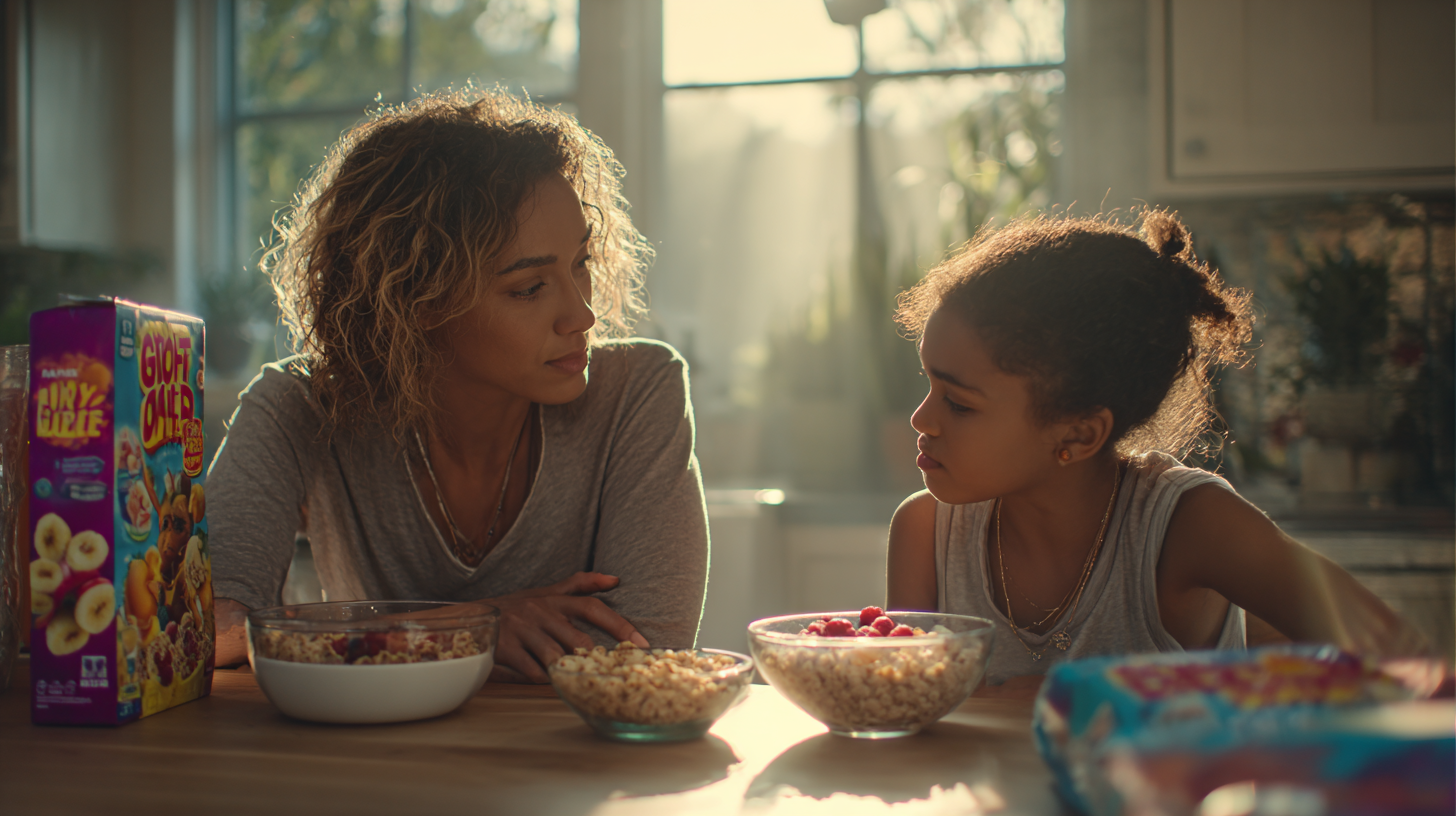
Last Thursday evening, I watched my six-year-old nephew point at a cereal box in the grocery store and declare, “Mommy, this one makes you strong like a superhero!” His eyes sparkled with absolute conviction. My sister looked at me, exhausted, and whispered, “How do I compete with that?”
That moment shifted everything for me. Because it wasn’t just about a cereal box. It was about a sophisticated, multi-billion-dollar industry that had successfully convinced a child—who couldn’t yet tie his shoes—that cartoon mascots and sugar-loaded flakes were the key to superhuman strength. And here’s the uncomfortable truth: this battle for your child’s mind is happening whether you acknowledge it or not.
The food industry spends over $1.8 billion annually marketing to children in the United States alone, and they’re not doing it because kids have purchasing power—they’re doing it because children are extraordinarily vulnerable to persuasion tactics that adults would dismiss in seconds. Research from the Oxford Public Health Department confirms that junk food advertisements now flood children’s social media feeds at unprecedented rates, with kids encountering unhealthy food promotions in two-thirds of popular influencer videos they watch. What’s terrifying is that most children under age eight cannot distinguish advertising from entertainment, trusting marketing claims as readily as they trust their own parents.
So if you’ve ever felt like you’re fighting a losing battle against chicken nuggets shaped like dinosaurs and fruit snacks masquerading as health food, you’re not imagining things. The deck is stacked. But here’s what the food industry doesn’t want you to know: you can teach your child to see through the smoke and mirrors. You can build marketing literacy that transforms your child from a passive target into a critical thinker who questions, analyzes, and makes informed choices.
The Evolution of Food Marketing: From Saturday Cartoons to TikTok Influencers
When I was growing up, food advertising was simple: thirty-second TV commercials during Saturday morning cartoons. You knew when you were being sold to because there was a clear boundary between the show and the ad. But that world is long gone.
Today’s food marketing is a shape-shifting beast that adapts faster than parents can keep up. The industry has moved from obvious TV spots to covert digital strategies that embed advertising into the very fabric of content children consume. We’re talking about kidfluencers—child social media personalities who casually munch on branded snacks while playing video games or doing challenges. We’re talking about reward-based mobile games where children collect virtual coins to unlock levels sponsored by fast-food chains. We’re talking about algorithm-driven personalization that tracks your child’s online behavior and serves up ads tailored specifically to their interests and vulnerabilities.
A comprehensive study published in the Journal of the American Medical Association found that children’s exposure to food and beverage advertising on television has evolved dramatically, with fast-food ads representing 36-38% of all food advertisements children encounter. But television is just the tip of the iceberg. Digital platforms have exploded, and with them, so has the sophistication of marketing tactics. Social media ads, influencer partnerships, branded content, in-game advertising, and even virtual reality experiences are now part of the marketing arsenal aimed at young minds.
The shift is profound because these new forms of advertising don’t look like advertising. They look like entertainment, like friendship, like fun. A 2021 Australian study revealed that children see an average of seventeen unhealthy food ads for every hour spent online—seventeen subtle nudges telling them that happiness comes in brightly colored packages filled with sugar, salt, and fat.
And here’s the kicker: while advertising tactics have evolved at lightning speed, our educational systems haven’t kept pace. Media literacy programs specific to food marketing are virtually nonexistent in most schools. Parents are left to navigate this alone, often without the tools or knowledge to effectively counter billion-dollar marketing machines.
The Science of Persuasion: How Marketers Hijack Young Brains
Let me tell you something that made my stomach turn when I first learned it: food marketers study child psychology more thoroughly than most teachers study pedagogy. They understand developmental stages, cognitive vulnerabilities, and emotional triggers better than many parents realize. And they use that knowledge with surgical precision.
Children’s brains are not miniature adult brains—they’re fundamentally different. The prefrontal cortex, responsible for critical thinking and impulse control, doesn’t fully develop until the mid-twenties. This means children process advertising differently than adults. They struggle to recognize persuasive intent, especially when marketing is embedded in content they perceive as neutral or entertaining.
Research published in the National Institutes of Health database demonstrates that food advertising affects children on multiple levels: it shapes their knowledge about food, alters their preferences, and directly influences their eating behaviors. Brain imaging studies show that exposure to food commercials activates reward centers in children’s brains, triggering cravings even when they’re not hungry.
Marketers exploit specific psychological principles: they use cartoon characters to create parasocial relationships where children feel genuine affection for brand mascots; they employ bright colors and dynamic movement to capture wandering attention; they leverage celebrity endorsements and peer influence to make products seem socially desirable; they use repetition to create familiarity, which the brain interprets as trustworthiness; and they craft messages that link products to aspirational qualities like strength, popularity, coolness, and fun.
One particularly insidious tactic is what researchers call “advergaming”—video games designed around branded products where the line between play and advertising completely disappears. Children spend hours engaging with these games, building positive associations with unhealthy foods without ever consciously recognizing they’re being marketed to.
The impact is measurable and disturbing. Meta-analyses examining the effect of screen advertising on children’s dietary intake found consistent evidence that exposure to food marketing leads to immediate increases in unhealthy food consumption and long-term shifts in food preferences and choices. We’re not talking about minor influences—we’re talking about fundamental changes in how children think about food, what they want to eat, and what they believe constitutes a healthy diet.
️ Marketing Tactics Detective Game
Can you identify the persuasion tactic? Test your marketing literacy skills!
Scenario 1: A cereal box features a popular cartoon character and the words “Part of a balanced breakfast”
Scenario 2: A YouTube video shows a popular kid influencer doing challenges while eating branded snacks
Scenario 3: A mobile game rewards players with virtual coins for watching fast-food ads
The Real-World Impact: Beyond the Grocery Store Tantrum
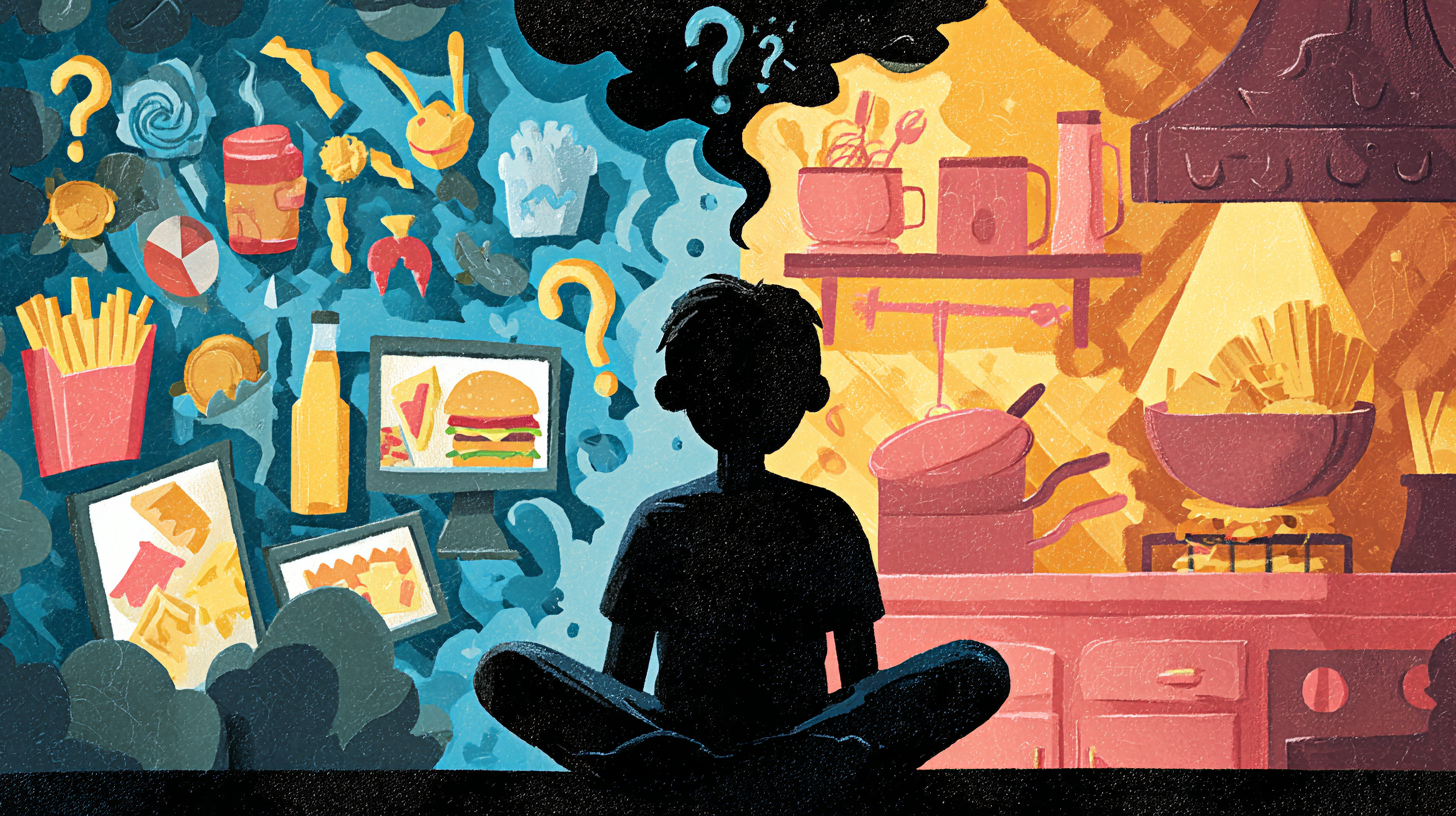
You might be thinking, “Okay, so kids see ads for junk food. Is it really that big a deal?” And I get it—on the surface, it seems like a minor inconvenience, maybe a few extra battles in the cereal aisle. But the implications run far deeper than most parents realize, touching everything from childhood obesity rates to lifelong eating patterns and even family dynamics.
Let’s start with the numbers. Childhood obesity has reached epidemic proportions globally, and while advertising isn’t the sole culprit, research demonstrates a direct link between marketing exposure and unhealthy dietary habits. Studies published through the National Institutes of Health confirm that reducing children’s exposure to food advertising could prevent significant numbers of obesity cases, with modeling studies suggesting measurable public health benefits from advertising restrictions.
But beyond obesity, there’s something more insidious happening: food marketing fundamentally reshapes how children perceive nutrition, health, and even their own worth. Children internalize messages that link food consumption to social status, emotional comfort, and personal identity. They learn to associate highly processed foods with fun, friendship, and celebration, while perceiving nutritious whole foods as boring, punitive, or something you eat only when forced.
Parents I’ve spoken with describe a constant uphill battle. One mother told me, “I spend hours preparing healthy meals with fresh vegetables, explaining nutrition, trying to model good choices. Then my daughter watches twenty minutes of YouTube and suddenly I’m the enemy because I won’t buy the rainbow cereal that promises to turn her into a princess.” The exhaustion in her voice was palpable, and it’s a sentiment echoed by parents everywhere who feel undermined by marketing forces far more powerful and persuasive than their own influence.
Research examining parents’ perceptions reveals widespread concern about unhealthy food marketing targeting children. Surveys show that the majority of parents feel frustrated and helpless in the face of aggressive food advertising, recognizing its negative impact but lacking effective strategies to counter it. Many parents report that marketing makes healthy feeding significantly more difficult, creating conflicts and stress around food that wouldn’t otherwise exist.
There’s also an equity issue here that deserves attention. Food marketing disproportionately targets children from lower-income families and communities of color, contributing to health disparities that persist into adulthood. The children with the least access to healthy food options are often exposed to the most aggressive junk food marketing—a cruel irony that compounds existing inequalities.
And let me share something personal: when I started really paying attention to food marketing, I realized how much it had shaped my own childhood eating habits and preferences. Foods I thought I loved independently were actually products I’d been conditioned to desire through years of strategic advertising. That realization was both enlightening and unsettling—it made me wonder how many of our “preferences” are truly ours versus carefully engineered responses to marketing stimuli.
Building the Foundation: Age-Appropriate Marketing Literacy
Here’s the good news: while we can’t shield our children from all marketing exposure, we can equip them with the critical thinking skills to recognize, analyze, and resist persuasion tactics. The key is starting early and building literacy in developmentally appropriate stages.
For young children ages 3-7, the focus should be on basic recognition: helping them distinguish advertising from other content. At this age, children are just beginning to understand that ads have a persuasive purpose. Simple conversations work best—pointing out commercials when they appear, explaining that “someone made this to try to sell us something,” and asking questions like “What do you think they want us to do?” These gentle nudges build foundational awareness without overwhelming young minds.
During these years, it’s also helpful to introduce the concept of truth versus exaggeration. When a commercial claims a toy will make you the coolest kid in school, you can ask, “Do you really think that toy can do that? Or are they just trying to make us want it?” These conversations plant seeds of skepticism that will grow stronger over time.
For children ages 8-12, marketing literacy can become more sophisticated. This age group can start analyzing specific persuasion techniques: celebrity endorsements, emotional appeals, bandwagon effects, use of music and color, claims versus reality, and the difference between needs and wants. Educational activities work beautifully here—watching commercials together and deconstructing them, comparing advertised products to actual nutritional information, and creating mock advertisements to understand the production process from the inside out.
Research on food advertising literacy training shows remarkable results. Studies examining the impact of short educational interventions found that teaching children about advertising tactics reduces their reliance on taste as the primary food selection criterion and increases their consideration of health factors. Children who receive advertising literacy training become more skeptical of marketing claims and better able to recognize persuasive intent—skills that persist long after the training concludes.
For teenagers, marketing literacy can expand to include critical analysis of digital marketing, influencer culture, data collection, targeted advertising, and the business models underlying “free” apps and platforms. Teens are capable of understanding complex concepts like algorithmic targeting and how their personal data is used to serve customized advertisements. These conversations can be eye-opening, transforming passive consumers into informed critics of the media landscape they navigate daily.
Throughout all ages, the most powerful educational tool is consistent, casual conversation. You don’t need formal lessons or complicated curricula—you just need to talk about ads when you encounter them together. Make it a game: “Spot the persuasion tactic.” Make it collaborative: “What do you think they’re trying to make us feel?” Make it empowering: “Now that we know their tricks, we can make our own smart choices.”
The beauty of building marketing literacy early is that it becomes a lens through which children automatically view media. Instead of passively absorbing messages, they start actively analyzing them. Instead of accepting claims at face value, they start questioning sources and motivations. These are life skills that extend far beyond food marketing, shaping how they engage with information throughout their lives.
Marketing Literacy Progress Tracker
Build your child’s critical thinking skills! Click each skill as you practice it together.
Practical Strategies: Daily Actions That Make a Difference
Theory is wonderful, but what parents really need are concrete, actionable strategies they can implement starting today. So let me share practical approaches that work in real households with real children who have real opinions about food.
First, create a “marketing analysis” routine during screen time. When you watch shows or videos together, make it habit to pause when ads appear and ask questions: “What are they selling? Who do you think they want to buy this? What tricks are they using to make it look appealing? Is this showing us the whole truth or just the good parts?” These brief interruptions transform passive viewing into active learning opportunities.
Second, involve children in grocery shopping as educational expeditions. Before entering the store, discuss the difference between what we plan to buy and what marketing might try to convince us to buy. Challenge children to spot marketing tactics on packaging: cartoon characters, health claims, bright colors, placement at eye level, words like “natural” or “wholesome” that sound healthy but might not mean much. Bring along a simple checklist to make it a game rather than a lecture.
Third, teach comparison shopping with a focus on nutritional literacy. Pick two similar products—one heavily marketed to children, one less flashy—and examine them side by side. Compare ingredient lists, serving sizes, sugar content, price per ounce, and claims versus reality. Let children be the investigators, discovering for themselves that the exciting cereal with the mascot has three times the sugar of the boring-looking alternative. When children reach these conclusions independently, they internalize them far more deeply than when we simply tell them what to think.
Fourth, establish “ad-free zones” and times in your home. Designate meal times as advertising-free spaces where screens are off and conversations can flow without commercial interruption. Use ad-blocking technology where appropriate and choose streaming services that minimize or eliminate advertising. While you can’t eliminate all exposure, reducing the sheer volume gives children mental space to develop preferences independent of marketing influence.
Fifth, model critical consumption yourself. Children learn more from what we do than what we say, so make your own skepticism visible. When you encounter advertising, think aloud: “That looks delicious in the picture, but I wonder what it really looks like. Let me check the ingredients. Hmm, sugar is the second ingredient—that’s interesting because they’re calling it a health food.” Your thought process becomes their template for critical analysis.
Sixth, empower children to create their own media. Have them design advertisements for healthy foods using persuasion tactics they’ve learned about. Ask them to make a commercial for broccoli or a poster for water that uses the same strategies junk food companies use. This reversal is powerful—it moves children from passive targets to active creators, building understanding from the inside out. Plus, it’s genuinely fun and often hilarious to see what they come up with.
Seventh, establish family conversations about values and decision-making. Help children develop their own criteria for food choices based on factors beyond marketing appeal: how food makes their body feel, energy levels after eating certain things, connection to cultural traditions, environmental impact, and alignment with family values. When children have internalized frameworks for decision-making, they’re less susceptible to external persuasion.
And here’s where I’ll share something that connects beautifully to these conversations about healthy, thoughtful eating: if you’re looking to build positive food experiences rooted in nutrition and culture rather than marketing hype, the Caribbean Baby Food Recipe Book offers over 75 recipes featuring real, whole ingredients like sweet potatoes, plantains, and coconut milk—foods that speak to authentic flavors and proper nutrition without relying on cartoon mascots or empty promises. Teaching children to appreciate genuine, nutrient-dense foods from an early age creates a foundation that marketing can’t easily erode.

The Digital Dilemma: Social Media and Influencer Marketing
If traditional advertising is a challenge, social media marketing is an entirely different beast—one that most parents feel completely unprepared to handle. And for good reason: influencer marketing operates in murky territory where the boundaries between authentic content and paid promotion are deliberately blurred.
Children’s perception of food marketing across digital media platforms reveals a troubling gap in recognition. Research shows that while children can often identify traditional commercials, they struggle significantly with recognizing branded content in social media posts, YouTube videos, and influencer partnerships. When their favorite YouTuber casually mentions a snack during gameplay or when a TikTok star includes a branded beverage in a dance video, children perceive these as genuine endorsements from trusted friends rather than paid advertisements.
The parasocial relationships children develop with influencers make this marketing particularly effective and particularly insidious. Children feel they know these personalities, trust their opinions, and want to emulate their choices. When an influencer promotes a product, it doesn’t feel like advertising—it feels like a recommendation from someone they admire and care about.
Recent studies examining junk food ads on social media found that unhealthy food promotions flood children’s feeds at alarming rates, with platforms like Instagram, TikTok, and YouTube serving as primary delivery mechanisms. Many of these ads are so seamlessly integrated into content that even adults struggle to distinguish sponsored material from organic posts—and disclosure requirements, when they exist at all, are often inadequate or easily overlooked.
So how do we address this? Start by watching content with your children and learning who they follow and admire. Ask genuine questions about their favorite creators: “What do you like about this person? Do they ever talk about products? How do you think they decide what to show in their videos?” These conversations build awareness without accusation.
Teach children about disclosure language. Explain that phrases like “ad,” “sponsored,” “partner,” or “gifted” mean someone paid for or provided products in exchange for promotion. Help them spot these indicators and understand their significance. Practice together: “Let’s watch this video and see if we can find any signs that this is advertising.”
Discuss the business model of content creation. Many children don’t understand that influencers make money through brand partnerships and that their content choices are often financially motivated. Age-appropriate explanations about how influencers earn income help children recognize that recommendations may not be purely based on genuine preference or quality.
Encourage diversified media consumption. When children follow a variety of creators across different platforms and interests, they’re less likely to be overly influenced by any single voice. They also begin to notice patterns in how different influencers promote products, which builds comparative thinking skills.
Set boundaries around parasocial relationships. Help children understand the difference between genuine friendship and one-way digital relationships. This doesn’t mean dismissing their enjoyment of content creators, but rather providing realistic framing: “It’s fun to watch this person, but remember they don’t actually know you. Their recommendations might not be right for everyone.”
Navigating Pushback: When Your Child Resists
Let’s be honest: implementing marketing literacy education isn’t always smooth sailing. Children, especially as they get older, may resist conversations that feel preachy, controlling, or like criticism of content and creators they love. I’ve heard countless stories from parents who’ve been met with eye rolls, arguments, or complete shutdown when trying to discuss advertising critically.
The key to navigating resistance is approaching these conversations with curiosity rather than judgment, collaboration rather than control. Instead of lecturing about the evils of marketing, ask genuine questions about what they’re experiencing: “That commercial was really well made. What made it so appealing to you? How do you think they created that effect?”
Acknowledge that marketing isn’t inherently evil—it’s a tool. Some products genuinely are good and worth purchasing. The goal isn’t to make children cynical or suspicious of everything, but rather to help them develop discernment: the ability to evaluate claims, consider motivations, and make thoughtful choices aligned with their values and needs.
Share your own experiences with being influenced by advertising. Vulnerability is powerful—when you admit to times you bought something because of clever marketing and it didn’t live up to expectations, children see that everyone is susceptible. This normalizes the experience and removes shame, creating space for honest conversation.
Respect their autonomy in age-appropriate ways. As children get older, allow them to occasionally make purchasing decisions you might not agree with, then reflect on the experience together afterward. “You really wanted that snack we saw advertised. Now that you’ve tried it, how does it compare to what you expected from the commercial?” Learning through experience, with you as a supportive guide rather than an “I told you so” critic, builds far more effective literacy than prohibition.
Pick your battles. You don’t need to analyze every single advertisement or marketing message. Sometimes it’s okay to just enjoy media without critical commentary. Constant deconstruction becomes exhausting and counterproductive. Instead, establish a rhythm where you occasionally pause to discuss particularly noteworthy examples, but otherwise allow normal viewing.
Connect marketing literacy to other values your family holds. If you prioritize environmental sustainability, discuss how marketing encourages overconsumption and waste. If health is important, examine how food advertising often conflicts with nutritional guidelines. If honesty matters to your family, explore how marketing sometimes uses misleading claims or manipulates information. When marketing literacy aligns with broader family values, it feels less like a separate agenda and more like a natural extension of principles you already share.
Unlock Parent Strategies
Click each challenge to reveal proven solutions from parents who’ve been there.
The Regulatory Landscape: What’s Changing and What’s Not
While individual action is crucial, it’s also worth understanding the broader regulatory context around food marketing to children—because parent education alone shouldn’t bear the full burden of protecting kids from predatory advertising practices.
Globally, approaches to regulating food marketing vary dramatically. Some countries have implemented comprehensive restrictions on advertising unhealthy foods to children across all media platforms, while others rely primarily on industry self-regulation with minimal government oversight. The United States falls largely into the latter category, with voluntary initiatives like the Children’s Food and Beverage Advertising Initiative (CFBAI) representing the primary mechanism for limiting harmful marketing practices.
The CFBAI, launched in 2006, involves food and beverage companies making voluntary pledges to limit advertising of certain products to children under 12. Participating companies agree to advertise only products that meet specific nutritional criteria in child-directed media. While this sounds promising on paper, critics point out significant limitations: participation is voluntary, nutritional standards are industry-determined rather than based on independent health guidelines, enforcement mechanisms are weak, and the initiative doesn’t adequately cover newer digital marketing channels where children spend increasing amounts of time.
Recent political developments have sparked renewed attention to this issue. Discussions about limiting advertising of unhealthy foods to children have emerged at federal levels, with some policymakers exploring potential restrictions similar to those implemented in other countries. However, significant regulatory change faces substantial obstacles including industry lobbying, free speech concerns, and political resistance to government intervention in markets.
From a parent’s perspective, the takeaway is this: don’t wait for regulation to protect your children. The political and legal landscape moves slowly, influenced by competing interests and complex constitutional considerations. While advocacy for stronger protections is worthwhile, your child’s media literacy education can’t wait for policy changes that may or may not materialize in time to benefit them.
That said, staying informed about policy developments and supporting advocacy organizations working toward stronger protections is valuable. Groups like the Center for Science in the Public Interest, the Rudd Center for Food Policy and Health, and various public health organizations conduct research, advocate for policy changes, and provide resources for parents navigating this landscape.
Cultural Connections: Food, Identity, and Marketing Resistance
One of the most powerful tools for resisting harmful food marketing is cultivating strong cultural connections around authentic food traditions. When children have deep, positive associations with cultural foods and cooking practices, they develop identity-based resilience against marketing messages that promote homogenized, processed alternatives.
In Caribbean culture, food carries profound meaning beyond mere sustenance. It’s connection to heritage, family history, seasonal rhythms, and community celebration. When children grow up understanding food as cultural expression and intergenerational tradition, they develop appreciation for qualities that advertising can’t manufacture: the taste of a dish exactly as their grandmother made it, the ritual of weekend market visits to select fresh ingredients, the pride of contributing to family meals, the stories embedded in traditional recipes.
This cultural grounding creates what I think of as “marketing immunity”—not complete protection, but meaningful resistance based on genuine preference for real food experiences over manufactured ones. A child who associates sweet potato with beloved family recipes has a different relationship with it than a child who only encounters sweet potato in processed baby food pouches marketed with cartoon characters.
Practical ways to build this cultural connection include cooking traditional recipes together, telling stories about food origins and family history, visiting markets and involving children in ingredient selection, preserving heirloom recipes and teaching older generations’ techniques, celebrating cultural food traditions and marking occasions with traditional dishes, and growing ingredients when possible, connecting children to food production.
When you’re introducing babies and toddlers to solid foods, starting with authentic cultural flavors creates foundational taste preferences that advertising struggles to override later. This is where resources like the Caribbean Baby Food Recipe Book become invaluable—offering recipes that honor traditional ingredients and flavors while meeting developmental nutrition needs. When a baby’s palate develops around genuine tastes of coconut milk, plantain, and warm spices like cinnamon and nutmeg, they build preferences rooted in authentic food experiences rather than engineered flavor profiles designed to maximize consumption.
Cultural food literacy also provides language and frameworks for resisting marketing messages. When a commercial promotes processed, artificially flavored tropical fruit snacks, a child with strong cultural food connections can recognize the disconnect: “That’s not what real mango tastes like. That’s not how we eat fruit in our family.” This comparative thinking, grounded in genuine experience, is far more powerful than abstract nutritional information alone.
Looking Forward: Raising Critical Thinkers in an Advertising-Saturated World
The future of food marketing will undoubtedly bring new challenges we haven’t yet imagined. Virtual reality grocery shopping experiences where brand mascots accompany children through digital aisles? AI-powered personalized advertising that adapts in real-time to emotional states and resistance patterns? Neuromarketing techniques that optimize persuasion based on brain activity measurements? These scenarios aren’t science fiction—they’re extensions of technologies and strategies already in development.
But here’s what gives me hope: the same technological evolution that enables more sophisticated marketing also provides unprecedented opportunities for education, connection, and resistance. We have access to nutritional information, ingredient databases, comparative shopping tools, and educational resources that previous generations couldn’t have imagined. We can connect with other parents, share strategies, and build collective knowledge. We can access expert research and evidence-based guidance with a few clicks.
The key is approaching this challenge with realistic expectations and sustainable strategies. You’re not going to eliminate your child’s exposure to food marketing, and you’re not going to create perfect immunity to persuasion. But you can build critical thinking skills that serve them not just around food choices, but in every area of life where they encounter information designed to influence their decisions.
Marketing literacy is ultimately about empowerment—giving children tools to navigate a complex media landscape with awareness, skepticism, and agency. It’s about shifting them from passive recipients of messages to active analysts of information. It’s about building confidence in their own judgment rather than relying solely on external sources to tell them what to want, need, or value.
And perhaps most importantly, it’s about modeling the kind of thoughtful engagement with media and consumption that we want to see in the next generation. Our children are watching not just the commercials and influencer videos, but how we respond to them, how we make our own decisions, how we balance enjoyment with health, and how we navigate a world that constantly tries to sell us things we may not need.
Every conversation about advertising is a deposit into their critical thinking account. Every grocery store analysis is practice in comparing claims to reality. Every “no” to a marketed product, explained with reasoning rather than just authority, is a lesson in values-based decision making. These small, consistent efforts accumulate over time, shaping children who question rather than accept, analyze rather than absorb, and choose rather than comply.
Your Marketing Literacy Action Plan
Choose three actions to start this week. Building literacy is a journey, not a destination.
The Power Is in Your Hands
That evening in the grocery store with my nephew didn’t end with my sister buying the superhero cereal. Instead, she knelt down to his level and asked, “What do you think makes people really strong? What do our bodies actually need?” And this six-year-old, who moments before was completely convinced by cartoon marketing, paused and said, “Vegetables? And protein?” She nodded, “That’s right. And do you see any vegetables in this box?” He looked at the ingredient list—which of course he couldn’t read yet—but the conversation had shifted. They compromised on a cereal with less sugar and picked out strawberries to add, which he declared would make him even stronger than the cartoon version.
Was it perfect? No. Did it immediately transform him into a marketing-immune critical thinker? Of course not. But it was a seed—one conversation in what would become hundreds of conversations over years, slowly building awareness, critical thinking, and agency.
The truth is, you’re already equipped for this challenge. You don’t need special training or advanced degrees in psychology or marketing. You just need awareness of what’s happening, willingness to engage in ongoing conversations, and commitment to treating your child as a capable thinker who can learn to navigate complexity with your guidance.
The food industry will continue refining its techniques, finding new channels, and exploiting emerging technologies. That’s inevitable in a profit-driven market system. But you have something far more powerful than any marketing budget: a genuine relationship with your child, built on trust, communication, and unconditional love. You have the ability to shape their thinking patterns, provide context and interpretation, model critical analysis, and build resilience against manipulation.
So start today. Start small. Have one conversation about one advertisement. Ask one question during one commercial. Compare two products during one shopping trip. Cook one traditional recipe that connects your child to authentic food culture, like the vibrant dishes in the Caribbean Baby Food Recipe Book—simple preparations that celebrate real ingredients and real flavors, offering an antidote to artificial tastes engineered in laboratories.
These small actions compound. They build momentum. They create patterns of thinking that become automatic over time. And before you know it, you’ll have a child who pauses when they see a colorful cereal box and thinks, “I wonder what they’re trying to make me feel. I wonder if this is really as healthy as they claim. I wonder what my body actually needs.”
That’s the goal—not perfection, not immunity, not elimination of all exposure. Just awareness. Just critical thinking. Just the ability to make informed choices in a world that constantly tries to make those choices for us.
Because at the end of the day, every child deserves the power to decide what they put in their body based on accurate information, genuine preferences, and thoughtful consideration rather than manipulation, misleading claims, and manufactured desires. And every parent deserves to know that while the marketing landscape is challenging, they have the ability to guide their children through it successfully.
The hidden battlefield exists. The competition for your child’s mind is real. But you’re not fighting alone, and you’re not fighting powerless. Armed with awareness, strategies, and consistent effort, you can raise children who see through the smoke and mirrors—who question, analyze, and ultimately make choices that serve their genuine wellbeing rather than someone else’s profit margin.
That’s the power of marketing literacy. That’s the gift you can give your child. And it starts with a single conversation, a single question, a single moment of pausing to ask: “What are they really trying to sell us?”

Kelley's culinary creations are a fusion of her Caribbean roots and modern nutritional science, resulting in baby-friendly dishes that are both developmentally appropriate and bursting with flavor. Her expertise in oral motor development and texture progression ensures that every recipe supports your little one's feeding milestones while honoring cultural traditions.
Join Kelley on her flavorful journey as she shares treasured family recipes adapted for tiny taste buds, evidence-based feeding guidance, insightful parenting anecdotes, and the joy of celebrating food, culture, and motherhood. Get ready to immerse yourself in the captivating world of Kelley Black and unlock the vibrant flavors of the Caribbean for your growing baby, one nutritious bite at a time.
- The Feeding Revolution: Why Your Everyday Meals Are Changing the World - October 13, 2026
- Your Feeding Story Matters More Than The “Perfect” One Online - October 12, 2026
- Looking Forward: Stepping Into Your Confident Feeding Future - October 11, 2026