Fast Food Navigation: Making Better Choices When Necessary
Your Fast Food Reality Check
Let’s be honest—how often does your family really eat fast food?
Here’s something nobody tells you when you become a parent: you will eat fast food. Not because you’re lazy. Not because you don’t care about nutrition. But because you’re human, living in a world that doesn’t pause when your toddler has a meltdown, when work runs late, or when the dinner you planned burns while you’re helping with homework.
And here’s the other truth—the one that changes everything: you can make this work. Not by avoiding fast food altogether like some nutrition saint, but by learning to navigate it strategically. Because the difference between a 1,200-calorie meal and a 400-calorie meal at the same restaurant isn’t about willpower. It’s about information. And once you have that information, everything changes.
According to recent data, about 32% of adults consumed fast food on any given day between 2021 and 2023, with children showing similar patterns. During the COVID-19 pandemic, one in five parents reported their children consumed fast food more frequently than before, and one in six said their child eats fast food at least twice weekly. The numbers tell us what we already know: fast food is part of modern family life.
But here’s where it gets interesting. Only 3% of kids’ fast food meals meet government nutrition criteria. Three percent. That means 97% of the time, families are ordering meals that are unnecessarily high in calories, saturated fat, sodium, and added sugars—not because better options don’t exist, but because nobody taught them how to find them.
The Truth About Fast Food Nobody Wants to Admit
Let’s start with what actually drives families to fast food, because understanding this is the first step to navigating it better. Parental stress is one of the strongest predictors of fast food consumption. Research consistently shows that families dealing with time pressure, financial constraints, or multiple competing demands rely on fast food not as a preference, but as a survival strategy.
This is not a moral failing. This is modern life.
During the pandemic, families faced unprecedented stress levels, and fast food consumption among children increased significantly. But here’s what’s fascinating: the families who successfully maintained healthier eating patterns weren’t the ones who avoided fast food entirely. They were the ones who learned to make strategic choices within the fast food environment.
The fast food industry knows exactly what it’s doing. Marketing targets children relentlessly, especially in minority communities. The meals are engineered for maximum palatability—salt, fat, and sugar in combinations that light up pleasure centers in the brain. Default options are almost always the least healthy ones. And portion sizes? They’re designed to seem like value while delivering far more calories than any child needs.
But understanding these tactics gives you power. Because once you see the game, you can play it differently.
What Makes a Fast Food Meal Actually Worse
⚠️ The Shocking Truth About “Kids’ Meals”
Think kids’ meals are designed for kids’ nutrition needs? Click to discover what restaurants aren’t telling you.
The Hidden Reality: Most kids’ meals contain 600-800 calories—nearly half of what many children need for an entire day. But the real problem isn’t the calories; it’s what those calories come from.
What You’re Actually Getting:
Sodium: A single kids’ meal can contain 800-1,200mg of sodium—more than half the daily limit for children. Why? Because salt is cheap, addictive, and masks the taste of low-quality ingredients.
Saturated Fat: That innocent-looking burger and fries? Often 15-20g of saturated fat—more than a child should consume in two days. It comes from the cheapest oils, processed cheese, and mystery meat.
Added Sugar: The drink alone can contain 30-40g of added sugar. The sauce on the nuggets? Another 8-12g. Even the bun has added sugar. You’re looking at 50+ grams in one meal—more than any child should have in three days.
Here’s What They Don’t Advertise: These meals are precisely engineered to create preference. Children who eat them regularly develop taste preferences that make whole foods seem bland. It’s not an accident. It’s the business model.
The meals that derail children’s nutrition share specific characteristics, and knowing these helps you avoid them. First, they’re calorie-dense but nutrient-poor. A meal might deliver 800 calories but almost no fiber, minimal vitamins, and very little actual nutrition that supports growth and development.
Second, they’re designed around processed foods. Chicken nuggets aren’t chicken with breading—they’re a processed meat product with fillers, binders, and flavorings. The difference matters because processed foods affect children’s bodies differently than whole foods.
Third, they front-load the salt-fat-sugar combination that creates immediate palatability but long-term problems. Children exposed repeatedly to these flavor profiles begin to reject foods without these intense tastes. It’s not pickiness; it’s neurological adaptation.
Studies examining fast food consumption and child development found concerning patterns. Children who consumed fast food frequently showed lower academic growth in reading, math, and science compared to peers who rarely ate fast food. The effect persisted even after controlling for numerous other factors. The researchers theorized that the nutritional deficiencies—particularly in iron, omega-3 fatty acids, and B vitamins—impaired cognitive development during critical periods.
But here’s what gives me hope: these same studies showed that occasional fast food consumption—once a week or less—showed no measurable negative effects when children’s overall diet was nutritionally adequate. This is the key insight: it’s not about never eating fast food. It’s about making better choices when you do, and ensuring the rest of your child’s diet is strong.
The Strategic Approach to Fast Food Selection
Now we get to what actually works. The families who successfully navigate fast food share specific strategies, and research backs up their effectiveness. This isn’t about perfection. It’s about consistent, strategic decision-making that adds up over time.
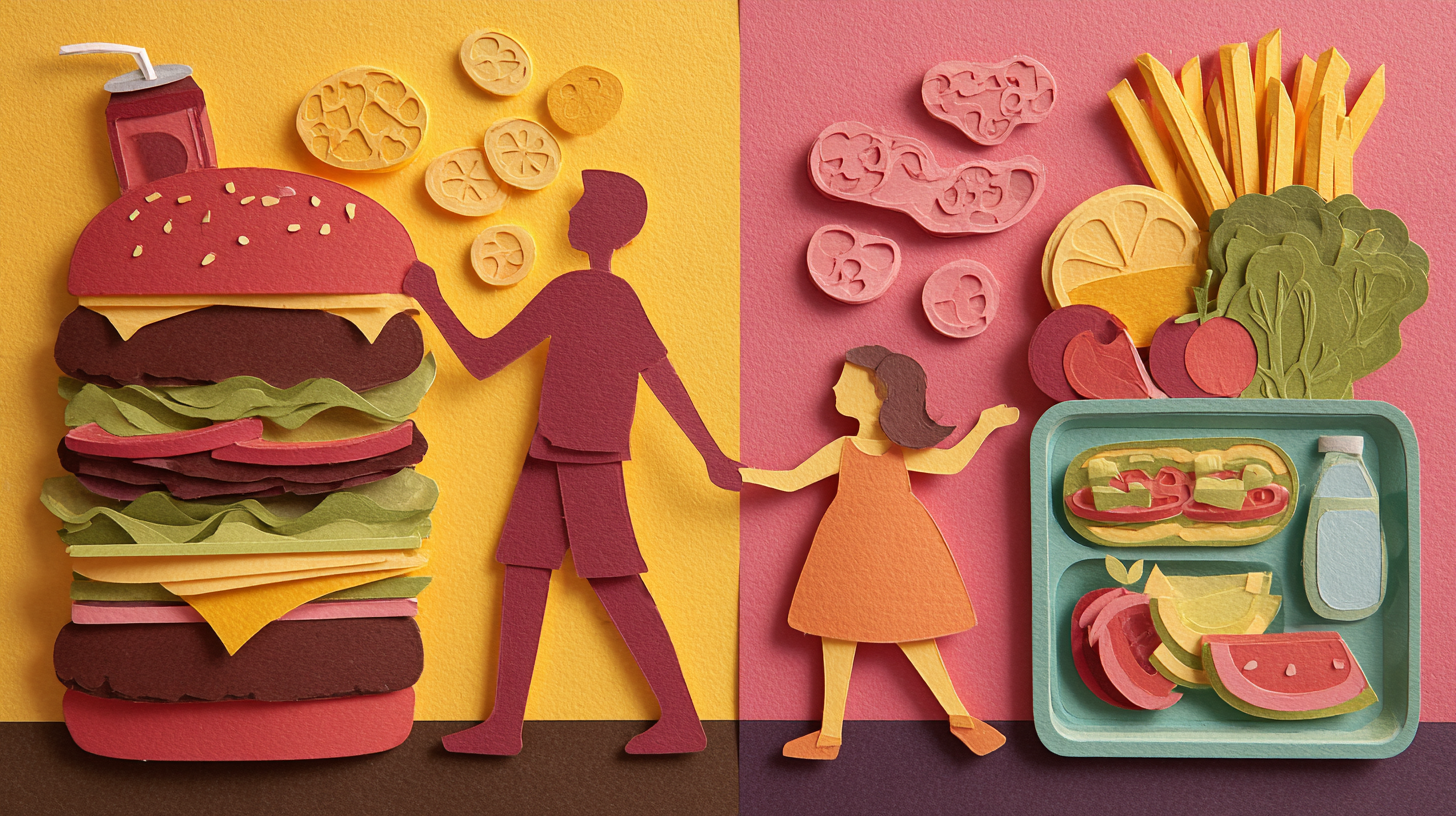
Start with the foundational principle: grilled over fried, always. This single decision typically cuts 200-300 calories and 15-20g of fat from a meal. The difference between a fried chicken sandwich and a grilled chicken sandwich isn’t subtle—it’s dramatic. And here’s what surprised me: most chains now offer grilled options at the same price point. You’re not paying extra for the better choice.
Second strategy: build your own meal instead of accepting defaults. Kids’ meals are designed for profit, not nutrition. Here’s what works better: order a grilled chicken sandwich, cut it in half, add a fruit cup or apple slices, and choose milk or water. You’ve just created a meal that’s 400-500 calories instead of 700-800, with actual protein, fiber, and nutrients. And in most cases, it costs the same or less than the kids’ meal.
Menu navigation requires a different approach than most parents use. Don’t look at pictures—they’re designed to sell you the worst options. Instead, look for these specific items: grilled proteins, vegetable sides, fruit options, whole grain when available, and plain milk or water. These items exist at virtually every major chain. They’re just not advertised.
Many restaurants now provide detailed nutrition information online and through apps. Use this before you order. Spend five minutes looking at the actual numbers for your family’s usual orders. Then find the better alternatives. Make this your new default. When you know that the grilled chicken wrap with fruit has 380 calories while the kids’ meal with nuggets and fries has 780 calories, the choice becomes obvious.
Just like introducing your baby to diverse flavors through Caribbean ingredients like sweet potatoes, plantains, and coconut milk, you can teach children to navigate fast food thoughtfully from a young age.
Build Your Better Meal
Select your typical fast food choices and discover what you’re really consuming:
Teaching Children to Think Critically About Food Choices
Here’s where everything I’ve learned as a parent comes together. You’re not just making better fast food choices for your children. You’re teaching them how to think about food in an environment designed to override their judgment. This is one of the most valuable life skills you can give them.
Start by involving children in the decision-making process. Before you order, talk through the options. “We can get nuggets and fries, or we can get grilled chicken with fruit. What sounds good?” This simple question does something powerful—it positions healthier choices as options, not restrictions. Children who participate in food decisions develop better eating habits than children who are simply told what to eat.
Teach the “treat choice” framework. Explain that fast food can include one treat item—maybe the fries, or the cookie, or the soda—but not all of them. This gives children autonomy while maintaining nutritional boundaries. Research on parenting practices around “junk food” shows that this balanced approach—allowing occasional treats within clear limits—produces better long-term outcomes than either strict restriction or unlimited access.
Use nonjudgmental language consistently. Don’t call foods “bad” or “junk.” Instead, talk about foods that give us energy for playing, foods that help us grow strong, and foods that are just for fun. This language framework helps children develop a healthy relationship with all foods, including fast food. Studies show that children exposed to rigid food labeling (“good” vs. “bad”) are more likely to develop disordered eating patterns.
Model the behavior you want to see. If you order a grilled sandwich with fruit while giving your child nuggets and fries, you’re sending a confused message. When children see parents making strategic choices—choosing water, selecting smaller portions, adding vegetables—they internalize these behaviors as normal.
Make it a learning experience. Point out the nutrition information. Show them the sodium content in a kids’ meal versus a homemade meal. Let them feel how greasy the fries are. Help them notice how they feel after different meals. This isn’t about creating anxiety—it’s about developing awareness. Children who understand how food affects their bodies make better choices independently.
Here’s an approach that works beautifully: teach children to balance fast food with the rest of their day. “We had fast food for lunch, so for dinner we’ll have lots of vegetables and fruit.” This demonstrates that nutrition happens over time, not in a single meal. It removes the guilt while maintaining the bigger picture.
The Practical Reality of Occasional Fast Food Use
Research on harm reduction approaches to food offers a framework that parents rarely hear but desperately need. Harm reduction acknowledges that complete avoidance isn’t realistic for many families, so instead focuses on minimizing negative impacts while maximizing positive outcomes.
Applied to fast food, harm reduction means accepting that your family will sometimes eat fast food, and preparing for those occasions strategically rather than reactively. It means having a plan before you’re hungry, stressed, and standing at the counter with three impatient children.
Create your family’s “fast food guidelines” during a calm moment, not a crisis. Sit down together and decide: What are our go-to orders at each restaurant we visit? What’s our default drink choice? What sides do we choose? Write it down. Make it normal. When fast food happens, you’re not making decisions under pressure—you’re following your predetermined plan.
One strategy that consistently works: the “home backup” rule. Before leaving for activities that might result in fast food, pack a backup option—fruit, vegetables, a sandwich, anything nutritious that travels well. Half the time, you won’t need it. But when you do need it, you’ve just prevented a 1,000-calorie fast food meal from being your only option.

Consider the timing of fast food meals. Fast food for lunch, when children will be active for hours afterward, impacts them differently than fast food for dinner, right before bed. If fast food is happening, earlier in the day is strategically better. The meal that seems identical has different metabolic effects depending on when it’s consumed.
Balance fast food days with nutrient-dense eating the rest of the time. If Tuesday includes fast food, make Wednesday morning’s breakfast count—eggs, whole grain toast, fruit. Make Wednesday’s dinner vegetable-rich. The research on occasional fast food consumption shows that children whose overall diet is strong show no measurable negative effects from occasional fast food. The key word is “overall.”
The same principle you’d apply when introducing your baby to balanced nutrition—like the variety of Caribbean baby food recipes featuring vegetables, proteins, and whole grains—applies to navigating fast food as they grow.
Your 30-Day Fast Food Transformation Plan
Click each step as you complete it—watch your progress build!
What Research Tells Us About Making This Work
The evidence base for strategic fast food navigation comes from multiple research streams, and understanding this research helps parents feel confident in their approach. Studies examining parenting practices around food consistently show that certain strategies produce better outcomes than others.
Autonomy-supportive feeding practices—giving children choices within boundaries—lead to better self-regulation and healthier eating patterns than either authoritarian control or permissive absence of limits. Applied to fast food, this means involving children in decisions while maintaining clear nutritional guidelines.
Research on food restriction shows a paradoxical effect: children whose access to certain foods is strictly controlled often develop stronger cravings for those foods and poorer self-regulation around them. The implication for fast food is clear: occasional, planned fast food consumption within a framework of nutritional education produces better outcomes than attempting complete prohibition.
Studies examining the relationship between fast food consumption and health outcomes reveal a dose-response relationship. Occasional consumption (once per week or less) shows minimal negative effects when overall diet quality is good. Frequent consumption (multiple times per week) shows clear negative effects on weight, metabolic health, and nutritional status. The takeaway: frequency matters enormously.
Intervention studies attempting to improve fast food choices show that information alone—providing nutrition information, for example—produces modest changes. But combining information with environmental changes (making healthier options the default, for instance) and skill-building (teaching children to navigate menus) produces substantially better results. This suggests that a comprehensive approach works better than any single strategy.
Research on menu labeling policies implemented in various jurisdictions shows that while adult behavior changes modestly when calorie information is provided, children’s consumption changes minimally unless parents actively use that information to guide choices. Parents need to be the active agents of change, not passive recipients of information.
When Fast Food Becomes a Teaching Moment
Fast Food Myths vs. Reality
Click each myth to reveal the truth you need to know:
Every fast food visit is an opportunity to teach critical thinking skills that extend far beyond nutrition. You’re teaching children to evaluate marketing claims, to look beneath surface appearances, to make decisions based on information rather than impulse. These are life skills.
Point out the marketing tactics you see together. “Notice how they put the toy with the meal? That’s to make you want the meal even if you’re not hungry.” “See how the pictures show huge burgers but the real ones are smaller? That’s called manipulative advertising.” Children who understand they’re being marketed to develop resistance to those tactics.
Teach comparative analysis. “This meal has 800 calories and this one has 400 calories. They cost the same. Which gives us better value?” Value isn’t about getting more food—it’s about getting better nutrition for your money. This reframes the entire decision-making process.
Use fast food visits to practice reading nutrition labels and understanding what the numbers mean. “This has 1,200mg of sodium. You need about 1,500mg for the whole day. Is this a good choice?” Let children calculate. Let them decide. Guide them, but let them think.
Connect fast food choices to how they feel. “Remember last time we got the fried meal and you felt sluggish afterward? This time we got grilled. Do you notice a difference?” Help children develop interoceptive awareness—the ability to recognize how their body responds to different foods. This internal guidance system is more powerful than any external rule.
Building a Sustainable Approach That Works for Your Family
Sustainability is the key word here. A perfect fast food strategy that you can maintain for two weeks is useless. A good-enough strategy that you can maintain indefinitely is transformative. Build your approach around what’s actually sustainable for your family, not what sounds ideal.
Start with one change, not five. If your family currently orders kids’ meals with fries and soda at every visit, don’t try to overhaul everything at once. Start by swapping soda for water. That’s it. Make that the new normal. Once it’s automatic, add the next change—fruit instead of fries. Then the next—grilled instead of fried. Sequential changes stick; simultaneous changes overwhelm.
Expect resistance and plan for it. Children accustomed to certain fast food meals will resist changes. This is normal. Acknowledge it: “I know you really like the fries. We’re going to have fruit this time, but next time you can choose between fries or a cookie.” Give them something to control. Resistance decreases when autonomy increases.
Create positive associations with better choices. Don’t present healthier options as punishment or sacrifice. “We’re getting the grilled chicken because it gives you energy for soccer this afternoon” works better than “We can’t get fried food because it’s unhealthy.” Frame it as enabling something they want, not preventing something they enjoy.
Track your progress without obsessing over perfection. Notice when you make better choices. Celebrate small wins. “Last month we had fast food five times. This month we had it three times, and we made healthier choices each time.” Progress, not perfection, drives long-term success.
Build connections between fast food lessons and home cooking. When you prepare meals at home, point out similarities: “Remember how we learned to choose grilled at restaurants? This is why—less fat, same flavor.” The principles transfer. Children begin to understand that these aren’t arbitrary rules but logical nutritional guidelines that apply everywhere.
If you’re already committed to preparing nutritious homemade meals at home—perhaps using Caribbean-inspired recipes featuring ingredients like sweet potatoes, beans, plantains, and fresh vegetables—the contrast with fast food becomes a natural teaching opportunity.
The Bigger Picture: Raising Food-Literate Children
This is what I want you to understand: teaching your children to navigate fast food strategically is part of a much larger project. You’re raising food-literate children who can function successfully in a complex food environment that includes everything from home-cooked meals to fast food to school cafeterias to birthday parties.
Food literacy means understanding where food comes from, how it’s prepared, what it contains, and how it affects your body. It means being able to make informed choices in any context. It means having the skills to balance nutrition, pleasure, convenience, and social connection without guilt or anxiety.
Children with high food literacy don’t avoid fast food entirely—that’s neither realistic nor necessary. They consume it occasionally, choose strategically when they do, and balance it with nutrient-dense eating the rest of the time. They enjoy it without overconsumimg it. They understand it without fearing it.
This balanced relationship with all foods—including fast food—is precisely what research shows produces the best long-term health outcomes. Not restriction. Not unlimited access. But informed, moderate consumption within an overall pattern of good nutrition.
The skills you’re teaching—critical evaluation of marketing, understanding nutrition information, balancing indulgence with nourishment, making strategic choices under pressure—these transfer to every food decision your children will face throughout their lives. This is profound education disguised as fast food orders.
And here’s what gives me confidence: you don’t need to be perfect at this. You need to be consistent in your approach, honest about your values, and willing to see every fast food visit as an opportunity rather than a failure. The research is clear that parents who take this strategic, educational approach raise children with better eating habits and healthier relationships with food than parents who either strictly prohibit fast food or allow unlimited access without guidance.
Your goal isn’t to never eat fast food. Your goal is to teach your children how to live well in a world where fast food exists. These are completely different objectives, and the second one is actually achievable.
Moving Forward With Confidence and Clarity
Let me end with what I wish someone had told me years ago when I was standing in that fast food restaurant, overwhelmed by choices and guilt: you are enough. Your willingness to think strategically about fast food—rather than avoiding it completely or accepting it uncritically—puts you ahead of most parents. The fact that you’re reading this, learning this, thinking about this, means your children will be fine.
Fast food is part of the modern food landscape. It’s not going anywhere. What changes is how you navigate it. And now you know how to navigate it strategically, educationally, and sustainably. You know the research. You understand the tactics. You have the frameworks. You’re prepared.
This week, when fast food happens—and it will happen—you’ll handle it differently. You’ll check the nutrition information before ordering. You’ll involve your children in the decision. You’ll make strategic swaps. You’ll use it as a teaching moment. And you’ll walk out knowing you just gave your children skills that will serve them for decades.
That’s not failure. That’s parenting at its most practical, most realistic, and most effective. The families who succeed in raising healthy children aren’t the ones who avoid every nutritional challenge. They’re the ones who navigate those challenges with information, strategy, and confidence. That’s what you’re doing now.
Start with one meal. Make one better choice. Involve your children in one decision. Teach one lesson about nutrition or marketing or strategic thinking. Then do it again next time. This is how sustainable change happens—not through perfection, but through consistent, incremental improvement that compounds over time.
The same approach that guided you when you started your baby on solids—taking it one food at a time, watching for reactions, building variety gradually—applies here too. Whether you introduced your baby to homemade Caribbean foods or adapted family recipes, you learned patience and persistence. Fast food navigation requires the same mindset: gradual improvement, thoughtful choices, and a long-term perspective.
You have the tools. You understand the research. You know what works. Now go use it. Your children are watching, learning, and developing the skills that will shape their relationship with food for the rest of their lives. You’re teaching them something invaluable: how to live well in an imperfect food environment. And that, right there, is one of the greatest gifts you can give them.

Kelley's culinary creations are a fusion of her Caribbean roots and modern nutritional science, resulting in baby-friendly dishes that are both developmentally appropriate and bursting with flavor. Her expertise in oral motor development and texture progression ensures that every recipe supports your little one's feeding milestones while honoring cultural traditions.
Join Kelley on her flavorful journey as she shares treasured family recipes adapted for tiny taste buds, evidence-based feeding guidance, insightful parenting anecdotes, and the joy of celebrating food, culture, and motherhood. Get ready to immerse yourself in the captivating world of Kelley Black and unlock the vibrant flavors of the Caribbean for your growing baby, one nutritious bite at a time.
- The Feeding Revolution: Why Your Everyday Meals Are Changing the World - October 13, 2026
- Your Feeding Story Matters More Than The “Perfect” One Online - October 12, 2026
- Looking Forward: Stepping Into Your Confident Feeding Future - October 11, 2026