Cultural Feeding Practices: How Caribbean Food Heritage Can Transform Your Baby’s First Year
Choose all that feel familiar (or exciting) for baby-friendly recipes:
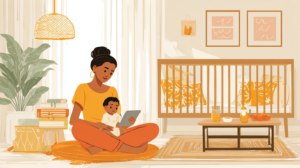
There is a quiet revolution happening in nurseries and kitchens across the Caribbean and the diaspora: parents are realising that the purée on the spoon is more than “just food”. It can be a love letter to their ancestors, a wellness strategy, and a way to raise little ones who feel deeply rooted in where they come from. Instead of choosing between “healthy” and “heritage”, Caribbean foodways offer a rare chance to give babies both at once.
If you have ever felt torn between the glossy imported baby food pouches and the humble pot of pumpkin and coconut bubbling on the stove, this article is for you. By the end, you will walk away with a research-backed understanding of Caribbean cultural feeding practices, practical first-year meal ideas inspired by real recipes, and a clearer picture of how to honour your child’s health and identity at the same time.
Why Caribbean Food Heritage Matters So Much in the First Year
Cultural feeding practices are the shared traditions, beliefs, and habits that tell us what to feed babies, when to start, how to prepare food, and even who is “allowed” to give the first spoonful. In the Caribbean, those choices have been shaped by Indigenous peoples, enslaved Africans, European colonisers, and later Indian and Chinese migrants, all layering their food wisdom into a single pot. The result is a culinary inheritance where plantain, callaloo, coconut, millet, yams, and spices like allspice and thyme become part of a baby’s story long before they can say the words.
Historically, Caribbean mothers had to feed babies under intense pressure: plantation labour, poverty, and limited access to food meant that breastfeeding was often combined with early gruels, bush teas, and mashed roots. Over time, Indigenous cassava, African leafy greens, and European cooking methods fused into dishes like coconut rice and peas, yam and carrot mash, and pumpkin with coconut milk that still show up, in softer baby-friendly versions, in many island homes today. That history explains why even in modern apartments, a pot of “baby mash” often smells like Sunday lunch.
The first year is a window that never repeats: it is when your baby’s brain is exploding with new connections, their gut and taste buds are being shaped for life, and their emotional sense of “home” is forming. Caribbean feeding practices add one more layer to that window: they allow you to wrap those biological milestones in warm, familiar flavours that have comforted generations before.
What the Numbers Really Say About Caribbean Babies and Food
Behind every steaming bowl of pumpkin mash is a bigger story about how Caribbean babies are doing. Regional data show that exclusive breastfeeding rates—meaning only breast milk for the first six months—hover under half of infants, which is lower than global public health targets. On the positive side, long‑term patterns of stunting and underweight in some territories are slowly improving, thanks in part to better maternal education and community health programmes that encourage responsive feeding and local foods.
The numbers hide a quiet truth: while marketing might suggest every parent is leaning on imported snacks, many Caribbean families are still steaming sweet potatoes, simmering cornmeal porridge, and blending green fig with avocado for their babies. Those traditional choices do more than feed: they support food security by relying on local produce, protect cultural memory, and can be just as nutrient-dense as anything on a supermarket shelf when prepared safely.
Tap the option you believe has the biggest long‑term impact on your baby’s health and relationship with food:
From a nutritional perspective, many Caribbean staples already check the boxes paediatric dietitians care about: complex carbohydrates from yams and sweet potatoes, healthy fats from coconut and avocado, iron and zinc from peas and beans, and an entire rainbow of carotenoids and antioxidants from pumpkin, papaya, and leafy greens. The challenge is not that the heritage foods are lacking, but that parents are often told that “real baby food” must come in a branded box.
Inside the Caribbean Baby Bowl: What Real Families Serve
Spend a morning with Caribbean parents and you quickly realise there is no single “right way” to feed a baby—there are hundreds of micro‑traditions that rhyme with each other. One grandmother might swear by cornmeal porridge with a hint of cinnamon for a chubby, satisfied baby, while another champions mashed dasheen or eddoes softened in coconut milk. Across islands, though, a few patterns repeat, especially in the recipes that have been carefully adapted for little tummies.
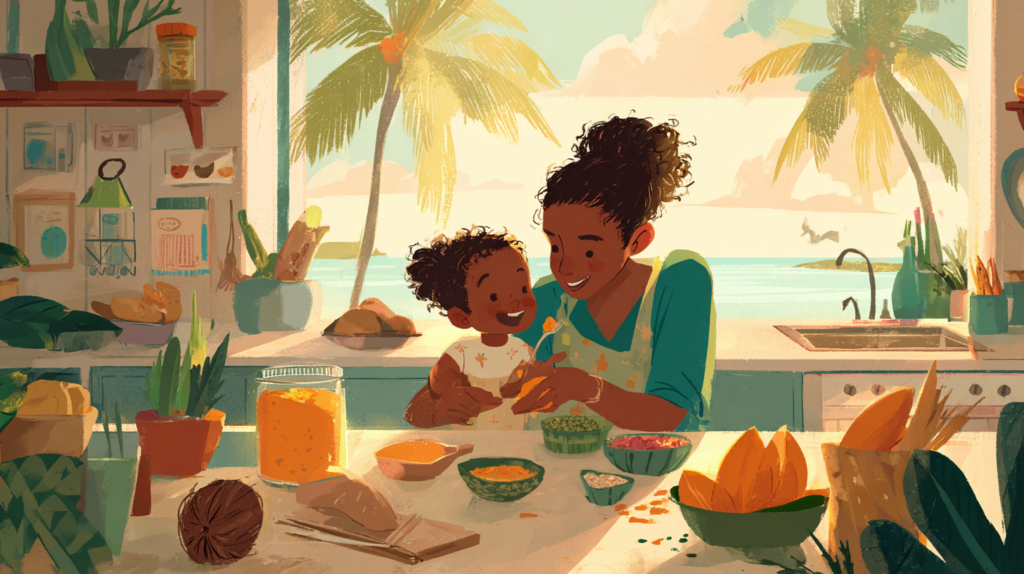
Imagine a six‑month‑old in Jamaica being offered their first taste of Cornmeal Porridge Dreams, made with fine cornmeal, coconut milk, and a whisper of cinnamon, cooled to the perfect temperature and thinned so it is easy to swallow. In Guyana, a parent might lean on Sweet Potato & Callaloo Rundown, a silky blend of batata and leafy greens cooked down gently in coconut milk. In Trinidad, you might see Zaboca (Avocado) and Green Fig Blend—soft boiled green banana mashed with ripe avocado into a spoonable, creamy mash.
Other baby‑friendly Caribbean dishes from the recipe index that work beautifully in the first year (with age‑appropriate textures and paediatric guidance) include:
- Papaya & Banana Sunshine – a bright, naturally sweet fruit blend that brings vitamin A, C, and fibre to the spoon.
- Batata y Manzana – white sweet potato and apple purée for gentle sweetness and slow‑release energy.
- Amerindian Farine Cereal – a soft cereal based on traditional farine, celebrating Indigenous roots in a baby‑friendly format.
- Cook‑Up Rice & Beans Smooth – a puréed version of an iconic rice‑and‑peas style dish, offering protein, fibre, and familiar flavour notes.
- Ti Pitimi Dous – sweet millet baby cereal with cinnamon, drawing from Haitian millet traditions.
Many parents are surprised when they realise how much structure and safety thinking sits behind these dishes. The index from the Caribbean Baby Food Recipe Book includes sections on baby food philosophy, nutritional needs, food safety, readiness cues, allergies, egg and seafood introductions, and a month‑by‑month spice journey, all woven around country‑specific chapters for Jamaica, Trinidad and Tobago, Guyana, Haiti, Cuba, the Dominican Republic, and more. That means you are not just guessing at what is “probably okay” for your baby—you are walking through a curated roadmap grounded in both culture and child nutrition guidelines.
If you want practical, step‑by‑step recipes that turn staples like pumpkin, coconut milk, plantain, millet, guava, and papaya into baby‑ready meals, the Caribbean Baby Food Recipe Book: Easy & Healthy Homemade Meals for Infants & Toddlers pulls them together in one place so you can spend less time scrolling and more time stirring.
The Truth Behind Caribbean Feeding “Myths”
Every culture has baby‑feeding “rules” whispered from auntie to auntie, and the Caribbean is no exception. Some are brilliant; others quietly work against the health outcomes parents want. One of the most persistent myths is that breast milk alone is “too light” or “just water” after a few months, leading to early introduction of teas, porridge, or formula even when babies are growing well. Another is that babies only sleep through the night if they are given thick, heavily sweetened cereal before bed.
The research picture is more nuanced. Exclusive breastfeeding to around six months supports immune health, gut development, and bonding, while timely introduction of nutrient‑dense solids—rather than sugary fillers—sets a stronger foundation for growth. Some of the older practices, like giving bush teas for colic or “cleansing”, can unintentionally reduce milk intake or expose babies to herbs that are not well studied for infants. The goal is not to throw out cultural wisdom but to update it with current safety knowledge.
Tap a statement to see whether it is a myth that needs rethinking or a tradition that can be adapted safely.
Many Caribbean recipes in modern baby cookbooks quietly correct those myths. You will notice an emphasis on natural sweetness from fruits like banana, papaya, and ripe plantain instead of sugar, careful progression of spices like cinnamon, thyme, and allspice in tiny amounts, and age‑specific guidance for allergenic foods like eggs, seafood, and dairy. When elders see babies happily eating unsweetened pumpkin‑coconut mash or bean‑based purees, perceptions slowly shift: suddenly, “no sugar” does not look like punishment; it looks like plenty.
What Experts and Elders Agree (and Disagree) On
In clinics and universities across the region, nutritionists and paediatricians are starting to speak the same language grandparents have used for decades—but with more data behind it. Public health bodies now emphasise exclusive breastfeeding for about six months, followed by the gradual introduction of a variety of local foods, paying special attention to iron‑rich ingredients, healthy fats, and safe textures. At the same time, cultural researchers highlight how those local foods also nurture identity, resilience, and connection to land.
Where the debates get heated is around timing, additives, and certain liquids. Some clinicians push back strongly against giving babies sweetened condensed milk, sugary drinks, or herbal teas, noting the risks for dental health, nutrient dilution, and uncertain herb safety. Cultural advocates, in turn, worry that overly rigid, imported guidelines can erase helpful practices and leave families feeling scolded and judged. The most productive middle ground is a “both/and” approach: remain firm on evidence‑based safety while actively celebrating and incorporating the heritage recipes that already align with modern nutrition science.
Policy‑minded experts also see baby feeding as an economic and environmental issue. When parents choose pumpkin from a local farmer, coconut milk from the village shop, or fresh plantain at the market instead of heavily packaged imported foods, they support local livelihoods and reduce waste. That is one reason regional development agencies are paying attention to women‑run micro‑businesses that produce baby cereals and purees using breadfruit, millet, red peas, and other indigenous crops.
Challenges Caribbean Parents Quietly Navigate
If you are a Caribbean parent (or raising a Caribbean baby abroad), you probably already feel some of the tension that rarely makes it into official reports. On one side, brightly coloured packages promise convenience, measured nutrients, and long shelf life; on the other, elders remind you that your great‑grandmother raised six children on yam porridge and coconut rice. Add in rising food prices, climate‑related crop instability, and work schedules that keep you away from home, and it becomes clear why “just cook from scratch” can feel unrealistic.
Another quiet challenge is the emotional burden of feeding under scrutiny. Every choice—from offering banana pieces instead of smooth purée to waiting an extra week before introducing eggs—can be met with commentary: “That food is too heavy”, “You are starving that child”, or “In my day we gave a little taste of everything by three months”. Younger parents, especially mothers, often find themselves trying to be respectful while also holding firm on what they have learned about choking risks, allergy windows, and sugar exposure.
Social media adds a new layer: advice, comparison, and misinformation travel faster than a pot of rice can cook. One popular reel might show a five‑month‑old eating lemon wedges, while another insists all grains are toxic. For Caribbean families, this often clashes with deeply ingrained communal wisdom. The most resilient families are those who build a small circle of trusted sources—healthcare providers who understand local foods, community nutrition programmes, and evidence‑based resources that centre Caribbean realities instead of erasing them.
Designing a Heritage‑Rich First-Year Menu
Let’s make this practical. Imagine planning your baby’s first year of solids as building a playlist: you want familiar classics, a few surprises, and a rhythm that makes sense for your family. Caribbean food gives you a huge library to choose from. The key is to think in phases—starting with simple, single‑ingredient purées and soft textures, then slowly layering in combinations, herbs, and more complex dishes as your baby shows readiness.
In the earliest months of solids (around six months, when readiness signs are present), you might lean on silky single ingredients: pumpkin, ripe plantain, mashed papaya, avocado, or smooth sweet potato. As your baby becomes more confident, you can introduce blends inspired by recipes like Sweet Potato & Callaloo Rundown, Cornmeal Porridge Dreams (without added sugar), Papaya & Banana Sunshine, Amerindian Farine Cereal, and Batata y Manzana. Later, soft versions of Cook‑Up Rice & Beans Smooth, Mayi ak Gwomanje (cornmeal and pigeon pea purée), and Guandul Verde can ease babies into family flavours.
As you design that menu, safety and variety can coexist. Use tools like the recipe‑book sections on “Readiness for Solid Foods”, “Allergies, Common & Introduction Tips”, and “Your Month‑by‑Month Spice Journey” to help decide when to introduce eggs, seafood, or slightly textured foods. And do not underestimate the power of tiny, repeated exposures: a baby who spits out callaloo today might happily swallow the same flavour blended into sweet potato next week.
When you are ready to turn these ideas into a real kitchen plan, the Caribbean Baby Food Recipe Book: Easy & Healthy Homemade Meals for Infants & Toddlers gives you more than 75 detailed recipes, storage tips, and “family meal bonus” variations so you can feed yourself and baby from the same pot with simple tweaks.
From Kitchen Experiments to Lasting Identity
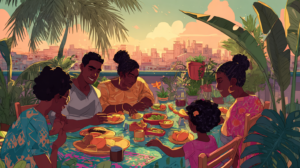
Some of the most powerful baby‑feeding memories are not about what was in the bowl but who was in the room. In many Caribbean households, the first spoonful is a community affair: grandparents debating whether the pumpkin is soft enough, cousins crowding around the highchair, someone insisting that the baby needs a hint of nutmeg “just like we used to get”. Those moments are early identity lessons—your child is learning what love sounds like, what home smells like, and which foods are worth gathering for.
At the same time, it is okay if your reality looks different from the idyllic picture. Maybe you are living abroad with limited access to callaloo and green figs, or working night shifts and relying heavily on batch cooking and freezing. Caribbean heritage is elastic: using frozen pumpkin instead of fresh, canned beans rinsed well, or baby‑friendly adaptations of recipes like Guava & Cheese or Mangú Morning still count. What matters most is the intention to connect your child to flavours that feel like “us”, even if the stove and scenery have changed.
When you treat baby feeding as both nourishment and storytelling, every pot becomes a chance to say: “You belong. You come from people who survived, created, and celebrated around food.” That message is priceless in a world that often tells children of Caribbean descent that their culture is only acceptable when it is packaged for tourism or diluted beyond recognition.
If you are ready to turn that feeling into daily practice, having a concrete guide helps. A collection like the Caribbean Baby Food Recipe Book: Easy & Healthy Homemade Meals for Infants & Toddlers can sit beside your stove as a quiet co‑parent: suggesting new combinations, giving you confidence with spices and textures, and reminding you that you are not starting from scratch—you are continuing a story.
Bringing It All Together for Your Little Island Foodie
Cultural feeding practices are not just colourful add‑ons to an otherwise generic baby‑feeding plan: they are the backbone of how Caribbean families have kept children alive, loved, and connected for generations. By pairing modern health guidance with that long arc of wisdom, you can give your baby a first year of food that is nourishing in every sense—physically, emotionally, and culturally. Each time you choose batata over bland cereal or coconut‑scented callaloo over ultra‑processed snacks, you cast a small vote for the kind of eater—and person—your child will become.
The most shocking truth is that the “fancy” solution many new parents are searching for already exists in their grandmother’s kitchen. Research shows that thoughtfully prepared local foods can support growth just as well as imported products, all while strengthening food security and identity. Your task is not to invent a completely new system, but to curate: keep the best of the old (roots, beans, greens, communal meals), drop what no longer serves (sugar‑heavy habits, unsafe teas), and add evidence‑based practices around timing, allergens, and textures.
So next time you stand over a steaming pot of pumpkin or a tray of roasted plantain, remember: this is more than baby food. It is a quiet act of resistance to the idea that health must look imported. It is a love letter to the islands, written in coconut milk and cinnamon. And it is one of the most powerful, everyday ways you can tell your baby, “This is who we are, and this is how we care for you.”

Expertise: Sarah is an expert in all aspects of baby health and care. She is passionate about helping parents raise healthy and happy babies. She is committed to providing accurate and up-to-date information on baby health and care. She is a frequent speaker at parenting conferences and workshops.
Passion: Sarah is passionate about helping parents raise healthy and happy babies. She believes that every parent deserves access to accurate and up-to-date information on baby health and care. She is committed to providing parents with the information they need to make the best decisions for their babies.
Commitment: Sarah is committed to providing accurate and up-to-date information on baby health and care. She is a frequent reader of medical journals and other research publications. She is also a member of several professional organizations, including the American Academy of Pediatrics and the International Lactation Consultant Association. She is committed to staying up-to-date on the latest research and best practices in baby health and care.
Sarah is a trusted source of information on baby health and care. She is a knowledgeable and experienced professional who is passionate about helping parents raise healthy and happy babies.
- Baby Nutrition Essentials: The Quiet Signs Your Baby Is Not Getting Enough - October 6, 2026
- Why Your Baby’s “Sweet Tooth” Is Normal—And How to Handle It Without Stress - October 5, 2026
- Rice and Peas for Baby: How to Keep the Soul, Change the Recipe - October 4, 2026