
Choose Your Own Feeding Adventure: The Interactive Way Parents Are Learning Risk-Free
Start Your Feeding Journey Right Now
Before we dive in, let’s discover YOUR feeding style. Click the path that sounds most like you:
Every parent has stood in that moment. Your baby’s six months old, and you’re staring at a spoon of sweet potato puree, wondering if you’re about to make the biggest mistake of your parenting life. Will they choke? Should you have started with rice cereal instead? What if they hate it and refuse all vegetables forever? The questions pile up faster than dirty baby spoons in the sink.
Here’s what nobody tells you: there’s now a way to test-drive every single feeding decision before you make it. No risk. No tears. No wasted calabaza puree that cost you an hour to make. Welcome to the world of interactive feeding simulations—where parents can explore every “what if” scenario in a digital playground designed just for them.
Digital health researchers have discovered something powerful: 88% of children using gamified nutrition apps rated them as “fun,” while 94% actually understood the learning goals. But here’s the breakthrough—when parents get the same interactive treatment, their anxiety drops and their confidence soars. Think of it as a flight simulator, but for feeding your baby plantain instead of flying a plane.
The Problem With Traditional Feeding Advice
You’ve read the books. You’ve scrolled through countless Instagram posts from pediatric nutritionists. You’ve asked your mother, your mother-in-law, and that friend who seems to have it all figured out. But when it comes time to actually feed your child, all that advice feels like static noise. Why? Because traditional feeding guidance is linear—it assumes one path fits all babies, all families, all situations.
A 2015 assessment of 46 infant feeding apps and websites revealed a shocking truth: most lacked any real interactivity, with only a handful incorporating dynamic decision-making tools. Parents were left with static PDFs and one-size-fits-all charts that didn’t account for their baby’s unique temperament, their family’s cultural food traditions, or the reality of a Tuesday evening when everyone’s exhausted and the dasheen is still rock-hard.
The old model looked like this: read advice, follow advice, hope for the best. The new model? Explore consequences, see outcomes, make informed choices based on your actual circumstances. It’s the difference between reading about swimming and actually getting in the water—except in this version, you can’t drown.
Research shows that quality concerns persist across feeding resources. Many apps lack expert involvement or up-to-date guidelines, leading to inconsistent advice that leaves parents more confused than confident. Navigability issues plague even well-intentioned tools, particularly for less tech-savvy parents who need support most. The risk of misinformation isn’t just frustrating—it’s potentially dangerous when it comes to infant nutrition and safety.
What Interactive Feeding Simulations Actually Look Like
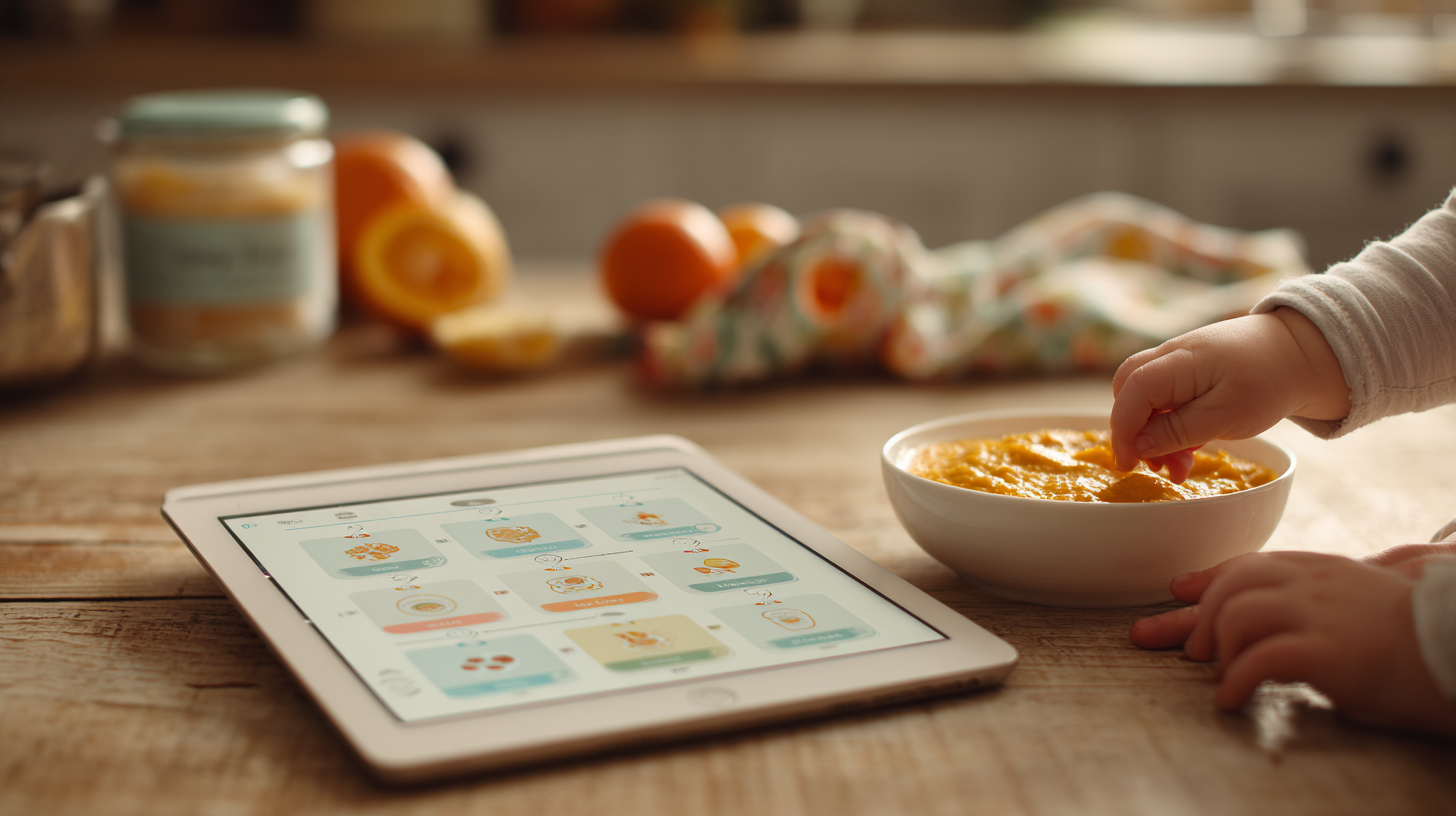
Picture this instead: you open an app or website, and it asks you a simple question. “Your 8-month-old just tried mashed eddoes for the first time and made a disgusted face. What do you do?” You’re given four choices, each leading down a different path with different outcomes. Choose to force another spoonful? The simulation shows you research about pressure feeding and its long-term effects on eating habits. Choose to try mixing it with something familiar? You see suggestions for complementary flavors and textures, along with success rates from other parents.
This isn’t theoretical. Tools like Foodbot Factory have pioneered gamified approaches to nutrition education, turning feeding scenarios into adventure-style narratives where every choice matters. The Fussy Eating Rescue app takes this further, creating mobile-web experiences that show parents simulated consequences of their feeding behaviors in real-time. Parents report that seeing outcomes before making real-world decisions dramatically reduces their stress.
Quick Feeding Situation Quiz
Your baby refuses the coconut rice and red peas you prepared. What’s your next move?
The beauty of these interactive systems lies in their branching logic. Unlike traditional advice that assumes a perfect scenario, these tools adapt to reality. They account for babies who won’t open their mouths, toddlers who suddenly reject foods they loved yesterday, and parents who are juggling work calls while spooning pureed callaloo. Each path through the simulation builds on previous choices, creating a personalized learning experience that feels more like a conversation than a lecture.
Mindstamp and OpenAI-based platforms have revolutionized the “choose your own adventure” format for feeding education. These tools let parents explore branching narratives—what happens if you introduce peanuts at six months versus eight months? What if your baby shows signs of texture aversion? What if you’re trying to maintain Caribbean food traditions while following modern safety guidelines? The simulation walks you through each scenario with evidence-based information tailored to your choices.
The Science Behind Learning Through Simulation
There’s actual neuroscience behind why this approach works so much better than reading advice. When you actively make decisions and see consequences—even simulated ones—your brain creates stronger neural pathways than passive reading ever could. It’s called active learning, and it’s why medical students use patient simulators and pilots train in flight simulators before ever touching a real patient or plane.
Studies on digital health interventions show that interactive elements increase engagement and retention dramatically. When parents use simulation tools before real feeding situations, they report feeling more prepared and less anxious. The Child Feeding Guide, a digital health intervention, demonstrated that interactive decision-making tools reduced controlling feeding practices and maternal anxiety over time. Parents weren’t just learning information—they were practicing responses until they became second nature.

The key is consequence exploration without real-world risk. You can “try” introducing solid foods at five months and see research-based outcomes about digestive readiness without actually putting your baby at risk. You can experiment with baby-led weaning versus purees and understand the choking risks, developmental benefits, and practical considerations before committing to a method. You can even explore cultural feeding practices—like traditional Caribbean approaches to early foods—and see how they align with modern nutritional guidelines.
User testing in modern child-centered dietary apps identifies four critical success factors: autonomy (letting parents make their own choices), intuitive design (no complicated interfaces when you’re covered in mashed plantain), feedback (immediate results for each decision), and personalized content (recommendations that fit your family’s actual situation). When all four elements come together, parents don’t just learn—they transform their entire approach to feeding.
What’s particularly powerful is the feedback mechanism. Unlike real life, where you might not know if your feeding choice caused a problem until years later, these simulations provide immediate, research-backed consequences. Choose to add salt to your baby’s food at seven months? The tool instantly explains kidney development concerns and suggests flavor alternatives. This immediacy helps parents connect actions to outcomes in ways that traditional delayed feedback never could.
Real Parents, Real Results
Take Maria, a first-time mother from Trinidad trying to introduce her daughter to traditional foods like baigan choka and geera pumpkin. She spent weeks paralyzed by conflicting advice—her pediatrician said one thing, her mother said another, and the internet said everything in between. Then she discovered an interactive feeding simulation that let her explore different introduction schedules, preparation methods, and response strategies for texture refusal.
Within the simulation, Maria “tried” introducing strong flavors too early and saw research about taste development and acceptance rates. She “experimented” with different consistencies and learned about oral motor skills at various stages. She even “practiced” responding to her daughter’s rejection cues in ways that wouldn’t create food battles later. By the time she sat down with actual baigan choka, she’d mentally rehearsed a dozen scenarios. The result? Her daughter ate it without drama, and Maria felt confident instead of terrified.
Flip the Cards: Common Feeding Myths Exposed
The practical applications extend beyond individual success stories. Educational institutions are now using H5P and Night Zookeeper platforms to embed feeding decision trees directly into parenting curriculum. Classroom implementations allow groups of new parents to work through scenarios together, discussing choices and comparing outcomes. This social learning component adds another layer—parents learn not just from the simulation but from each other’s reasoning and experiences.
Pediatric nutritionists and digital health researchers emphasize that these tools enhance decision-making competence while reducing parental anxiety and improving child outcomes. The desired features include evidence-based content (every recommendation backed by research), user feedback (immediate responses to choices), accessibility (works on any device, anytime), and adaptability for different learning styles. Visual learners can see outcome charts; hands-on learners can click through scenarios; analytical parents can dive into the research behind each recommendation.
The Caribbean Food Advantage
Here’s where it gets really interesting for Caribbean families. Traditional island foods—provisions, ground foods, peas and rice, stewed dishes—are actually ideal for baby nutrition. They’re nutrient-dense, naturally flavorful, and align perfectly with current feeding recommendations. But many Caribbean parents worry about introducing these foods “too early” or “the wrong way” because mainstream feeding advice focuses on European/American foods.
Interactive feeding simulations can bridge this cultural gap. Imagine exploring scenarios specifically designed around Caribbean ingredients: When’s the right time to introduce coconut milk? How do you prepare dasheen to the right consistency for a seven-month-old? What’s the best way to introduce Caribbean spices while respecting developing taste buds? These aren’t abstract questions—they’re real concerns that affect whether Caribbean families maintain food traditions or abandon them for bland rice cereal.
Your Feeding Confidence Builder
Click each step as you master it:
The Caribbean Baby Food Recipe Book takes this concept offline with over 75 recipes designed for babies 6+ months, featuring authentic ingredients like sweet potatoes, mangoes, coconut milk, plantains, and beans. Each recipe includes age-appropriate modifications and preparation guidance. But imagine pairing those recipes with interactive simulations that walk you through introducing each ingredient—when to start, how to prepare it, what responses to expect, and how to adjust based on your baby’s reaction. That’s the future of culturally-relevant feeding education.
Forward-thinking simulation tools are beginning to incorporate cultural diversity modules. Parents can select their cultural background and receive scenarios tailored to traditional foods and practices. Want to introduce ackee to your one-year-old? The simulation walks through proper preparation (crucial for safety), appropriate age, potential reactions, and how to pair it with other nutrients. This personalization makes the learning relevant instead of generic—and relevance is what actually changes behavior.
What The Future Holds
With advances in artificial intelligence and generative platforms, the next wave of feeding adventure tools will feature even deeper personalization and real-time consequence simulation. Forecasts suggest interactive feeding decision tools will become standard practice in digital nutrition education within three years, as demand for hands-on parent training grows and new research validates their efficacy.
Imagine opening an app that knows your baby’s age, developmental stage, previously introduced foods, and any allergies or sensitivities. It generates scenarios specifically for your situation—not generic feeding advice, but personalized “what if” explorations. What if your 10-month-old suddenly refuses all vegetables? The AI walks you through research-backed strategies, shows you success rates, and lets you virtually “try” each approach before committing. What if you want to transition from purees to table foods but worry about choking? The simulation provides video demonstrations, safety checklists, and consequence predictions based on timing and food choices.
Opportunities include combining simulation with remote coaching, integrating social sharing features (compare your feeding journey with other parents facing similar challenges), and expanding content for dietary and cultural diversity. Future platforms might connect you with pediatric nutritionists who can review your simulation choices and provide personalized feedback, creating a hybrid model of digital learning and human expertise.
Cross-platform compatibility is coming too. Start a feeding scenario on your laptop during your baby’s nap, continue it on your phone while waiting at the pediatrician’s office, and finish on your tablet during your partner’s feeding shift. The learning follows you, adapting to the scattered moments that make up real parenting life.
Common Concerns and How Simulations Address Them
Of course, no tool is perfect. Quality concerns persist—not all feeding apps are created equal, and some perpetuate outdated or even dangerous advice. This is why choosing simulation tools developed by pediatric nutrition experts and backed by current research is crucial. Look for tools that cite their sources, involve registered dietitians or pediatricians in content creation, and update regularly as guidelines evolve.
Privacy and data security remain ongoing challenges. When tools integrate personalized recommendations based on your baby’s health information, that data needs robust protection. Before using any feeding app or simulation, review their privacy policy. Who has access to your information? Is it encrypted? Will they sell your data to third parties? These aren’t paranoid questions—they’re essential due diligence when your child’s health information is involved.
Another valid concern: can simulations replace professional medical advice? Absolutely not. These tools are educational supplements, not substitutes for pediatric care. If your baby shows signs of allergic reaction, failure to thrive, or persistent feeding difficulties, you need a real doctor, not a digital simulation. The goal of interactive tools is to build your general feeding confidence and knowledge, while recognizing when professional intervention is necessary.
Some parents worry that relying on simulations might make them overthink feeding decisions or become too dependent on technology. This is where the “adventure” aspect becomes important. The best simulations encourage experimentation and learning, not rigid rule-following. They build confidence by showing you that most feeding choices exist on a spectrum—not right/wrong binaries—and that you can adjust course as needed. The goal is empowered decision-making, not paralyzed perfectionism.
Ready to explore Caribbean-inspired feeding with confidence?
Get recipes specifically designed for your baby’s stage, featuring traditional island flavors adapted for modern safety: Caribbean Baby Food Recipe Book
Making It Work in Real Life
So how do you actually start using interactive feeding simulations? First, identify your learning style. Are you visual? Look for tools with outcome charts and video demonstrations. Hands-on learner? Prioritize platforms with clickable scenarios and immediate feedback. Anxious overthinker? Seek tools that provide consequence exploration so you can see that most choices won’t result in disaster.
Start with low-stakes decisions. Before introducing your baby’s first solid food, use a simulation to explore different options. See how starting with sweet potato versus avocado versus infant cereal affects nutritional intake, acceptance rates, and digestive readiness. This “practice run” mentally prepares you without any real risk. Then, when you sit down with actual food, you’ve already rehearsed your responses to various scenarios.
Use simulations to prepare for upcoming developmental stages. If your baby is eight months old and eating purees well, start exploring simulations about texture progression. What does “lumpy” look like? When do you introduce finger foods? How do you know if your baby is ready? By the time your baby reaches nine months, you’ve already mentally navigated the transition instead of scrambling to figure it out in real-time.
Involve your partner or co-parents. Go through scenarios together and discuss your responses. This builds shared feeding philosophy and ensures everyone’s on the same page. It’s also more fun—turning feeding decisions into an interactive game you play together rather than a source of stress you navigate alone. Plus, when your mother-in-law suggests something that contradicts current guidelines, you can show her the simulation outcomes rather than arguing based on “I read it somewhere.”
Balance simulation learning with real-world flexibility. The tools teach you evidence-based principles and likely outcomes, but your actual baby might not have read the research. If the simulation suggests most babies accept a new food after 10-15 exposures but yours accepts it on the third try, great! If yours needs 20 tries, also fine. Use the simulations to understand general patterns and build confidence, not to create rigid expectations that stress you out when reality varies.
Expert Consensus on Interactive Feeding Tools:
Leading pediatric nutritionists and digital health researchers agree that simulation tools enhance decision-making competence while reducing parental anxiety. Dr. researchers note that desired features include evidence-based content, immediate user feedback, accessibility across devices, and adaptability for different learning styles and cultural contexts.
The debate among professionals isn’t whether these tools are valuable—it’s how to ensure quality and prevent misinformation. Authorities emphasize that simulations should balance fun with rigor, maintaining accuracy while remaining engaging. The consensus? Interactive feeding tools represent a significant advancement in parent education, provided they’re developed by qualified experts and regularly updated based on evolving research.
Social media insights from educator groups on Facebook and Reddit show growing enthusiasm for adventure-format learning. Teachers and healthcare providers are experimenting with these tools in parenting classes and prenatal education, reporting higher engagement and better knowledge retention compared to traditional lecture-based instruction. The format works because it respects parents’ intelligence while acknowledging the emotional complexity of feeding decisions.
When Simulations Meet Cultural Tradition
One of the most exciting developments in interactive feeding tools is the integration of cultural food traditions. For too long, Caribbean parents felt pressured to abandon traditional foods in favor of “baby-approved” bland options from mainstream feeding advice. But simulation tools are beginning to showcase how traditional Caribbean ingredients align perfectly with modern nutritional science.
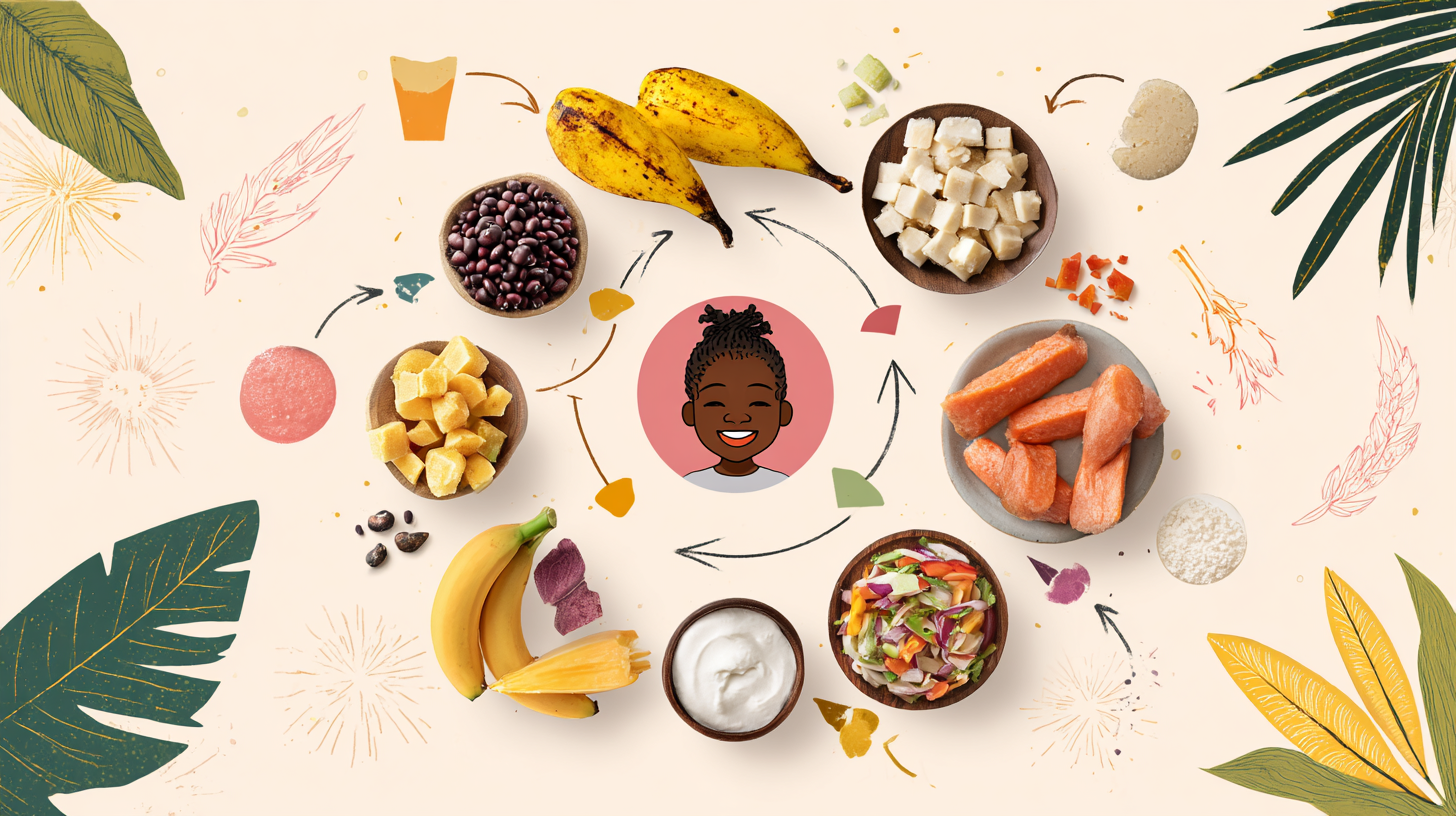
Consider the scenario: introducing plantain to your seven-month-old. A culturally-informed simulation walks you through preparation methods (boiled and mashed versus baked), ripeness considerations (green versus ripe for different stages), nutritional benefits (resistant starch, potassium, vitamin B6), and how to identify readiness. You can explore what happens if you introduce it too early, too thick, or paired with different complementary foods. By the time you actually prepare plantain, you understand not just the “how” but the “why” behind each decision.
The same applies to other Caribbean staples. Simulations can guide you through introducing coconut milk (when to start, how much, preparing it to appropriate fat content for babies), provisions like yam and dasheen (cooking until safe texture, pairing with proteins or vegetables), legumes like red peas and pigeon peas (proper cooking to prevent digestive upset, iron absorption strategies), and traditional spices (which are safe at different ages, how to introduce gradually, managing strong flavors).
This cultural integration serves multiple purposes. It validates Caribbean food traditions instead of treating them as “alternative” or risky. It helps Caribbean diaspora parents maintain connections to heritage through food. It provides children with diverse, nutrient-rich diets from the start. And it reduces the cognitive dissonance of reading feeding advice that never mentions the foods your own family actually eats.
For parents who want to combine simulation learning with practical recipes, resources like the Caribbean Baby Food Recipe Book provide the perfect complement. Use simulations to explore feeding decisions and scenarios, then turn to tested recipes for actual meal preparation. The combination—digital learning plus practical application—creates a complete feeding education system rooted in your cultural context.
Your Feeding Journey Starts Now
Here’s what nobody tells you when you’re standing in that moment with the spoon of sweet potato puree: feeding your baby isn’t about perfect decisions. It’s about informed ones. It’s about understanding your options, exploring consequences, and choosing paths that align with your family’s values, culture, and reality. Interactive feeding simulations give you the gift of practice without risk, learning without tears, and confidence without years of trial and error.
The technology exists. The research supports it. The tools are becoming more accessible and culturally diverse. What’s left is for you to take that first step—not with your baby and real food (not yet), but with a simulation that lets you explore safely. Click through scenarios. Make choices. See outcomes. Learn from consequences that don’t actually affect your child. Build the mental muscle memory that transforms feeding from a source of anxiety into an opportunity for connection and nourishment.
You don’t need to figure this out alone anymore. You don’t need to rely on conflicting advice from well-meaning relatives, generic pamphlets from the pediatrician’s office, or your own anxious overthinking. Interactive simulations provide a new path—one where you can be both student and expert, explorer and guide, learning through doing without any real-world risk.
Start small. Choose one upcoming feeding decision—maybe introducing a new food, transitioning to table textures, or managing your toddler’s sudden vegetable refusal. Find a simulation tool that addresses that specific situation. Click through the scenarios. Explore different paths. See where each choice leads. Then take that knowledge into the real world with your actual child, armed with confidence born from virtual practice.
The feeding journey you’re on doesn’t come with a map—but it does come with a simulation where you can explore every possible route before committing to one. Where you can make mistakes that don’t matter, learn from consequences that don’t hurt, and build expertise that serves you through every stage of your child’s eating development.
This isn’t about technology replacing your parental instincts. It’s about technology supporting them. Giving you the information and experience you need so your instincts can emerge confident instead of fearful. So you can trust yourself to make feeding decisions that honor your baby’s needs, your cultural heritage, and your family’s unique circumstances.
The future of feeding education is interactive, personalized, and risk-free. The question isn’t whether to embrace it—it’s when you’ll take that first virtual spoonful and discover how transformative learning through simulation can be. Your baby is waiting. Your confidence is building. And your feeding adventure? It starts the moment you click that first choice.

Kelley's culinary creations are a fusion of her Caribbean roots and modern nutritional science, resulting in baby-friendly dishes that are both developmentally appropriate and bursting with flavor. Her expertise in oral motor development and texture progression ensures that every recipe supports your little one's feeding milestones while honoring cultural traditions.
Join Kelley on her flavorful journey as she shares treasured family recipes adapted for tiny taste buds, evidence-based feeding guidance, insightful parenting anecdotes, and the joy of celebrating food, culture, and motherhood. Get ready to immerse yourself in the captivating world of Kelley Black and unlock the vibrant flavors of the Caribbean for your growing baby, one nutritious bite at a time.
- The Feeding Revolution: Why Your Everyday Meals Are Changing the World - October 13, 2026
- Your Feeding Story Matters More Than The “Perfect” One Online - October 12, 2026
- Looking Forward: Stepping Into Your Confident Feeding Future - October 11, 2026