Caribbean Soups for Baby: How Saturday Tradition Becomes Your Little One’s Superfood
Every Caribbean household has their own soup ritual. Click the tradition that sounds most like your family:
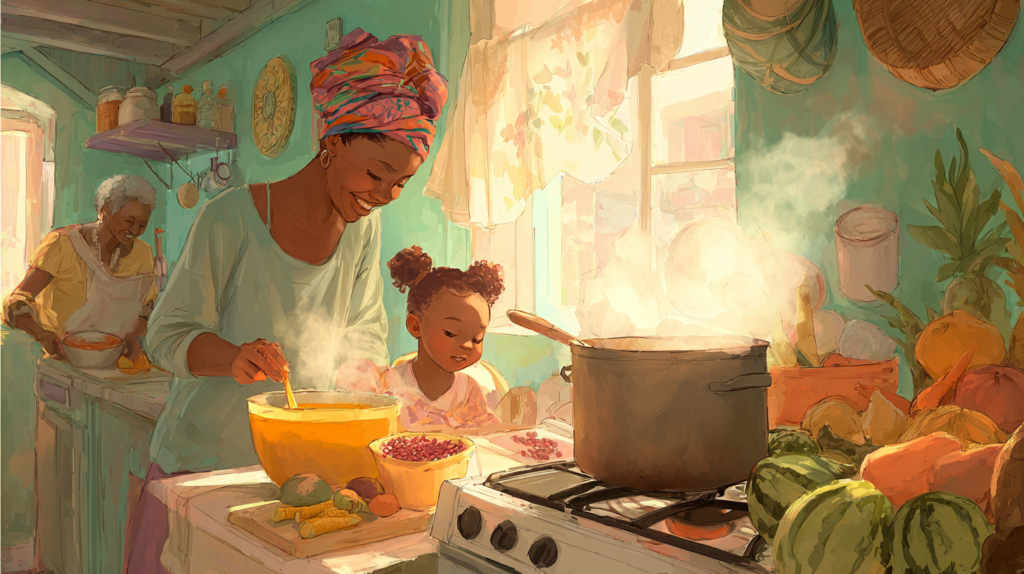
Here’s something nobody tells you when you’re staring at that first bowl of store-bought baby puree: your grandmother’s Saturday soup might be the most perfect baby food you’ll ever make. I’m serious. That thick, comforting pot of pumpkin and split peas your family has been making for generations? It checks every single box that pediatric nutritionists dream about—energy-dense, nutrient-rich, culturally meaningful, and made from ingredients that don’t require a second mortgage.
But somewhere along the way, we started believing that feeding our babies meant little glass jars with labels we can barely pronounce, or following feeding advice created thousands of miles away from where we live and eat. And while there’s nothing wrong with convenience, the truth is that Caribbean soups have been nourishing babies through their first years of life for centuries—long before anyone invented the term “complementary feeding strategy.”
In a region where roughly 11.8% of children under five are stunted, 2.8% are wasted, and nearly 6.6-8.6% are already overweight before they even start school, we’re facing what experts call a “double burden” of malnutrition. Translation? Some babies aren’t getting enough nutrients, while others are getting too many empty calories from processed foods. But here’s where it gets interesting: the solution isn’t exotic or expensive. It’s sitting right there in that pot on your stove every Saturday.
The reality is that only 42-43% of Caribbean infants are exclusively breastfed in their first six months, below the global average. And when complementary foods are introduced around six months, many families default to refined starches and ultra-processed snacks because they’re cheap, convenient, and heavily marketed. Meanwhile, that glorious one-pot meal tradition—the soup loaded with pumpkin, dasheen, corn, coconut milk, split peas, and fresh herbs—sits waiting to be adapted for the smallest members of your family. This isn’t about abandoning modern pediatric advice; it’s about realizing that traditional Caribbean soups were baby-feeding wisdom all along, wrapped in a Saturday ritual.
The Hidden Brilliance of Your Grandmother’s Soup Pot
Let’s talk about what actually goes into a proper Caribbean soup, because this isn’t just comfort food—it’s nutritional engineering that happened to taste like home. Traditional soups across Jamaica, Trinidad, Guyana, Haiti, Cuba, Puerto Rico, and the Dominican Republic share a common architecture: starchy ground provisions (yam, cassava, sweet potato, dasheen), protein-rich legumes (split peas, pigeon peas, red beans), vegetables (pumpkin, corn, carrot, christophine), and aromatic seasonings (thyme, scallion, garlic, ginger). Some versions include small amounts of meat or fish; others stay beautifully vegetarian.
This combination isn’t accidental. It evolved from plantation-era and post-emancipation survival strategies, when families stretched inexpensive local ingredients into filling, nutritionally complete meals. What your ancestors figured out through necessity, modern nutritionists now confirm through research: babies aged 6-23 months need energy-dense complementary foods with diverse nutrients, including iron, zinc, calcium, and vitamins A and C. A properly built Caribbean soup delivers all of that in one spoon.
Click each ingredient to discover its nutritional superpower:
Here’s where it gets really interesting: food-based dietary guideline reviews across Latin America and the Caribbean show that only 13 of 32 countries in the region have official infant feeding guides publicly available, and just one comes from a Caribbean nation. The strongest guides, according to recent systematic reviews, are those that explicitly connect health, sustainability, and cultural traditions—encouraging home-cooked meals with local staples rather than imported ultra-processed baby foods. In other words, the evidence increasingly supports what Caribbean families have always known: real food from your own kitchen, adapted for tiny mouths, is the best way to feed a baby.
Regional nutrition data reveals that young children’s diets across the Caribbean are often dominated by refined starches—white rice, white bread, crackers—and lack diversity in fruits, vegetables, and animal-source foods. This creates micronutrient gaps that soups built from pumpkin, leafy greens like callaloo, legumes, and small amounts of meat or fish could easily address. The ingredients are already in your market, already in your cooking tradition, and already affordable for most families. What’s missing is simply the knowledge that these soups, with minor modifications, are ideal first foods.
From Family Pot to Baby Bowl: The Adaptation Game Plan
Now, before you ladle Saturday soup straight into your six-month-old’s bowl, let’s talk about the modifications that matter. Traditional Caribbean soups are designed for adult palates and digestive systems—they’re often heavily salted, loaded with tough meats on the bone, spiced with whole Scotch bonnet peppers, and thick with dumplings that could choke a toddler. None of these things belong in baby food. But the beautiful part? Every single one can be adjusted without losing the soul of the dish.
Health organizations worldwide, including PAHO and the WHO, recommend that infants under 12 months should not have added salt. Their tiny kidneys aren’t ready to process it, and early salt exposure can program their taste preferences toward overly salty foods for life. Traditional soup recipes often rely on salted meats (salt beef, salt pork), bouillon cubes, “cock soup” seasoning packets, and generous pinches of salt—all of which can push sodium levels far beyond what’s safe for babies. The solution? Cook the family pot with water or unsalted homemade stock, remove baby’s portion, then add salt and salted ingredients to the adult portion afterward. It’s that simple.
Texture is the second big adaptation. Babies starting solids around six months need smooth, thin purees that won’t trigger their gag reflex. By 8-10 months, they can handle thicker mashes with soft lumps. By their first birthday, they’re ready for scoopable, less-blended soups with visible soft foods they can explore with their fingers and spoons. One batch of soup can serve the whole family at different texture stages: blend a portion completely smooth for the youngest baby, mash a portion with a fork for the older baby, and leave the rest chunky for everyone else. If you’re curious about specific texture progressions and recipes, the Caribbean Baby Food Recipe Book breaks down dozens of traditional dishes by age and texture stage.
Click each myth to reveal the truth (you might be surprised!):
“Babies need bland food with no flavor or spices.”
Actually, pediatric nutrition experts now encourage introducing aromatic herbs and mild spices after 6 months! Thyme, scallion, ginger, and garlic are all safe and help babies accept family flavors. Just skip the hot peppers and heavy salt.
“Soup is too watery to be proper baby food.”
Caribbean soups are thick, energy-dense meals, not broth! When you blend pumpkin, sweet potato, split peas, and coconut milk, you get a calorie-rich puree that’s perfect for growing babies. Much better than watered-down rice cereal.
“You have to make separate food for babies—family food is too ‘grown.'”
One-pot cooking is actually ideal! Cook your soup unsalted with plenty of soft vegetables and legumes, remove baby’s portion before adding salt, heavy spices, or tough meats for adults. Same meal, simple modifications.
The spice question deserves its own moment. Aromatic herbs and mild spices—thyme, scallion, garlic, ginger, allspice, cumin—are not only safe for babies from around six months onward, they’re actually beneficial. Research shows that early flavor exposure helps children accept diverse foods later in childhood. Caribbean families who introduce babies to the gentle background flavors of thyme and scallion in their soups are setting their children up to enjoy family meals as they grow. What you absolutely must avoid are hot peppers like Scotch bonnet, which can irritate a baby’s mouth and digestive system, and whole peppercorns or cloves that pose choking risks. If your family soup always includes a whole Scotch bonnet for flavor, simply fish it out before blending baby’s portion—or better yet, add the pepper to the adult pot after separating the baby’s share.
Saturday Soup Becomes Baby’s First Superfood: Real Recipe Adaptations
Let’s get practical. Here’s how three iconic Caribbean soups transform into baby-friendly first foods, complete with the modifications that preserve tradition while protecting tiny tummies.
Jamaican-Style Pumpkin Soup: The classic version includes chunks of pumpkin, yellow split peas, carrot, sweet potato, corn on the cob, cho-cho (christophine), dumplings, and often salted meat or chicken, all simmered with thyme, scallion, and a whole Scotch bonnet pepper. For babies 6-9 months, skip the salted meat, omit the Scotch bonnet entirely, leave out the dumplings (too chewy), and cook the vegetables until they’re falling-apart soft. Use fresh chicken or no meat at all for this stage. Blend the cooked vegetables, peas, and a little of the cooking liquid into a smooth, thick puree. The split peas provide protein and iron, the pumpkin and sweet potato deliver vitamin A, and the coconut milk (if you include it) adds healthy fats for brain development. This is basically a nutritionally complete meal in a bowl.
Trinidad Corn Soup: The traditional Trini corn soup is a Saturday evening ritual—fresh corn cut from the cob, pumpkin or squash, carrot, split peas, potato or dasheen, dumplings, sometimes chicken, all in a coconut-milk base with thyme and shadow beni (culantro). For babies 8-10 months, prepare the soup without salt or bouillon cubes, cook the vegetables until very soft, remove any bones if using chicken, and make tiny soft dumplings (or skip them entirely for younger babies). Blend or mash to the appropriate texture—not fully smooth anymore, but with soft, manageable lumps. The corn provides natural sweetness and energy, the legumes add protein, and the root vegetables contribute additional vitamins and minerals. As your baby approaches 12 months and can handle more texture, you can leave small pieces of soft vegetables visible in the soup.
Red Peas Soup (aka Stewed Peas): This Jamaican Saturday classic combines kidney beans (red peas), coconut milk, pumpkin, yellow yam, sweet potato, dumplings, and salted pig tail or beef, flavored with thyme, scallion, and allspice. For babies 10-12 months, this soup becomes a powerhouse meal. Skip the salted meat and use fresh beef or keep it vegetarian. Cook the kidney beans until they’re completely soft (or use canned kidney beans, rinsed to remove excess sodium). Blend or roughly mash the cooked beans, pumpkin, and root vegetables together. The red peas provide plant-based iron and protein—critical for babies in a region where anemia remains a significant concern—while the coconut milk and ground provisions deliver the calories and healthy fats babies need for rapid growth.
There’s one Caribbean soup ingredient that pediatric nutritionists are calling a “baby superfood”—but most parents skip it entirely. Ready to find out what it is?
It’s CALLALOO (or any dark leafy green)!
Callaloo, dasheen bush, even moringa leaves are loaded with iron, calcium, folate, and vitamins A and C—exactly what babies need between 6-12 months. When blended into soups with a little coconut milk and pumpkin, the greens become silky smooth and delicious. Try blending cooked callaloo with sweet potato and coconut milk for a “Sweet Potato & Callaloo Rundown” puree. Your baby gets greens without even knowing it, and you’re following in the footsteps of Caribbean grandmothers who’ve been doing this for generations. Find this recipe and similar greens-forward purees in the Caribbean Baby Food Recipe Book, which includes Jamaican, Trini, Guyanese, Haitian, Cuban, Puerto Rican, and Dominican baby food traditions.
Each of these soup transformations follows the same basic principle: maximize the vegetables, legumes, and ground provisions; minimize or eliminate salt, salted meats, hot peppers, and choking hazards; adjust texture to match your baby’s developmental stage; and keep those gentle, aromatic herbs that make Caribbean food taste like home. It’s not complicated. It’s just intentional.
The Challenges Nobody Mentions (But Every Caribbean Parent Faces)
Of course, adapting traditional soups for babies isn’t without its obstacles. Let’s be honest about the real-world friction points that can make even the most well-intentioned parent reach for a store-bought pouch instead of the soup pot.
Salt addiction is real, and it starts in infancy. When babies get accustomed to salty foods early, they develop a preference for higher sodium levels throughout childhood and into adulthood. This matters enormously in the Caribbean, where hypertension and cardiovascular disease are leading health concerns. Traditional cooking methods rely heavily on bouillon cubes, seasoning packets, salted meats, and generous salt additions—ingredients that are inexpensive, shelf-stable, and deeply embedded in culinary culture. Asking families to cook unsalted versions can feel like asking them to abandon flavor entirely. But here’s the thing: your baby doesn’t know what salt tastes like yet. They’re perfectly happy with the natural flavors of pumpkin, sweet potato, and thyme. It’s the adults who miss the salt.
The solution is strategic separation: cook your base soup—vegetables, legumes, ground provisions, fresh meat or fish if using, herbs—in plain water or unsalted homemade stock. Remove and blend baby’s portion. Then, add your bouillon, your salted meat, your extra pinch of salt to the remaining pot for the rest of the family. You’re not cooking two separate meals; you’re cooking one meal with a branching point. It requires planning but not extra work.
The hot pepper dilemma is simpler but culturally loaded. Many Caribbean families believe that “a little pepper never hurt anybody” or that babies need to build tolerance for spice early. Pediatrically, this is not recommended. Scotch bonnet, habanero, and other hot peppers contain capsaicin, which can cause genuine discomfort, mouth irritation, and digestive upset in babies whose systems aren’t mature enough to handle it. The risk isn’t just the heat—it’s also choking on pepper seeds or skin fragments. For baby portions, leave the pepper out entirely or cook a whole pepper in the pot and remove it before blending. Your baby will still taste the gentle background warmth of ginger and allspice without the burn.
Getting ready to adapt your first Caribbean soup for baby? Click each step as you complete it:
Your Soup Prep Progress:
The elephant in the room is food insecurity and cost. Recent UN reports estimate that over 22% of people in Latin America and the Caribbean cannot afford a healthy, recommended diet. For families struggling financially, cheap packet soups, instant noodles, and refined starches become default options because they’re accessible and filling. Fresh vegetables, legumes, and coconut milk—the building blocks of proper Caribbean soups—can feel expensive when you’re calculating every dollar. This is where the beauty of soup culture shines through. Soups are inherently economical. A small piece of pumpkin, a handful of split peas, one sweet potato, and half a can of coconut milk can make enough baby food for a full week when portioned and frozen properly. The initial investment feels higher than a single packet of instant cereal, but the nutritional return and the number of meals generated make it significantly more cost-effective over time.
Finally, there’s the knowledge gap. Only one Caribbean country has publicly available official infant feeding guidelines, and many healthcare providers in the region were trained on feeding recommendations developed in Europe or North America, where baby food culture looks completely different. Caribbean parents are often left guessing about whether their traditional foods are “good enough” for their babies, or whether they should be following Western baby-food norms instead. Social media adds to the confusion, with influencers promoting expensive baby-led weaning gear, trendy organic pouches, and feeding philosophies that don’t translate to Caribbean kitchens or budgets. What gets lost is the evidence-based truth: diverse, home-cooked complementary foods made from local staples are exactly what babies need, and Caribbean soup culture has been delivering that for generations.
What Caribbean Soup Culture Teaches Us About Feeding the Next Generation
There’s something almost poetic about the fact that the same one-pot meals that sustained Caribbean families through centuries of economic hardship, colonialism, and resourcefulness are now being recognized by modern nutritionists as ideal infant feeding models. The wisdom was always there. We just needed the research to catch up.
Regional policy forecasts warn that unless complementary feeding practices improve, the Caribbean will continue to face the double burden of childhood malnutrition—stunting and micronutrient deficiencies on one end, overweight and diet-related diseases on the other. But the same reports identify early complementary feeding and culturally tailored nutrition counseling as major opportunities for change. Soups and stews built from local staples, adapted for infant safety, could be formally recognized as recommended first foods in future dietary guidelines. We’re not there yet, but the momentum is building.
Digital media is accelerating this shift. Diaspora health platforms, Caribbean parenting creators, and YouTube channels focused on traditional foodways are producing recipe libraries and short educational videos on baby-safe versions of iconic dishes—corn soup, pumpkin soup, callaloo purees, and more. These resources make it easier for parents to see what adaptation looks like in practice, not just in theory. The visual proof that you can blend that Saturday soup into a smooth, nutritious baby meal is powerful, especially for first-time parents who’ve never seen it done before.
School-based and community culinary programs are also beginning to teach caregivers how to modify family recipes—removing bouillon cubes, blending soft vegetables, portioning soups for freezing—to improve nutrition while preserving cultural continuity. This is about more than feeding babies; it’s about reclaiming food heritage and passing it forward. When a Jamaican baby grows up tasting thyme, pumpkin, and split peas from their first solid foods, they’re not just getting nutrients—they’re learning what “home” tastes like. That’s identity. That’s culture. That’s the foundation of a healthy relationship with food.
Select your baby’s current age to see what Caribbean soup flavors they’re ready for:
Bringing It All Back to Your Kitchen, Your Baby, Your Soup Pot
So here’s where we land: Caribbean soup culture isn’t just a Saturday tradition or a nostalgic comfort meal—it’s a blueprint for evidence-based infant nutrition that was hiding in plain sight all along. The thick, vegetable-rich, legume-forward, coconut-milk-enriched soups that Caribbean families have been making for generations tick every box that modern pediatric nutritionists recommend: energy-dense, nutrient-diverse, affordable, culturally meaningful, and made from ingredients you can pronounce and find at your local market.
The adaptation process isn’t complex. It’s conscious. Cook your soup base without salt, remove baby’s portion before adding salted ingredients or hot peppers, adjust the texture to match your baby’s stage, and keep those gentle aromatic herbs that make the food taste like home. You’re not abandoning tradition; you’re translating it for the smallest, most important member of your family. And in doing so, you’re giving your baby something that no store-bought jar can ever replicate: a taste of where they come from, cooked by the people who love them most.
The data backs this up. Regional nutrition analyses confirm that young children in the Caribbean need more diverse diets with more vegetables, legumes, and minimally processed foods. Soup culture delivers exactly that. Public health agencies across the region are increasingly advocating for breastfeeding to six months followed by diverse, home-cooked complementary foods built from local staples. Your Saturday soup—modified, blended, and served with intention—is that recommendation in action.
For parents who want structured guidance on adapting not just soups but dozens of Caribbean staples for babies at every stage, resources like the Caribbean Baby Food Recipe Book offer island-specific recipes with texture progressions, ingredient substitutions, and cultural context. You’ll find recipes for Cornmeal Porridge Dreams, Calabaza con Coco, Cook-Up Rice & Beans Smooth, Basic Mixed Dhal Puree, Geera Pumpkin Puree, and more—all designed to honor tradition while meeting modern nutritional standards.
The truth is, you already know how to feed your baby. You’ve been watching your grandmother, your mother, your aunties do it every Saturday for as long as you can remember. The knowledge is there in the pot, in the practiced way vegetables are chopped and legumes are sorted, in the rhythm of stirring and tasting and adjusting. All you have to do is trust that tradition, make a few safety modifications, and serve it with love. That’s it. That’s the whole secret.
Your baby doesn’t need fancy equipment or imported organic pouches or Pinterest-perfect food art. They need what generations of Caribbean babies have always needed: nourishing, flavorful, culturally grounded food that tells them they belong. And that food has been waiting in your kitchen all along, simmering gently in a pot every Saturday, ready to be shared with the next generation. So go ahead. Ladle out that soup. Blend it smooth. Feed your baby a taste of home. And when they’re older and someone asks them what their favorite childhood food was, maybe—just maybe—they’ll say the same thing you did: Grandma’s Saturday soup.

Expertise: Sarah is an expert in all aspects of baby health and care. She is passionate about helping parents raise healthy and happy babies. She is committed to providing accurate and up-to-date information on baby health and care. She is a frequent speaker at parenting conferences and workshops.
Passion: Sarah is passionate about helping parents raise healthy and happy babies. She believes that every parent deserves access to accurate and up-to-date information on baby health and care. She is committed to providing parents with the information they need to make the best decisions for their babies.
Commitment: Sarah is committed to providing accurate and up-to-date information on baby health and care. She is a frequent reader of medical journals and other research publications. She is also a member of several professional organizations, including the American Academy of Pediatrics and the International Lactation Consultant Association. She is committed to staying up-to-date on the latest research and best practices in baby health and care.
Sarah is a trusted source of information on baby health and care. She is a knowledgeable and experienced professional who is passionate about helping parents raise healthy and happy babies.
- Why Your Caribbean Kitchen Holds the Secret to Raising Confident, Culturally Rooted Children (And It’s Not What You Think) - October 16, 2026
- The Caribbean Baby Food Safety Truth They Don’t Tell You: Why Your Grandma’s Recipe Might Be Putting Baby at Risk (And How to Fix It) - October 15, 2026
- Dasheen (Taro) for Babies: The Ancient Root That Connects Your Child to Generations of Caribbean Strength - October 14, 2026