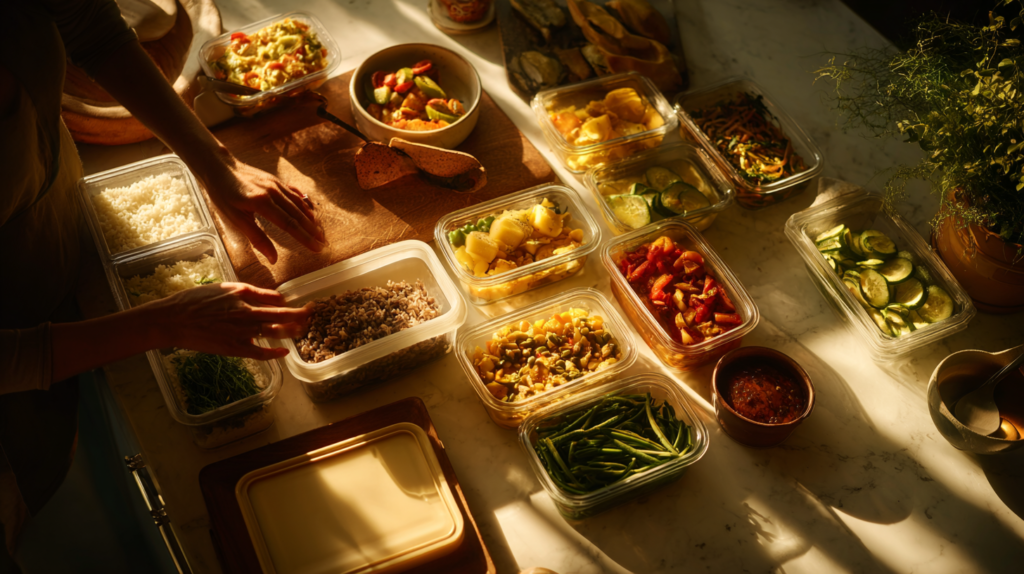
Budget-Friendly Meal Prep for Busy Families: The Truth About Taking Back Your Time (And Your Money)
Here’s what nobody tells you about meal prep: it’s not about becoming a culinary genius or spending your entire Sunday in the kitchen. It’s about getting those hours back—the ones you lose standing in line at the drive-through on a Tuesday night, exhausted and defeated. It’s about that moment when you open your freezer and instead of staring at mystery containers from three months ago, you see next week’s dinners already planned, prepped, and waiting.
I learned this the hard way. Three years ago, I was that parent—you know the one. Racing home from work, kids hungry and cranky, throwing together whatever I could find while my grocery budget mysteriously evaporated and the takeout apps got rich off my panic. The American household spends an average of $3,526 annually on food away from home, and I was definitely contributing more than my share to that statistic. But here’s the truth that changed everything: families who dedicate just 6-7 hours to monthly batch cooking save approximately $200 per month. That’s $2,400 a year back in your pocket.
The real magic? When you prepare 30 meals through batch cooking, you can slash costs to as low as $2.20 per serving compared to $12-15 for takeout. We’re not talking about eating rice and beans for every meal—we’re talking about real, nutritious food that your family actually wants to eat. The kind of meals that have your kids asking for seconds instead of complaining.
The Hidden Cost Nobody Mentions
Let’s talk about what 2025 has done to our wallets. Grocery prices have jumped 25% cumulatively since 2020. Restaurant menu inflation? Try 6-8% in just the past year. Meanwhile, 78% of people are eating at home more frequently just to survive financially. But eating at home doesn’t automatically save money if you’re throwing away spoiled produce, buying convenience items at premium prices, and making multiple trips to the store because you forgot that one ingredient.
The research tells a story that most of us are living: time and budget-constrained families aren’t failing at meal planning—they’re stuck in a system that wasn’t designed for the reality of modern life. You’re juggling work schedules, school activities, after-school programs, and somehow you’re supposed to produce a healthy dinner by 6 PM? Every single night?
But here’s where it gets interesting. When researchers studied families using community-based meal services with pre-planned menus, they found significant decreases in meal preparation time. Not because these families suddenly became more efficient, but because they stopped making hundreds of micro-decisions every single day. What’s for dinner? Do we have all the ingredients? Is this healthy enough? Will everyone eat it? That mental load—that invisible burden—weighs more than the actual cooking.
The Batch Cooking Revolution
Batch cooking isn’t new—our grandmothers did versions of this without Instagram-worthy containers or fancy labels. But what’s changed is how we approach it systematically. The modern batch cooking method combines three powerful strategies: preparing large quantities of versatile base ingredients, creating freezer-friendly complete meals, and building a rotation of “planned leftovers” that don’t feel like leftovers.
Think about it this way: when you cook one chicken breast for dinner, you’re heating up your oven, using your time, and cleaning your dishes. When you cook six chicken breasts at once, you’ve only marginally increased your effort but created the foundation for multiple meals. That’s the core principle driving the entire meal prep movement—and why Once A Month Meals, a subscription service at $10 monthly, reports members save approximately 12 hours in planning time and reduce cooking sessions to 6-7 hours per month.
The science backs this up. Women prepare an average of 9.2 meals per week compared to 4.5 for men, with 60% of women preparing food daily. That’s not just cooking—that’s planning, shopping, prep work, cooking, serving, and cleanup. Multiply that by seven days a week, and you’re looking at nearly a part-time job that nobody’s paying you for.
Building Your Foundation
Every successful meal prep system starts with versatile base recipes—those workhorses that transform into completely different meals throughout the week. We’re talking about seasoned ground beef that becomes tacos on Monday, pasta sauce on Wednesday, and stuffed peppers on Friday. Or a big batch of rice and beans that shows up as burrito bowls, side dishes, and stirred into soup.
The USDA’s Food Plans demonstrate that healthy eating on a budget is mathematically possible—research shows two weeks of menus meeting dietary objectives cost between $19-31 daily for a family of four when carefully planned. But here’s the key phrase: “when carefully planned.” That planning is where most of us stumble, not because we’re incompetent, but because we’re overwhelmed.
Let me share what worked for my family—and what I’ve learned from watching other parents succeed. Start with one successful batch cooking session before you commit to the monthly marathon. Pick a Sunday afternoon (or whatever day works for your schedule—there’s no rule book here), choose three recipes that share ingredients, and just do it. Don’t wait until you have the perfect containers, the ideal grocery list, or feel “ready.” Remember: clarity doesn’t come from waiting; it comes from doing.
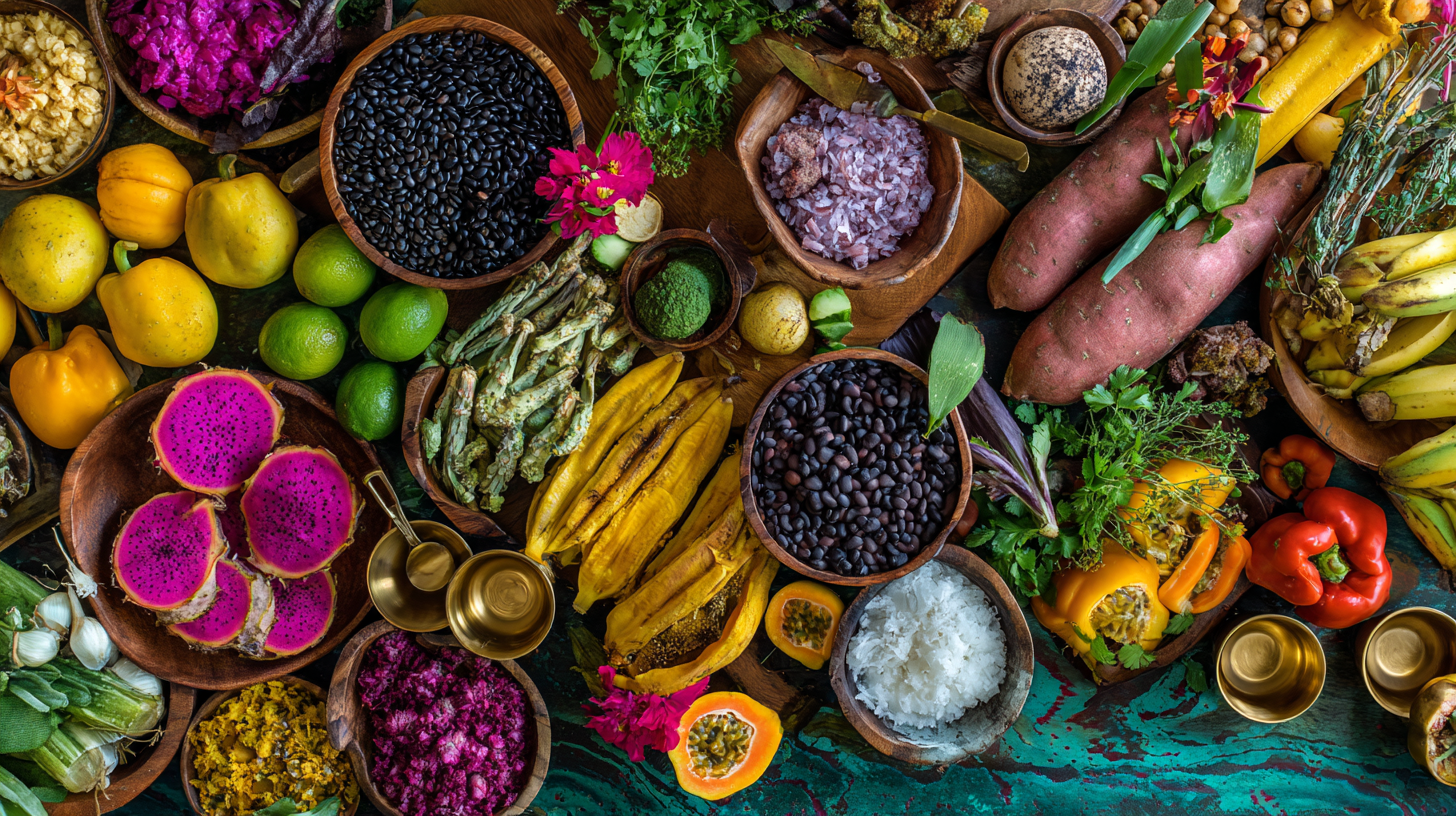
For my family, introducing Caribbean-inspired flavors completely transformed how my kids approached meal prep meals. When I started incorporating recipes from our Caribbean Baby Food Recipe Book, something clicked. Those same sweet potatoes, plantains, and beans that seemed boring in “regular” meal prep became exciting when prepared with coconut milk or mild island seasonings. The recipes are designed for babies and toddlers, but the flavor principles scale up beautifully for family meals—gentle spices, naturally sweet vegetables, and protein-rich legumes that cost pennies per serving.

The Freezer Meal Game-Changer
Let’s address the elephant in the room: food safety. Batch cooking and freezer meals raise legitimate concerns about cross-contamination, time-temperature abuse, and proper storage. Research on bulk food preparation identified substantial bacterial loads remaining on chopping boards with hard-to-clean crevices and bacteria transferring between raw and cooked foods when proper segregation isn’t practiced.
Here’s what you actually need to know—not the paranoia-inducing version, but the practical one. Food must cool within 2 hours to prevent microorganism proliferation. Divide hot foods into smaller portions to speed cooling. Store refrigerated items between 0-4°C (32-39°F) and frozen items at minimum -18°C (0°F). Cook food to at least 65-70°C (149-158°F) for safety. Use separate cutting boards for raw meats and produce. That’s it. Those are the non-negotiable rules. Everything else is just best practices.
The reality is that proper freezer meals, when stored correctly, can maintain nutritional quality and food safety for 2-3 months. You’re not preparing food for a nuclear winter—you’re creating a rotation of meals that will be consumed within weeks. The biggest mistake beginners make? Not labeling clearly with contents and date. Trust me, three weeks from now, you will not remember whether that container is chili or spaghetti sauce.
Strategic Shopping and Minimal Waste
In 2024, bulk shopping surged 18% as families stocked up for group meals at warehouse retailers. But bulk buying only saves money if you actually use what you purchase. The trick is understanding which items legitimately save money in bulk and which ones just end up as expensive compost.
Bulk buying champions: rice, dried beans, pasta, frozen vegetables, cooking oils, spices, and shelf-stable items you use regularly. These items have long shelf lives and significant price-per-unit savings. A 20-pound bag of rice from Costco might seem excessive, but at $0.20 per pound versus $1.50 for a small box at the corner store, you’re looking at real savings if your family eats rice weekly.
Bulk buying disasters: fresh produce you “hope” to use, trendy ingredients for one recipe, anything you’ve never tried before, and items approaching their expiration date (yes, even at discount prices). The worst financial decision isn’t buying expensive ingredients—it’s buying cheap ingredients that end up in the trash.
Food waste reduction starts with the “planned leftovers” strategy—intentionally cooking extra quantities to have ready-made meals for subsequent days. But here’s the psychological trick that makes it work: leftover rice becomes fried rice. Leftover chicken becomes chicken salad or quesadillas. Leftover roasted vegetables get blended into soup. You’re not eating “leftovers”—you’re eating components that transform into new meals.
One family meal planning practice that dramatically reduces waste: the weekly “Use It Up” night. Every Thursday (or whatever day works), the challenge is creating meals from remaining food from previous dinners. My kids actually look forward to this—it’s become a creative challenge rather than a chore. Last week, odds and ends became what we called “Caribbean confusion bowls”—rice, black beans, random roasted vegetables, and a quick mango salsa. Would it appear in a restaurant? No. Did everyone eat it without complaining? Yes. That’s the win.
Expert Perspectives and Real Solutions
Registered dietitians like Abbey Sharp and Dr. Rupy Aujla consistently emphasize the importance of moderation and flexibility in meal planning—discouraging fad diets while promoting evidence-based approaches that are both nutritious and sustainable. The FOODWISE model (Fostering Optimal Outcomes through Dietary Wisdom, Integration, Spirituality, and Emotionality) represents a paradigm shift acknowledging that meal planning must account for family dynamics, cultural preferences, and emotional connections to food.

Here’s what the experts aren’t saying loudly enough: perfect meal prep doesn’t exist. Sadia Badiei of Pick Up Limes has built an international audience with structured meal plans and prep routines, but even she emphasizes nourishing, colorful, budget-friendly meals—not perfection. Alex Snodgrass of The Defined Dish shares family-friendly weekly guides that balance nutrition and taste, but also acknowledges that some weeks, you’re going to order pizza. And that’s okay.
The social media meal prep movement has both helped and hurt home cooks. On one hand, platforms like TikTok feature creators sharing batch cooking demonstrations, with influencers describing freezing food as “the biggest life hack.” That visibility normalizes meal prep and builds community. On the other hand, the aesthetically perfect meal prep containers arranged in rainbow order set unrealistic standards that make regular families feel inadequate.
Your meal prep doesn’t need to be Instagram-worthy. It needs to be eaten. That’s the only metric that matters.
The Technology Revolution
The AI-generated meal plan market is exploding—valued at $1.34 billion in 2025 and projected to reach $5.37 billion by 2033, expanding at a CAGR of 18.97%. In April 2025, EatLove unveiled Nutrition Intelligence® technology to deliver personalized meal recommendations, while Spoon Guru introduced generative AI features for customized product and recipe suggestions.
What does this mean for real families? Soon, meal planning apps will integrate genetic data, biometrics, activity levels, and sleep patterns to deliver hyper-personalized nutrition plans that adapt dynamically as you log meals or change routines. Advances in generative AI and image recognition will enable visual meal suggestions, portion estimation, and ingredient substitutions.
But here’s my honest take: you don’t need fancy technology to start meal prepping successfully. A notebook, a pen, and determination will get you 90% of the way there. The technology is coming, and it will make things easier, but don’t wait for the perfect app to begin. Start with what you have right now.
Practical Implementation That Actually Works
Let’s get specific. Here’s a proven four-week progression for families new to meal prep:
Week 1: Make double portions of two dinners. Freeze the extras. That’s it. You now have two emergency meals in your freezer, and you didn’t do any extra cooking—just portioning.
Week 2: Add one batch cooking session. Pick a simple recipe (chili, soup, or casserole), make a triple batch, and freeze in family-size portions. Combine this with continuing to double your regular dinners.
Week 3: Introduce one versatile base ingredient. Cook a large batch of seasoned ground beef, shredded chicken, or rice and beans. Store in meal-size portions. Use throughout the week for different meals.
Week 4: Plan one complete meal prep day. Choose three complementary recipes (sharing ingredients to maximize efficiency), do all shopping in one trip, and spend 3-4 hours cooking and portioning. You’ll have 9-12 meals in your freezer.
Theme-based meal planning simplifies decision-making by setting daily themes—Pizza Fridays, Taco Tuesdays, Soup Wednesdays. This structure eliminates decision fatigue while still allowing flexibility within each category. Schedule-based planning looks ahead at the week’s activities and assigns easy or quick meals for busy days. Ingredient-based planning works backward from pantry staples, finding recipes that use them in different ways.
For families with young children, incorporating familiar flavors early makes meal prep acceptance much easier later. When my youngest was starting solids, recipes from the Caribbean Baby Food Recipe Book like Sweet Potato & Callaloo Rundown or Coconut Rice & Red Peas became family staples. Those same ingredients—sweet potatoes, coconut milk, beans—now form the foundation of our weekly meal prep rotation. Starting with baby food versions helped normalize the flavors for everyone, and scaling up was just a matter of quantities and textures.
Budget-Friendly Breakfast Burrito Blueprint
Here’s a practical example that demonstrates every meal prep principle we’ve discussed: budget-friendly breakfast burritos. Total cost: approximately $12-15 for 10 burritos ($1.20-1.50 per serving). Prep time: 30 minutes. Shelf life: 3 months in freezer.
Ingredients: 12 eggs ($4), 2 cans black beans ($2), 2 bell peppers ($2), 1 onion ($0.50), 2 cups shredded cheese ($3), 10 whole wheat tortillas ($3). Optional seasonings you probably already have: cumin, garlic powder, salt, pepper.
Process: Scramble eggs with diced peppers and onions. Drain and warm black beans with seasonings. Divide egg mixture among tortillas, top with beans and cheese, roll into burritos, wrap individually in foil, freeze. Reheat from frozen in microwave (2-3 minutes) or oven (350°F for 25 minutes).
This single recipe demonstrates: versatile base ingredients (eggs, beans, vegetables), budget-friendly staples, batch cooking efficiency, proper freezer storage, and easy reheating. Scale up or down based on your family size. Customize with different vegetables, proteins, or seasonings. The formula stays the same.
Confronting the Challenges Honestly
Meal prep isn’t a magic solution. It requires upfront time investment, adequate storage space, functioning kitchen equipment, and basic nutrition literacy that not all families possess. Low-income families using food pantries face additional constraints, needing to strategize around unpredictable food availability while juggling other expenses and time demands.
The sustainability debate presents complex considerations. While meal prep reduces food waste and transportation emissions, questions persist about the environmental impact of freezer storage, plastic packaging for portioned meals, and the carbon footprint of bulk ingredient sourcing. Use reusable containers when possible. Choose glass over plastic when you can afford it. But don’t let perfect be the enemy of good—feeding your family nutritious meals on a tight budget is already an environmental and social good.
Accessibility matters. If you’re reading this article, you have internet access, likely some discretionary time, and at least basic kitchen equipment. That puts you ahead of many families struggling with food insecurity. Community resources exist: food banks, cooking classes through non-profit organizations, online recipe repositories like Budget Bytes. If you’re in a position to help others learn these skills—through community centers, religious organizations, or informal neighbor networks—that’s how we make meal prep accessible beyond individual success stories.
Your Next Steps (Not Conclusions)
Here’s what I wish someone had told me three years ago: start before you feel ready. Your first meal prep session will be chaotic. You’ll forget ingredients, overcook something, and probably question whether this is worth the effort. Do it anyway. Because the second session will be smoother. And the third one? You’ll actually enjoy it.
The path you’re about to take isn’t something you can always see from the start. You create it by walking, by doing, by learning from each small step along the way. That first step might feel uncomfortable—you might be afraid of wasting money on ingredients or time on cooking that doesn’t work out. But the pain of feeling overwhelmed every single dinner time is always worse than the temporary discomfort of trying something new.
When you start implementing these strategies, something powerful happens. You build momentum. Every meal you prep makes the next one easier. Every dollar you save reinforces the habit. Every evening you spend actually talking to your family instead of frantically cooking validates the effort. What felt impossible suddenly becomes achievable.
The average American family spends over $3,500 yearly on takeout, loses 10-14 hours weekly to meal planning and cooking, and throws away approximately $1,500 worth of uneaten food annually. You can reduce all three of those numbers significantly—not by becoming a different person, but by implementing a system that works with your reality instead of against it.
This moment right now—reading this article, considering whether to try—this is your starting point. Not when you have more money, more time, or more motivation. Now. Make one double batch this week. Write down three versatile recipes. Shop for shared ingredients. Dedicate a few hours to cooking. That’s how this works—not through perfect planning, but through imperfect action.
And when you’re looking for recipe inspiration that works for the whole family—from your youngest eaters to adults—don’t overlook resources designed for introducing babies to real food. The Caribbean Baby Food Recipe Book offers over 75 recipes featuring affordable staples like sweet potatoes, beans, coconut milk, and seasonal vegetables. These aren’t “baby food” recipes in the puree-only sense—they’re foundational flavor combinations that scale beautifully into family meals while introducing authentic island tastes from the start.
Three years from now, you won’t remember the specific recipes you made during your first meal prep session. You’ll remember how it felt to stop living in constant food stress. You’ll remember the first time your kid asked for a meal you’d prepped instead of demanding takeout. You’ll remember the month you checked your bank account and realized you’d actually stayed within your grocery budget.
Those moments don’t come from waiting for the perfect time. They come from starting right now, with what you have, where you are. So go—open your calendar, pick a day, choose three recipes, and begin. The freezer meals won’t cook themselves, but once you start, you’ll wonder why you waited so long.
Because at the end of the day, meal prep isn’t really about food. It’s about taking back control of your time, your money, and your sanity. It’s about the smile on your child’s face when they come home to a warm meal instead of you frantically searching for your phone to order pizza again. It’s about proving to yourself that you can change the pattern, even when it feels impossible.
The only regret you’ll have is not starting earlier. But you can fix that right now. Today is the day. Let’s get cooking.

Kelley's culinary creations are a fusion of her Caribbean roots and modern nutritional science, resulting in baby-friendly dishes that are both developmentally appropriate and bursting with flavor. Her expertise in oral motor development and texture progression ensures that every recipe supports your little one's feeding milestones while honoring cultural traditions.
Join Kelley on her flavorful journey as she shares treasured family recipes adapted for tiny taste buds, evidence-based feeding guidance, insightful parenting anecdotes, and the joy of celebrating food, culture, and motherhood. Get ready to immerse yourself in the captivating world of Kelley Black and unlock the vibrant flavors of the Caribbean for your growing baby, one nutritious bite at a time.
- The Feeding Revolution: Why Your Everyday Meals Are Changing the World - October 13, 2026
- Your Feeding Story Matters More Than The “Perfect” One Online - October 12, 2026
- Looking Forward: Stepping Into Your Confident Feeding Future - October 11, 2026