Baby Food on Vacation: Your Complete Planning Guide to Stress-Free Travel Feeding
That knot in your stomach when you think about your upcoming trip? The one that tightens every time you imagine feeding your baby in an unfamiliar hotel room, on a plane at 35,000 feet, or at a restaurant where the kids’ menu consists of chicken nuggets and fries? You’re not imagining it. And you’re certainly not alone.
Here’s what most travel blogs won’t tell you: over 90% of parents with young children plan to travel within the next year, according to recent family travel surveys. That’s the highest rate since before the pandemic. Yet the conversation around traveling with babies still focuses on strollers and sleep schedules, leaving the genuinely complex topic of vacation meal planning as an afterthought. The global baby food market now exceeds $79 billion annually, with portable pouches alone valued at over $7 billion and growing at roughly 7.4% per year. This explosion isn’t happening by accident—it’s being driven by parents like you who are traveling more and demanding convenient, nutritious options for their little ones on the go.
The Evolution of Traveling with Baby Food
Not so long ago, parents traveling with babies had two choices: breastfeed exclusively or hope local food was safe enough to mash up for little ones. There were no squeeze pouches, no perfectly portioned puree jars designed to survive a transatlantic flight. Your grandmother likely traveled with a thermos, some rice cereal, and a whole lot of prayer. The transformation from those days to now represents one of the most significant yet underappreciated shifts in parenting convenience.
The turning point came around 2010-2012 when baby food pouches went mainstream. Suddenly, parents had access to shelf-stable, single-serve, no-spoon-required nutrition that could slip into a diaper bag and survive hours without refrigeration. Advances in retortable laminate packaging and food preservation meant purees stayed fresh and safe far longer than anyone would have believed possible a generation ago. Today’s baby food packaging market is projected to reach nearly $11.5 billion by 2032, fueled specifically by demand for portable, travel-friendly formats.
But here’s where the story gets interesting. While convenience has exploded, so have concerns about what’s actually in those convenient packages. Nutritional audits of baby food pouches reveal huge variations in sugar content, with many products dominated by sweet fruit purees that can shape babies’ taste preferences toward sweetness. This means vacation meal planning isn’t just about logistics—it’s about making informed choices under the pressure of travel.
Understanding What Your Baby Actually Needs While Traveling
Before diving into packing lists and TSA protocols, let’s address the question most parents never think to ask: does your baby’s nutrition need to be perfect on vacation? The short answer is no—and releasing yourself from that pressure changes everything. A week of slightly different eating won’t derail months of careful feeding at home. What matters is maintaining safety, offering reasonable nutrition, and keeping your baby comfortable enough that everyone can actually enjoy the trip.
Pediatric nutrition experts consistently emphasize that even on vacation, parents should prioritize nutrient density, limit added sugars and salt, and try to maintain some variety in textures and flavors. That said, responsive feeding matters more than perfection. If your baby needs an extra pouch to get through a delayed flight or eats more crackers than usual during a road trip, the world keeps turning. The goal is adequate nutrition with minimal stress—not Instagram-worthy baby meals at every destination.
What research actually shows: Many commercial baby food pouches marketed as healthy contain surprisingly high amounts of natural sugars from concentrated fruit purees. Studies auditing pouch contents found that fruit-based options dominate the market—over 45% of all pouch sales—and these can contain more sugar per serving than parents realize.
The texture trap: Pouches bypass the oral-motor development that comes from spoon-feeding and self-feeding. Excessive pouch use, particularly on vacation when they’re convenient, can interfere with your baby learning to manage different food textures.
What this means for you: Pouches are absolutely appropriate for travel—they’re designed for exactly this purpose. But balance them with finger foods, varied textures when possible, and use them as one tool in your vacation feeding toolkit, not the only tool.
TSA Rules That Actually Help You
Here’s some genuinely good news that most parents don’t realize until they’re already sweating at the security checkpoint: baby food is explicitly exempt from the standard 3.4-ounce liquid rule. The Transportation Security Administration classifies baby food, formula, and breast milk as “medically necessary,” which means you can bring pouches, jars, and containers larger than the typical liquid limit right through security in your carry-on bag.
The process is straightforward once you know it. Declare your baby food to TSA officers at the checkpoint—a simple “I have baby food pouches in my bag for my child” is sufficient. Be prepared for additional screening; agents may swab the exterior of containers or use vapor testing. Importantly, you will not be forced to throw away unopened baby food when traveling with your baby. Having your child present makes the process smoother since it clearly demonstrates the need for the items.
Practical tip from experienced traveling parents: place all baby food items in a separate bin for screening. This prevents agents from needing to dig through your entire diaper bag, which saves time and reduces the chaos of repacking while managing a potentially restless baby. Some parents recommend keeping baby food in a clear, gallon-sized bag separate from your regular toiletries to make declaration and inspection faster.
The Complete Vacation Baby Food Calculator
One of the most common mistakes parents make is either massively overpacking or dangerously underpacking baby food for trips. The sweet spot depends on your baby’s age, your destination’s resources, and your feeding style. Use this calculator to get a personalized estimate for your specific situation.
Your Personalized Packing Estimate:
Hotel Room Hacks That Replace a Kitchen
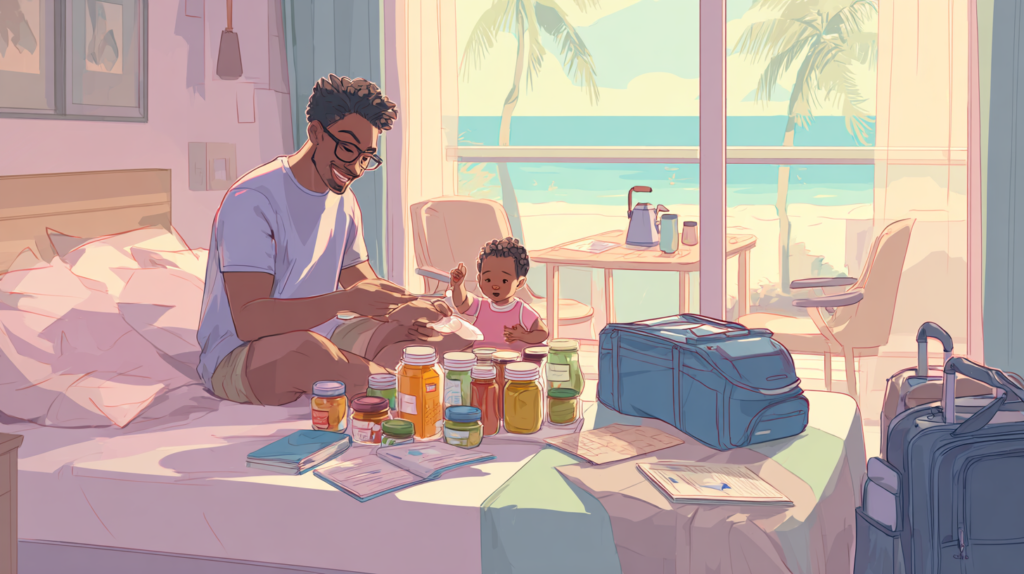
The hotel room is where vacation baby feeding either comes together or falls apart. Without the comfort of your home kitchen, everything feels harder—until you know the tricks that experienced traveling parents swear by. The most important realization is that you don’t need much equipment to prepare perfectly adequate baby meals away from home.
First, always request a mini fridge, kettle, and microwave when booking, even if your room doesn’t automatically include them. Most hotels have extra appliances available upon request at no charge. These three items make a massive difference for baby feeding: the fridge keeps milk, yogurt, and opened jars safe; the kettle provides hot water for instant oatmeal, warming bottles, and even heating pouches; the microwave handles everything else. A quick call to the front desk before arrival can save enormous hassle.
The coffee maker deserves special mention. Even if you don’t drink coffee, that little machine in your hotel room becomes a hot water source for mixing or warming bottles, preparing instant cereals, and heating food pouches by placing them in a cup of hot water. Just run it once without coffee first to flush out any residual grounds from previous guests. This single hack has saved countless parents from early morning meltdowns when baby wakes hungry at 5 AM and room service doesn’t open until 7:30.
For keeping homemade food safe during travel, insulated bags with ice packs extend the safety window for perishable items significantly. Freeze homemade purees in leak-proof containers before leaving home, then transport them in an insulated bag where they serve double duty as ice packs themselves, thawing gradually and staying at safe temperatures throughout your journey. By the time you reach your hotel, they’re thawed and ready to use.
What to Pack: The Strategic Approach
Overpacking baby food ranks among the top regrets of traveling parents. All that extra weight, the suitcase space consumed, and often half of it comes back home untouched. The strategic approach balances preparedness with practicality, recognizing that you’ll likely find baby-appropriate food at your destination.
The golden rule: pack enough for your travel days plus one or two emergency days, then plan to stock up locally. For a typical week-long vacation with a baby between 9-12 months, experienced parents recommend bringing enough pouches and snacks for the flight or drive plus the first full day. After that, grocery stores, hotel buffets, and restaurant sides become your friends. Most destinations have access to bananas, avocados, yogurt, bread, eggs, and other baby-friendly basics.
Pre-trip batch cooking works brilliantly for parents who prefer homemade food. About a week before travel, prepare several complete meals—think lentil-vegetable mash, sweet potato blends, or simple Caribbean-inspired options like Cornmeal Porridge Dreams or Papaya Banana Sunshine—and freeze them in individual portions. These frozen portions then travel in insulated bags, staying cold and safe, ready to thaw and serve during your first few days before you’ve had time to shop locally.
Tap items as you pack them to track your progress:
Eating Out and Buffet Strategies
Restaurant meals with a baby require advance thinking, but they don’t have to be disasters. The key insight from experienced traveling parents: you’re not limited to kids’ menus, and you shouldn’t be. Children’s menus typically offer nutritionally poor options—fried foods, excessive sodium, refined carbohydrates—that parents wouldn’t choose at home. Instead, look at the entire menu through the lens of what can be modified for baby.
Side dishes are your secret weapon. Ordering three or four sides and mashing some together creates baby meals that are often fresher and more nutritious than anything marketed specifically for children. Steamed vegetables, plain rice, mashed potatoes, soft beans—these appear on menus worldwide and require minimal adaptation. Don’t hesitate to ask your server for simple modifications: a hard-boiled egg, plain avocado slices, a banana, or unseasoned mashed vegetables. Most restaurants accommodate these requests happily.
Hotel buffets offer particular opportunities. Make the most of breakfast by gathering foods that can serve throughout the day—fresh fruits, plain yogurt, soft bread, scrambled eggs. Bring small containers or Tupperware to discretely portion out items for later meals or snacks. This isn’t hoarding; it’s practical parenting that hotels generally accept and even expect from families. The buffet approach can significantly reduce how much you need to pack from home and how much you spend on restaurant meals.
One strategy that works across cultures: when nothing on the menu seems suitable, ask what the kitchen can provide. A simple request like “what’s the plainest soft food you can make for my baby” often yields surprisingly good results. Chefs appreciate the challenge, and babies aren’t nearly as picky as menus assume.
Food Safety When You Can’t Control the Environment
Hot climates, questionable water quality, limited refrigeration—vacation environments introduce food safety challenges that don’t exist at home. This is where preparation and knowledge truly matter, because a baby with food poisoning transforms any trip into an emergency.
The two-hour rule applies rigorously when traveling: perishable baby food should not remain at room temperature for more than two hours, or one hour if temperatures exceed 90°F (32°C). This rule governs how you transport food on travel days, how long you can let breakfast sit while sightseeing, and when leftovers need to be discarded rather than saved. When in doubt, throw it out—no meal is worth the risk of making your baby sick in an unfamiliar place.
For destinations with uncertain water quality, stick to sealed bottled water for mixing formula, cereals, or any baby food preparation. Avoid ice unless you’re confident it was made from purified water. Raw fruits and vegetables should be peeled or washed thoroughly with safe water. These precautions might feel excessive, but babies’ immune systems and digestive tracts are far more vulnerable than adults’ to waterborne pathogens.
Shelf-stable options earn their place in vacation feeding specifically because they eliminate much of this worry. Unopened pouches and jars require no refrigeration, can withstand temperature fluctuations, and carry no risk of contamination from local water or handling. This is precisely why these products dominate the travel baby food space—convenience and safety align perfectly.
The Mindset Shift That Changes Everything
Here’s what the best-prepared parents eventually discover: the goal isn’t to replicate home feeding on vacation. It’s to maintain safety, provide reasonable nutrition, and create the conditions for your family to actually enjoy traveling together. Perfection is the enemy of vacation.
The parents who travel most successfully with babies are those who embrace flexibility. They pack backup options but don’t panic when plans change. They accept that a week of slightly different eating—more pouches than usual, more restaurant sides than homemade purees, more crackers than they’d prefer—won’t undo months of careful feeding at home. They understand that stress transfers to babies, and a relaxed parent offering a pouch creates a better mealtime than an anxious parent trying to recreate a home-cooked meal in a hotel room.
Research on infant feeding supports this approach. What matters for long-term nutrition and eating behavior development is the overall pattern over months and years, not any individual week. Vacation represents a tiny fraction of your baby’s feeding experiences. The memories you create, the exposure to new environments, and the bonding that happens during travel provide developmental benefits that far outweigh any temporary nutritional imperfection.
This doesn’t mean abandoning standards entirely. It means holding them appropriately—prioritizing safety always, aiming for balance, accepting convenience when needed, and letting go of guilt when things don’t go exactly as planned. The trip where baby ate more packaged food than you’d like but the family explored a new place together was a success. The trip where you stressed constantly about feeding and missed the joy of travel was not.
Your Pre-Trip Planning Timeline
Success with vacation baby feeding starts well before departure. Here’s how to approach the weeks leading up to your trip so that travel days themselves feel manageable rather than overwhelming.
Two weeks before: Test any new foods you’re considering bringing. Never introduce a new food for the first time during travel—you won’t know how baby tolerates it, and dealing with a potential allergic reaction in an airport or unfamiliar destination is every parent’s nightmare. This is also the time to start batch cooking if you plan to bring homemade food. Prepare and freeze individual portions that will be fully frozen and ready to transport by departure day.
One week before: Research your destination’s resources. Identify grocery stores near your accommodation, check whether your hotel has in-room fridges and microwaves, and look into grocery delivery services that might let you have supplies waiting when you arrive. Make your packing list specific based on this research—destinations with good baby food access require less packing from home.
Two to three days before: Purchase any commercial pouches or snacks you’re bringing. Keeping them factory-sealed until needed streamlines TSA screening. Confirm your hotel requests for baby equipment including high chairs, fridges, and microwaves. Freeze any homemade food completely solid.
Day before: Pack your travel day food kit in your carry-on or diaper bag. Verify that frozen homemade portions are completely frozen and ready to transfer to insulated bags in the morning. Charge any devices baby uses during feeding for distraction. Lay out clothes that are easy to clean in case of mealtime disasters.
Travel day: Transfer frozen items to insulated bags first thing. Keep your food kit accessible—not buried at the bottom of your carry-on. At the airport, declare baby food proactively and have it ready for separate screening. Take a breath. You’ve prepared for this.
Your Vacation Feeding Confidence Score
1 = Still terrified → 10 = Completely ready
The parents who travel best with babies aren’t the ones with the most elaborate systems or the biggest suitcases full of food. They’re the ones who prepare adequately, stay flexible, and remember why they’re traveling in the first place: to create experiences, build memories, and show their little ones the world—one carefully planned meal at a time.
That first vacation with baby will be imperfect. You’ll forget something. A pouch will explode in your bag. Your baby will refuse the carefully prepared homemade food and happily eat restaurant bread instead. And you’ll return home with stories, photos, and the knowledge that you can absolutely do this again. Because you can. The magic isn’t in perfect feeding—it’s in the adventure you share together.

Expertise: Sarah is an expert in all aspects of baby health and care. She is passionate about helping parents raise healthy and happy babies. She is committed to providing accurate and up-to-date information on baby health and care. She is a frequent speaker at parenting conferences and workshops.
Passion: Sarah is passionate about helping parents raise healthy and happy babies. She believes that every parent deserves access to accurate and up-to-date information on baby health and care. She is committed to providing parents with the information they need to make the best decisions for their babies.
Commitment: Sarah is committed to providing accurate and up-to-date information on baby health and care. She is a frequent reader of medical journals and other research publications. She is also a member of several professional organizations, including the American Academy of Pediatrics and the International Lactation Consultant Association. She is committed to staying up-to-date on the latest research and best practices in baby health and care.
Sarah is a trusted source of information on baby health and care. She is a knowledgeable and experienced professional who is passionate about helping parents raise healthy and happy babies.
- Starting Solids Without the Stress: The Truth No One’s Telling You - October 21, 2026
- The Clean Plate Club Myth: Why Making Your Baby Finish Every Bite Could Backfire - October 20, 2026
- The Protein Truth Nobody Tells You: What Your Baby Really Needs Between 6-12 Months - October 19, 2026