Baby Feeding Challenges & Colorful Foods: Is Your Baby’s “Favorite Color” a Myth?
Here’s an uncomfortable truth most baby food ads will never admit: your baby does not wake up thinking, “I only eat orange purée on Tuesdays.” The color drama around baby food is mostly happening in our adult heads, not in their tiny bellies. Yet parents are told that if the bowl is not bright enough, shaped like a cartoon, and arranged like a rainbow, their child will refuse it forever.
The research tells a very different story. Babies learn to love foods through repeated exposure, taste, smell, and texture long before color takes center stage. Vision matures gradually in the first year, while flavor learning starts in the womb and continues through breast milk and early solids. By toddlerhood, color becomes part of how they recognize familiar foods, but it still rides in the backseat compared with habit and experience.
In this focused deep dive, you will peel back three layers of the “color myth”: what science actually says about infant color perception, how companies and social media quietly shape your expectations, and how to use color in a way that supports—rather than stresses—your feeding journey. Along the way, you will also see how naturally vibrant Caribbean-inspired meals can turn “picky” into “curious” without a single artificial drop of dye.
What Color Really Means To Your Baby (And To You)
Color in baby food sounds simple, but it actually refers to several overlapping ideas: how your baby’s eyes and brain perceive hue and brightness, how parents judge whether food looks “fresh” or “safe,” and how marketing and culture teach you what a “good” baby meal should look like. When all of those collide at the high chair, it can feel like you are failing if your purée looks beige instead of neon.
Physiologically, babies develop near full-color vision somewhere between four and six months, right around the time many families begin introducing solids. That means your baby is just starting to see more vivid differences between orange pumpkin and green callaloo when you are nervously offering the first spoonful. Taste and smell, however, have been in training much longer—through amniotic fluid and milk—so flavor familiarity often matters more than visual drama.
On the parent side, color has become a shortcut for quality. Surveys show that a large majority of caregivers associate bright natural colors with better nutrition and freshness, even when two foods have the same nutrient profile. When you see a jar of mango purée glowing on a supermarket shelf next to a more muted pumpkin blend, the brighter one may simply feel safer or more “worth it,” regardless of what your baby actually prefers once it touches their tongue.
The Research: Color Preferences, Or Just Familiarity?
When researchers look specifically at young children and color, a pattern appears: it is not that kids are born loving orange or hating green; they learn to trust foods that look similar to what they already know. In studies of toddlers between roughly one and three years old, children are more likely to try foods that resemble familiar bright shades—like orange or yellow mashed vegetables—while unfamiliar dark or muddy colors can trigger hesitation. This is less about some magical orange superpower and more about familiarity and safety.
Interestingly, those same studies highlight that repeated exposure can override initial color worries. Once a food, even a “suspicious” green purée, has been offered calmly multiple times, acceptance tends to rise. Some children who rejected a green mash on the first attempt later ate it readily after seeing it on their plate several days in a row or alongside a trusted favorite, showing that experience can reshape their response to color.
Another important piece of the puzzle is how visual cues help toddlers recognize a food they have eaten before. By the second year of life, many children mentally link the look of a food with its taste—“That orange mush tastes sweet,” or, “That darker mash was salty.” Color functions like a visual label that tells them, “I know this,” or, “This is new.” That helps explain why a child might reject a slightly darker batch of their usual pumpkin and coconut mash: to you it is the same recipe; to them it looks like a different food.
Myth Meter: How Much Does Color Actually Matter?
Time to put the big question on the table: does the color of your baby’s food truly determine whether they will eat it? The honest answer lives in the messy middle. Color is not a complete myth, because toddlers clearly respond to familiar-looking shades and sometimes refuse foods that look “off.” But color is not the main character either; it is more like a supporting actor that amplifies what repeated exposure and taste have already built.
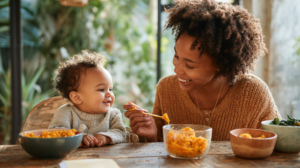
To make this concrete, imagine two bowls: one is a mild orange mix of pumpkin and sweet potato, the other is a darker green mash with callaloo and coconut milk. A child who has eaten orange mash ten times and green mash zero times will almost always pick the orange bowl, not because orange is objectively better, but because their brain screams, “We survived this one before.” If you flip the exposure—green offered ten times, orange never—the green often becomes the “favorite.”
The most useful way to think about it as a parent is this: use color as an invitation, not a requirement. You can plate foods in a visually appealing way to spark curiosity, but the real work happens when you calmly re-offer the same foods across days and weeks. Even a “boring” beige mash can become your child’s comfort dish if it shows up consistently, especially paired with warm connection and little mealtime pressure.
How Marketing And Social Media Shape Your Color Expectations
If your baby’s bowl ever looked dull next to a bright baby food ad and you felt like you were doing something wrong, that feeling was not an accident. For decades, baby food companies have leaned on color to communicate freshness, safety, and nutrition. High-pressure processing techniques are often highlighted because they help retain the vivid orange of carrots or mangoes that might otherwise dull with heat, even if the underlying nutritional changes are more complex than the ad suggests.
Social media adds another layer. On Instagram and Pinterest, “rainbow plates” and “aesthetic baby bowls” perform well because they are visually striking. Those images train your brain to see beige or olive-green purée as less impressive, even if the bowl is full of nutrient-rich pumpkin, red peas, callaloo, or plantain. Over time, feeding becomes a performance for the camera instead of a learning experience for your child.
What rarely makes it into the caption is that many babies happily eat meals that would never win a photoshoot—slightly separated textures, mixed colors, or a mash that looks more like a Caribbean Sunday plate than a pastel rainbow. Real life meals in Trinidad, Jamaica, Guyana, or the Dominican Republic are rich, saucy, and sometimes a bit “messy” in color, yet they produce adventurous eaters who grow up loving yams, plantains, peas, and pumpkin.
Caribbean Colors On The Spoon: Flavor First, Color Second
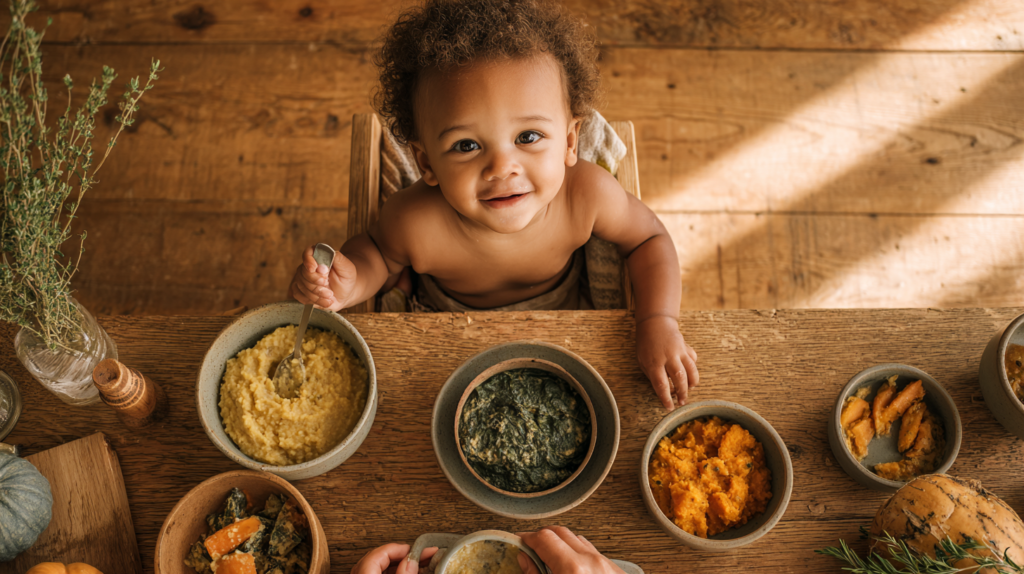
In Caribbean kitchens, color usually arrives as a side effect of flavor, not the goal. Orange comes from calabaza (pumpkin) and sweet potato, green from callaloo and green fig (young banana), yellow from cornmeal and yam, and soft creams from dasheen or malanga. When adapted to baby-friendly textures, those ingredients naturally create a lively palette without using a single artificial colorant.
Think of a silky pumpkin and coconut milk blend, a sweet potato and callaloo rundown purée, or a green fig and avocado mash. These dishes may not be evenly colored like store-bought jars, but they carry deep nutrients, fiber, and authentic island flavor. The subtle flecks of herbs or slightly varied shades in the bowl teach your baby that real food is not always perfectly uniform, which can actually help with flexibility later.
If you want step-by-step guidance on turning ingredients like calabaza, plantain, coconut milk, beans, and millet into baby-safe, age-appropriate meals, a dedicated resource can save an enormous amount of trial and error. That is exactly what a Caribbean-style baby cookbook does: it translates family flavors into gentle purées, mashes, and finger foods for six months and beyond, while keeping the colors natural rather than airbrushed.
For a collection of over seventy-five such recipes using sweet potatoes, mangoes, coconut milk, plantains, beans, and more, you can explore the Caribbean Baby Food Recipe Book: Easy & Healthy Homemade Meals for Infants & Toddlers. It is designed to help you serve real island flavors in baby-friendly textures without worrying whether the color is “Insta-perfect.”
Social Media, Guilt, And The “Beige Bowl” Problem
One of the most common messages from parents worldwide sounds like this: “My baby’s food never looks as beautiful as what I see online.” That gap between the beige bowl on your table and the neon-bright feed on your phone fuels guilt and second-guessing. You might catch yourself wondering if your child would magically start eating more if you could just arrange the peas into a perfect rainbow or cut mango into tiny stars.
But hidden behind all the filters is a simple reality: many babies eat best when meals are repetitive, simple, and predictable, not stunning. The green papaya blend you froze in small cubes, the cornmeal porridge with a swirl of coconut, the mashed plantain that leans more golden than glowing—those are the quiet heroes that teach your child comfort around real food. The camera rarely captures the hundred ordinary meals that made the “cute” moments possible.
From a Caribbean perspective, the most powerful thing you can do is trade some of that performance pressure for warm, regular, flavorful meals. Maybe it is a smooth callaloo purée next to a little sweet potato, or a blended rice and peas bowl softened with coconut milk. The colors are naturally rich without being fluorescent, but what your child will remember in their body is: “We eat together, and food is safe.”
Imagine these three baby plates. Tap the one you would feel most proud serving today.
Practical Ways To Use Color Without Stressing About It
Once you stop chasing perfect shades and start using color as a gentle tool, feeding gets much easier. Instead of asking, “Is this bowl bright enough?” a more helpful question is, “What can this color teach my baby today?” A soft green mash might introduce leafy flavors; a sunny orange mash might teach sweetness from root vegetables instead of sugar; a beige bowl might build comfort and satiety with familiar staples.
A simple, realistic strategy is to aim for “color variety across the week” rather than in every single meal. On Monday, perhaps you serve a golden sweet potato and callaloo blend; on Tuesday, a cornmeal porridge with a little pumpkin; on Wednesday, a creamy plantain dish with some mashed beans. Over several days, your baby will see and taste a spectrum of tones, even if each individual bowl is not a rainbow.
To make those ideas easier to implement, having a set of tested recipes arranged by ingredient and age can help you quickly rotate colors and flavors. For instance, you might follow a recipe for Yellow Yam & Carrot Sunshine one day, then a Coconut Rice & Red Peas mash the next, and finish the week with a Green Papaya Pleasure blend. Curated collections make it simpler to ensure both flavor and color variety without reinventing the wheel at every meal.
If you would like that kind of done-for-you structure, including guidance on when to add herbs like thyme or mild spices in a baby-safe way, take a look at the Caribbean Baby Food Recipe Book: Easy & Healthy Homemade Meals for Infants & Toddlers. Many of the recipes—such as Sweet Potato & Callaloo Rundown, Cornmeal Porridge Dreams, or Plantain Paradise—naturally introduce different colors over the week while keeping the cooking process straightforward.
Hidden Challenges: When Color Becomes A Battle
Even with the best intentions, color can unintentionally become a battleground. A toddler might insist on only eating “orange food,” or refuse anything green because of one bad experience with a bitter purée. Sometimes it is not the color itself but what the child has linked to it—being pressured to take “one more bite,” feeling rushed, or sensing parental anxiety when a new food hits the table.
Another challenge is over-relying on artificially colored snacks and drinks to encourage eating. While these products can be eye-catching, they may shift your child’s expectations toward very bright, uniform colors that real food can rarely match. Later, your carefully cooked callaloo, dasheen mash, or bean purée might be unfairly compared to the electric green of a packaged snack.
Cultural bias also plays a role. In some settings, pale or very light baby food is considered safer or “gentler,” while in others, intense orange or yellow is seen as a marker of health and energy. If you grew up in the Caribbean or in a Caribbean-influenced home, you may feel more comfortable with richly colored dishes like pumpkin and coconut or red peas and rice. Those experiences are an asset: they show you that strong color and gentle flavor can coexist when meals are prepared thoughtfully for babies.
A Caribbean Parent’s Story: From Color Panic To Calm Plates
When starting solids with a first baby in a Caribbean home, it is easy to feel torn. On one side, there are online posts insisting every plate must be a rainbow; on the other, there is the memory of grandparents serving humble pumpkin, rice and peas, or plantain, all mashed together in one not-so-photogenic bowl. That tension can make you overthink every spoonful.
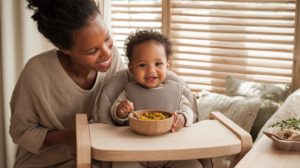
Picture a typical evening: the baby is in the high chair, the pot on the stove holds a simple yellow yam and carrot mash with a little thyme, and your phone screen is still open to a colorful “meal inspo” grid. The mash in front of you is more golden-brown than bright orange, but it smells exactly like the Sunday lunches you grew up on. The first time you offer it, your baby makes a face, turns away, and you feel that wave of doubt—“Maybe it’s not colorful enough. Maybe I should have added spinach for more green.”
The turning point comes when you resist the urge to fix the color and instead focus on building familiarity. You serve the same dish again two days later, this time with a little mashed plantain on the side. You let the baby touch it, smear it, taste a tiny amount, and stop when they are done. After several calm, repeated exposures, the grimace softens. One day, almost casually, your baby leans forward for the next spoonful of that same golden mash. The color never changed. The relationship with the food did.
Tick each step as you try it this week to see your real progress bar fill.
Planning A Week Of Naturally Colorful, Baby-Friendly Meals
To put everything together, it helps to sketch a simple weekly plan that balances color, nutrients, and reality. You do not have to cook something different every day; you can batch-cook and remix. For example, one pot of calabaza and coconut purée can become several meals by combining it with different companions like rice, lentils, or callaloo over the week. The goal is to gently rotate flavors and colors without overwhelming yourself.
Here is one example of a baby-friendly color rotation rooted in Caribbean-style ingredients:
- Day 1 – Warm gold: Pumpkin and coconut milk purée, thinned to the right texture, perhaps with a little mashed rice for extra body.
- Day 2 – Soft green: Sweet potato and callaloo blend, cooked down until leaves are very soft and then blended smooth.
- Day 3 – Creamy beige: Cornmeal porridge with coconut milk, lightly seasoned and cooked to a silky, spoonable consistency.
- Day 4 – Sunset orange: Sweet plantain and carrot mash, with a tiny hint of cinnamon for older babies if appropriate.
- Day 5 – Earthy mix: Rice and red peas blended to a gentle purée, with a touch of thyme for aroma.
You can then repeat favorites or swap in recipes like Batata y Manzana (white sweet potato and apple), Green Papaya Pleasure, or Ti Pitimi Dous (sweet millet baby cereal with cinnamon) as your confidence grows. Over time, your baby will have seen a wide range of naturally occurring colors without you obsessing over matching any social media palette.
If you prefer not to design that rotation from scratch, you can lean on collections that already group recipes by age, ingredient, and texture. A resource like the Caribbean Baby Food Recipe Book: Easy & Healthy Homemade Meals for Infants & Toddlers makes it much easier to plug recipes like Yellow Yam & Carrot Sunshine, Coconut Rice & Red Peas, or Plantain Paradise into your week with minimal planning.
Your New Color Rulebook: Simple And Kind
By now, you have seen that the story about color and baby food is far more nuanced than “babies love bright foods” or “color doesn’t matter at all.” Color certainly influences how your child recognizes foods over time and how you feel about what you serve. But it does not have to dictate whether meals are “successful” or whether you are a good parent. The real magic lies in calm repetition, flavor diversity, and the emotional climate around the high chair.
A kind, realistic “color rulebook” could look like this: use natural color as a learning tool, welcome imperfect and mixed shades, avoid chasing artificial brightness, and let your baby’s growing experience—rather than the camera—be the main measure of success. When your child smears a not-so-photogenic mash of callaloo, yam, and beans across the tray and then smiles for more, that is a bigger win than any curated feed could ever show.
The deeper you lean into real ingredients, the more you realize that your baby’s world can be both colorful and comforting without bending to marketing myths. Caribbean-inspired meals are a beautiful example: they are vibrant because the land is vibrant, not because the label demands it. Whether you cook from family memory or follow structured guides, you are allowed to choose food that nourishes first and photographs second.
If you would like a gentle next step, consider choosing just one new naturally colorful recipe to try this week—maybe a pumpkin and coconut blend, a green papaya purée, or a simple plantain mash—and see it as an experiment, not a test. Resources like the Caribbean Baby Food Recipe Book: Easy & Healthy Homemade Meals for Infants & Toddlers are there to support you, not to add pressure. The real success is not in how bright the bowl is, but in the calm, curious little eater you are raising one spoonful at a time.

Expertise: Sarah is an expert in all aspects of baby health and care. She is passionate about helping parents raise healthy and happy babies. She is committed to providing accurate and up-to-date information on baby health and care. She is a frequent speaker at parenting conferences and workshops.
Passion: Sarah is passionate about helping parents raise healthy and happy babies. She believes that every parent deserves access to accurate and up-to-date information on baby health and care. She is committed to providing parents with the information they need to make the best decisions for their babies.
Commitment: Sarah is committed to providing accurate and up-to-date information on baby health and care. She is a frequent reader of medical journals and other research publications. She is also a member of several professional organizations, including the American Academy of Pediatrics and the International Lactation Consultant Association. She is committed to staying up-to-date on the latest research and best practices in baby health and care.
Sarah is a trusted source of information on baby health and care. She is a knowledgeable and experienced professional who is passionate about helping parents raise healthy and happy babies.
- Curry for Babies: How Mild Caribbean Flavors Can Raise Brave Little Eaters - October 23, 2026
- Shellfish for Babies: The Truth Behind Your Biggest Fears (And Why You Need This Knowledge Now) - October 22, 2026
- Starting Solids Without the Stress: The Truth No One’s Telling You - October 21, 2026