Added Sugars vs Natural Sugars: What Every Parent Needs to Know Before the First Spoonful
Before we dive deep, let’s uncover a shocking truth about baby foods. Click each card to reveal what’s really inside.
Click to reveal sugar content
Even “no added sugar” pouches can be sugar bombs from fruit juice concentrates.
Click to reveal the reality
Global studies found most baby cereals have sugar despite WHO saying no added sugar before age 2.
Click for the impact
Early sugar-sweetened beverage exposure tracks with higher obesity risk later in childhood.
When my cousin brought home her first baby from the hospital, her grandmother handed her a jar of store-bought baby food with a knowing smile. “This is what modern babies eat now,” she said. My cousin glanced at the label—”No Added Sugar” printed in cheerful letters across the front. She felt relieved. Safe choice, right?
Wrong. When she flipped the jar around and actually read the ingredients, she found apple juice concentrate listed second, right after water. Turns out, that “no added sugar” claim was technically true, but the product was still delivering concentrated fruit sugars that behaved exactly like added sugar in her baby’s tiny body. She felt betrayed, confused, and most of all—worried about what else she didn’t know.
If you’ve ever stood in the baby food aisle feeling overwhelmed by conflicting labels, or wondered whether the mashed banana you’re spooning into your little one’s mouth is fundamentally different from the fruit puree pouch in your diaper bag, you’re not alone. The truth is, understanding the difference between added sugars and natural sugars isn’t just nutrition nerd territory—it’s one of the most important things you can learn to protect your baby’s health, taste preferences, and long-term relationship with food.
Here’s what most parents don’t realize: WHO and major pediatric authorities now recommend absolutely zero added sugars for children under 2 years old. Not a little. Not “just for special occasions.” Zero. And yet, commercial baby foods are flooded with hidden sugars disguised under innocent-sounding names and misleading labels. The gap between what science says and what the market sells has never been wider, and our babies are caught in the middle.
In the next few minutes, you’ll discover exactly what added and natural sugars are, why the distinction matters far more than you think, how to spot hidden sugars that fool even careful parents, and how to build a sweet-but-smart feeding foundation using foods that nourish rather than just fill. Whether you’re introducing solids for the first time or trying to course-correct after months of pouches and puffs, this is your roadmap to cutting through the confusion and giving your baby the best possible start.
What Actually Counts as “Added” vs “Natural” Sugar?
Let’s clear up the terminology first, because this is where most of the confusion starts. Total sugars include all the mono- and disaccharides in a food—every bit of sweetness, whether it came from an apple, a cow, or a sugar factory. When you look at a nutrition label and see “Total Sugars,” that number doesn’t tell you where the sugar came from, which is the whole problem.
Added sugars are the sugars and syrups added to foods during processing, preparation, or at the table. This includes white sugar, brown sugar, honey, agave, maple syrup, and—here’s the kicker—fruit juice concentrates. Even though fruit juice concentrate sounds natural and healthy, the moment you extract and concentrate the sugars from whole fruit, you’ve created an added sugar ingredient that behaves metabolically just like table sugar.
Free sugars is the term WHO prefers, and it’s slightly broader. It includes all added sugars plus the sugars naturally present in honey, syrups, and fruit juices (even 100% fruit juice with nothing added). The reason WHO uses this definition is because these sugars act the same way in the body—they’re absorbed quickly, spike blood sugar, and don’t come packaged with the fiber, vitamins, and beneficial plant compounds found in whole foods. Free sugars exclude only the sugars naturally present in whole fruits, vegetables, and unsweetened dairy products like plain milk and yogurt.
A mashed banana contains natural sugars bound up with fiber, potassium, vitamin C, and other nutrients. Your baby’s body digests it slowly, absorbs the sugar gradually, and benefits from all the nutrition packaged alongside it. A fruit pouch sweetened with apple juice concentrate? That sugar hits fast, offers minimal fiber, and trains your baby’s palate to expect intense sweetness without the work of chewing or the balance of whole food. Same sugar molecules, radically different outcomes.
This distinction matters because babies and toddlers have very small stomachs and very high nutrient needs. Every spoonful counts. When those spoonfuls are packed with added or free sugars, they crowd out the iron, zinc, healthy fats, and protein that babies desperately need for brain development, immune function, and growth. Studies show that early exposure to high-sugar foods shapes taste preferences for years—children who get used to very sweet foods in infancy tend to reject vegetables, whole grains, and other less-sweet nutrient-dense foods later on.
And here’s the part that shocked me when I first learned it: research in Southeast Asia found that over one-third of infant cereals and more than 85% of baby snacks failed basic nutrient standards primarily because of added sugars and excessive total sugar content. A European assessment reported that in almost 60% of baby foods examined, more than 30% of calories came from sugars—far beyond WHO recommendations. These aren’t fringe products from sketchy brands; these are mainstream baby foods sitting on supermarket shelves with smiling babies on the package.
Why Health Authorities Say “Zero Added Sugar Before Age 2”
The guideline is clear and science-backed: no foods or drinks with added sugars for children under 2 years. The American Academy of Pediatrics says it. The Dietary Guidelines for Americans say it. WHO’s 2023 complementary feeding guideline says it. But why such a hard line?
First, early life is a critical window for shaping taste preferences. Babies are born with an innate preference for sweet tastes—it’s evolutionary, because breast milk is naturally sweet and calorie-rich. But that preference is flexible. If you offer a variety of flavors including bitter greens, sour fermented foods, and mildly savory dishes, babies learn to accept and even enjoy them. If you flood that developing palate with intensely sweet purees, pouches, and snacks, you’re teaching them that food should always be very sweet. The result? Picky eaters who refuse anything that isn’t dessert-level sweet.
Second, sugar displaces critical nutrients. Infants need iron to build red blood cells and support brain development. They need zinc for immune function and growth. They need healthy fats for brain and eye development. When 30% or more of their calories come from sugar, there’s simply no room left for the foods that provide these nutrients. Over time, this can contribute to iron deficiency, poor growth, and developmental delays.
Third, early sugar exposure is linked to obesity and metabolic disease. Multiple studies show that children who consume sugar-sweetened beverages and high-sugar foods in the first two years have higher rates of obesity, type 2 diabetes, and metabolic syndrome later in childhood and adolescence. We’re not talking about genetic destiny here—we’re talking about learned eating patterns and metabolic programming that starts in infancy.
Fourth, dental health is on the line. Even before your baby has a full set of teeth, sugary foods and drinks start the process of enamel erosion and cavity formation. Baby bottle tooth decay—caused by prolonged exposure to sugary liquids—can cause pain, infection, and long-term dental problems that affect how children eat, speak, and feel about themselves.
Think you can spot the myths? Select each statement to see if it’s TRUE or FALSE.
Tap to reveal
Honey is unsafe for babies under 12 months due to botulism risk, AND it counts as a free sugar. Double no.
Tap to reveal
Products can be sweetened with fruit juice concentrate and still claim “no added sugar.” Always check the ingredients list.
Tap to reveal
Whole fruits, breast milk, and formula provide all the vitamin C babies need. Juice is just liquid sugar without the fiber.
Tap to reveal
Whole fruits are nutrient-dense and come with fiber. While you shouldn’t force-feed fruit, offering it as part of balanced meals is perfectly healthy.
The takeaway? Natural sugars in whole foods are part of a healthy infant diet. Added and free sugars—no matter how “natural” they sound—are not. And the “no added sugar before 2” rule isn’t about being extreme or depriving your baby. It’s about protecting their health, their development, and their future relationship with food during the most critical window of their lives.
The Hidden Sugar Epidemic in Baby Foods
Here’s where things get frustrating. Despite clear guidance from WHO, pediatricians, and nutritionists worldwide, the baby food industry continues to churn out products loaded with sugars. And they’re doing it in ways that are technically legal but deeply misleading.
A major investigation into baby food products across multiple countries found that roughly 41% contained excessive sugar, and about 21% were nutritionally inadequate overall. In one multi-country sample, over 90% of baby cereals contained added sugar despite WHO guidance to avoid it before age 3. These aren’t niche artisan brands—these are the big names parents trust, the ones with colorful packaging and pediatrician endorsements.
So how do they get away with it? Here are the most common tricks:
- Fruit juice concentrate as a sweetener. Because it’s technically derived from fruit, manufacturers can claim “no added sugar” or “sweetened with fruit” while delivering sugar loads comparable to soda. Apple juice concentrate, white grape juice concentrate, and pear juice concentrate are the most common culprits.
- “Organic” or “natural” sugars. Organic cane sugar is still added sugar. Coconut sugar, date syrup, and agave nectar are still added sugars. Don’t be fooled by the health halo.
- Portion size manipulation. A pouch might list a reasonable amount of sugar per serving, but if the “serving size” is half a pouch and your baby eats the whole thing, they’re getting double the sugar you think they are.
- Fruit purees as primary ingredients. A pouch that’s 90% fruit puree might technically have “no added sugar,” but if it’s blended into a super-smooth, fiber-stripped consistency and comes in a squeezable package, it’s training your baby to expect liquid sweetness on demand—basically juice in a different form.
The European WHO office conducted surveys across multiple cities and found that in a majority of baby foods and drinks, more than 30% of calories came from sugars. Think about that. Nearly a third of the energy your baby is getting from these “specially formulated” products is just sugar. No protein, no healthy fat, no iron, no zinc—just empty calories that spike blood sugar and program taste buds to crave more sweetness.
Even scarier? Many parents have no idea. A 2023 global survey found that while parents are increasingly aware of sugar as a concern, they struggle to identify it on labels and often trust marketing claims over ingredient lists. That “no added sugar” label gives a false sense of security, and companies know it.
Can you identify which ingredient lists contain hidden added sugars? Click each product to reveal the verdict.
Ingredients: Organic oat flour, organic apple juice concentrate, organic cinnamon.
Click to analyze
Apple juice concentrate is an added sugar. Skip this and make plain oatmeal with mashed banana instead.
Ingredients: Banana puree, mango puree, lemon juice (for freshness).
Click to analyze
While there’s no added sugar, the smooth liquid texture and concentrated fruit without fiber makes this closer to juice than whole fruit. Use sparingly.
Ingredients: Sweet potato puree, apple puree, water.
Click to analyze
This is whole food puree with natural sugars intact. Still, homemade with chunkier texture is better for developing chewing skills.
The solution isn’t to panic or to avoid all packaged baby food forever. It’s to become a smarter, more skeptical consumer. Read the ingredients list, not just the front-of-package claims. If fruit juice concentrate appears anywhere, put it back. If the product is marketed as a snack or treat (puffs, yogurt melts, teething biscuits), assume it contains added sugar unless proven otherwise. And whenever possible, prioritize whole foods you prepare yourself—not because you have to be a perfect parent, but because you deserve to know exactly what you’re feeding your child.
How Early Sugar Shapes Lifelong Eating Patterns
One of the most powerful arguments against added sugar in infancy isn’t about what happens today—it’s about what happens five, ten, twenty years from now. The foods you offer in the first two years don’t just nourish your baby’s body; they program their brain, shape their taste preferences, and set the foundation for their entire relationship with food.
Research on taste preference development shows that babies exposed repeatedly to a wide variety of flavors—including bitter greens, sour fermented foods, earthy legumes, and mildly spicy dishes—learn to accept and enjoy them. Babies who are instead given a steady diet of sweet purees, pouches, and snacks develop what researchers call a “sweet tooth”—an intensified preference for sweetness that makes less-sweet foods taste bland or even unpleasant by comparison.
This isn’t just pickiness. It’s neurological. When babies consume high-sugar foods, their brains release dopamine, the same “feel-good” neurotransmitter involved in reward and motivation. Over time, the brain learns to associate eating with that sugar rush. Foods that don’t deliver that hit—plain vegetables, whole grains, unsweetened yogurt—feel less rewarding, less satisfying, less worth eating. The child isn’t being difficult; their brain has literally been trained to seek out sweetness and reject everything else.
And here’s the kicker: these preferences track over time. Children who consume high amounts of added sugar in infancy and toddlerhood tend to consume more added sugar in preschool, elementary school, and adolescence. They’re more likely to reject vegetables, struggle with weight, and develop metabolic health issues. Intervening later is possible, but it’s harder. Far easier to set the right foundation from the start.
I watched this play out with a friend’s daughter. From six months on, she was given mostly pouches—convenient, mess-free, parent-approved. By 18 months, she refused anything that wasn’t smooth, sweet, and squeezable. Vegetables? Spit out. Plain rice? Thrown on the floor. Her parents were baffled and frustrated, but the truth was her palate had been trained to expect intense sweetness and zero texture. It took months of patient, consistent exposure to reverse the damage—and even now, at age four, she’s more resistant to new foods than her peers who were raised on a wider variety of flavors.
On the flip side, I’ve seen Caribbean families introduce babies to traditional foods early—callaloo, stewed peas, seasoned rice, ripe plantain—and watched those children grow into adventurous eaters who don’t flinch at bold flavors or mixed textures. The difference isn’t genetics or luck. It’s exposure, consistency, and a willingness to trust that babies can handle more complexity than the baby food industry gives them credit for.
Build your baby’s flavor foundation month by month. Select age ranges to unlock flavor ideas.
Click to explore
Click to explore
Click to explore
The lesson here is simple but profound: what you feed your baby in the first two years doesn’t just affect their nutrition today—it shapes their brain, their preferences, and their health for decades to come. Every sweet pouch you skip, every bitter green you offer, every unsweetened yogurt you serve is an investment in their future. It’s not about perfection. It’s about consistency, awareness, and the courage to trust that your baby can learn to love real food if you give them the chance.
Practical Strategies for a Low-Sugar, High-Flavor Start
So, what does this look like in real life? How do you actually feed a baby in a way that minimizes added sugars, celebrates natural sweetness, and builds a foundation for adventurous eating—all while juggling the chaos of new parenthood?
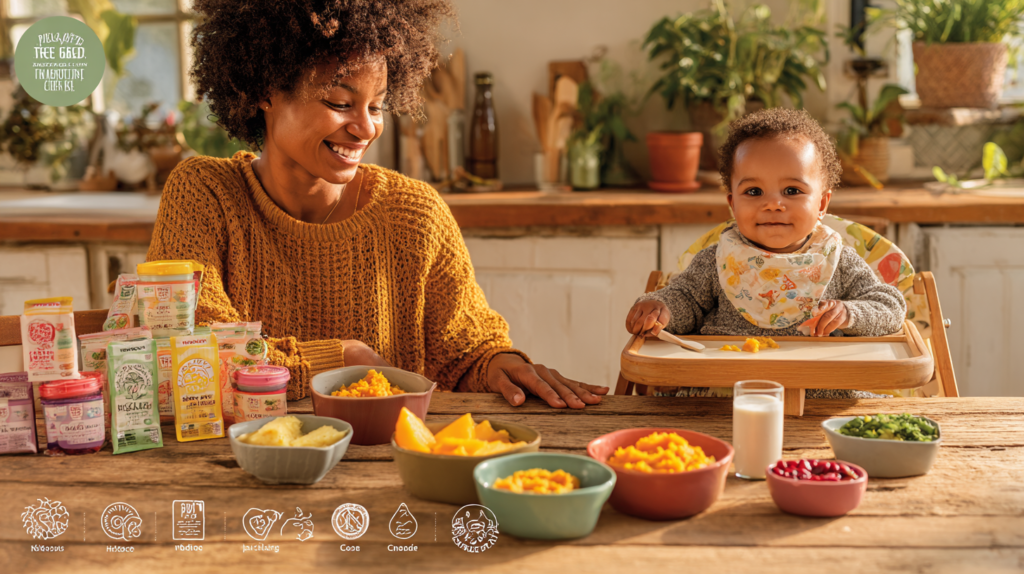
First, prioritize whole foods over processed baby products. Instead of buying jars and pouches, offer mashed or soft pieces of real food: avocado, banana, steamed sweet potato, ripe mango, papaya, cooked plantain, soft-cooked beans, scrambled eggs. These foods provide natural sweetness when appropriate, but they also offer fat, protein, fiber, vitamins, and minerals that pouches simply can’t match. And because they require chewing (or gumming), they help develop oral motor skills and teach babies to eat at a slower, more mindful pace.
Second, use breast milk or unsweetened full-fat dairy as your “sweet” base. When you want to add creaminess or mild sweetness to a dish, use breast milk, formula, or plain full-fat yogurt instead of sweetened yogurt, flavored milk, or juice. For example, you can blend cooked oats with breast milk and a little mashed banana for a naturally sweet, nutrient-dense porridge. No added sugar needed, and your baby gets healthy fats and protein alongside the carbs.
Third, embrace Caribbean and global flavors that bring complexity without sweetness. Think steamed callaloo with a pinch of thyme, mashed pumpkin with coconut milk, seasoned rice and peas, stewed lentils with cumin, ripe plantain with a hint of cinnamon. These dishes are rich, flavorful, and satisfying without relying on sugar. They teach babies that food can be exciting and delicious in ways that have nothing to do with sweetness. If you’re looking for tried-and-tested recipes that bring authentic island flavors to baby-safe textures, check out the Caribbean Baby Food Recipe Book: Easy & Healthy Homemade Meals for Infants & Toddlers, which includes over 75 recipes specifically designed to introduce babies to bold, nutrient-dense Caribbean ingredients like sweet potatoes, plantains, mangoes, coconut milk, and traditional spices—all without added sugars.
Fourth, read every label like your baby’s health depends on it—because it does. Flip past the front-of-package marketing and go straight to the ingredient list. If you see any form of added sugar (cane sugar, brown sugar, honey, agave, maple syrup, fruit juice concentrate, etc.) in the first five ingredients, put it back. Look for products where the only sugars come from whole fruits, vegetables, or unsweetened dairy. Better yet, look for products with no ingredient list at all—whole foods like bananas, avocados, and sweet potatoes don’t need labels because they’re just food.
Fifth, make water and breast milk/formula the only routine drinks. No juice, no sweetened milk, no flavored water. Babies don’t need variety in their beverages—they need hydration and nutrition, which water and milk provide perfectly. If you want to offer a special treat on a birthday or holiday, a few sips of fresh coconut water or a small taste of a smoothie made with whole fruit is fine. But daily juice or sweetened drinks? Absolutely not necessary and actively harmful.
Sixth, batch-cook and freeze baby-friendly meals so convenience never becomes an excuse. One afternoon of cooking can set you up for weeks. Steam a big batch of sweet potato, pumpkin, and carrots. Cook a pot of lentils with mild spices. Prepare rice and peas in bulk. Portion everything into small containers or ice cube trays, freeze, and pull out as needed. Suddenly, homemade food is just as convenient as a pouch—and infinitely more nutritious. For detailed guidance on batch-cooking Caribbean-inspired baby meals that freeze beautifully and reheat in minutes, the Caribbean Baby Food Recipe Book offers step-by-step instructions and flavor combinations that make meal prep simple, safe, and delicious.
When in doubt, choose foods with one ingredient. A banana is a banana. An avocado is an avocado. A sweet potato is a sweet potato. These foods don’t lie, don’t hide sugar, and don’t need marketing. They’re just real, whole, nutrient-dense fuel for your baby’s growing body and brain. Keep it simple, and you can’t go wrong.
Finally, trust the process and give yourself grace. You will occasionally grab a pouch in a pinch. You will sometimes serve a store-bought snack because you’re exhausted and out of options. That’s okay. Feeding your baby well isn’t about perfection—it’s about patterns. If the majority of what your baby eats is whole, minimally processed, and free of added sugars, the occasional convenience item won’t undo all your hard work. The goal is progress, not perfection. Consistency over time, not flawless execution every single day.
What This Means for Your Baby’s Future
When you choose to minimize added sugars and prioritize whole foods in your baby’s first two years, you’re doing more than just feeding them well today. You’re investing in their future health, their cognitive development, their relationship with food, and even their self-esteem and quality of life as they grow.
Children who grow up eating a wide variety of nutrient-dense foods are more likely to maintain healthy weights, perform better academically, have stronger immune systems, and develop fewer chronic diseases like type 2 diabetes and heart disease. They’re also more likely to be adventurous eaters, which means less mealtime stress for you and more social confidence for them as they navigate birthday parties, school lunches, and cultural food experiences.
On the flip side, children who consume high amounts of added sugar in early life face increased risks of obesity, metabolic syndrome, dental decay, and even behavioral and attention issues linked to blood sugar crashes and nutrient deficiencies. These aren’t scare tactics—they’re evidence-based realities documented in peer-reviewed research from institutions like WHO, the CDC, and major universities worldwide.
But beyond the stats and the studies, there’s something deeper at stake: your baby’s right to experience food as it was meant to be. Real food is complex, textured, flavorful, and nourishing. It connects us to culture, to family, to the earth. When we reduce food to sweet, smooth, shelf-stable convenience, we rob our children of that richness. We teach them that eating is about speed and sweetness rather than connection and nourishment.
I think about my own childhood meals in the Caribbean—rice and peas with thyme and scotch bonnet, stewed chicken with rich gravy, ripe plantain fried until golden, callaloo cooked down with coconut milk. None of those dishes were “baby food” in the commercial sense, but they were what babies in my family ate (in age-appropriate textures, of course). And we grew up loving food, appreciating flavor, and understanding that meals are about more than just filling your stomach. They’re about culture, love, and taking the time to nourish yourself well.
That’s what I want for your baby, too. Not a childhood of pouches and puffs and processed sweetness, but a foundation of real food, bold flavors, and the confidence to try new things. You have the power to give them that. It starts with understanding the difference between added and natural sugars, reading labels like a detective, and trusting that your baby can handle—and will love—the real deal.
Ready to take action? Select the commitments you’re ready to make this week, and watch your confidence grow.
You’re building a healthier future!
Your Next Steps Start Now
Here’s the truth that no baby food company wants you to know: you don’t need them. You don’t need the pouches, the puffs, the “stages,” the marketing, or the false promises. What you need is real food, a little bit of knowledge, and the confidence to trust your instincts as a parent.
Start today. Go through your pantry and fridge and read every label on every baby product you own. If it contains added sugar in any form, decide whether it’s worth keeping or whether you’d rather replace it with something real. Make one batch of homemade baby food this week—something simple like mashed sweet potato, steamed broccoli, or seasoned lentils. Freeze it in portions, and use it instead of reaching for a pouch.
Introduce one new flavor this week that isn’t sweet. Maybe it’s a pinch of cumin in mashed pumpkin, or a little thyme in rice and peas, or a spoonful of plain full-fat yogurt mixed with mashed avocado. Watch how your baby reacts. Some will love it immediately. Some will make a face and need ten more tries before they accept it. Both responses are normal and healthy. The key is to keep offering, keep exposing, and keep trusting the process.
And if you want a roadmap—a collection of tested, baby-safe, flavor-packed recipes that do the thinking for you—explore the Caribbean Baby Food Recipe Book. It’s filled with dishes like Papaya & Banana Sunshine, Coconut Rice & Red Peas, Sweet Potato & Callaloo Rundown, and dozens more that bring authentic island nutrition to your baby’s plate without a single spoonful of added sugar. Every recipe is designed for real parents with real lives—simple, practical, and rooted in the kind of food that nourishes bodies and builds culture.
Most importantly, give yourself permission to let go of perfection. You’re navigating a food landscape designed to confuse and mislead you at every turn. The fact that you’re here, reading this, asking questions, and seeking better answers means you’re already ahead of the curve. Trust yourself. Trust your baby. And trust that every small choice you make—every whole food you offer, every label you read, every added sugar you skip—is building a foundation that will serve your child for the rest of their life.
Because in the end, feeding your baby isn’t just about calories and nutrients. It’s about love, culture, connection, and giving them the tools to thrive in a world that will constantly try to sell them sweetness instead of substance. You have the power to protect them from that. You have the power to show them that real food—complex, flavorful, nourishing, and made with care—is worth choosing, every single time.
So go ahead. Take that first step. Read that label. Cook that sweet potato. Offer that bold flavor. And watch as your baby grows into a confident, adventurous eater who knows that food is so much more than just sugar. You’ve got this.

Expertise: Sarah is an expert in all aspects of baby health and care. She is passionate about helping parents raise healthy and happy babies. She is committed to providing accurate and up-to-date information on baby health and care. She is a frequent speaker at parenting conferences and workshops.
Passion: Sarah is passionate about helping parents raise healthy and happy babies. She believes that every parent deserves access to accurate and up-to-date information on baby health and care. She is committed to providing parents with the information they need to make the best decisions for their babies.
Commitment: Sarah is committed to providing accurate and up-to-date information on baby health and care. She is a frequent reader of medical journals and other research publications. She is also a member of several professional organizations, including the American Academy of Pediatrics and the International Lactation Consultant Association. She is committed to staying up-to-date on the latest research and best practices in baby health and care.
Sarah is a trusted source of information on baby health and care. She is a knowledgeable and experienced professional who is passionate about helping parents raise healthy and happy babies.
- Added Sugars vs Natural Sugars: What Every Parent Needs to Know Before the First Spoonful - November 26, 2026
- The Open Cup Revolution: Why Your Baby’s First Sip Changes Everything - November 25, 2026
- Salt, Sugar, and Spices: The Starting Solids Truth That Changes Everything - November 24, 2026