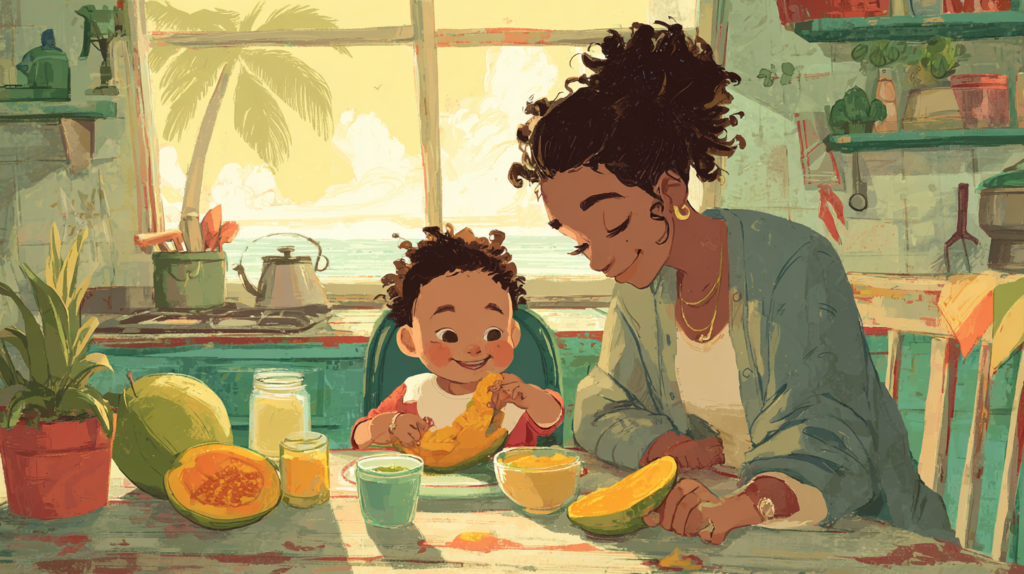
Baby Myths & Facts: Do Babies Really Need Teeth to Eat Solid Food?
Gut check moment: In your family, what have you heard most often?
In Caribbean families and across the globe, one line gets passed down like a well‑worn lullaby: “Don’t start solids until the baby has teeth.” It sounds harmless, even loving, but it quietly delays important nutrients, feeding skills, and your baby’s confidence at the table.
As a Caribbean parent raising a little one between mango trees and modern pediatric guidelines, it became crystal clear that this “teeth first” advice is not just outdated—it can actually get in the way of healthy, joyful eating. In this guide, you will see exactly why babies do not need teeth to start solids, how to know when your baby is truly ready, and how to offer safe, delicious foods (including island‑inspired options) from day one.
By the end, you will be able to smile at anyone who says “no teeth, no solids” and think: “Bless your heart—but I’ve got the facts, the skills, and a whole menu of baby‑friendly recipes ready to go.”
Why This Myth Is So Sticky (And So Wrong)
The “baby needs teeth to eat solid food” myth comes from a time when people used whatever obvious signs they could see to guess when a child was ready for stronger foods. Teeth were easy to notice, so they became a shortcut for maturity, strength, and even “good health.” In older medical writing, teething was blamed for everything from fevers to diarrhea, and tougher foods were often connected to that same stage.
Modern infant nutrition science, though, has flipped that logic. Health organizations around the world now recommend starting complementary foods around six months of age, based not on tooth eruption but on a combination of age and developmental skills. That is because babies’ nutritional needs change sharply around this time—especially for iron and zinc—and their oral‑motor skills are ready to start practicing real chewing, even if their smile is still completely gummy.
Here is the part that usually shocks grandparents: the teeth that do the real grinding work—the molars—often come much later than the first birthday. If we waited for those before serving anything but milk, most toddlers would miss the critical window when they are most open to new textures and flavors.
What Actually Matters: Readiness Signs, Not Teeth
When pediatric dietitians, speech‑language therapists, and pediatricians talk about starting solids, they focus on skills, not smiles. The big question is not “How many teeth?” but “What can this baby’s body and mouth do right now?”
Core readiness signs include:
- Baby is around 6 months old (for most full‑term babies).
- Baby can sit with minimal support and hold their head steady.
- The tongue‑thrust reflex has faded, so food is not automatically pushed out.
- Baby can move food from the front of the mouth to the back and swallow.
- Baby shows interest in food: watching you eat, reaching for your plate, opening their mouth when food approaches.
What does not belong on the readiness checklist:
- Number of teeth or presence of molars.
- Pressure from relatives to start earlier “so baby sleeps better.”
- Marketing on jars and boxes telling you when to buy specific stages.
- Fear alone—nervousness is normal, but it is not a medical sign.
Tap each skill your baby already has. Watch your “readiness bar” fill up.
Most babies will tick several of these boxes somewhere between 5½ and 7 months. Rather than circling a date on the calendar or waiting for a tiny tooth to pop through, use these skills as your green light. Teeth can come whenever they are ready; solids should come when your baby is ready.
Stats You Should Know: Why Waiting for Teeth Can Backfire
Behind the cozy family myths sit some uncomfortable numbers. In many countries, only a minority of babies receive complementary foods at the right time. In India, for example, survey data have shown that roughly two out of five infants actually start solids on time, and only a small fraction of children between 6 and 23 months get a “minimum acceptable diet” by public‑health standards.
Why does that matter? Around six months, your baby’s stores of iron and certain other nutrients begin to run low. Breastmilk or formula still do a lot of heavy lifting, but they no longer cover everything. When solids are delayed—for example, because a well‑meaning elder insists on waiting until four or six teeth appear—babies can quietly slip into iron deficiency or miss out on other key nutrients.
Research from different regions tells a similar story: babies who start solids too early (before 4 months) or too late (well past 7–8 months) face higher risks of nutrition problems, later feeding difficulties, and, in some cases, higher chances of obesity. The sweet spot is not “after teeth”—it is during the window when the body needs extra nutrients and the brain is wide open to new sensations.
| Timing of solids | What tends to happen |
|---|---|
| Before ~4 months | Higher risk of choking, digestive upset, and interfering with breastmilk or formula intake. |
| Around 6 months (with readiness signs) | Supports iron and zinc intake, develops chewing skills, and fits with global health guidelines. |
| After 7–8 months, waiting “for teeth” | Greater risk of nutrient shortfalls and texture aversion; baby may become picky or anxious with food. |
On top of that, careful studies of baby‑led weaning and spoon‑feeding have found that when parents follow safety guidance, the choking rates are similar. In other words, the biggest risk factor is not “no teeth,” but how food is prepared, offered, and supervised.
What Experts Actually Say (Hint: It’s Not “Wait for Molars”)
If you listen to pediatric nutritionists, pediatricians, and feeding therapists, a clear chorus emerges. Global and regional guidelines—from North America to the Nordics—emphasize that complementary foods should start around six months, guided by readiness signs, not by how many teeth you can count.
Many infant‑feeding experts also highlight that molars, the real grinding teeth, arrive well after the first birthday. Yet long before that, babies should already be exploring a range of soft textures, moving toward family foods, and practicing chewing motions. Their jaws, tongue, cheeks, and gums are more than capable of handling this, especially when you choose sensible textures.
On social media, you will see pediatricians and dietitians debunking phrases like “Wait until molars to start solids” or “Babies can only have purees before they have teeth.” They point out that clinging to these ideas often holds parents back from progressing textures, feeding autonomy, and cultural foods that the whole family enjoys.
Tap each card once to guess if it is a Myth or a Fact. Tap again to reveal the expert note.
At the same time, professionals may differ on how to start. Some prefer beginning with spoon‑fed purees and gradually thickening and chunking the texture. Others love baby‑led weaning from the start, where baby feeds themselves soft strips and chunks of food. But here is the unifying message: whichever path you choose, teeth are not the gatekeeper. Skills, safety, and responsive feeding are.
Gagging, Choking & The “No Teeth” Fear
One of the biggest reasons caregivers cling to the teeth myth is fear. Watching a baby gag on a new texture is nerve‑wracking, even when you know, logically, that gagging is part of learning. Without teeth, that fear explodes: “If my baby doesn’t have teeth, how will they chew? Won’t everything just get stuck?”
Here is the crucial difference: gagging is a protective reflex; choking is an emergency. When babies are first learning solids, the gag reflex sits much further forward in the mouth than it does in adults. That means they will gag often as they experiment, even on very soft foods—but in most cases, they work the food forward and spit it out or reposition it.
Choking, on the other hand, is silent and serious. It usually happens when a food is the wrong shape, too hard, too round, or offered in a way that does not respect the baby’s abilities. This is true whether or not the baby has teeth. An almond is dangerous for a one‑year‑old with four teeth; a soft ripe banana strip is safe for a six‑month‑old with none.
Caribbean‑Inspired First Foods Babies Can Eat Without Teeth
This is where feeding gets fun. Caribbean kitchens are packed with baby‑friendly ingredients: sweet potatoes (batata), pumpkin (calabaza), plantain, callaloo, coconut milk, beans, rice, and tropical fruits like papaya, banana, and avocado. Many of these already feature in gentle, slow‑cooked dishes that can be adapted for even a brand‑new solids‑starter.
Some examples, inspired by a Caribbean baby recipe index, include smooth purées like Baigan Choka Smooth (eggplant), Sweet Potato & Callaloo Rundown, Yellow Yam & Carrot Sunshine, Cook‑Up Rice & Beans blended to silky texture, or a soft Cornmeal Porridge made with coconut milk. These bowls are bursting with flavor and culture, yet soft enough to be mashed completely with gums—no teeth required.
If you want ready‑made guidance, step‑by‑step textures, and over 75 island‑inspired ideas for babies 6 months and up, you can explore the Caribbean Baby Food Recipe Book: Easy & Healthy Homemade Meals for Infants & Toddlers. It is designed to ease you into solids with recipes that respect both nutrition science and Caribbean flavor.
Tap one option below that feels closest to your style. Get a suggested mini‑menu.
Whichever path you choose, you can build on staples like Amerindian Farine Cereal, Cook‑Up Rice & Beans Smooth, or Ti Pitimi Dous (sweet millet baby cereal with cinnamon), adjusting texture from smooth to gently lumpy as your baby’s skills grow. The same pot that makes your family’s callaloo or pumpkin and coconut dish often doubles as baby’s meal when you set aside a no‑salt, no‑chili portion to blend or mash.
Over time, those smooth beginnings can evolve into heartier options like Cassareep Sweet Potato mash, Stewed Peas Comfort, or soft plantain and beef for older babies—still easy to handle with gums, but introducing more complex flavors and textures.
Step‑By‑Step: From First Bite To Family Plate
Think of solids not as a single event—“We started solids today!”—but as a learning curve. Your baby moves from exploring, to practicing, to participating. Teeth will come and go during this journey, but they are not the main driver.
A simple, skill‑based progression might look like this:
- Weeks 1–2: Very smooth foods—thin purées, mashed foods thinned with breastmilk, formula, or water; served by spoon or allowed on a pre‑loaded spoon baby brings to their mouth.
- Weeks 3–5: Thicker purées and soft mashed foods with tiny soft lumps, like fork‑mashed sweet potato or pumpkin, or blended stewed peas with a bit more body.
- Weeks 6–8: Soft finger foods baby can hold and gnaw, such as ripe banana fingers, steamed carrot sticks, or soft wedges of calabaza, alongside mashed spoon foods.
- Beyond 2 months of solids: Increasing variety in textures and flavors, including soft rice and bean combinations, finely shredded meats in sauces, and small soft lumps they need to manage with their tongue and gums.
Throughout this time, your baby’s iron‑rich foods—like lentils, beans, fortified baby cereals, and appropriate meats or fish—play a crucial role, especially if you live in a country where anemia is common. Delaying those foods while you wait for teeth means delaying essential nutrients.
As you move through these stages, having a trusted roadmap of recipes helps, especially if you want to honor Caribbean flavors without overloading babies with salt, sugar, or heat. That is exactly what resources like the Caribbean Baby Food Recipe Book: Easy & Healthy Homemade Meals for Infants & Toddlers are built for—guiding you toward nutritionally balanced, culturally rooted meals for each age and skill level.
Real‑World Challenges: Family Pressure, Mixed Advice & Social Media Noise
If you are feeling tugged in ten directions, you are not alone. Parents get conflicting messages from relatives, health workers, baby food marketing, and social media. One aunt may swear your baby is “starving” and needs cereal in the bottle at three months. Another might panic at the idea of a 7‑month‑old without teeth gnawing a piece of ripe banana.
In some healthcare settings, not all professionals are up to date on texture progression or baby‑led weaning research. You might hear one expert encourage finger foods at six months and another insist on smooth purees until teeth appear. Neither is trying to mislead you; they are often drawing on older training or limited exposure to newer guidelines.
Online communities can help—but they can also make things worse. Fear‑driven stories about gagging videos or choking scares easily go viral, while calm, evidence‑based explanations spread more slowly. Parenting forums show how many caregivers remain deeply worried about “no teeth” and may wait months longer than needed to move beyond purées.
From Myth To Action: A Simple Plan For Confident Toothless Feeding
So how do you move from “My family says wait for teeth” to “My baby is happily mashing callaloo with their gums” in real life? It comes down to three pillars: education, practice, and preparation.
Education means understanding the difference between readiness signs and myths, learning which nutrients matter most at this age, and knowing how textures progress over time. Practice means giving your baby frequent, low‑pressure opportunities to explore food—touching, smelling, tasting, and spitting out as needed. Preparation means choosing foods and recipes that fit your baby’s stage, culture, and your capacity as a parent.
In a Caribbean kitchen, that might look like serving very soft Calabaza con Coco purée one day, then offering a barely‑textured version of Sweet Potato & Callaloo Rundown the next, then adding a tiny strip of ripe plantain or avocado as a finger food while still letting your baby enjoy spoon‑fed bites.
If you would like ready‑tested recipes tailored to each stage, including iron‑rich porridges, silky legumes, and gentle adaptions of family dishes like Cook‑Up Rice & Beans Smooth or Simple Metemgee‑Style Mash, the Caribbean Baby Food Recipe Book: Easy & Healthy Homemade Meals for Infants & Toddlers can act as your kitchen coach alongside your baby’s pediatrician.
Tap the statement that sounds most like you right now. Get a tailored reframe.
Walking Away With Confidence (Not Just Information)
The teeth myth survives because it is simple and memorable—but that does not make it true. Babies around six months are built to start learning how to eat long before their mouths are filled with teeth. Their gums are strong, their reflexes are protective, and their brains are hungry for new tastes and textures.
When you shift from “I’m waiting for teeth” to “I’m watching for readiness signs and planning safe, soft foods,” you step into a more confident, evidence‑based role as your baby’s feeding guide. You choose textures carefully, avoid genuine choking hazards, and keep breastmilk or formula as the nourishing backbone while solids teach skills and supply extra nutrients.
Most importantly, you turn mealtimes into a space where your baby can enjoy the flavors of home—from papaya and banana blends to rice and peas purées and silky pumpkin and coconut bowls—without waiting months for a toothy grin. If you want a structured, Caribbean‑inspired roadmap to help you put all of this into practice night after night, explore the Caribbean Baby Food Recipe Book: Easy & Healthy Homemade Meals for Infants & Toddlers and let your baby’s journey with solids be as rich, vibrant, and joyful as the island table you love.

Expertise: Sarah is an expert in all aspects of baby health and care. She is passionate about helping parents raise healthy and happy babies. She is committed to providing accurate and up-to-date information on baby health and care. She is a frequent speaker at parenting conferences and workshops.
Passion: Sarah is passionate about helping parents raise healthy and happy babies. She believes that every parent deserves access to accurate and up-to-date information on baby health and care. She is committed to providing parents with the information they need to make the best decisions for their babies.
Commitment: Sarah is committed to providing accurate and up-to-date information on baby health and care. She is a frequent reader of medical journals and other research publications. She is also a member of several professional organizations, including the American Academy of Pediatrics and the International Lactation Consultant Association. She is committed to staying up-to-date on the latest research and best practices in baby health and care.
Sarah is a trusted source of information on baby health and care. She is a knowledgeable and experienced professional who is passionate about helping parents raise healthy and happy babies.
- Baby Myths & Facts: Do Babies Really Need Teeth to Eat Solid Food? - November 22, 2026
- Your 7-Month-Old’s Feeding Revolution: The Skills They’re Hiding (And The Foods That Unlock Them) - November 21, 2026
- The Starting Solids Revolution: Why Everything Your Grandmother Told You Just Changed - November 20, 2026