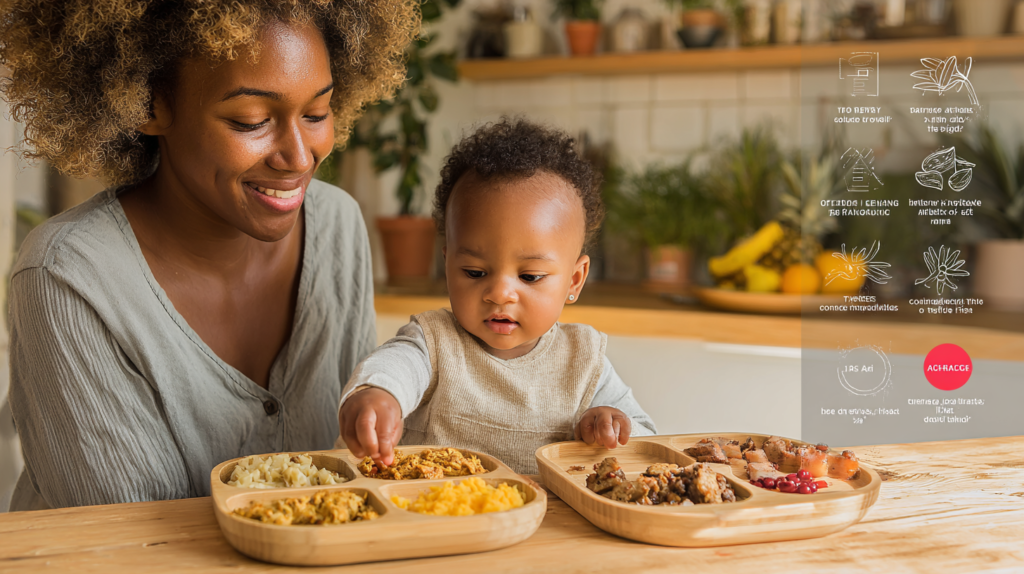
The Truth About Tough Meats: When Your Baby Can Really Handle Them (And The Shocking Mistake Most Parents Make)
Tap the food below that you think is SAFEST for a 7-month-old baby:
Here’s something that might surprise you: the meat itself isn’t the problem. It’s what we do with it—or more accurately, what we don’t do with it—that creates danger for our babies. Every single day, thousands of well-meaning parents serve meat to their babies in ways that could lead to choking, not because they don’t care, but because nobody told them the truth about texture, timing, and preparation.
I remember the first time my grandmother watched me prepare meat for my baby. She looked at me like I’d lost my mind. “Yu mean fi tell mi seh di baby cyaan nyam proper meat yet?” But here’s the thing—she was both right and wrong. Babies can absolutely eat meat starting around six months, but the traditional Caribbean way of slow-cooking until tender, moist, and falling apart? That’s actually the secret pediatricians and feeding experts have been recommending all along.
The Meat Paradox Nobody Talks About
Around six months, when babies start solid foods, their bodies desperately need iron and zinc—nutrients that meat provides better than almost any other food. The World Health Organization now explicitly recommends that animal-source foods, including meat, should be among baby’s early complementary foods. Yet during this exact same window when babies need meat most, their oral-motor skills are still developing, making tough or chewy meat one of the top choking hazards for infants and toddlers.
children per year visit emergency departments in the U.S. for food-related choking injuries, with meat accounting for approximately 12% of pediatric choking events.
This creates what I call the “meat paradox”: your baby needs it nutritionally, but serving it wrong could be dangerous. The solution isn’t to avoid meat—it’s to understand the massive difference between meat textures and when each type becomes safe.
“Babies should wait until they have teeth before eating meat.”
Babies can start properly prepared meat at 6 months, often before they have teeth! They use their powerful gums to mash soft, moist meat. Teeth actually increase choking risk with tough meat because babies can bite off chunks they can’t safely swallow.
What Makes Meat “Tough”?
When pediatricians and feeding experts talk about “tough meat,” they’re referring to meat that is fibrous, chewy, dry, stringy, or presented in large resistive pieces. Think about these examples:
- Steak strips or chunks that require strong chewing
- Dry roasted meat without sufficient moisture
- Tough cuts like certain parts of goat, mutton, or beef that haven’t been cooked long enough
- Meat with gristle, cartilage, or visible fat that creates resistance
- Large pieces requiring coordinated oral-motor skills to break down
In contrast, “safe meat” for babies means meat that’s been cooked until extremely tender, is moist (often mixed with broth, sauce, or gravy), and is offered in textures appropriate for the baby’s developmental stage—whether that’s pureed, finely shredded, or in very soft, moist pieces.
Which cooking method creates the SAFEST meat texture for babies?
The Iron Crisis in Infancy
Here’s why we can’t just skip meat and wait until toddlerhood: iron and zinc are identified as “nutrients of concern” for breastfed infants beyond four to six months. Breastmilk alone only meets about 60% of an infant’s nutritional needs between 6-12 months. The rest must come from complementary foods, and meat provides highly bioavailable iron and zinc that plant-based sources simply can’t match in the same quantities.
National data shows that many infants aged 6-12 months consume insufficient meat and other protein foods, leading to iron intakes that fall short of recommendations. In some studies, nearly half of infants had late introduction of meat and meat alternatives, despite guidelines encouraging timely iron-rich foods. The consequences? Iron deficiency can impact cognitive development, growth, and long-term health outcomes.
of Indian children aged 6-23 months meet minimum dietary diversity, with flesh foods (meat, fish, poultry) being among the least consumed food groups despite their critical nutritional importance.
This is where Caribbean cooking traditions actually shine. When mi madda cook her curry goat or stew beef, she does it low and slow until the meat literally falls apart. That traditional method—whether it’s Jamaican brown stew chicken, Guyanese metemgee, or Trini curry—creates exactly the tender, moist texture that babies can safely eat. We weren’t necessarily thinking about baby feeding when we developed these methods, but it turns out our ancestors were onto something nutritionally brilliant.
The Developmental Timeline Nobody Explains
The confusion about when babies can handle different meat textures stems from a lack of clear, age-specific guidance. Professional bodies agree on introducing complementary foods around six months, but what changes between six months and four years that makes tough meat safer?
Oral-Motor Skills: Baby can mash with gums, move tongue side-to-side, but can’t chew resistive foods
Safe Meat Textures: Smooth purees, very soft moist shreds mixed with broth or sauce, finely minced meat cooked until extremely tender
Avoid: Any pieces larger than a grain of rice that aren’t mashable, dry meat, stringy textures
Oral-Motor Skills: Developing chewing motion, can handle slightly more texture, beginning pincer grasp
Safe Meat Textures: Soft pea-sized minced meat, very tender small shreds, meat mixed into soft dishes like rice and peas or dal
Avoid: Large chunks, tough pieces, anything that requires grinding with molars
Oral-Motor Skills: More molars emerging, better chewing coordination, stronger jaw muscles
Safe Meat Textures: Soft mixed dishes with finely chopped meat (stews, curries), tender shredded meat, small soft meatballs
Avoid: Tough chunks, large pieces, meat with bones, hot dogs in round slices, gristle
Oral-Motor Skills: Most teeth present, mature chewing pattern developing, better airway protection
Safe Meat Textures: Gradually more variety, but still cut into small pieces and ensure moistness
Still Avoid: Very tough steaks, large resistive chunks, dry meat, round shapes like hot dog slices
Oral-Motor Skills: Mature chewing and swallowing coordination, full set of teeth, developed airway protection reflexes
Safe Meat Textures: Can begin to handle more resistive meats with supervision, though safety practices should continue
Still Monitor: Eating speed, proper chewing, mealtime behavior
Select your baby’s age to see which meat textures are safe:
The Caribbean Advantage
If you’re making Caribbean baby food, you already have a massive advantage. Traditional Caribbean cooking methods are naturally aligned with baby-safe meat preparation. Consider these examples:
Jamaican Brown Stew Chicken: The meat is seasoned, browned, then simmered in gravy until fall-off-the-bone tender. For baby, you’d simply shred it finely and mix with some of that rich gravy for moisture. The Caribbean Baby Food Recipe Book includes a Fricase de Pollo Pure adapted specifically for babies 12+ months that uses this exact principle.
Guyanese Metemgee: This one-pot dish cooks vegetables and meat together in coconut milk until everything is supremely soft. The Simple Metemgee Style Mash in the cookbook shows how to adapt this traditional dish for babies starting at 8+ months.
Trini Curry: Whether it’s goat, chicken, or beef, Caribbean curries are cooked low and slow with plenty of sauce. The Karhee Curry Blend recipe (12+ months) demonstrates how to introduce these beloved flavors safely to babies by ensuring proper texture and removing any tough pieces.
Dominican Picadillo: Ground beef cooked until very tender with tomatoes and spices creates a naturally baby-friendly texture. The Picadillo Suave recipe (12+ months) adapts this classic for little ones.
Want 75+ Caribbean-inspired baby food recipes with proper texture guidance for every age?
Get Your Caribbean Baby Food Recipe Book →Includes Beef, Chicken, Fish & Conch recipes with safety tips for ages 6+ months
Expert Consensus vs. Parent Confusion
Professional bodies like the WHO, American Academy of Pediatrics, and ESPGHAN all agree on the nutritional importance of early meat introduction. Yet pediatric emergency physicians and choking-prevention experts emphasize that the main risk with meat in early childhood is form and texture, not the food itself.
This creates significant confusion for parents receiving seemingly contradictory advice. Some hear “introduce meat early for iron” while others hear “meat is a choking hazard.” Both statements are true—the missing piece is understanding that texture preparation is what bridges the gap between nutrition and safety.
Research on baby-led weaning (BLW) shows that when parents are educated about proper meat preparation—serving very soft, moist strips to young babies and avoiding tough textures—meat can be safely introduced as part of self-feeding. However, studies also confirm that inappropriate preparation (tough, dry, or large pieces) significantly increases choking risk.
The “Squish Test” is your best friend: Any meat you offer to a baby under 24 months should be soft enough to squish between your thumb and forefinger with light pressure. If you can’t easily squish it, it’s too tough for your baby.
The Social Media Reality
On Instagram and Facebook groups, baby-led weaning advocates frequently share images of 6-9-month-olds eating strips of meat. What the photos don’t always show is the extensive preparation: that chicken thigh was slow-cooked for hours, that beef was cooked in a pressure cooker until it shreds apart, that lamb was braised in broth until tender enough to fall apart with a fork.
The danger comes when parents see the photo but not the preparation method, then serve their baby a tough piece of grilled chicken or pan-fried steak thinking it’s appropriate. Pediatric dietitians and feeding experts regularly post lists of choking hazards that include “tough or large chunks of meat,” yet these warnings often get lost in the sea of colorful feeding photos.
Match each cooking method to its safety level for babies under 12 months:
Cultural Practices and Global Patterns
Interestingly, meat consumption patterns among infants vary dramatically by culture and region. In India, despite clear guidelines recommending flesh foods, only a small percentage of babies 6-23 months receive adequate animal-source proteins. Common complementary foods include ragi sari, Cerelac, biscuits, porridge, and dal, with meat being reserved for older children or avoided entirely in vegetarian households.
In Caribbean and Latin American cultures, meat is introduced earlier but often in safe forms—ground beef in picadillo, shredded chicken in sopas, or tender stewed meats in one-pot dishes. Chinese feeding practices, as studied in rural populations, show that introducing meat as a first complementary food at six months led to better growth outcomes compared to cereal alone.
What becomes clear across cultures is this: when meat is prepared appropriately for developmental stage, it provides crucial nutrition without excess risk. When it’s prepared incorrectly—regardless of cultural context—choking incidents occur.
What Research Actually Shows
A comprehensive systematic review of complementary feeding in India found that many infants experience delayed introduction of appropriate foods, with late introduction of meat and meat alternatives being particularly common. This delay contributes to micronutrient deficiencies that could impact development.
Meanwhile, baby-led weaning studies show mixed results: some find no difference in iron status between BLW and traditional spoon-feeding, while others express concern about potential iron inadequacy if meat isn’t offered frequently enough or in sufficient quantities. The key variable? How well parents understand texture modification and food safety.
Studies on choking consistently identify meat as a concern, but the context matters enormously. Choking incidents involving meat almost always involve inappropriate textures: tough pieces, large chunks, dry meat, hot dogs, or meat with bones. Properly prepared soft, moist, finely textured meat rarely appears in choking incident reports.
Your Journey Through This Article
You’ve learned about nutrition, safety, and preparation methods. Keep going—the practical steps are next!
Practical Preparation Methods
The difference between safe meat and dangerous meat often comes down to cooking method and moisture content. Here’s what actually works:
Slow Cooking: This is your best friend for baby-safe meat. Whether you use a traditional pot on low heat, a slow cooker, or a pressure cooker, cooking meat for extended periods in liquid breaks down tough connective tissue and creates that fall-apart texture babies can safely handle. For Caribbean recipes like curry goat or stewed beef, cook until the meat can be shredded with a fork, then shred it very finely for babies.
Braising: Cooking meat in a covered pot with liquid (broth, coconut milk, tomato sauce) at low temperature achieves similar results. This is how traditional dishes like Jamaican oxtail, Trinidadian pelau, or Cuban ropa vieja become baby-safe—the extended cooking in liquid creates tender, moist meat.
Grinding and Mixing: Ground meat cooked thoroughly and mixed with moisture-rich foods (mashed sweet potato, rice, beans, or vegetables) creates a texture that’s easy for babies to manage. The recipes for Pastelón Style (sweet plantain and beef) and Yaroa Baby in the Caribbean Baby Food Recipe Book use this method brilliantly.
Removing Problematic Parts: Always remove skin, visible fat, gristle, cartilage, and bones before serving to babies and toddlers. These create choking hazards and are difficult to chew even for older children.
Moisture Maintenance: Serve meat with sauce, gravy, broth, or mixed into moist dishes. Dry meat is exponentially more dangerous because it’s harder to swallow and more likely to cause choking. This is why Caribbean stews and curries are naturally safer—there’s always plenty of flavorful liquid.
Which of these meat preparations would you serve to a 10-month-old?
Regional Recipe Adaptations
One of the beautiful aspects of Caribbean cooking is how easily it adapts to baby feeding. Traditional recipes already emphasize slow cooking, bold flavors from herbs and spices rather than salt, and cooking meat until tender. Here’s how to adapt some favorites:
Jamaican Recipes: Brown stew chicken, curry goat, or oxtail all become baby-appropriate when cooked until very tender, shredded finely, and served with reduced salt. The Yellow Yam & Carrot Sunshine and Coconut Rice & Red Peas recipes in the cookbook show how to build complete meals using these proteins.
Guyanese Dishes: Cook-up rice, metemgee, and pepperpot traditionally involve meat cooked until it practically dissolves. The Guyanese Fish & Potato recipe (12+ months) demonstrates proper texture for introducing seafood proteins.
Trinidadian Favorites: Pelau, callaloo with meat, and various curry dishes work beautifully for babies when prepared with minimal salt and proper texture. The Karhee Curry Blend recipe shows exactly how to achieve this.
Haitian Preparations: Griot (pork), chicken in sauce, or tasso (dried meat rehydrated and cooked) all follow principles that can be baby-adapted. The Lambi ak Lalou recipe even introduces babies to conch when prepared properly.
Dominican and Puerto Rican Dishes: Pernil, pollo guisado, sancocho, and various stewed meats are perfect candidates for baby food when texture-modified appropriately. Recipes like Picadillo Suave and Pastelón Style show this adaptation in action.
The Sustainability Question
Some parents worry about environmental impacts of meat consumption. Nutrition experts acknowledge these concerns but note that infants’ small portions have minimal environmental impact while being nutritionally critical. The WHO 2023 complementary feeding guidelines explicitly address this, stating that during the 6-23 month window, the infant’s high micronutrient needs and small gastric capacity make animal-source foods particularly valuable despite sustainability considerations.
For families choosing to limit meat for environmental or ethical reasons, the focus should shift to ensuring adequate iron and zinc from other sources (fortified cereals, legumes with vitamin C for absorption, eggs) while recognizing that plant-based iron is less bioavailable than heme iron from meat.
Future Trends and Better Education
Feeding experts predict that future complementary feeding guidance will include more explicit, age-based examples of safe meat textures with visual guides and videos. There’s growing emphasis on caregiver training in choking-risk reduction, including safe cutting techniques, cooking methods, and basic first-aid skills.
Digital education targeting parents and community health workers will likely play a larger role, with demonstrations of safe meat preparation for babies becoming more common on health organization websites and social media platforms. Product development may also expand to include more culturally relevant, iron-rich infant foods that are texturally safe yet align with local cuisines.
Research continues on optimal patterns of animal-source food intake for growth and cognition, including determining exactly how early and how often meats should be offered for maximum developmental benefit.
What’s the MOST important factor in making meat safe for babies?
Your Action Plan
Understanding when babies can handle tough meats isn’t about waiting for some magic birthday. It’s about matching texture to development, prioritizing moisture and tenderness, and using cooking methods that create safe consistency. Here’s your practical roadmap:
For 6-9 months: Puree or very finely shred slow-cooked meat mixed with broth, coconut milk, or vegetable puree. Think consistency of yogurt or mashed avocado. Remove all skin, fat, and connective tissue. Start with chicken, beef, or lamb cooked for hours until fall-apart tender.
For 9-12 months: Progress to slightly more texture—finely minced meat that’s still very soft and moist, or small tender shreds mixed into rice, beans, or root vegetables. The meat should still squish easily between your fingers.
For 12-24 months: Offer soft mixed dishes where meat is incorporated—stews, curries, rice and peas with tender meat, soft meatballs, or fine shreds. Still avoid any tough or large pieces, and always ensure moisture.
For 24-48 months: Gradually expand variety while continuing to cut into small pieces and checking for moistness. This is when you might begin introducing slightly firmer textures, but tough steaks, dry roasts, and large chunks should still wait.
Around 4+ years: Most children can handle more resistive meats with supervision, though good practices (proper chewing, appropriate portions, sitting while eating) should always continue.
Remember: Traditional Caribbean cooking methods—slow cooking in liquid until fall-apart tender—create exactly the texture babies need. You’re not abandoning your culture’s food; you’re honoring it by preparing it the way it was meant to be prepared.
Moving Forward with Confidence
The truth about tough meats and babies isn’t complicated once you understand the core principle: developmental readiness isn’t just about age—it’s about the match between your baby’s oral-motor skills and the food’s texture. A six-month-old can absolutely eat meat, as long as that meat is prepared with their current abilities in mind. A four-year-old might struggle with a tough piece of steak that hasn’t been cooked properly.
Your grandmother’s method of cooking meat until it’s tender enough to fall apart? That wasn’t just about flavor—it was about creating food that the entire family, including the youngest members, could safely enjoy. Modern feeding research has essentially validated what Caribbean grandmothers knew all along: slow cooking with moisture creates the best texture for everyone.
The shocking mistake most parents make isn’t introducing meat too early or too late—it’s not understanding that preparation method matters more than timing. You can serve meat safely from six months if you cook it right. You can create choking hazards at three years if you serve it wrong.
For Caribbean families specifically, this is good news. You don’t need special baby food or separate meal preparation. Your traditional recipes—curry chicken, stewed beef, brown stew, metemgee, sancocho—already create baby-safe textures when prepared authentically. You just need to shred or mince the meat finely, reduce the salt, and ensure plenty of moisture. The Caribbean Baby Food Recipe Book takes these traditional preparations and adapts them specifically for each age group, giving you confidence that you’re honoring your food culture while keeping your baby safe.
Start where you are. Use what you have. Cook meat the way your grandmother taught you—low and slow until tender. Remove the problem parts—skin, bones, gristle, fat. Shred or mince it finely for your baby’s current stage. Mix it with moisture—sauce, gravy, coconut milk, broth. Check the squish test. And feed your baby the same flavorful, nutritious, culturally authentic food the rest of your family eats.
That’s not a compromise. That’s not making things complicated. That’s simply understanding what makes meat safe at every stage, and it turns out our traditional cooking methods were already doing exactly that. We just needed the research to catch up with what our ancestors already knew: when you cook with patience, love, and plenty of good sauce, you create food that nourishes everyone—even the smallest, newest members of the family.
Ready to Feed Your Baby Authentic Caribbean Flavors Safely?
Get 75+ recipes with exact texture guidance, safety tips, and age-appropriate adaptations of your favorite Caribbean dishes.
Get Your Recipe Book Now →Includes Beef, Chicken, Fish, Conch & Vegetarian Options • 6+ Months to Toddler

Expertise: Sarah is an expert in all aspects of baby health and care. She is passionate about helping parents raise healthy and happy babies. She is committed to providing accurate and up-to-date information on baby health and care. She is a frequent speaker at parenting conferences and workshops.
Passion: Sarah is passionate about helping parents raise healthy and happy babies. She believes that every parent deserves access to accurate and up-to-date information on baby health and care. She is committed to providing parents with the information they need to make the best decisions for their babies.
Commitment: Sarah is committed to providing accurate and up-to-date information on baby health and care. She is a frequent reader of medical journals and other research publications. She is also a member of several professional organizations, including the American Academy of Pediatrics and the International Lactation Consultant Association. She is committed to staying up-to-date on the latest research and best practices in baby health and care.
Sarah is a trusted source of information on baby health and care. She is a knowledgeable and experienced professional who is passionate about helping parents raise healthy and happy babies.
- The Reflux Myth That’s Keeping Your Baby (and You) Up at Night - October 2, 2026
- The Weight That Keeps You Up at Night: Finding Peace When Your Baby Looks “Too Skinny” - October 1, 2026
- Messy Eater, Healthy Baby: How Much Mealtime Chaos Is Actually Normal? - September 30, 2026