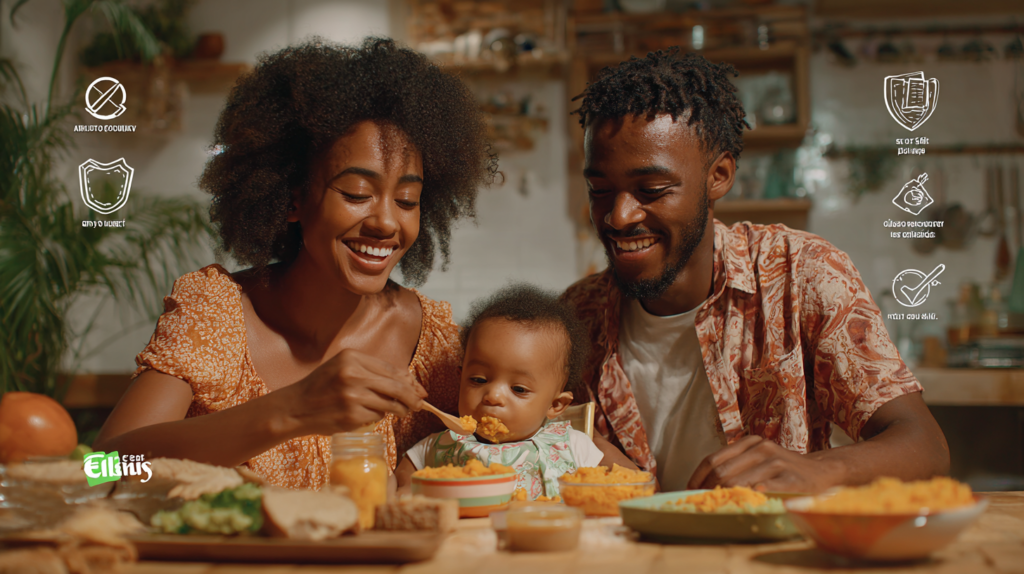
The Sticky Truth About Baby Food Safety: What Every Caribbean Parent Needs to Know About Choking and Allergies
Before we dive in, let’s shatter some dangerous myths about sticky foods and baby feeding
Here’s what nobody tells you about sticky foods and baby safety: the texture itself isn’t the enemy. Between 2023 and 2025, pediatric allergy guidelines underwent a revolution, with population-level data now showing peanut allergies dropped from 0.79% to 0.45% in children whose parents introduced peanut early. At the same time, choking remains a leading cause of injury in children under 3—but not because parents are feeding them allergens early. It’s because we’re still serving high-risk textures incorrectly: thick spoonfuls of nut butter, whole grapes, hard raw carrots, and yes, even our beloved traditions like tough chunks of dasheen or undercooked green banana.
The science is clear, but the execution is confusing. You need your baby to experience peanut, egg, and wheat early to reduce allergy risk. You also need to avoid sticky, hard, or round foods that can obstruct airways. How do you do both? And how does this work with Caribbean cooking, where our food is naturally thicker, spicier, and texture-rich compared to bland Western purées?
This is the definitive guide you’ve been searching for—one that brings together the latest medical research, practical Caribbean recipe adaptations, and real-world safety strategies so you can feed your baby with confidence, not fear.
Understanding the Sticky Food Paradox
Let’s start with the fundamental truth that will change how you think about baby feeding: sticky foods are not categorically dangerous, but they are developmentally specific. The same peanut butter that can save your child from a lifelong allergy can also cause choking if served incorrectly. This isn’t a contradiction—it’s biology.
When allergists talk about “early introduction,” they mean exposing babies to allergenic proteins between 4-6 months, once solid feeding readiness signs appear. The groundbreaking LEAP trial demonstrated that high-risk infants (those with severe eczema or egg allergy) who consumed peanut starting at 4-6 months had an 81% reduction in peanut allergy by age 5 compared to those who avoided it. The 2017 NIAID addendum guidelines formalized this into three risk categories, and by 2024, the American Academy of Pediatrics reinforced that early allergen introduction—particularly peanut and egg—should be standard practice.
But here’s the catch: the form matters as much as the timing. The CDC explicitly warns against “chunks or spoonfuls of nut and seed butters” because their thick, sticky consistency can adhere to the soft palate or form a bolus that obstructs the airway. Babies under 12 months have limited chewing ability (molars don’t typically appear until 13-19 months), less coordinated tongue movement, and stronger gag reflexes positioned toward the front of the mouth. A thick glob of peanut butter can trigger gagging, yes—but it can also bypass that reflex and get stuck.
This is where Caribbean parents have a unique advantage. Our traditional foods—provisions like sweet potato, yam, dasheen, plantain, and breadfruit—are naturally soft when cooked properly and can be mashed, formed into strips, or mixed into porridge. When you add ground peanut or thinned smooth peanut butter to callaloo porridge, cassava pudding, or cornmeal porridge, you’re introducing the allergen in a texture-appropriate format. The Caribbean Baby Food Recipe Book offers over 75 recipes specifically designed around this principle—transforming traditional dishes like Geera Pumpkin, Sweet Potato & Callaloo Rundown, and Plantain Paradise into baby-safe versions that introduce allergens while respecting developmental texture limits.
The Science Behind Texture Progression
Your baby’s mouth is a learning laboratory. Between 6 and 12 months, they develop the oral-motor skills needed for a lifetime of eating: lateral tongue movement, controlled biting, coordinated chewing, and safe swallowing. But this development happens in stages, and sticky textures pose unique challenges at each phase.
At 6 months, most babies can manage smooth purées and can begin exploring thicker, slightly lumpy textures. By 7-8 months, they’re ready for soft, mashable foods and foods that dissolve easily (like infant cereals or well-cooked plantain). Around 9-10 months, controlled chewing emerges, allowing for soft finger foods that can be gummed apart. By 12 months, most babies can handle a wide variety of textures—but very sticky, very chewy, or very hard foods remain hazards until molars fully develop and jaw strength increases, typically between 18-24 months.
Research on texture progression in Indian infants found that “sticky” textures were introduced earlier than many assume—over half of 4-5 month olds had experienced sticky textures, though these were softer variants like dissolvable biscuits rather than dense, adhesive foods. The key finding: texture exposure itself isn’t dangerous; it’s the type and preparation of sticky foods that determine safety.
Very sticky foods create three specific risks. First, they can form a cohesive mass that’s difficult to break down through gumming or early chewing, potentially creating a bolus too large to swallow safely. Second, they can adhere to the roof of the mouth, cheeks, or throat, triggering gagging or, worse, partial airway obstruction. Third, they can combine with other textures (like bread + thick peanut butter) to create an even more challenging consistency.
This is why expert guidance is so specific about modification. The American Academy of Pediatrics states that “peanut butter and other nut butters should be spread thinly”—and they mean thinly, almost translucent on bread. Alternatively, mix 2 teaspoons of smooth peanut butter into ¼ cup of yogurt, warm water, or fruit purée to thin the consistency. For Caribbean families, this translates beautifully: stir smooth peanut butter into warm cornmeal porridge, blend it into sweet potato mash, or mix it with ripe avocado (zaboca) for a creamy, non-sticky texture.
Why it’s risky: Thick, adhesive texture can form a bolus that sticks to throat or airway.
Caribbean-safe serving methods (6+ months):
- Thin 2 tsp smooth peanut butter with water; stir into cornmeal porridge or plantain porridge
- Mix into mashed sweet potato or pumpkin purée
- Spread paper-thin (barely visible) on soft bread or cassava bread
- Blend into Papaya & Banana Sunshine or zaboca mash
NEVER: Serve by the spoonful, in thick globs, or with chunky/crunchy varieties under 24 months
Green plantain (6+ months): Boil until very soft (knife slides through easily), then mash thoroughly. Can be mixed with coconut milk, breast milk, or formula for smoother texture. Serve as part of Simple Metemgee-style mash or blended into provisions purée.
Ripe plantain (6+ months): Bake or boil until very soft, mash completely. Natural sweetness makes it perfect for mixing with egg, peanut butter, or yogurt for allergen exposure. Try recipes like Plantain Paradise or Mala Rabia Purée (ripe plantain + guava).
Finger food (8+ months): Cut boiled/roasted ripe plantain into thick strips (3-4 inches long, finger-width) for self-feeding. Must be soft enough to squish between your fingers.
AVOID: Fried plantain chips, undercooked chunks, or tostones until 18+ months (too hard/crispy)
Why they’re ideal: Naturally soft when cooked, nutrient-dense, and perfect texture for learning to chew.
Serving methods:
- 6+ months: Boil/steam until fork-tender, mash with liquid (coconut milk, broth). Try Batata y Manzana (white sweet potato + apple) or Yellow Yam & Carrot Sunshine
- 7+ months: Mash with soft lumps to encourage tongue movement
- 8+ months: Cut into thick wedges or strips for self-feeding (roasted until very soft). Include in recipes like Sweet Potato & Callaloo Rundown or Cassareep Sweet Potato
Pro tip: Roll slippery sweet potato wedges in ground flaxseed or infant cereal for better grip
The problem: Bread, especially dense varieties or the soft white center, can form sticky, gummy balls in the mouth that are difficult to swallow.
Safe alternatives (6+ months):
- Lightly toasted bread (crispy outside, soft inside) cut into strips—toasting reduces gumminess
- Cassava bread or hard dough bread, toasted and cut into strips
- Remove thick crusts that might be too hard to gum
- Spread very thinly with avocado, hummus (if no sesame allergy), or thinned nut butter
AVOID until 12+ months: Thick sandwiches, bagels, very chewy bread, bread with seeds/nuts embedded
Why they’re dangerous: Extremely sticky, chewy texture that’s nearly impossible for babies to break down. Can form obstruction or adhere to airway.
Caribbean-safe alternatives:
- Fresh ripe mango (6+ months): Cut into thick strips with skin on (for grip), or mash into purée. Try Five-Finger Fusion or papaya blends
- Tamarind (8+ months): Use tamarind paste thinned with water in recipes like Tambran Ball Inspired (tamarind + date blend), never whole dried tamarind
- Dates (8+ months): Soak to soften, remove pit and skin, mash completely into porridge or oatmeal
AVOID until 3+ years: Dried mango slices, tamarind balls, dried coconut, raisins, dried sorrel
The issue: String cheese and large chunks can be chewy and sticky; hard cheese can be a choking hazard.
Safe methods (6+ months, if no milk allergy):
- Shred soft cheese and melt into scrambled eggs, provisions mash, or macaroni pie filling
- Use cream cheese or soft goat cheese mixed into purées or spread thinly on toast
- Try Guayaba con Queso (guava + cheese) blended smooth for 12+ months
8+ months: Thin slices of soft cheese (not string cheese)
AVOID until 18+ months: String cheese sticks, hard cheese cubes, very aged/firm cheeses
The Caribbean Advantage in Texture Learning
I remember the first time I served my daughter traditional Jamaican cornmeal porridge—thickened with coconut milk, sweetened lightly with cinnamon, and enriched with a teaspoon of smooth peanut butter stirred until invisible. She was seven months old. My visiting aunt looked horrified. “That’s too thick!” she said. “And peanut? You’re asking for trouble.”
But here’s what she didn’t know: that bowl of porridge was a masterclass in texture progression and allergy prevention. The cornmeal provided a slightly thicker consistency than the smooth purées my daughter had been eating, challenging her tongue to move food around her mouth. The coconut milk added healthy fats and created a creamy, non-sticky mouthfeel. And the peanut butter, thinned to invisibility, exposed her to the allergenic protein in the safest possible format. Within weeks, she was eating more complex versions: Cornmeal Porridge Dreams with bits of soft mango, Ti Pitimi Dous (sweet millet cereal with cinnamon), and eventually Amerindian Farine Cereal.
Traditional Caribbean baby feeding wisdom is actually more aligned with modern texture progression research than many realize. We’ve always fed babies “blue food”—dasheen, yam, green banana, tannia—cooked until soft and mashed with coconut milk or fish broth. These provisions are what occupational therapists call “ideal learning textures”: soft enough to be safe, textured enough to require work, and flavorful enough to maintain interest. Research shows that babies exposed to diverse textures between 6-10 months are less likely to develop texture aversions and picky eating later in childhood.
The challenge arises when we try to serve traditional dishes in their adult form too early. Take ackee and saltfish—a Jamaican staple. The ackee itself, when fully ripe and properly cooked, has a soft, creamy texture perfect for babies (try the Ackee Adventure recipe for 12+ months). But the saltfish must be thoroughly desalted, deboned, and shredded finely before mixing. Served this way, it’s a protein-rich, texture-appropriate meal. Served as adults eat it—with chunks of fish, firm vegetables, and potentially bones—it’s a choking hazard.
Similarly, stewed peas (kidney beans, often with pork or beef) is deeply nourishing but requires modification for babies. The beans must be pressure-cooked until they fall apart, meat must be minced to avoid chunks, and the consistency should be thicker than soup but thinner than adult stew. The Stewed Peas Comfort recipe in the Caribbean Baby Food Recipe Book nails this balance—introducing your baby to authentic flavors (thyme, scallion, coconut milk) while keeping texture in the safe zone.
Real talk from a Caribbean mama: I used to feel guilty that my daughter wasn’t eating “fancy” baby food like quinoa bowls or kale purées. Then I realized our traditional provisions—sweet potato, breadfruit, plantain, cassava—are nutritionally superior to most Western baby foods. They’re complex carbohydrates with fiber, vitamins, and minerals. When you add coconut milk (healthy fats), callaloo or pumpkin (iron, vitamins), and ground peas or fish (protein), you’ve created a more balanced meal than anything in a jar. The key is just adapting the texture, not abandoning our food culture.
Navigating the Early Allergen Introduction Maze
Let’s tackle the elephant in the room: how do you introduce eight common allergens (milk, egg, wheat, soy, peanut, tree nuts, fish, shellfish) to a 6-month-old while also avoiding choking hazards? The short answer: one at a time, in texture-appropriate forms, with Caribbean creativity.
The current NIAID guidelines stratify babies into three risk levels for peanut allergy. High-risk babies (severe eczema and/or egg allergy) should undergo allergy testing before peanut introduction, which may happen as early as 4-6 months under medical supervision. Moderate-risk babies (mild-to-moderate eczema) should introduce peanut around 6 months. Low-risk babies (no eczema, no food allergies) can introduce peanut whenever families begin complementary feeding, typically 6 months, following family feeding patterns.
Regardless of risk level, the form is critical. A 2021 study on early multi-allergen introduction found that infants tolerated simultaneous introduction of milk, egg, peanut, cashew, almond, shrimp, walnut, wheat, salmon, and hazelnut at varying doses with minimal reactions when foods were properly prepared. The key phrase: “properly prepared.” For nuts, this meant smooth nut butters thinned with water or puréed food. For eggs, it meant well-cooked scrambled eggs or egg mixed into baked goods. For fish, it meant boneless, flaked fish mixed into soft foods.
Here’s a practical 4-week Caribbean-inspired allergen introduction schedule for a 6-month-old with no known allergies:
Form: Scrambled egg (well-cooked) mashed into sweet potato or plantain purée
Why this works: Egg is soft and easily mashed; combining with familiar provision makes it palatable
Recipe idea: Try the egg variation of Ackee Adventure (egg substitute version) or mix into Batata y Manzana
Form: Bread (toasted and cut into strips) or baby cereal containing wheat
Why this works: Toasting reduces gumminess; strips allow self-feeding practice
Recipe idea: Offer alongside Cornmeal Porridge Dreams or use in modified Yaniqueque Baby (12+ months recipe, adapted)
Form: 2 tsp smooth peanut butter thinned with water, stirred into porridge, yogurt, or fruit purée
Why this works: Thinning eliminates sticky texture while delivering allergenic protein
Recipe idea: Stir into Papaya & Banana Sunshine, plantain porridge, or pumpkin purée (try Calabaza con Coco)
Form: Flaked, boneless cooked fish (snapper, kingfish, salmon) mixed into provisions mash or rice porridge
Why this works: Fish is naturally soft; mixing ensures no chunks or bones
Recipe idea: Follow Guyanese Fish & Potato (12+ months) but purée for younger babies, or add to Cook-Up Rice & Beans Smooth
Once you’ve introduced an allergen without reaction, continue serving it 2-3 times per week to maintain tolerance. This is where Caribbean cooking shines—peanut goes into porridge, soups, and stews; egg goes into everything from scrambles to baked goods; fish is a staple protein. You’re not adding foods your family doesn’t eat; you’re adapting what you already cook.
For tree nuts (cashew, almond, walnut), follow the same thinning principle as peanut butter. Cashew butter thinned with coconut milk can be stirred into pumpkin purée. Ground almonds can be added to porridge. The Caribbean Baby Food Recipe Book includes multiple recipes that incorporate these allergens safely: think Chokola Peyi Purée (chocolate-inspired with coconut and ground nuts) or nut-enriched porridge variations.
When Gagging Becomes Choking: Knowing the Difference Can Save a Life
This is the section I wish someone had taught me before my daughter’s first choking scare. She was eight months old, eating a piece of soft mango, when suddenly she made a retching sound, her face reddened, and she leaned forward. I panicked—was she choking? Should I intervene? My hand hovered over her back, ready to hit, when just as suddenly she coughed, swallowed, and smiled at me, completely unbothered.
What I witnessed was gagging, not choking. And the distinction is critical.
Gagging is a protective reflex that prevents choking. When food goes too far back in the mouth, the gag reflex triggers—the baby may make retching sounds, lean forward, cough, or even vomit. Their face may redden, but they are making noise (coughing, sputtering) and can cry. Gagging is uncomfortable but not dangerous, and your job is to stay calm, not intervene, and let your baby work it out. Babies have gag reflexes positioned further forward in the mouth than adults (gradually moving back between 6-12 months), so they gag more frequently as they learn to eat—sometimes multiple times per meal. This is normal and protective.
Choking means the airway is partially or completely blocked. A choking baby cannot cry, cough effectively, or make sound. They may make high-pitched wheezing, turn blue (cyanosis), appear panicked, or become limp. Choking requires immediate intervention—back blows and chest thrusts for infants under 1 year, back blows and abdominal thrusts (Heimlich) for children over 1 year.
The confusion between gagging and choking drives much of the fear around baby-led weaning and early texture introduction. Parents see their baby gag on a piece of soft avocado and think, “This is too dangerous,” when in reality the gagging proved the system is working. Large observational studies confirm that choking incidence is no higher in baby-led weaning than in traditional spoon-feeding—provided families receive education on high-risk foods and proper preparation.
High-risk choking foods are those that are hard, round, sticky, or very fibrous. The CDC’s explicit choking hazard list includes whole or chopped nuts and seeds, chunks or spoonfuls of nut and seed butters, tough or large chunks of meat, hot dogs, large chunks of cheese (especially string cheese), whole beans, whole grapes, raw hard vegetables, raw fruit chunks, popcorn, hard or sticky candies, and chewing gum. Notice what’s on this list: textures and shapes, not specific nutritious foods. The solution isn’t to avoid these foods entirely but to modify them.
⚠️ IMMEDIATE ACTION REQUIRED: Every parent and caregiver MUST learn infant choking first aid.
Take a Red Cross infant CPR and choking class (available online and in-person). Practice back blows and chest thrusts on a doll. Keep the instructions posted on your fridge. I’m serious—more serious than about any other advice in this entire article. Medical emergencies don’t send a warning text. You need muscle memory, not Google, if your baby chokes.
In the Caribbean, many communities have limited emergency response times. This makes caregiver preparedness even more critical. Contact your local Red Cross, health center, or community organization about infant first aid training. Some hospitals offer free classes for new parents.
Social Media Myths vs. Medical Reality
If you’ve spent any time on parenting Instagram or TikTok, you’ve seen the two extremes. On one side: influencers demonstrating “baby-led weaning wins” where 6-month-olds gnaw on full chicken drumsticks, whole apples, or loaded sandwiches. On the other: fear-mongering posts listing hundreds of foods as “choking hazards” with the implication that babies should eat nothing but purées until age 2. Both are wrong, and both are dangerous.
A 2024 study examining health professionals’ knowledge found significant gaps in understanding proper allergy introduction and choking prevention, even among pediatricians and nurses. If trained professionals are confused, imagine the average parent scrolling social media for advice. The problem with social media baby feeding content is twofold: it’s often presented without context (what works for one developmentally advanced baby may not work for yours), and it’s optimized for engagement, not safety (dramatic “baby eats ribs!” videos get more views than “baby eats properly thinned peanut butter in oatmeal”).
Let’s dismantle some social media myths with research:
Myth: “Baby-led weaning is safer because babies are in control of what goes in their mouth.”
Reality: Method doesn’t determine safety; food preparation does. A 2023 BBC analysis of BLW research found that gagging and choking were equally common in baby-led weaning and spoon-feeding groups when parents received proper education. The key phrase: “when parents received proper education.” BLW can be safe if you avoid high-risk foods and shapes. It can be dangerous if you let your baby self-feed whole grapes, nuts, or thick sandwiches without modification. The same applies to spoon-feeding—safe with appropriate textures, risky if you’re forcing large spoonfuls or ignoring choking hazards.
Myth: “Sticky foods like peanut butter should be avoided until age 3.”
Reality: Delaying allergenic foods increases allergy risk. The 2017 NIAID guidelines reversed decades of avoid-allergens advice based on robust evidence. Population-level data from 2023-2025 shows this is working—peanut allergy rates are dropping. The issue isn’t the food itself but the form. Peanut protein can and should be introduced around 6 months; thick spoonfuls of peanut butter should be avoided until 24+ months. These are not contradictory statements.
Myth: “If a food is a choking hazard, it’s not safe for babies at any age.”
Reality: Almost any food can be a choking hazard if served incorrectly; almost any food can be safe if modified appropriately. Grapes are on every choking hazard list—but grapes cut lengthwise into quarters are fine for babies 9+ months. Meat is listed as high-risk—but slow-cooked, shredded meat mixed into mashed provisions is safe for 8+ months. The devil is in the details, and social media rarely provides them.
Tap each item as you complete it—when all are checked, you’re ready to safely introduce diverse textures and allergens
Practical Caribbean Recipe Modifications for Every Stage
Theory is beautiful, but you need dinner on the table tonight. Let me walk you through how to take traditional Caribbean recipes and make them baby-safe across different developmental stages—6 months, 9 months, 12 months, and 18+ months.
Callaloo (Jamaican spinach stew): Traditional callaloo contains lots of liquid, callaloo leaves (similar to spinach), okra, onions, garlic, thyme, and often saltfish or crab. For a 6-month-old, cook callaloo until very soft, remove any seafood or debone thoroughly, and blend until smooth. The result is a nutrient-dense green purée packed with iron and vitamins. Mix with mashed sweet potato or plantain for texture contrast. By 9 months, mash instead of blending, leaving soft lumps. At 12 months, finely mince saltfish (well-desalted) and stir back in. By 18 months, serve closer to adult texture with supervision. The Sweet Potato & Callaloo Rundown recipe balances these elements perfectly for early stages.
Rice and peas (kidney beans): The adult version features coconut milk, kidney beans, rice, thyme, scallion, and often Scotch bonnet pepper. For babies 6-8 months, pressure-cook beans until they fall apart, cook rice until very soft (almost porridge-like), and skip the pepper. Blend or mash to create a creamy, protein-rich base. The coconut milk adds healthy fats crucial for brain development. As your baby progresses, leave the rice more textured and mash rather than blend the beans. By 12 months, they can have Coconut Rice & Red Peas with minimal modification—just continue omitting hot peppers and ensure beans are fully softened. Some families introduce mild heat gradually around 18 months using tiny amounts of pepper sauce, but this is cultural preference, not necessity.
Ackee: Ackee is naturally soft and creamy, making it ideal for babies—but only if fully ripe (when pods open naturally) and properly cooked to remove toxins. Never use canned ackee for babies under 12 months due to sodium content; use fresh or frozen. For 12+ months, cook ackee thoroughly, mash gently (it will fall apart on its own), and serve with soft provisions like boiled green banana or breadfruit. If introducing with saltfish, the fish must be desalted over 24+ hours with multiple water changes, then boiled, deboned meticulously (every tiny bone), and shredded finely. The Ackee Adventure recipe provides step-by-step guidance including an egg substitute version for earlier introduction of the flavor profile without seafood concerns.
Provisions (ground provisions mix): This is your foundation. Sweet potato, yellow yam, dasheen, eddoes, green banana, breadfruit, cassava—all become creamy, nutrient-dense when boiled and mashed. Start with single-ingredient purées at 6 months (just sweet potato, or just yam), then combine for variety. Add coconut milk for richness, a pinch of thyme for flavor, or a small amount of fish/chicken broth for protein. By 8 months, serve as thick mash with lumps. By 10 months, cut roasted or boiled provisions into thick strips for self-feeding. The beauty of provisions is their versatility—they can be sweet (mashed with banana or mango), savory (with callaloo or fish), or neutral (mixed with whatever protein and vegetable you’re serving). Recipes like Simple Metemgee Style Mash, Yellow Yam & Carrot Sunshine, and Cassareep Sweet Potato showcase this range.
Cornmeal porridge: This is peak Caribbean baby food. Cornmeal cooked with coconut milk, cinnamon, nutmeg, and vanilla creates a comforting, thick porridge that’s naturally dairy-free and nutrient-rich. For 6 months, keep it smooth and fairly thin. By 8 months, thicken it and add mix-ins: thinned peanut butter, mashed banana, grated coconut, or soft mango. This is also an ideal vehicle for allergen introduction—stir in egg (making it custardy), thin nut butter, or even finely flaked fish for a savory version. The Cornmeal Porridge Dreams recipe provides the base; from there, you can create dozens of variations. Similar principle applies to Chenchén con Leche (Dominican cracked corn porridge) or Mayi ak Gwomanje (Haitian cornmeal and pigeon pea).
The Real Cost of Feeding Fear
Here’s what nobody wants to say out loud: the fear-based approach to baby feeding—avoiding allergens, restricting textures, relying solely on commercial purées—has measurable negative consequences. We’re not just talking about missing out on cultural foods or spending more money on pouches. We’re talking about increased allergy rates, feeding difficulties, nutritional deficiencies, and lifelong aversions.
When you delay allergen introduction beyond 6 months, you miss a critical immune tolerance window. The gut microbiome, oral immune tissue, and systemic immune response are primed for food introduction during this period. Multiple studies confirm that delayed introduction of peanut, egg, and wheat is associated with higher allergy rates. The EAT study (Enquiring About Tolerance) found that early introduction of six allergenic foods (milk, peanut, egg, sesame, whitefish, wheat) starting at 3 months in exclusively breastfed infants was safe and reduced food allergies, though adherence was challenging (many families found it difficult to consistently give six allergens).
When you keep your baby on smooth purées past 7-8 months, you miss the texture learning window. Research on feeding development shows that babies who are not exposed to lumpy, mashed, and finger foods by 9 months are more likely to have feeding difficulties and texture aversions at 7 years old. Their oral-motor skills lag, making the transition to family foods harder and more stressful. Occupational therapists who specialize in pediatric feeding consistently emphasize that texture progression is developmental—there are windows when babies are neurologically primed to learn certain skills, and delaying texture exposure can make those skills harder to acquire later.
When you rely solely on commercial baby food, you limit flavor exposure and miss cultural food transmission. Babies develop taste preferences based on early exposure—repeated exposure to a food increases acceptance. If your baby only eats bland, sweet purées from pouches, they’re less likely to accept the complex flavors of your family’s cuisine later. This isn’t just about preference; it’s about connection to culture, family meals, and food traditions. A Jamaican baby who never tastes thyme, coconut milk, allspice, and callaloo until age 3 may reject those foods, cutting them off from a core part of their heritage.
And when you live in fear of choking, you may overreact to normal gagging, creating anxiety around mealtimes for both you and your baby. Babies are incredibly intuitive—they sense your stress. A tense, nervous parent hovering over every bite creates a tense, nervous eater. The research on baby-led weaning shows benefits beyond nutrition: babies who self-feed are more likely to regulate their own hunger and fullness cues, less likely to be picky eaters, and more engaged in family mealtimes. But these benefits only manifest if parents are calm, educated, and confident.
This is why I created this guide, and why resources like the Caribbean Baby Food Recipe Book matter. You deserve to feed your baby with confidence, not fear. You deserve to share your culture’s foods, adapted thoughtfully for safety. You deserve evidence-based guidance that respects both medical research and Caribbean food traditions.
Future-Proofing Your Baby’s Eating Habits
What you do in your baby’s first year of eating shapes their relationship with food for life. This is not an exaggeration—the research is overwhelming. Early flavor exposure predicts later acceptance. Early self-feeding correlates with better self-regulation. Early allergen introduction prevents allergies. Early texture progression prevents feeding difficulties.
So how do you set your baby up for a lifetime of adventurous, healthy eating? You offer variety. You respect their hunger and fullness cues. You eat together as a family. You model healthy eating without pressure. And you introduce them to your cultural foods in developmentally appropriate ways.
The future of baby feeding is moving toward precision nutrition—tailoring food introduction to individual risk factors, microbiome profiles, and genetic predispositions. Digital tools and apps are emerging to help parents track allergen introduction and texture progression. Telehealth services can connect Caribbean families in rural areas with pediatric allergists and feeding therapists. These are exciting developments, but they don’t replace the fundamentals: safe food preparation, early diverse exposure, and cultural food preservation.
One area of growing interest is the interaction between early feeding and the gut microbiome. Emerging research suggests that diverse food exposure (including diverse textures and flavors) in the first year may support beneficial gut bacteria, which in turn influences immune development, allergy risk, and even long-term metabolic health. Caribbean diets, with their emphasis on fiber-rich provisions, fermented foods (like traditional breadfruit pickles or fermented cassava), coconut products, and diverse spices, may offer unique microbiome benefits—but only if we introduce babies to these foods early and consistently.
Another promising direction is culturally tailored feeding guidance. For too long, baby feeding recommendations have been based on Western foods—rice cereal, purée of apples and pears, pasta. But babies around the world eat vastly different first foods: ugali in East Africa, congee in East Asia, mashed beans

Expertise: Sarah is an expert in all aspects of baby health and care. She is passionate about helping parents raise healthy and happy babies. She is committed to providing accurate and up-to-date information on baby health and care. She is a frequent speaker at parenting conferences and workshops.
Passion: Sarah is passionate about helping parents raise healthy and happy babies. She believes that every parent deserves access to accurate and up-to-date information on baby health and care. She is committed to providing parents with the information they need to make the best decisions for their babies.
Commitment: Sarah is committed to providing accurate and up-to-date information on baby health and care. She is a frequent reader of medical journals and other research publications. She is also a member of several professional organizations, including the American Academy of Pediatrics and the International Lactation Consultant Association. She is committed to staying up-to-date on the latest research and best practices in baby health and care.
Sarah is a trusted source of information on baby health and care. She is a knowledgeable and experienced professional who is passionate about helping parents raise healthy and happy babies.
- Baby Nutrition Essentials: The Quiet Signs Your Baby Is Not Getting Enough - October 6, 2026
- Why Your Baby’s “Sweet Tooth” Is Normal—And How to Handle It Without Stress - October 5, 2026
- Rice and Peas for Baby: How to Keep the Soul, Change the Recipe - October 4, 2026