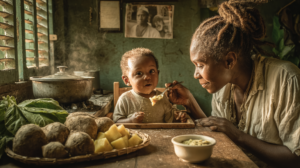
When Everyone Has An Opinion About Your Baby’s Plate: How To Stay Sane, Nourish Your Child, And Quiet The Cultural Noise
If you’ve ever carried a plate of baby food to the table and felt like you were also carrying the expectations of your whole family, your community, and the internet, this article was written for you.
In many cultures, especially across the Caribbean, South Asia, and Latin America, feeding a baby is not a quiet, private task. It is a public performance of love, competence, and status: a “good” parent raises a “big” baby, a child who opens wide on cue, finishes every spoonful, and politely asks for more. Add modern growth charts, scrolling reels of perfectly plated baby meals, and strong opinions from every direction, and you have the perfect recipe for pressure.
That pressure does not just live in your head. It shapes how you talk to your child, how you interpret every refused spoon, and whether you feel calm enough to follow evidence-based guidance like responsive feeding. Understanding where that pressure comes from—and how to push back without disrespecting your culture or elders—is the first step toward a healthier, happier relationship with food for your baby and for you.
What Cultural Pressure About Baby’s Eating Really Looks Like
Cultural pressure about baby feeding is more than the occasional comment about how chubby or slim your child looks. It is the whole invisible rulebook that tells you what “good feeding” looks like in your family: who decides what’s served, whether a baby is allowed to refuse, and how many people feel entitled to comment on your choices. In many families, this rulebook has been handed down for generations, long before growth charts, nutrition research, or social media existed.
Traditionally, many communities equated a plump baby with health and good parenting, especially in places where food insecurity or infectious diseases were common. A baby with round cheeks and wrists looked like evidence that the family was doing well. That history still lives in the phrases you hear at gatherings: “She too skinny”, “Make sure he eat, eh?”, “You can’t let that child tell you no.” Even as modern health advice warns about obesity and sugar, those older instincts to “fatten up” a baby are still strong.
On top of that, feeding is deeply relational. For Caribbean grandparents, food is love—offering an extra spoon of pumpkin and coconut milk, a little taste of stewed peas, a piece of ripe plantain, is their way of pouring affection into your child. When a baby refuses, or a parent says “no more, they’re full,” it can feel like rejection of both culture and care. That’s why conversations about feeding quickly become heated, especially when you start bringing in modern ideas like waiting until six months for solids or not forcing extra bites.
Research on parents’ online forums shows just how common this tension is. Thousands of posts from caregivers around the world cluster around themes like fears about picky eating, anxiety about undereating, and guilt about not meeting family expectations. Parents describe being pressured to keep offering food after their child turns away, bribing with screens or dessert to hit a target number of bites, or starting solids early because “everyone else did it and their babies are fine.” Under the surface of these stories are deeply rooted cultural beliefs about what a healthy baby should look like and how a “good” mother behaves.
Numbers Behind The Noise: What The Research Tells Us
When you are in the middle of a tense meal, it feels like your child is the only one spitting out carefully cooked food. But large-scale analyses of parents’ conversations online tell a different story: concern about fussy eating is one of the most common worries in early childhood. In a major thematic review of parents’ posts on a big parenting forum, researchers found clusters of discussion around picky eating, undereating, fear of nutritional gaps, and conflict with partners or grandparents. The sheer volume shows that this is not a fringe problem—it is a shared, global experience.
Another line of research has looked at food neophobia and pickiness: children who refuse new foods, stick to a short list of favorites, or dramatically reject certain textures. These studies point to a mix of biology, temperament, sensory sensitivity, and family habits. What stands out is that parental reactions—especially pressuring or over-controlling feeding—tend to make things worse over time. Instead of gently expanding what a child eats, constant battles can turn the table into a place of stress and power struggle.
At the same time, pediatric guidelines from major organizations now strongly emphasize “responsive feeding.” This approach is simple in theory: the parent decides what, when, and where food is offered, and the child decides whether and how much to eat. It sounds calm and rational, but when your aunt is saying, “One more bite or else!” and your baby clamps their mouth shut, following this rule requires serious confidence and support.
Newer research on maternal mental health adds another layer. Studies looking at mothers who are introducing solids have found that anxiety often spikes during this phase. For some, certain feeding methods like baby-led weaning bring additional worry about mess, choking, or whether the child is getting enough nutrients. Others feel overwhelmed by conflicting advice and the relentless comparison to curated images of baby meals online. The message is clear: when you are anxious about feeding, it is not just about the food—it is about the emotional load and the perfectionism wrapped around it.
Tap up to three phrases you’ve heard recently and see how they might be shaping your feeding decisions.
These common phrases each pull you in a different direction. Calls to “clean the plate” can push you toward pressuring your child to override their fullness cues. Worries about food waste can tempt you to keep offering “just one more bite,” long after your baby has turned away. Comparisons to other babies—especially when fueled by highlight reels online—can lead to sudden, drastic changes in feeding strategy, like forcing bigger portions, hiding vegetables in everything, or abandoning culturally familiar foods in favor of whatever looks impressive in photos.
On the flip side, some comments may pressure you to introduce solids or sweet drinks earlier than recommended, especially in cultures where a little taste of tea, porridge, or mashed food is seen as a loving tradition. Studies on early food introduction show that social and cultural expectations, along with low awareness of breastfeeding benefits, can shorten exclusive breastfeeding periods. When older relatives remember a time of food scarcity or use food to soothe any cry, it makes perfect sense from their worldview—but it may clash with your pediatrician’s guidance.
From “Eat One More Bite” To Responsive Feeding: Expert Insights
Across guidelines and position statements, experts now consistently recommend responsive feeding as the foundation for healthy eating habits. The core idea is that babies are born with the ability to regulate their own intake: they know when they are hungry and when they are done. Your job is not to micromanage the number of bites but to create a rhythm where nourishing foods are offered regularly, in a safe and loving environment, without force or bribery.
Responsive feeding involves watching for cues: turning the head away, pushing the spoon, closing the mouth, or becoming distracted can all be signs that your baby is finished for now. It also means resisting the urge to immediately bring out distractions (like a phone or cartoon) just to get a few more bites in. Even if a child’s appetite seems small on a given day, experts emphasize that most healthy babies self-regulate over days or weeks, not at every single meal. Your role is to look at the big picture, not panic over one snack.
However, experts also recognize that parents do not feed in a vacuum. A caregiver’s mental health, their own childhood memories of being forced or restricted, and their cultural beliefs about food all influence what happens at the table. Some studies show that maternal depressive symptoms are linked with higher concerns about picky eating, which in turn are linked to more controlling feeding practices. That means a parent can be doing “all the right things” on paper yet still feel overwhelmed, guilty, or stuck in patterns they promised never to repeat.
That is why culturally sensitive guidance matters. Advising a Caribbean family to stop serving traditional dishes like sweet potato callaloo mash or coconut rice with peas is neither helpful nor realistic. A more effective approach is to keep those beloved meals, adjust textures and salt for babies, and focus on structure and responsiveness: the family continues to pass on culture through food, while also protecting the child’s ability to listen to their own body.
Tap the card that feels closest to how you tend to react when your baby refuses food.
Gently noticing your default reaction is powerful. If you recognize yourself in “The Pressure Spoon,” for example, you might experiment with serving slightly smaller portions and telling yourself, “If they want more, they will ask.” If you are “The Short-Order Cook,” you might try offering one family meal plus a predictable “safe food” your baby almost always accepts, instead of cooking two or three different plates. Each shift is small, but over time it reduces conflict and helps your child trust both you and their own body.
When you find yourself slipping into old patterns, remember that this is not a character flaw—it is usually a stress response. Comments from relatives, worries about waste, or memories of your own childhood experience can flip you into survival mode. That is why it helps to have a simple, evidence-backed phrase you can repeat in your head at the table: “I decide what and when, my baby decides whether and how much.” Over time, that phrase becomes a protective shield between your instincts and other people’s expectations.
How Social Media Supercharges Feeding Pressure
Ten years ago, your main critics were probably in your living room. Today, they also live in your phone. Social platforms are full of reels featuring babies happily eating platters of colorful, perfectly cut finger foods, or parents transforming every ingredient into cute shapes. These can be fun and inspiring, but they often leave out the messy reality: the food thrown on the floor, the tears, the days when a toddler survives on two bites of banana and vibes.
Researchers exploring “digital mothering” have pointed out that social media can subtly shift standards for what it means to be a “good parent.” When you repeatedly see others presenting idealized mealtimes, it is easy to feel that your own reality is lacking. That can drive more controlling feeding strategies, crash dieting for babies (“no sugar ever again!”), or endless experimentation based on the latest trending advice, instead of steady, responsive routines.
There is another hidden effect. Posts that dramatize picky eating—labeling children as “little food monsters” or joking about “failing” as a mom—might feel relatable, but they also reinforce the idea that a picky or low-appetite child is automatically a problem. When you internalize that message, every small refusal feels like a sign that something is wrong with your parenting. Over time, that anxiety can spill into your tone, your body language, and your decisions about what and how to serve food.
Yet social media does not have to be the enemy. Parents also use online communities to ask real questions, seek validation, and share creative solutions: presenting the same food in different textures, rebranding dishes, or incorporating beloved cultural ingredients like sweet potato, plantain, and calabaza (pumpkin) in baby-friendly ways. The key is to curate your feed as carefully as you curate your baby’s plate: follow accounts that normalize imperfect meals, respect cultural diversity, and highlight responsive feeding over strict rules.
Turning Culture Into A Superpower At The Table
Here is the part that many feeding guides miss: the goal is not to erase culture in order to follow “modern” advice. Culture is one of the biggest protective factors you have. It connects your baby to grandparents, stories, and flavors that carry resilience. The challenge is to separate the parts of your food culture that truly nourish your child from the parts that come from older fears—like scarce food or strict obedience—that no longer serve you.
Think about a classic Caribbean baby-friendly line-up: smooth sweet potato mash, pumpkin and coconut milk, stewed red peas blended into a soft puree, a little callaloo mixed into sweet potato rundown. These dishes are naturally rich in fiber, vitamins, and healthy fats. When you adapt them for a baby—limiting salt, blending to the right texture, skipping spicy heat—you are not just feeding them nutrients; you are teaching their tongue and brain that home tastes like something specific and beautiful.
One way to lean into that heritage with confidence is to build a simple rotation of baby meals based on familiar regional ingredients. A resource like the Caribbean Baby Food Recipe Book: Easy & Healthy Homemade Meals for Infants & Toddlers can be a powerful ally here. With recipes like “Sweet Potato Callaloo Rundown,” “Coconut Rice Red Peas,” “Papaya Banana Sunshine,” and “Batata y Manzana (White Sweet Potato & Apple),” you get age-appropriate guidance without giving up the flavors you love.
Inside that style of cookbook, you will often find more than recipes: there are sections on when babies are ready for solids, how to safely introduce common allergens, month-by-month spice journeys, and country-specific wisdom from Jamaica, Trinidad, Guyana, Haiti, Puerto Rico, and beyond. This kind of structure does something crucial: it lets you say to your relatives, “I am not throwing away our food; I am serving it in a way that fits what we now know about baby nutrition.” You are building a bridge between tradition and science, not choosing one over the other.
Real-World Scenarios: When Comments Sting And Plates Come Back Full
To make this practical, imagine a Sunday lunch. Your toddler has picked at the callaloo and only eaten the plantain. Grandma leans over and says, “You spoil this child; in my day, they eat what you put in front of them.” In that moment, three things happen inside you at once: an urge to prove her wrong by pressuring your child to eat, a flash of guilt, and maybe a quiet voice that remembers how awful it felt when you were forced to finish your own plate as a child.
Here is where preparation is everything. When you have already decided that your family will follow responsive feeding, you can respond calmly: “I hear you, and I know you raised great eaters. The pediatrician checked their growth and they are on track, even on days they pick. I am focusing on letting them listen to their body so they can enjoy our food long-term.” You are validating her experience, anchoring your choice in health information, and modeling a new standard without attacking the old one.
Tap the response that feels most like how you’d want to handle it. Then hit “Check strategy.”
Responsive feeding does not mean being relaxed to the point of neglect. If your child consistently refuses food, appears lethargic, drops percentiles on the growth chart, or has very limited accepted foods, those are valid reasons to seek professional help. There are medical conditions and sensory differences that need more targeted support. But for most children, especially those who are playful, energetic, and growing steadily, a skipped meal or a “white-food-only” day is not a crisis. It is a normal part of early childhood, magnified by adult expectations.
One practical strategy is to combine structure with flexibility. Create a loose rhythm of meals and snacks, roughly every 2.5–3 hours in the day. At each eating opportunity, offer at least one familiar “safe food” (like mashed sweet potato, banana, or a mild millet cereal) alongside other options, including small tastes of whatever the family is eating. If your child refuses, resist chasing them with food. Trust that the next scheduled opportunity is coming soon. This pattern quietly teaches your child that food will appear predictably and that they do not need to eat out of fear or pressure.
Challenges, Controversies, And The Hidden Cost Of “Perfect Feeding”
Even with the best intentions, several real-world challenges keep showing up in research and in everyday family life. One is the clash between preventing undernutrition and preventing obesity. In communities where underweight and stunting were once common, older generations may see any fat on a baby as a sign of success. Public health messaging, however, is increasingly concerned about rising rates of childhood obesity and sugar intake. Parents get stuck in the middle: one voice says, “make that baby big,” another says, “watch the sugar and juice,” and both voices sound urgent.
Another challenge is that non-responsive feeding often emerges in response to real stressors rather than ignorance. A parent who grew up with food insecurity may feel a deep, visceral panic when their child refuses a meal, especially during times of high grocery prices. A caregiver managing multiple jobs or children may not have the bandwidth to slowly introduce new foods ten times before acceptance; making a favorite “safe” dish every day simply feels easier. These are not character flaws; they are survival strategies. Any feeding advice that ignores this context will feel unrealistic and judgmental.
There are also debates around specific feeding approaches. Baby-led weaning has passionate supporters and equally vocal critics. Some studies show that mothers using baby-led weaning feel more anxious about intake and choking, even when things are going well. Online, the conversation can become polarized: either you are “failing” your child by using purees, or you are “behind the times” if you do not let them self-feed everything. In reality, most families land somewhere in the middle, offering soft finger foods alongside spoon-fed dishes, adapting things like “Cook-Up Rice Beans Smooth” or “Cornmeal Porridge Dreams” to be safe for small hands and mouths.
The hidden cost of chasing perfect feeding is burnout. When every meal feels like a test, you start measuring your worth as a parent by how much your baby eats that day. Over time, this can erode joy not only from meals but from parenting in general. You might find yourself resenting cooking, dreading visits from relatives who comment on your child’s size, or avoiding social events where food will be involved. The goal of this article is to help you step off that treadmill and build a feeding culture at home that is sustainable, respectful, and rooted in both evidence and tradition.
When you have a set of trusted, baby-ready recipes built from ingredients your family already loves—like plantain, calabaza, guava, millet, and coconut milk—it becomes much easier to say “no” to pressure and “yes” to your plan. That is exactly the kind of support a resource like the Caribbean Baby Food Recipe Book: Easy & Healthy Homemade Meals for Infants & Toddlers is designed to offer.
Practical Game Plan: What To Do This Week
Abstract ideas are nice, but change happens in the next three or four meals, not in theory. Here is a practical, research-informed plan you can start this week, even if your kitchen is busy and your relatives are opinionated. Start by picking one meal of the day where you feel the least rushed—maybe breakfast or an afternoon snack—and experiment there before tackling the most chaotic mealtime.
First, choose a simple rotation of meals that blend culture and nutrition. For example, you might plan: “Papaya Banana Sunshine” one day, “Simple Metemgee-Style Mash” another day, “Green Papaya Pleasure” on day three, and “Ti Pitimi Dous (Sweet Millet Cereal with Cinnamon)” on day four. All of these can be made baby-friendly with attention to texture and salt. Rotate them alongside family favorites like “Sweet Potato Callaloo Rundown” or “Batata y Manzana” so your baby gets repeated exposure without boredom.
Second, script two or three sentences you will use when other adults comment on your feeding. For instance: “We’re following the ‘I decide what and when, baby decides how much’ approach, and the pediatrician is happy with their growth.” Or: “They may look like they are eating less today, but over the week it balances out; I am focusing on keeping mealtimes calm.” Having these phrases ready reduces the chance that you will respond with defensiveness or panic.
Third, observe your own body at mealtimes. Do your shoulders tense when the plate returns half full? Do you feel heat in your chest when someone suggests your baby is “too small”? Those are signs of stress that deserve kindness, not shame. Even a few slow breaths before you sit down to feed, or a quiet reminder that “one meal will not make or break my child,” can help you stay in responsive mode rather than survival mode.
Tap each phrase you’ve heard recently. Your tracker will show how heavy the cultural noise has been—and why you feel so tired.
When you see how many of these phrases you are swimming in each month, it becomes easier to understand why feeding feels exhausting. You are not only nourishing a baby; you are also negotiating history, expectations, and modern worries. Recognizing that load is not self-pity—it is clarity. From that clarity, you can make changes that are small, specific, and sustainable instead of chasing total perfection.
For some families, one powerful small step is to outsource the mental load of planning. Having a go-to list of baby-safe Caribbean recipes—organized by age and ingredient—saves precious decision energy. That is where structured resources like the Caribbean Baby Food Recipe Book: Easy & Healthy Homemade Meals for Infants & Toddlers shine: instead of arguing over what to cook, you can say, “Let’s pick something from the Guyana section today” or “How about a Haitian-inspired millet cereal tomorrow?”
Walking Forward: Raising An Eater Who Trusts Their Own Body
There is a story many elders tell in different forms. A child asks their mother, “What was your favorite moment in life?” expecting to hear about weddings, achievements, or big celebrations. The mother smiles and says, “This moment right now.” The older your baby gets, the more you realize how quickly each feeding phase passes: the slurpy purees, the mashed yams, the first bites of soft plantain, the day they finally grab a spoon and insist on feeding themselves, messy and proud.
When you strip away the noise, your deepest goal is simple: you want your child to grow into someone who trusts their hunger and fullness, enjoys a wide variety of foods (including your culture’s dishes), and does not carry lifelong guilt or anxiety about eating. That future starts now—not in what you serve one time, but in the pattern you create day after day. Every time you choose a calm “all done” over a pressured “just one more,” you are telling your child: “Your body’s signals matter here.”
From a Caribbean perspective, there is something especially powerful about reclaiming your family’s food in a baby-friendly way. When your child grows up remembering the taste of calabaza with coconut milk, fragrant millet porridge, or smooth malanga puree, they are not just nourished; they are rooted. Tools like structured recipe collections, readiness guides, and spice journeys help you pass down that legacy with intention. They turn culture from a source of pressure into a source of strength.
Years from now, your child will not remember how many bites of “Papaya Banana Sunshine” they took at eight months. They will remember that meals were where they felt safe, seen, and accepted, even when they were unsure about the food in front of them. If resources like the Caribbean Baby Food Recipe Book: Easy & Healthy Homemade Meals for Infants & Toddlers help you build that kind of table—one where science, culture, and compassion sit side by side—then they are worth far more than the number of recipes they contain.
Tap the action that feels easiest right now. Your planner will break it into a simple next move you can take today, not “someday.”
One day, you will look back on these early feeding battles and barely remember who said what about your baby’s weight or appetite. What will stay with you is the quiet pride of having protected your child’s right to listen to their own body while still honoring the island flavors, family recipes, and stories you grew up with. Feeding under pressure is hard—but you are allowed to write a new script, one spoonful, one comment, one small decision at a time.
If this article spoke to you, bookmark it and revisit it on the hard days. Let it remind you that you are not alone, that most picky phases are normal, and that your culture can be a powerful ally instead of an enemy at the table. Your baby does not need perfect meals; they need a present, imperfect, learning parent who keeps showing up. That parent is already in your kitchen.

Expertise: Sarah is an expert in all aspects of baby health and care. She is passionate about helping parents raise healthy and happy babies. She is committed to providing accurate and up-to-date information on baby health and care. She is a frequent speaker at parenting conferences and workshops.
Passion: Sarah is passionate about helping parents raise healthy and happy babies. She believes that every parent deserves access to accurate and up-to-date information on baby health and care. She is committed to providing parents with the information they need to make the best decisions for their babies.
Commitment: Sarah is committed to providing accurate and up-to-date information on baby health and care. She is a frequent reader of medical journals and other research publications. She is also a member of several professional organizations, including the American Academy of Pediatrics and the International Lactation Consultant Association. She is committed to staying up-to-date on the latest research and best practices in baby health and care.
Sarah is a trusted source of information on baby health and care. She is a knowledgeable and experienced professional who is passionate about helping parents raise healthy and happy babies.
- The Caribbean Baby Food Safety Truth They Don’t Tell You: Why Your Grandma’s Recipe Might Be Putting Baby at Risk (And How to Fix It) - October 15, 2026
- Dasheen (Taro) for Babies: The Ancient Root That Connects Your Child to Generations of Caribbean Strength - October 14, 2026
- The Peanut Butter Revolution: Why Everything Your Parents Told You About Baby Food Allergies Was Wrong - October 13, 2026