 Skip to content
Baby Nutrition Essentials: Unlocking Complete Proteins for Vegetarian Babies
Tap a button below and get a quick “snapshot” of how close you already are to nailing vegetarian protein for your little one. No judgment, just insight.
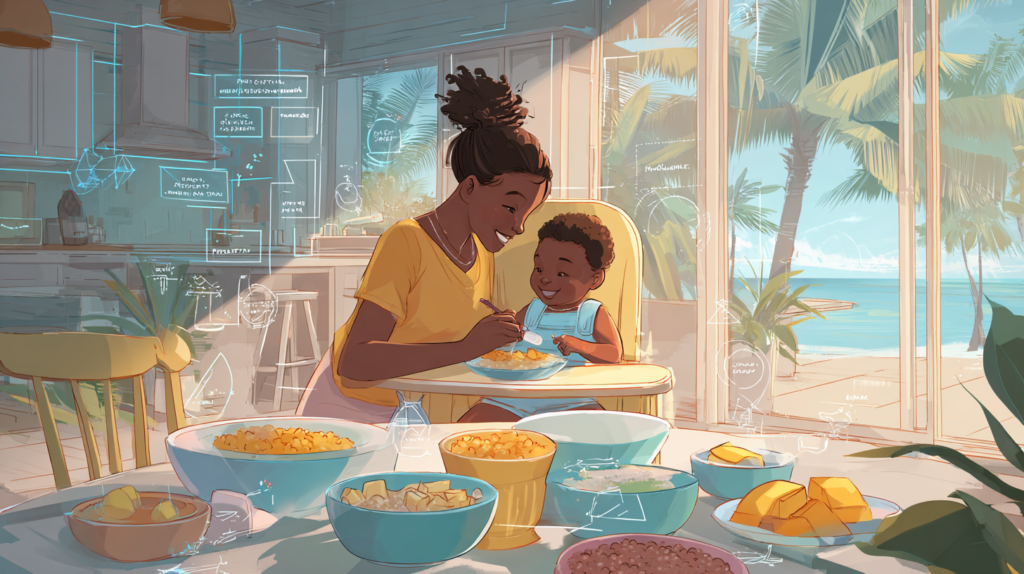
Sitting in a tiny Caribbean kitchen with the trade winds slipping through the window, there is a special kind of silence that happens when you place a new food in front of your baby. No email notifications, no to-do list—just that one spoonful heading toward a tiny mouth that will shape how they grow, think, and even taste the world. That moment feels small, but it is one of the most powerful decisions a parent ever makes.
When raising a vegetarian baby, especially in cultures where meat is seen as the “default” path to strength, the pressure can feel intense. You may hear a grandparent whisper, “But where will the child get protein?” while your pediatrician talks about growth charts and your own brain is juggling work, sleep deprivation, and a sink full of bottles. This guide is here to cut through the noise and show you, step by step, how vegetarian babies can get complete, high-quality protein and thrive.
Here is the quiet truth most people never say out loud: vegetarian babies can get every essential amino acid they need for incredible growth without a single piece of meat. Many families across India, the Caribbean, and beyond have done this for generations, long before it became trendy. The difference between kids who flourish and kids who fall behind is not meat—it is planning, variety, and knowing which plant foods make a complete team.
What “Complete Protein” Really Means for Babies
Protein is built from amino acids, and nine of them are called “essential” because your baby’s body cannot make them. These essentials power everything from muscle and organ growth to hormones, enzymes, neurotransmitters, and immune function. During the first two years of life when brains are wiring at record speed and bodies are doubling and tripling in size, those amino acids are like the building crew working non-stop behind the scenes.
A “complete protein” is simply a food or combination of foods that provides all nine essential amino acids in sufficient amounts for the body’s needs. Many animal foods are complete on their own, but certain plant foods—such as soy, quinoa, buckwheat, and high-quality blends of legumes and grains—also meet this standard. For babies on vegetarian diets, the goal is not perfection in every single spoonful but a well-planned pattern across the day that supplies all the amino acids their body needs to thrive.
Modern pediatric and nutrition guidelines across several countries now confirm that vegetarian diets are safe and nutritionally adequate for infants when carefully planned. Organizations emphasize that breast milk or formula remains the primary protein source in the first year, while complementary vegetarian foods are introduced around 6 months to build iron, zinc, and overall energy intake. This approach allows babies to benefit from both the protective factors of milk and the diversity of plant proteins during the rapid growth window.
From Tradition to Science: How Vegetarian Baby Feeding Evolved
Long before “plant-based” became a buzzword, families in India, the Caribbean, Latin America, and parts of Africa raised babies on predominantly vegetarian or plant-forward diets. Lentils simmered with spices, rice porridges, millet cereals, mashed yams, callaloo, and coconut milk have been normal first foods for generations. These traditional combinations often accidentally achieved amino acid balance: beans brought lysine; grains contributed methionine and cysteine; and dairy or coconut-based dishes rounded out the energy intake.
Early Western nutrition research questioned whether vegetarian diets could provide enough protein for infants, largely because many studies focused on isolated plant foods or diets with significant poverty and overall calorie deficiency. Over the last few decades, better-designed research has shown that when vegetarian diets are energy-sufficient and varied, babies can meet protein and amino acid requirements just as well as omnivorous peers. Studies have also refined how protein quality is measured, shifting from older scoring systems to approaches that look more closely at digestibility and individual amino acid patterns.
Today, vegetarian baby feeding sits at the intersection of tradition and innovation. Parents are drawing on ancestral dishes while also using fortified infant cereals, soy or pea-based formulas, and evidence-based guidance from pediatricians and dietitians. This combination brings the best of both worlds: cultural comfort foods with modern clarity about nutrients, safety, and growth tracking. For many families, it is no longer about whether vegetarian diets work, but how to implement them with confidence in real-world, messy, busy kitchens.
Stats, Market Trends, and Why This Matters Now
In the last few years, interest in plant-based baby diets and baby foods has expanded rapidly. The global market for plant-based baby food has reached several billions of dollars in value, with strong projected growth over the next decade. This surge reflects not only vegetarian or vegan families, but also flexitarian parents who want to reduce meat for environmental or ethical reasons while still ensuring optimal nutrition for their children.
Commercial products now frequently highlight added plant protein sources such as pea, lentil, quinoa, and chickpea flour in their purees, pouches, and cereals. At the same time, surveys reveal that a notable share of vegetarian toddlers—especially in Western countries—are at some risk of mild protein or micronutrient shortfalls when diets lack diversity and are overly reliant on refined starches or sweetened foods. This gap underscores why parents need more than marketing labels; they need solid, practical frameworks for pairing plant foods to make baby plates complete.
Newer research comparing plant-based complementary feeding patterns to traditional omnivorous ones has found that, when energy intake is adequate and diets are thoughtfully planned, growth and developmental outcomes remain similar. The emphasis, again, is on quality and variety. Vegetarian babies who regularly eat legumes, whole grains, dairy or soy products, nuts and seeds (in safe textures), fruits, vegetables, and fortified foods are well-positioned for healthy growth in height, weight, and developmental milestones.
Tap the foods you currently offer at least 3 times a week. Then tap “Get Insight” to see how close you are to a balanced vegetarian protein pattern.
How Complete Proteins Work in Vegetarian Baby Diets
For vegetarian babies, there are three main ways to reach complete protein: naturally complete plant sources, combinations of plant foods that complement each other, and inclusion of dairy or soy-based formulas or yogurts. Soy, quinoa, and buckwheat are examples of plant foods that already provide all essential amino acids in good proportions. When these anchor foods are used alongside grains, legumes, and seeds, they can make it easier to achieve balance in a typical day’s meals and snacks.
Beyond these naturally complete sources, classic pairings like lentils with rice, beans with cornmeal, or chickpeas with whole wheat help cover amino acid “gaps” between foods. Legumes tend to be rich in lysine but lower in methionine, while many grains are the reverse; together they form a stronger amino acid profile. For babies, these combinations often show up as soft khichdi, mixed dhal with rice, coconut rice and peas, or smooth Caribbean-style cook-up rice blends adapted to baby-friendly textures.
Dairy and soy foods contribute valuable high-quality protein as well. Plain yogurt or curd, paneer cubes crushed into mash, and soft tofu added to purees supply complete proteins along with fat and some minerals. For vegan families, fortified soy-based infant formulas and soy yogurts play a central role. The big picture is not about one “magic” food, but about building a small ecosystem of foods that, across each day and week, deliver all the amino acids needed for growth, tissue repair, and healthy immune function.
Tap the option that best “completes” each food’s protein team. You will see instant feedback below each card.
Real Caribbean & Vegetarian Plates That Deliver Complete Protein
In many Caribbean homes, the same vibrant ingredients that make Sunday lunch unforgettable can be gently adapted for babies to provide balanced protein. Coconut rice and red peas, for example, combines legumes, grains, and healthy fats in a way that supports both energy needs and amino acid balance. When peas are well-cooked and mashed and the rice is softened or blended, this dish becomes a satisfying option for older babies who are used to thicker textures and Caribbean flavors.
Smooth stewed peas with soft dumplings or pieces of yam and pumpkin can also be transformed into baby-friendly meals by blending or mashing while keeping salt and pepper very low. Mixed dhal purees made from split peas or lentils pair beautifully with rice or soft roti pieces soaked in dhal, forming the classic grain-legume combination that nutrition research repeatedly highlights. Across the region, dishes like cook-up rice and beans, sweet potato and callaloo mash, or cornmeal porridge with a swirl of coconut milk and finely ground seeds can all form the basis of high-protein vegetarian baby meals.
For parents who want ready-made structure and recipe inspiration, a curated collection of regional recipes can be invaluable. A resource like the Caribbean Baby Food Recipe Book: Easy & Healthy Homemade Meals for Infants & Toddlers offers over 75 baby-friendly recipes built around ingredients such as beans, coconut milk, sweet potatoes, plantains, millet, and tropical fruits, making it easier to put complete proteins on your baby’s plate without starting from scratch every week. You can explore it here for more inspiration and meal ideas: Caribbean Baby Food Recipe Book: Easy & Healthy Homemade Meals for Infants & Toddlers.
Recipes like Coconut Rice & Red Peas, Cook-Up Rice & Beans Smooth, Mayi ak Gwomanje (cornmeal and pigeon pea puree), and Basic Mixed Dhal Puree illustrate how Caribbean staples naturally combine legumes and grains. Yellow yam and carrot sunshine, calabaza con coco (pumpkin and coconut milk), and sweet potato and callaloo rundown contribute additional energy and micronutrients alongside smaller amounts of protein. When these dishes are rotated through the week and served in baby-safe textures, they together support complete protein intake without needing meat.
Fruit-forward dishes such as Papaya & Banana Sunshine, Green Papaya Pleasure, Guanabana Dreams, and plantain-based purees add carbohydrates, fiber, and vitamins; when they are paired with yogurt, tofu, or a spoon of nut or seed butter (for older babies who have cleared allergy checks), they become more balanced protein snacks. By blending local recipes with modern guidance, parents can keep cultural foods on the table while quietly meeting all the scientific targets for amino acids, iron, zinc, and healthy fats.
Expert Insights, Debates, and What Social Media Gets Wrong
Pediatric nutrition experts increasingly agree that vegetarian diets—when well planned and monitored—are appropriate from infancy onward. They emphasize that the keys to success are sufficient calories, a variety of protein sources, and attention to micronutrients such as iron, zinc, vitamin B12, iodine, and omega-3 fats. Many professional position statements now highlight that plant-based and vegetarian patterns can meet protein requirements across childhood, provided families do not rely heavily on ultra-processed foods or single starches like white rice alone.
One ongoing debate is whether plant proteins are “inferior” because individual foods sometimes provide less of certain amino acids or are less digestible. Modern research, however, looks at total dietary patterns, not single ingredients. When a baby consumes different sources of protein across the day—such as lentils, yogurt, oats, and nut or seed pastes—overall amino acid intake looks very similar to that of an omnivorous child. Some researchers are now encouraging a shift from obsessing over single “complete protein” items to focusing on diverse, whole-food meals that build a complete picture over time.
Social media often amplifies extremes: some accounts insist that meat is absolutely necessary for baby brain development, while others promise that a minimalist vegan diet with minimal planning is automatically superior. Parents scrolling at 2 a.m. can end up anxious and confused. In practice, successful vegetarian baby diets live in the calm middle ground—anchored by evidence, guided by growth charts, and supported by real recipes that actually fit into a busy family’s life. The most reliable markers of success remain your baby’s growth pattern, developmental milestones, energy, and joy around food.
Caribbean and Indian parenting communities online add another layer, often mixing deep cultural wisdom with strong opinions passed down through generations. Grandparents might worry that babies who skip meat will be “weak,” while younger parents share photos of thriving little ones eating dhal, rice, callaloo, and plantain. These spaces highlight a real tension: honoring elders’ experience while applying current science. A grounded way through is to treat elders’ recipes as valuable starting points, then adapt textures, salt levels, and combinations based on pediatric recommendations.
Tap the foods you would include in a typical day for your 8–12 month vegetarian baby. Then tap “Analyze My Day” to see a quick snapshot of your protein picture.
A Day in the Life: Sample Vegetarian Protein Day (Caribbean-Inspired)
To make all this more concrete, imagine a vegetarian baby around 9–12 months who is still breastfeeding or taking formula, but now eats three meals and one or two snacks each day. The goal is not perfection—some days will be messy or off-schedule—but a repeating pattern where high-quality proteins show up often. Over time, this pattern builds strong muscles, supports brain development, and sets up long-term eating habits that feel joyful instead of restrictive.
In the morning, you might start with a warm bowl of millet or Amerindian farine cereal cooked in water or milk, blended with mashed banana and a spoonful of yogurt. This pairing combines grain, fruit, and dairy protein. Another morning option is Basic Mixed Dhal Puree served with very soft rice or a bit of mashed yam, giving the legume-plus-grain combo that strengthens the amino acid profile. Babies who enjoy sweeter flavors may love Green Papaya Pleasure alongside these dishes for extra vitamin C and fiber.
Lunch can lean into classic Caribbean flavors. A baby-friendly Coconut Rice & Red Peas mash uses peas for protein, rice for energy, and coconut milk for fat that helps keep bellies full longer. For extra variety, Sweet Potato & Callaloo Rundown offers leafy greens, carotenoids from sweet potato, and coconut-based richness, with a modest boost of protein from the callaloo. On other days, Smooth Cook-Up Rice & Beans or Mayi ak Gwomanje (cornmeal with pigeon peas) step in as hearty options that combine grain and legume power in a single bowl.
Snacks and evening meals are where many parents either shine or slip. A simple Papaya & Banana Sunshine puree can become more protein-savvy when paired with a spoonful of soy yogurt or served after a small portion of tofu blended into another savory puree. Cornmeal Porridge Dreams made with coconut milk can be upgraded with a sprinkle of finely ground chia or flax (for older babies as per safety guidance), adding plant-based omega-3 fats and extra protein. Spreading these options across the week, rather than repeating the same dish daily, keeps flavor learning exciting while covering all amino acid bases.
For parents who want structured variety without reinventing every meal, using an organized cookbook of regional recipes is a powerful shortcut. The Caribbean Baby Food Recipe Book: Easy & Healthy Homemade Meals for Infants & Toddlers collects dishes like Coconut Rice & Red Peas, Stewed Peas Comfort, Mangú Morning, and Guanabana Dreams in one place, making it easier to rotate different high-protein combinations through the week without falling into a rut. You can take a closer look at those recipes and how they fit into complete protein planning here: discover the Caribbean Baby Food Recipe Book.
Challenges, Risks, and Hidden Pitfalls (So You Can Avoid Them)
The biggest challenge in vegetarian baby feeding is not usually protein quantity but overall nutrient balance. When diets rely heavily on refined starches, sweetened foods, or only one or two protein sources, babies may fall short on iron, zinc, vitamin B12, iodine, or healthy fats. These shortfalls do not always show up immediately; sometimes the first signs are slower growth, fatigue, or more frequent infections. This is why pediatric growth monitoring and regular check-ins are important for all babies, including those on vegetarian diets.
Another pitfall lies in anti-nutrients like phytates and oxalates, naturally present in legumes, grains, and some vegetables. These compounds can reduce the absorption of minerals such as iron and zinc. However, traditional cooking methods—soaking beans, sprouting some grains or legumes, slow cooking, and pairing iron-rich foods with vitamin C sources like citrus, guava, or papaya—significantly reduce this effect. Many Caribbean and Indian recipes already use these techniques without naming them as such, which means cultural cooking methods are quietly doing important nutrient work behind the scenes.
There are also safety considerations around certain ingredients and textures. Whole nuts and seeds are choking hazards for babies, but when finely ground or made into thinned nut and seed butters, they offer valuable protein and healthy fats. Eggs, seafood, and other animal foods are common allergens; even in vegetarian households that include some of these foods, they must be introduced carefully and in accordance with allergy guidance. For strictly vegetarian or vegan babies, supplements—especially vitamin B12 and sometimes vitamin D and DHA omega-3—are often necessary and should be discussed with a pediatrician.
Social pressure can be an unexpected challenge too. Family members may question your choices, worry that you are “experimenting” on your baby, or compare your child to cousins who eat meat-heavy diets. Having a clear understanding of how vegetarian diets meet protein needs can help you respond confidently. Some parents find it helpful to bring sample growth charts and pediatric recommendations to family gatherings or to simply point to their thriving baby happily eating dhal and rice while the cousins eye their plate with curiosity.
Slide each bar to roughly match your current routine, then tap “Check Risk Profile” for a personalized snapshot.
The Future of Vegetarian Baby Protein
Looking ahead, the world of vegetarian baby nutrition is changing fast. Food companies are investing in plant-based formulas and baby foods that use pea protein, soy isolates, and blends of quinoa, buckwheat, and legumes to create products that more closely match the amino acid profile of human milk or standard infant formulas. Some manufacturers are experimenting with precision-fermented proteins that mimic dairy proteins but are produced without animals, potentially offering new options for families who want both plant-based ethics and highly digestible proteins.
At the same time, researchers are exploring underused plant proteins, such as lupin, various pulses, and certain seeds that grow well in challenging climates. As climate pressures increase and families seek more sustainable food systems, these crops may play a growing role in baby feeding too. For Caribbean and Indian families, this could eventually mean more baby products that reflect local ingredients and flavors while still meeting international standards for infant nutrition and safety.
Technology is also moving into the home kitchen. It is becoming more common to see parents using apps or digital tools to track their baby’s iron intake, protein sources, or allergen exposure across the week. Future tools may help calculate amino acid completeness automatically, guiding families on which combinations to serve more often. Yet even as innovation grows, the core principles will likely stay the same: varied plant proteins, appropriate use of fortified foods or supplements, culturally familiar recipes, and regular check-ins with healthcare providers.
A Personal Note from a Caribbean Kitchen
When a little one in my family was first starting solids, lunch often happened in a small kitchen where the pot of rice and peas was already bubbling for the adults. Instead of cooking a separate “baby menu,” we would scoop out a ladle of soft peas, coconut-infused rice, and pumpkin before the salt and pepper went in. That portion would get blended with a bit of breast milk or water, and within minutes there was a baby bowl that smelled exactly like Sunday lunch, just softer and gentler.
Over time, that baby went from smooth purees to slightly chunky mashes, then to picking up bits of soft yam or plantain with tiny fingers. Their protein never came from steak or chicken; it came from red peas, pigeon peas, dhal, tofu added silently to a mash, and the occasional yogurt bowl with grated fruit. Watching that child grow strong and energetic—climbing chairs, dancing to soca, and out-eating older cousins when it came to sweet potato and callaloo—is one of the best reminders that vegetarian babies can absolutely thrive when we respect both tradition and science.
If you are juggling Caribbean flavors, Indian spices, or any global mix of vegetarian dishes and you want more baby-friendly structure, it can help to have a trusted playbook. A collection like the Caribbean Baby Food Recipe Book: Easy & Healthy Homemade Meals for Infants & Toddlers gives you tested recipes, age guides, and ideas for using sweet potatoes, mangoes, beans, plantains, coconut milk, and more in ways that support complete protein and overall nutrition.
At the end of the day, complete protein for vegetarian babies is not a mysterious advanced science project. It is the steady rhythm of lentils and rice, millet and peas, tofu and fruit, yogurt and oats—the humble meals that happen again and again in your kitchen. When those meals are built with intention, your baby gains not only the amino acids needed for growth, but also a lifelong comfort with plant-forward eating, diverse flavors, and the warmth of family food traditions that stretch from your table to generations before you.

Expertise: Sarah is an expert in all aspects of baby health and care. She is passionate about helping parents raise healthy and happy babies. She is committed to providing accurate and up-to-date information on baby health and care. She is a frequent speaker at parenting conferences and workshops.
Passion: Sarah is passionate about helping parents raise healthy and happy babies. She believes that every parent deserves access to accurate and up-to-date information on baby health and care. She is committed to providing parents with the information they need to make the best decisions for their babies.
Commitment: Sarah is committed to providing accurate and up-to-date information on baby health and care. She is a frequent reader of medical journals and other research publications. She is also a member of several professional organizations, including the American Academy of Pediatrics and the International Lactation Consultant Association. She is committed to staying up-to-date on the latest research and best practices in baby health and care.
Sarah is a trusted source of information on baby health and care. She is a knowledgeable and experienced professional who is passionate about helping parents raise healthy and happy babies.
- 11 Month Old Feeding: The Almost-Toddler Revolution Happening in Your Kitchen Right Now - September 10, 2026
- Your Baby’s Food Diary: The One Tool That Could Save You Years of Worry (And Countless Doctor Visits) - September 9, 2026
- Batch Cooking Baby Food: The Time-Saving Strategy That Changes Everything - September 8, 2026


