 Skip to content
From Munching to True Chewing: The Baby Feeding Shift No One Warned You About
If you’ve ever stared at your baby chomping away on a piece of yam or banana and wondered, “Is this actually chewing… or just chaos with drool?”, you’re in the right place. The secret nobody really tells new parents is that there are two very different stages your baby will pass through: early munching and later true chewing. Understanding the difference can change how you serve food, how you judge “readiness”, and how confident you feel at the table.
This isn’t just theory. Studies of jaw motion and tongue control show that babies start out with simple up‑and‑down munching before they develop the more advanced rotary chewing that lets them handle fibrous meats, raw veggies, and full family meals. At the same time, research on complementary feeding and baby‑led approaches confirms that offering the right textures at the right time helps children become safer, more capable eaters without increasing choking risk when done properly.
Which of these is true about baby chewing?
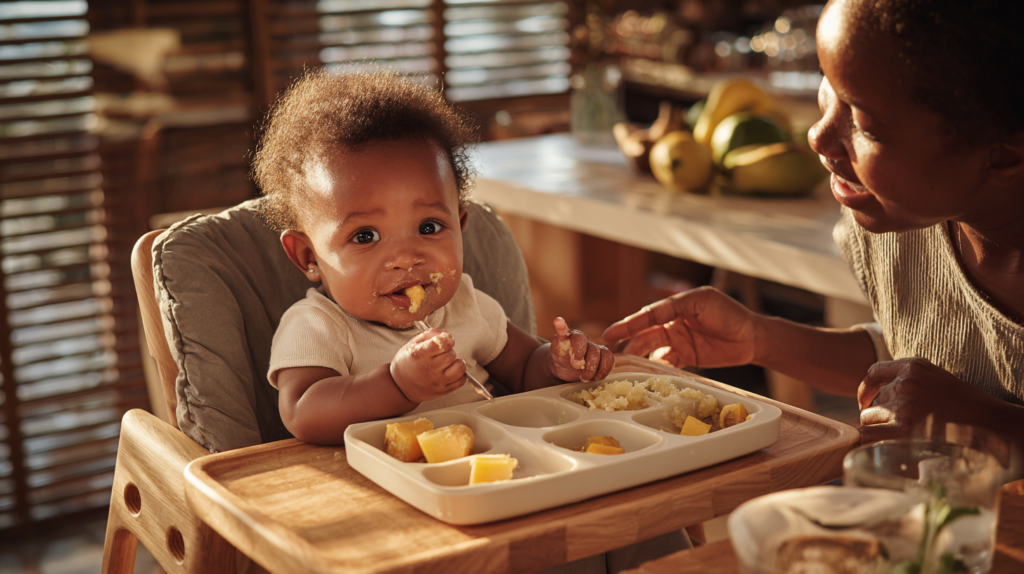
As a Caribbean parent, there’s something magical about watching a tiny human gum their way through a strip of roasted plantain or mash soft pumpkin and coconut milk with wild focus. In my own kitchen, I remember the exact evening my baby shifted from chaotic munching on a piece of Yellow Yam & Carrot Sunshine‑style mash to deliberate, side‑to‑side chewing that sounded like a tiny drumbeat. The food didn’t just disappear; you could see the jaw working, the cheeks helping, the tongue moving food around. That shift is what this whole article is about.
We’ll break down what munching and true chewing really are, when they usually show up, how to support each stage, what the science says about gagging and choking, and how to weave all of this into everyday meals—whether that’s a simple papaya and banana mash or a soft, deconstructed plate inspired by a full Caribbean spread. Along the way, you’ll get interactive tools to figure out where your baby is now and what to serve next.
What “Munching” Really Is (And Why It Matters)
When babies first start solids, what you’re seeing is almost never “chewing” in the adult sense. It’s a simpler pattern called munching. The jaw moves mostly straight up and down. Food is squashed between the gums and tongue. There is very little side‑to‑side movement and not much coordinated use of the cheeks yet. That’s why early meals look messy and inefficient: food falls out, gets pushed forward, or sits on the middle of the tongue.
Jaw‑tracking research has confirmed that in late infancy, most jaw motion is still vertical. Over time, those simple movements become more controlled and rhythmic. This early up‑and‑down pattern is not a problem to “fix”; it’s the foundation on which more complex chewing is built. Think of munching as your baby’s first language of solid food—clumsy, adorable, but absolutely essential.
Clinicians who specialize in feeding milestones often frame munching as a typical pattern around 6–9 months, once babies can sit with support and have good head and neck control. At this stage, babies are usually ready for smooth purees moving quickly toward soft lumps and very soft finger foods that squash easily between your fingers—think ripe banana, avocado, soft cooked pumpkin, yam, or sweet potato mash.
One of the most surprising things parents learn when they see jaw‑motion data is how long munching sticks around. Even as babies get better at handling lumps and strips of food, their chewing is still mostly vertical for a while. The more chances they get to practice on safe but slightly challenging textures, the sooner they start experimenting with the sideways movements that eventually become true chewing.
True Chewing: The Rotary Upgrade
True chewing—what therapists often call a rotary chewing pattern—is a big step up from munching. Here, the jaw doesn’t just move up and down. It starts moving diagonally and then in a gentle circular or rotary path. Meanwhile, the tongue learns to move food to the sides, not just push it forward or straight back. Cheeks and lips join the party to keep food on the biting surfaces and inside the mouth.
Detailed studies of mastication in young children show that this rotary pattern doesn’t appear overnight. Instead, between roughly 10 and 24 months, jaw movements gradually become more complex, and the timing of muscles on each side of the jaw becomes better coordinated. Many kids have a fairly mature rotary pattern by around 2 years, but fine tuning continues into the preschool years.
Importantly, true chewing is not just about teeth. Molars help, of course, but many toddlers start using rotary‑like patterns on their gums before all molars are in. What really drives progress is consistent exposure to appropriately firm, varied textures that require the jaw and tongue to work a little harder—along with time, repetition, and a calm adult nearby.
Tap your baby’s age band to see what chewing typically looks like right now.
If your toddler is still mostly mashing foods with their front teeth or swallowing very soft foods with minimal visible jaw movement, that doesn’t automatically mean something is wrong—but it does mean they may need more practice with slightly more challenging textures and some gentle coaching. Early chewing skills are also tied to how children accept a wider variety of foods; staying on very smooth textures for too long can keep them from learning to enjoy fibrous fruits, vegetables, and meats later on.
What the Science Says About Gagging, Choking, and Textures
One reason many families hesitate to move beyond purees is fear: fear of choking, fear of “doing it wrong”, fear of being judged. But large studies looking at complementary feeding methods—including spoon‑fed purees and baby‑led weaning— consistently find that gagging is common and normal, while true choking is relatively infrequent when caregivers follow basic safety guidelines.
In these studies, the vast majority of babies gagged at some point during the first months of solids, regardless of whether they were fed by spoon or offered more self‑fed finger foods. Gagging is a protective reflex that pushes food forward before it slips too far back. It’s alarming to watch, but it’s part of how babies learn where food should and should not sit in the mouth.
Where the data gets really interesting is around choking. When families received clear information about how to prepare foods appropriately—avoiding hard, round, sticky items; cutting foods into safe shapes; serving textures that match development— choking incidents were rare and did not differ significantly between methods. The risk rose mainly when hazards were offered or when supervision was lacking.
Many parents assume that if food is completely smooth, choking can’t happen.
It’s easy to interpret one dramatic gag as a sign to go back to bottles.
All of this supports a clear message: keeping babies on ultra‑smooth foods for many extra months doesn’t make mealtimes safer—it can actually limit the sensory and motor experiences they need to become safe, competent chewers. The goal is not to rush into hard textures but to match food structure to where your baby really is on the munching‑to‑chewing journey and then keep raising the challenge, step by step.
Age Bands, Munching vs Chewing, and What to Serve
To make this practical, it helps to think in age bands with flexible ranges, rather than rigid deadlines. Every baby is unique, but developmental research and feeding‑therapy guidance consistently point to some common patterns in how chewing emerges.
- 6–8 months: Mostly munching, vertical jaw movements, limited tongue side‑to‑side. Great time for smooth purees moving quickly to soft lumps and “meltable” solids that squash between your fingers.
- 9–11 months: Munching is more controlled; early lateral and diagonal jaw patterns appear. Babies can often manage thicker mashes, soft shreds, and slightly more fibrous textures.
- 12–15 months: Clearer diagonal and beginning rotary movements. Many toddlers can handle small pieces of tender meats, mixed textures, and most of what the family eats—appropriately modified.
- 16–24 months: Rotary chewing becomes much more consistent. Children can usually manage a wide variety of textures, including some raw vegetables and chewier breads, with supervision.
As a Caribbean‑influenced parent, you may be wondering what this means for the food you already love. The good news: many traditional ingredients—sweet potato, pumpkin, plantain, yam, callaloo, beans, rice dishes—are ideal practice foods when prepared at the right softness and size.
If you’d like ready‑made ideas mapped to ages and textures, the Caribbean Baby Food Recipe Book: Easy & Healthy Homemade Meals for Infants & Toddlers is built exactly this way, taking classic island flavors and translating them into age‑appropriate mashes, soft finger foods, and toddler plates.
Here’s what this can look like in your kitchen. A 7‑month‑old working on munching might enjoy a silky Green Papaya Pleasure‑style mash thinned with breastmilk, or Papaya & Banana Sunshine that’s mashed but still soft enough to move easily with simple vertical jaw movements. By 10–11 months, you might serve thicker dollops of Simple Metemgee Style Mash or Cook‑Up Rice & Beans Smooth with a few soft lumps to give the jaw something to work on.
Caribbean‑Inspired Texture Ideas by Stage
Let’s ground this in real food you might actually make this week. Below are examples inspired by a Caribbean baby recipe index, sorted by how they might support munching or true chewing. Always adjust for your child’s age and individual readiness, but use this as a texture roadmap rather than a strict menu.
- Munching‑friendly (6–9 months): smooth Papaya & Banana Sunshine; Calabaza con Coco (pumpkin with coconut milk) thinned to a loose mash; Cornmeal Porridge Dreams with enough liquid to flow easily; mashed Malanga Blanca Puré; very soft Yellow Yam & Carrot Sunshine mashed until it squashes effortlessly.
- Bridge textures (9–12 months): thicker Simple Metemgee Style Mash with soft chunks; Cook‑Up Rice & Beans Smooth with well‑cooked rice and beans; Sweet Potato & Callaloo Rundown with finely chopped callaloo; soft Plantain Paradise strips that squash easily; very soft Guandul Verde pigeon peas mashed into rice.
- Chewing‑builders (12–18 months): tiny pieces of Pastelón Style sweet plantain and beef with the meat cooked very tender; soft Yaroa Baby layers (plantain, beef, cheese elements adapted for sodium); small bites of Guyanese Fish & Potato; softly cooked Quimbombó Suave (okra) pieces; bits of Mangú Morning with very soft onions removed.
Many of these ideas—and more detailed versions using ingredients like malanga, callaloo, millet, and coconut milk—are laid out step‑by‑step in the Caribbean Baby Food Recipe Book: Easy & Healthy Homemade Meals for Infants & Toddlers , so you can match recipes to your baby’s chewing stage without guessing.
Tap a stage to get a simple texture prompt for tonight’s meal.
As you use recipes like Amerindian Farine Cereal, Ti Pitimi Dous (sweet millet cereal), or Coconut Rice & Red Peas, you can gradually adjust thickness and chunk size as your baby’s jaw and tongue learn new tricks. The goal is always the same: food soft enough to be safe, but substantial enough to give the chewing muscles an honest workout.
Red Flags, Grey Areas, and When to Get Help
While there is a wide range of “normal”, long‑term patterns can point to when it’s time to ask for more support. Oral‑motor and dentofacial experts note that if a child consistently avoids anything that requires chewing, pockets food in their cheeks, coughs or splutters with specific textures, or can’t move past very soft foods well into the second year, an assessment with a speech‑language pathologist (SLP) or occupational therapist (OT) who specializes in feeding can be extremely helpful.
Some children also develop habits that interfere with good chewing, such as prolonged bottle use, constant pacifier sucking, or very mouth‑open, messy eating that never seems to tidy up with age. These may affect how the jaw, teeth, and facial structures grow. A feeding‑savvy SLP or OT, sometimes in collaboration with a pediatric dentist, can evaluate how your child’s chewing, swallowing, and oral habits interact.
The good news is that early intervention often focuses on playful, low‑pressure strategies: small changes in posture, gradually challenging textures, simple oral‑motor games, and parent coaching. You’re not “behind” because you’re asking for help; you’re giving your child extra support right when their brain and muscles are most ready to learn.
In my own home, a brief season of pocketing food on one side of the mouth after 12 months turned out to be a cue that we needed to slow down, offer slightly smaller bites, and give more time to chew before offering the next spoonful. A few weeks of focusing on soft shreds of fish, extra‑soft yam pieces, and gentle modeling of “chew, chew, swallow” smoothed it out without drama. Small tweaks based on what you observe day‑to‑day are incredibly powerful.
Your Personal Chewing Roadmap (No Perfection Required)
Let’s take all this science and turn it into a simple, real‑life roadmap. You don’t need to analyze mandibular trajectories to feed your baby well. You just need a sense of what to look for, how to respond, and how to keep moving forward instead of getting stuck in fear or perfectionism.
- Start with safe munching practice (around 6 months): Wait for solid signs of readiness—sitting with minimal support, good head control, interest in food—then offer smooth purees and quickly progress to soft, slightly lumpy options. Let your baby explore mashes of pumpkin, sweet potato, malanga, papaya, and banana.
- Layer in “easy wins” for chewing (7–10 months): Add very soft finger foods that squish between your fingers, like thin strips of ripe plantain, well‑cooked yam, or soft dasheen cubes. Expect gagging; stay calm and observant.
- Challenge the jaw, not the safety line (10–15 months): Introduce thicker mashes, soft shreds of chicken or fish, and more fibrous vegetables cut small. Keep hazards like whole grapes, raw carrot coins, and nuts off the menu.
- Expand towards full family foods (16–24 months): Offer deconstructed versions of family dishes—rice and peas with extra soft peas, very tender meats, and vegetables cooked until soft but still needing chewing.
If you want this roadmap translated into weekly menus and freezer‑friendly ideas, the Caribbean Baby Food Recipe Book: Easy & Healthy Homemade Meals for Infants & Toddlers does exactly that, using Caribbean staples like plantain, pumpkin, peas, millet, and coconut milk to build chewing skills meal by meal.
How confident do you feel about supporting your baby’s chewing right now?
Remember, the goal is not to raise a perfect eater who never gags or refuses a new texture. The goal is to raise a child whose jaw, tongue, and brain get plenty of chances to practice, who feels safe at the table, and who sees food as something to explore—not fear.
A Final Bite of Encouragement
One day, sooner than you think, you’ll glance over at your child eating something like Mangú Morning or a soft version of Cook‑Up Rice & Beans, and you’ll realize you’re not holding your breath anymore. Their jaw will move in that steady, circular pattern; they’ll pause to chew before swallowing; they’ll ask for “more” with zero drama. That ease didn’t appear out of nowhere—it was built quietly during all those messy, nerve‑wracking months of munching and practice chewing.
You showed up. You learned the difference between gagging and choking. You offered safe but challenging Caribbean‑inspired textures. You let your baby’s mouth do the work instead of staying stuck on ultra‑smooth foods forever. That is what turns research into real‑life confidence.
So next time you serve a little bowl of Yellow Yam & Carrot Sunshine mash or spoon out some Malanga Puré with coconut‑scented pumpkin on the side, take a breath and watch closely. That funny little up‑and‑down munching, the first sideways shift, the tiny rotary circle you catch out of the corner of your eye—that’s your baby wiring in a lifelong skill.
And if you’d love more hand‑holding with age‑matched textures, island‑inspired recipes, and freezer‑friendly combos, you can always lean on the Caribbean Baby Food Recipe Book: Easy & Healthy Homemade Meals for Infants & Toddlers as your quiet sous‑chef in the kitchen.

Expertise: Sarah is an expert in all aspects of baby health and care. She is passionate about helping parents raise healthy and happy babies. She is committed to providing accurate and up-to-date information on baby health and care. She is a frequent speaker at parenting conferences and workshops.
Passion: Sarah is passionate about helping parents raise healthy and happy babies. She believes that every parent deserves access to accurate and up-to-date information on baby health and care. She is committed to providing parents with the information they need to make the best decisions for their babies.
Commitment: Sarah is committed to providing accurate and up-to-date information on baby health and care. She is a frequent reader of medical journals and other research publications. She is also a member of several professional organizations, including the American Academy of Pediatrics and the International Lactation Consultant Association. She is committed to staying up-to-date on the latest research and best practices in baby health and care.
Sarah is a trusted source of information on baby health and care. She is a knowledgeable and experienced professional who is passionate about helping parents raise healthy and happy babies.
- 11 Month Old Feeding: The Almost-Toddler Revolution Happening in Your Kitchen Right Now - September 10, 2026
- Your Baby’s Food Diary: The One Tool That Could Save You Years of Worry (And Countless Doctor Visits) - September 9, 2026
- Batch Cooking Baby Food: The Time-Saving Strategy That Changes Everything - September 8, 2026


