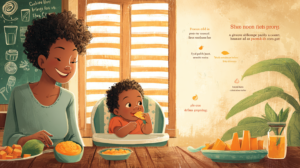
You Are Enough: A Love Letter to Every Feeding Parent
Before We Begin: What’s Your Biggest Feeding Fear?
Click below to uncover what research reveals about your worry—and why it matters less than you think.
Here’s what nobody tells you: A systematic review found that parental guilt and shame about feeding aren’t about failing your child—they’re about impossible cultural standards and inadequate support systems. Research shows that parents report guilt over feeding regardless of method: breast, bottle, picky eating, or food choices. The guilt exists because we’ve been taught there’s a “perfect way” when science says the real success metric is your child’s growth, your mental health, and the relationship you’re building together.
You’re not failing. The system that makes you feel this way is what’s broken.
Three in the morning. Your baby finally latched after forty minutes of trying, and you’re sitting there in the dim light wondering if you’re doing everything wrong. Or maybe it’s dinnertime, and your toddler has thrown their fourth plate of carefully prepared food on the floor, and you’re questioning every parenting decision you’ve ever made.
I need you to hear something right now, before we go any further: You are enough. Not “you will be enough when you figure this out.” Not “you’re enough if you try harder.” You are enough, exactly as you are, in this moment, with all the mess and uncertainty and tears—both theirs and yours.
The truth that changes everything is this: Research now confirms that guilt and shame around feeding are not reflections of your parenting quality. They’re symptoms of a culture that has created impossible standards while providing inadequate support. A 2021 systematic review examining guilt and shame in infant feeding found these emotions are linked to societal pressure, unrealistic expectations, and feeling unsupported by healthcare professionals—not actual parenting failures.
The Heavy Truth Nobody Warns You About
When researchers asked parents about their deepest feeding struggles, they didn’t just catalog physical challenges like latching difficulties or picky eating. They uncovered something more profound: parents carry an emotional weight that goes far beyond nutrition. One study found that parents of children with feeding difficulties experience significant stress, anxiety, and depression, with major impacts on family relationships, work life, and personal well-being.
But here’s what struck me most: this guilt isn’t exclusive to parents facing clinical feeding disorders. Quantitative research on parental feeding guilt shows that everyday parents—the ones making regular meals, dealing with typical toddler food battles—report intense feelings of having “failed” their child over routine food decisions. The recently validated Parental Food Choice Guilt Scale measures how often parents feel they’ve let their child down over things like serving convenience foods, portion sizes, or allowing treats.

Think about that for a second. We’ve created a world where feeding our children—one of the most fundamental acts of care—has become a minefield of self-judgment and fear.
Which Guilt Story Lives in Your Head?
Choose the thought that haunts you most at 2 AM:
Your Truth: Research shows that the “breast is best” messaging, when delivered without adequate support and individual consideration, creates shame that’s linked to postnatal depression and anxiety. A 2023 study found that pressure to breastfeed, combined with insufficient professional support, predicts guilt, shame, AND poor mental health outcomes.
What you need to hear: Fed Is Best Foundation advocates emphasize that focusing solely on one feeding method can leave infants underfed and parents traumatized. Safety, growth, and your well-being matter more than any single method. You’re not failing—you’re making informed decisions with your child’s actual needs in focus.
Your Truth: Feeding difficulties in children are multifactorial—influenced by sensory processing, temperament, developmental stages, medical history, and yes, feeding approaches, but NOT caused by you being a “bad parent.” Research on pediatric feeding disorders shows these are complex medical and behavioral issues requiring specialized support.
What you need to hear: One occupational therapist specializing in feeding writes: “You know your child better than anyone. Your parenting instincts are good.” The fact that you’re worried shows you care deeply. That care is what matters most.
Your Truth: Food insecurity research reveals that parents facing resource constraints experience intense pressure and guilt over “stretching” food and worry about failing to protect their children from hunger. But even parents with adequate resources report guilt over food choices because we’ve moralized food in damaging ways.
What you need to hear: A 2023 survey found that 1 in 3 parents struggle to provide meals. Relying on accessible food isn’t a moral failing—it’s reality. Your child needs fed, warm, and connected meals more than they need organic, homemade perfection. When you have capacity, resources like the Caribbean Baby Food Recipe Book can help you introduce nourishing, culturally meaningful flavors—but only when it works for YOUR life, not because you “should.”
Your Truth: Social media creates an illusion of perfect parenting that research shows is damaging to new parents’ mental health. What you’re seeing are curated highlights, not reality. Research on social media and new mothers found that many platforms amplify guilt, comparison, and unrealistic standards.
What you need to hear: Academic experts in maternal health now emphasize that healthcare should be “tailored and nonjudgmental” to minimize guilt for ALL feeding parents. Nobody has it all figured out. The parents who seem perfect are either lying or about to break. Your messy, real, trying-your-best approach is exactly what your child needs.
What Science Says About Parental Effort
Let me share something that should be taught to every new parent: your effort matters more than your outcomes. This isn’t feel-good platitude—it’s backed by attachment research, feeding therapy principles, and mental health science.
Studies on responsive feeding emphasize that the quality of the caregiver-child relationship during meals matters more than “perfect” feeding outcomes or rigid adherence to one method. Experts who work with feeding disorders—pediatricians, occupational therapists, speech therapists, psychologists—increasingly promote approaches that explicitly validate parent emotions and stress, recognizing that parent well-being directly impacts child feeding success.
Think about what this means practically: when you’re exhausted and serve frozen nuggets instead of the balanced meal you planned, the fact that you sat with your child, made eye contact, and engaged with them during that meal creates more developmental benefit than a “perfect” meal served by a stressed, disconnected caregiver.
Research on family-centered care for feeding disorders identifies caregiver coping, stress management, and peer support as core outcomes—not just child weight gain or food acceptance. Because practitioners understand something crucial: your mental health and your child’s feeding progress are intertwined, not opposed.
Your Personal Affirmation For Right Now
Generate a research-backed affirmation for whatever feeding challenge you’re facing today:
The Shocking Reality of Feeding Pressure
Here’s something that will make you angry, and it should: the same public health system that aggressively promotes exclusive breastfeeding often fails to provide adequate lactation support, paid leave, or education about formula feeding. This isn’t controversial—it’s documented in research.
A systematic review found that large proportions of parents feel judged about formula use and report limited education about formula feeding compared with breastfeeding education. Studies on postnatal mental health found that the pathway from “pressure to breastfeed” and inadequate professional support leads directly to guilt, shame, postnatal anxiety, and depression.
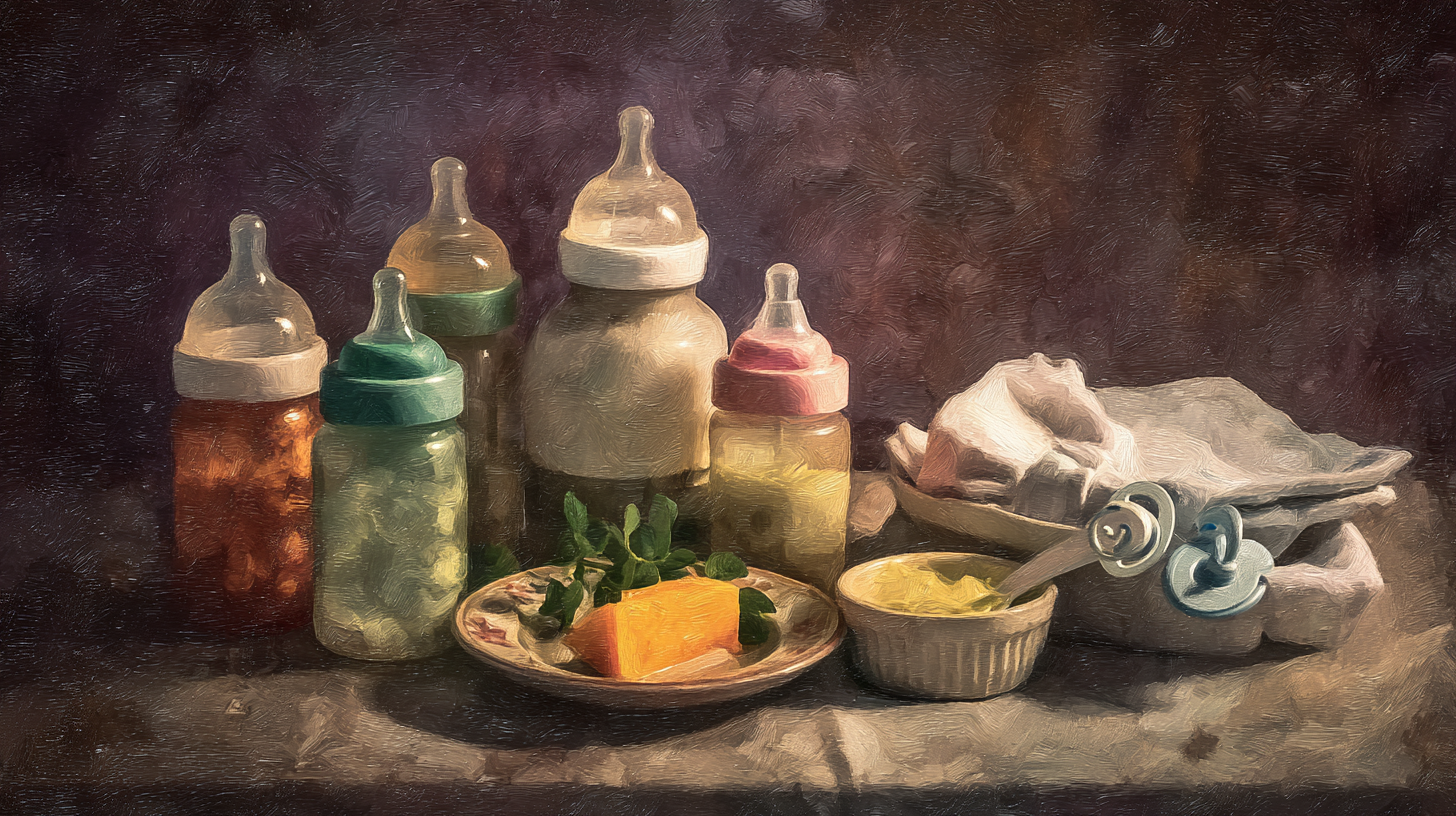
Meanwhile, parents dealing with picky eating face conflicting advice: “Don’t pressure them” and “Make sure they eat enough” exist in the same breath, leaving you paralyzed with indecision. Research on interventions for picky eating shows that mobile apps and digital tools providing reassurance and practical strategies can reduce parental anxiety and nonresponsive feeding—but access to these resources is inconsistent and often not covered by insurance.
And if your child has a diagnosed feeding disorder? Families report that getting appropriate therapy can involve months-long waitlists, and even when treatment begins, parents describe feeling isolated and unsupported emotionally while being expected to implement complex behavioral and sensory strategies at every meal.
Truth Bomb: Which Feeding Myth Has Hurt You Most?
Select the lie you’ve been sold, and I’ll show you what research actually says:
The Lie: One feeding method is universally superior for all families in all circumstances.
The Research Truth: The Fed Is Best Foundation and maternal mental health researchers argue that rigid “breast is best” messaging without individualized support can lead to infant safety issues AND maternal trauma. The actual best approach? “Informed and supported is best”—meaning parents receive balanced education, respectful support for their actual situation, and prioritization of both baby’s AND parent’s wellbeing.
Your feeding method doesn’t determine your love. Your presence, responsiveness, and mental health do.
The Lie: Feeding difficulties are primarily caused by parental behavior and can be overcome through willpower.
The Research Truth: Pediatric feeding disorders are recognized medical conditions with complex causes including oral-motor difficulties, sensory processing challenges, gastrointestinal issues, developmental delays, and trauma history. Research on feeding interventions emphasizes interprofessional treatment combining medical management, therapy (OT, SLP, psychology), and parent support—not parent “trying harder.”
If feeding is hard, it’s not because you’re not trying enough. It’s because feeding IS hard, and you need support, not blame.
The Lie: The morality of food means convenience foods equal bad parenting.
The Research Truth: Studies on food insecurity show that structural factors—income, work schedules, access, family support—drive food choices far more than parent “effort” or “caring.” Research on parental feeding guilt confirms that moralizing food creates shame without improving nutrition. What actually supports child health? Reliable access to adequate food, low-stress mealtimes, and modeling balanced attitudes toward eating.
Feeding your child with what you have available, served with love, is exactly enough. When you have energy and interest, exploring recipes that connect to your heritage can be joyful—but it’s never a requirement for being a good parent.
The Lie: Your anxiety caused your child’s feeding problems and is making them worse.
The Research Truth: Research clearly shows that the relationship between parent mental health and child feeding is BIDIRECTIONAL—meaning feeding difficulties cause parental stress just as much (or more) than parental stress causes feeding difficulties. Studies on parents of children with feeding disorders document that they experience high rates of anxiety and depression AS A RESULT of the daily stress of managing feeding challenges.
Your anxiety isn’t the problem—it’s a reasonable response to a genuinely difficult situation. You need support and compassion, not more guilt.
Why Validation Changes Everything
Let me tell you about something called validation therapy, and why it matters for feeding. Validation doesn’t mean agreeing with distorted thoughts or giving up on goals. It means acknowledging that your feelings make sense given your experience and the messages you’ve received.
Research on validation in parent-child interactions around eating disorders provides a powerful framework that applies to everyday feeding struggles too. The key principle: swap “but” for “because” in your self-talk.
Instead of: “I feel guilty about using formula, BUT I shouldn’t feel that way.”
Try: “I feel guilty about using formula BECAUSE I’ve been told repeatedly that breast is best, BECAUSE I see judgment in others’ eyes, BECAUSE our culture has moralized infant feeding in ways that ignore individual circumstances.”
See the difference? The first statement invalidates your experience and adds shame on top of guilt. The second acknowledges why you feel this way—and in doing so, creates space for self-compassion.
Studies on self-compassion interventions for parents confirm that self-compassion—extending kindness to yourself in moments of perceived inadequacy—is associated with better mental health outcomes, less parental stress and burnout, and even more warm and attentive parenting styles. Research from 2021 found that mothers with higher self-compassion showed healthier eating behaviors themselves, creating better modeling for their children.
Practice Validation: Your Feeding Challenge
Choose a scenario you’re struggling with, and I’ll show you what validation sounds like:
Building Your Support Foundation
Research on effective interventions for feeding challenges consistently points to the same elements: practical strategies combined with emotional support. Not one or the other—both.
Digital and telehealth supports are emerging as accessible options. Studies on mobile apps for parents worried about picky eating show that tools providing reassurance, practical strategies, and normalization of stress can reduce pressure-based feeding and parental anxiety. Apps addressing infant crying, sleeping, and feeding provide psychoeducation that helps parents understand typical development and reduces catastrophic thinking.

But technology can’t replace human connection. Research on family support organizations for pediatric feeding disorders emphasizes that peer connection and validation are essential alongside medical and therapy resources. Parents who connect with others facing similar challenges report feeling less alone, gaining practical tips, and—crucially—having their experiences normalized.
One feeding therapist writes directly to parents: “You are doing a fantastic job. You know your child better than anyone. Your parenting instincts are good. Please seek help if you are scared, sad, overwhelmed, and feel unheard. Talk to your feeding therapist. Talk to your doctor. Things will get better.”
Notice what she’s doing? She’s leading with affirmation, then permission to seek help. Not “you need to try harder”—but “you’re already trying so hard, and you deserve support.”
Practical Compassion for Your Daily Feeding Life
Let’s get specific about what self-compassion looks like in the daily grind of feeding children. Research-backed affirmations for parents include phrases like:
“I’m doing the best I can with what I have.” This acknowledges that parenting happens within real constraints—time, money, energy, support, your child’s unique needs. You don’t have to be superhuman. Research confirms that self-compassion reduces stress and improves resilience more than self-criticism ever could.
“I’m allowed to feel different emotions—and that doesn’t make me a bad parent.” Studies show that parents who accept all their feelings choose more warm and attentive parenting styles. Your frustration at 5 PM when your toddler throws dinner on the floor? That’s human. Acknowledging it without shame actually helps you respond more calmly.
“I don’t have to be a perfect parent.” Perfect parents don’t exist. Research on parental self-compassion found that parents with high self-compassion experience less burnout and are better able to be present with their children. Your child needs you present and good enough, not perfect and depleted.
“Hard days happen.” This simple statement, validated by research, helps you ride out difficult moments without catastrophizing. Every parent has hard days. It doesn’t mean you’re failing—it means you’re parenting a real child in real life with real challenges.
When you’re preparing meals—whether that’s carefully blending sweet potato and callaloo or opening a pouch—these affirmations can become anchors. If you’re in a season where cooking feels possible and joyful, exploring flavors from Caribbean Baby Food Recipe Book recipes like Coconut Rice & Red Peas or Cornmeal Porridge can be a way to share your heritage and create connection. But if you’re in survival mode? Store-bought is fine. Formula is fine. Whatever gets food into your child while preserving your sanity is fine.
Your Self-Compassion Feeding Check-In
Answer honestly—no one’s grading you. This is just for you:
Your Self-Compassion Snapshot:
What Experts Wish Every Parent Knew
Clinicians and researchers who specialize in feeding have a message they want you to hear. I’ve pulled these from recent studies and clinical guidelines:
From maternal health researchers: “Healthcare should be tailored and nonjudgmental to minimize guilt for ALL feeding parents—whether breastfeeding, formula feeding, or combination feeding.” This isn’t a fringe position. It’s increasingly mainstream in evidence-based maternal care.
From feeding therapists: “Responsive feeding, gradual exposure, and family-centered care that explicitly validates parent emotions and stress are the foundations of effective intervention.” They’re telling you that your emotions aren’t obstacles to overcome—they’re central to the work of feeding your child well.
From mental health professionals: “Self-compassion in parents is associated with better outcomes for both parents and children. It’s not selfish—it’s essential.” Research shows that when you care for your own emotional needs, you become more available and responsive to your child.
From researchers studying breastfeeding experiences: Mothers who create positive feeding experiences do so by “maintaining an effortless mindset about breastfeeding to prevent perceiving it as a compulsion.” Translation: when feeding becomes joyless obligation, it’s time to reassess—not push harder.
The Future Is More Compassionate
Here’s what gives me hope: the research and practice landscape is shifting toward integrating mental health support into standard feeding care. Studies from 2023 and 2024 show that new interventions are being designed with emotional support built in from the start, not added as an afterthought.
Researchers are developing validated tools to identify parents who need extra emotional support around feeding decisions. Digital platforms are being created that combine evidence-based feeding guidance with affirmation and validation. Family-centered models of care for feeding disorders now include caregiver coping and stress management as core outcomes, not optional add-ons.
There’s growing collaboration between public health professionals, mental health specialists, and parent advocates to create campaigns that promote healthy feeding AND counter shame. Online communities led by compassionate clinicians and experienced parents are providing spaces where struggle is normalized and support is freely given.
This means that the guilt and isolation you may be feeling now? There’s a growing movement of professionals and parents working to ensure the next generation of feeding parents doesn’t have to carry that same weight.
Your Permission Slip
I want to give you explicit permission for things you might be waiting to hear:
You have permission to formula feed—for any reason, at any time, without explanation or justification. Research confirms that fed is best, and your mental health matters.
You have permission to serve convenient foods when that’s what works for your family. Frozen meals, pouches, crackers and cheese—these are tools, not moral failures. Studies show that family stress around meals is more harmful to children than imperfect nutrition.
You have permission to ask for help. Research shows that parents who reach out for support have better outcomes. This includes asking family for meal prep assistance, asking your doctor for feeding therapy referrals, asking friends to listen without judgment, or seeking mental health support if feeding stress is overwhelming.
You have permission to change your feeding approach whenever it’s not working for your family. Started with exclusive breastfeeding and need to supplement? That’s fine. Began with baby-led weaning and your child needs purees? That’s fine. Research supports flexible, responsive approaches that adapt to your child’s needs and your family’s capacity.
You have permission to grieve if feeding isn’t going as you hoped. Loss of the breastfeeding relationship you imagined, sadness over a child’s feeding disorder, disappointment that mealtimes aren’t the joyful connection you wanted—these feelings are valid. Research shows that acknowledging grief is part of moving forward.
You have permission to enjoy feeding your child, whatever that looks like for you. Maybe it’s the quiet moments of breastfeeding, or the ease of formula preparation, or the adventure of introducing new flavors like the Plantain Paradise or Mango Coconut Rice recipes. If exploring Caribbean-inspired combinations brings you joy, that’s beautiful. If opening a jar brings you relief, that’s equally beautiful.
This Moment, Right Here
I want to close with something a parent researcher shared when studying feeding experiences. She interviewed parents about their favorite moments, and many described simple instances: the way their baby’s hand rested on their chest during feeding, the toddler’s delighted face trying a new food, the peaceful companionship of a family meal even when half the food ended up on the floor.
None of these cherished memories were about perfection. They were about presence. Connection. The small, unremarkable moments that somehow contain everything important.
Research confirms that the magic isn’t in achieving the “right” feeding approach. It’s in showing up, in the trying, in the relationship you’re building one feeding session at a time. Studies on attachment and child development make clear that children don’t need perfect nutrition or perfect feeding execution. They need a caregiver who is responsive to their cues, who shows up consistently, who repairs ruptures when things go wrong, who models self-compassion.
That caregiver? That’s you. Even on the hardest days. Even when you’re exhausted and doubting everything. Even when the baby won’t latch or the toddler won’t eat or you’re crying over spilled milk (literally).
You are doing the most important work in the world. You’re showing up for a tiny human who depends on you completely. And research says—I say—that your effort, your presence, your love? It’s not just enough.
It’s everything.
You are enough. Your child is fed. Your love is present. That’s the whole story, and it’s beautiful.

Kelley's culinary creations are a fusion of her Caribbean roots and modern nutritional science, resulting in baby-friendly dishes that are both developmentally appropriate and bursting with flavor. Her expertise in oral motor development and texture progression ensures that every recipe supports your little one's feeding milestones while honoring cultural traditions.
Join Kelley on her flavorful journey as she shares treasured family recipes adapted for tiny taste buds, evidence-based feeding guidance, insightful parenting anecdotes, and the joy of celebrating food, culture, and motherhood. Get ready to immerse yourself in the captivating world of Kelley Black and unlock the vibrant flavors of the Caribbean for your growing baby, one nutritious bite at a time.
- You Are Enough: A Love Letter to Every Feeding Parent - October 4, 2026
- Imperfect Feeding: Why Messy, Real-Life Parenting Is Exactly What Your Child Needs - October 3, 2026
- Your Child’s Relationship with Food: The Quiet, Life-Long Gift You’re Giving Every Day - October 2, 2026