
The Feeding Journey Continues: A Research-Backed, Future-Focused Guide for Confident Parents
Tap the word that matches your current mood and see what your “next chapter” headline could be.
You’ve survived the early feeding trenches—those long nights measuring milliliters, the first spoonfuls, the mess, the doubt, the pressure to “do it right.” Now a new question is quietly tugging at you: what comes next? Not just at the next meal, but in the next year… the next five… the entire arc of your child’s relationship with food.
This is where feeding becomes less about a checklist and more about a journey. Developmental research, responsive feeding frameworks, and long-term studies on family meals all agree on something powerful: the way you navigate these upcoming stages can shape how your child eats, feels, and thinks about food for years to come. And the best part? You don’t need perfection—you need a flexible, future-focused mindset, grounded in evidence and adapted to your real life (Caribbean flavors, tight budgets, busy schedules and all).
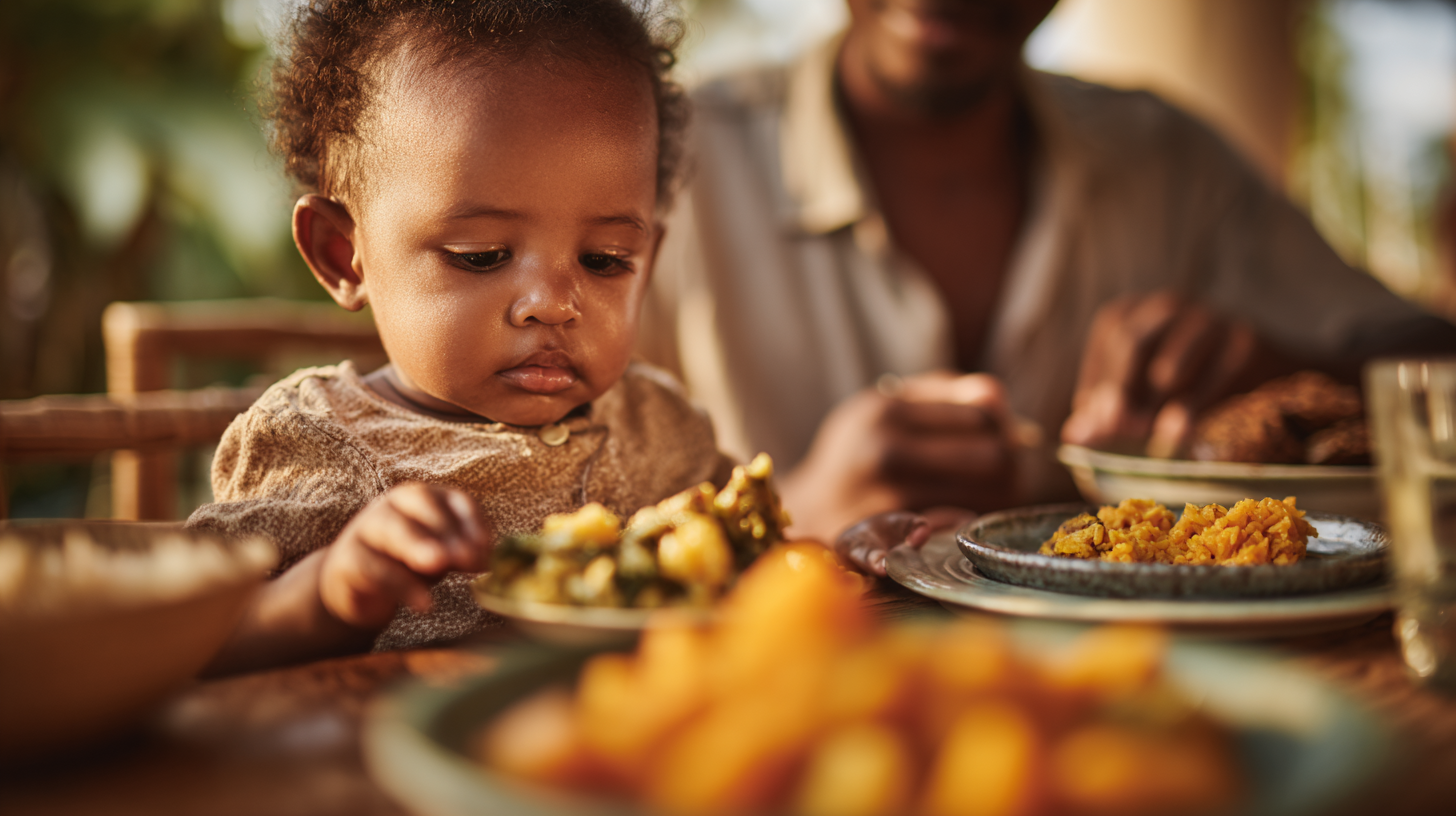
The Long View: From Complementary Feeding to Lifelong Eating Patterns
Early feeding guidelines used to focus almost entirely on what to feed: which purees to start with, when to add iron, when to introduce allergens. Over the last two decades, the science has shifted toward a broader lens: how caregivers feed is just as important. Responsive feeding and division-of-responsibility models emphasize that parents provide structure (what, when, where), while children learn to listen to their own hunger, fullness, and interest to decide whether and how much to eat.
Global and national recommendations now highlight the 6–24 month window as a “transition feeding” period: a gradual move from milk-focused nutrition to a family-style diet. By around 12 months, many children can share most family foods, as long as textures are safe, foods are nutrient-dense, and added sugars and ultra-processed snacks are limited. But this isn’t a finish line. It’s the handoff from infant feeding to the long game of shaping tastes, habits, and body trust that can last into adulthood.
Longitudinal research shows that early patterns in this window—how often you share family meals, whether you pressure or restrict, how you respond to refusal—predict children’s later eating behaviors, dietary quality, and sometimes weight trajectories. These effects are meaningful but not destiny: families who shift toward more responsive, structured-yet-flexible approaches later still see benefits.
Tap the statement you believe is closest to the truth. You’ll get an evidence-informed explanation.
Developmental Progression: What to Expect After Early Feeding
Understanding normal progression turns “What’s wrong with my child?” into “Oh, this is that stage.” Researchers and clinicians generally see three broad post-infancy phases:
- 12–24 months: Joining the family table Your child moves from “baby food” into modified family meals. They refine chewing, experiment with self-feeding, and begin to show preferences. Appetite can swing widely day to day as growth slows compared to infancy. The key developmental tasks here: learning textures, getting repeated exposure to core family foods, and experiencing meals as predictable and safe.
- 2–5 years: Autonomy explosion and neophobia This is the peak of “NO!”—in behavior, clothing, and food. Studies on food neophobia show that cautiousness around unfamiliar foods is common and often peaks in preschool years. It’s not a pathology; it’s partly a survival strategy and a way of practicing independence. Appetite also tends to be more sensitive to activity, growth spurts, and emotions.
- 5–12 years: Social influence and skill-building School, peers, parties, and sports shape what your child is offered and how they feel about it. Research on family meals suggests that even in this stage, frequent, high-quality shared meals correlate with better diet quality, fewer extreme dieting behaviors later, and stronger psychosocial outcomes. This is also when children are ready to help cook, pack parts of their lunch, and understand simple ideas about nutrients and energy.
Across these stages, exposure to ultra-processed snacks and sugary drinks often increases, while fruit and vegetable intake tends to drop if families don’t proactively protect variety. That’s where responsive structure—regular meals, consistent snack windows, and family foods at the center of the plate—works like a safety net.
Choose your child’s age range and we’ll show (1) roughly how far along you are in the long-term skill arc and (2) a research-aligned focus for the next season.
Responsive Feeding & Division of Responsibility: The Framework That Grows With Your Child
Responsive feeding is more than “letting kids eat what they want.” It’s a structured partnership. Parents provide:
- What food is offered (within cultural, financial, and logistical realities).
- When meals and snacks happen (roughly predictable windows, not all-day grazing).
- Where eating happens (ideally at a table or designated spot, not constantly on the move).
Children decide:
- Whether they eat from what’s offered.
- How much they eat, guided by internal hunger and fullness cues.
This approach is consistent with both responsive parenting research and the division of responsibility model: when parents respect cues and avoid coercion, children develop better self-regulation and more flexible food preferences. Pressure (“three more bites”), using food as a bribe (“If you behave, you get ice cream”), or harsh restriction (“you can never have sweets”) are consistently linked to more conflict, more obsession with “forbidden” foods, and less attuned eating.
In many Caribbean families, this balance shows up as relaxed authority: the adults decide what’s in the pot—rice and peas, callaloo, a soft yam mash, tender stewed peas—while children are encouraged to try, but not forced to clean their plate. Over time, gentle expectations plus repeated exposure to core flavors like coconut, thyme, pimento, ginger, and plantain help build adventurous palates without daily battles.
Evolving Challenges: From Food Strikes to Snack Culture to School Cafeterias
As your child grows, the challenges don’t disappear—they evolve. Research and clinical practice highlight several recurring friction points:
- Normal developmental neophobia misread as “failure” Many parents interpret toddler and preschool food refusal as a sign they “ruined” feeding. In reality, cautiousness around new foods is expected. The risk comes when panic triggers pressure, bargaining, or cooking separate meals, which can lock in patterns of refusal.
- Snack culture & ultra-processed foods As children enter childcare and school, convenient, hyper-palatable snacks become more available. Studies show that without structure, “grazing” can blunt hunger and reduce acceptance of balanced meals. At the same time, strict bans may backfire by increasing desire for exactly those foods.
- Parent stress & structural barriers Caregiver mental load, time poverty, and food costs heavily influence feeding. Parents might know the guidelines but feel unable to implement them. Longitudinal research consistently links family meal frequency and quality—not perfection—to better outcomes, even when life is stressful.
- Conflicting messages from professionals and social media One clinician warns about weight gain, another about restrictive dieting; one influencer glorifies perfect baby-led weaning plates, another advocates rigid rules. Parents are left feeling that every choice is wrong. Future-focused feeding requires a way to filter this noise through your values and your child’s needs.
Tap the scenario that sounds most like your current struggle. You’ll get a response grounded in what long-term studies and responsive feeding principles suggest.
Caribbean-Inspired, Research-Aligned Strategies for Each Stage
To make this concrete, imagine your child’s feeding future as a series of “seasons” where your tools evolve but your core approach—responsive, structured, culturally rooted—stays steady. Caribbean-inspired baby and toddler recipes make this especially powerful because they introduce real-world flavors early, then scale with your child.
- 12–24 months: Transition to family meals Developmentally, the goal is exposure and participation, not perfect variety at each meal. Soft, flavorful dishes like:
- Plantain Paradise (p. 56) – mashed ripe plantain with coconut milk, ideal for self-feeding.
- Baigan Choka Smooth (p. 86) – silky eggplant puree with gentle seasoning, great on soft roti or rice.
- Coconut Rice Red Peas (p. 62) – tender rice and peas the whole family can share, with texture modified for younger babies.
- 2–5 years: Managing peaks of neophobia with play and structure Research suggests that 10–15 neutral exposures to a food (sometimes more) may be needed before acceptance. Caribbean-inspired recipes can be your “repetition without boredom” tool:
- Sweet Potato Callaloo Rundown (p. 66) lets you offer greens in a creamy, familiar base.
- Yellow Yam Carrot Sunshine (p. 64) offers bright color and naturally sweet notes—less intimidating than a raw vegetable side.
- “Adventure bites” (tiny portions) and family-style serving (“You can take some if you’d like”) preserve autonomy while keeping doors open.
- 5–12 years: Building skills, independence, and resilience This is the age where kids can help plan, shop, and cook from a resource like the Caribbean Baby Food Recipe Book: Easy & Healthy Homemade Meals for Infants & Toddlers. Recipes like:
- Cassareep Sweet Potato (p. 96) – can become a “choose your topping” dish (beans, shredded chicken, sautéed callaloo).
- Ti Pitimi Dous – Sweet Millet Cereal (p. 154) – evolves into a build-your-own breakfast bowl with older kids picking fruit and nut toppings.
- Stewed Peas Comfort (p. 60) – doubles as a packed lunch in a thermos for school, reinforcing home patterns even in outside settings.
If you want a structured, flavor-forward toolkit spanning these stages, the Caribbean Baby Food Recipe Book: Easy & Healthy Homemade Meals for Infants & Toddlers gives you over 75 recipes that grow with your child—from first spoonfuls to shared family dinners.
Hidden but Reassuring Truths About the Feeding Future
Here are some of the “unknown” truths that rarely make it into parent handouts, but show up again and again in the research:
- Early responsive interventions show benefits for growth and eating behaviors—but many effects fade unless families keep adapting strategies. That’s not a failure; it’s a reminder that feeding, like relationships, needs maintenance.
- Family meal patterns appear to move across generations. Adults who grew up with pressuring, chaotic mealtimes can intentionally build calmer, more flexible routines—and research suggests those new patterns can influence not just their children, but eventually grandchildren.
- Changing course later is meaningful. Shifting from “clean your plate” rules to division-of-responsibility or from screens-at-every-meal to a few screen-free anchor meals has measurable benefits, even if it starts in the school years.
Each button reveals one less-known insight drawn from long-term feeding research and real family data.
Designing Flexible Systems Instead of Fragile Rules
Many parents are sold rigid plans that crumble the moment someone gets sick, the paycheck is late, or the toddler starts a new phase. A future-ready feeding system is flexible by design. Think in terms of scaffolding, not scripts:
- Anchor points, not rigid schedules Decide on a few non-negotiable anchors—maybe one shared breakfast most weekdays and two sit-down dinners per week. Around those anchors, allow menus and exact timing to flex.
- Batch and re-purpose Dishes like Cook-Up Rice Beans Smooth (p. 92), Coconut Rice Red Peas (p. 62), or Amerindian Farine Cereal (p. 102) can be cooked once and remixed across meals: served warm at dinner, repurposed in lunchboxes, or offered as easy toddler lunches.
- Three “always-ok” options list Keep a short mental list of three fast, nutrient-dense fallback meals you can make in under 15 minutes—like yam mash with egg, millet cereal with fruit, or simple stewed peas with rice. This reduces panic and dependence on ultra-processed fallbacks.
- Micro rituals for connection Research on family meals shows that quality—tone, interaction—matters as much as quantity. Simple rituals like everyone sharing “one sweet thing and one hard thing” from their day can turn even basic meals into emotionally rich experiences.
These systems allow you to integrate evidence-based practices (routine, exposure, autonomy) without expecting yourself to cook like a TV chef every night. They also fit well with Caribbean cooking patterns that already rely on big pots, leftovers, and adaptable bases.
If you’d like your “always-ok” list and weekly anchors to practically build themselves, using ready-to-go recipes that work from 6 months through the school years, the Caribbean Baby Food Recipe Book gives you a curated, research-aware collection to pull from on autopilot.
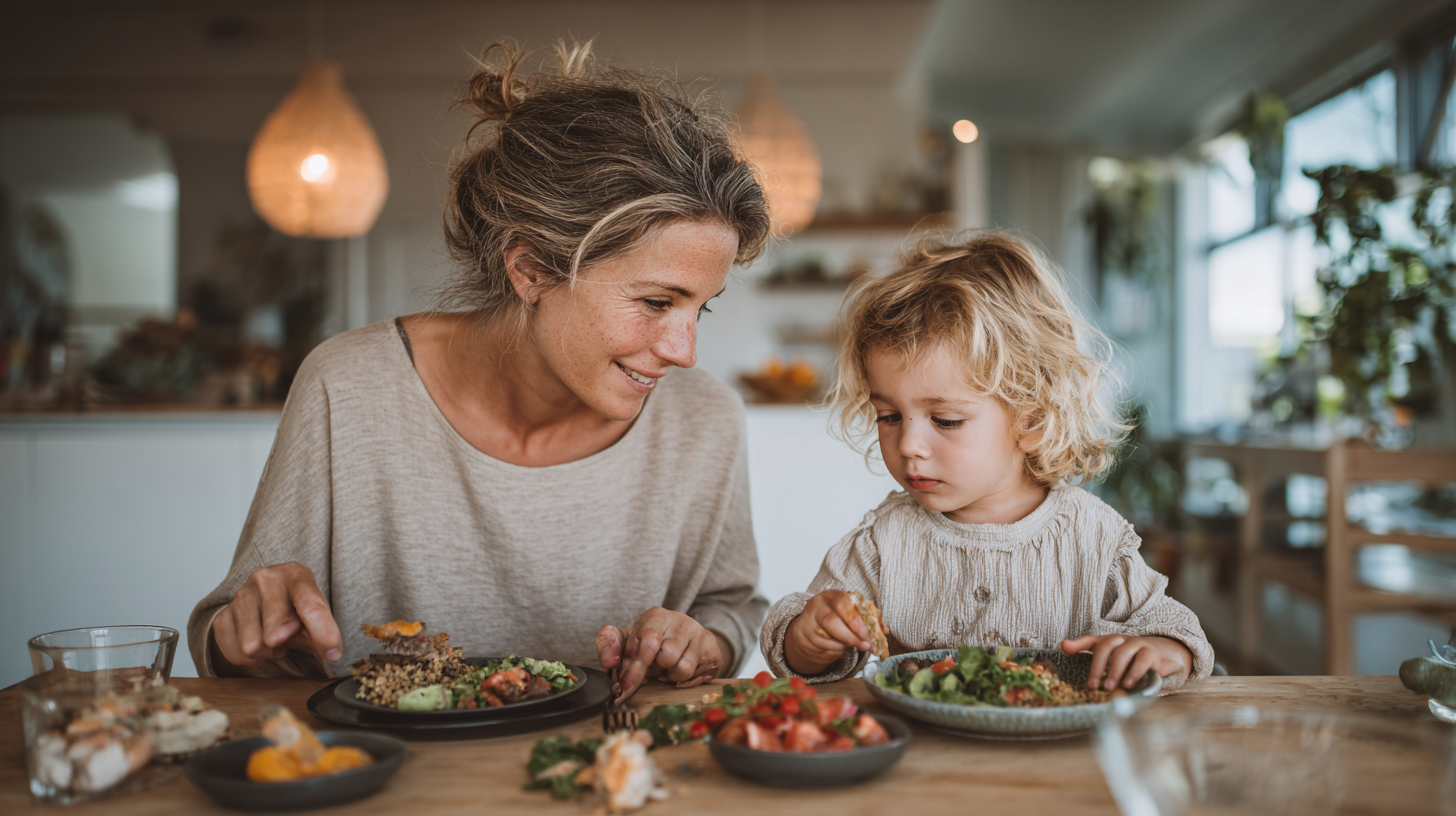
Future Outlook: Where Feeding Research Is Heading (and How It Helps You)
Emerging research points toward a few important trends that matter for your family’s future:
- Longer, multi-stage interventions Instead of brief programs focused only on infancy, there’s a move toward supports that revisit families in toddlerhood, preschool, and school age. That aligns with reality: each stage brings new challenges and opportunities to recalibrate.
- Integration with broader “nurturing care” Feeding guidance is increasingly combined with advice on sleep, responsive play, and emotional regulation. The message: it’s all one system, and skills in one area support others.
- More attention to family stress and context Studies recognizing the impact of parental burnout, socio-economic constraints, and cultural differences are pushing for more flexible, tailored guidelines—not one-size-fits-all rules that assume unlimited time and money.
- Digital and hybrid support models There’s growing interest in using apps, telehealth, and online communities to provide booster sessions, check-ins, and practical guidance beyond the baby stage. That means future parents may be able to access ongoing coaching rather than one-off visits.
For you, this means the future is likely to bring more nuanced, compassion-focused guidance, not less. Your decision today to build flexible systems and honor your child’s cues puts you ahead of the curve of where the research is already moving.
Pick a Caribbean-inspired recipe you’d like to introduce (or re-introduce) this week. You’ll get a personalized mini pep talk based on its strengths.
Feeding Forward: A Final Word for Your Future Self
Years from now, you probably won’t remember whether your toddler ate three bites or five of yam on a random Tuesday. What you will remember is the feeling at your table: whether it was a place of tension and tallying, or a place where you laughed, experimented, and came back together after long days.
A future-focused feeding journey doesn’t require you to predict every stage. It asks you to do something much more human: stay curious, keep your structure flexible, let your child’s body wisdom have a voice, and draw strength from your own roots. The same way a pot of coconut rice and peas quietly nourishes everyone at the table, small, consistent choices you repeat over years will nourish your child’s relationship with food.
If you’d like a practical companion that turns all of this into specific meals, snacks, and flavor ideas that grow with your child from 6 months onward, you’ll find that support in the Caribbean Baby Food Recipe Book: Easy & Healthy Homemade Meals for Infants & Toddlers. Think of it as your future-self kindness—one less thing to figure out when the day is long and the energy is low.
You don’t need to see the entire map today. Feeding is a journey you create by walking it, one responsive meal, one tiny taste, one shared pot at a time. And right now, by looking toward the future with intention, you’re already changing that future for the better.

Kelley's culinary creations are a fusion of her Caribbean roots and modern nutritional science, resulting in baby-friendly dishes that are both developmentally appropriate and bursting with flavor. Her expertise in oral motor development and texture progression ensures that every recipe supports your little one's feeding milestones while honoring cultural traditions.
Join Kelley on her flavorful journey as she shares treasured family recipes adapted for tiny taste buds, evidence-based feeding guidance, insightful parenting anecdotes, and the joy of celebrating food, culture, and motherhood. Get ready to immerse yourself in the captivating world of Kelley Black and unlock the vibrant flavors of the Caribbean for your growing baby, one nutritious bite at a time.
- The Feeding Journey Continues: A Research-Backed, Future-Focused Guide for Confident Parents - September 22, 2026
- Letting Go of Feeding Anxiety: Finding Peace in the Messy Middle - September 21, 2026
- Your Feeding Confidence: Building Trust in Your Parenting Decisions - September 20, 2026