
Finding Your Feeding Community: The Support That Changes Everything
How Strong Is Your Support Right Now?
Click the statement that feels most true for you today:
Here’s something nobody tells you when you bring your baby home: feeding isn’t just about the milk or the mashed sweet potatoes or whether you’re doing purees or baby-led weaning. It’s about the 2 AM searches for answers when nothing seems to work. The tears—yours and the baby’s—when another feeding session goes sideways. The way your chest tightens when someone casually asks, “So, how’s feeding going?” because you don’t even know where to start.
Every parent navigating infant feeding deserves more than advice. They deserve understanding. Connection. A place where their worries aren’t dismissed and their wins—however small—are celebrated. Research from Pew Research Center reveals that 63% of parents say online communities make them feel more informed, and 48% feel more connected. But here’s the truth beneath those numbers: community support isn’t a luxury in the feeding journey—it’s the difference between drowning and learning to swim.
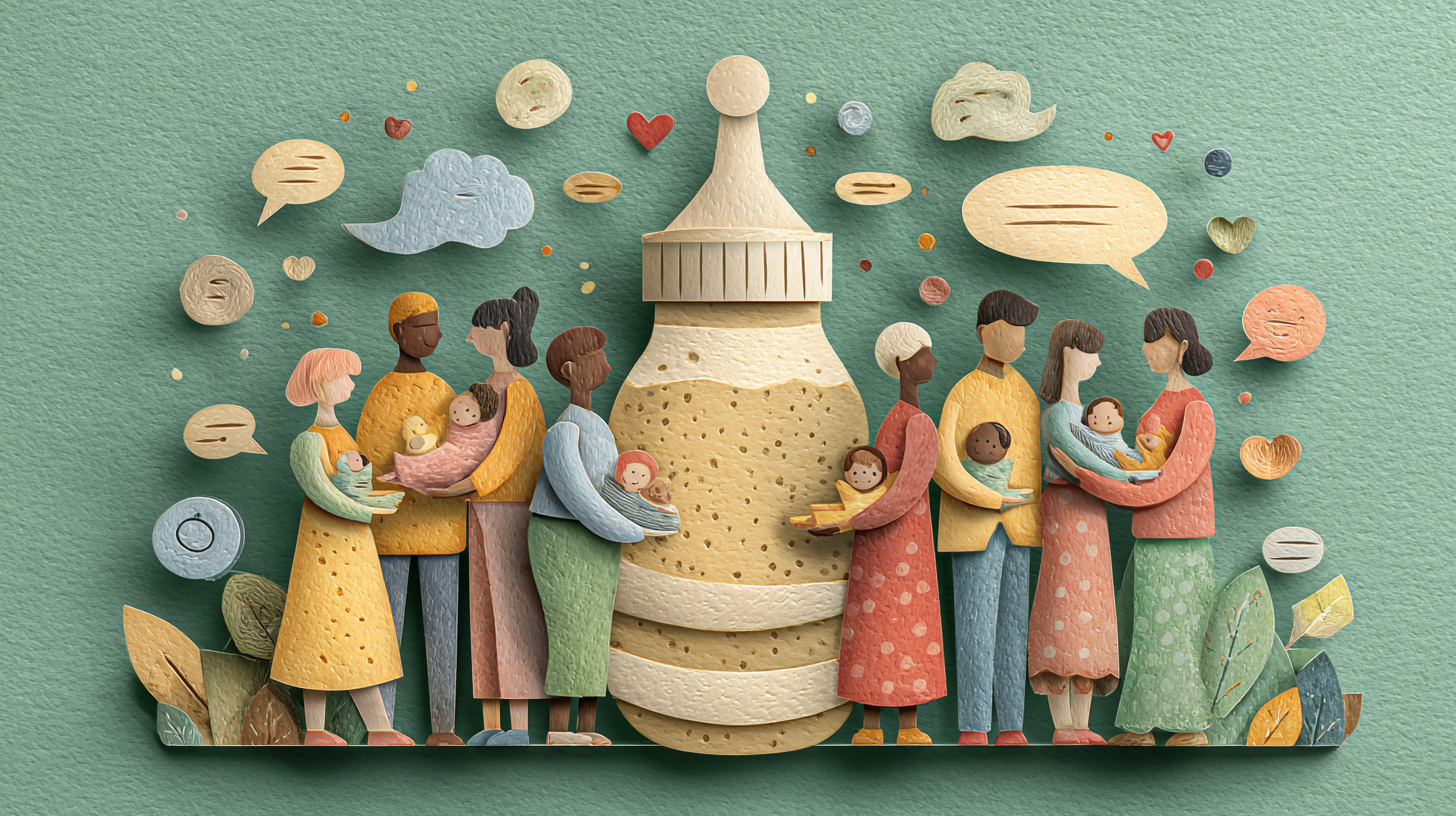
The feeding journey transforms when you stop white-knuckling it alone and start building networks of support that hold you up. Whether through Facebook groups buzzing with midnight messages, local meetups where you can actually see other parents struggling too, or structured peer programs that pair you with someone who’s walked this path before, finding your feeding community is about discovering you’re not broken, you’re not failing, and you’re definitely not alone.
When Isolation Becomes the Invisible Enemy
Isolation doesn’t announce itself with dramatic fanfare. It creeps in quietly—through the partner who works long hours, the friends without kids who don’t understand why you can’t just “relax,” the Instagram feeds showing perfectly peaceful feeding sessions when yours feel like battlefield negotiations. You start to wonder if everyone else has it figured out except you.
The Malaysian Breastfeeding Peer Counsellor Program discovered something powerful: mothers receiving peer support were 3.6 times more likely to initiate breastfeeding within the first hour compared to those without such connections. That’s not just a statistic—it’s proof that having someone in your corner fundamentally changes outcomes. When you feel isolated, every challenge becomes magnified. A fussy eater isn’t just a phase; it’s evidence you’re doing something wrong. A rejected bottle isn’t a normal hiccup; it’s confirmation of your inadequacy.

But isolation does more than amplify problems—it silences solutions. When you’re alone, you don’t have access to the collective wisdom of parents who’ve faced the same struggles. You don’t hear about the trick that worked for someone else’s reflux baby, the lactation consultant who actually listens, or the simple reassurance that yes, growth spurts really do make them want to eat every 45 minutes for three days straight.
The isolation gap hits hardest for marginalized communities. Low-income parents, single mothers, parents in rural areas, and those from cultural backgrounds where traditional feeding practices clash with modern medical advice often find themselves doubly isolated—cut off not just from support networks, but from resources that acknowledge their specific realities. Building inclusive feeding communities means recognizing these gaps and intentionally creating spaces where every parent can find their people.
The Hidden Architecture of Support Networks
Support networks aren’t one-size-fits-all solutions. They’re ecosystems with different layers serving different needs. Understanding this architecture helps you build the community that actually serves you, rather than draining your already depleted energy.
Online Communities: The 24/7 Lifeline
Reddit’s r/Parenting boasts over 8 million members as of November 2025. Facebook hosts thousands of feeding-specific groups—from exclusive breastfeeding support to formula-feeding parents to combo-feeding families to specialty groups for parents of babies with food allergies or feeding difficulties. These digital spaces offer something revolutionary: instant access to collective experience.
What Type of Support Do You Need Most?
Click the need that resonates most with you right now:
At 3 AM when your baby refuses the breast for the fifth time and panic sets in, online groups provide something precious: immediate validation and practical suggestions from parents who’ve been exactly where you are. Analysis of online parenting communities shows that comments are overwhelmingly supportive and helpful, creating environments where vulnerability is met with compassion rather than judgment.
But online communities come with trade-offs. Information overload can leave you more confused than when you started. Mixed-quality advice means separating gold from garbage. Privacy concerns are real, and unmoderated groups sometimes become spaces for misinformation or commercial interests disguised as support. The key is choosing communities with clear guidelines, active moderation, and values that align with yours.
Local Connections: The Power of Presence
Something magical happens when you sit across from another parent whose baby is also refusing every vegetable known to humanity. The shared laughter, the knowing looks, the way you don’t have to explain why you’re near tears over sweet potato rejection—local connections offer validation that pixels can’t replicate.
In-person support groups provide accountability and continuity. You see the same faces week after week. You watch each other’s babies grow. You celebrate milestones together and commiserate through regressions. Research shows that structured, culturally relevant peer support models—like community health programs that embed support at birth and throughout the postpartum period—achieve remarkable outcomes, including up to 31% increases in exclusive breastfeeding rates during the first six months.
Finding local connections might mean joining a La Leche League meeting, attending a baby café at your library, connecting through your pediatrician’s office, or even starting your own meetup with parents from your neighborhood or workplace. Many parents discover their strongest support networks emerge from unexpected places—the parent at the playground who mentions their own feeding struggles, the neighbor who offers to share homemade baby food recipes, the coworker who becomes a trusted sounding board.
Caribbean families often navigate additional layers when seeking local support, especially when traditional food practices don’t appear in mainstream feeding advice. This is where cultural community becomes essential—connecting with other Caribbean parents who understand why introducing foods like plantain, callaloo, or coconut milk matters not just nutritionally but culturally. Local Caribbean cultural centers, churches, and community organizations often facilitate these connections organically.
Building Your Network From Scratch
Maybe you’re reading this thinking, “This all sounds great, but I literally don’t have anyone.” Starting from zero feels overwhelming, but every thriving community began with someone taking the first uncomfortable step. Here’s how to build your feeding support network even when you’re starting from nothing.
You Are Not Alone
Over 42% of mothers visit parent support communities monthly. Right now, thousands of parents are searching for connection just like you.
Start with low-stakes exploration. You don’t have to commit to anything immediately. Join a few online groups and lurk. Read posts. Notice which communities feel welcoming and which ones trigger your anxiety. Pay attention to moderation quality—are harmful comments addressed quickly? Do people ask questions without getting shamed? Is there room for different feeding approaches?
Engage incrementally. Once you’ve found a group that feels right, start small. React to posts that resonate. Leave a brief, supportive comment on someone’s struggle. Share a small win. The beautiful thing about feeding communities is that everyone remembers being the nervous newcomer. Most established members actively welcome and encourage new voices.
Ask specific questions. General pleas for help often get lost in busy groups. Specific questions get specific, actionable answers. Instead of “My baby won’t eat, help!” try “My 8-month-old gags on any texture thicker than puree. Has anyone successfully transitioned a texture-sensitive baby?” Specificity signals genuine need and invites experienced parents to share targeted wisdom.
Seek out hybrid models. Many communities now blend online and in-person elements—Facebook groups that organize local meetups, Instagram accounts that connect parents in specific cities, WhatsApp groups for neighborhood parents. These hybrid spaces offer the convenience of digital connection with pathways to real-world relationships.
Don’t overlook professional-led options. Many hospitals, lactation consultants, and pediatric practices host support groups. These professionally facilitated spaces provide evidence-based information alongside peer support, offering a safety net of expertise while building community connections. Some are free; others charge modest fees. Many now offer virtual options that increase accessibility.

What Good Support Actually Looks Like
Not all support is created equal. Toxic positivity masquerading as encouragement. Judgment disguised as advice. Competitive parenting dressed up as sharing. Understanding what healthy, effective support looks like helps you identify communities worth your time and energy.
Good support validates before problem-solving. When you share a struggle, the first response isn’t immediately jumping to fixes. It’s acknowledgment: “That sounds so hard.” “You’re not alone in this.” “What you’re feeling makes complete sense.” Only after validation do helpful communities move toward practical suggestions—and they offer them as options, not mandates.
Good support holds space for different approaches. The feeding wars—breast versus bottle, purees versus baby-led weaning, scheduled feeds versus on-demand—create unnecessary division. Strong communities recognize that fed is best, that different families have different needs and values, and that your feeding choices don’t require anyone else’s approval. They share information without agenda and respect each family’s autonomy.
Good support acknowledges structural realities. Advice that works for a parent with paid leave, reliable childcare, and comfortable finances might not work for a parent juggling three jobs with no support system. Effective communities recognize how factors like income, work schedules, access to healthcare, housing stability, and cultural context shape feeding experiences. They offer practical wisdom that accounts for real-world constraints.
Build Your Ideal Support Community
Select all the qualities that matter most to you in a feeding support community:
Good support evolves with your needs. The community that saves you during the newborn feeding marathon might not be the one you need when navigating toddler food refusal. Some parents maintain connections across multiple communities simultaneously—an online group for quick questions, a local meetup for in-person connection, a professional group for complex issues. Your support network should flex and shift as your journey changes.
Good support empowers rather than creates dependency. The goal isn’t to need constant external validation for every feeding decision. It’s to build confidence, knowledge, and self-trust while having a safety net when things get truly challenging. Communities that celebrate your growing expertise and encourage autonomy serve you better than those that position themselves as the only source of acceptable answers.
Navigating the Messy Middle: When Community Gets Complicated
Real talk: support communities aren’t always sunshine and understanding. Sometimes you’ll encounter judgment. Sometimes advice will contradict itself. Sometimes the group that once felt like home starts feeling like an obligation. Navigating these complications is part of the journey.
Managing conflicting advice requires developing discernment. When you ask about introducing solids and receive seventeen different answers ranging from “wait until 6 months minimum” to “we started at 4 months and it was fine,” the overwhelm is real. Learning to filter advice through your own values, your baby’s cues, your pediatrician’s guidance, and your intuition transforms information overload into informed decision-making.
One strategy: look for consensus on safety issues while allowing flexibility on preference issues. Honey before age one? That’s a hard safety no across medical guidance. But whether to start with iron-rich meats or iron-fortified cereals? That’s preference territory where different approaches can all work fine. Distinguishing between these categories reduces stress significantly.
Dealing with judgment is inevitable in parenting communities. Your choice to formula feed might get questioned. Your decision to extend breastfeeding past a year might draw comments. Your approach to introducing allergens, your baby’s growth curve, your return-to-work feeding plan—all potential judgment targets. Strong communities address this proactively through clear guidelines and active moderation. But you also need personal boundaries.
Permission to disengage: You don’t owe strangers on the internet explanations for your feeding choices. You don’t need to justify your decisions or defend your approach. When judgment appears, you can ignore it, report it if it violates group rules, or simply leave the conversation. Protecting your mental health matters more than winning arguments with people who don’t know you or your baby.
Recognizing when to step back is an underrated skill. Sometimes communities that once felt supportive become sources of anxiety. Maybe comparison culture creeps in and suddenly everyone else’s baby seems more advanced. Maybe the tone shifts and negativity dominates. Maybe your needs change and the group no longer serves you. Leaving or taking breaks doesn’t mean you’ve failed at community—it means you’re honoring what you need right now.
Consider a rotation approach: engage intensively when you need support, step back when you’re feeling stable, return when new challenges emerge. Many parents describe their relationship with feeding communities as tidal—flowing in during crisis periods, flowing out during calmer stretches. This rhythm is healthy and sustainable.
The Ripple Effect: From Receiving Support to Offering It
Something shifts when you move from primarily seeking support to also providing it. You realize how far you’ve come. You recognize your hard-won wisdom has value. You discover that helping someone else navigate what you’ve already survived creates its own form of healing.
The peer counseling model demonstrates this powerfully. Parents who’ve successfully navigated feeding challenges, received training, and now support others report profound benefits—increased confidence, deeper knowledge, stronger sense of purpose. Programs scaling peer support globally show that this reciprocal model, where today’s supported parent becomes tomorrow’s supporter, creates sustainable, self-perpetuating communities.
You don’t need formal training to offer support. Simply sharing your honest experience—including the mistakes and failures alongside the victories—gives other parents permission to be imperfect. Responding to someone’s panicked 2 AM post with “I remember that feeling, you’re doing better than you think” plants seeds of resilience. Celebrating someone’s small win validates that progress isn’t always dramatic.
Your Feeding Community Journey
Click each step as you complete it on your path to building support:
Reciprocal support also creates accountability in positive ways. When you’re part of a community where people know your feeding goals—whether that’s making it to six months of breastfeeding, successfully introducing solids, or establishing healthy mealtime routines—you have gentle accountability. Not pressure, but encouragement. People checking in. Celebrating milestones with you. Offering perspective when you’re ready to give up.
For parents introducing Caribbean flavors to their babies, sharing recipes and experiences becomes particularly valuable. When you discover a way to adapt traditional dishes for baby-friendly versions—maybe your grandmother’s coconut rice and peas pureed to perfect consistency, or callaloo blended smooth for early eaters—sharing that success helps preserve cultural food traditions while building community around shared heritage.
Cultural Community: When Heritage Meets Feeding
Mainstream feeding advice often operates from a culturally narrow perspective—recommendations developed primarily around Western, middle-class feeding norms. For Caribbean parents, parents of color, immigrant parents, and those from non-Western cultural backgrounds, this creates disconnect. Your mother’s advice about introducing foods might differ dramatically from what your pediatrician suggests. Traditional practices your family has followed for generations might not appear in any parenting book.
Cultural feeding communities bridge this gap. They’re spaces where you can ask, “How do I introduce plantain?” without needing to first explain what plantain is. Where “my mother-in-law says I should give the baby this traditional porridge” isn’t met with alarm but with curiosity and shared experience. Where the flavors, ingredients, and practices that connect your baby to their heritage are celebrated rather than questioned.
These communities often exist in culturally specific spaces—Caribbean community centers, cultural association gatherings, religious congregations, ethnic grocery stores, neighborhood enclaves. They might be harder to find than mainstream parenting groups, but they offer irreplaceable value: the validation that your cultural practices have worth, the collective wisdom of generations, and the support of people who understand that feeding isn’t just nutrition—it’s connection to identity and belonging.
Some parents create hybrid approaches—maintaining connections in both mainstream feeding communities for evidence-based medical information and cultural communities for traditional wisdom and practices. This both/and approach, rather than either/or, allows you to honor multiple sources of knowledge while making informed decisions for your unique family.
The Digital Evolution: New Platforms, New Possibilities
The landscape of feeding support communities continues evolving rapidly. Instagram influencers build communities around feeding philosophies. TikTok videos offer bite-sized advice and solidarity. Specialized apps connect parents based on specific needs—babies with feeding disorders, parents exclusively pumping, families navigating food allergies. Some innovations genuinely improve access to support; others add noise without substance.
Virtual support groups exploded during the pandemic and many have continued, offering accessibility for parents who can’t easily leave home—those in rural areas, parents without transportation, families with medically complex babies, working parents with inflexible schedules. Zoom-based meetups, Instagram Lives with lactation consultants, and virtual baby cafes democratize access in meaningful ways.
Chatbots and AI-powered support tools are emerging, offering 24/7 answers to common feeding questions. While these can’t replace human connection and should never substitute for medical advice, they can provide quick reassurance during middle-of-the-night panics. As one recent example, a chatbot helping mothers and infants during conflict situations demonstrates how technology can bridge support gaps in crisis conditions.
But technology also amplifies risks. Misinformation spreads faster. Echo chambers form more easily. Commercial interests infiltrate communities with subtle marketing. The “Hazards of Online Advice for Parents of Young Children” report warns about dangers including unqualified advice, privacy breaches, and pressure toward harmful practices. Navigating digital feeding communities requires critical thinking alongside open hearts.
When Professional Support Intersects with Community
The most effective support ecosystems blend peer connection with professional expertise. Lactation consultants who facilitate support groups. Pediatric feeding therapists who host parent education sessions. Registered dietitians who provide evidence-based nutrition guidance while honoring diverse cultural practices. These hybrid models leverage professional knowledge while maintaining the peer support that makes parents feel less alone.
World Breastfeeding Month 2025 emphasized exactly this integration—calling for workplace accommodations, health facility support, and trained peer counselors all working together. Systematic reviews show that internet-based peer support significantly increases breastfeeding rates, while structured peer counseling programs improve complementary feeding practices. The magic happens at the intersection: professional guidance delivered within supportive community structures.
If you’re struggling with complex feeding challenges—persistent weight gain issues, suspected feeding disorders, severe food allergies, anatomical complications affecting feeding—professional support isn’t optional. But even while working with specialists, community support remains vital. Other parents navigating similar diagnoses offer emotional support and practical wisdom that complements clinical care. Online groups for parents of babies with specific conditions provide both information and hope.
Look for professionals who value and encourage community connection rather than positioning themselves as the sole source of knowledge. Lactation consultants who recommend support groups. Pediatricians who connect you with other families facing similar challenges. Feeding therapists who facilitate parent networks. These professionals understand that sustainable success requires both expertise and community.
Real Stories from the Feeding Community
Click each card to reveal how community support changed these parents’ feeding journeys:
Your Next Step Starts Today
Maybe you’ve been reading this whole article thinking, “This sounds great, but I still don’t know where to start.” That feeling—that overwhelm—is exactly why you need community. You don’t have to figure it all out before taking the first step. You just need to take the first step.
Your next move might be searching “feeding support group near me” and showing up to one meeting, even if your hands shake the whole time. It might be joining one carefully chosen online group and lurking until you’re ready to post. It might be texting that one other parent you know and suggesting coffee to talk about feeding struggles. It might be asking your pediatrician if they know any local resources or support groups.
The beautiful thing about community is that you don’t build it alone. Every person in those groups felt nervous joining. Every confident community member remembers being the uncertain newcomer. The path from isolated to connected doesn’t require perfection—just willingness to be imperfect in the company of other imperfect humans doing their imperfect best.
As you build your feeding community, remember that different seasons require different support. The community that carries you through breastfeeding challenges might differ from the one that helps you navigate toddler food refusal. Some connections will last years; others will serve you beautifully for a season and then fade. All of it counts. All of it matters.
The feeding journey you’re on right now—whether you’re in the exhausting early days, the messy middle of introducing solids, or the challenging toddler years—is inherently communal. Humans have always fed babies in community. We’ve always shared wisdom, troubleshot problems together, and celebrated milestones collectively. Modern isolation isn’t natural or necessary. It’s a gap you can actively bridge.
Feeding your baby nourishing foods—whether that includes Caribbean-inspired sweet potato and callaloo, traditional porridges with coconut milk, or plantain mashes that connect to heritage—becomes richer when done in community. The struggles feel more manageable. The wins feel more worth celebrating. The whole messy, beautiful, difficult journey transforms when you stop carrying it alone.
You Belong Here
Here’s what nobody tells you about finding your feeding community: you already belong. You don’t need to earn it. You don’t need to prove you’re struggling enough to deserve support. You don’t need to wait until you have it all together before showing up. Your presence—exactly as you are right now, with all your uncertainties and imperfections—adds value to the community.
Every question you ask gives someone else permission to wonder the same thing. Every struggle you share reminds another parent they’re not alone. Every small victory you celebrate creates hope for someone still in the thick of it. Community isn’t something you join once you’ve figured it out—it’s how you figure it out together.
The support system you build now ripples forward. The connections you make during your baby’s feeding journey might evolve into friendships that last years. The wisdom you gain might position you to support someone else down the road. The courage you develop by showing up imperfectly models resilience for your child in ways you can’t yet see.
And when the feeding journey feels impossibly hard—when nothing works, when everyone else seems to have it easier, when you question every decision—remember this: thousands of parents in communities right now are searching for exactly what you’re searching for. Connection. Understanding. Validation. The reassurance that they’re not failing, they’re learning. That their best—messy and imperfect as it is—is enough.
You’re not alone in this journey. You never were. The support you need exists. The community that will hold you is out there waiting. Your only job right now is to take one small step toward finding it. Search for a group. Show up to a meeting. Post a vulnerable question. Reach out to another parent.
Your feeding community is calling. They’re ready to welcome you home.

Kelley's culinary creations are a fusion of her Caribbean roots and modern nutritional science, resulting in baby-friendly dishes that are both developmentally appropriate and bursting with flavor. Her expertise in oral motor development and texture progression ensures that every recipe supports your little one's feeding milestones while honoring cultural traditions.
Join Kelley on her flavorful journey as she shares treasured family recipes adapted for tiny taste buds, evidence-based feeding guidance, insightful parenting anecdotes, and the joy of celebrating food, culture, and motherhood. Get ready to immerse yourself in the captivating world of Kelley Black and unlock the vibrant flavors of the Caribbean for your growing baby, one nutritious bite at a time.
- Finding Your Feeding Community: The Support That Changes Everything - September 8, 2026
- Your Feeding Journey: The Growth You’re Not Seeing (But Should Celebrate) - September 7, 2026
- Trusting the Process: How Faith in Your Child’s Development Changes Everything - September 6, 2026