
Trusting the Process: How Faith in Your Child’s Development Changes Everything
Your Parenting Anxiety Reality Check
Click on the statement that most closely describes how you feel RIGHT NOW about your child’s development:
I compare my child to others daily and lose sleep over every “behind” milestone
I trust development, but social media and milestone charts make me second-guess myself
I monitor milestones but don’t stress—every child is different
I want to care without controlling, but I don’t know how
I’ve been there. Standing in the pediatrician’s office, my stomach in knots because my daughter wasn’t saying “mama” at precisely 12 months like the chart promised. I’d scroll through Instagram at midnight, watching perfectly curated toddlers recite their ABCs at 18 months, feeling like I was failing her. The irony? Research from 2024 shows that parental overcontrol driven by this exact anxiety—the hovering, the constant correction, the need to “fix” every perceived lag—actually delays the emotional regulation and independence we’re so desperate to see develop.
Self-Determination Theory has revolutionized our understanding of how children develop. When parents support three basic psychological needs—autonomy, competence, and relatedness—children’s natural developmental motivation flourishes. But when we micromanage, over-help, and control every learning moment out of fear, we inadvertently thwart those very needs. A 159-family longitudinal study found that warmth plus autonomy support predicted better child well-being in over 99% of families, while psychological control consistently linked to higher anxiety and lower perceived competence in children.

The truth about developmental timelines is more forgiving—and more complex—than the rigid milestone charts suggest. The CDC revised its developmental checklists in 2022 after comprehensive literature review, and what emerged is striking: most milestones have enormous age ranges that all fall within “typical” development. Walking, for instance, can happen anywhere from 9 to 18 months. Language explosion might begin at 15 months or 24 months. Both are normal. Both children will likely be indistinguishable by age five.
The Shocking Truth About Milestone Charts That Nobody Shares
Myth vs. Truth Revealer
Click the button below to reveal the shocking gap between what you’ve been told and what research actually shows:
❌ MYTH: Milestone charts show the “right” age for each skill
Most parents believe the age listed on milestone charts is when their child should achieve that skill. Miss it by a month, and panic sets in.
✅ TRUTH: Charts show averages across huge ranges—and “late” often predicts nothing
Evidence-based milestone research from 2022 reveals that charts now show the age by which 75% of children achieve a skill—meaning 25% of typically developing children will be “late” by definition. Studies tracking children from the Copenhagen Perinatal Cohort found that within the normal range, early vs. late milestone achievement had minimal predictive power for adult outcomes. The child who walked at 10 months and the one who walked at 16 months? Equally likely to thrive.
❌ MYTH: More stimulation and teaching speeds up development
The billion-dollar baby industry promises that the right toys, classes, and flashcards will give your child an edge.
✅ TRUTH: Autonomy-supportive environments outperform intensive teaching
A 2024 randomized trial of the “Partners in Play” intervention found that when parents learned to guide play autonomously—following the child’s lead, offering choices, narrating effort instead of directing—children’s self-regulation improved significantly within 8 weeks. Conversely, drilling skills and over-teaching can actually reduce intrinsic motivation and delay emotional development. Your child doesn’t need more intervention; they need more space to practice being competent.
This reframing changes everything. Because if developmental timelines are wide and forgiving, and if parental anxiety-driven control slows the very growth we seek, then the most powerful thing we can do is learn to release our grip.
But I know what you’re thinking: “Easy to say, impossible to do when everyone around me is posting about their 20-month-old’s full sentences.” Social media has become the modern village square, except instead of realistic community support, we get curated highlight reels that make typical development look delayed. A 2023 study on maternal anxiety found that comparison-focused social media use directly increased parenting stress and reduced confidence in their child’s pace. The dopamine hit of scrolling has become the enemy of developmental trust.
Why Your Brain Fights Against Trusting Development
Here’s what’s really happening in your anxious parent brain: evolution wired us to scan for threats to our children’s survival. In ancestral environments, a child who couldn’t keep up with the group faced real danger. That ancient alarm system is still firing—except now it’s triggered by a developmental chart instead of a predator. Your nervous system doesn’t distinguish between “my child isn’t walking yet” and “my child is in danger.” Both activate the same fight-or-flight response.
Neuroscience research shows that when parents are in a chronic state of anxiety, they’re more likely to engage in overcontrolling behaviors as an attempt to reduce that anxiety. It feels like protection. But studies on maternal overcontrol and child anxiety reveal a painful irony: overcontrol actually increases child anxiety by teaching them they’re not capable of handling challenges independently. Children internalize the message, “Mom hovers because I can’t do this alone,” which decreases perceived competence—one of the key psychological needs for healthy development.
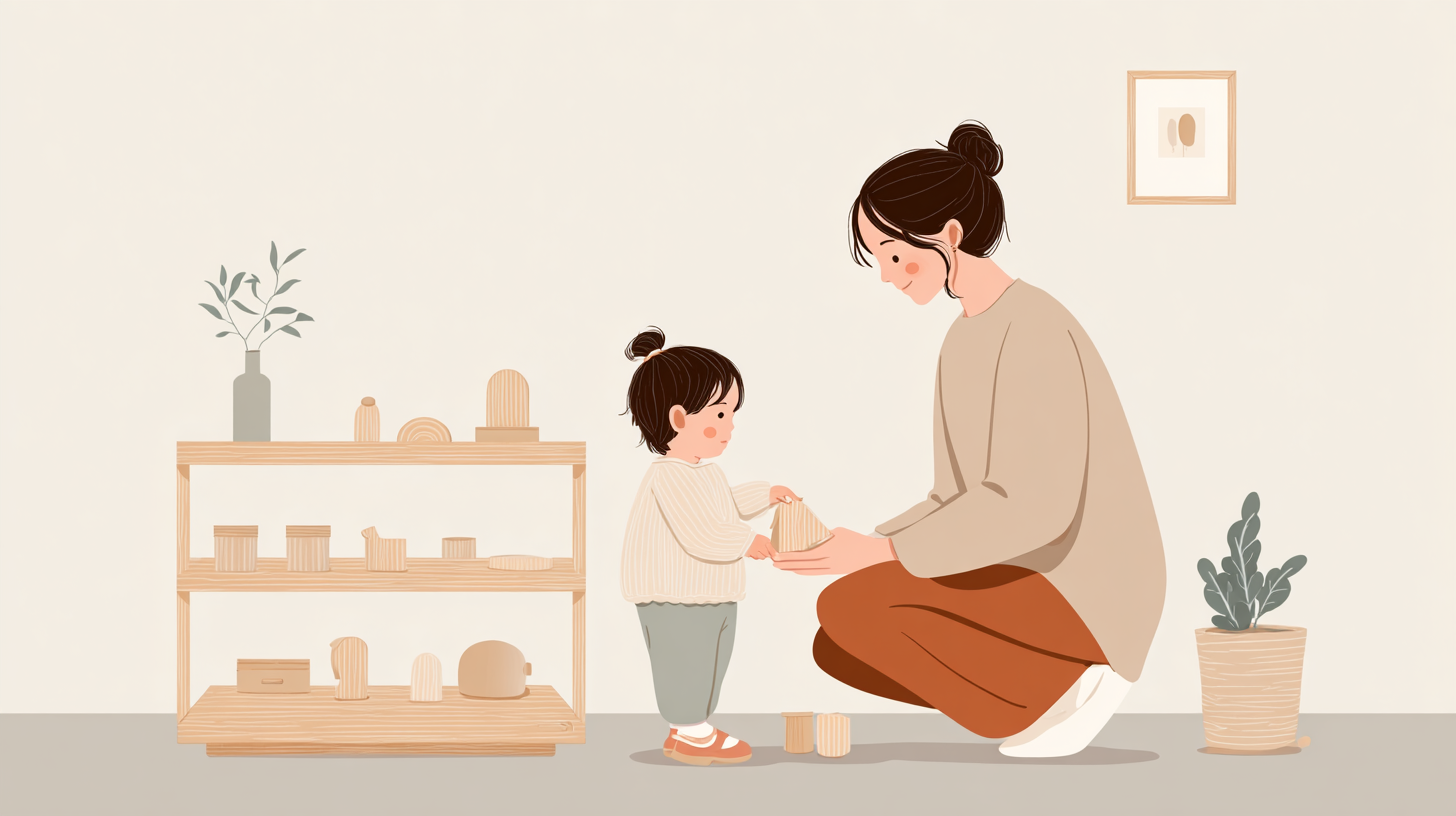
The antidote isn’t to stop caring. It’s to care differently. Autonomy-supportive parenting—the research-backed alternative to control—means offering warmth, clear structure, and room for the child to try, fail, and succeed on their own timeline. It means saying, “I see you struggling with that puzzle. Do you want to keep trying or take a break?” instead of jumping in to fix it. It means celebrating effort over outcome. It means trusting that your child’s innate developmental drive is powerful if you create the conditions for it to flourish.

The Long-Term Perspective That Changes How You Parent Today
Future Vision Exercise
Imagine your child at age 25. Use the slider below to indicate how much you believe each factor will matter to their success and happiness:
When we zoom out to the adult your child will become, the things we obsess over in toddlerhood shrink to almost nothing. Large-scale longitudinal studies following children from infancy to adulthood consistently find that timing of motor milestones (walking, self-feeding) and early language milestones have virtually no correlation with adult intelligence, career success, or relationship quality—assuming development falls within the broad typical range. What does predict adult well-being? Emotional regulation, autonomy, secure attachment, and resilience—the exact qualities that autonomy-supportive, low-control parenting cultivates.
Think about it this way: you probably don’t remember whether your best friend walked at 11 months or 15 months. You don’t know when your partner first said “mama.” These milestones matter intensely in the moment, then evaporate into irrelevance. What remains is the relationship you built, the trust you fostered, and the competence your child developed through countless small moments of struggle and triumph.
This long-term perspective isn’t about being neglectful. Developmental surveillance is important—watching for true red flags, ensuring access to early intervention when genuinely needed. But there’s a vast difference between watching and worrying, between monitoring and micromanaging. The American Academy of Pediatrics recommends developmental screening at specific intervals using validated tools precisely because clinical impression and parent anxiety are unreliable guides. If your pediatrician isn’t concerned, and your child is progressing (even if slowly), the most evidence-based intervention is often watchful waiting paired with a rich, responsive environment.
Practical Strategies for Releasing Control Without Checking Out
So how do you actually do this? How do you trust development when every fiber of your being wants to intervene, compare, and perfect? Here are research-backed strategies that helped me—and thousands of parents I’ve worked with—make the shift:
Create a “Trust Fund” of Evidence: Start a simple note on your phone. Every time your child masters something they previously struggled with—finally stacking those blocks, using a new word, climbing the stairs—add it to the list. When anxiety strikes, review this evidence. Your child has been learning all along, on their own timeline. This practice helps retrain your brain to see the pattern of growth rather than isolated moments of “behind.”
Limit Comparison Inputs: Research on social media and parental anxiety is clear: the more time spent on platforms where milestone-bragging is common, the higher parental stress and lower confidence in their child’s development. Set boundaries. Unfollow accounts that trigger comparison. Remind yourself that you’re seeing 30 seconds of someone else’s highlight reel, not the full 14-hour reality that includes tantrums, setbacks, and completely age-appropriate struggles.
Practice “Autonomy Pauses”: Before jumping in to help, count to ten. Watch what your child does. Can they problem-solve? Do they ask for help? Often we intervene before they’ve even had a chance to try. A 2024 study on play-based interventions found that parents who learned to pause before helping—offering choices like “Do you want a hint, or keep trying?”—saw measurable improvements in their children’s self-regulation and persistence. That ten-second pause is where trust lives.
Reframe “Delays” as “Different Pacing”: Language matters. Instead of thinking “my child is behind,” try “my child is focusing their developmental energy elsewhere right now.” A child who walks late might be pouring energy into language. A child slow to talk might be mastering fine motor skills. Development isn’t linear; it’s a complex dance of trade-offs and spurts. Reframing reduces your anxiety and changes how you interact with your child.
Just like building a nourishing foundation with whole foods—whether you’re making traditional Caribbean-inspired purees like Sweet Potato & Callaloo Rundown or Plantain Paradise—trusting your child’s development means providing rich, varied experiences and then stepping back to let them digest and integrate on their own schedule. You wouldn’t force-feed a baby who isn’t hungry; don’t force-feed milestones to a child whose brain is working on something else.
When Anxiety Becomes a Red Flag: Knowing the Difference
Here’s the nuance that gets lost in “just relax” advice: sometimes parental anxiety is picking up on something real. Sometimes it’s not about trusting the process—it’s about trusting your gut that something needs attention. How do you tell the difference?
True developmental red flags typically involve regression (losing previously mastered skills), lack of progress across multiple domains over several months, or missing several milestones within a sector by the outer age limit. Isolated “lateness” in one area while other development proceeds typically? Not a red flag—a normal variation. A pediatric developmental specialist can help you distinguish between the two.
Parental anxiety becomes problematic when it’s chronic, interfering with your ability to enjoy your child, driving controlling behaviors, or existing independent of actual developmental concerns. If you find yourself unable to sleep, constantly googling symptoms, or unable to be present because you’re mentally cataloging “deficits,” that’s anxiety that needs support—not more milestone information. Therapy, particularly approaches addressing parental anxiety and experiential avoidance, can be transformative. Treating your anxiety isn’t selfish; it’s one of the most powerful interventions for your child’s developmental environment.
Research on the dual-process model of Self-Determination Theory clarifies this beautifully: you can be high in autonomy support AND high in appropriate structure. Setting boundaries, ensuring safety, seeking evaluation when genuinely warranted—these aren’t control. They’re responsible parenting. Control is the intrusive, psychologically pressuring behaviors driven by our need to reduce our own discomfort, not by the child’s actual needs.
Building Daily Practices That Reinforce Trust
Your 30-Day Trust-Building Tracker
Check off each practice as you implement it. Watch your progress build momentum:
Progress: 0% Complete
These daily practices aren’t about being a perfect parent. They’re about incremental shifts that compound over time. Just as you wouldn’t expect your child to master walking in a day, don’t expect yourself to master trust in a week. Development—yours and theirs—is a process. Small, consistent steps create lasting change.
One of my favorite trust-building practices came from a Caribbean grandmother I met at a community center. She told me about the old island wisdom of “watching, not hovering.” She’d set her grandchildren up with simple, open-ended activities—a pot and wooden spoon, a bowl of dried beans to scoop, ripe plantains to mash (just like in recipes like Mangú Morning or Plantain Paradise)—then she’d sit nearby, present but not interfering. “They figure it out,” she said. “Always do.” That image stuck with me. Presence without pressure. Availability without anxiety.
The Relationships That Anchor Long-Term Trust
Trusting development isn’t a solo journey. You need a village—but the right kind of village. Surround yourself with people who reinforce realistic expectations, who normalize the messiness of real child development, who can say “my kid didn’t do that until way later” without shame. Find your pediatrician who takes time to address your anxiety, not just check boxes. Connect with parents who share values around autonomy and trust, not competition.
Research on parental support networks shows that parents embedded in communities that normalize wide developmental ranges and discourage comparison report lower anxiety and higher parenting satisfaction. These relationships become your external regulation system when your internal anxiety spikes. They’re the ones who remind you, “Remember when you were worried about X? Look at them now.” They hold the long-term perspective when you can’t.
And crucially, strengthen your relationship with your child by letting go. The ultimate irony of parental control is that it often damages the relationship we’re trying to protect. Studies on autonomy support consistently show that children whose parents offer more choice, validate feelings, and allow age-appropriate struggles report feeling closer to their parents, not more distant. Trust says, “I believe in you.” Control says, “I don’t think you can handle this.” Children hear that message, even when we don’t say it out loud.
What Faith in Development Actually Looks Like in Real Life
Let me paint you a picture. It’s a Tuesday afternoon. Your 20-month-old is playing with blocks. They stack two, then knock them over. Stack two again. Knock them over. You see other kids their age on Instagram building elaborate towers. Your anxiety whispers, “They’re behind. You should show them how.”
But you remember: development is a process. You pause. You watch. Your child is learning cause and effect. They’re practicing motor control. They’re experiencing the satisfaction of knocking something down that they built. You say, “You knocked it down! Do you want to build it again?” They do. They stack two blocks. This time they add a third before it falls. They look at you, delighted. You mirror their delight. In this moment, you’ve supported all three psychological needs: autonomy (they led the play), competence (they experienced success at their level), and relatedness (you connected over their achievement, not yours).
That’s what trusting development looks like. It’s quiet. It’s undramatic. It won’t get you likes on social media. But it’s building the neural pathways for self-regulation, intrinsic motivation, and resilience that will serve your child for life. That Tuesday afternoon moment is worth more than a thousand flashcards.
Or here’s another scene: You’re at a family gathering. Your sister’s child, two months younger than yours, is speaking in full sentences. Yours is still using mostly single words. Your chest tightens. But you’ve done the work. You take a breath. You remember the research: language explosion happens anywhere from 15 to 30 months. Your child is within range. You remember your “Trust Fund”—last week they learned three new words, started pointing to show you things, began trying to sing along to songs. Growth is happening. You choose presence over comparison. You engage with your child where they are, delighting in the words they do have, not mourning the ones they don’t. That choice—repeated hundreds of times—builds a relationship based on acceptance, not pressure.
✨ Your Personal Trust Mantra Generator
Select the statement that resonates most deeply with where you want to be as a parent:
Growth is happening, even when I can’t see it
My child needs my connection, not my correction
My child’s path is theirs alone—comparison steals joy
I trust my child’s capability more than my anxiety
The Gift You Give by Letting Go
Here’s what I wish someone had told me when I was drowning in milestone anxiety: the greatest gift you can give your child isn’t acceleration. It’s not being “advanced” or “ahead.” The greatest gift is the unshakeable belief that they are capable, that their timeline is valid, that they don’t need to be anyone other than exactly who they are in this moment.
That gift—true acceptance paired with warm support—creates the psychological safety that allows optimal development. Children don’t thrive because we push them. They thrive because we create environments where their innate drive to grow has room to unfold. Autonomy, competence, relatedness. These aren’t parenting techniques; they’re the conditions under which human beings naturally flourish.
When you stop fighting your child’s developmental pace and start trusting it, something shifts. You notice more. You stress less. You actually enjoy the stage you’re in instead of anxiously awaiting the next one. And paradoxically, your child often blooms in ways you couldn’t have orchestrated. Because you’ve stopped micromanaging their process and started nourishing the soil they’re growing in.
The research is overwhelmingly clear: children of autonomy-supportive parents show better emotional regulation, higher intrinsic motivation, greater persistence, lower anxiety, and stronger relationships. These outcomes matter infinitely more than whether they hit a milestone at month 14 or month 18. You’re not playing a short game here. You’re building a human being who will navigate decades of challenges, relationships, and growth. Trusting their process now teaches them to trust themselves later. That’s the long game. That’s what lasts.
I can’t promise that reading this will make your anxiety disappear. Neural pathways built over years of worry don’t rewire overnight. But I can promise this: every time you choose trust over control, every time you pause instead of jumping in, every time you celebrate your child’s effort instead of comparing their outcome—you’re building new pathways. For you and for them. Small moments of faith, compounded daily, become a parenting philosophy. And that philosophy becomes the foundation of your child’s self-concept.
So the next time you’re tempted to spiral over a milestone chart, take a breath. Look at the actual child in front of you. Are they exploring? Connecting? Learning in their own way? Then they’re developing. Trust that. Trust them. And maybe, just maybe, trust yourself a little more too. You’re doing better than you think. And so are they.
As you navigate this journey of releasing control while staying deeply connected, remember that nourishing your child’s development is a lot like nourishing their body—it’s about providing good ingredients and trusting their internal wisdom to do the rest. Whether you’re introducing nutrient-dense foods like Yellow Yam & Carrot Sunshine or Coconut Rice & Red Peas, the principle is the same: offer, don’t force. Support, don’t pressure. Trust the process, not the timeline. Your child knows how to grow. Your job is simply to make space for it to happen.

Kelley's culinary creations are a fusion of her Caribbean roots and modern nutritional science, resulting in baby-friendly dishes that are both developmentally appropriate and bursting with flavor. Her expertise in oral motor development and texture progression ensures that every recipe supports your little one's feeding milestones while honoring cultural traditions.
Join Kelley on her flavorful journey as she shares treasured family recipes adapted for tiny taste buds, evidence-based feeding guidance, insightful parenting anecdotes, and the joy of celebrating food, culture, and motherhood. Get ready to immerse yourself in the captivating world of Kelley Black and unlock the vibrant flavors of the Caribbean for your growing baby, one nutritious bite at a time.
- The Feeding Revolution: Why Your Everyday Meals Are Changing the World - October 13, 2026
- Your Feeding Story Matters More Than The “Perfect” One Online - October 12, 2026
- Looking Forward: Stepping Into Your Confident Feeding Future - October 11, 2026