
The Pressure to Perform: When Feeding Feels Like a Test
Tap to reveal: What parents REALLY think when judgment shows up at mealtime
Every card hides a silent fear that parents carry to the dinner table. Click each one to uncover the invisible weight.
The Grandparent Visit
The Instagram Post
The Checkup
The Playdate
The 3AM Thought
The Partner’s Look
Here’s something nobody tells you before you become a parent: feeding your child will sometimes feel less like nourishment and more like a performance review. Every bite your toddler refuses, every veggie pushed to the plate’s edge, every meal where chicken nuggets appear for the third time this week—it all gets tallied up in an invisible scorecard that supposedly measures your worth as a parent.
And the weight of that scorecard? It’s crushing. Nearly 30% of parents in a recent US survey said they’ve felt judged by other parents specifically about what their child eats. But that number doesn’t tell the full story—because it’s not just other parents. It’s grandparents who remember when babies “ate everything.” It’s pediatricians asking pointed questions about vegetable intake. It’s the carefully curated social media feeds showing five-year-olds devouring Buddha bowls while your kid negotiates over a single bite of pasta. It’s everywhere, and it’s exhausting.
The truth is, feeding has become a test we never signed up for—one where the grading criteria keep changing, where everyone seems to have an opinion, and where we’re constantly left wondering if we’re failing. This isn’t just about picky eating or nutrition anxiety. It’s about the psychological pressure parents face when every meal feels like evidence of their parenting quality, when outcomes (clean plates, “good” foods, ideal growth charts) become more important than the process, and when external judgment drowns out internal confidence.
But here’s what’s possible: you can release outcome attachment, manage external judgment, find internal validation, and reduce the performance anxiety that’s turned your kitchen table into a courtroom. Let me show you how.
Why Feeding Became a Performance (And Who’s Holding the Scorecard)
To understand how we got here, we have to look at the collision of well-meaning public health campaigns with intensive parenting culture. Over the past two decades, we’ve been bombarded with messaging about childhood obesity, the dangers of sugar, the importance of vegetables, and the lifelong impact of early nutrition. The stakes were framed as incredibly high: feed your child wrong, and you’re setting them up for diabetes, eating disorders, and a lifetime of health problems.
The research is clear that stress and controlling feeding practices go hand in hand. Systematic reviews show that parents experiencing higher stress levels are significantly more likely to use pressure-to-eat tactics and restrictive feeding practices—the very approaches that research consistently links to worse eating outcomes for children. When parents feel evaluated and anxious, they double down on control, trying to force the “right” result. But here’s the cruel irony: that pressure backfires. Experimental studies demonstrate that pressuring children to eat actually reduces their intake of target foods and worsens their emotional experience at meals.

Meanwhile, social media amplified the pressure exponentially. Platforms filled with perfectly plated toddler meals, children eating adventurously, and parents proudly documenting their “wins” created an impossible standard. A 2024 systematic review on parenting information from social media found that highly curated posts create unrealistic standards and increase parental self-criticism, even when parents are seeking genuine support. The comment sections became judgment zones where feeding choices were scrutinized, criticized, and publicly evaluated.
And it’s not just online. In real life, parents report feeling the gaze of relatives, other parents at playdates, and even healthcare providers. Low-income and food-insecure parents describe particularly intense guilt and shame when they can’t meet perceived feeding standards or when they resort to practices they believe are “wrong”—like bribing with dessert or forcing bites—out of desperation or constraint.
The scorecard, it turns out, is everywhere. And it’s largely imaginary, but it feels devastatingly real.
Your Pressure Meter: What’s really driving your feeding stress?
Select the statement that hits closest to home and discover your primary pressure point.
The Hidden Cost of Performance-Based Feeding
When feeding becomes about outcomes—clean plates, “good” foods consumed, weight percentiles hit—rather than relationship and process, something fundamental breaks down. Children stop listening to their internal hunger and fullness cues because external pressure has taught them those signals don’t matter. Parents stop trusting themselves and their children because the scoreboard says they’re losing.
A 2024 study examining mother-father dyads found that both parents often share similar concerns about picky eating, but fathers sometimes report even higher pressure-to-eat scores than mothers, suggesting that gendered expectations and invisible pressures affect all caregivers. The stress isn’t just maternal—it’s systemic, cultural, and relentless.
And here’s what the research reveals about the damage: controlling feeding practices like pressure-to-eat and restriction are repeatedly associated with children’s disinhibited eating patterns, reduced ability to self-regulate appetite, and higher risk of weight extremes in both directions. In other words, when we parent from a place of performance anxiety—trying to control outcomes to prove we’re “good enough”—we actually undermine the very goals we’re desperate to achieve.
Parents in qualitative studies describe intense feelings of guilt, shame, and failure around feeding, particularly when they can’t meet the standards they perceive as necessary. One powerful study of low-income parents captured this sentiment: parents said they knew certain practices were “wrong” (like forcing bites or using food as rewards), but felt trapped between impossible standards and real constraints like budget, time, and their child’s resistance.
The psychological toll is real. When every meal is a test, mealtimes become battlegrounds. Connection is replaced by conflict. Joy is replaced by dread. And parents increasingly feel isolated, inadequate, and desperate for validation that never comes—because the scorecard only tallies failures, never successes.
Releasing Outcome Attachment: The Shift That Changes Everything
The most powerful shift you can make is this: stop defining success by what and how much your child eats, and start defining it by the process you’re offering. Research on positive food parenting and child self-regulation consistently shows that responsive, autonomy-supportive approaches—where parents provide structure without coercion—lead to healthier eating patterns and better body outcomes than controlling, outcome-driven tactics.
What does releasing outcome attachment actually look like? It means your job is to decide what food is offered, when, and where. Your child’s job is to decide whether to eat and how much. This division of responsibility, long advocated by feeding experts, removes the performance pressure because you’re no longer trying to control the uncontrollable (your child’s appetite and preferences). You’re focusing on what you can control: creating a supportive environment.
Picture this: instead of counting bites or celebrating a clean plate, you measure success by whether you sat together, offered a variety of foods without pressure, stayed calm when foods were rejected, and modeled positive eating yourself. Those are process goals—actions within your control that build long-term skills and connection rather than short-term compliance.
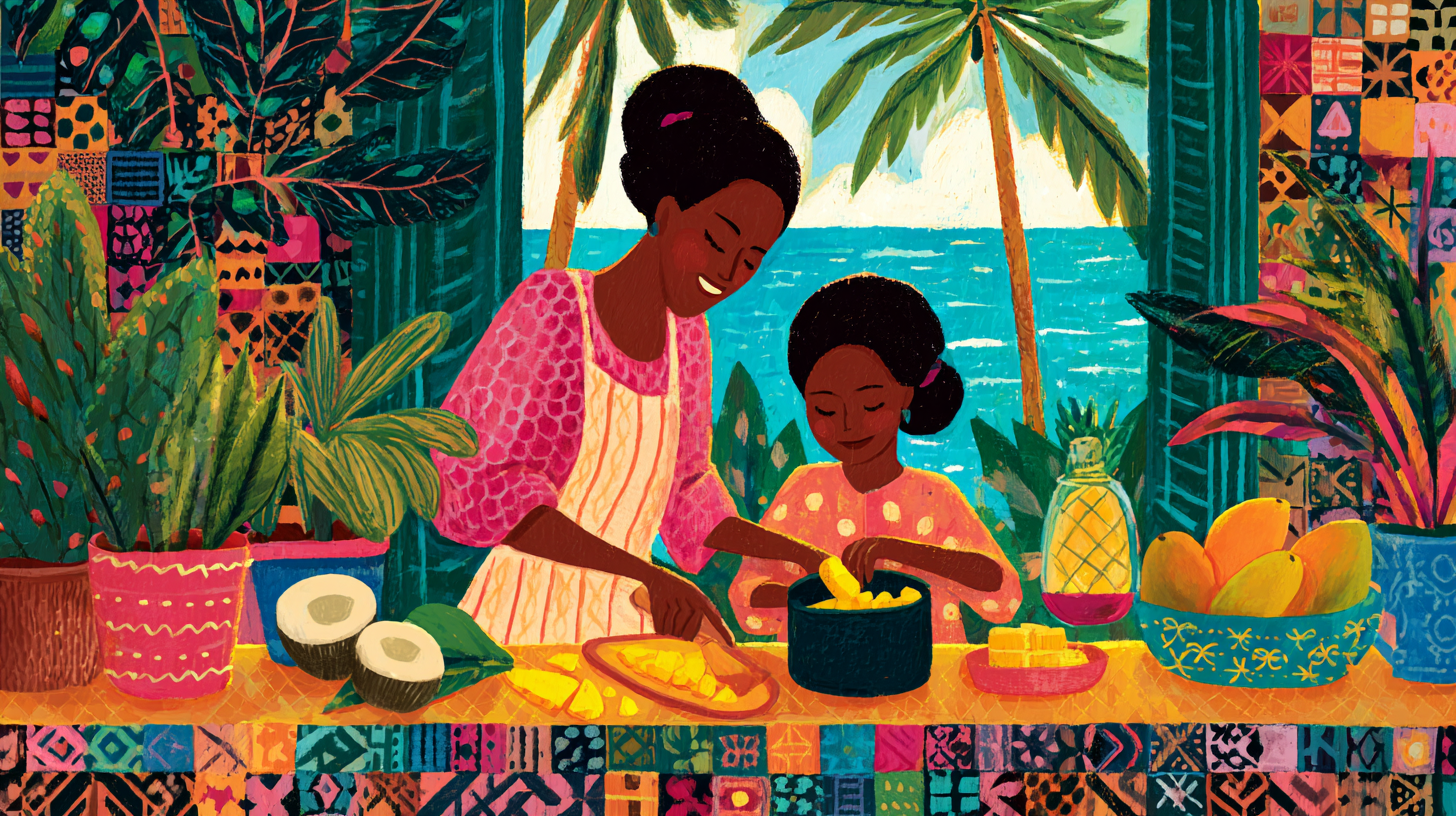
One of my favorite Caribbean approaches to this comes from making food exploration joyful rather than pressured. In Caribbean Baby Food Recipe Book, you’ll find recipes like Calabaza con Coco (pumpkin with coconut milk) and Sweet Potato & Callaloo Rundown that introduce bold flavors and textures in a no-pressure way. The goal isn’t to make your baby finish the bowl; it’s to expose them repeatedly to island ingredients like coconut milk, callaloo, and sweet spices, building familiarity and acceptance over time without force.
Research backs this up: repeated neutral exposure—offering a food multiple times without pressure or expectation—is one of the most effective ways to increase acceptance. It can take 10, 15, even 20 exposures before a child accepts a new food. If you’re measuring success by the first five attempts, you’ll feel like a failure every time. But if you measure success by offering it calmly, modeling eating it yourself, and letting your child explore at their own pace, you’ve already won.
Build Your Internal Validation Statement
Select 3-4 process-based wins from your recent feeding experiences. Watch your personalized validation message appear.
Managing External Judgment: Scripts, Boundaries, and Selective Sharing
External judgment is inevitable. Grandparents will comment. Other parents will make comparisons. Social media will continue to show you impossible standards. But you can control how much of that judgment you let in and how you respond to it.
First, recognize that most judgment says more about the person giving it than about your parenting. When someone criticizes your child’s eating, they’re often projecting their own anxiety, their own generational beliefs, or their own need to feel superior. It’s not actually about you or your child.
Second, develop a few go-to scripts for deflecting unwanted advice. When a relative says, “They’d eat better if you just made them try it,” you can respond calmly: “We’re following an approach that works for our family, but I appreciate your concern.” When another parent brags about their child’s adventurous palate while yours is eating plain noodles, you can say: “Every kid is different. We’re focusing on keeping mealtimes positive.” You don’t owe anyone an explanation, justification, or apology.
Third, curate your inputs. If social media is making you feel inadequate, unfollow the accounts that promote perfectionism and follow body-positive, intuitive-eating-aligned voices instead. A 2024 review on parenting content online noted that while social media can provide community and support, it also amplifies unrealistic standards—so be selective about what you consume.
And when it comes to professionals—doctors, nutritionists, educators—remember that you’re allowed to advocate for your child and your approach. If a healthcare provider asks what your child eats in a way that feels judgmental, you can redirect: “We’re working on offering a variety and keeping mealtimes low-pressure. What specific concerns do you have about their growth or development?” Good professionals will work with you; those who shame or pressure may not be the right fit.
Flip the Script: Turn Judgment Into Boundary Practice
Tap each card to flip the judgment into a powerful boundary you can use.
Finding Internal Validation: Trusting Yourself in a World of Noise
The hardest but most essential work is building internal validation—the ability to trust your own judgment and define success on your own terms, regardless of external feedback. This doesn’t happen overnight, especially if you’ve spent months or years seeking approval and coming up short.
Start by identifying your core feeding values. What actually matters to you? Is it connection at meals? Exposing your child to your cultural foods? Keeping stress low? Respecting your child’s autonomy? When you’re clear on your values, you have a compass that external judgment can’t shake.
For me, one of those values was introducing my children to the flavors I grew up with—bold, warm Caribbean spices and ingredients that told a story of heritage and family. That meant success wasn’t about them finishing every bite of Geera Pumpkin or Stewed Peas Comfort. Success was them experiencing those flavors, seeing me enjoy them, and slowly building familiarity. The Caribbean Baby Food Recipe Book became my tool for that—recipes like Cornmeal Porridge Dreams and Plantain Paradise weren’t just nutrition; they were connection, culture, and joy.
Next, practice self-compassion. When a meal goes poorly—your toddler throws food, refuses everything, or has a meltdown—pause and speak to yourself the way you’d speak to a friend. “This is hard. I’m doing my best. One tough meal doesn’t define my parenting or my child’s future.” Research shows that parental stress and self-criticism directly fuel more controlling feeding practices, which means being kind to yourself isn’t indulgent—it’s strategic.

Finally, seek supportive communities—online or in-person—where the norms are different. Find spaces where parents talk about feeding struggles openly, where process is valued over outcomes, and where imperfection is normalized. Studies on parenting stress and social support consistently show that perceived support buffers against anxiety and improves feeding practices. You need people who will say, “Your kid ate crackers for dinner? Same. You’re doing great.”
♀️ Outcome Detachment Practice: Real Scenarios, New Responses
Choose a stressful feeding scenario and see how outcome detachment reframes it.
Reducing Performance Anxiety: Practical Strategies for Calmer Mealtimes
Knowing the theory is one thing; living it daily is another. Here are concrete, research-backed strategies to reduce the performance anxiety that makes feeding feel like a test.
Establish structure without control. Research consistently shows that structured meal and snack times—where children know when food is coming—support self-regulation better than grazing or chaotic schedules. But structure isn’t the same as control. You set the times and what’s offered; your child decides whether and how much to eat. This predictability reduces anxiety for both of you.
Serve family-style when possible. Putting food in the center of the table and letting everyone serve themselves removes the “finish your plate” pressure and empowers children to listen to their bodies. Even toddlers can participate in scooping food onto their plates, which increases their sense of autonomy and reduces power struggles.
Include at least one “safe” food at every meal. When you know your child has access to something they reliably eat—bread, rice, a favorite fruit—you can relax about whether they try the new or less-preferred items. This takes the pressure off both of you and prevents meals from feeling like high-stakes negotiations.
Model eating without commentary. Your child learns more from watching you enjoy food than from any lecture about nutrition. Eat a variety of foods yourself, express pleasure (“This mango is so sweet!”), and avoid labeling foods as “good” or “bad.” Keep mealtime conversation light and unrelated to eating when possible. This shifts the focus from performance to connection.
Embrace repeated exposure as the strategy. Remember, it can take many exposures before a child accepts a new food. Serve small portions of new or rejected foods alongside familiar ones, without expectation or pressure. Your only goal is exposure, not consumption. Over weeks and months, familiarity builds acceptance. This is especially true for culturally specific foods—like the vibrant options in Caribbean Baby Food Recipe Book—where flavors may be unfamiliar but become beloved through patient, pressure-free repetition.
Separate your worth from your child’s intake. This is the big one. When your child refuses food, it’s not a referendum on your parenting. When they eat only beige foods for a week, it doesn’t mean you’ve failed. Developmental phases, temperament, sensory preferences, and normal appetite fluctuations all affect eating. You’re not being graded. There is no scorecard. Your worth is inherent, not earned through your child’s plate.
✅ Your De-Stressing Feeding Wins
Check off the strategies you’ve already tried or are willing to try this week. Watch your confidence statement build.
The Long Game: What Success Really Looks Like
When you release outcome attachment and stop treating feeding like a performance, something remarkable happens. Mealtimes become less stressful. Your child develops better self-regulation and a healthier relationship with food. And you reclaim your confidence as a parent.
The research is unequivocal: responsive, autonomy-supportive feeding practices—where parents provide structure without coercion—lead to better eating behaviors and body outcomes than controlling approaches. Children who aren’t pressured to eat learn to trust their hunger and fullness cues. They’re more willing to try new foods over time. They’re less likely to develop disordered eating patterns. And they experience food as nourishment and pleasure, not as a battleground.
But the benefits extend beyond your child. When you stop measuring your worth by your child’s plate, you experience less guilt, less shame, and less burnout. You can actually enjoy family meals again. You can pass down cultural food traditions—like the recipes for Karhee Curry Blend, Yellow Yam & Carrot Sunshine, and Coconut Rice & Red Peas found in Caribbean Baby Food Recipe Book—not as rigid requirements but as invitations to explore and connect.
Success in this long game isn’t measured in grams of vegetables consumed or growth chart percentiles. It’s measured in the calm you feel when your child pushes away dinner. It’s measured in your ability to set boundaries with judgmental relatives without second-guessing yourself. It’s measured in the joy you rediscover when you sit down together, knowing that your job is simply to offer, connect, and trust—not to control, perform, or prove.
Future interventions in this space are moving toward supporting parent mental health, self-compassion, and realistic expectations alongside traditional nutrition education. Researchers recognize that addressing caregiver stress and perfectionism isn’t a “nice-to-have”—it’s central to effective feeding and child health outcomes. Programs are beginning to integrate emotion regulation skills, boundary-setting practice, and community support for parents who feel isolated in their feeding struggles.
The vision is this: a world where parents feed from a place of connection rather than fear, where diversity in eating is normalized, where cultural foods are celebrated without pressure, and where external judgment has no power because internal validation is rock-solid.
Your Next Meal Starts Now
If you take only one thing from this article, let it be this: feeding your child is not a test. There is no scorecard. There is no audience whose approval you need. There is only you, your child, and the opportunity to build a healthy, joyful relationship with food—one meal at a time, one exposure at a time, one moment of letting go at a time.
The next time judgment creeps in—whether from a well-meaning relative, a social media post, or your own inner critic—pause. Ask yourself: “What do I actually control here?” You control the structure, the offerings, the environment, and your response. You do not control your child’s appetite, preferences, or developmental timeline. And that’s not a failure. That’s biology.
Ask yourself: “What are my values around feeding?” If connection matters more than compliance, let that guide you. If cultural transmission matters more than clean plates, let that guide you. If low stress matters more than perfect nutrition, let that guide you. Your values are your compass, not someone else’s expectations.
And ask yourself: “What would I tell a friend in this situation?” You’d tell them they’re doing great. You’d tell them one tough meal doesn’t define anything. You’d tell them their child is learning, growing, and will be okay. Now say that to yourself. Mean it.
The performance is over. The test is canceled. The only person you need to prove anything to is yourself—and the proof is in the trying, not the outcome. Show up, offer food with love, stay calm in the chaos, and trust the process. That’s all. That’s everything.
You’re not failing. You’re parenting. And you’re doing it beautifully, even on the days when it doesn’t feel that way. Especially on those days.

Kelley's culinary creations are a fusion of her Caribbean roots and modern nutritional science, resulting in baby-friendly dishes that are both developmentally appropriate and bursting with flavor. Her expertise in oral motor development and texture progression ensures that every recipe supports your little one's feeding milestones while honoring cultural traditions.
Join Kelley on her flavorful journey as she shares treasured family recipes adapted for tiny taste buds, evidence-based feeding guidance, insightful parenting anecdotes, and the joy of celebrating food, culture, and motherhood. Get ready to immerse yourself in the captivating world of Kelley Black and unlock the vibrant flavors of the Caribbean for your growing baby, one nutritious bite at a time.
- The Feeding Revolution: Why Your Everyday Meals Are Changing the World - October 13, 2026
- Your Feeding Story Matters More Than The “Perfect” One Online - October 12, 2026
- Looking Forward: Stepping Into Your Confident Feeding Future - October 11, 2026