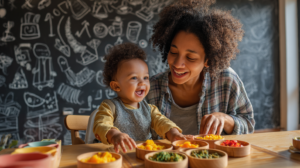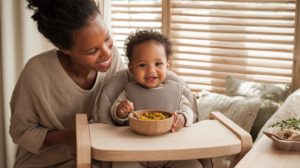
Your Kitchen Table Is the Most Powerful Classroom Your Family Will Ever Have
What Does Food Diversity Mean to You?
Select what resonates most with your family’s journey:
Exploring World Cuisines
Respecting Dietary Needs
Creating Belonging
Teaching Through Food
Last Tuesday evening, something extraordinary happened at our dinner table. My six-year-old daughter asked why her friend’s lunch “smelled funny”—she was talking about the delicious-looking curry her classmate’s mother had packed. Instead of brushing it aside, we turned that moment into a conversation that led us on a journey exploring Indian spices, the history of trade routes, and eventually cooking our own version of chicken curry together the following weekend.
That single question opened a door I didn’t even know we were standing in front of. Because here’s what nobody tells you about raising children in our beautifully diverse world: every meal is an opportunity to build bridges, every shared plate is a chance to celebrate differences, and every recipe carries stories that textbooks simply can’t teach. The truth is, we’re sitting on the most powerful diversity education tool available, and most of us don’t even realize it’s right there on our kitchen counter.
According to recent data, 60% of consumers now prefer to buy from brands that actively promote diversity and inclusion in their food offerings. But more striking is this: 52% of consumers express a desire for food brands to offer more culturally inclusive products. These aren’t just statistics—they’re families like yours and mine, waking up to the reality that food is so much more than nutrition. It’s connection. It’s understanding. It’s the bridge between “different” and “delicious.”
The Uncomfortable Truth About Food and Belonging
Let me tell you what changed everything for me. Three years ago, I attended a school potluck where I watched a young boy—maybe eight years old—stand alone by the food table, his homemade tamales untouched while everyone crowded around the pizza and chicken nuggets. His mother stood nearby, trying to smile, but I saw the disappointment in her eyes. That image haunted me for weeks.
The reality is this: our food environments are not naturally inclusive. They’re shaped by what we’re familiar with, what feels “normal” to us, and often, what’s easiest. Schools, hospitals, and community organizations are just beginning to adopt truly inclusive food policies, but the real transformation? That happens in our homes, at our tables, in the daily choices we make about what to cook, serve, and celebrate.
Research from diverse, equitable, and inclusive school food programs reveals something powerful: when children see their cultural foods respected and celebrated, their sense of belonging increases dramatically. When they’re exposed to foods from other cultures with curiosity rather than judgment, their capacity for empathy expands. This isn’t abstract theory—it’s measurable change happening in real families.
But here’s where it gets uncomfortable: many of us unintentionally create exclusive food environments. We plan birthday parties with only “kid-friendly” foods, host holidays with the same traditional menu year after year, and sometimes react to unfamiliar foods with visible skepticism. Our children watch everything. They absorb our hesitation, our comfort zones, our unspoken boundaries.
Discover Your Family’s Inclusion Style
How does your family currently approach food diversity?
Why Food Is the Secret Gateway to Understanding Difference
Here’s what makes food such an extraordinary teaching tool: it engages every sense. When your child helps you prepare Jamaican callaloo or Puerto Rican arroz con gandules, they’re not just learning a recipe—they’re touching ingredients they’ve never felt, smelling spices that tell stories of distant lands, tasting complexity that expands their palate and their worldview simultaneously.
Neuroscience backs this up beautifully. When we engage multiple senses in learning, our brains create stronger, more lasting connections. The scent of cumin roasting in a pan becomes linked to conversations about Middle Eastern culture. The texture of hand-rolled dumplings connects to discussions about Chinese New Year traditions. These aren’t abstract lessons—they’re embodied experiences that children carry with them.
And something else happens, something even more profound: food removes the intellectual distance that can make diversity education feel preachy or forced. When your seven-year-old declares that Ethiopian injera is “weird but actually really good,” you’ve just witnessed the exact moment when curiosity overcomes judgment. That’s the moment everything changes.
Recent research from the United Nations Food Systems Summit emphasizes the need for inclusive stakeholder engagement in food systems, leading to broader adoption of inclusive food policies globally. But the most impactful inclusion work isn’t happening in policy meetings—it’s happening in kitchens where families are making conscious choices to explore, respect, and celebrate food diversity.
I’ve watched this transformation in my own home. When we started our “World Wednesday” tradition—where we explore a different cuisine each week—my children went from being anxious about “weird food” to becoming the kids who excitedly tell their friends about trying goat curry or plantain porridge. That shift didn’t come from lectures about tolerance. It came from butter melting on warm roti, from the satisfaction of successfully using chopsticks, from the pride of pronouncing “pupusa” correctly.
The Hidden Curriculum Your Pantry Is Teaching
Walk to your pantry right now and look at what’s inside. Really look. What stories do those shelves tell? What cultures are represented? Whose food traditions are visible, and whose are absent?
This isn’t about guilt—it’s about awareness. Your pantry is teaching your children what’s “normal,” what’s valuable, what deserves space in your home and on your table. If every shelf holds only familiar foods from your own cultural background, that’s sending a message. If your spice rack contains nothing beyond salt, pepper, and garlic powder, that’s teaching something too.
The good news? Transformation is simpler than you think. Start small. Add one unfamiliar ingredient to your next shopping trip. Not for a specific recipe—just to explore. Maybe it’s tamarind paste, or cassava flour, or berbere spice blend. Bring your children to international markets where they can see, smell, and touch foods they’ve never encountered. Let them ask questions. Let them be curious.
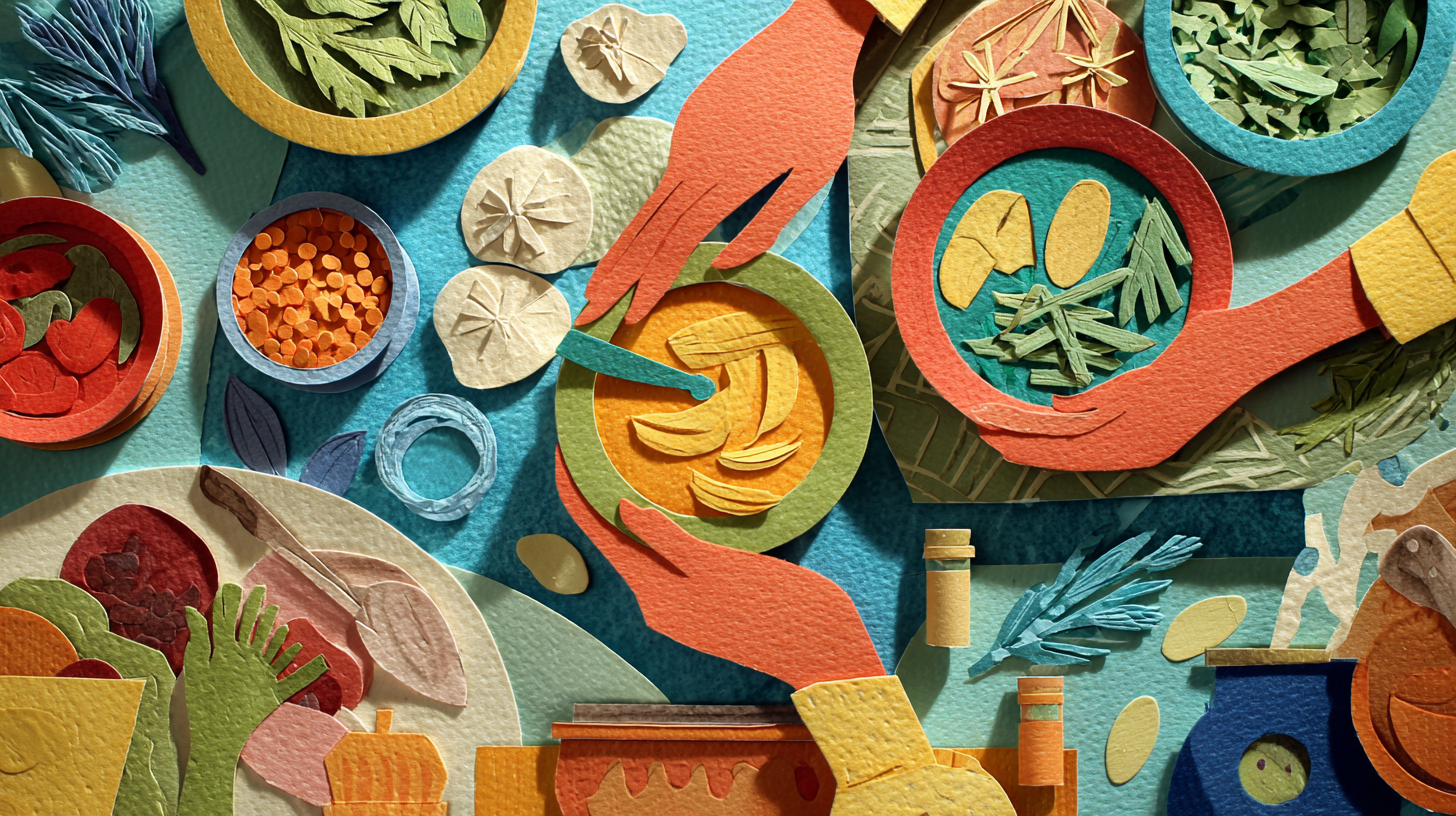
One of my favorite discoveries has been introducing Caribbean flavors to our regular meal rotation. My Caribbean Baby Food Recipe Book opened up an entire world of island ingredients we’d never explored—plantains, coconut milk, callaloo, ackee. These ingredients aren’t just for babies; they’ve become staples that our whole family now loves and incorporates into everyday meals.
But here’s what makes this approach powerful: you’re not performing diversity. You’re genuinely integrating it into the fabric of your family life. There’s a massive difference between having an annual “cultural appreciation night” and actually keeping miso paste in your refrigerator for regular use. One is a performance; the other is transformation.
Busting Dangerous Myths About Inclusive Food Environments
Inclusion is about expansion, not replacement. Your family’s food traditions remain precious and important. You’re simply making room for others’ traditions alongside yours. Think of it as adding new chapters to your family’s food story, not erasing the ones you already love.
Research shows children’s food preferences are largely learned, not innate. When diverse foods are presented with enthusiasm and curiosity rather than pressure, children are remarkably open. The key is exposure without force, and modeling genuine interest rather than obligation.
Inclusion doesn’t require buying specialty ingredients for every meal. It starts with mindset: asking questions, showing genuine interest, learning proper pronunciations, and creating space at your table for everyone. Some of the most inclusive meals are also the simplest—rice and beans appear in dozens of cultures, prepared differently but fundamentally accessible.
There’s a profound difference between appreciation and appropriation. Cooking someone else’s traditional food with respect, curiosity, and a desire to learn is celebration. Appropriation happens when you claim ownership, strip away cultural context, or profit without acknowledgment. Cook with humility, learn the stories behind the recipes, and teach your children to honor the origins.
Creating Celebrations That Welcome Everyone
The phone call came two days before my daughter’s eighth birthday party. A mother I barely knew asked, hesitantly, whether the cake would contain eggs—her son had a severe allergy. In that moment, I realized I’d sent invitations without even thinking to ask about dietary restrictions. That conversation changed how I approach every celebration.
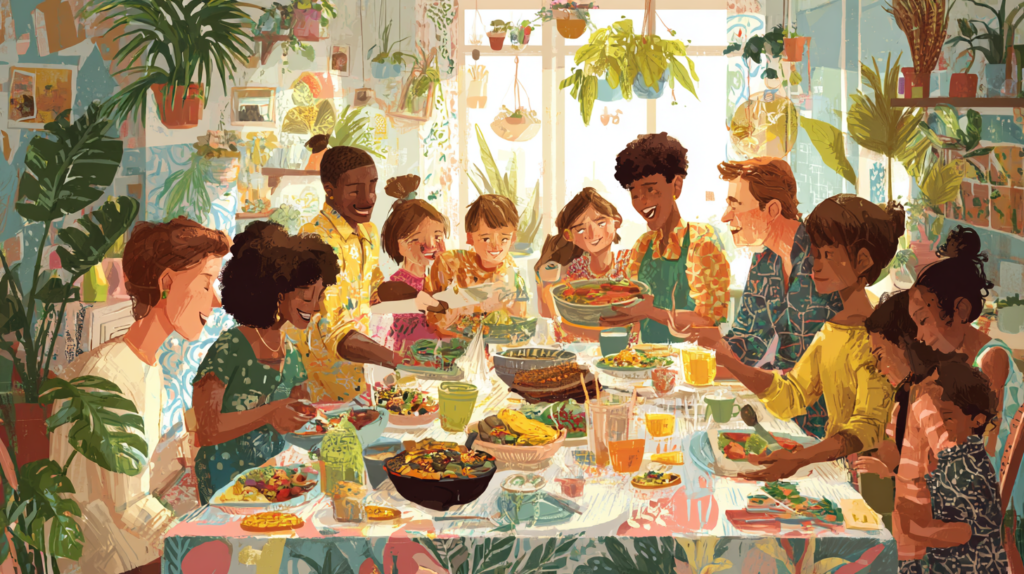
Inclusive celebrations require intentionality. They don’t happen by accident. When you’re planning any gathering—birthday parties, holiday meals, school events—the question shouldn’t be “What do I want to serve?” but rather “How can I create a table where everyone belongs?”
This means asking about dietary needs without making people feel like burdens. It means researching options for common restrictions—vegan, gluten-free, halal, kosher, allergy-friendly—not as afterthoughts but as integral parts of your planning. It means labeling food clearly so guests can make informed choices without having to ask uncomfortable questions.
But it goes deeper than allergies and restrictions. Truly inclusive celebrations acknowledge that “normal” is relative. Pizza and hot dogs might feel standard to you, but for many families, these aren’t celebratory foods—they’re unfamiliar or culturally disconnected. What if your next celebration included dishes from multiple traditions? What if the birthday cake was complemented by mango sticky rice or guava pastelitos?
According to recent trends in event catering, 70% of Americans believe that offering diverse options, including alcohol-free drinks and culturally varied foods, improves social inclusion during celebrations. This isn’t just politeness—it’s recognizing that true celebration happens when everyone can participate fully.
Build Your Inclusive Celebration Menu
Select the types of dietary considerations you want to include:
Teaching Appreciation Without Tokenization
There’s a fine line between celebrating food diversity and turning it into a performance. I learned this the hard way during our first attempt at “International Food Month” when my daughter’s class asked families to bring dishes from their heritage. One mother brought beautiful homemade samosas, and I watched as children grabbed them, took single bites, and threw them away. Nobody had explained what they were. Nobody had created context for trying something unfamiliar.
Appreciation requires more than exposure—it requires education. When you introduce a new food to your family, tell its story. Where does it come from? Why is it important in that culture? How is it traditionally eaten? What memories does it carry for the people who grew up with it?
This storytelling transforms “weird food” into “food with meaning.” When my children learned that injera isn’t just Ethiopian flatbread but is meant to be torn and shared—that the act of feeding each other from a communal platter is itself an expression of love and community—their entire relationship with the food changed. Suddenly it wasn’t strange; it was beautiful.
Avoid the “around the world” approach where you superficially sample foods from different cultures without depth. Instead, go deep. Pick one cuisine and spend a month exploring it. Learn about the geography, the history, the ingredients. Watch videos of people cooking traditional dishes. If possible, visit restaurants owned by people from that culture and ask questions respectfully.
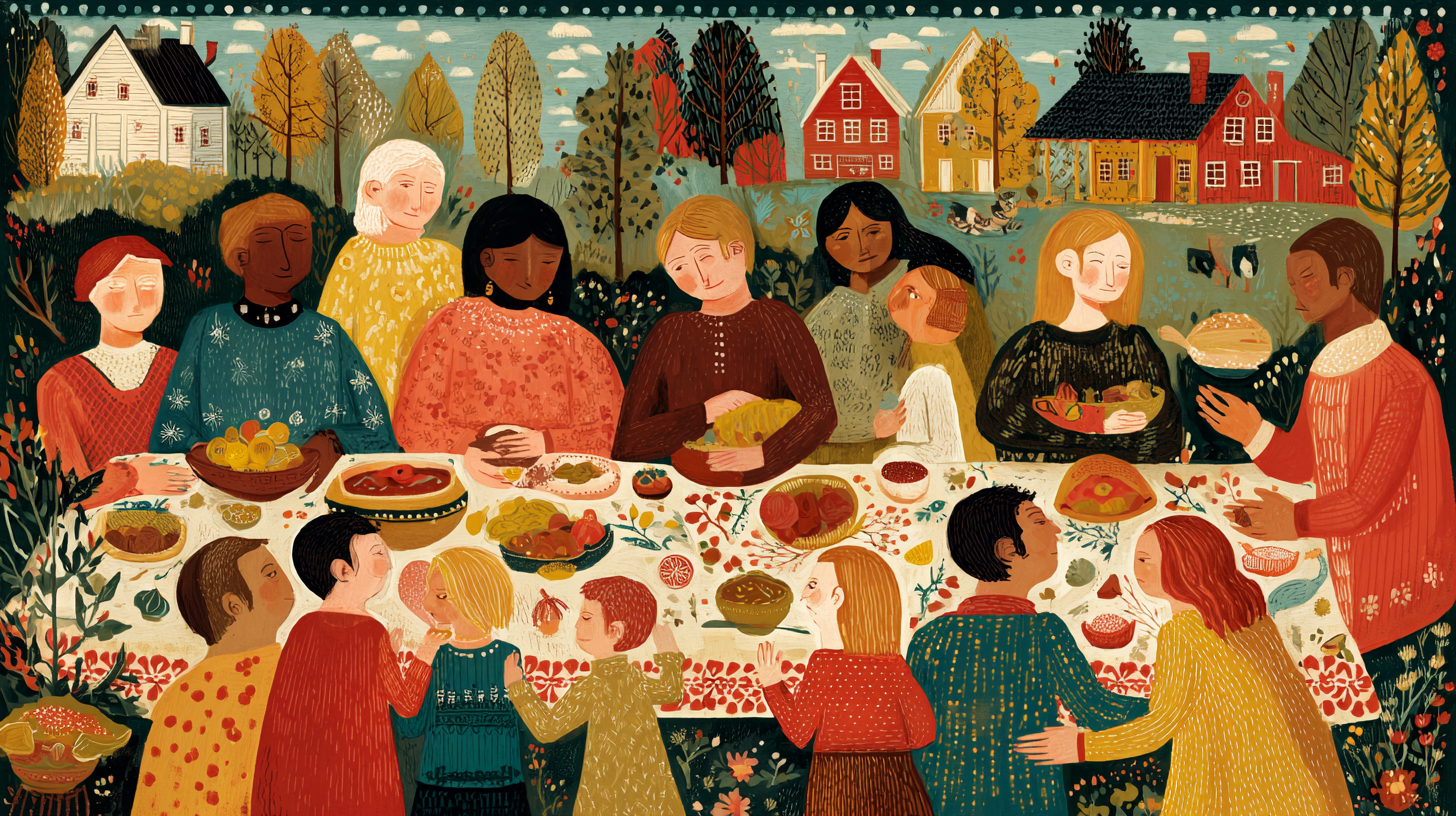
And here’s the crucial part: teach your children that appreciation means humility. You’re learning, not judging. You’re honoring, not claiming. When they say something is “gross” or “weird,” gently redirect: “It’s unfamiliar to us, but it’s important and delicious to many people. Let’s learn why.”
This approach has worked beautifully in our kitchen. When we explored Caribbean cuisine more deeply—particularly through recipes from the Caribbean Baby Food Recipe Book—we didn’t just make the food. We learned about island histories, watched documentaries about Caribbean farming, and listened to reggae and calypso while cooking. The recipes became gateways to broader understanding.
️ Explore Food Traditions Around the World
Select a culture to discover meaningful food traditions:
Caribbean
Indian
Ethiopian
Japanese
Mexican
Lebanese
The Real-World Challenges Nobody Mentions
Let’s talk about what makes this genuinely difficult, because pretending it’s easy does nobody any favors. Creating inclusive food environments requires confronting your own biases, your comfort zones, and sometimes, resistance from your own family members.
My mother-in-law was openly skeptical when we started exploring diverse cuisines. “Why can’t you just make normal food?” she asked more than once. Extended family gatherings became complicated. Do we bring unfamiliar dishes and risk judgment? Do we conform to expectations and abandon what we’re teaching our kids at home?
There’s also the practical challenge of time and access. Many communities lack international markets. Some ingredients are genuinely expensive or hard to find. Working parents already stretched thin might feel like learning new cuisines is one more impossible demand on their time.
And then there’s the fear of getting it wrong—of inadvertently being disrespectful, of mispronouncing words, of preparing something incorrectly and offending someone. This fear is real and valid. But here’s what I’ve learned: genuine effort with humble intentions is almost always met with grace. People can tell when you’re trying to understand rather than perform.
The controversy around cultural appropriation in food is legitimate and deserves attention. Some critics argue that mainstreaming diverse foods can lead to commodification that strips away cultural context and benefits people outside the originating culture. This is a real concern. The antidote isn’t avoiding other cultures’ foods—it’s approaching them with respect, learning from people within those cultures when possible, and never claiming expertise or ownership over traditions that aren’t yours.
Starting Today: The Practical Path Forward
Everything I’ve shared might feel overwhelming. You might be thinking, “This is beautiful in theory, but where do I actually start?” Let me give you a concrete roadmap that won’t require overhauling your entire life.
Week One: Awareness
Audit your current food environment. What’s in your pantry? What restaurants do you frequent? What cuisines are your children exposed to? Just notice, without judgment. This awareness is your baseline.
Week Two: Research
Choose one cuisine you know nothing about. Spend the week reading about it. Watch cooking videos. Learn three facts about the culture. Find one authentic restaurant or market in your area, even if it’s a drive away.
Week Three: First Steps
Visit that restaurant or market with your children. Let them observe. Encourage questions. Buy one or two ingredients to bring home, even if you’re not sure what you’ll do with them yet.
Week Four: Cooking Together
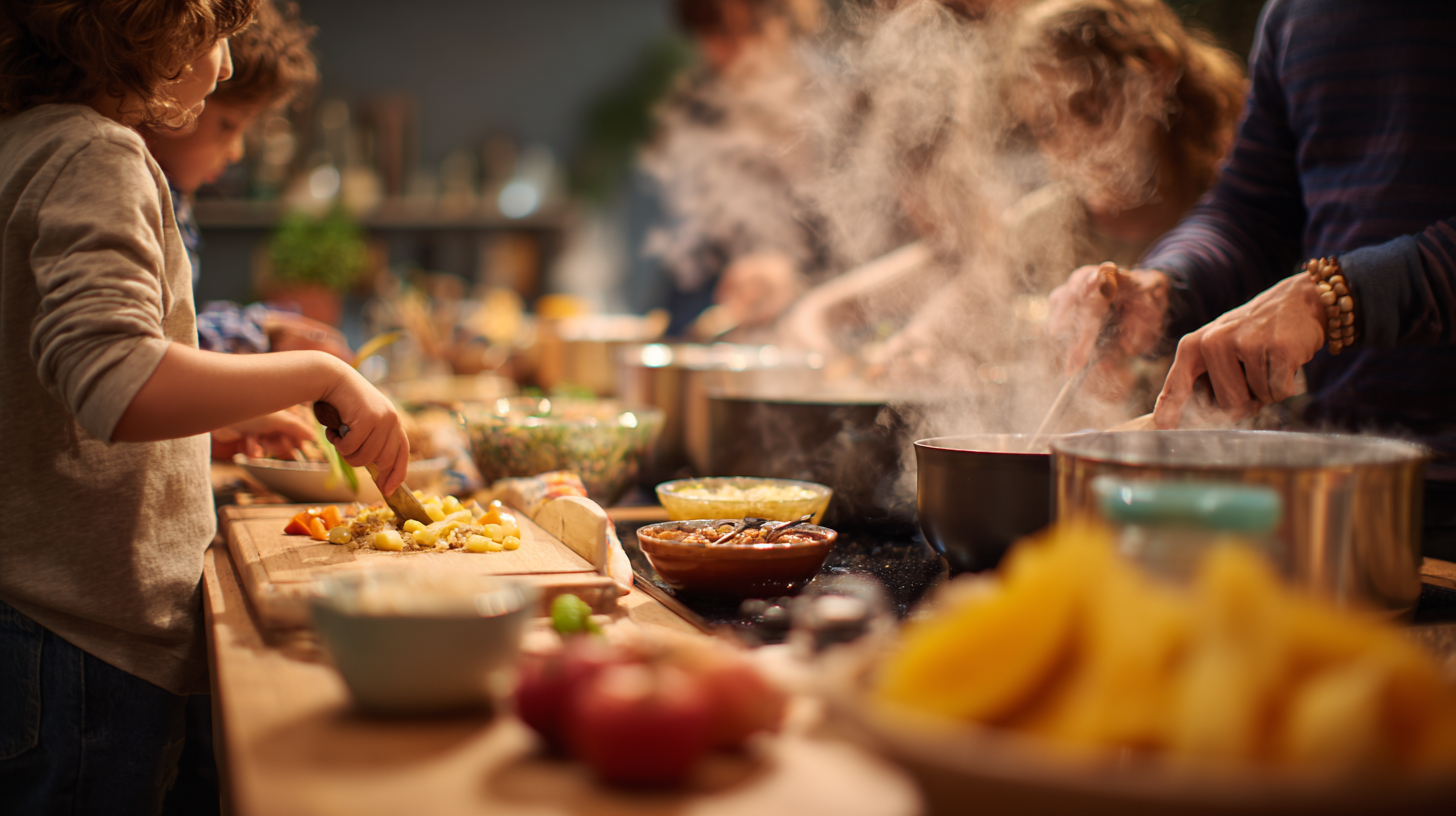
Find a simple, authentic recipe using those ingredients. Make it a family project. Don’t worry about perfection—focus on the experience. Tell the story behind the food while you cook. Eat it together, and talk about the experience honestly.
The Caribbean flavors we’ve explored have been particularly accessible entry points for our family. Recipes like Coconut Rice & Red Peas or Plantain Paradise from our Caribbean cookbook use ingredients that are increasingly available in regular grocery stores, and the flavors are complex enough to be interesting without being intimidating.
From there, build slowly. Maybe you commit to exploring one new cuisine per month. Maybe you start a “Family Food Journal” where everyone records their experiences trying new foods. Maybe you make it a rule that family celebrations always include at least one dish from a culture different from your own.
✅ Your Inclusive Kitchen Action Plan
Track your journey toward creating a more inclusive food environment:
What We’re Really Teaching When We Share Food
Here’s what I want you to understand: this isn’t really about food. Food is the vehicle, not the destination. When you create an inclusive food environment, you’re teaching your children that difference is valuable, that curiosity is more powerful than judgment, that the world is vast and beautiful and worth exploring.
You’re teaching them to ask questions before making assumptions. You’re teaching them that “normal” is just what you’re used to, not an objective standard everyone should meet. You’re teaching them that creating space for others doesn’t mean losing yourself—it means becoming more fully human.
These lessons extend far beyond the dinner table. A child who learns to appreciate unfamiliar foods becomes an adult who can navigate difference with grace. A child who sees their parents actively learning about other cultures becomes an adult who understands that growth is lifelong. A child who watches their family make space for everyone at the table becomes an adult who builds inclusive communities.
The data supports this beautifully. Studies on diverse, equitable, and inclusive school food programs show that when children see their cultural foods respected and celebrated, their sense of belonging increases measurably. But the impact goes deeper—children exposed to food diversity with proper context show increased empathy, improved cultural competence, and greater comfort with difference in all its forms.
I think back to that potluck three years ago, to those abandoned tamales, to that mother’s disappointment. Now I imagine a different scene: children eager to try those tamales because they’ve been taught to approach unfamiliar food with curiosity. Parents asking respectful questions about how they’re made. The mother feeling seen, valued, celebrated. That’s the world we’re building, one meal at a time.
The Kitchen Table Revolution
Social movements happen in streets and voting booths, but they also happen in kitchens. Every time you choose to explore a cuisine you don’t know, you’re participating in something larger than dinner. Every time you ask about dietary restrictions without making someone feel burdensome, you’re reshaping what hospitality means. Every time you teach your child to say “unfamiliar” instead of “weird,” you’re changing the future.
This revolution doesn’t require marching or protests. It requires showing up at your own table with intention. It requires questioning assumptions you’ve never thought to question. It requires recognizing that the phrase “picky eater” often means “child who’s never been exposed to diverse flavors” and that “acquired taste” usually means “food that’s unfamiliar to my specific cultural background.”
The global food inclusion market is growing precisely because families are demanding this change. By 2060, demographic shifts mean that the concept of “minority” foods will be obsolete—but we don’t have to wait for population statistics to change our kitchens. We can start today.
Think about the conversations happening around tables right now. In some homes, children are learning that Chinese food is what you order when nobody feels like cooking. In others, they’re learning about the regional differences between Cantonese and Sichuan cuisine, practicing chopstick skills, understanding the cultural significance of communal eating. Both homes have access to the same resources. The difference is intention.
My family’s journey into Caribbean cuisine has been particularly transformative. The recipes we’ve explored—from Jamaican Yellow Yam to Trinidadian Karhee Curry to Puerto Rican Plantain Paradise—haven’t just expanded our palates. They’ve connected us to histories of migration, resilience, and cultural fusion. Every dish carries stories we never would have encountered otherwise.
Your Table, Your Terms, Your Impact
I want to be clear about something: you don’t have to become an expert in world cuisines to create an inclusive food environment. You don’t need to master cooking techniques from every culture. You don’t need a pantry stocked with ingredients from six continents.
What you need is openness. Curiosity. Willingness to be uncomfortable sometimes. Commitment to teaching your children that the world is bigger than what’s familiar, and that’s something to celebrate rather than fear.
Start wherever you are. If you’ve never explored food outside your cultural background, start with one new recipe this month. If you’re already adventurous but haven’t made inclusion intentional, start asking about dietary needs. If you’re doing all this but struggling with extended family resistance, start having honest conversations about why this matters to you.
The point isn’t perfection. It’s direction. Every small step accumulates. Every conversation matters. Every new food tried with genuine curiosity is a vote for the kind of world you want your children to inherit.
And here’s what I’ve learned through this journey: it becomes joyful. What starts as intentional effort transforms into genuine excitement. My children now approach unfamiliar foods with enthusiasm rather than suspicion. They ask questions about origins. They want to learn correct pronunciations. They feel pride in their expanding food literacy.
That eight-year-old who once thought curry “smelled funny”? Last week she asked if we could try making dosas for breakfast. She’s been watching cooking videos, researching fermentation times, planning the menu. The transformation didn’t happen overnight, but it happened. And it started with one conversation at one dinner table.
The Invitation on Your Kitchen Counter
Right now, at this very moment, you have everything you need to begin. Your kitchen is ready. Your table is waiting. The only question is whether you’ll accept the invitation—not someday when you have more time or more knowledge or more resources, but today.
Because your children are watching. They’re learning what matters by observing what you prioritize. They’re forming their understanding of difference based on how you react to unfamiliar foods. They’re building their capacity for empathy through every meal you share, every conversation you have, every choice you make about who belongs at your table.
The truth is, we’re all learning together. None of us were handed a manual for raising culturally competent children in an increasingly diverse world. We’re figuring it out as we go, making mistakes, correcting course, trying again. But we’re doing it together, one kitchen at a time.
That’s the real power of food: it connects us not just to other cultures but to each other. It creates community among parents who are all trying to do better, to teach better, to be better. When you share a recipe with another family, when you ask for advice about introducing new foods, when you honestly admit you don’t know something but want to learn—you’re building the network of support that makes this sustainable.
So here’s my invitation to you: pick one thing. Not ten things, not a complete kitchen overhaul, just one thing. Maybe it’s asking about dietary needs at the next birthday party. Maybe it’s buying one unfamiliar ingredient this week. Maybe it’s having a conversation with your children about respecting all foods. Maybe it’s finally trying that Caribbean recipe you’ve been curious about.
Choose one thing, and do it. Then watch what happens. Notice how one small change creates ripples. How one conversation leads to another. How one new food opens a door you didn’t know was there. That’s how transformation works—not through grand gestures but through consistent small choices that accumulate into something beautiful.
Your kitchen table really is the most powerful classroom your family will ever have. The question isn’t whether you have the resources to create an inclusive food environment. The question is whether you’ll use the resources you already have—curiosity, intention, love, and a willingness to grow—to transform that table into a place where everyone belongs, where difference is celebrated, and where every meal is an opportunity to build a more inclusive world.
The revolution starts now. It starts with you. It starts at your table. And the most extraordinary part? You already have everything you need to begin.

Kelley's culinary creations are a fusion of her Caribbean roots and modern nutritional science, resulting in baby-friendly dishes that are both developmentally appropriate and bursting with flavor. Her expertise in oral motor development and texture progression ensures that every recipe supports your little one's feeding milestones while honoring cultural traditions.
Join Kelley on her flavorful journey as she shares treasured family recipes adapted for tiny taste buds, evidence-based feeding guidance, insightful parenting anecdotes, and the joy of celebrating food, culture, and motherhood. Get ready to immerse yourself in the captivating world of Kelley Black and unlock the vibrant flavors of the Caribbean for your growing baby, one nutritious bite at a time.
- The Feeding Revolution: Why Your Everyday Meals Are Changing the World - October 13, 2026
- Your Feeding Story Matters More Than The “Perfect” One Online - October 12, 2026
- Looking Forward: Stepping Into Your Confident Feeding Future - October 11, 2026