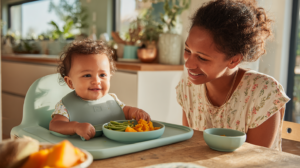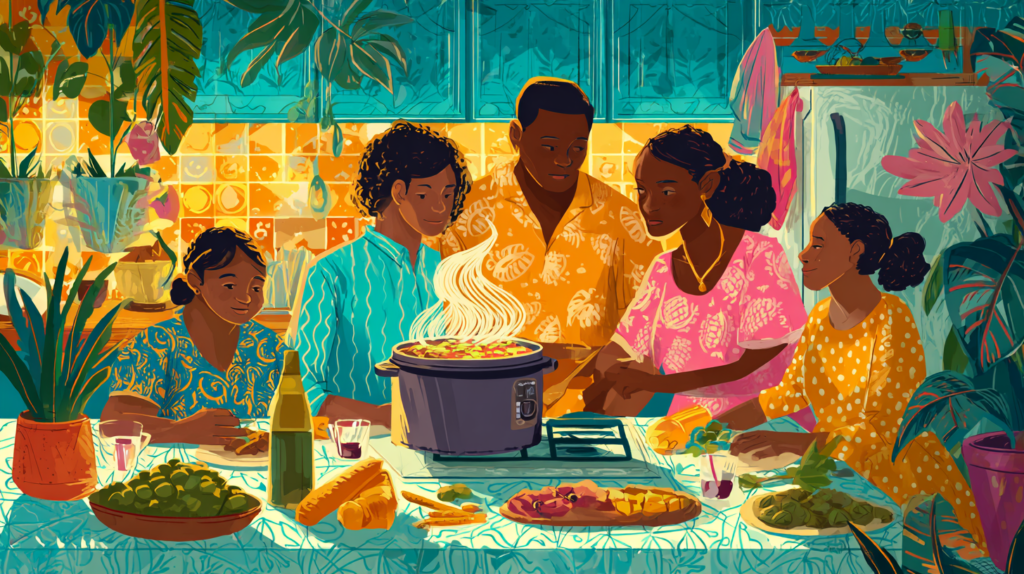
Slow Cooker Family Favorites: Set It and Forget It Nutrition
How Much Time Are You Actually Spending on Dinner?
Before we dive in, let me ask you something important. Click how many hours per week you spend on dinner prep and cleanup:
Here’s the truth nobody talks about: Most families spend between seven and twelve hours per week just getting dinner on the table. That’s not cooking time—that’s the whole circus. The planning, the shopping, the chopping, the standing over the stove stirring, the cleanup, the “Mom, I’m hungry!” interruptions, the trying to remember if you defrosted the chicken, the panic when you didn’t.
Seven to twelve hours. That’s almost like having a second part-time job, except this one doesn’t pay and nobody gives you performance reviews or vacation days.
But what if I told you there’s a way to cut that time in half while actually improving the nutrition your family gets? What if you could start dinner in the morning, walk away, live your life, and come home to a meal that’s been quietly transforming itself into something delicious and nourishing—no babysitting required?
That’s not a fantasy. That’s exactly what a slow cooker does. And if you’ve been sleeping on this magical kitchen tool—or if you have one collecting dust in the back of your cupboard because you’re not sure how to make it work for your nutrition-focused family—this is the guide that changes everything.
Because here’s what I’ve learned after years of feeding my family: The best nutrition plan is the one you’ll actually follow. And the meals you’ll actually make are the ones that don’t require you to be a short-order cook every single evening.
Why Your Slow Cooker Is Actually a Nutrition Powerhouse
Let’s clear something up right away. When most people think “slow cooker,” they picture those heavy, cream-of-whatever casseroles your aunt brings to potlucks. The ones swimming in sodium and mystery ingredients that come from a can.
But that’s not what slow cooking has to be. In fact, when you use it right, your slow cooker becomes one of the most nutrition-friendly tools in your kitchen.
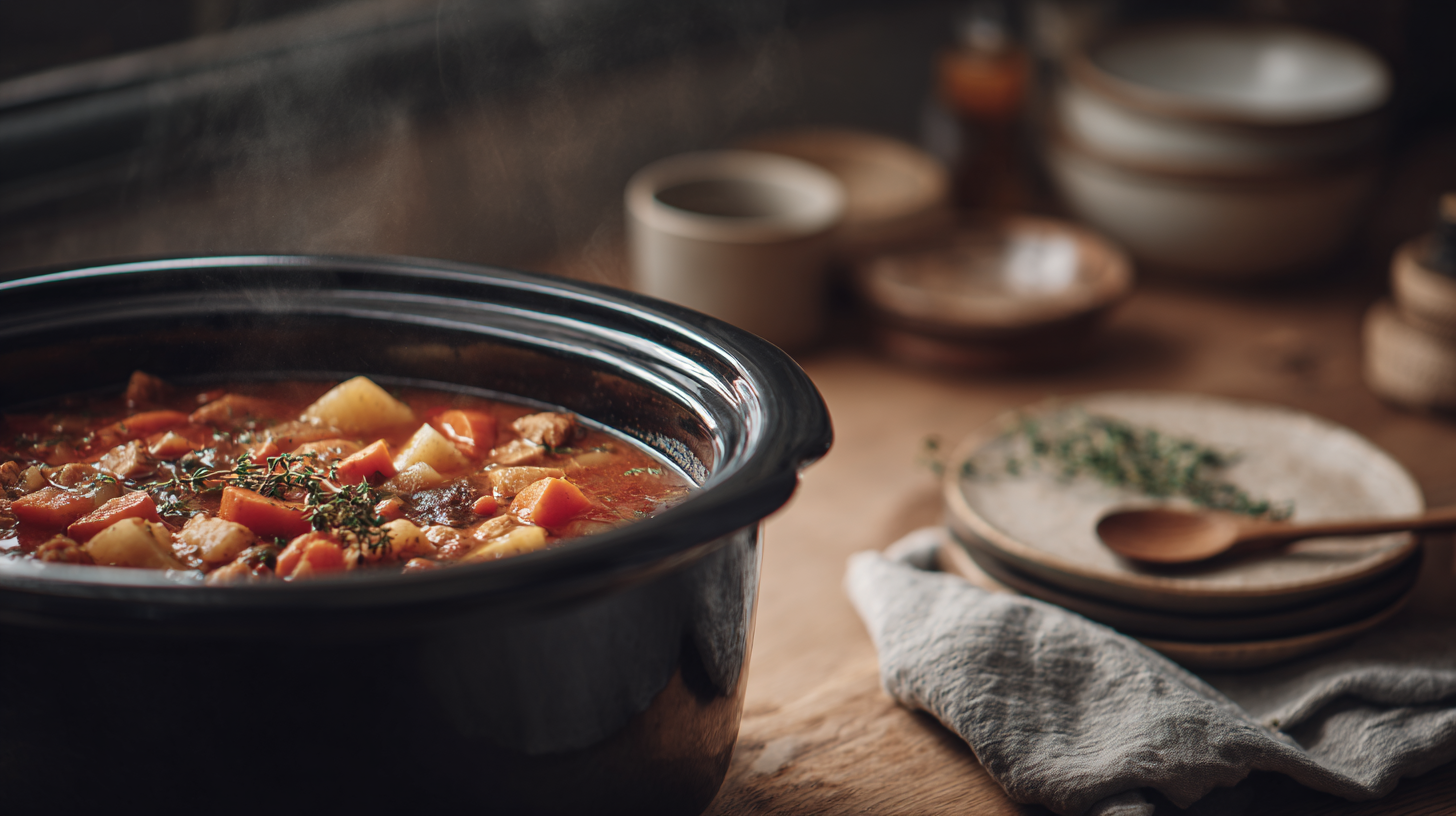
Here’s the science behind it: Slow cookers use enclosed, moist heat at steady temperatures—usually between 170°F and 280°F—over several hours. Unlike boiling or high-heat methods that can destroy water-soluble vitamins like vitamin C and B vitamins, slow cooking keeps those nutrients locked in the liquid that becomes part of your meal. When you make a stew or curry in the slow cooker, you’re not dumping nutrient-rich cooking water down the drain. You’re eating it.
Research comparing cooking methods shows that techniques which preserve cooking liquid—like slow cooking—maintain phenolic compounds and antioxidant properties better than methods where you discard the water. Translation: Your family actually absorbs more of the good stuff from vegetables cooked this way.
Plus, the low, gentle heat is perfect for tough cuts of meat and dried beans—both budget-friendly protein options that become tender and flavorful without needing added fats or fancy techniques. A slow cooker makes cheap ingredients taste expensive, and nutritious ingredients taste delicious.
The global slow cooker market reached about $1.9 billion in 2024, with steady growth expected through 2034, driven largely by health-conscious families wanting home-cooked meals without the evening chaos. Working parents, busy households, and people who care about what goes into their bodies are rediscovering what grandmothers have always known: Good food doesn’t have to be complicated. It just needs time.
The Real Talk About Slow Cooker Food Safety
⚠️ Quick Safety Check: Can You Spot the Mistake?
You’re making slow cooker chicken stew tonight. Which of these is the BIGGEST food safety mistake?
If you picked frozen chicken, you’ve just saved your family from potential foodborne illness. Here’s why this matters.
Slow cookers are incredibly safe when used correctly, but there are real rules you need to follow. The USDA and university food safety extensions are clear: Never cook frozen meat or poultry in a slow cooker. The exterior might reach safe temperatures, but the interior can spend too long in the “danger zone” (40–140°F) where bacteria multiply like they’re training for the Olympics.
Always thaw meat completely in the refrigerator before adding it to your slow cooker. This isn’t one of those “technically you should but everyone skips it” rules. This is a “please don’t give your family food poisoning” rule.
Here are the other non-negotiables for safe slow cooking:
Fill it right: Keep the cooker between half and two-thirds full. Too little food won’t heat properly; too much prevents even cooking and temperature distribution.
Liquid is essential: Slow cookers need moisture to create the steam that cooks your food evenly. Don’t skip the broth, sauce, or cooking liquid the recipe calls for.
Keep the lid on: Every time you lift that lid, you add 15–20 minutes to your cooking time and create temperature fluctuations. Resist the urge to peek.
Use a thermometer: Especially for dishes with meat or poultry, check that the internal temperature reaches at least 165°F before serving. This is especially important if your slow cooker is older or if you’re trying a new recipe.
Don’t reheat in the slow cooker: Leftovers should be reheated quickly on the stove or in the microwave to 165°F, then can be held warm in the slow cooker on the “warm” setting. But never use the slow cooker itself to bring cold leftovers up to temperature—it takes too long.
Store promptly: Transfer leftovers to shallow containers and refrigerate within two hours. Don’t leave food sitting in the turned-off slow cooker “to cool down.” That’s danger zone territory.
Follow these guidelines and your slow cooker is one of the safest cooking methods out there. The combination of direct heat, prolonged cooking time, and steam in a covered container destroys bacteria effectively—as long as you start with properly thawed, fresh ingredients.

Adapting Your Favorite Recipes for the Slow Cooker
Recipe Transformer: Pick Your Favorite Dish
Let’s see how to adapt it for slow cooker success! Choose one:
One of my favorite things about slow cooking is that almost any braised, stewed, or simmered recipe can be adapted—once you know the basic principles.
Increase your liquid by about 50%: Stovetop cooking allows evaporation; slow cookers don’t. If your original recipe calls for one cup of broth, use about 1.5 cups in the slow cooker. You can always simmer uncovered at the end to reduce excess liquid if needed.
Layer smartly: Root vegetables and dense ingredients go at the bottom and sides where heat is most direct. Tender vegetables, leafy greens, and delicate ingredients get added in the last 30–60 minutes of cooking.
Brown for flavor (optional but recommended): Browning meat and sautéing aromatics like onions and garlic before adding them to the slow cooker deepens flavor. It also helps render some fat from meat, which you can drain off for a leaner final dish. This step isn’t required for food safety in the slow cooker, but it makes a noticeable difference in taste.
Adjust your seasonings: Long cooking can mellow flavors. Start with your recipe’s suggested amounts, then taste and adjust seasonings—especially salt, pepper, and acidic ingredients like lime juice or vinegar—in the final 30 minutes. Fresh herbs also fade over hours; add them near the end for maximum impact.
Convert cooking times thoughtfully: A general rule is that one hour on high equals about 2–2.5 hours on low. Most slow cooker recipes work beautifully on low for 6–8 hours (perfect for a workday) or on high for 3–4 hours (great for weekend cooking). If your stovetop recipe simmers for 45 minutes, plan on 4–5 hours on low or 2–3 hours on high in the slow cooker.
Don’t overfill with meat: Slow cookers work magic on smaller amounts of protein extended with vegetables, beans, and grains. You don’t need a mountain of meat. A pound of chicken or beef combined with beans, lentils, sweet potatoes, and greens easily feeds a family and delivers better nutrition and lower cost per serving.
Some of my family’s staples started as stovetop recipes I adapted: Jamaican-style curry with chicken thighs, sweet potato, and coconut milk. Red bean stew with callaloo and dumplings. Oxtail that falls off the bone after eight hours and fills the house with the kind of smell that makes everyone ask, “When’s dinner?” These are meals that connect us to our roots while fitting into our modern, chaotic lives.
If you’re raising babies or toddlers and want to introduce those same rich Caribbean flavors early, the Caribbean Baby Food Recipe Book has over 75 recipes designed for little ones—many featuring slow-cooked ingredients like sweet potatoes, plantains, and beans that adapt beautifully to family slow cooker meals.
Building a Nutritious Slow Cooker Meal from Scratch
Build Your Balanced Bowl: What’s Going In?
Select ingredients for your slow cooker meal (pick 3–5) and see what nutrition you’re packing in:
The beauty of slow cooker meals is how easily they lend themselves to balanced, nutrient-dense eating. You’re essentially building a complete meal in one pot—protein, vegetables, complex carbs, healthy fats—all mingling together into something greater than the sum of its parts.
Here’s my formula for nutritious slow cooker success:
Start with lean or moderate-fat protein: Chicken thighs, turkey, lean beef, pork loin, or fish (added near the end). Or go plant-based with beans, lentils, or chickpeas—all of which become incredibly creamy and tender in the slow cooker.
Load up on vegetables: This is where nutrition really shines. Aim for at least two or three different vegetables per meal. Root vegetables like carrots, sweet potatoes, and turnips hold up beautifully for long cooking. Leafy greens like callaloo, spinach, or kale can be stirred in during the last 20–30 minutes. Bell peppers, tomatoes, onions, and garlic create flavor bases.
Add complex carbohydrates: Whole grains, starchy vegetables, or legumes give your meal staying power and fiber. Brown rice, quinoa (added in the last hour), sweet potatoes, green bananas, or additional beans all work beautifully.
Include healthy fats: A splash of coconut milk, a drizzle of olive oil, or a handful of nuts or seeds added at serving balances the meal and helps your body absorb fat-soluble vitamins from all those vegetables.
Season thoughtfully: Instead of relying on salt alone, use herbs, spices, citrus, and aromatics. Thyme, bay leaves, ginger, garlic, cumin, turmeric, allspice, scotch bonnet pepper (for the brave), fresh lime juice—these bring depth and complexity without adding sodium or empty calories.
Dietitians consistently point to slow cooker meals as a practical way for families to eat more vegetables, legumes, and whole foods. When you’re making a big pot of food, it’s easy to bulk it out with nutrient-dense ingredients. A half-pound of chicken becomes a complete meal when you add black beans, sweet potatoes, peppers, tomatoes, and greens. You’re diluting the cost and the calories while amplifying the nutrition.
And here’s the magic: because everything cooks together, even picky eaters get exposure to vegetables they might reject on their own. The flavors blend. The textures soften. A kid who won’t touch a plain carrot might happily eat it when it’s part of a rich, savory stew. It’s stealth nutrition at its finest.
Real-World Slow Cooker Recipes That Families Actually Love
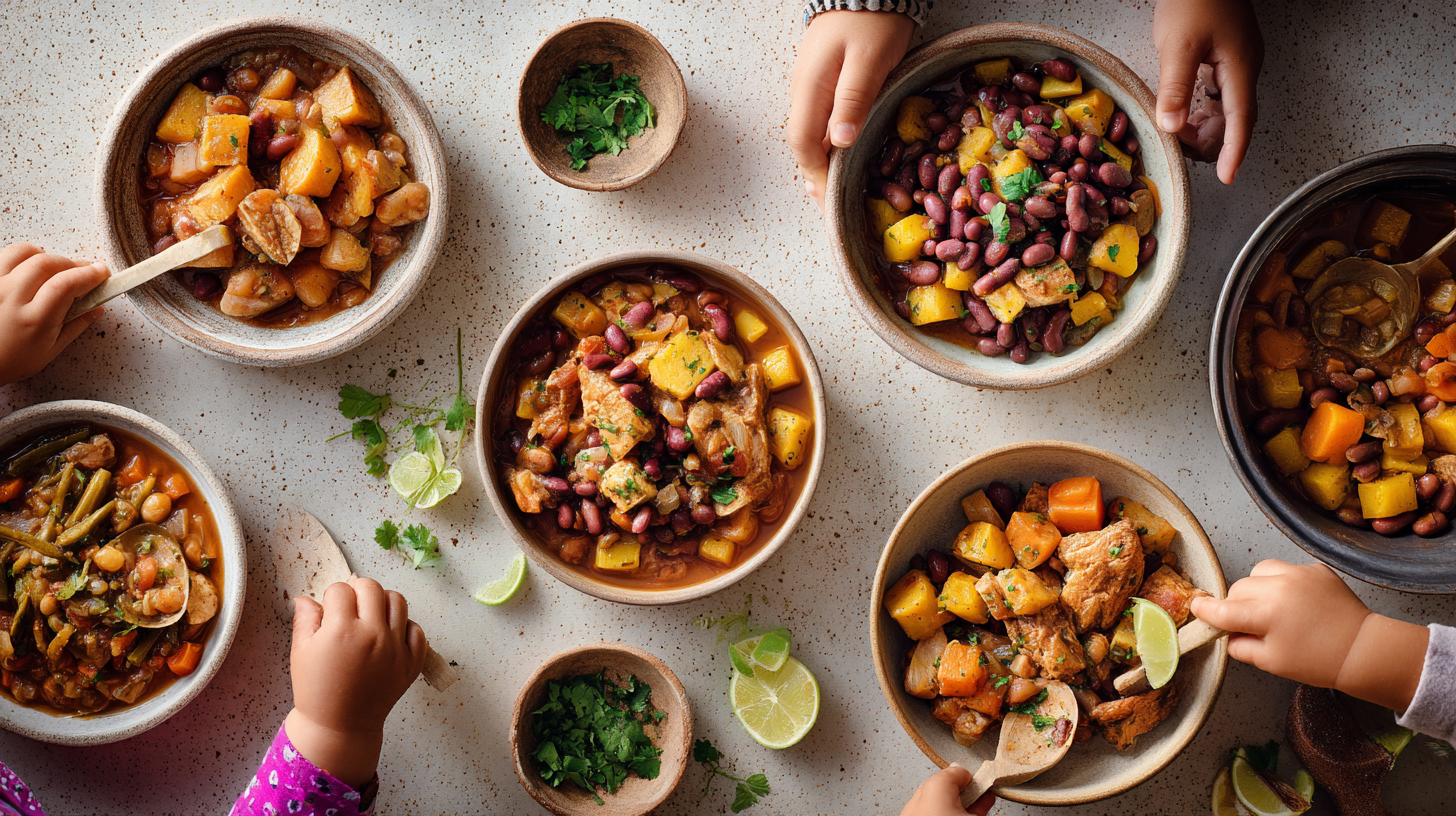
Theory is great, but let’s get practical. Here are some family-tested, nutrition-packed slow cooker meals that work in real life:
Caribbean Chicken and Sweet Potato Stew: Brown chicken thighs with onions and garlic, then transfer to the slow cooker with diced sweet potatoes, bell peppers, coconut milk, thyme, allspice, and a scotch bonnet (whole, for flavor without fire). Cook on low for 6–7 hours. Stir in chopped callaloo or spinach in the last 30 minutes. Serve over rice or with crusty bread. This meal is vitamin A–rich from the sweet potatoes, protein-packed from the chicken, and has that comforting coconut creaminess kids love.
Slow Cooker Black Bean and Plantain Bowl: Combine dried black beans (soaked overnight or quick-soaked), diced tomatoes, chopped onions, garlic, cumin, and vegetable broth in the slow cooker. Cook on low for 7–8 hours until beans are tender. In the last hour, add chunks of ripe plantain. The plantains soften and add natural sweetness that balances the earthy beans. Top with avocado, lime, and cilantro. This is a complete plant-based protein meal with fiber, potassium, and complex carbs.
Lentil and Vegetable Curry: Red or green lentils, diced carrots, sweet potatoes, tomatoes, onions, garlic, ginger, curry powder, turmeric, and coconut milk. Cook on low for 5–6 hours. Lentils break down into a thick, creamy base that kids often find more approachable than whole beans. Serve over rice or with roti. This is budget-friendly, packed with iron and fiber, and endlessly adaptable to whatever vegetables you have on hand.
Island-Spiced Beef and Callaloo: Lean stew beef, diced tomatoes, onions, thyme, allspice, bay leaves, and beef broth. Cook on low for 7–8 hours until beef is fall-apart tender. Add chopped callaloo (or spinach) and sliced okra in the last 45 minutes. The okra thickens the stew naturally, and the callaloo adds iron and calcium. Serve with ground provisions or rice.
Chicken and Chickpea “Pelau” Style: Layer brown rice, chicken pieces, chickpeas, diced pumpkin, onions, garlic, and coconut milk with a bit of browning sauce or soy sauce for color. Cook on low for 4–5 hours. This is a one-pot complete meal inspired by traditional pelau but adapted for the slow cooker’s gentle heat. It’s hearty, filling, and delivers protein, fiber, and beta-carotene.
These aren’t fancy. They’re not Instagram-perfect. But they are real food that real families eat on real weeknights—and they happen to be loaded with nutrients.
For parents introducing solids, many of these slow cooker ingredients translate beautifully to baby food. Sweet potatoes, lentils, beans, and mild curries are featured throughout the Caribbean Baby Food Recipe Book, including recipes like Sweet Potato & Callaloo Rundown, Basic Mixed Dhal Pure, and Coconut Rice & Red Peas—all gentle introductions to the flavors that will become family favorites.
The Time-Saving Reality of Slow Cooker Life
Your Weekly Slow Cooker Strategy
Pick a day and get a complete slow cooker meal plan for that night:
Let me paint you a picture of how this actually works in daily life.
It’s Monday morning. You’re moving through the pre-work/pre-school chaos. While the coffee brews, you pull a container of prepped ingredients from the fridge—chicken thighs you trimmed yesterday, chopped sweet potatoes, a bag of frozen bell peppers, a can of coconut milk. You dump it all into the slow cooker, add your spices and liquid, put the lid on, turn it to low, and walk away.
That took you maybe five minutes.
You go to work. You answer emails. You sit in meetings. You pick up the kids. You help with homework. You break up sibling arguments. You answer seventeen questions about why the sky is blue.
And while you’re doing all of that, dinner is cooking itself.
You walk in the door at 6 PM and the house smells like heaven. The meal is done. You scoop it into bowls, maybe toast some bread or cook some quick rice in the microwave, and dinner is on the table in under ten minutes from when you walked in.
No scrambling. No stress. No “What are we eating tonight?” panic. No drive-through runs because you’re too exhausted to cook.
That’s the real magic of the slow cooker. It’s not just that it saves you time—it’s that it gives you back your evening.
Studies on family meals consistently show that eating together improves kids’ nutrition, language development, emotional well-being, and academic performance. But for many families, the barrier isn’t desire—it’s logistics. By the time you get home and cook, everyone’s hangry and scattered, homework is piling up, bedtime is looming, and the meal feels like one more stressful task to power through.
Slow cookers remove that barrier. They let you frontload the work—spending 10–15 minutes in the morning or even the night before—so that when the evening hits, you can actually be present for your family instead of stuck at the stove.
Meal prep becomes less daunting too. Dedicate an hour on Sunday afternoon to chop vegetables, portion proteins, and assemble freezer packs for three or four slow cooker meals. Label them with cooking instructions. On busy weeknights, grab a pack, dump it in the slow cooker, and go. It’s batch cooking without the monotony of eating the same thing all week.
Overcoming Common Slow Cooker Frustrations
I’d be lying if I said slow cooking is always perfect. There are legitimate frustrations, and I want to address them honestly.
Problem: Everything tastes bland.
Solution: Season more aggressively than you think you need to, and adjust at the end. Long cooking mellows flavors. Use aromatics like onions, garlic, and ginger. Toast whole spices before adding them. Finish with fresh herbs, a squeeze of citrus, or a splash of vinegar to brighten everything up before serving.
Problem: Vegetables turn to mush.
Solution: Cut dense vegetables larger and add delicate ones later. If you’re cooking on low for eight hours, your zucchini doesn’t need to be in there the whole time. Add it in the last hour. Same with leafy greens, fresh tomatoes, and peas.
Problem: There’s too much liquid.
Solution: Remove the lid and turn the slow cooker to high for the last 30–45 minutes to reduce excess liquid. Or ladle out some of the broth and save it for another use (it makes excellent soup base). You can also thicken the liquid with a cornstarch slurry or mashed beans.
Problem: Recipes take longer than listed.
Solution: Slow cookers vary in temperature. Older models and larger capacity units may cook slower. Use a thermometer to check doneness, and adjust your expectations. If a recipe says 6 hours and yours consistently takes 7, just plan for 7 next time.
Problem: I don’t have time to prep in the morning.
Solution: Prep the night before. Store prepped ingredients in the slow cooker insert in the fridge overnight (if your insert is removable and fridge-safe), then pop it into the base in the morning and turn it on. Or use freezer prep packs as mentioned earlier.
Problem: My family won’t eat “one-pot” meals.
Solution: Serve slow cooker mains with customizable sides. Let picky eaters build their own plates—rice on the side, plain chicken separate from the stew, raw veggies for dipping. You’re still saving time and effort, even if everyone doesn’t eat the exact same bowl.
No cooking method is perfect for every family or every meal. But once you work through the learning curve, the slow cooker becomes one of the most reliable tools in your kitchen.
What the Critics Get Wrong About Slow Cookers
There’s a certain food snobbery around slow cookers. You’ll see celebrity chefs and food influencers dismiss them as outdated, or only good for “heavy” comfort food, or not capable of “real” cooking.
That’s nonsense.
Yes, slow cookers don’t sear a steak or deliver crispy roasted vegetables. They’re not designed to. They do one thing exceptionally well: they cook food gently, evenly, and unattended over time, which makes them perfect for stews, braises, curries, soups, beans, grains, and tough cuts of meat.
Those happen to be some of the healthiest, most budget-friendly, and most culturally significant foods on the planet. Nearly every cuisine in the world has slow-cooked dishes at its heart. Caribbean stews. Indian dals. Mexican moles. Italian ragùs. African tagines. Asian congees.
Slow cooking isn’t lesser cooking. It’s ancestral cooking. It’s how humans have fed families for centuries—minus the electricity.
Social media has also amplified slow cooker trends in recent years, with TikTok and Instagram creators sharing viral “dump and go” recipes, high-protein meal prep ideas, and plant-based slow cooker content. These creators aren’t Michelin-starred chefs. They’re real people—often parents, working professionals, students—showing how to make nutritious food fit into a real life. That’s valuable. That’s the kind of food education that actually changes how families eat.
Budget and Environmental Benefits You Can’t Ignore
Calculate Your Savings: How Often Do You Eat Out?
Select how many times per week your family typically buys take-out or eats at restaurants:
Beyond health and time, there’s the money factor. Slow cookers are insanely cost-effective.
A typical slow cooker uses between 75 and 200 watts, compared to an oven that uses 2,000–5,000 watts. Running a slow cooker for eight hours costs roughly 15–40 cents in electricity, depending on your local rates. Running your oven for an hour costs significantly more, and it heats up your whole kitchen in the process—which means your air conditioning works harder in warm climates.
You also save money on ingredients because slow cookers excel at transforming inexpensive foods. Dried beans instead of canned. Tough cuts of meat instead of expensive quick-cooking cuts. Whole chickens instead of pre-cut breasts. Root vegetables and seasonal produce instead of out-of-season delicacies.
A pound of dried black beans costs about $1.50 and yields the equivalent of four cans, which would cost $4–6. A family-size batch of slow cooker lentil curry might cost $8–10 in ingredients and feed six people for two meals. Compare that to take-out or restaurant meals at $40–60 for the same number of people.
Over a month, over a year—it adds up fast.
And let’s talk about food waste. Slow cookers help you use up vegetables that are getting soft, meat that needs to be cooked before it expires, and leftover bits of this and that. That “everything but the kitchen sink” stew isn’t just resourceful—it’s delicious and reduces how much food you’re throwing away.
From an environmental perspective, eating more home-cooked plant-based and plant-forward meals (which slow cookers make easier) reduces your carbon footprint compared to meat-heavy restaurant meals and highly processed packaged foods. You’re also using less single-use packaging, plastic containers, and disposable utensils.
It’s not about being perfect. It’s about small, consistent choices that add up. And choosing to cook more meals at home in a slow cooker is one of those choices with multiple benefits—financial, environmental, nutritional, and emotional.
Slow Cooking Through the Seasons and Life Stages
One question I get a lot: “Isn’t slow cooking just for winter?”
No. Absolutely not.
Yes, slow cookers shine in cooler months when you want hearty stews and soups. But they’re just as valuable in summer when you don’t want to turn on your oven and heat up the house. A slow cooker does its thing without raising the ambient temperature of your kitchen.
In summer, think lighter slow cooker meals: poached chicken in broth with herbs, vegetable-forward curries, bean salads where the beans are slow-cooked then chilled, slow-simmered tomato sauce for pasta. You can even make slow cooker oatmeal overnight for an easy breakfast base, or cook fruit compotes and chutneys to preserve seasonal produce.
Slow cookers also adapt beautifully through different family life stages.
For new parents: Slow cookers are lifesavers when you’re sleep-deprived and overwhelmed. You can prep during a nap or the night before, and dinner happens without your active involvement. Many slow cooker meals are also easy to puree or mash for babies starting solids.
For toddler and preschool families: The textures are soft and approachable for little mouths. The flavors can be mild or gradually spiced up as kids’ palates develop. And the one-pot nature means less “I don’t like that touching this” drama.
For school-age kids and teens: They can help with prep—measuring spices, chopping soft vegetables, stirring ingredients together. And they can serve themselves when they get home, which fosters independence and reduces the “when’s dinner?” nagging.
For aging adults and multi-generational households: Slow cookers make large quantities without heavy lifting, and the tender textures are easier to chew and digest for older family members.
It’s a tool that grows with your family, adapting to changing needs and preferences.
Where to Go From Here
If you’ve read this far, you probably already know whether slow cooking is for you. Maybe you’ve been convinced. Maybe you’re still skeptical. Maybe you’re somewhere in between.
Here’s what I’d suggest: Start small.
Don’t overhaul your entire cooking routine overnight. Pick one night this week—say, Wednesday—and commit to making one slow cooker meal. Choose something simple. Chicken, sweet potatoes, coconut milk, and spices. Or black beans with tomatoes and onions. Prep it the night before if mornings are chaos. Turn it on before you leave for work. Come home and see how it feels.
If it works, do it again next week. Add a second slow cooker night. Build a small collection of reliable recipes that your family actually eats. Experiment with flavors and ingredients that reflect your heritage and preferences. Let it become a tool, not a trend.
And if you’re raising little ones, remember that the flavors you cook now are building their palate for life. Introducing bold, real-food flavors early—whether through slow-cooked family meals or carefully prepared purees—sets the foundation for adventurous eaters. The Caribbean Baby Food Recipe Book offers a bridge between what you’re cooking for your family and what your baby can enjoy, with recipes that celebrate authentic island ingredients and gentle preparation methods.
Because at the end of the day, feeding your family well isn’t about perfection. It’s not about complicated recipes or expensive ingredients or hitting every nutritional target every single day.
It’s about showing up. It’s about putting real food on the table more often than not. It’s about creating the kind of meal routines that let you actually sit down together and talk about your day instead of scrambling to get food in front of everyone before bedtime.
Slow cookers don’t solve everything. They won’t fold your laundry or help with homework or magically give you more hours in the day.
But they will give you back your evenings. They will help you serve nutritious, home-cooked meals without the stress. They will save you money, reduce food waste, and make tough cuts of meat and humble beans taste like something special.
And in a world that’s constantly telling you to do more, be more, achieve more—there’s something quietly radical about a tool that says, “Set it and forget it. Let time do the work. You go live your life.”
That’s not lazy. That’s not settling.
That’s smart. That’s sustainable. That’s the kind of cooking that lets you feed your family well today, tomorrow, and for years to come.
So dust off that slow cooker. Give it another chance. Let it surprise you.
Your future self—standing in the kitchen at 6 PM with dinner already done—will thank you.

Kelley's culinary creations are a fusion of her Caribbean roots and modern nutritional science, resulting in baby-friendly dishes that are both developmentally appropriate and bursting with flavor. Her expertise in oral motor development and texture progression ensures that every recipe supports your little one's feeding milestones while honoring cultural traditions.
Join Kelley on her flavorful journey as she shares treasured family recipes adapted for tiny taste buds, evidence-based feeding guidance, insightful parenting anecdotes, and the joy of celebrating food, culture, and motherhood. Get ready to immerse yourself in the captivating world of Kelley Black and unlock the vibrant flavors of the Caribbean for your growing baby, one nutritious bite at a time.
- The Feeding Revolution: Why Your Everyday Meals Are Changing the World - October 13, 2026
- Your Feeding Story Matters More Than The “Perfect” One Online - October 12, 2026
- Looking Forward: Stepping Into Your Confident Feeding Future - October 11, 2026