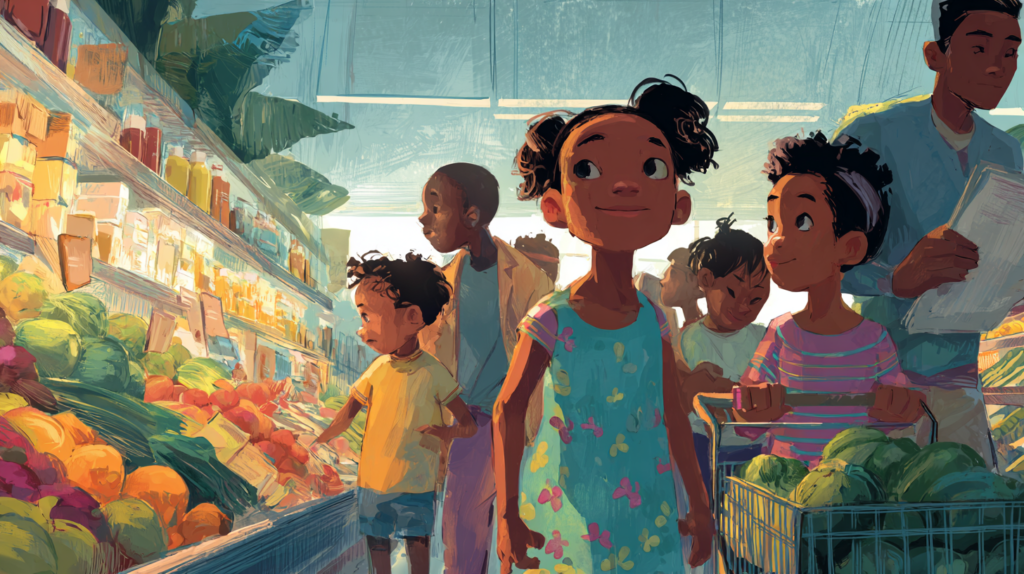
Aisle by Aisle: How One Grocery Trip Can Teach Your Child More Than a Week of Worksheets
What’s Your Biggest Grocery Shopping Challenge?
Click your answer to discover personalized insights:
Every week, millions of parents drag their kids through grocery stores—dodging tantrums, negotiating over candy bars, and counting down the minutes until they can escape. What if I told you that this weekly chaos is actually one of the most powerful classrooms your child will ever step into?
Here’s the truth nobody talks about: while other parents are bribing their kids with screen time just to survive the shopping trip, savvy parents are turning those same forty-five minutes into a masterclass in math, money, nutrition, and decision-making. The grocery store isn’t just where you buy food—it’s where your child can learn skills they’ll use for the rest of their life.
Think about it. Where else can your seven-year-old practice addition and subtraction with real money on the line? Where else can your teenager learn that organic doesn’t always mean better value? Where else does your preschooler get to make choices, face consequences, and understand that money is finite—all in a safe, controlled environment where the stakes are a box of cereal, not a car payment?
But here’s what nobody warns you about: teaching shopping literacy isn’t about handing your kid a calculator and calling it a day. It’s not about letting them throw whatever they want in the cart and hoping they learn through osmosis. And it’s definitely not about turning every shopping trip into a lecture that makes everyone miserable.
The magic happens when you know exactly what to teach, when to teach it, and how to make it stick—without adding an hour to your shopping time or triggering World War III in the cereal aisle.
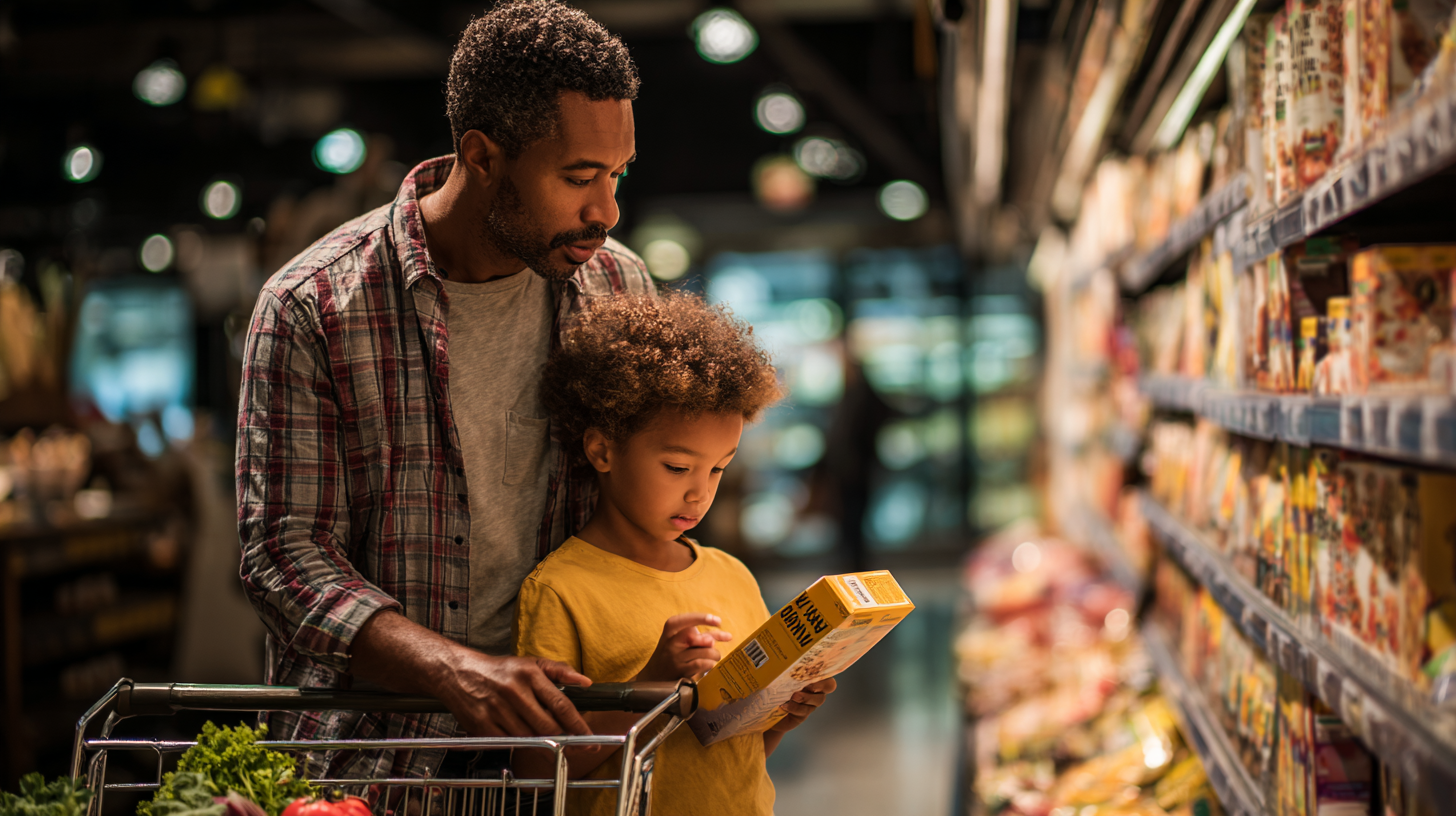
The Hidden Crisis in Your Shopping Cart
Let me share something that stopped me cold when I first heard it: by the time your child graduates high school, they’ll have zero required classes on budgeting, comparison shopping, or reading nutrition labels. Zero. Yet we expect them to walk into adulthood and somehow know that the bigger box isn’t always the better deal, that “low-fat” doesn’t mean healthy, and that spending their entire paycheck at the grocery store on day one is a really bad idea.
Research from 2024 reveals that children who actively participate in grocery shopping develop significantly stronger executive function skills, including planning, decision-making, and impulse control. These aren’t soft skills—these are the exact capabilities that predict success in everything from maintaining a healthy weight to managing a budget to making wise financial decisions decades later.
But here’s where it gets even more interesting: the same studies show that kids who shop with their parents eat more fruits and vegetables. Not because anyone forced them. Not because of elaborate reward systems. Simply because they were involved in choosing them, touching them, and understanding where they came from. When a child picks out the mangoes themselves, suddenly mangoes become exciting instead of suspicious.
The problem isn’t that parents don’t want to teach these skills. The problem is that nobody ever taught us how to teach them. We weren’t raised learning shopping literacy—we figured it out through expensive trial and error in our twenties. And now we’re supposed to somehow transform our stressed, rushed grocery runs into educational experiences? While keeping a toddler from licking the shopping cart and a preteen from sneaking energy drinks into the basket?
That’s where most parents give up. They fall into two camps: the ones who leave the kids at home entirely (missing the learning opportunity), and the ones who bring the kids but spend the whole time managing behavior instead of building skills (missing the learning opportunity in a different way).
But here’s what the research actually shows works: age-appropriate involvement with clear expectations and real responsibility. Not busy work. Not “here, hold this while I shop.” Real involvement where kids make actual decisions, face actual constraints, and learn actual skills they can use tomorrow.
Why Your Child Needs Shopping Skills More Than Ever
Something fundamental has shifted in how we shop, and it’s leaving an entire generation without critical life skills. Online grocery shopping and delivery services have exploded—with nearly 43% of parents of school-age children now shopping online weekly as of 2025. While convenient, this trend means millions of kids are growing up never seeing their parents make purchasing decisions in real-time, never learning how to evaluate quality, and never understanding the connection between the food on their plate and the choices made at the store.
The stakes couldn’t be higher. Marketing to children has become a sophisticated, multi-billion-dollar industry. Food companies spend approximately $2 billion annually marketing directly to children, using tactics specifically designed to bypass parental oversight and trigger impulse purchases. Kids are being targeted with cartoons on cereal boxes, influencer partnerships, and strategic product placement at their eye level—all while lacking the critical thinking skills to recognize they’re being manipulated.
Here’s the uncomfortable truth: if you don’t teach your child shopping literacy, corporations will teach them shopping compliance instead. They’ll learn that shopping means buying whatever looks good, that bigger packaging means better value, and that “natural” and “organic” labels automatically mean healthy—none of which is true.
But when you teach shopping literacy intentionally, something remarkable happens. Your child develops what researchers call “food literacy”—the ability to plan, select, prepare, and eat food in ways that promote both personal and planetary health. This isn’t just about saving money on groceries today. It’s about raising an adult who can feed themselves nutritious meals on a budget, who won’t fall for every marketing gimmick, and who understands that the cheapest option isn’t always the cheapest when you factor in nutrition, satisfaction, and waste.
The grocery store is also one of the last remaining spaces where children can practice making decisions with immediate, tangible consequences in a safe environment. Choose the wrong snack? You’re stuck with it for the week, but nobody’s health is in danger. Blow your budget on impulse purchases? You learn that you can’t afford the item you actually wanted, but you’re not homeless. These are the kind of low-stakes-but-real-consequences experiences that build genuine competence and judgment.
And if you’re raising your child with any connection to Caribbean culture—whether you’re introducing them to ingredients like plantains, ackee, or callaloo—the grocery store becomes even more important as a bridge between heritage and daily life. Teaching your child to confidently navigate both mainstream and ethnic grocery stores gives them cultural literacy alongside practical skills. When your child can explain to their friends why they’re buying breadfruit or can teach a classmate about the difference between green and ripe plantains, that’s cultural confidence in action.
What Should YOUR Child Learn? Age-Specific Guide
Select your child’s age to discover exactly what shopping skills they’re ready for:
The Foundation: Getting Started the Right Way
Here’s what nobody tells you about teaching shopping skills: the first three shopping trips will probably take longer and feel more chaotic than your usual routine. That’s not a sign you’re doing it wrong—it’s a sign you’re doing it right. You’re investing time now to save countless hours of frustration (and money) later.
Start with the pre-shop conversation at home. This is non-negotiable. Before you ever walk into the store, sit down with your child and establish three things: the plan (what you’re buying today), the budget (how much money you’re spending), and their specific role (what job they have). This five-minute conversation prevents ninety percent of store meltdowns because expectations are clear before anyone has the chance to be disappointed.
For younger children (ages 2-5), their job might be as simple as “find three red things” or “hold the shopping list and check off items with me.” You’re building positive associations with the shopping experience and establishing that they have a role—they’re not just passive passengers in the cart being told “no” forty times.
For school-age children (ages 6-12), up the ante. Give them actual responsibility: “We need to find the best deal on pasta. There are three brands in our budget. Your job is to compare the price per ounce and tell me which is the best value.” Now you’re teaching unit pricing—a skill most adults struggle with—in a context where it actually matters.
For teenagers, the game changes completely. Hand them a category: “You’re in charge of breakfast this week. Here’s twenty dollars. You need to buy enough to feed four people breakfast for five days. You can buy whatever you want as long as it fits the budget and provides reasonable nutrition.” Then step back and let them figure it out—including making mistakes.
The key principle that makes this work: real responsibility requires real authority. If you give your child a task but then override every decision they make, you’re not teaching shopping skills—you’re teaching learned helplessness. Let them make choices. Let them occasionally make the wrong choice. That’s not failure; that’s the entire point.
One practical tip that transformed shopping trips for many families: the “three-item rule.” For younger kids especially, tell them they can pick three items during the entire shopping trip—but they have to really think about what they want because once they’ve chosen three, that’s it. This instantly converts “I want that!” from a battle into a strategic decision. Watch as your seven-year-old, who normally begs for everything in sight, suddenly becomes incredibly selective because they don’t want to “waste” one of their three choices on something they only kind of want.
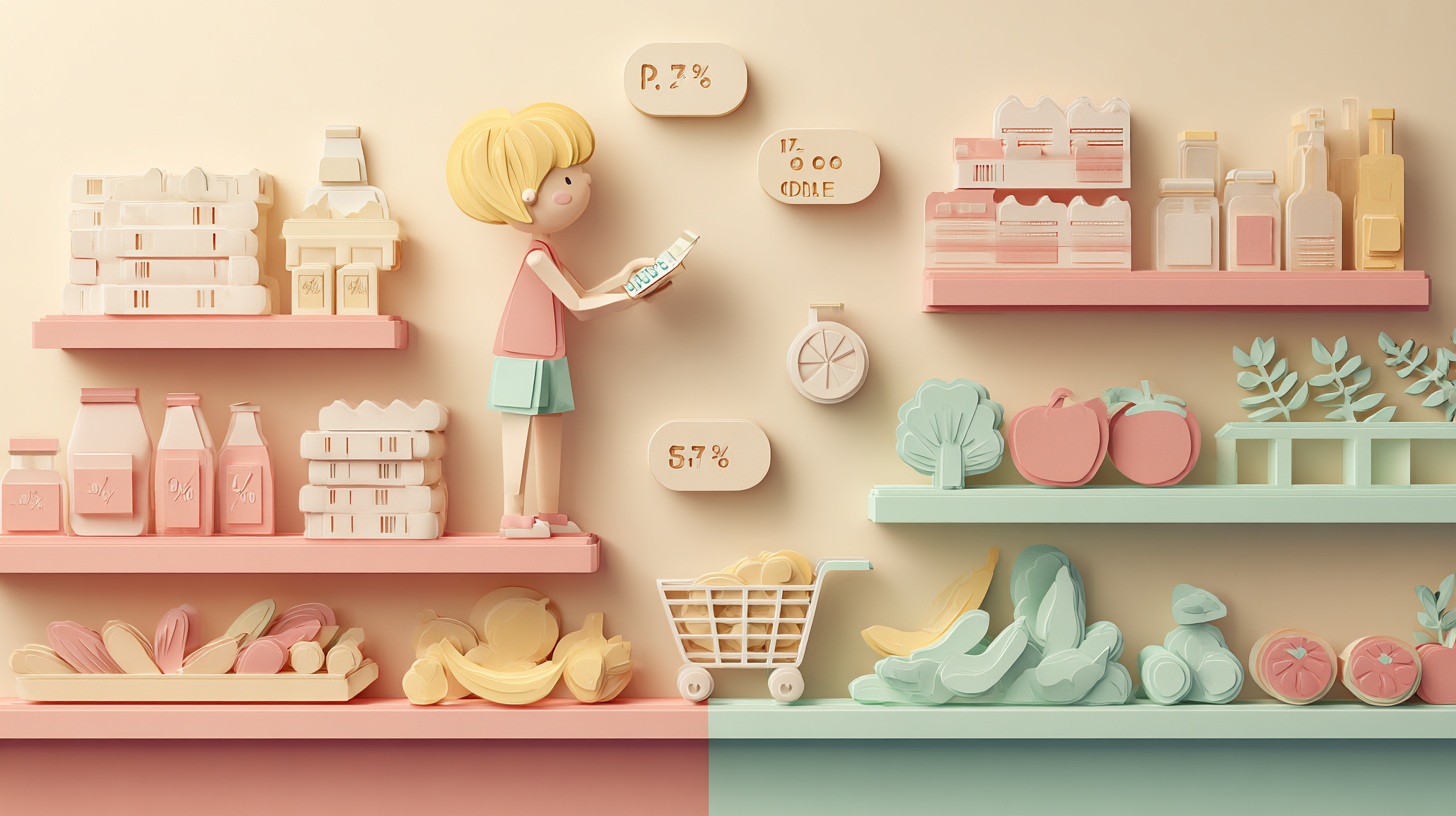
Reading Labels: The Skill That Changes Everything
If I could only teach children one shopping skill, it would be this: how to read a nutrition label. Not because I want to raise obsessive calorie counters, but because learning to decode labels teaches critical thinking, skepticism of marketing claims, and the ability to distinguish between what a package promises and what it actually delivers.
Here’s the dirty secret of food marketing: the front of the package lies. Not technically—there are regulations—but through strategic truth-telling that creates completely false impressions. “Made with real fruit!” might mean there’s 2% fruit juice in a product that’s 35% sugar. “All natural!” is a completely meaningless term with no legal definition. “Low fat!” often means they removed fat and added sugar to compensate for lost flavor. The front of the package is an advertisement. The back of the package is where the truth lives.
Teaching label reading starts simpler than you think. With younger children (ages 5-8), focus on one thing: ingredient lists. Teach them that ingredients are listed in order by amount, and that the first three ingredients are what the product is mostly made of. Play the game: “What’s this mostly made of?” Look at fruit snacks together. “First ingredient: corn syrup. Second ingredient: sugar. Third ingredient: modified corn starch. Huh, I’m not seeing much fruit yet. Let’s keep reading…” This builds healthy skepticism.
For older children (ages 9-13), introduce the nutrition facts panel. Pick one aspect to focus on per shopping trip—don’t try to teach everything at once or you’ll overwhelm everyone. One week, focus on serving sizes and how sneaky they can be. (“This bag of chips says 150 calories, but look—that’s per serving, and there are 2.5 servings in this bag that looks like a single-serve snack. So really, it’s 375 calories if you eat the whole thing.”) Next week, focus on added sugars. The week after, protein content. Build the skill gradually.
For teenagers, teach them to compare similar products directly. Put two granola bars side by side and do a full comparison: calories per serving, grams of protein, grams of added sugar, fiber content, and price per ounce. Then let them decide which is the better choice based on their personal priorities. Maybe they value protein for after-school sports. Maybe they’re watching sugar intake. Maybe they just want the cheapest option that tastes good. The point isn’t that there’s one right answer—it’s that they learn to make informed decisions based on their own criteria.
Here’s an advanced skill that blows kids’ minds when they learn it: understanding the difference between “use by,” “sell by,” and “best by” dates. Most adults don’t know this, but these dates are about quality, not safety (with the exception of infant formula). Teaching your child that milk doesn’t suddenly become poisonous at midnight on the expiration date—it gradually loses freshness and quality—helps them understand food waste, plan meals strategically, and not panic when they realize the yogurt “expired” yesterday.
One technique that works remarkably well: the “choose your own snack” challenge. Tell your child they can pick any snack for the week, but they have to read you the nutrition label and explain why it’s a reasonable choice. Not a perfect choice—a reasonable one. This forces them to actually read labels, but it also teaches them that there’s space for treats and preferences as long as they’re making informed decisions. The child who can tell you, “Yes, these cookies have a lot of sugar, but I’m choosing them anyway because I only eat two at a time and they’re for special occasions, not daily snacks” has already learned more about nutrition than most adults ever will.
Can YOU Spot the Marketing Trick?
Test your label-reading skills with real-world scenarios:
1. A juice box says “Made with Real Fruit!” What does this REALLY mean?
2. You see “Low Fat” on yogurt. What should you check next?
3. A cereal box shows “Whole Grain” on the front. How do you verify this?
Price Comparison and Budgeting: Math That Actually Matters
Want to know the exact moment kids start paying attention in math class? When they realize math determines whether they can afford the thing they want. Abstract worksheet problems about buying apples don’t motivate anyone. Real money for real things? That’s different.
Teaching price comparison starts with a simple truth: the biggest package isn’t always the cheapest per unit, and the cheapest option isn’t always the best value when you factor in waste, preference, and actual usage. These are nuanced concepts, but children grasp them faster than you’d think when real money is on the line.
Start with direct comparisons of the same product in different sizes. Stand in front of the pasta sauce with your nine-year-old. “This jar is $3.49 for 24 ounces. This jar is $5.99 for 45 ounces. Which is the better deal?” Pull out the calculator app on your phone and teach them to divide the price by the ounces to get price per unit. Watch their face when they realize the bigger jar is actually cheaper per ounce, even though it costs more total. You’ve just taught division, fractions, and practical economics in thirty seconds.
But then level up the lesson: “However, we only use about 30 ounces of sauce per month. If we buy the 45-ounce jar, is it still a better deal if we end up throwing away half of it?” Now you’re teaching the difference between price and value—a distinction many adults still haven’t learned.
For younger children who aren’t ready for unit pricing, teach estimation and rounding. “This costs $2.79, this one costs $3.15, and this one costs $2.50. If we round to the nearest dollar, which one costs about three dollars? Which one is less than three dollars?” You’re building number sense and mental math in a context that feels like a game, not a lesson.
Budgeting is where the real magic happens. Here’s the technique that works: give your child a real budget for a real shopping task. Not a fake exercise—a genuine responsibility. “You’re in charge of snacks this week. We usually spend about twelve dollars on snacks. Here are the parameters: we need five different snacks, one for each school day. At least two of them should have some nutritional value. Figure it out.”
Then—and this is the hardest part—let them struggle. Let them pick three items that total eleven dollars, then realize they have two more snacks to buy with only one dollar left. Let them recalibrate. Let them put something back and choose differently. This isn’t cruel; this is the exact process they’ll use for the rest of their life when managing money. Better to learn it at age ten with snacks than at age twenty-five with rent money.
One family I know does “budget challenges” where each family member gets an equal budget and fifteen minutes to find the best lunch ingredients they can. Everyone reconvenes at the checkout, compares what they got, and discusses trade-offs. (“I got fancy cheese but basic crackers. You got fancy crackers but basic cheese. Who made the better choice?”) It’s competitive, educational, and actually fun—the trifecta of effective learning.
For families with Caribbean food traditions, budgeting becomes especially interesting because you’re often comparing conventional grocery stores with ethnic markets. Teach your child to notice that plantains might be $0.89/lb at the Latin market but $1.49/lb at the mainstream supermarket. Callaloo might be $2.99 fresh at the Caribbean grocer but $5.99 frozen at the regular store. This isn’t just about saving money—it’s about understanding that knowing where to shop for different items is itself a valuable skill.
Here’s a strategy many parents overlook: let your child handle the physical money or card for their portion of the transaction. There’s something psychologically different about handing over money yourself versus watching a parent do it. When your thirteen-year-old physically hands their budgeted $20 to the cashier and gets $2.47 back, they feel the transaction in a way that watching doesn’t create. (Obviously, adjust this based on your child’s maturity and your comfort level, but the principle holds.)
Which Is the Better Deal? Price Comparison Challenge
Enter prices and sizes to calculate the best value (just like you’d teach your child!):
Results:
Brand A: per oz
Brand B: per oz
Understanding Marketing: Teaching Healthy Skepticism
The most important conversation you’ll have with your child in a grocery store isn’t about nutrition or math—it’s about recognizing when someone is trying to manipulate them. Because here’s what’s happening while you’re trying to quickly grab milk: your child is being marketed to with surgical precision.
Products children prefer are placed at their eye level. Character licensing on packaging is specifically designed to trigger recognition and desire. The candy aisle is positioned where you’re most likely to be stuck waiting in a slow-moving line. Colors, shapes, fonts—everything about child-focused packaging is scientifically designed to push psychological buttons. And if you don’t teach your child to recognize these tactics, they’ll spend their entire lives being manipulated by them.
Start by making the invisible visible. Point out the strategy while you’re shopping: “Do you notice where all the kids’ cereals are? Right at your eye level. And where are the healthy cereals mom and dad usually buy? Way up high. That’s on purpose. The store knows kids shop with their eyes, so they put the products they want kids to want right where you’ll see them.” For many children, this is a revelation. They assumed the store layout was random. Learning it’s strategic changes how they see everything.
Play “spot the marketing trick” as you shop. Make it a game. “How many different ways is this product trying to convince you it’s healthy? I count four: the word ‘natural’ in big letters, the picture of fruit, the green color scheme, and the sunshine logo. Now let’s read the ingredients and see if it’s actually healthy.” When your child beats you to spotting the tricks, celebrate it. You’re raising a critical thinker, not a compliant consumer.
Teach them about loss leaders and impulse purchases. “See these avocados right by the entrance? They’re on sale—really good deal. The store wants us to come in for avocados and then remember fourteen other things we ‘need’ while we’re here. It’s a strategy called a loss leader. They lose money on the avocados to make money on everything else we buy.” Understanding the business strategy demystifies it and makes children more resistant to its effects.
Here’s a conversation that works particularly well with tweens and teens: “Notice how all the candy and magazines are in the checkout line? That’s called the ‘impulse zone.’ They know you’re stuck waiting with nothing to do, and they’re counting on you being bored enough to grab something you didn’t plan to buy. Once you know that’s what they’re doing, it’s easier to resist.” Knowledge is armor.
One powerful technique is to give your child a budget to spend however they want—but require them to explain their choices. “You can spend five dollars on any treat you want, but you have to tell me: Did you choose this because you genuinely think it’s the best option, or because the packaging caught your eye? If you didn’t know anything about these products except what’s on the nutrition label, would you still choose this one?” You’re not forbidding anything—you’re requiring conscious choice instead of reactive buying.
For families cooking Caribbean food, there’s an additional layer of marketing literacy around “authentic” versus actually authentic products. Teach your child to read ingredient lists on products claiming to be Jamaican, Trinidadian, or Haitian cuisine. Is the “Jamaican jerk seasoning” actually made in Jamaica with traditional ingredients, or is it made in New Jersey with a cartoon reggae character on the bottle? This kind of cultural authenticity literacy is valuable far beyond the grocery store.

The Shocking Truth About “Healthy” Food Labels
You (and your kids) need to know these manipulative tactics:
Here’s What They Don’t Want You to Know:
Trick #1: “Made With Whole Grains” – Might mean only 1% whole grain. Check if whole grain is the FIRST ingredient.
Trick #2: “All Natural” – This term has NO legal definition. Arsenic is all natural. Doesn’t mean healthy.
Trick #3: “No High Fructose Corn Syrup” – Great! But they might have added regular corn syrup, cane sugar, or six other sugar types instead.
Trick #4: The Health Halo – Green packaging, sunshine, wholesome images create an impression of healthiness regardless of actual content.
Trick #5: “Lightly Sweetened” – Compared to what? Their other product with triple the sugar? Check grams of sugar, not marketing claims.
Trick #6: Serving Size Games – A “single-serve” package contains 2.5 servings so the calories look lower. Always check servings per container.
Trick #7: “Made With Real Fruit” – Could be 2% juice or even just “natural fruit flavor” with zero actual fruit. Check the ingredient list.
Pro Tip: Teach your child this one rule – If the front of the package is trying really hard to convince you it’s healthy, be extra suspicious and read the back.
Making Choices Within Budget: The Real-World Test
Here’s where theory meets reality, and where most parents either unlock breakthrough learning or accidentally sabotage the whole process. Giving your child real budget authority is terrifying because it means accepting they might make choices you wouldn’t make. But that’s precisely why it works.
Start small if you need to. Don’t hand your sixteen-year-old the family’s entire grocery budget on their first try. Start with a category: beverages, snacks, or breakfast items. Give them a realistic budget for that category and clear parameters, then genuinely let them own the decision.
The parameters matter. Don’t say “buy whatever you want”—that’s not realistic or educational. Instead: “We need seven breakfasts. Budget is $20. At least three of them should have protein. No repeated meals. Figure it out.” Now they have constraints that mirror real-world adult decision-making, but enough freedom to express preferences and problem-solve creatively.
Here’s what happens that makes this powerful: they’ll make trade-offs. They’ll want the expensive granola but realize it blows the budget, so they’ll get the mid-priced granola to have money left for other items. They’ll compare store brand versus name brand and actually care about the outcome because it affects what else they can buy. They’ll calculate whether buying a large quantity at a discount is wise or wasteful based on actual consumption patterns.
One mother shared this story that perfectly captures the learning moment: Her twelve-year-old daughter was given a $15 budget for school lunches for a week. The daughter initially chose all pre-packaged convenience items and realized she could only afford three days’ worth. She put everything back, recalibrated, and chose to make sandwiches with deli meat and bread (cheaper per lunch) so she could afford all five days plus still have money left for fruit. Nobody told her to do this. She figured it out because the constraint was real.
That’s the magic word: real. When consequences are real, learning is real. When your thirteen-year-old chooses to spend their snack budget on one expensive item instead of several cheaper items, and then genuinely has no other snacks for the week, that’s not punishment—that’s education. The lesson sticks because they lived the outcome.
For younger children who aren’t ready for full budget management, start with bounded choice. “We’re buying three vegetables today. You can choose any three you want from this section. Which three should we get?” They have real decision-making power, but within a scope you’ve pre-approved. As they demonstrate good judgment, expand the scope.
Here’s an advanced strategy for families with teenagers: the monthly food budget challenge. Give your teen responsibility for planning and shopping for all family dinners for one week per month. Provide the budget (same amount you’d normally spend), require balanced nutrition, and let them figure out the rest—meal planning, list making, shopping, the works. This is terrifyingly close to actual adult responsibility, which is precisely why fifteen-year-olds often rise to the occasion spectacularly. Many parents report that their teens actually come in under budget while creating meals the family genuinely enjoys, because when you give young people real responsibility, they often prove more capable than anyone expected.
The failure moments are learning moments too. When your child overspends their budget, don’t bail them out. Use it: “You spent $18 on a $15 budget. That’s $3 over. Where did the plan break down? What would you do differently next time?” This isn’t criticism—it’s debrief and strategy development. Real growth happens when we analyze failures, not when we avoid them.
One critical note for families exploring Caribbean ingredients: budgeting becomes more complex when you’re shopping across multiple stores (conventional supermarket for basics, ethnic market for specialty items, maybe a third store for the best produce prices). This is actually a fantastic teaching opportunity. Help your child create a comparative price list: where is rice cheapest? Where are plantains most affordable? Where do you get the best deal on coconut milk? They’re learning market research, price tracking, and strategic shopping—skills that will save them thousands of dollars over their lifetime.
Building the Habit: From Occasional Lesson to Consistent Practice
The difference between kids who develop real shopping literacy and kids who just endure occasional shopping lessons comes down to consistency and progression. One shopping trip where they’re engaged isn’t enough. But every shopping trip being a high-pressure educational marathon will burn everyone out. You need a sustainable system.
Here’s a framework that works: rotation of focus. Not every shopping trip teaches everything—that’s overwhelming. Instead, each trip has one primary learning objective. This week, we’re focusing on comparing unit prices. Next week, reading nutrition labels. The week after, staying on budget. Rotate through the skills, practicing each regularly enough to build competence without making any single trip feel like school.
Build progression deliberately. Don’t expect your seven-year-old to do what your twelve-year-old does. Map out age-appropriate milestones and celebrate when your child reaches them. “Remember when you used to just ride in the cart? Now you’re reading me the shopping list and finding items yourself. Look how far you’ve come!” Acknowledging progress motivates continued effort.
Create rituals that make shopping feel like “our thing” rather than a chore. Maybe you always stop at the bakery for a free cookie sample at the end of a successful trip. Maybe you have a tradition of trying one new fruit or vegetable each month and rating it together. Maybe you take a photo when your child makes a particularly savvy shopping decision and keep a “smart shopper” album. Positive associations matter, especially for younger children who are still forming their relationship with this activity.
One strategy that creates consistency: the rotating “shopping captain” system. If you have multiple children, assign one as shopping captain each trip. That child has enhanced responsibility (maybe they manage the list, track the budget, or lead the decision-making for certain categories) and also gets some small privilege (first choice of where to have lunch afterward, control of the music in the car, whatever matters to your kids). Rotate who’s captain each trip. This ensures every child gets regular practice while also making the role feel special rather than burdensome.
Document the learning for older kids. Some families keep a shopping journal where kids record what they learned, what worked, what didn’t, and what they want to try next time. It doesn’t have to be elaborate—even just voice memos on your phone where your child reflects on the shopping trip can serve this purpose. The act of articulating what they learned cements the lesson.
Here’s what sustainable practice looks like: most shopping trips, your child has one or two specific jobs appropriate to their age and skill level. Once per month, they take on a bigger challenge that stretches them (managing a category budget, planning a meal, comparing multiple products). Occasionally, you do a speed run where education takes a backseat because you just need to get groceries fast—and that’s okay. Consistency doesn’t mean perfection. It means regular, repeated practice over time.
For families integrating Caribbean culinary traditions, consistency looks like gradually introducing your child to the full range of ingredients and preparation methods. One month you’re teaching them to select good plantains (firm and green for tostones, yellow with black spots for maduros). Next month, choosing fresh callaloo or dasheen leaves. The month after, comparing prices on different brands of coconut milk or understanding the difference between Caribbean hot peppers. Layer the learning, building competence incrementally.
The goal isn’t perfect shopping trips—it’s gradual skill acquisition that becomes second nature. You’ll know you’ve succeeded when your teenager naturally checks unit prices without being prompted, when your ten-year-old spontaneously notices marketing tactics and calls them out, or when your eight-year-old reminds you that you’re about to blow the budget before you’ve even realized it. These moments aren’t luck—they’re the result of consistent, patient, progressive teaching over time.
Track Your Shopping Skills Journey
Check off skills as you teach them to see your progress:
Your Progress
Start checking off skills to track your journey!
Special Considerations: Challenges and How to Handle Them
Real talk: teaching shopping literacy isn’t always smooth. Some kids resist, some situations are complicated, and some trips will go sideways despite your best planning. Here’s how to handle the common challenges that derail most parents.
The resistant child who “doesn’t want to help” needs a reframe, not a battle. Don’t present shopping as optional participation in a family task—present it as skill development they’ll need for independence. For teenagers especially, connect shopping skills directly to freedom: “You want to move out someday, right? You want to be able to have friends over and actually feed them? These are the exact skills that make that possible. I’m not trying to make you help me—I’m trying to make sure you can take care of yourself.” Reframing from chore to life skill changes motivation.
For younger kids, the challenge is usually attention span, not willingness. Keep shopping trips shorter when teaching new skills. Do a focused thirty-minute learning trip instead of a marathon two-hour stock-up. Or split responsibilities: “We’re doing fifteen minutes of learning time where you help me comparison shop for pasta sauce, and then you can draw on my phone while I finish the rest of the shopping.” Meet them where they are.
The “but everyone else gets that” argument requires a consistent response. The answer isn’t “we can’t afford it” (even if true) and it’s not “because I said so.” The answer is “different families have different priorities and budgets. In our family, we choose to spend money on X instead of Y. When you’re managing your own money, you’ll make your own choices, but right now, these are our family’s priorities.” You’re teaching that all purchasing decisions are trade-offs and that other people’s choices don’t dictate yours.
Special dietary needs—allergies, intolerances, religious restrictions, or medical diets—actually make label-reading more important, not less. These children need even stronger skills because they can’t afford to make mistakes. Frame it as empowerment: “You have to be extra careful about what you eat, which means you’re going to be extra good at reading labels and asking questions. That’s actually a superpower that will keep you safe your whole life.” Many young adults with food allergies report that learning to check labels and ask questions as children gave them independence and confidence their peers lacked.
The financial pressure situation—when money is genuinely tight and grocery shopping is stressful—is complicated. Some parents avoid teaching shopping skills during tight financial times because it feels like adding pressure. But actually, this is when kids most need to learn. Be age-appropriately honest: “Our budget is tight right now, which means we have to be extra smart about our choices. That’s not scary—it just means we’re really going to focus on getting the most value for our money. You’re going to learn skills most kids never learn.” Kids can handle honesty about financial constraints as long as you don’t burden them with adult anxiety.
The divided household challenge—when caregivers have different standards or approaches—needs explicit acknowledgment. “Dad and I might buy different things when we shop separately, and that’s okay. We have different priorities. When you shop with each of us, you’ll learn different things. That’s actually good because you’ll see there are multiple right ways to approach this.” Don’t undermine the other parent’s approach; instead, teach that there are different valid strategies and eventually your child will develop their own.
Cultural navigation can be tricky, especially for families balancing mainstream and ethnic food traditions. Some children feel embarrassed by traditional foods or ingredients their peers don’t recognize. This requires gentle, proud education: “Not everyone eats plantains or knows what callaloo is, and that’s okay. They’re probably not familiar with it because their family has different food traditions. Ours are different, not weird. Being able to confidently navigate both kinds of stores and explain our foods to

Kelley's culinary creations are a fusion of her Caribbean roots and modern nutritional science, resulting in baby-friendly dishes that are both developmentally appropriate and bursting with flavor. Her expertise in oral motor development and texture progression ensures that every recipe supports your little one's feeding milestones while honoring cultural traditions.
Join Kelley on her flavorful journey as she shares treasured family recipes adapted for tiny taste buds, evidence-based feeding guidance, insightful parenting anecdotes, and the joy of celebrating food, culture, and motherhood. Get ready to immerse yourself in the captivating world of Kelley Black and unlock the vibrant flavors of the Caribbean for your growing baby, one nutritious bite at a time.
- You Are Enough: A Love Letter to Every Feeding Parent - October 4, 2026
- Imperfect Feeding: Why Messy, Real-Life Parenting Is Exactly What Your Child Needs - October 3, 2026
- Your Child’s Relationship with Food: The Quiet, Life-Long Gift You’re Giving Every Day - October 2, 2026