
The Restaurant Liberation Plan: How to Actually Enjoy Dining Out with Your Picky Eater (Without the Meltdowns)
Your Restaurant Reality Check
Choose the statement that best describes your current restaurant experience with your selective eater:
Here’s what nobody tells you when you’re standing outside that restaurant with a picky eater in tow: the stress isn’t inevitable. The meltdowns aren’t guaranteed. And that sinking feeling that you’ll never be able to enjoy a normal family meal out? That can actually change.
But it requires something that goes against every parenting instinct screaming in your head—you need to stop fighting their selectivity and start working with it. Because here’s the uncomfortable truth that 50% of American families with selective eaters have discovered: when you try to force restaurant dining the traditional way, everyone loses. Your child feels anxious, you feel embarrassed, and the whole experience reinforces the very food fears you’re trying to eliminate.
The families who successfully dine out aren’t the ones whose kids suddenly became adventurous eaters overnight. They’re the ones who learned to work the system—who discovered that restaurants can actually be adapted, menus can be modified, and servers can be powerful allies instead of sources of stress. And most importantly, they learned that reducing the pressure around restaurant meals often becomes the very thing that eventually helps their kids expand their palates.
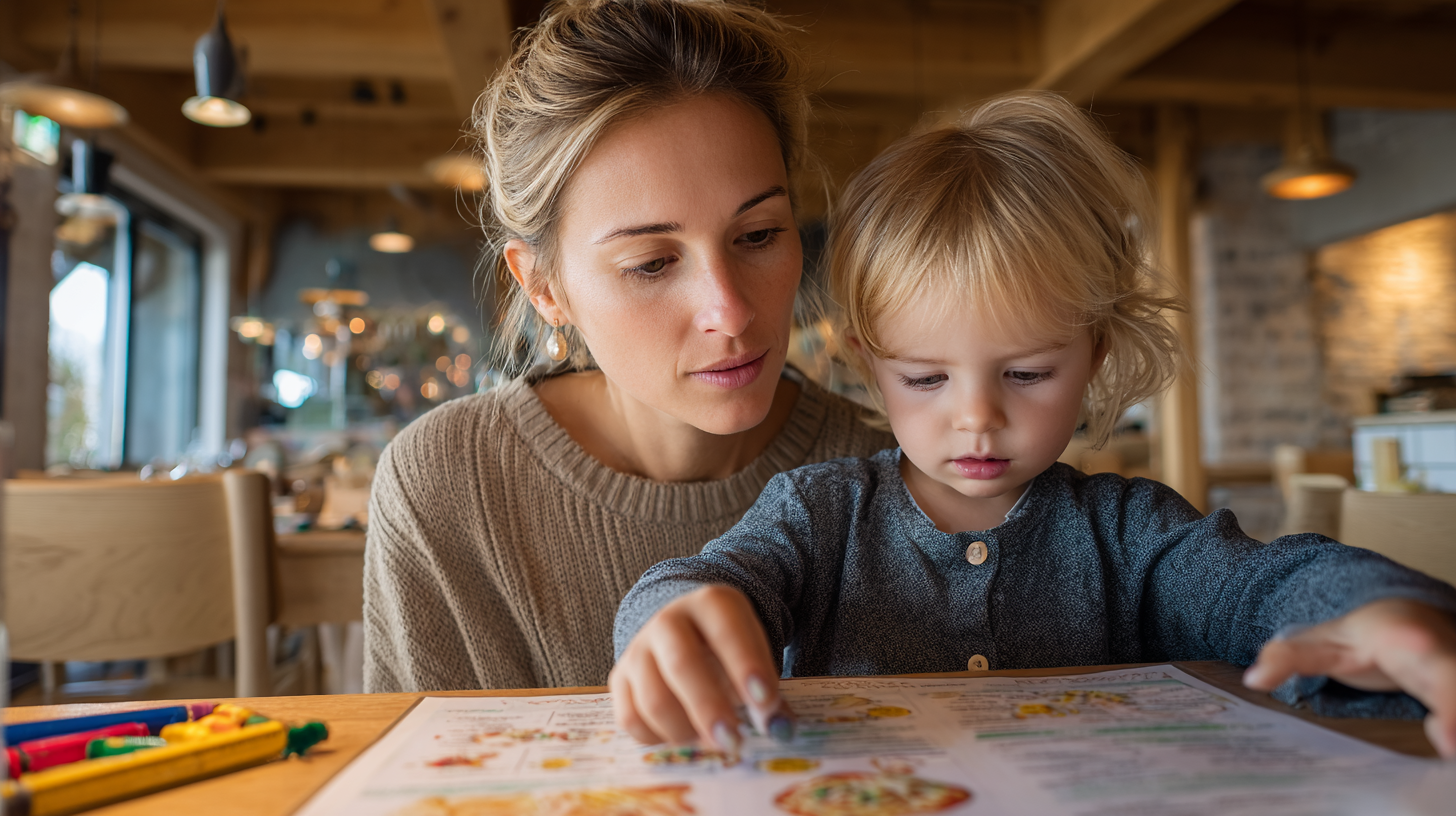
The Hidden Truth About Picky Eaters and Restaurants
Let’s start with something that might surprise you: in 2024, research revealed that 50% of Americans self-identify as picky eaters. Half. That means when you walk into any restaurant, half the people around you are navigating their own food selectivity—they’ve just learned to hide it better. In fact, over a third of adults admit they feel embarrassed by their eating preferences, and more than half actively conceal their habits when dining with others.
But here’s where it gets interesting for those of us raising selective eaters: this massive population of adult picky eaters proves something crucial. Picky eating isn’t just a “phase” that magically disappears—it’s often a legitimate, long-term trait driven by heightened taste sensitivities and sensory aversions. Pediatricians and behavioral experts now recognize selective eating as a genuine concern that deserves respect, not dismissal.
Studies tracking children who were preschool picky eaters into their later years show they’re 49% more likely to choose familiar “safe” foods like burgers and sausages when eating out, and significantly less likely to select vegetables or new dishes. This isn’t failure—it’s consistency. These kids (and the adults they become) have different sensory experiences with food, and restaurants—with their overwhelming menus, unfamiliar preparations, and social pressure—amplify that challenge exponentially.
Understanding this changes everything. Because once you stop seeing selective eating as something to “fix” at restaurants and start seeing it as something to accommodate, the whole dining-out experience transforms. The goal isn’t to trick your child into eating new foods in public. The goal is to create positive restaurant experiences that reduce anxiety and build confidence—and ironically, that’s what eventually opens the door to food exploration.
The Biggest Restaurant Myth About Picky Eaters
Think you know what makes restaurant dining successful?
MYTH BUSTED!
The Myth: “If I just expose them to enough restaurant foods, they’ll eventually eat them.”
The Reality: Forced exposure in high-pressure public settings actually increases food anxiety and resistance. Research shows positive exposure requires LOW-STRESS environments, not more pressure.
What Actually Works: Finding safe menu items first, building confidence, THEN gradually expanding—all on your child’s timeline, not yours.
The Pre-Restaurant Strategy That Changes Everything
Here’s what successful restaurant visits with picky eaters have in common: they’re won or lost before you ever leave the house. The families who walk into restaurants with confidence aren’t winging it—they’ve done reconnaissance work that would make a military strategist proud.
First, they’ve reviewed the menu online. Not just glanced at it—actually studied it, looking for modification opportunities and backup options. They’re scanning for simple proteins that can be served plain, sides that can be ordered separately, and preparations their child recognizes. When you do this advance work, you’re not showing up hoping something will work out. You’re arriving with a plan.
But here’s what separates good planning from great planning: the phone call. Yes, actually calling the restaurant before you go. It feels awkward at first, but that three-minute conversation can save you from a 45-minute disaster. You’re not asking for special treatment—you’re gathering intelligence. Can they do plain pasta? Is the chicken actually grilled or does it come breaded? Can sides be swapped? The restaurants that respond positively to these questions are telling you something important: they’re going to be your allies, not your obstacles.
Smart families also consider timing strategically. Arriving during off-peak hours isn’t just about shorter waits—it means servers have more time to accommodate requests, kitchens are less stressed, and the overall environment is calmer. That reduced stimulation matters enormously for kids who are already managing sensory challenges around food.
And here’s a Caribbean-mama tip that changed everything for my family: bring the familiar alongside the new. Just like how we introduce new flavors in our Caribbean Baby Food Recipe Book by pairing them with trusted tastes—like combining sweet potato with callaloo or plantain with familiar fruits—you can request familiar sides at restaurants even when trying new main dishes. It’s not cheating; it’s smart parenting.
What’s Your Restaurant Risk Profile?
Discover which type of restaurant will give your picky eater the best first experience:
Perfect for kids who need to SEE their food being prepared. These spots let you watch every ingredient go in (or stay out), and customization is literally built into their model. Chipotle, Panera, and similar chains expect modifications—you’re not a burden, you’re a regular customer. Success rate for first-timers: Very High.
Chains like Outback Steakhouse and Cracker Barrel are repeatedly praised by families with picky eaters for a reason—they’ve perfected the art of basic, customizable menu options. Their servers are used to substitutions, and their kitchens can handle simple prep. It’s not exciting, but it works. Success rate: High.
This is the long game that pays off beautifully. Small restaurants where you can become regulars, where staff learn your child’s name and preferences, create the most supportive environment for gradual expansion. But start with their simplest dishes first. Success rate: Medium initially, Very High long-term.
When the focus shifts from “eat this food” to “look at this experience,” pressure decreases. But be strategic—too much stimulation can backfire for sensory-sensitive kids. Test this approach on good days when your child is well-rested. Success rate: Variable, depends on your specific child’s sensory profile.
Menu Decoding: Finding Safe Foods in Unfamiliar Territory
Here’s a skill that transforms restaurant anxiety: learning to read menus like a detective, not a disappointed optimist. Because when you know what to look for—and what red flags to avoid—suddenly every menu contains possibilities instead of landmines.
Start with the children’s menu, but don’t stop there. Kids’ menus are designed for broad appeal, which often means they feature the exact “safe” foods selective eaters prefer: plain pasta, grilled cheese, chicken tenders, simple burgers. But here’s what experienced parents know: sometimes the best options are on the regular menu, modified. That adult “build your own pasta” option? It’s often better than the kids’ mac and cheese because you control every element.
Look for key words that signal modification-friendly dishes: “grilled,” “plain,” “simple,” “classic.” These preparations are straightforward and usually easier to customize. Avoid words like “topped with,” “smothered in,” “tossed with,” or “signature sauce”—these dishes have multiple components that complicate modifications and increase the chance of rejection.
But here’s the advanced strategy: identify the restaurant’s building blocks. Every kitchen has basic ingredients they use across multiple dishes—plain rice, simple pasta, grilled chicken, steamed vegetables. Once you identify these components, you can essentially create your own menu by requesting combinations that work for your child. “Could we get the grilled chicken from this entrée, the plain pasta from this dish, and a side of the steamed broccoli?” Most kitchens can absolutely do this—you’re not asking them to cook something new, you’re just rearranging what they’re already making.

And here’s something that helped us tremendously: recognizing familiar flavors in unfamiliar forms. When your child knows they like sweet potato from home—maybe from recipes like our Sweet Potato & Callaloo Rundown or Yellow Yam & Carrot Sunshine from the Caribbean Baby Food Recipe Book—you can confidently order sweet potato fries or mashed sweet potato at restaurants. That foundation of trust with ingredients at home translates to confidence in restaurant settings.
The Secret Menu Hack Restaurants Don’t Advertise
There’s a powerful ordering strategy that works at 90% of restaurants, but most parents never discover it…
The “Component Swap” Strategy
Here’s what you do: Instead of ordering a single menu item and requesting modifications (which can feel complicated to servers), identify 2-3 menu items that contain the components your child will eat.
Then say this exact phrase: “Could we get [specific protein] from [menu item name], with [specific side] from [other menu item name], and [additional side] from [third item]? We’re happy to pay for whichever full entrée costs the most.”
Why this works: You’re acknowledging the value of their food, you’re naming specific menu items (so they’re not creating something new), and you’re making it financially fair. Restaurants say yes to this 90% of the time.
Real example: “Could we get the grilled chicken from the Chicken Caesar Salad, with the plain pasta from the Kid’s Spaghetti, and the steamed broccoli from the Vegetable Medley? We’re happy to pay for whichever entrée costs the most.”
This strategy removed 90% of our restaurant stress. Try it.
The Communication Script That Makes Servers Your Allies
Here’s an uncomfortable truth: how you communicate your child’s needs determines whether servers become helpful partners or frustrated obstacles. And the difference comes down to about 30 seconds of strategic communication at the beginning of the meal.
First, let’s talk about what doesn’t work: apologizing, over-explaining, or approaching the situation like you’re requesting special treatment. When you start with “I’m so sorry, but my child is really picky…” you’ve already framed the interaction as a problem. Servers hear complaints all night—you don’t want to sound like one more difficulty they have to manage.
Instead, here’s the approach that transforms server interactions: direct, friendly, and solution-focused communication. When the server arrives, make eye contact, smile, and say something like: “Hi! We have a selective eater who will only eat plain pasta with butter—no cheese, no herbs. Is that something your kitchen can easily do?” Notice what’s happening here: you’re not apologizing, you’re not explaining why, and you’re asking a yes-or-no question that makes it easy for them to help.
If they say yes (which they usually will), follow up with: “Perfect! And just to confirm, completely plain—butter only. Thank you so much for checking.” That confirmation isn’t nagging—it’s preventing the automatic garnish or sprinkle of parmesan that well-meaning kitchen staff add out of habit.
But here’s the advanced communication strategy that experienced parents swear by: involve your child when appropriate. Not in a “explain to the server why you won’t eat that” way, but in a “what’s your name? Nice to meet you!” way. When your child becomes a person (not just “the picky kid at table seven”), servers naturally become more invested in getting the meal right. One mama told me her seven-year-old daughter started asking servers for their recommendations for plain foods, and suddenly servers were problem-solving with them instead of for them.
And here’s something that absolutely matters: tip well when you have a positive experience. When servers go out of their way to accommodate requests, acknowledge that. A good tip with a note like “Thank you for making our daughter’s meal perfect!” means that server will remember you—and they’ll be genuinely happy to see you return. You’re building a relationship, not just placing an order.
Match Your Situation to the Right Server Script
Click your scenario to get the exact words to use:
“Hi! Could we get [the items] served on separate plates? Or if separate plates aren’t possible, could you ask the kitchen to keep each item completely separated on the plate with space between them? This makes a huge difference for my child’s comfort. Thank you!”
Why it works: You’re offering the easier solution first (separate plates), then providing a backup option. You’re not explaining WHY, just stating WHAT you need.
“We’d like to order [item], but I need to confirm something first: will this be prepared on clean surfaces separate from [rejected ingredient]? My child is extremely sensitive to even traces of [ingredient]. If there’s any chance of contact, we’ll choose something else—no problem!”
Why it works: You’re being specific about needs, acknowledging their constraints, and making it clear you’re flexible if they can’t accommodate. This shows respect for their kitchen operations.
“Could we get the [protein], [starch], and [vegetable] served separately instead of combined? Essentially the same ingredients, just not mixed together. Is that doable?”
Why it works: You’re clarifying that you want the SAME food, just presented differently. This feels like less work to servers than “special preparation.”
“I have a few specific requests for [menu item]. May I walk through them with you? [List modifications clearly, numbered if there are more than 3]. I know that’s several changes—is your kitchen able to do that, or should we look at a different menu item?”
Why it works: You’re being organized and clear, acknowledging the complexity, and offering an out. This respect for their time and processes makes servers WANT to help you.
Reducing Stress: The Environmental Factors Nobody Talks About
Here’s what finally clicked for me after dozens of stressful restaurant attempts: the food is only part of the equation. The whole environment—the noise, the lighting, the wait time, the table location, the surrounding activity—can make or break the experience for selective eaters who often have heightened sensory awareness.
Think about it: your child is already navigating anxiety about unfamiliar food in an unfamiliar place. Now add fluorescent lighting, clattering dishes, loud conversations at neighboring tables, strange smells from the kitchen, scratchy booth fabric, and a 25-minute wait for food. That’s not a dining experience—that’s sensory overload with a side of hunger-induced irritability.
Strategic families control what they can. They request specific table locations—booths in corners away from the kitchen and bathrooms, or outdoor seating when weather permits. They bring quiet activities for wait times (not screens that will make transitioning to eating harder, but coloring, small toys, conversation games). They arrive at their child’s best time of day, when hunger hasn’t turned into hangry but appetite is present.
But here’s the environmental factor that makes the biggest difference: managing expectations through preparation. Before you go, talk through exactly what will happen. “We’re going to try that new restaurant tonight. We’ve looked at their menu and they have plain noodles you can get. We’ll sit down, you’ll color while we wait for food, and if the noodles don’t taste right, we can get something else or leave without anyone being upset. This is just practice for restaurant adventures.”
Notice that script does several things: it removes surprise, confirms a safe food option, provides a wait-time activity, and—most importantly—takes away the pressure by framing it as “practice” with a built-in escape plan. When kids know there’s no trap, no forcing, no consequences for leaving if it’s not working… they relax. And ironically, that’s when success becomes possible.

One more environmental strategy that changed everything for us: celebrating ANY positive moment, not just “eating new food.” Did your child stay seated for the whole meal? That’s success. Did they try one bite of something, even if they didn’t like it? Success. Did they order their own food from the server? Success. When you redefine what “winning” looks like at restaurants, you remove the pressure that causes the very behaviors you’re trying to avoid.
The Gradual Exposure Strategy That Actually Works
Here’s what every expert agrees on but few parents hear clearly enough: pressure backfires. Always. Every single time. The fastest way to ensure your child never expands their restaurant palate is to make each dining-out experience a battle over trying new foods in public.
Research is crystal clear on this: positive food exposure requires low-stress environments. The families who see gradual expansion in their child’s restaurant choices are the ones who master the art of proximity without pressure. Here’s how that actually looks in practice.
First visit to a new restaurant: Order 100% safe foods. Your entire goal is a positive experience where your child eats successfully and everyone leaves happy. You’re building a foundation of “restaurants are okay places.”
Second through fifth visits (assuming the first went well): Continue ordering safe main items, but start adding ONE new side dish that you simply place on the table. Not on their plate—on the table, available if they want to explore it. Maybe you order that side for yourself and enthusiastically enjoy it. Maybe your child asks about it, maybe they don’t. Either way, you’re providing exposure through proximity.
Around visit six through ten: Your child might start asking questions about the new food they’ve now seen multiple times. This is your opportunity—but not to push. Answer their questions matter-of-factly. Offer a taste if they’re interested. Celebrate curiosity, but accept refusal without any disappointment. This stage can last months, and that’s completely normal.
Eventually (and this timeline varies wildly): Some selective eaters will try the new food. Some won’t. And here’s the truth that sets families free: both outcomes are okay. The goal was never to create an adventurous eater overnight—it was to remove barriers to restaurant dining so your family can participate in this social experience. If expansion happens, it’s a bonus.
This same gradual, pressure-free approach works at home too. The recipes in our Caribbean Baby Food Recipe Book use familiar ingredients as foundations—like how Plantain Paradise starts with naturally sweet plantain, or how Coconut Rice & Red Peas pairs new flavors with comforting coconut milk. When children trust the foundational flavors at home, they’re more likely to trust variations of those flavors in restaurants.
Your Restaurant Confidence Builder
Track your progress through the dining-out journey. Click each milestone as you achieve it:
Your Progress:
You’ve mastered the fundamentals of stress-free dining out with your selective eater!
When Things Go Wrong: The Backup Plan That Saves Everything
Let’s be honest: even with perfect planning, sometimes restaurant attempts fail. The kitchen gets the order wrong. Your child is having an off day. The environment is more overwhelming than expected. The food that’s usually safe suddenly “tastes weird.” These moments happen, and they don’t mean you’ve failed as a parent or that your child will never succeed at restaurants.
What separates successful restaurant families from stressed ones isn’t that problems never occur—it’s that they have escape plans that prevent problems from becoming disasters.
First, give yourself permission to leave. Seriously. Before you even enter the restaurant, decide that if this isn’t working, you can leave without guilt, without shame, without feeling like you’ve wasted the evening. Frame it as data collection: “This restaurant/timing/approach didn’t work today. Good to know for next time.” When leaving is an acceptable option, the pressure on everyone decreases dramatically—and ironically, that often prevents the need to leave.
Second, have a backup meal plan that doesn’t feel like punishment. Maybe that means stopping at a reliable fast-food spot on the way home where you know they’ll eat. Maybe it means having ingredients at home for a quick favorite meal. The key is removing the “now everyone is hungry and disappointed” spiral that makes these moments traumatic instead of just disappointing.
Third, debrief separately from your child. After a difficult restaurant experience, parents often process their frustration out loud in ways kids interpret as disappointment in them. Save the “what went wrong” conversation for when your child isn’t listening. With your child, focus only on what worked: “The server was really nice when you ordered!” or “You did great waiting for the food!” or even just “Restaurant practice is hard, but you tried.”
And here’s something that completely changed my perspective: sometimes the “failure” is actually important information. When my daughter refused the plain pasta at a new restaurant—the same plain pasta she eats everywhere else—I was baffled and frustrated. Turns out, that particular restaurant used a different pasta shape, and the texture was different enough to trigger her sensitivity. That wasn’t her being difficult; that was legitimate sensory feedback. Once I understood that, I started confirming pasta SHAPES during menu reviews, and our success rate jumped.
Building Long-Term Restaurant Confidence
Here’s what nobody tells you at the beginning of this journey: the goal isn’t to have a child who eats everything at restaurants. The goal is to have a child who feels safe and capable in restaurant environments—who knows they can navigate these social situations without anxiety, who trusts that their needs will be respected, and who sees restaurants as positive experiences rather than food battlegrounds.
When you achieve that? Magic happens. Not overnight, not dramatically, but gradually—children who feel safe often become children who feel curious. Children who aren’t pressured to try new foods sometimes voluntarily choose to try new foods. Children who have positive restaurant experiences develop the confidence that opens doors to expansion.
But even if that expansion never happens? You’ve still won. Because you’ve given your child the skills to participate in one of our culture’s most common social experiences. You’ve taught them that they can advocate for their needs. You’ve shown them that being a selective eater doesn’t mean being excluded from family activities. And you’ve proven that respecting their individuality matters more than conforming to conventional eating expectations.
The families who succeed long-term are the ones who redefine success. They celebrate the fact that they now have five restaurants they can visit comfortably instead of feeling defeated that their child doesn’t eat at every restaurant. They appreciate that their eight-year-old can confidently order their own meal instead of worrying that they’re not trying the chef’s specials. They recognize that a peaceful family meal in public—even if it’s the same safe food every time—is a genuine accomplishment.
Think about it this way: you’re not just managing today’s meal. You’re shaping how your child will approach food, social situations, and self-advocacy for the rest of their life. When you handle restaurant challenges with respect, flexibility, and creativity, you’re teaching them that their needs matter, that problems can be solved, and that being different doesn’t mean being wrong.
That’s worth celebrating. Every single time.
Your Restaurant Toolkit: What Actually Helps
Let’s get practical. Here’s what to keep in your metaphorical (and sometimes literal) restaurant survival kit:
Before you go: Menu screenshots on your phone, a list of successful modifications from previous visits, the restaurant’s phone number saved, backup restaurant options identified for the same area, and a conversation with your child about the plan.
What to bring: Quiet wait-time activities, any comfort items that help your child feel secure, wet wipes for sensory-sensitive kids who need clean hands immediately, and backup snacks only for genuine emergencies (not as a default).
In your phone’s notes app: A running list of restaurants that have worked, specific menu items that succeeded, names of helpful servers, and dishes that looked promising but haven’t been tried yet. This information becomes invaluable as you build your restaurant rotation.
Your communication approach: That friendly, direct, confirmation-focused server script we covered. Practice it at home if it feels awkward at first. The more natural it becomes, the more effective it is.
Your mindset: This is the most important item in your toolkit, and it costs nothing. Approach restaurants as experiments, not tests. You’re gathering data, building skills, and creating positive experiences—not proving anything or fixing anyone.
And one more tool that genuinely helps: a home foundation of food confidence. When children have positive, pressure-free food experiences at home—when they learn to trust familiar ingredients prepared in simple ways—that confidence translates to restaurant settings. This is why introducing diverse flavors at home, through resources like our Caribbean Baby Food Recipe Book with recipes like Cornmeal Porridge Dreams or Stewed Peas Comfort, creates a foundation that makes restaurant adventures less intimidating.
Your Next Steps: The Liberation Plan
If you’ve read this far, you’re ready. Not ready for your child to suddenly become an adventurous eater—ready to transform how your family experiences restaurants. Here’s exactly where to start:
This week: Research three restaurants within 15 minutes of your home. Look for the menu characteristics we discussed—simple preparations, modification-friendly options, or familiar safe foods. Call one of them and practice that server communication script: “Hi, I’m planning to bring my family in soon, and I wanted to check if your kitchen can prepare plain [specific item] for my selective eater.”
Before your first visit: Review the menu with your child. Let them choose their safe food. Discuss what will happen, including the backup plan if it doesn’t work. Decide on your wait-time activity together. Pick a time when everyone is well-rested and not overly hungry.
During that first visit: Use every strategy we’ve covered—the table location request, the clear server communication, the focus on positive moments, the zero-pressure approach. Remember: success is a peaceful meal, not adventurous eating.
After that visit: Debrief honestly about what worked and what didn’t. Add notes to your phone list. Celebrate specific wins with your child. If it went well, plan a return visit. If it didn’t, analyze why without blame, and adjust your strategy.
Over the next month: Build your restaurant rotation. The goal is 3-5 places where your family can dine comfortably. Once you have that foundation, you’ve already won. Everything else is bonus expansion.
The truth is, this journey looks different for every family. Some kids expand their restaurant palates within months. Some take years. Some remain selective eaters into adulthood but develop the confidence to navigate any restaurant situation. All of these outcomes are valid and valuable.
What matters is this: you’re not avoiding restaurants anymore. You’re not feeling trapped by your child’s selectivity. You’re not missing out on family experiences or social opportunities. You’re participating, adapting, and succeeding on your own terms.
That’s not settling. That’s liberation.
And on those days when restaurant attempts still feel hard—when other tables seem to be eating everything effortlessly, when you’re modifying orders while other parents order directly from the menu, when you wonder if this will ever feel truly easy—remember this: those families navigating restaurant visits with ease? Half of them have picky eaters too. They’ve just learned what you’re learning now: how to work the system, advocate effectively, and create success from what others might see as limitations.
You’re not behind. You’re exactly where you need to be, learning exactly what you need to know. And every restaurant visit—successful or not—is teaching your child something invaluable: that they matter, their needs are valid, and there’s always a way forward.
Now go forth and conquer those menus. The restaurant world is yours for the taking—one plain pasta dish at a time.

Kelley's culinary creations are a fusion of her Caribbean roots and modern nutritional science, resulting in baby-friendly dishes that are both developmentally appropriate and bursting with flavor. Her expertise in oral motor development and texture progression ensures that every recipe supports your little one's feeding milestones while honoring cultural traditions.
Join Kelley on her flavorful journey as she shares treasured family recipes adapted for tiny taste buds, evidence-based feeding guidance, insightful parenting anecdotes, and the joy of celebrating food, culture, and motherhood. Get ready to immerse yourself in the captivating world of Kelley Black and unlock the vibrant flavors of the Caribbean for your growing baby, one nutritious bite at a time.
- The Feeding Revolution: Why Your Everyday Meals Are Changing the World - October 13, 2026
- Your Feeding Story Matters More Than The “Perfect” One Online - October 12, 2026
- Looking Forward: Stepping Into Your Confident Feeding Future - October 11, 2026