 Skip to content

Eating Out with Kids: Restaurant Strategies for Success
Choose the statement that best describes your current dining-out experience:
Last month, I watched a mother at a local restaurant attempt what I can only describe as a beautiful act of hope. She’d dressed her three-year-old in a crisp little button-down shirt. She’d packed a small bag with quiet activities. She’d even arrived strategically at 5:15 PM, beating the dinner rush. Fifteen minutes later, crayons were scattered across two tables, the child was performing an impromptu concert with spoons, and she was doing that thing we’ve all done—apologizing to strangers while simultaneously trying to convince a tiny human that screaming isn’t an indoor activity.
Here’s what nobody tells you about dining out with children: it’s not about having perfect kids. It’s about having a plan. And according to recent data, 74% of families are dining out more than ever before, which means we’re all navigating this together. The restaurant industry has noticed too—parents with children dine out or order in at least once weekly, significantly more than couples without kids. We’re keeping the restaurant sector alive, but are we actually enjoying it?
The truth is, successful restaurant outings with kids aren’t about luck or having unusually compliant children. They’re about understanding a few key principles that most of us learn the hard way—through trial, error, and more than a few hastily-paid checks. What if you could skip straight to the strategies that actually work?
The Restaurant Selection Strategy Nobody Talks About
We spend hours researching vacation destinations, comparing prices on car seats, and reading reviews for every baby product imaginable. But when it comes to choosing a restaurant? Most of us just pick wherever sounds good in the moment. That’s our first mistake.
Restaurant selection deserves the same strategic thinking you’d apply to any major family decision. The right venue can make the difference between a pleasant memory and a disaster you’ll recount at therapy sessions for years. Industry experts emphasize that child-friendly venues aren’t just about having a kids’ menu—they’re about creating an environment where families feel genuinely welcome rather than merely tolerated.
Start by evaluating restaurants through what I call the “Three Noise Levels Test.” Can you hear individual conversations clearly? That’s a quiet restaurant—beautiful for date night, terrible for kids. Is there a pleasant ambient buzz where conversation is possible but you’re not worried about every sound your child makes? Perfect. Is it so loud you need to shout? Your kids won’t stand out, but you might leave with a headache.
Timing matters more than you think. Early dining (think 5:00-5:30 PM) puts you ahead of the dinner rush, meaning faster service, more available high chairs, and staff who aren’t yet exhausted. One mother of three told me she once showed up at 4:45 PM and had their entire meal finished before the restaurant got busy. Her kids were praised for their behavior, but the secret was simply that they weren’t hungry, tired, and waiting in a crowd.
Look for venues with outdoor seating options, fast turnover times, or private room availability. These features provide natural pressure relief valves when things get tense. A toddler who needs to move can walk around an outdoor patio. A child having a moment can be taken to a private area without disrupting other diners. These aren’t luxuries—they’re strategic advantages.
Tap each factor to reveal if this restaurant is truly kid-ready:
If you can check 4+ factors, you’ve found a winner!
The menu matters, but not in the way you think. You’re not just looking for chicken tenders and mac and cheese (though those help). You’re looking for flexibility. Can you order smaller portions? Will they accommodate simple modifications? Do they serve food that arrives at safe temperatures for kids? Recent interventions in the restaurant industry have focused on improving children’s menus with healthier options, but the real win is when restaurants offer scaled-down adult dishes that let kids try new flavors without committing to massive portions.
Decoding the Menu With Your Child’s Palate in Mind
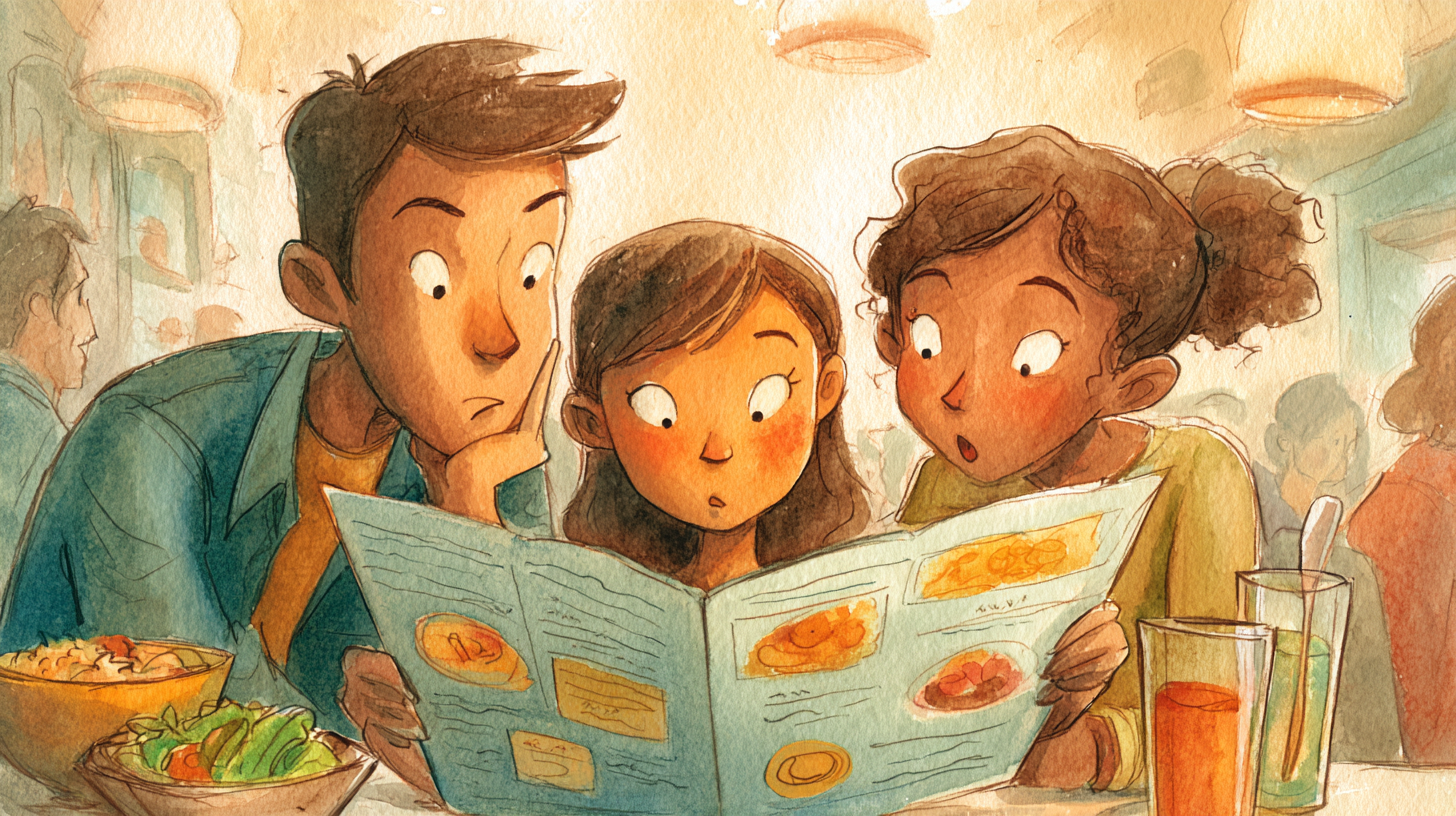
Menu navigation with children is where good intentions go to die. You arrive planning to encourage adventurous eating, expose them to new flavors, maybe even share your meal. Then they spot the dessert section, fixate on it entirely, and suddenly you’re negotiating like you’re trying to broker international peace treaties.
Here’s what research reveals that most parents miss: children are influenced by menu design more than we realize. Studies on menu labeling and presentation show that healthy choice indicators, engaging descriptions, and visual cues significantly impact what kids choose. But most parents are too overwhelmed managing behavior to use these tools strategically.
Before you even open the menu, have a conversation. Not a lecture—a conversation. “We’re going to look at the menu together and each pick something that sounds delicious. What are you hungry for today?” This simple framing shifts the dynamic from you controlling their choice to both of you making decisions together. Children who participate in menu selection are more likely to eat what arrives and less likely to have meltdowns over food they didn’t want in the first place.
Scan for shared plates. Family-style dining or shareable appetizers give kids variety without the pressure of finishing an entire meal they might not like. It also creates natural opportunities for conversation about food, trying new things, and modeling adventurous eating. When your child sees you trying different items, they absorb that curiosity.
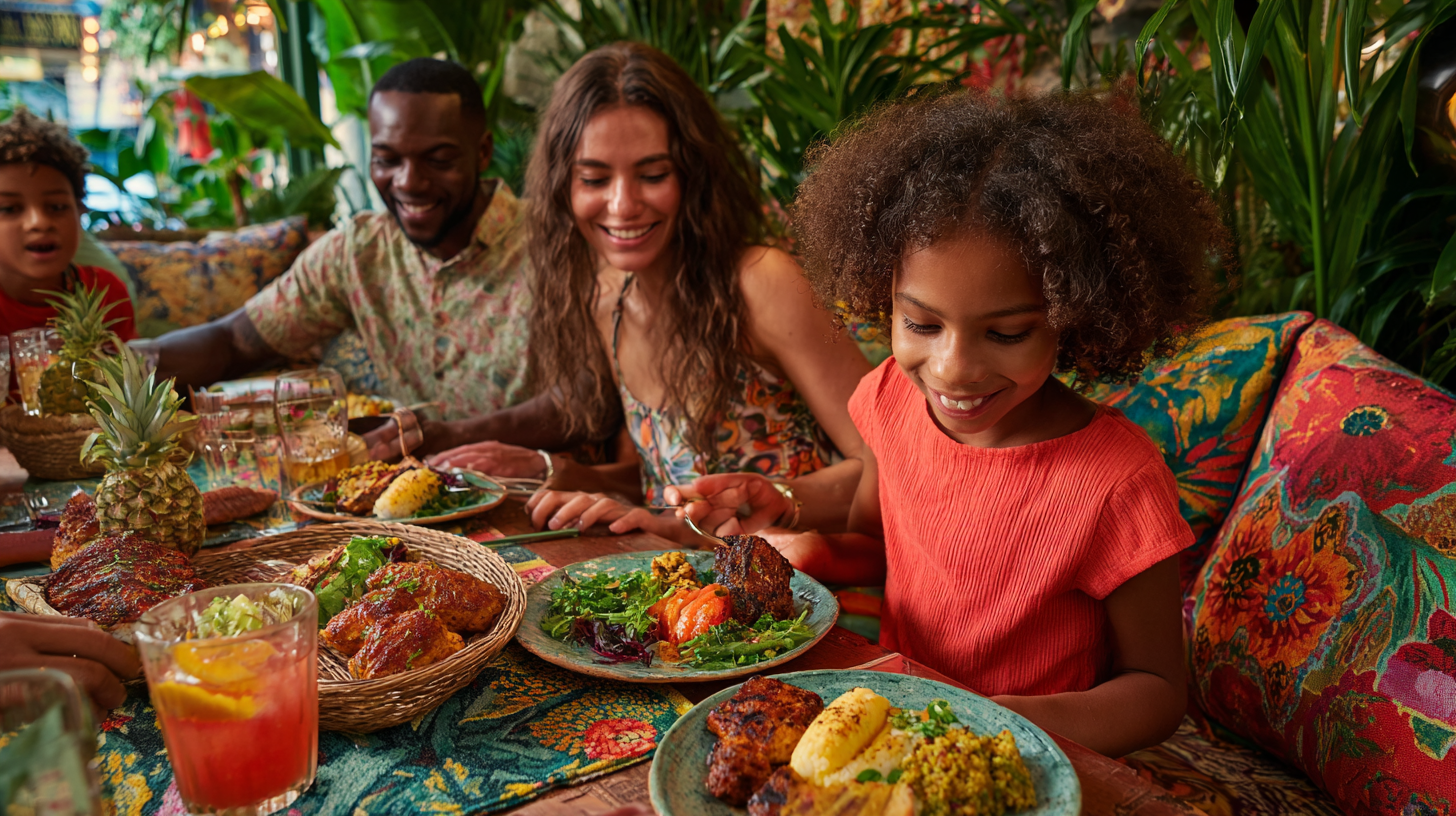
Watch out for hidden disasters. Kids’ menus often feature foods that are either too hot (hello, lava-temperature grilled cheese) or too messy for small hands. Spaghetti sounds great until your two-year-old is wearing it. Soups are beautiful in theory, catastrophic in practice. Choose items that arrive at manageable temperatures and can be eaten with hands if necessary. There’s no shame in asking how hot something will be or whether it can be cut into smaller pieces before it arrives.
The dessert negotiation deserves its own strategy. Rather than fighting about whether dessert is happening, frame it as a privilege that comes after eating a reasonable amount of the main meal. “If you’re still hungry after trying your dinner, we can look at dessert together.” This removes the battle while setting clear expectations. Some families order one dessert to share, which teaches portion control and reduces sugar intake while still feeling special.
Don’t overlook drinks. Many restaurant meltdowns start with sugar-loaded beverages that spike energy and then crash, perfectly timed with waiting for food to arrive. Water or milk might seem boring, but they keep energy stable. If your child insists on something special, save it for after the meal—another natural incentive for cooperation.
Setting Behavior Expectations That Actually Work
Most parents have a pre-restaurant pep talk that sounds something like: “We’re going to a restaurant now, and you need to behave. That means using inside voices, staying in your seat, and being polite. Okay?” The child nods. You feel prepared. Fifteen minutes later, they’re standing on the booth and you’re wondering what went wrong.
The problem isn’t that kids don’t want to behave—it’s that they genuinely don’t know what we mean by those abstract concepts. “Inside voice” means nothing to a four-year-old who’s excited about pizza. “Stay in your seat” is torture for a six-year-old whose legs need to move every few minutes. We’re setting expectations without providing the tools to meet them.
How long can your child reasonably sit at a restaurant?
Better expectations sound like this: “At the restaurant, we’ll sit in our chairs with our bottoms touching the seat. If you need to move around, you can tell me and we’ll take a quick walk outside together. We’ll use voices that are this loud”—and then you demonstrate. “When we get our food, we’ll keep it on our plates and use our forks and spoons. If you need help, just ask.”
Specific, concrete, demonstrable expectations give children something to actually follow. And here’s the secret: you need to practice them before you go. Seriously. Set up a pretend restaurant at home. Practice sitting, using appropriate voices, and waiting for food. Role-play what happens if they need to use the bathroom or if they drop something. This sounds excessive until you realize it’s the exact same principle we use for fire drills and crossing the street—we practice important behaviors in low-stakes environments before we need them in high-pressure situations.
Bring strategic distractions, but not the ones you’re thinking. Tablets and phones work, but they also create battles when it’s time to put them away. Instead, consider a small bag of quiet activities: coloring pages, sticker books, or simple puzzles. Some families bring a “restaurant bag” that only comes out during dining experiences, making the items feel special and new each time. One clever mother I know packs a small sensory toy—something the child can manipulate quietly in their lap when they’re getting antsy.
But here’s the controversial truth: sometimes the best strategy is to let them be slightly bored. Children who learn to sit through a meal without constant entertainment are developing crucial executive function skills. They’re practicing patience, observation, and conversation. If your five-year-old can’t make it through a 30-minute meal without a screen, that’s information worth having—and a skill worth building, gradually, over time.
Teaching Restaurant Etiquette Without the Power Struggles
The word “etiquette” makes this sound fancy and outdated, like we’re training children for formal dinners with the Queen. But restaurant etiquette is really about three things: respecting shared space, treating service workers kindly, and not disrupting other people’s experiences. These are lessons that extend far beyond restaurants—they’re foundational social skills disguised as table manners.
Start with the basics: greeting the server, saying please and thank you, and making eye contact when speaking. These aren’t just niceties—they’re teaching children that service workers are real people deserving of respect and kindness. In an era where social media influencers shape children’s food desires (often toward unhealthy options), teaching them to engage respectfully with food service creates a healthier relationship with dining culture overall.
The “restaurant voice” is a crucial skill that needs explicit teaching. Practice at home by having meals where everyone uses their “restaurant voice”—loud enough to be heard at your own table but soft enough that someone ten feet away can’t follow your conversation. Make it a game. See who can maintain it longest. Celebrate successes. When you’re actually at a restaurant and voices start creeping up, you can simply say “restaurant voice” as a gentle reminder instead of shushing or lecturing.
Click each scenario to discover the teaching moment:
Table manners matter, but pick your battles. A five-year-old who chews with their mouth open but stays seated and uses kind words is doing pretty well. A seven-year-old who has perfect fork technique but complains loudly about everything needs different guidance. Focus on the behaviors that actually impact other diners first: volume, staying seated, not touching other people’s space. The refinements of which fork to use can come later.
Teach the concept of “restaurant awareness”—noticing the space around them, being aware of servers walking by with hot plates, not blocking aisles with backpacks or chairs pushed out too far. This is about safety as much as courtesy. Turn it into a game: “How many servers can you spot right now? Let’s make sure we’re not in any of their paths.”
And here’s a controversial opinion: if your child is genuinely melting down—not testing boundaries, but actually overwhelmed—the most respectful thing you can do is leave. Not as punishment, but as recognition that sometimes we’re not in the right state for a particular environment. Have a plan for this scenario before you go. Know who will take the child outside, how you’ll handle the check, and how you’ll frame it to your child later. “You were feeling really big feelings, and that’s okay. Restaurants need to be calm places, so we left to help you feel better. Next time we’ll try again.”
The Food Arrival Strategy
There’s a particular kind of chaos that erupts the moment food arrives at a table with children. It’s as if the mere presence of food triggers a complete regression to primal behavior. Suddenly, children who can use utensils at home are eating with their hands. Kids who know better are reaching across the table, touching siblings’ plates, and declaring everything “yucky” before they’ve even tried it.
The solution starts before the food arrives. During that waiting period, set expectations: “When our food comes, we’re going to wait until everyone has their plate before we start eating. Then we’ll each try at least three bites before deciding if we like it.” This does two things—it creates a ritual that slows down the initial frenzy, and it primes them to actually taste their food rather than rejecting it instantly.
Temperature checks are crucial and often overlooked. Restaurants serve food hot—sometimes dangerously so for little mouths. Before your child digs in, test it yourself. If needed, ask for a small plate and spread the food out to cool faster. This also gives you a chance to cut things into appropriate sizes and remove any elements that might be problematic (bones, hard pieces, anything that’s a choking hazard).

Model adventurous eating. If you want your children to try new things, they need to see you doing it. Share bites, talk about flavors, express genuine curiosity about your food. “This has a really interesting texture—do you want to try a tiny taste?” Kids learn food culture from observation far more than instruction. When you approach meals with curiosity rather than just fueling up, they absorb that attitude.
The mess is going to happen. Accept it now and plan accordingly. Bring wipes. Request extra napkins. If your toddler is in a particularly enthusiastic eating phase, consider asking for a “splash mat” area—some family restaurants are remarkably understanding about putting down extra napkins under high chairs. And here’s a tip that changed my life: before you leave, make a genuine effort to clean up the immediate area. You’re not expected to mop the floor, but gathering plates, wiping up obvious spills, and stacking dishes makes a massive difference to servers. Plus, it teaches your kids to clean up after themselves.
The Exit Strategy That Prevents Disasters
Most restaurant disasters happen in two places: arrival and departure. We’ve covered arrival. Now let’s talk about the exit—which is where exhausted parents make crucial mistakes that undo all the good work they’ve done.
First, announce the timeline clearly: “We have about ten more minutes here. Think about whether you want to use the bathroom before we go.” This prevents the inevitable “I have to go NOW” moment that happens in the parking lot. It also gives kids a chance to transition mentally from restaurant mode to leaving mode.
If dessert is happening, use it as the natural conclusion. “After we finish our dessert, we’ll get ready to leave.” If dessert isn’t part of the plan, create a different marker: “When we finish our drinks” or “After Dad pays the check.” Children do better with clear endpoints than vague “soon” or “in a few minutes.”
Before you stand up to leave, do a scan: coats, diaper bags, that toy someone brought in, the sippy cup that rolled under the table. Nothing derails a smooth exit like realizing halfway to the car that you left something behind and having to navigate back through the crowded restaurant with tired, done-with-this kids.
Building positive dining habits takes time. Track your progress:
The goodbye to servers matters more than you think. Teach your children to make eye contact with the server, say thank you, and if they’re old enough, even shake hands or wave. This reinforces that service workers are people who helped make your experience possible. It’s also teaching children gratitude in a concrete, actionable way rather than as an abstract concept.
Here’s a practice many families forget: the post-meal debrief. On the way home or that evening, talk about how it went. “What did you like about dinner tonight? What was challenging? What should we do differently next time?” This isn’t about criticizing—it’s about metacognition, helping children develop awareness of their own behavior and agency over improving it. Kids who participate in these conversations develop dramatically better self-regulation over time.
When Things Don’t Go According to Plan
Let’s be honest about something every parenting article tries to gloss over: sometimes, despite your best planning, restaurant outings fail spectacularly. Your toddler has a complete meltdown. Your normally well-behaved five-year-old decides today is the day to test every single boundary. The baby who usually sleeps through anything screams the entire meal. It happens. It will happen to you. The question isn’t whether you’ll have bad restaurant experiences—it’s how you’ll handle them.
Some families face genuine barriers that aren’t discussed enough in mainstream dining advice. Food allergies mean menus become minefields of potential danger rather than exciting options. Sensory processing challenges mean that the “pleasant ambient noise” recommended earlier might be genuinely overwhelming for your child. Picky eating that goes beyond normal childhood preferences can make finding acceptable options nearly impossible. If you’re dealing with any of these issues, you’re not failing at restaurant dining—you’re managing a more complex situation that requires additional strategies.
For children with dietary restrictions, advance research becomes non-negotiable. Call ahead, ask about ingredient lists, explain cross-contamination concerns. Many restaurants are remarkably accommodating when given notice, but last-minute requests in a busy dining room often end poorly. Consider keeping a list of restaurants you’ve verified as safe, updating it as your child’s needs change.
For sensory-sensitive children, timing and environment become even more crucial. Off-peak hours mean fewer people, less noise, and more space. Some families find success with restaurants that have semi-private booths where their child can face a wall rather than a crowded dining room. Others discover that outdoor seating provides enough sensory variety that indoor overwhelm becomes less of an issue.
For truly struggling situations, know your exit plan and don’t be afraid to use it. You’re not giving up or letting your child “win”—you’re recognizing that today isn’t the day, this isn’t the venue, or something about the situation isn’t working. Some of the most successful family dining cultures (and yes, I’m thinking of how Caribbean families approach meals) include an understanding that not every moment is the right moment for every experience. Flexibility within structure, rather than rigid expectations, creates more positive outcomes.
Building Restaurant Skills Over Time
Here’s what nobody tells you when you’re surviving that first disastrous restaurant attempt with your toddler: this is a skill that develops over years, not weeks. You’re not trying to create a perfectly behaved restaurant child by next month. You’re building a foundation of skills, expectations, and shared experiences that compound over time into competence and, eventually, genuine enjoyment.
Start small. A 15-minute breakfast at a casual diner is a very different experience than a sit-down dinner at a nice restaurant. Consider your child’s first restaurant experiences as practice runs, not the main event. Go somewhere forgiving. Order quickly. Keep expectations minimal. Consider it a success if you make it through the meal without major incident, regardless of whether it was picture-perfect.
Increase difficulty gradually. Once your child can handle a quick casual breakfast, try lunch at a slightly nicer place. Then a weekday dinner at an off-peak time. Eventually, you work up to weekend dinners, celebrations, and maybe even that fancy restaurant you’ve been avoiding. This isn’t about limiting your life—it’s about setting everyone up for success by building skills progressively.
Celebrate improvements explicitly. “Last time we went to a restaurant, you had trouble sitting still for the whole meal. Today, you did it! I noticed how hard you worked at that.” Specific, descriptive praise tells children exactly what behaviors to repeat. It also helps them develop a narrative about themselves as competent restaurant-goers, which becomes a self-fulfilling prophecy over time.
Connect restaurant experiences to home cooking when possible. Children who help prepare food at home develop appreciation for the work that goes into meals. They’re also more likely to try new foods and understand why we treat restaurants as special experiences. If you’re looking to expand your child’s palate at home with exciting flavors, resources like the Caribbean Baby Food Recipe Book offer over 75 recipes featuring ingredients like sweet potatoes, mangoes, coconut milk, plantains, and beans—all flavors that translate beautifully to restaurant exploration as children grow.
Your Family’s Dining Evolution
Years from now, your children won’t remember every restaurant meal. They won’t recall whether they had chicken nuggets or pasta at that casual Italian place when they were four. But they will remember the patterns—whether dining out felt stressful or enjoyable, whether it was something your family did together with confidence, whether restaurants represented adventure and connection or anxiety and conflict.
The strategies covered here aren’t just about surviving meals out. They’re about building a relationship with food, dining, and shared experiences that extends far beyond childhood. Children who learn to navigate restaurants develop social skills, cultural awareness, and confidence in new situations. They learn that trying new things is part of life’s joy, not something to fear. They understand that shared meals are opportunities for connection, not just fueling stations between activities.
Every challenging restaurant experience is data. Every meltdown teaches you something about your child’s limits, needs, and development. Every success builds competence and confidence for everyone involved. You’re not trying to create Instagram-perfect dining experiences—you’re creating memories, building skills, and teaching your children how to exist gracefully in shared spaces with diverse people.
The parents who make restaurant dining look effortless? They’re not magic. They’re not lucky enough to have uniquely compliant children. They’ve just done the work—the practicing, the strategizing, the learning from mistakes, the gradual skill-building that eventually becomes second nature. You can get there too. It takes time, patience, and more than a few imperfect meals. But the destination—a family that genuinely enjoys dining out together, that can navigate new restaurants with confidence, that treats meals as opportunities for connection—is absolutely worth the journey.
So next time you’re considering a restaurant outing, take a breath. Make your plan. Set your expectations appropriately. Bring your strategies. And remember that even imperfect meals are building something important. The goal isn’t perfection. The goal is progress, connection, and creating a positive food culture for your family that extends far beyond what’s on the plate.
Your family’s restaurant story is still being written. Each meal is another page. Make it a good one.

Kelley's culinary creations are a fusion of her Caribbean roots and modern nutritional science, resulting in baby-friendly dishes that are both developmentally appropriate and bursting with flavor. Her expertise in oral motor development and texture progression ensures that every recipe supports your little one's feeding milestones while honoring cultural traditions.
Join Kelley on her flavorful journey as she shares treasured family recipes adapted for tiny taste buds, evidence-based feeding guidance, insightful parenting anecdotes, and the joy of celebrating food, culture, and motherhood. Get ready to immerse yourself in the captivating world of Kelley Black and unlock the vibrant flavors of the Caribbean for your growing baby, one nutritious bite at a time.
- You’re Doing Your Best: The Self-Compassion Revolution Every Feeding Parent Needs - September 11, 2026
- Feeding Therapy: Your Family’s Roadmap from Overwhelm to Progress - September 10, 2026
- When to Seek Professional Feeding Help: Your Complete Guide to Recognizing Warning Signs and Taking Action - September 9, 2026


