
Eczema Flare-Ups and Foods: The Connection Parents Miss
Last Tuesday at 2 AM, I found myself sitting on the bathroom floor, cradling my screaming daughter while she clawed at her arms until they bled. The pediatrician had said it was “just eczema”—slather on the steroid cream and it’ll get better. But here’s what no one told me: that innocent bowl of sweet potato puree I’d proudly made from scratch? It might have been the very thing setting her skin on fire.
Here’s the truth that dermatologists and allergists are finally starting to talk about: approximately 30% of babies with moderate to severe eczema have food allergies driving their flare-ups. Yet when I frantically searched for answers during those sleepless nights, I found nothing but conflicting advice and judgment. Some parents swore by elimination diets. Others insisted food had nothing to do with it. Meanwhile, my baby’s skin told a different story—one written in angry red patches that no amount of moisturizer could calm.
The thing is, babies can’t tell us what’s bothering them. They can’t say, “Mom, I think that egg you snuck into my breakfast made my cheeks feel like they’re burning.” All they can do is cry, scratch, and refuse to sleep. And we’re left playing detective, trying to piece together clues while exhausted pediatricians hand us another prescription and send us on our way.
Quick Reality Check: Is Food Behind Your Baby’s Flare-Ups?
Click the scenario that sounds most like your experience:
The Food-Eczema Connection Nobody Warned You About
Let me tell you something that changed everything for me: eczema isn’t just a skin problem. It’s a window into what’s happening inside your baby’s immune system. When my daughter’s dermatologist finally explained the “dual allergen exposure hypothesis,” it was like someone turned on the lights in a dark room I’d been stumbling through for months.
Here’s how it works: babies with eczema have a broken skin barrier—think of it like a fence with holes in it. Food proteins can sneak through those holes and meet the immune system in all the wrong ways. Instead of the gut teaching the immune system, “Hey, this egg is food, we’re cool with it,” the skin’s immune cells go, “INTRUDER! ATTACK!” And that’s how food allergies can develop through eczematous skin.
The statistics are sobering. Children with eczema face an 8.4-fold higher risk of developing food allergies compared to babies with clear skin. In fact, one-third of children with moderate to severe eczema have verifiable food allergies. But here’s the kicker: most parents have no idea this connection exists until they’re deep in the trenches, like I was.

Research from 2024 reveals something even more interesting: 42% of parents reported that certain foods exacerbate their child’s eczema. But when scientists actually tested these suspicions with elimination diets and reintroduction, 79% of those eliminated foods caused no eczema recurrence when brought back. Translation? We’re often wrong about what’s triggering our babies’ flares, which is why proper testing and medical guidance is absolutely critical.
The Big Three Culprits
Not all foods are created equal when it comes to eczema triggers. Let me break down what research—and real parent experiences—tell us about the most common offenders.
Milk is the heavyweight champion of eczema triggers, showing up in 32% of food-related flare cases. And I’m not just talking about obvious sources like bottles and yogurt. Milk sneaks into everything—crackers, bread, that “safe” pasta you thought was fine. When I finally did a proper milk elimination with my daughter under allergist supervision, I discovered she’d been getting tiny exposures from foods I never suspected.
Eggs come in at 11% of cases, but here’s what surprised me: egg allergies in babies with eczema often predict peanut allergies later. That’s why current guidelines recommend getting egg-allergic babies with severe eczema tested for peanut sensitivity before first introduction. It’s not about being paranoid—it’s about being smart and proactive.
Tree nuts, seeds, and peanuts account for 16% of reactions. In a study of 132 children with food-triggered eczema, researchers found that 39% developed immediate reactions to cow’s milk, showing that eczema can coexist with both immediate allergic reactions and delayed flare-ups. These aren’t two separate issues—they’re two sides of the same coin.
The vast majority of food allergies are limited to nine food groups: milk, egg, peanut, soya, wheat, tree nuts, sesame, shellfish, and kiwi. But please hear this: just because these are common triggers doesn’t mean you should start eliminating them without professional guidance. That’s where many well-intentioned parents (myself included) go wrong.
Myth Buster: Tap to Reveal the Truth
“If I eliminate suspected trigger foods, my baby’s eczema will clear up”
Research shows that 38% of parents saw NO improvement in eczema, 35% saw only 25% improvement, and just 9% saw complete resolution after elimination diets. Even more telling: 79% of parents successfully reintroduced eliminated foods without eczema recurring. The truth? Most elimination diets fail because they’re not based on proper testing—parents eliminate the wrong foods.
“Food allergy testing is always accurate for babies with eczema”
With eczema and markedly elevated IgE levels, false positive tests (both skin and blood) are incredibly common. Allergists emphasize “less is more” when testing babies with eczema. Testing without clinical relevance leads to unnecessary eliminations that can cause nutritional deficiencies and feeding difficulties—plus you might create the very allergies you’re trying to avoid.
“Once I control the eczema better, food triggers will matter less”
This is actually TRUE—and it’s one of the most shocking findings. A landmark study found that in 80% of cases where parents were convinced food was a significant factor, those concerns became negligible once better eczema control was achieved with proper skincare and treatment. Sometimes what looks like a food trigger is actually just poorly controlled eczema.
“Elimination diets are safe and won’t harm my baby”
Shockingly, 19% of patients with food-triggered eczema who had no previous immediate reactions developed NEW immediate reactions—including anaphylaxis—after starting elimination diets. Prolonged eliminations also carry risks of nutritional deficiencies, reduced growth, and feeding difficulties. This is why elimination must be medically supervised.
Working With the Right Specialists
Here’s where I made my biggest mistake: I tried to figure this out alone. I read blogs, joined Facebook groups, and started eliminating foods based on internet advice and my own gut feelings. Six weeks later, my daughter was still miserable, I was exhausted, and I’d eliminated so many foods that I was terrified she wasn’t getting proper nutrition.
The game-changer? Finally getting referrals to both a pediatric dermatologist and a pediatric allergist. Not one or the other—both. Because here’s what I learned: dermatologists are skin experts who can optimize your baby’s skin barrier and treatment regimen. Allergists are immune system specialists who can determine which foods (if any) are actually problematic.
According to current medical guidelines, babies who need allergist referrals include those with immediate hypersensitivity reactions to foods, reproducible history of eczema worsening with specific foods, and persistent eczema requiring more than two months of topical corticosteroids. If your baby fits any of these categories, push for that referral. Be the squeaky wheel.
When you finally get in front of an allergist, they can perform skin prick testing, measure specific IgE antibodies in the blood, or conduct oral food challenges. But here’s the important part: allergists recommend testing only the most common culprits initially—milk, egg, and peanut—based on your baby’s clinical history. Random testing of every possible food under the sun? That’s how you end up with false positives and unnecessary eliminations.

My allergist explained something crucial: the gold standard for diagnosing food-dependent reactions is double-blind placebo-controlled oral provocation testing. Sounds fancy, but basically it means giving your baby the suspected food under medical supervision to see if reactions occur. Why? Because specific IgE levels, skin prick tests, and even parent observations don’t always correlate with actual clinical reactivity. You need to see what actually happens when your baby eats the food.
The Elimination Diet Journey
If you do end up needing an elimination diet—and let me be clear, not all babies with eczema need this—here’s what worked for us when we finally did it right under medical supervision.
The “rule of 3s” became my guiding principle: eliminate the suspected food for 3 weeks, reintroduce one food at a time in increasing amounts during all three meals, and wait at least 3 days before reintroducing another food. This structure kept me from spiraling into the chaos of eliminating everything at once.
Here’s what our elimination process actually looked like. Week 1: I documented everything my daughter ate, every single diaper, and every scratch session. Week 2-3: Eliminated the suspected food completely while maintaining detailed records. Week 4: Skin started looking better—but was it the elimination or just the natural ebb and flow of eczema? That’s why the reintroduction phase is so critical.
During reintroduction, I started with a tiny amount—like a quarter teaspoon of the food mixed into something she normally tolerated. Then I watched like a hawk for the next 48 hours. No reaction? Increased the amount the next day. Still nothing? Increased again. After three full days of normal amounts with no flares, we knew that food wasn’t the culprit and added it back to her regular diet.
The Elimination & Reintroduction Timeline: Click to Reveal Each Phase
But here’s the thing that nobody tells you: elimination diets are emotionally exhausting. You second-guess every bite your baby takes. You become that parent reading labels in the grocery store for 20 minutes. You panic when well-meaning relatives offer “just a little taste” of something forbidden. And the guilt? When you accidentally give your baby something with the eliminated ingredient and spend the next two days convinced you’ve ruined everything? That guilt is crushing.
That’s why having a support system—whether it’s your partner, a trusted friend, or even an online support group of parents going through the same thing—is just as important as having good medical care. You can’t do this alone, and you shouldn’t have to.
When you’re navigating elimination diets, having reliable, allergen-friendly recipes becomes essential. Many parents find that Caribbean Baby Food Recipe Book helps them introduce diverse, nutritious foods while managing elimination protocols—especially recipes like Simple Metemgee Style Mash or Coconut Rice & Red Peas that use naturally allergen-friendly ingredients.
✅ Your Action Plan Checklist: Track Your Progress
Click each step as you complete it:
When Elimination Diets Go Wrong
Let’s talk about the dark side of elimination diets—the part nobody wants to discuss but everybody needs to hear. I learned this lesson the hard way, and I’m sharing it so you don’t make the same mistakes.
First, there’s the risk of over-restriction. Up to 75% of children with eczema have tried elimination diets, with 48% excluding all dairy products, 27% excluding eggs, and 25% excluding cow’s milk. But here’s the problem: most of these eliminations happen without proper medical guidance or testing. Parents (like past-me) read articles, compare notes with other parents, and start removing foods based on hunches and internet advice.
The consequences can be serious. Prolonged elimination diets carry risks of nutritional deficiencies, reduced growth velocity, and feeding difficulties. Babies need calories, protein, calcium, and other nutrients for rapid growth and development. When you start eliminating major food groups without professional guidance on replacement, you’re gambling with your baby’s nutrition.
But here’s something that absolutely floored me when my allergist told me: 19% of patients with food-triggered eczema who had no previous immediate reactions developed NEW immediate reactions—including anaphylaxis—following the onset of an elimination diet. Let that sink in. By eliminating a food you think is causing eczema, you might actually be setting your baby up for a more dangerous immediate allergic reaction when that food is reintroduced.
This happens because complete avoidance can shift the immune response from a delayed type (eczema flares) to an immediate type (anaphylaxis). It’s like your baby’s immune system forgets the food entirely, and when it’s reintroduced, the immune system treats it as a brand new threat and overreacts. This is exactly why reintroduction must happen under medical supervision, especially for high-risk allergens.
There’s also the psychological toll. I spent six months convinced that food was the enemy. Every meal became a source of anxiety. I stopped accepting dinner invitations from friends because I couldn’t control what ingredients might be lurking in their cooking. I cried in the grocery store more than once, overwhelmed by label-reading and fear of making the wrong choice.
And for what? After proper testing and a medically-supervised elimination diet, we discovered that only one of the five foods I’d eliminated was actually problematic. I’d put my family through months of unnecessary restriction, stress, and nutritional concern—all because I was trying to be a good mom by figuring it out myself.
Food-Eczema Connection Evaluator
Select all symptoms that apply to your baby:
The Caribbean Connection
Now, let me share something from my own cultural background that shifted my perspective on food and eczema management. In Caribbean culture, food is medicine, community, and love all rolled into one. When you’re navigating food eliminations, you’re not just removing ingredients—you’re navigating family expectations, cultural identity, and generations of feeding wisdom.
My Jamaican grandmother couldn’t understand why I was “depriving” my daughter of certain foods. “Just give her some coconut oil and cornmeal porridge,” she’d say. “That’s what we did in our day.” And you know what? She wasn’t entirely wrong. Traditional Caribbean foods—rich in omega-3s from fish, anti-inflammatory compounds from spices like turmeric and ginger, and gut-healthy fiber from ground provisions—offer nutritional benefits that support overall health.
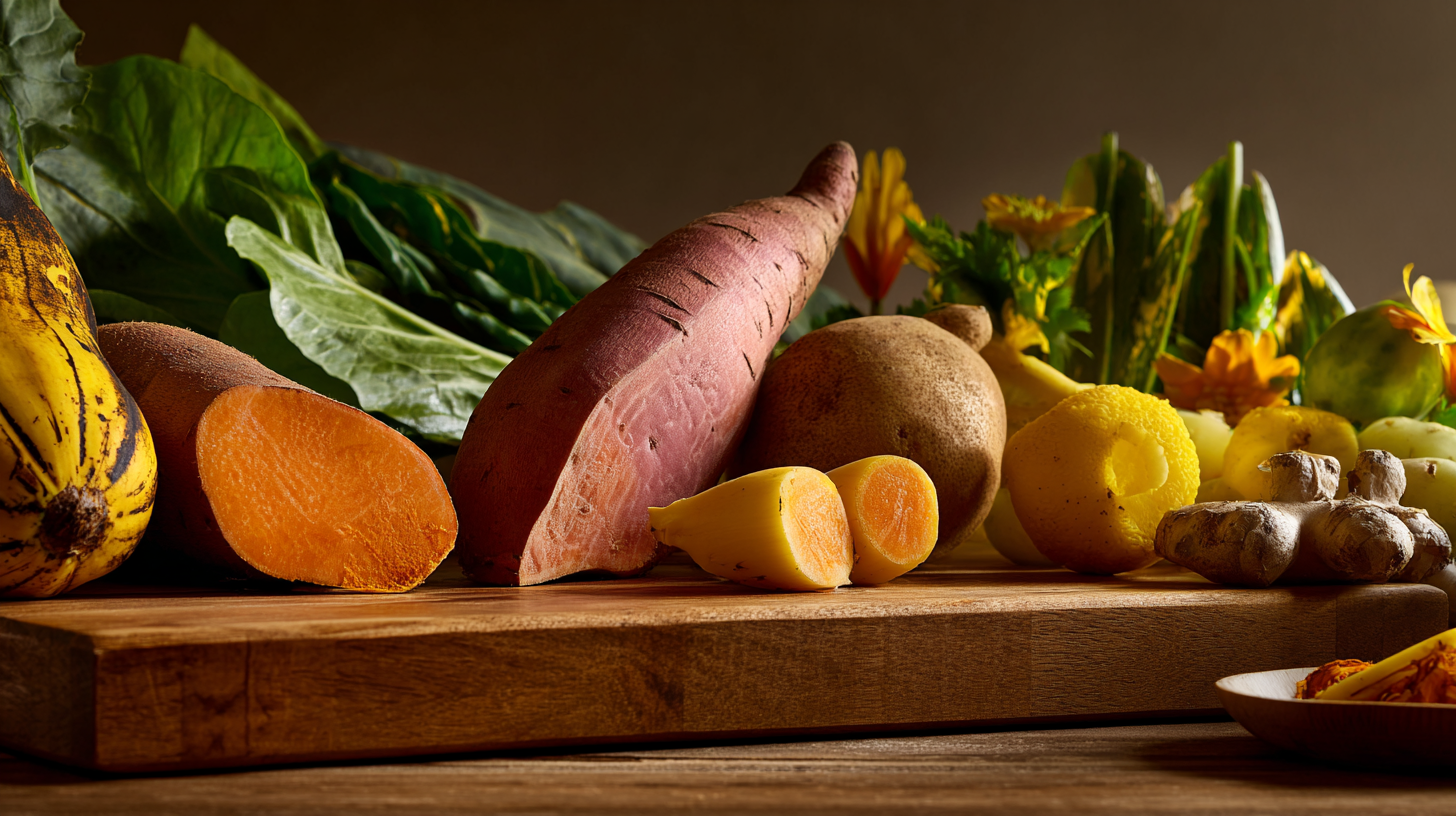
The trick is adapting these traditional foods to work within your baby’s specific dietary needs. Take something like Sweet Potato & Callaloo Rundown—naturally dairy-free, made with coconut milk, packed with nutrients. Or Yellow Yam & Carrot Sunshine—simple root vegetables that are rarely allergenic and provide complex carbohydrates babies need for growth.
When you’re managing food eliminations, having a repertoire of naturally allergen-friendly recipes that still connect your baby to cultural food traditions becomes invaluable. Resources like the Caribbean Baby Food Recipe Book became a lifeline for me—it includes recipes like Calabaza con Coco (pumpkin with coconut milk) and Basic Mixed Dhal Pure that are naturally free of common allergens while providing rich nutrition and authentic island flavors.
The beautiful thing about Caribbean ingredients is their versatility. Coconut milk can replace dairy in so many recipes. Ground provisions like cassava, dasheen, and eddoes offer alternatives to grains. Fresh tropical fruits provide natural sweetness without added sugars. When you’re eliminating foods, you need delicious, nutritious alternatives—not just a list of what your baby can’t have.
The Latest Research and Future Hope
Here’s where things get exciting. The science around eczema and food allergies is evolving rapidly, and some of the latest findings offer real hope for families struggling with these issues.
Remember how old advice used to say “delay introducing allergenic foods”? That’s been completely flipped. Following the groundbreaking 2015 LEAP trial on peanut introduction, new guidelines adopted in 2017 recommend early introduction of allergenic foods—and it’s working. Research published in November 2024 showed food allergy rates in children under 3 fell after these guidelines were implemented, with nearly 60,000 fewer children developing food allergies. That’s a 36% drop in all food allergies and a 43% decrease in peanut allergies.
The TRANS-FOODS study currently underway in the UK, Germany, and France is investigating how food allergies develop through the skin—exactly that “dual allergen exposure” mechanism I mentioned earlier. Their findings could translate into improved public health measures to prevent food allergies before they start. Imagine a future where we can prevent food allergies in high-risk babies with eczema by optimizing skin barrier function in early infancy. That future might be closer than we think.
Emerging therapies are also changing the game. The FDA-approved medication Xolair shows promise for addressing multiple allergic conditions simultaneously—eczema, food allergies, and asthma. Early immunotherapy implementation in children under 4 years demonstrates significant peanut allergy reduction. We’re moving toward a future where babies won’t have to live with dietary restrictions forever.
Research also increasingly recognizes the gut-skin axis—the connection between gut health and skin conditions. Diets rich in anti-inflammatory foods like fatty fish, leafy greens, and fermented foods may help reduce eczema flares. Studies suggest that Staphylococcus aureus colonization on eczematous skin may directly impact food sensitization through secreted toxins, opening new avenues for prevention and treatment.
The One Thing I Wish Someone Had Told Me At The Start
The single most important thing I learned? In 80% of cases where parents are convinced food is significantly contributing to their baby’s eczema, those concerns become negligible once better eczema control is achieved with proper skincare and medical treatment.
Translation: Before you start eliminating foods and turning your life upside down, make absolutely sure you’ve optimized the basics—daily gentle bathing, generous moisturizing (like, WAY more than you think), appropriate use of prescription medications when needed, and proper skincare techniques.
Sometimes what looks like a food trigger is actually just poorly controlled eczema. The flares you’re attributing to that strawberry your baby ate? It might have happened anyway because their skin barrier is compromised and environmental triggers set off the inflammation.
Start with the skin. Work with a dermatologist to get the eczema under the best possible control FIRST. Then, if problems persist despite optimized skincare, THAT’S when you explore food connections with an allergist. Not before. This order matters, and it could save you months of unnecessary elimination diets and stress.
Moving Forward With Confidence
Look, I’m not going to tell you this journey is easy. Because it’s not. Some nights you’ll still find yourself sitting on the bathroom floor at 2 AM, wondering what you’re doing wrong and whether you’ll ever figure this out. But here’s what I want you to know: you’re not alone, you’re not failing, and there are answers out there.
The key is approaching this systematically, not frantically. Start with optimizing your baby’s basic eczema care—moisturize religiously, bathe gently, work with a dermatologist to find effective treatments. Document everything: what your baby eats, when flares occur, how severe they are, what makes them better or worse. That food diary you think is overkill? It’s your most powerful diagnostic tool.
If you suspect food connections, push for proper referrals to pediatric specialists. Get appropriate testing before you start eliminating foods. Follow medical guidance for elimination and reintroduction protocols. Build your support system—whether that’s your partner, family members, or online communities of parents navigating the same challenges.
And remember: this phase won’t last forever. My daughter is four now, and her skin is beautiful. We did eventually identify one food trigger (eggs, ironically—one of the most common culprits I’d initially refused to believe was problematic). We did a medically supervised elimination, and she outgrew the sensitivity by age three. Today she eats everything, her eczema is mild and easily managed, and those dark 2 AM bathroom floor nights feel like a distant memory.
You’re doing the best you can with the information you have. That’s all any of us can do. Be patient with yourself, trust the process, and don’t be afraid to advocate loudly for your baby’s needs. The answers are out there—sometimes you just need the right team and the right approach to find them.
As you experiment with allergen-friendly foods during this journey, don’t forget to keep meals nourishing and culturally connected. The Caribbean Baby Food Recipe Book has helped countless families maintain nutritious, delicious meals even while managing eliminations—because your baby deserves food that nourishes both body and soul.
Your baby’s skin will heal. Your family will find its rhythm. And one day, you’ll be the parent offering hope and practical advice to someone else standing in the baby food aisle, overwhelmed and exhausted, wondering if things will ever get better. They will. I promise.

Kelley's culinary creations are a fusion of her Caribbean roots and modern nutritional science, resulting in baby-friendly dishes that are both developmentally appropriate and bursting with flavor. Her expertise in oral motor development and texture progression ensures that every recipe supports your little one's feeding milestones while honoring cultural traditions.
Join Kelley on her flavorful journey as she shares treasured family recipes adapted for tiny taste buds, evidence-based feeding guidance, insightful parenting anecdotes, and the joy of celebrating food, culture, and motherhood. Get ready to immerse yourself in the captivating world of Kelley Black and unlock the vibrant flavors of the Caribbean for your growing baby, one nutritious bite at a time.
- The Feeding Revolution: Why Your Everyday Meals Are Changing the World - October 13, 2026
- Your Feeding Story Matters More Than The “Perfect” One Online - October 12, 2026
- Looking Forward: Stepping Into Your Confident Feeding Future - October 11, 2026