The Texture Ladder: Your Baby’s Journey from Smooth Purees to Family Dinners (Without the Guessing Game)
Here’s what nobody tells you about feeding your baby: that smooth butternut squash puree you’ve perfected? Your 8-month-old should probably be done with it by now. That perfectly mashed avocado you’re so proud of? It might actually be holding your little one back from developing the chewing skills they desperately need.
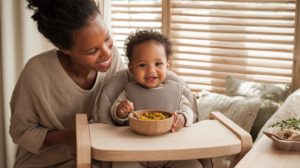
I learned this the hard way when my cousin visited from Trinidad with her 9-month-old. While I was still carefully pureeing every morsel for my same-aged baby, her daughter was gleefully gumming soft pieces of callaloo and mashed plantain. “But she barely has teeth!” I protested. My cousin just smiled knowingly. “She doesn’t need teeth, darling. She needs practice.”
That moment changed everything. Because here’s the uncomfortable truth that’s backed by research: 25-40% of parents report feeding problems with their babies, and a huge part of this stems from confusion about texture progression. We’re so terrified of choking, so paralyzed by conflicting advice, that we keep our babies on smooth purees far longer than necessary—and it’s actually making things harder, not safer.
Quick Reality Check: Where Are You Right Now?
Click the statement that sounds most like you:
If you clicked any of these, you’re in exactly the right place. Because by the time you finish reading this, you’ll have a clear, visual roadmap that takes the mystery out of texture progression. No more second-guessing. No more mom guilt. Just a straightforward path that respects your baby’s development and your peace of mind.
The Truth About the “Sensitive Period” Nobody Warned You About
Let me share something that might make your heart skip a beat: there’s a critical window between 6-9 months when your baby’s brain is uniquely primed to accept different food textures. Miss this window, and you’re not doomed—but you’re definitely making your life harder.
Research from 2024 shows that babies introduced to lumpy textures by 9 months have significantly fewer feeding problems and accept a wider variety of foods later in childhood. But here’s what really shocked me: a French study tracking over 1,000 babies found that delayed texture introduction wasn’t just about picky eating—it was linked to delays in language development, motor skills, and overall cognition through age 3.5 years.
Think about it this way: when your baby practices moving textured food around their mouth, they’re not just learning to eat. They’re developing the same muscles needed for speech. They’re building the hand-eye coordination required for self-feeding. They’re literally wiring their brain for learning.
But here’s the good news that nobody emphasizes enough: this isn’t about perfection or rigid timelines. It’s about understanding what your baby needs right now and having the confidence to take that next small step.
The 5-Stage Texture Ladder: Your Clear Visual Roadmap
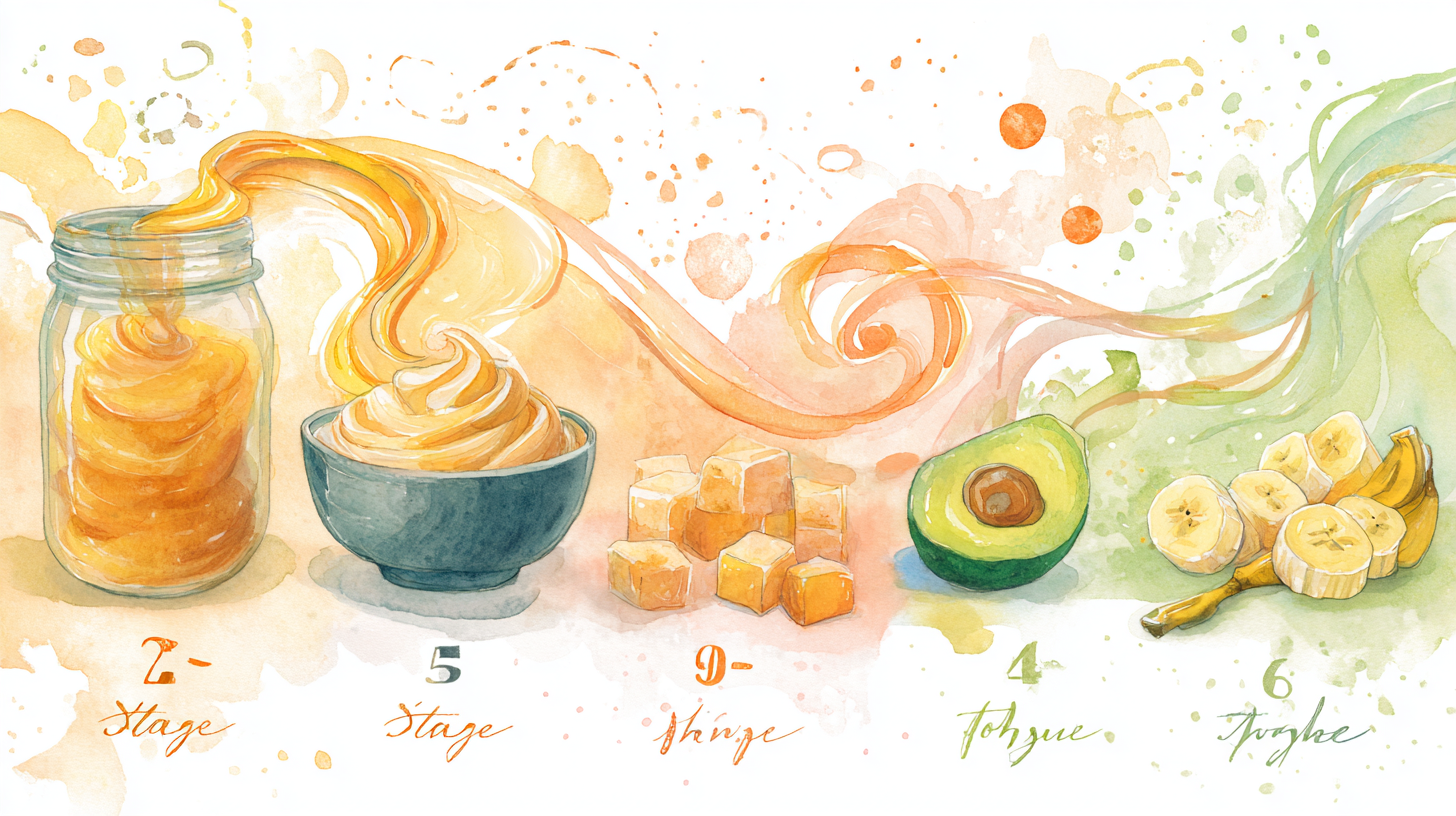
Forget those confusing “Stage 1, Stage 2, Stage 3” labels on store-bought baby food jars. They’re not standardized, and they don’t tell you what you actually need to know. Instead, think of texture progression as climbing a ladder—each rung builds on the last, and you can see exactly where you’re going.
A groundbreaking 2025 framework from feeding experts finally gave us standardized definitions based on actual food properties: flow rate, cohesiveness, moisture, firmness, and particle size. This is the roadmap that feeding therapists use, and now you have it too.
Click Each Stage to Reveal What Happens
Stage 1: Smooth Purees (4-6 months)
What it looks like: Completely smooth, lump-free, thinned with breast milk or formula to a consistency slightly thicker than milk. Think baby-smooth applesauce or silky Caribbean sweet potato puree.
Why this stage matters: Your baby is learning the mechanics of swallowing food instead of just liquid. Their tongue-thrust reflex is fading, and they’re discovering that food tastes different from milk.
Perfect examples: Single-ingredient purees like mashed banana, avocado, butternut squash, or traditional Caribbean starters like Batata y Manzana (white sweet potato and apple blend) or smooth Calabaza con Coco (pumpkin with coconut milk).
How long to stay here: 2-4 weeks maximum. Seriously, don’t camp out at this stage.
Stage 2: Thicker Purees (6-8 months)
What it looks like: Still smooth but much thicker—like yogurt or hummus. This is when you start combining ingredients and adding proteins.
Why this stage matters: Your baby’s tongue is learning to move food around their mouth in preparation for chewing. They’re building strength in their jaw muscles.
Perfect examples: Pureed chicken mixed with sweet potato, thick oatmeal with fruit, protein-rich options like Basic Mixed Dhal puree or Stewed Peas Comfort—both packed with Caribbean flavor and nutrition.
Red flag to avoid: Don’t add random chunks to smooth purees. Mixed textures at this stage are a choking hazard because babies expect smoothness and aren’t ready to detect surprises.
Stage 3: Mashed/Lumpy Foods (7-9 months)
What it looks like: Consistently lumpy throughout—like mashed potatoes with soft lumps. Use a fork, not a blender.
Why this stage matters: This is THE critical stage. Your baby learns to move food with their tongue, practice chewing motions, and handle unexpected textures safely.
Perfect examples: Mashed pumpkin, fork-mashed banana, ground meat mixed with vegetables. Try Caribbean favorites like Yellow Yam & Carrot Sunshine mashed with a fork, or Sweet Potato & Callaloo Rundown for iron-rich greens.
Don’t skip this: Babies who miss this stage often become picky eaters who refuse any texture variation later.
Stage 4: Soft Finger Foods (8-10 months)
What it looks like: Soft pieces your baby can pick up and self-feed. They should melt or dissolve easily in the mouth.
Why this stage matters: Self-feeding develops fine motor skills, hand-eye coordination, and independence. Plus, babies who self-feed are more likely to eat what the family eats.
Perfect examples: Soft-cooked pasta, banana chunks, steamed carrot sticks, avocado slices, well-cooked plantain pieces. The Caribbean Baby Food Recipe Book has over 75 recipes perfect for this stage, featuring soft versions of traditional foods like plantain and eddoes.
Safety note: Pieces should be about the size of your pinky finger—easy for baby to grasp but impossible to fully shove in their mouth.
Stage 5: Chopped Family Foods (10-12+ months) ️
What it looks like: Finely chopped or diced versions of what your family is eating, gradually increasing in size and complexity.
Why this stage matters: By 12 months, babies can eat most family foods with appropriate modifications. This is when they join the family table for real.
Perfect examples: Diced cooked vegetables, ground or finely chopped meats, chopped fruits, small pasta shapes. Caribbean classics like Coconut Rice & Red Peas, Ackee Adventure (12+ months), or Geera Pumpkin all work beautifully chopped small.
The goal: By 13 months, research shows 85.4% of babies are successfully eating chopped/diced family foods as their primary texture.
The Mixed Texture Mystery: Why Your Baby Gags on “Easy” Foods
Remember when I mentioned my cousin’s baby happily eating mashed callaloo while my baby was still on smooth purees? Here’s what I didn’t understand then: consistency matters more than you think.
Every pediatric feeding specialist will tell you the same thing: smooth purees with random chunks are harder for babies to manage than either pure smoothness or consistent lumpiness. It’s like driving on a smooth highway and suddenly hitting a pothole—your brain wasn’t prepared for the change, and you react with alarm.
When your baby expects smoothness and suddenly encounters a chunk, their natural safety reflex is to gag. But when the entire texture is consistently lumpy, their brain knows what to expect and they handle it beautifully. This is why store-bought “Stage 2.5” foods that claim to “introduce texture” with occasional chunks often backfire spectacularly.
Myth-Busting Time: Click to Reveal the Truth
❌ MYTH: “My baby needs teeth to eat textured foods”
✅ TRUTH: Babies’ gums are incredibly strong—about as hard as an adult’s knuckles. They can effectively “gum” soft foods without a single tooth. Research shows babies demonstrate chewing motions and can handle appropriate textures from 6-7 months, regardless of tooth count.
Real talk: I’ve watched babies with zero teeth devour soft mashed plantain and callaloo. Meanwhile, toddlers with full sets of teeth still refuse anything but purees because they never learned how to chew. Teeth aren’t the issue—practice is.
❌ MYTH: “Gagging means my baby isn’t ready”
✅ TRUTH: Gagging is your baby’s safety mechanism working perfectly. It’s actually a good sign that they’re learning to manage food. Gagging happens forward in the mouth; choking is silent and happens in the throat.
The distinction: A gagging baby makes noise, coughs, and often continues eating afterward. A choking baby cannot make sound, cannot cough, and needs immediate intervention. Studies show that up to 26.2% of babies aged 6-12 months experience gagging episodes—it’s completely normal during learning.
❌ MYTH: “I should stay at each stage until my baby masters it”
✅ TRUTH: Babies actually REFUSE textures that are too easy for their developmental stage. If your 10-month-old suddenly starts rejecting the purees they once loved, it’s not pickiness—it’s boredom. They need more challenge.
Expert guidance: Feeding specialists recommend spending just 2-4 weeks at each stage. The 2025 Developmental Texture Framework emphasizes that prolonged use of soft textures during early growth can actually alter feeding behavior and oral motor development negatively.
❌ MYTH: “Smooth purees are always safer than finger foods”
✅ TRUTH: Research from 2023 shows that exposure to more complex textures may actually protect against choking. Why? Because babies who practice handling various textures develop better oral motor skills and awareness.
The real safety factor: Supervision, appropriate food choices (no grapes, nuts, hard candies), and trusting your baby’s developmental reflexes. Studies comparing baby-led weaning to traditional puree feeding found no significant difference in choking rates when guidelines are followed.
When to Progress vs. Hold Steady: The Readiness Signs That Actually Matter
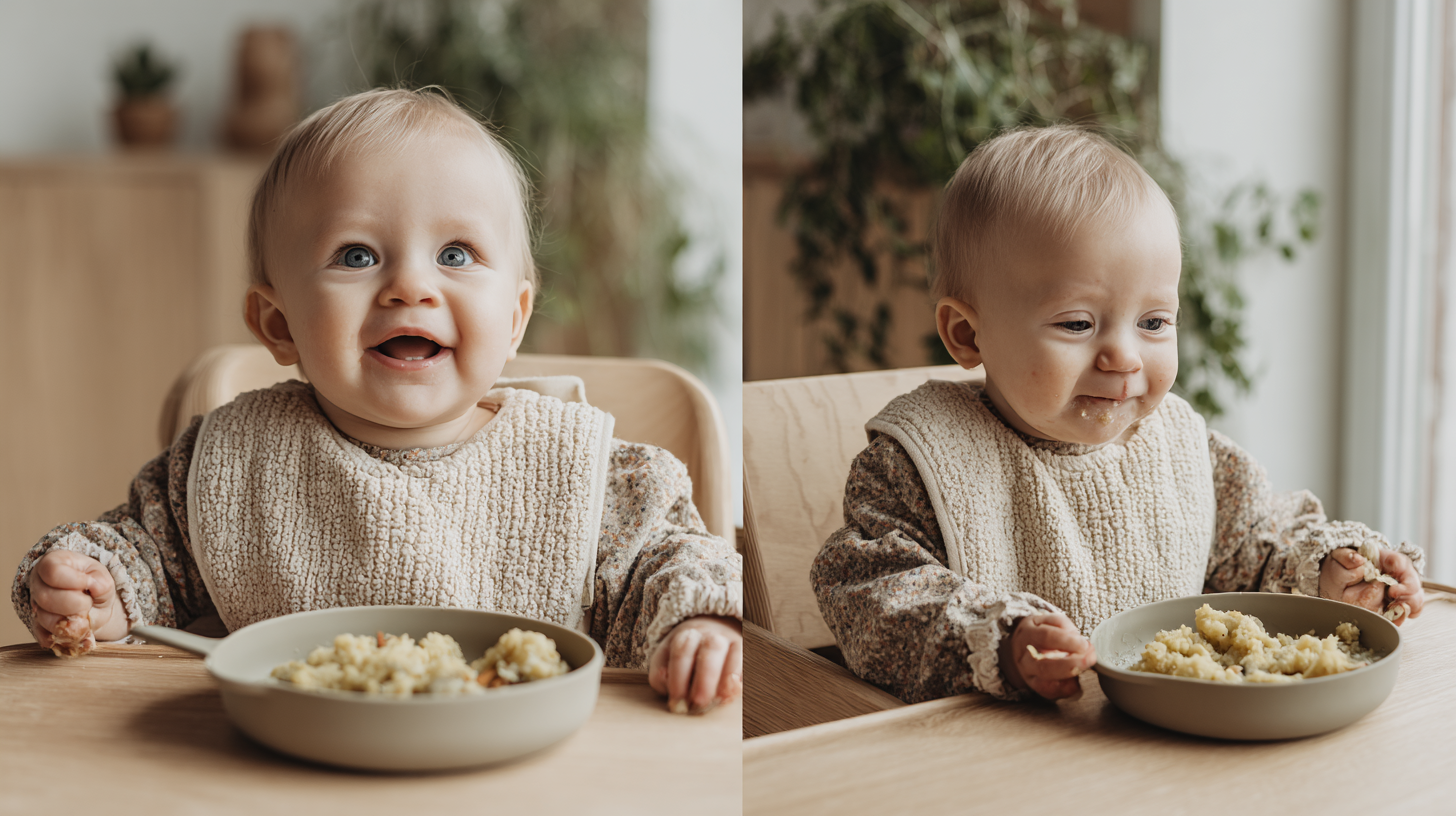
This is where most parents get completely stuck. You’re staring at your 8-month-old, wondering if they’re ready for the next stage, and Google is giving you seventeen contradictory answers. Let me make this crystal clear with signs you can actually observe.
✅ Is Your Baby Ready to Move Up? Check All That Apply:
Be honest—this is just for you!
Now let’s talk about when to pump the brakes. If your baby is frequently gagging to the point of distress, showing complete food refusal, or recently dealt with illness, it’s perfectly fine to hold steady at the current stage for another week or two. This isn’t failure—it’s responsive parenting.
And here’s something nobody admits: sometimes YOU need more time. If your anxiety about texture progression is sky-high, your baby will feel that tension. There’s no shame in taking things slow while you build confidence. Just don’t let fear keep you stuck for months.
The Sensory Side: When Texture Aversion Is More Than Pickiness
I need to get real with you about something important: sometimes, texture struggles aren’t about timing or technique. They’re about sensory processing.
About 63% of children with autism spectrum disorders eat a restricted range of foods, with over 30% showing specific texture-based preferences. But you don’t need a diagnosis for texture sensitivity to be real. Many typically developing babies simply have more sensitive oral systems—they genuinely experience textures more intensely than others.
Signs your baby might have genuine texture sensitivity (not just normal learning curves): intense distress with certain textures that doesn’t improve with repeated exposure; refusing entire categories of textures (all mushy things, all crunchy things); gagging at the sight or smell of foods; or extreme resistance that affects their weight gain or nutrition.
If this sounds like your baby, you’re not alone, and you’re not doing anything wrong. This is when feeding therapy with an occupational therapist or speech-language pathologist becomes invaluable. They can assess whether sensory integration is at play and provide targeted strategies.
One approach that works beautifully for sensitive babies: sensory play with food outside of mealtimes. Let them touch whipped coconut cream during bath time. Let them squish mashed plantain through their fingers during play. Research shows that tactile exploration helps children build comfort with textures before eating them. The Caribbean Baby Food Recipe Book includes sensory play ideas alongside recipes, using ingredients like smooth avocado, sticky mango, and textured coconut.
Real-World Texture Progression: Three Paths That Actually Work
Theory is great, but what does this look like in your actual kitchen with your actual baby? Let me show you three different approaches that work for real families:
Texture Matching Game: Can You Sort These Caribbean Baby Foods?
Click each food and match it to the right texture stage. Let’s see how well you’ve been paying attention!
Path 1: Traditional Puree Progression (Gradual & Cautious)
This is for parents who want maximum control and feel most comfortable with slower transitions. You start with smooth single-ingredient purees at 6 months—think silky Calabaza con Coco or simple sweet potato. Spend 2-3 weeks here while introducing new foods. By 7 months, move to thicker combination purees like Basic Mixed Dhal or Stewed Peas Comfort. Around 8 months, introduce consistently lumpy foods (fork-mashed, not blended). By 9-10 months, start offering soft finger foods alongside mashed options. Transition to chopped family foods by 12 months.
Path 2: Modified Baby-Led Approach (Adventurous But Safe)
This works beautifully for families who want to encourage independence early. Start at 6 months with both: smooth purees on a spoon AND soft finger foods baby can hold. Offer long sticks of soft-cooked sweet potato, thick strips of ripe mango, or steamed plantain wedges that are easy to grasp. The beauty of Caribbean ingredients like plantain, dasheen, and eddoes is they’re naturally soft when cooked but hold their shape. By 8 months, most foods are finger foods with occasional mashes. By 10 months, they’re eating chopped versions of your family’s dinner. Many parents find this path reduces mealtime battles because babies feel in control.
Path 3: The Caribbean Fusion Method (Culture Meets Science)
This is my personal favorite because it honors traditional Caribbean feeding wisdom while incorporating modern research. Start with familiar Caribbean smooth textures—Cornmeal Porridge Dreams, smooth Papaya & Banana Sunshine. But don’t linger there. Our grandmothers didn’t have blenders, remember? By 7-8 months, introduce the naturally textured foods Caribbean babies have eaten for generations: mashed Yellow Yam & Carrot Sunshine, fork-mashed Plantain Paradise, soft Dasheen Bush Silk. These traditional preparations are already perfectly suited to texture progression. By 9-10 months, introduce spiced options like Geera Pumpkin (12+ months) or Baigan Choka Smooth. The Caribbean Baby Food Recipe Book provides 75+ recipes organized by texture stage, making this progression incredibly simple.
Your Personalized 4-Week Texture Advancement Plan
Enough theory. Let’s get tactical. What should you actually DO this week to move your baby forward? I’m going to give you a customized plan based on where you are right now.
Select Your Baby’s Current Stage:
The Caribbean Advantage: Foods Designed for Texture Progression
Can I tell you something beautiful about Caribbean baby food traditions? Our ingredients are naturally perfect for texture progression. Unlike many Western baby food staples that need extensive processing, Caribbean staples work brilliantly at every stage.
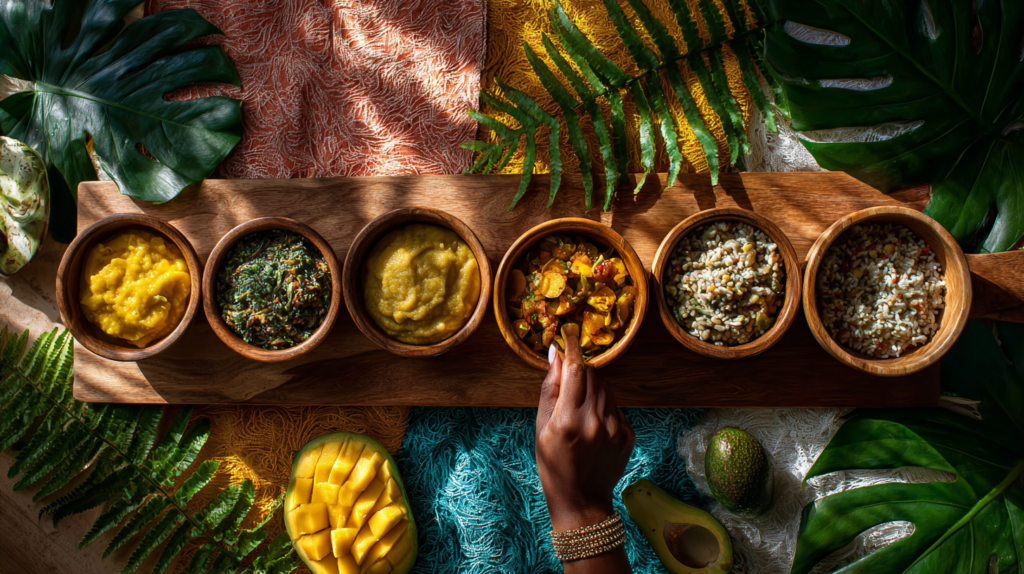
Sweet potatoes, plantains, and ground provisions start silky-smooth when pureed but maintain structure when fork-mashed. Coconut milk adds creaminess without dairy, helping transition textures. Beans and peas (pigeon peas, red peas, lentils) provide protein-rich options that mash easily and introduce gentle texture.
Traditional preparations like Metemgee (a Guyanese coconut milk stew), Mangú (Dominican mashed plantains), and Callaloo (Caribbean leafy greens) were feeding babies long before commercial baby food existed. These weren’t accidents—they’re nutritionally complete, appropriately textured, and delicious enough that the whole family eats them.
The genius of using traditional Caribbean recipes for texture progression is that you’re not making separate “baby food.” You’re adapting the family meal. When you make Coconut Rice & Red Peas, you can mash a portion for your 8-month-old and serve it normally for everyone else. When you prepare Geera Pumpkin, your toddler gets the full-spiced version while baby gets a milder adaptation. This is how families around the Caribbean have fed babies for generations—and research now confirms it’s developmentally optimal.
Troubleshooting: When Things Don’t Go According to Plan
Let’s talk about what happens when your baby completely rejects the next texture level. Because it will happen, and you need to know it’s not catastrophic.
Scenario 1: The Total Refuser
Your baby clamps their mouth shut, turns their head, or cries at the sight of lumpier food. First, take a breath. Then try this: go back one small step. If they refuse lumpy, offer slightly thick. If they refuse thick, add a tiny bit more liquid. You’re looking for their “just right” challenge level—difficult enough to build skills but not so hard they shut down.
Also consider the “skin exposure” technique used by feeding therapists: let them touch the texture with their hands first. Put a bit of the lumpy food on their high chair tray and let them explore it through play before it ever approaches their mouth. Research shows that tactile exploration significantly reduces oral aversion.
Scenario 2: The Inconsistent Eater
They handle chunks perfectly one day and gag dramatically the next. This is actually normal developmental behavior. Babies have off days just like we do—teething pain, tiredness, slight illness all affect feeding. The key is consistency in what you offer, not in their acceptance. Keep presenting the appropriate texture even if they refuse it sometimes.
Scenario 3: The Selective Texture Lover
They’ll eat crunchy things but refuse mushy, or vice versa. This is where food variety within texture categories helps. If they love crunchy, offer various crunchy options (toasted bread, rice crackers, dried cereal). But continue presenting small amounts of other textures without pressure. Studies show repeated exposure (10-15 times) without pressure eventually increases acceptance.
When to seek help: If your baby isn’t making any progress over 4-6 weeks, is losing weight, or shows extreme distress around all eating, consult your pediatrician. They can refer you to a pediatric feeding specialist if needed. The earlier you address feeding challenges, the better the outcomes.
Your Baby’s Future Is Being Built Right Now
Here’s what I wish someone had told me when I was nervously pureeing everything: every meal is practice. Every texture you introduce is wiring your baby’s brain for the skills they’ll need for speech, for independence, for trying new things throughout their life.
That 2024 French study I mentioned earlier? It found that babies who experienced timely texture progression showed better language development, better motor skills, and better cognitive outcomes through age 3.5. This isn’t just about eating—it’s about overall development.
But here’s what matters even more than perfect timing: your presence. Research consistently shows that responsive feeding—where you watch your baby’s cues and respond with warmth and patience—matters more than any specific technique. Babies who eat while interacting with engaged caregivers have better outcomes than babies fed with perfect textures but parked in front of screens.
So yes, use this texture ladder as your guide. But also trust yourself to know your baby. You’ll see when they’re ready. You’ll feel when they need more challenge. And you’ll know when to slow down and let them master their current level.
Your Next Step: The 24-Hour Challenge
In the next 24 hours, I want you to do ONE thing that moves your baby forward on the texture ladder. Just one.
If you’re at smooth purees: Make tomorrow’s breakfast slightly thicker. Add less liquid. See what happens.
If you’re at thick purees: Mash something with a fork instead of blending it. Try mashed banana or avocado. Just once.
If you’re stuck at mashed foods: Put one soft finger food on their tray tomorrow. A banana slice. A bit of soft plantain. Don’t make them eat it—just let them explore.
If they’re eating finger foods: Put a small portion of tonight’s family dinner (chopped appropriately) on their plate alongside their usual food.
That’s it. One small step. Because momentum beats perfection every single time.
Building Confidence One Bite at a Time
I started this article with my moment of revelation watching my cousin’s daughter happily gumming solid foods while I was still pureeing everything. You want to know what happened next?
I went home and did something terrifying: I fork-mashed my baby’s sweet potato instead of blending it. I put it in front of her expecting disaster. And you know what she did? She ate it. Just like that. All my anxiety, all my fear—and she was ready the whole time. I was the one holding us back.
Three months later, she was eating chopped Callaloo, mashed Plantain, and soft pieces of Yellow Yam right alongside the family. The texture progression that seemed so scary became our normal. And mealtimes became less stressful because I finally understood the roadmap.
That’s what I want for you. Not perfection. Not rigid adherence to timelines. Just clarity about where you’re going and confidence that you can get there.
Your baby is capable of more than you think. Your instincts are stronger than you know. And you have everything you need to guide them up this texture ladder—one rung at a time, at your own pace, with love and patience and maybe a little bit of that Caribbean boldness that says, “My baby can handle this.”
Because they can. And so can you.
Ready to make texture progression easier with recipes designed for every stage? The Caribbean Baby Food Recipe Book: Easy & Healthy Homemade Meals for Infants & Toddlers includes 75+ recipes organized by texture stage, from smooth purees to family meals. Each recipe includes texture modifications, age recommendations, and traditional Caribbean wisdom passed down through generations. Stop guessing and start cooking with confidence.

Kelley's culinary creations are a fusion of her Caribbean roots and modern nutritional science, resulting in baby-friendly dishes that are both developmentally appropriate and bursting with flavor. Her expertise in oral motor development and texture progression ensures that every recipe supports your little one's feeding milestones while honoring cultural traditions.
Join Kelley on her flavorful journey as she shares treasured family recipes adapted for tiny taste buds, evidence-based feeding guidance, insightful parenting anecdotes, and the joy of celebrating food, culture, and motherhood. Get ready to immerse yourself in the captivating world of Kelley Black and unlock the vibrant flavors of the Caribbean for your growing baby, one nutritious bite at a time.
- The Feeding Revolution: Why Your Everyday Meals Are Changing the World - October 13, 2026
- Your Feeding Story Matters More Than The “Perfect” One Online - October 12, 2026
- Looking Forward: Stepping Into Your Confident Feeding Future - October 11, 2026