When Your Toddler Throws Organic Broccoli on the Floor (Again): The Real Talk About Sustainability Guilt
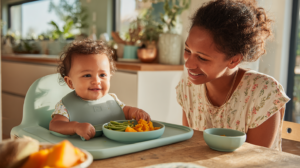
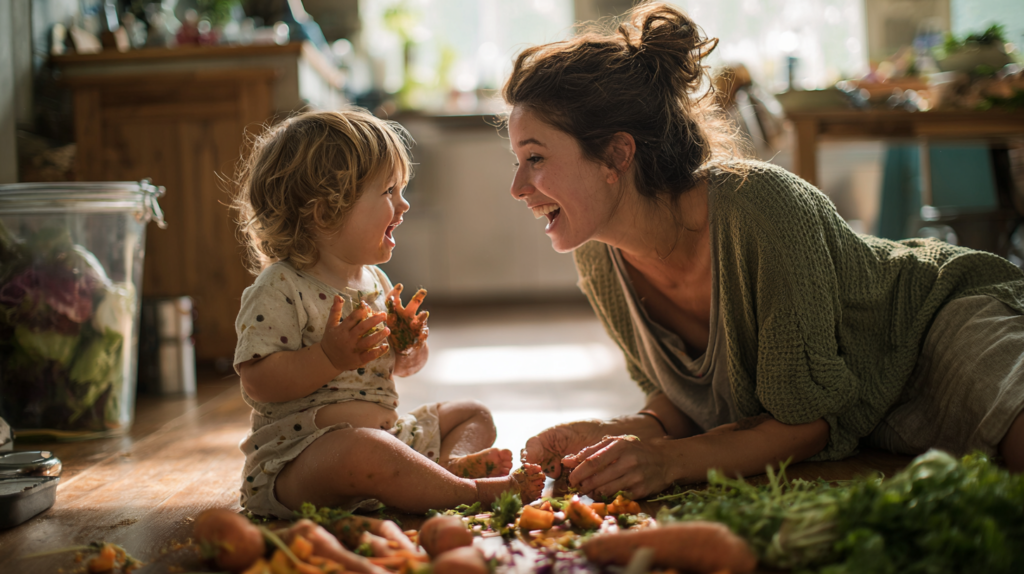
Three days ago, I watched my daughter take one bite of the perfectly steamed sweet potato I’d sourced from the farmer’s market, lovingly prepared without any plastic packaging, and then launch it across the kitchen like a tiny, eco-conscious trebuchet. As I scraped $4 worth of organic produce off the wall, I felt that familiar knot in my stomach—the one that whispers, “You’re failing at both parenting AND saving the planet.”
Here’s the thing nobody tells you when you’re pregnant and pinning zero-waste nursery ideas: the collision between your environmental values and the chaos of feeding an actual human child creates a guilt so thick, you could compost it. If you’ve ever cried over a bin full of rejected baby-led weaning meals, felt shame buying pouches after swearing you’d make everything from scratch, or wondered if you’re the worst eco-parent because your toddler will only eat from disposable plates this week—this one’s for you.
Because here’s the truth I wish someone had told me: sustainability guilt in parenting isn’t a character flaw. It’s a sign that you care deeply about two important things that sometimes refuse to cooperate. And it’s time we talked about it honestly, without the Instagram filter.
Your Sustainability Guilt Check-In
Check any statements that sound familiar. Let’s see where you’re at (no judgment, promise):
The Shocking Truth Nobody’s Talking About
Let me hit you with some numbers that might make you feel better (or at least less alone): Research from 2024 found that 70% of U.S. households consider themselves eco-friendly, while 77% want to do even more. But here’s the kicker—41% of parents cite their children as motivation for sustainable practices, yet two-thirds report parenting is harder than they expected. That gap? That’s where the guilt lives.
Food waste accounts for approximately 8% of global greenhouse gas emissions, and more than 40% of food in the United States gets wasted annually. But before you spiral into eco-despair, consider this: early childhood education centers that simply tracked their food waste reduced plate waste from 17% to 7%—just through awareness, not perfection.
The real plot twist? Parents exposed to their children’s unsustainable behaviors actually end up engaging in MORE sustainable actions as compensation. Your toddler throwing food isn’t just driving you crazy; it’s potentially motivating your entire household to level up your environmental game. Wild, right?
Baby-Led Weaning: The Sustainability Promise That Came With a Catch
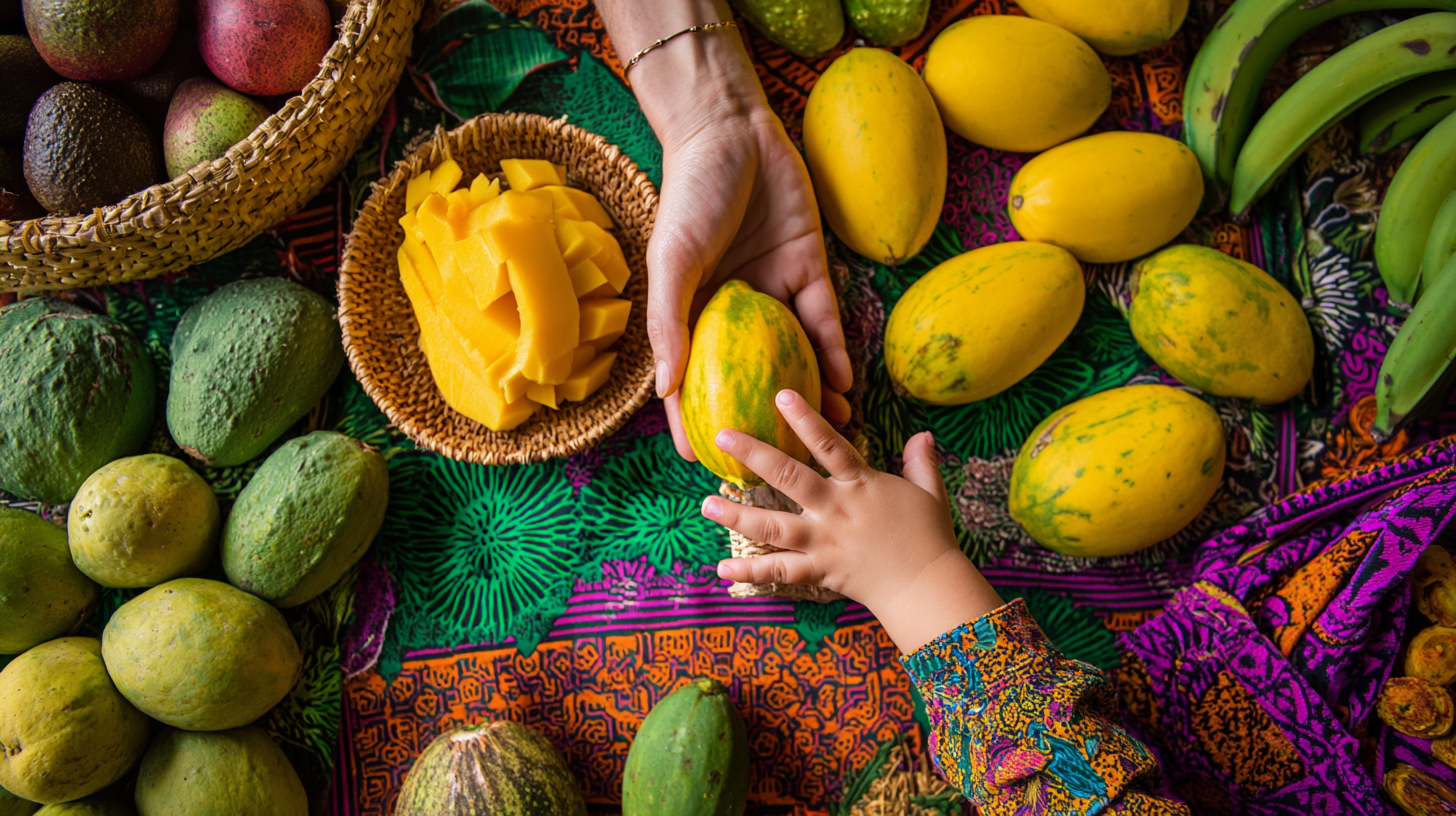
Baby-led weaning sounded like the perfect eco-solution. Skip the jarred baby food! Reduce packaging waste! Share family meals! What they don’t show you in those beautifully curated Instagram posts is the floor covered in smooshed avocado, the rejected organic produce, and the mental math you’re doing: “That’s $6 of grass-fed beef on the dog right now.”
A 2025 article in The Atlantic captured it perfectly: baby-led weaning gained popularity partly through social media, where idealized presentations don’t show the reality. Babies exploring textures drop, squish, and reject foods as part of normal development. They need 10-15 exposures before accepting new foods. That’s 10-15 opportunities for waste before success.
Here’s what the experts aren’t emphasizing enough: some food waste during self-feeding is developmental investment, not moral failure. Your baby is building motor skills, learning food properties, and developing autonomy. That broccoli on the floor? It’s not just waste—it’s education. (Though yes, it’s also waste. Both things can be true.)
Your Real-Talk Waste Calculator
Let’s get honest about what’s actually happening in your house:
How many meals per day does your toddler reject or leave mostly uneaten?
What do you do with rejected food?
The Convenience-vs-Eco-Friendly Trade-Off (And Why You’re Not a Bad Person)
Let me paint you a scene: It’s 6:47 PM. Your toddler is melting down because you put the banana in the wrong bowl. You haven’t eaten since breakfast. There’s a work deadline at 8 PM. And you’re standing in front of your pantry, holding a squeezable organic pouch in one hand and your homemade sweet potato purée in a reusable container in the other.
The pouch wins. And you know what? That’s okay.
The baby food packaging market was valued at $69.22 billion in 2023 and is projected to reach $106.75 billion by 2029. Why? Because despite growing demand for sustainable alternatives, parents need options that actually work with their lives. Nestlé introduced recyclable pouches in 2024, and Danone is investing in bio-based plastics. The industry is responding because they know what we know: perfection isn’t possible.
Research on attitude-behavior inconsistencies in sustainable choices found something fascinating: participants were aware of their inadequacies and accepted personal inconsistencies without much cognitive dissonance. In other words, we know we’re not perfect, and that’s actually a healthy psychological adaptation to impossible standards.
The magic isn’t in never using convenience products. It’s in making the strategic choices that work for your family’s capacity right now. Maybe that means you batch-cook nutrient-dense Caribbean-inspired recipes like Sweet Potato & Callaloo Rundown or Coconut Rice & Red Peas on Sundays and use pouches on chaotic weekdays. Maybe it means reusable pouches when you have energy, disposable when you don’t.
Teaching Sustainable Eating Without Traumatizing Everyone
Here’s where it gets interesting: involving children in sustainable practices actually works. Studies show that kids who participate in meal planning and food preparation help reduce household food waste. Food waste awareness campaigns in educational settings decreased waste across many food groups.
But—and this is crucial—there’s a right way and a wrong way to do this. The wrong way looks like lecturing your two-year-old about polar bears while they cry over their refused carrots. The right way looks like simple, age-appropriate involvement:
Ages 1-2: Let them scrape plates into the compost bin. It’s sensory, it’s cause-and-effect, and they’re learning without pressure.
Ages 2-3: Farmers market visits where they pick one item. “You chose the mango! Let’s make something yummy with it.” Connection over obligation.
Ages 3-4: Age-appropriate meal prep—rinsing vegetables, tearing lettuce. Increased investment in eating what they prepared.
Ages 4-5: Simple concepts like “eating the rainbow” and “feeding our compost worms.” Food literacy without eco-anxiety.
The key? Model imperfect sustainability with self-compassionate language: “We do our best, and sometimes our best includes convenience.” Your kids are watching how you handle imperfection more than they’re watching your compost system.
Small Wins That Actually Matter (Click to Reveal)
The Packaging Waste Dilemma (And What’s Actually Changing)
Let’s talk about those pouches. The global plastic baby food packaging market was valued at $7.82 billion and is projected to reach $12.65 billion by 2032. But here’s the good news buried in those numbers: a fundamental shift is occurring.
Parents are increasingly aware of environmental consequences of single-use plastics, and the industry is responding. Recyclable pouches, bio-based plastics, paperboard alternatives for dry goods—innovation is happening because we demanded it. Your guilt about packaging? It’s part of a collective pressure that’s literally changing manufacturing.
Practical strategies that work RIGHT NOW:
Hybrid Model: Reusable pouches for home, disposable for travel/emergencies. You’re not failing by having both—you’re being strategic.
Bulk Buying: Large containers of applesauce, yogurt, etc., that you portion out. Less packaging per serving, same convenience.
Community Solutions: Some areas now have baby food gear libraries. Borrow that food processor, portion trays, and dehydrator instead of buying.
Homemade Convenience: Batch-cooking culturally resonant recipes means making Caribbean Baby Food Recipe Book favorites like Plantain Paradise, Cornmeal Porridge Dreams, or Yellow Yam & Carrot Sunshine once and freezing portions. You get convenience AND tradition AND reduced packaging.
Your 30-Day Imperfect Sustainability Challenge
Check off what you’ve tried (not mastered, just TRIED). Watch your progress build:
Releasing Perfectionism (The Secret Sauce)
Here’s what nobody tells you about sustainable parenting: perfection isn’t just unnecessary—it’s actively harmful. Research on perfectionism in eco-parenting shows it acts as a systemic stressor that erodes mental well-being. Negative perfectionism (characterized by self-criticism and fear of judgment) correlates with poorer mental health outcomes.
Meanwhile, positive perfectionism—setting high standards with self-compassion—promotes mental health. The difference? Self-compassion. Permission to be imperfect.
A 2024 study on eco-guilt found something powerful: participants were aware of their inadequacies and accepted personal inconsistencies without cognitive dissonance. That’s not apathy—it’s psychological health. You can care deeply about sustainability AND accept that you’ll sometimes fall short.
The #ImperfectParenting movement on TikTok (175,000 views and climbing) represents a cultural shift. Parents are sharing relatable content about feeding children non-organic food, handling challenges authentically, and questioning whether sustainable practices are “sustainable or just stressful.”
This isn’t permission to stop caring. It’s permission to care sustainably—which means caring in a way that doesn’t break you.
Eco-Parenting Myths That Need to Die
“Good eco-parents make everything from scratch.”
The Reality: Research shows that strategic use of convenience products reduces parental burnout, which actually increases overall sustainable behaviors. An exhausted parent who crashes and orders takeaway creates more waste than someone who uses sustainable convenience products mindfully. Balance beats martyrdom every time.
“Baby-led weaning is wasteful, so it’s not eco-friendly.”
The Reality: BLW reduces reliance on packaged baby foods and teaches self-regulation that prevents picky eating long-term. The short-term waste is offset by long-term benefits: kids who learn diverse flavors early waste less food as older children and adults. Plus, composting that exploration waste means it’s nutrient cycling, not actual waste.
“If you really cared about the planet, you’d never use disposables.”
The Reality: All-or-nothing thinking leads to burnout and complete abandonment of sustainable practices. Studies show that people who practice flexible sustainability maintain their habits long-term, while perfectionists burn out and give up entirely. Strategic disposable use during high-stress periods keeps you in the game for the marathon.
“Instagram eco-parents have it all figured out.”
The Reality: Social media shows highlight reels, not reality reels. That influencer with the zero-waste nursery? She’s not showing you the disposable diapers during her postpartum depression, or the takeout containers from survival weeks. Curated content ≠ real life. Your messy middle is more authentic than their edited perfection.
What’s Coming Next (And Why It Matters)
The future of sustainable baby feeding is actually hopeful. The baby food packaging market is projected to expand to $149.34 billion by 2034, with sustainability as the dominant trend. This isn’t just consumer-driven anymore—it’s increasingly mandated by regulatory frameworks.
Industry experts predict that by 2030, single-use plastic baby food packaging will become increasingly obsolete as bio-based, compostable, and refillable systems gain market share. Circular economy infrastructure—community return and refill programs—is expanding, especially in Europe, with U.S. markets following.
Mental health professionals are recognizing eco-anxiety in children and parents as a legitimate psychological concern requiring clinical intervention. Research on climate anxiety in parent-child dyads is expanding, informing family-based interventions that support environmental values without compromising psychological well-being.
Technology-assisted waste reduction—apps that track food waste patterns, AI meal planning that adapts to toddler preferences—is becoming more sophisticated and accessible. These tools reduce decision fatigue while maintaining human connection during meals.
Most importantly? Cultural acceptance of “imperfect sustainability” is growing. The #ImperfectParenting movement represents a shift toward authenticity over perfection. This isn’t lowering standards—it’s raising them to sustainable levels.
Waste-Reducing Recipe Roulette
Got ingredients that need using? Spin for a Caribbean-inspired recipe that transforms common ingredients into something your toddler might actually eat (no promises, but worth a shot!):
Your Sustainable-Enough Feeding Framework
After all this research, here’s what actually matters. Not what’s Instagram-perfect. Not what your child-free friend with the pristine compost system thinks. What actually works for real parents feeding real toddlers in real life:
The 80/20 Rule: If 80% of your feeding choices align with your values, you’re winning. That 20%? That’s survival, and survival is sustainable.
Progress Over Perfection: Track what you’re TRYING, not what you’re mastering. Every small swap, every portion reduction, every frozen banana—it counts.
Strategic Focus: Pick 2-3 high-impact areas (like reducing meat consumption, choosing secondhand items, composting) and accept inefficiency in high-stress areas like toddler meals.
Community Infrastructure: Sustainable parenting requires infrastructure support, not just individual willpower. Join food co-ops, gear libraries, and composting programs. Collective action distributes the burden.
Cultural Connection: Making traditional recipes like Jamaican Yellow Yam & Carrot Sunshine, Trini Karhee Curry Blend, or Guyanese Cook-Up Rice connects your child to heritage while reducing reliance on packaged foods. Cultural sustainability matters too.
Permission-Based Language: “We do our best” becomes your mantra. Model self-compassion. Your kids learn more from how you handle imperfection than from your compost system.
The Permission You’ve Been Waiting For
Here’s what I wish someone had told me when I was crying over that sweet potato on the wall: You are allowed to care about the planet AND feed your kid chicken nuggets from a package when you have the flu. You are allowed to use pouches when your mother-in-law is visiting and your energy is gone. You are allowed to compost the rejected organic broccoli without self-flagellation.
The collision between environmental values and feeding realities isn’t a bug—it’s a feature of conscious parenting. That tension means you care. It means you’re thinking critically. It means you’re trying.
Research from 2025 shows that parents exposed to their children’s unsustainable behaviors actually increase their sustainable actions as compensation. Your toddler’s chaos isn’t undermining your values—it’s potentially motivating your entire household to evolve. That’s powerful.
Every day you stay in this conversation, trying imperfectly, you’re modeling something crucial: that we can hold values strongly without holding ourselves hostage to impossible standards. That sustainability is a practice, not a performance. That “good enough” parenting includes “good enough” eco-choices.
So the next time your toddler launches that lovingly prepared meal across the room, take a breath. Compost what you can. Freeze what’s salvageable. Order takeout if you need to. And remember: you’re not failing at sustainability. You’re succeeding at sustainable sustainability—which means you’re still here, still trying, still caring. And that’s the only metric that actually matters.
Because here’s the truth they don’t put on Instagram: The most sustainable thing you can do is not burn out. Your long-term engagement with environmental values matters infinitely more than your short-term perfection. So give yourself permission to be imperfect. Your toddler—and the planet—will benefit from a parent who lasts the distance more than one who crashes trying to be flawless.
Now go scrape that sweet potato off your wall, throw it in the compost, and know that you’re doing enough. You’re doing more than enough. You’re doing exactly what needs doing: caring imperfectly, consistently, and courageously.
Want more stress-free feeding solutions? The Caribbean Baby Food Recipe Book features over 75 recipes designed for batch-cooking and freezing—meaning you can make nutrient-dense meals featuring sweet potatoes, plantains, coconut milk, and mangoes ONCE and have portions ready for weeks. Less daily cooking stress = more sustainable sustainability. Plus, you’ll introduce your little one to authentic island flavors that connect them to cultural heritage. That’s sustainability on multiple levels.

Kelley's culinary creations are a fusion of her Caribbean roots and modern nutritional science, resulting in baby-friendly dishes that are both developmentally appropriate and bursting with flavor. Her expertise in oral motor development and texture progression ensures that every recipe supports your little one's feeding milestones while honoring cultural traditions.
Join Kelley on her flavorful journey as she shares treasured family recipes adapted for tiny taste buds, evidence-based feeding guidance, insightful parenting anecdotes, and the joy of celebrating food, culture, and motherhood. Get ready to immerse yourself in the captivating world of Kelley Black and unlock the vibrant flavors of the Caribbean for your growing baby, one nutritious bite at a time.
- The Feeding Revolution: Why Your Everyday Meals Are Changing the World - October 13, 2026
- Your Feeding Story Matters More Than The “Perfect” One Online - October 12, 2026
- Looking Forward: Stepping Into Your Confident Feeding Future - October 11, 2026