When Grandma’s “Secret Ingredient” Gets a Side-Eye from Your Pediatrician
Last Sunday, my mother-in-law walked into my kitchen with that knowing smile—the one that says she’s about to drop some ancestral wisdom on me whether I’m ready or not. In her hands? A jar of golden honey, destined for my six-month-old’s first taste of sweetness. My pediatrician’s voice immediately echoed in my head: “No honey before twelve months—botulism risk.”
But here’s what the pamphlets at the doctor’s office don’t tell you: that jar of honey wasn’t just honey. It was tradition. It was her mother’s mother’s recipe. It was cultural identity in a glass container. And when I gently suggested we wait a few more months, the look on her face? It wasn’t just disappointment. It was hurt—like I’d rejected everything she’d carried across oceans to give my child.
If you’re reading this, you already know this tension. You’re living it. You’re the bridge between two worlds, trying to honor the food traditions that define your family’s heritage while navigating American feeding guidelines that feel like they’re written in a completely different language. And honestly? Nobody prepared us for this particular kind of exhaustion—the emotional labor of being a cultural translator at your own dinner table.
What’s Your Biggest Feeding Tension Right Now?
Click the scenario that hits closest to home—let’s unpack it together.
Here’s what research reveals that might surprise you: 62.5% of infants in immigrant populations receive solid foods before the recommended timeframe, and it’s not because parents don’t care about safety—it’s because cultural wisdom and American guidelines are often speaking completely different languages. Studies show that among Latinx families, mothers report moderate levels of disagreement with grandparents (averaging 2.7 out of 5) about child feeding, with conflicts primarily around how much children should eat and what types of foods are appropriate.
But here’s the part that keeps me up at night: these disagreements aren’t just uncomfortable conversations. Research shows that parent-grandparent feeding conflicts significantly correlate with negative eating behaviors and higher BMI in children. When we can’t find common ground, our kids feel the tension—even if we think we’re hiding it well.
The Weight of What We Carry
Let me tell you what food means in immigrant families, because it’s never just about nutrition. Food is how we say “I love you” when words feel inadequate. It’s how we maintain connections to homelands we may never see again. It’s the taste of childhood memories, the smell of safety, the texture of belonging.
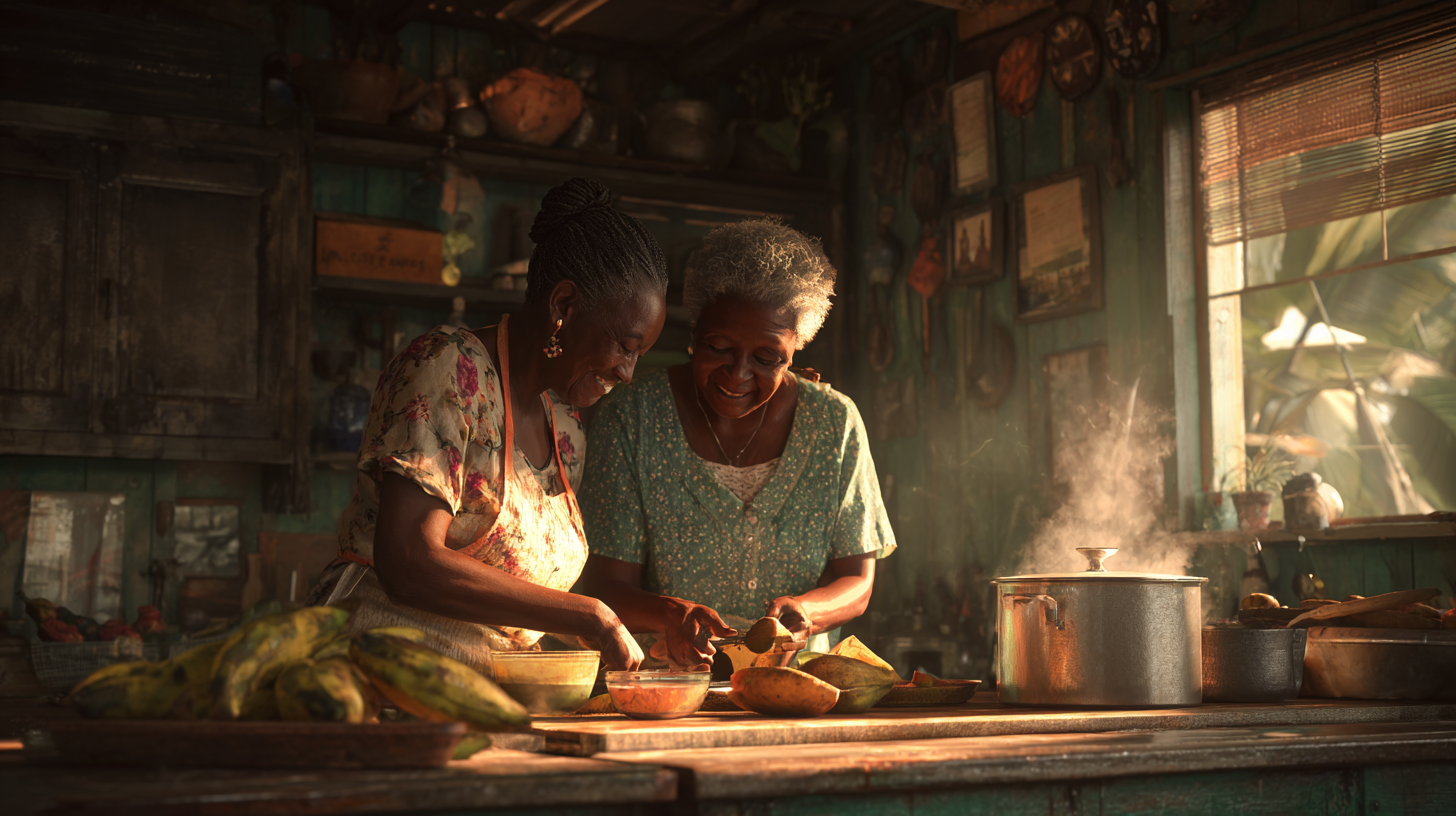
When my Jamaican grandmother makes her cornmeal porridge with cinnamon and nutmeg for Sunday breakfast, she’s not just feeding bodies—she’s feeding souls. She’s passing down recipes that survived colonization, migration, and loss. That porridge is resilience in a bowl. And when healthcare providers suggest we start with “plain rice cereal,” they’re not trying to erase culture—they genuinely don’t know what they’re asking us to give up.
Research from 2024 emphasizes something crucial: healthcare professionals must not maintain prejudices against parents whose traditional complementary feeding practices differ from Western norms. The timing and approaches to solid food introduction are deeply influenced by traditions, culture, and beliefs—and there’s often wisdom in these practices that modern guidelines are only beginning to recognize.
Consider this: French families typically start solids at 4-5 months with vegetable purees and mild herbs. Asian cultures often introduce rice porridges and soft mashed foods around 3-4 months. Many Latin American families begin with homemade soups prepared with vegetables, beans, and meats. Are all these cultures wrong? Or is the American “one-size-fits-all” approach missing something important about cultural diversity?
Click to Reveal: The Hidden History of American Feeding Guidelines
What your pediatrician probably doesn’t know about where these rules came from…
Here’s the shocking truth: Many current American feeding guidelines were developed primarily from research on white, middle-class populations in the 1970s-1990s. Immigrant families, diverse ethnic groups, and traditional practices were often excluded from the studies that created these “universal” standards.
Even more eye-opening? Research shows that dietary acculturation studies have historically “underrepresented, aggregated, or excluded racial and ethnic minority populations,” creating methodological tools that lack the capacity to effectively address immigrant dietary behaviors. The assumptions underlying many guidelines simply don’t appropriately consider the complexity of immigrant experiences.
This doesn’t mean the guidelines are wrong—honey can cause infant botulism, and food safety matters. But it means the way these guidelines are communicated often fails to acknowledge that other cultures have been safely feeding babies for thousands of years using different approaches.
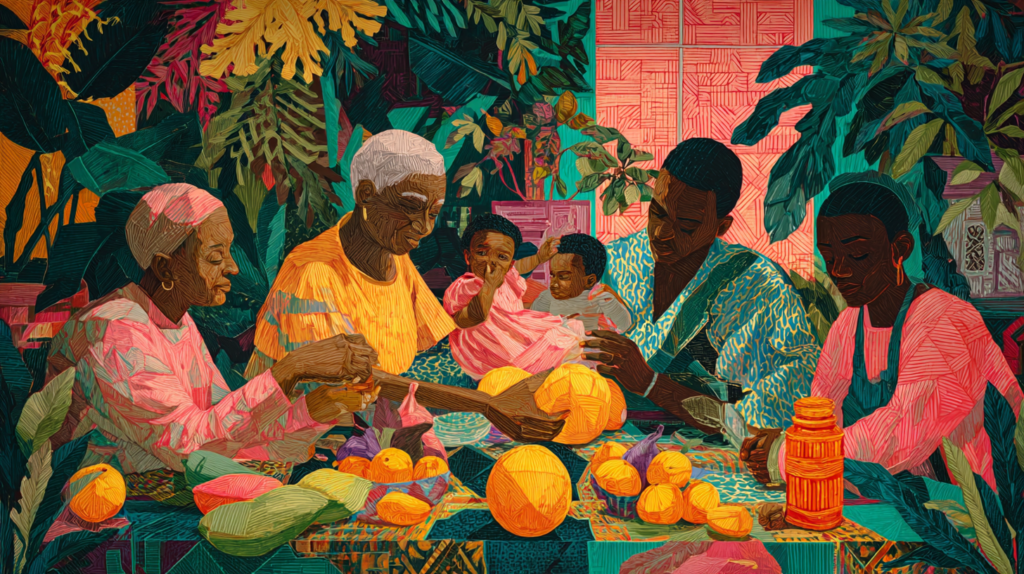
The truth is, food in immigrant families fulfills social roles that go far beyond nutrition. Feeding teaches behavioral norms like showing respect. It transmits family values across generations. It’s how children learn where they come from—not from history books, but from the taste of their great-grandmother’s recipe on their tongue.
When Two Worlds Collide at the High Chair
Let me paint you a picture of what this actually looks like in real life. It’s not dramatic arguments or slammed doors (usually). It’s subtler and somehow harder to navigate.
My friend Lucia, whose family is from the Dominican Republic, describes it perfectly: “My mother comes over to help with the baby, which I desperately need. But then I’m standing in my own kitchen watching her feed my seven-month-old mangú—mashed plantains—when we’re supposed to be introducing one new food at a time. Do I say something and risk her feeling rejected? Or do I stay quiet and stress about allergic reactions?”
The research backs up what Lucia is experiencing. Studies show that mothers’ reliance on grandparents for childcare restricts their ability to control feeding practices, creating situations where preserving access to childcare takes priority over enforcing preferred feeding guidelines. When grandparents’ positive contributions to grandchildren’s overall quality of life outweigh their negative contributions to specific health measures, mothers demonstrate less willingness to engage in feeding-related conflicts.
⚖️ Your Cultural-Medical Conflict Meter
Select situations you’re currently navigating:
And here’s another layer: language barriers. When healthcare providers hand you pamphlets in English about introducing solids, but you need to explain these concepts to grandparents who speak Spanish, Creole, Mandarin, or any of hundreds of other languages, you become the translator. And translation isn’t just about words—it’s about cultural concepts that don’t always have direct equivalents.
How do you translate “responsive feeding” to a grandmother whose culture emphasizes that a chubby baby is a healthy baby? How do you explain “baby-led weaning” to elders who were taught that adults control what and how much children eat as a sign of proper caregiving?
The Science Behind the Struggle
Let’s talk about what research actually shows about these cultural feeding tensions—because understanding the data helps us find solutions.
A comprehensive 2024 study on complementary feeding revealed something important: there’s emerging recognition that maintaining culturally relevant first foods while incorporating safety guidelines requires culturally competent counseling. Healthcare providers need to ask patients about their home cuisine and bridge gaps between recommendations and real-world implementation—but this rarely happens in rushed pediatric appointments.
Studies on Latinx grandparents’ feeding practices found that communication patterns significantly impact outcomes. Grandparent-parent communication correlates positively with grandparents’ positive feeding behaviors (like modeling healthy eating and offering vegetables), while disagreement correlates with negative practices (like offering processed foods or using unhealthy foods as rewards). Translation? How we talk matters as much as what we’re talking about.
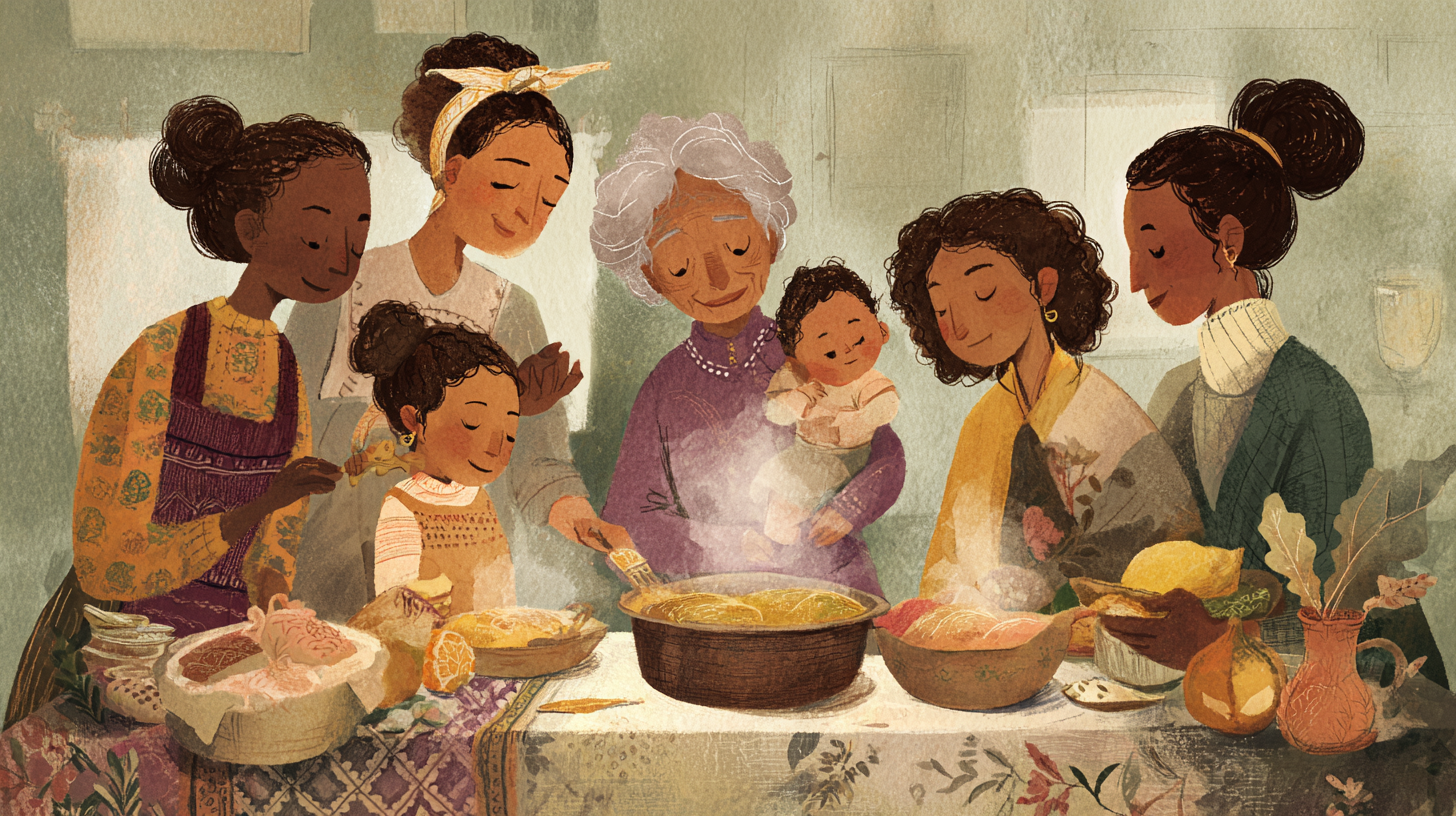
Here’s another critical finding: second-generation children acculturate more rapidly than their immigrant parents, creating an “acculturation gap” that manifests in reduced family cohesion, less frequent shared meals, and more serious arguments about food choices. When our kids start demanding chicken nuggets over traditional dishes, it’s not just about picky eating—it’s about cultural identity formation happening in real time.
And the statistics are sobering: dietary acculturation patterns show consistent trends across diverse migrant groups, with 15-20% increases in consumption of energy-dense processed foods and 10-15% decreases in traditional staples like whole grains and fresh vegetables. These dietary shifts associate with 5-10% increases in obesity risk, 7-12% rises in type 2 diabetes, and elevated cardiovascular disease rates among immigrant populations.
So the pressure to adapt to American eating patterns isn’t just coming from pediatricians—it’s coming from the entire food environment our kids are growing up in. And somehow, we’re supposed to preserve traditional foods while our children are surrounded by messaging that American food is “normal” and traditional foods are “ethnic” or “exotic.”
Real Stories from Real Families
Navigate through these scenarios—see how other families found their balance.
The Honey Dilemma – Priya’s Story (Indian-American)
“In Hindu tradition, jatakarma involves placing a small drop of honey on a newborn’s tongue—it’s meant to signify a beautiful life ahead. My mother-in-law was heartbroken when I said no. She kept saying, ‘Our families have kept this tradition for centuries and lived to tell the tale.'”
What worked: “I showed her research on infant botulism in her language, then we created a new ritual: at twelve months, we had a special ceremony where she gave my daughter her first taste of honey. She felt honored that we valued the tradition enough to adapt it rather than abandon it.”
Early Solids Pressure – Maria’s Experience (Mexican-American)
“My mother kept insisting that my four-month-old needed ‘real food’—she said babies back home always got sopita and mashed beans at this age. My pediatrician was adamant about waiting until six months. I felt torn between two experts: medical school versus life experience.”
What worked: “I brought my mother to a pediatric appointment and asked the doctor to explain developmental readiness in Spanish. When she understood it was about digestive system development, not American versus Mexican parenting, she got on board. Now she’s the one checking for sitting-up skills before offering solids!”
The Spice Debate – Chen’s Journey (Chinese-American)
“My grandmother wanted to add mild spices like ginger and a tiny bit of soy sauce to my son’s congee at eight months. The American baby food books all said ‘no salt, no seasonings’ for the first year. She felt like I was saying her cooking wasn’t good enough for her grandson.”
What worked: “I learned that small amounts of many traditional spices are actually fine and can help babies develop diverse palates. I found a Caribbean Baby Food Recipe Book that showed how to introduce traditional flavors safely—seeing that other cultures do this successfully helped my grandmother feel validated.”
Portion Size Conflicts – Yara’s Challenge (Haitian-American)
“My aunt believed a chubby baby was a healthy baby—it meant we were good providers. She’d get offended when I tried to practice responsive feeding and stop when my daughter showed fullness cues. ‘She needs to finish her plate!’ became a constant refrain.”
What worked: “I reframed it using our cultural values. I explained that teaching her to listen to her body’s signals was teaching her wisdom—something we value highly. I also shared articles about childhood obesity rates in Haitian-American communities. When she saw this as protecting her granddaughter’s future health using traditional wisdom about balance, she became my biggest ally.”
The Emotional Toll Nobody Talks About
Can we just be honest for a minute about how exhausting this is? You’re already navigating new parenthood with all its sleep deprivation and second-guessing. Now add being a cultural mediator between your family’s traditions and American medical advice. Add language translation. Add the emotional weight of potentially disappointing elders you were raised to respect unconditionally.
And here’s what really gets me: the guilt. The guilt when you choose guidelines over grandma’s wishes. The guilt when you choose tradition over what the pamphlet says. The guilt of wondering if you’re raising your children disconnected from their heritage. The guilt of worrying you’re not protecting them adequately by modern standards.
Research shows that Latina mothers caught in these tensions use strategies like agreeing to relatives’ instructions face-to-face but feeding children differently later, or using conflicts as educational opportunities. One study participant articulated it perfectly: “It is difficult at times to tell the family, ‘no.’ But we are thinking of the well-being of our children. Because our roots are very strong. But families have to learn new ways too.”
That last sentence? That’s the whole struggle right there. Our roots are strong. And families do have to learn new ways. How do we honor both truths simultaneously?
What’s Your Cultural-Medical Navigation Style?
Understanding your natural approach helps you communicate more effectively.
Finding Your Middle Path
Alright, here’s where I’m supposed to give you a neat, tidy solution that resolves all these tensions. But that would be dishonest, because there isn’t one. What there is are strategies, frameworks, and approaches that other families have used successfully—not to eliminate the tension entirely, but to navigate it with more grace and less guilt.
First, let’s talk about what culturally responsive feeding actually means. It’s not choosing between Grandma’s way and the pediatrician’s way—it’s finding the third path that honors both safety and heritage.
Take traditional foods: many can be adapted for infant safety without losing their cultural significance. That honey tradition? Save it for the first birthday and make it an even more special ceremony. Those early solid foods? Look for the overlap—many traditional first foods like mashed plantains, rice porridge with coconut milk, or pureed calabaza are actually developmentally appropriate when introduced at the right time and texture.
Speaking of which, if you’re looking for guidance on safely introducing traditional Caribbean flavors, the Caribbean Baby Food Recipe Book offers over 75 recipes that bridge this exact gap. Recipes like Calabaza con Coco (pumpkin with coconut milk), Plantain Paradise, and Cornmeal Porridge Dreams show you how to prepare traditional foods with appropriate textures and timing for different developmental stages. It’s not about choosing between culture and safety—it’s about having the knowledge to honor both.
Second, communication strategies matter enormously. Research shows that when families establish open, ongoing communication about feeding—rather than avoiding topics or only addressing them during conflicts—everyone benefits. This means proactive conversations before the baby starts solids, not reactive arguments in the moment.

Here’s a practical framework: Instead of “No, that’s not allowed,” try “Let me show you what I learned about this.” Instead of “That’s dangerous,” try “I want to honor this tradition—help me understand the significance, and then let’s figure out how to adapt it safely.” Instead of “The doctor said,” try “Did you know that baby’s digestive system is still developing? That’s why we’re waiting on certain foods—it’s not about our culture versus American culture.”
Third, involve extended family in your education process. Bring grandparents to pediatric appointments when possible. Share resources in their language—many organizations now provide bilingual feeding guidelines. The National CACFP Sponsors Association offers Spanish-language nutrition education materials. Many WIC programs have multilingual staff. Use these resources.
And here’s something that research strongly supports: family-based interventions that recruit multiple family members to help grandparents understand their impact on children’s health work better than trying to manage everything yourself. It truly takes a village—but that means the village needs to be on the same page.
Practical Strategies for Your Kitchen and Your Heart
Let’s get tactical. Here are approaches that real families have used successfully:
The “Yes, And” Method: When a grandparent suggests a traditional food, respond with “Yes, I love that idea, and let’s prepare it this way…” Then suggest the safety modification. This validates their wisdom while implementing your boundaries.
The Documentation Approach: Create a written feeding plan (in multiple languages if needed) that you share with all caregivers. Include which foods are approved, how they should be prepared, and portion guidelines. This isn’t about controlling people—it’s about ensuring consistency and safety when you’re not there.
The Honor-and-Adapt Strategy: Identify which traditions are most important to preserve, and focus your adaptation energy there. Maybe you’re flexible on timing for certain low-risk foods but firm on high-risk ones like honey. Strategic compromise prevents burnout.
The Cultural Educator Role: Position yourself as the bridge person bringing best of both worlds. Share how babies in France eat differently than American recommendations too—it’s not about erasing immigrant culture specifically; it’s about understanding there are multiple valid approaches informed by different contexts.
The Recipe Translation Project: Work with elders to document traditional recipes, then research how to adapt them for babies. This honors their knowledge while ensuring safety. The Caribbean Baby Food Recipe Book includes “Family Meal Bonus” sections for many recipes, showing how baby versions connect to full family dishes—this is exactly the kind of cultural continuity that matters.
✅ Your Cultural Feeding Harmony Action Plan
Check off steps as you complete them—watch your confidence grow.
What the Future Holds
There’s actually some encouraging movement happening in healthcare and nutrition spaces. More pediatricians are receiving training in cultural competency. Telehealth is expanding access to bilingual nutritionists who specialize in diverse cultural feeding practices. Community-based programs like “Niños Sanos, Familia Sana” (Healthy Children, Healthy Family) demonstrate that culturally adapted interventions work better than one-size-fits-all approaches.
Research published in 2024-2025 emphasizes technology-enabled nutrition support through mobile apps, SMS-based interventions, and online communities. These tools can provide personalized guidance that respects cultural preferences while ensuring safety—and they’re available in multiple languages without requiring transportation or childcare to attend appointments.
But here’s what really gives me hope: families like us, having these conversations, doing this work. Every time we successfully bridge the gap between tradition and safety, we’re creating new roadmaps for the families coming behind us. Every time we adapt rather than abandon cultural practices, we’re showing our children that they don’t have to choose between honoring where they came from and thriving where they are.
Your Kitchen, Your Rules, Your Heritage
Look, I’m not going to lie and say this gets easy. Some days, you’ll feel like you’re failing at both preserving culture and following guidelines. Some days, family gatherings will be tense. Some days, you’ll question every decision you make about what goes into your baby’s mouth.
But here’s what I’ve learned through my own journey and through talking with hundreds of other families navigating these same tensions: there is no perfect balance. There’s only the balance that works for your specific family, in your specific context, with your specific values and constraints.
Your great-grandmother fed babies successfully. Your pediatrician has important safety knowledge. Both can be true. Your job isn’t to prove one right and one wrong—it’s to synthesize the wisdom from both into a feeding approach that honors your heritage while protecting your child.
And on the days when it feels impossible? Remember that this struggle itself—this conscious effort to bridge worlds—is teaching your child something profound. You’re showing them that cultural identity isn’t fragile; it’s adaptable. You’re showing them that tradition isn’t rigid; it’s living and evolving. You’re showing them that they don’t have to choose between being authentically connected to their heritage and safely navigating the world they’re growing up in.
The food you’re feeding them isn’t just calories and nutrients. It’s connection. It’s history. It’s identity. It’s love made visible in every carefully prepared spoonful that balances what grandmother knew and what science confirms.
So yes, navigate the guidelines. Respect the safety protocols. But also make that mangú. Prepare that congee. Cook that cornmeal porridge. Adapt them as needed for developmental stages, but don’t abandon them because a pamphlet didn’t include them in its recommended first foods.
Because when your child is grown and thinking about their childhood, they won’t remember whether you introduced solids at 4 months or 6. They’ll remember the taste of their heritage on their tongue. They’ll remember family gathered around tables. They’ll remember that food was how their family said “you belong, you are loved, you are part of something bigger than yourself.”
And that? That’s worth navigating every uncomfortable conversation, every cultural tension, every moment of doubt.
Your kitchen, your rules, your heritage. Nobody gets to tell you there’s only one right way to honor all three.

Kelley's culinary creations are a fusion of her Caribbean roots and modern nutritional science, resulting in baby-friendly dishes that are both developmentally appropriate and bursting with flavor. Her expertise in oral motor development and texture progression ensures that every recipe supports your little one's feeding milestones while honoring cultural traditions.
Join Kelley on her flavorful journey as she shares treasured family recipes adapted for tiny taste buds, evidence-based feeding guidance, insightful parenting anecdotes, and the joy of celebrating food, culture, and motherhood. Get ready to immerse yourself in the captivating world of Kelley Black and unlock the vibrant flavors of the Caribbean for your growing baby, one nutritious bite at a time.
- The Feeding Revolution: Why Your Everyday Meals Are Changing the World - October 13, 2026
- Your Feeding Story Matters More Than The “Perfect” One Online - October 12, 2026
- Looking Forward: Stepping Into Your Confident Feeding Future - October 11, 2026