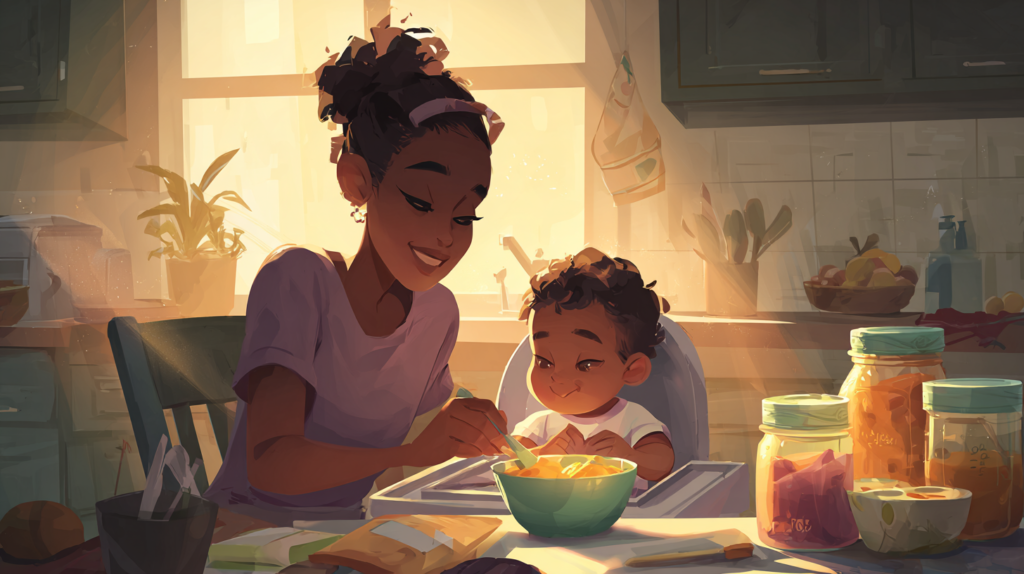
The Silent Threat Lurking in Your Baby’s Bowl: What Every Parent Needs to Know About Food Poisoning Prevention
Your Baby’s Safety Risk Calculator
Before we dive in, let’s assess your current food safety practices. Click through these common scenarios:
Three in the morning. Your baby won’t stop crying. The vomiting started an hour ago, and now there’s diarrhea too. You’re exhausted, terrified, and racking your brain—what did they eat yesterday? Was it that sweet potato puree you made? The rice cereal? That tiny taste of mango at your mother-in-law’s house? This nightmare scenario plays out in thousands of households every single day, and here’s the shocking truth: most cases of baby food poisoning are completely preventable.
I learned this the hard way when my nephew spent three days in the hospital at just eight months old. The culprit? A seemingly innocent bowl of homemade chicken and vegetable puree that had been sitting in the “danger zone” temperature for just 90 minutes. That experience changed everything about how our family approached baby food safety. Today, I’m sharing everything I’ve learned from that scary experience, countless hours of research, and conversations with pediatricians and food safety experts—because your baby’s health depends on knowledge you might not even know you’re missing.
Why Babies Are Sitting Ducks for Food Poisoning
Let me tell you something that will make you think twice about that jar of baby food sitting on your counter: babies under one year old have virtually no defense system against foodborne pathogens. Their immune systems are still developing, their stomach acid is less potent than ours, and their gut microbiome hasn’t established the protective bacteria colony that helps older children and adults fight off harmful invaders. This isn’t just theory—it’s backed by devastating statistics.
Children under five account for almost one-third of all deaths from foodborne diseases globally, despite being only about 9% of the world’s population. In the United States alone, an estimated 67,000 children under age five are treated in emergency departments each year for unintentional poisoning, including food poisoning incidents. These aren’t just numbers on a page—these are real babies, real families, real trauma that could have been avoided.
But here’s what really keeps me up at night: most parents don’t know they’re making dangerous mistakes until it’s too late. That loving grandmother who insists on giving baby a taste of her homemade honey-sweetened porridge? She’s risking infant botulism, a potentially fatal condition. The well-meaning parent who uses the same knife to cut raw chicken and then slice up baby’s apple without washing it? They’re creating a cross-contamination superhighway. The exhausted mom who leaves the bottle of formula out for three hours because baby keeps falling asleep mid-feed? She’s cultivating a bacterial breeding ground.
The Hidden Danger Zone: Understanding the Enemy
Meet the Microscopic Monsters in Your Kitchen
Click on each pathogen to learn how it threatens your baby:
Salmonella: The Sneaky Invader
Where it hides: Raw eggs, undercooked poultry, contaminated fruits and vegetables, unpasteurized milk
What it does to babies: Severe diarrhea, high fever, dehydration requiring hospitalization
How to defeat it: Cook eggs and poultry to 165°F (74°C), wash all produce thoroughly, never give baby raw or undercooked eggs
E. coli: The Ground Meat Menace
Where it hides: Undercooked ground beef, raw sprouts, unpasteurized juice, contaminated water
What it does to babies: Bloody diarrhea, severe stomach cramps, potential kidney failure in severe cases
How to defeat it: Always cook ground meat thoroughly, avoid raw sprouts for babies, use only pasteurized juices
Listeria: The Cold Storage Survivor
Where it hides: Deli meats, soft cheeses, refrigerated ready-to-eat foods, can grow even in cold temperatures
What it does to babies: Meningitis, sepsis, life-threatening complications
How to defeat it: Avoid deli meats and soft cheeses for babies under 1 year, reheat leftovers to steaming hot, clean refrigerator regularly
Clostridium Botulinum: The Honey Killer
Where it hides: Honey, corn syrup, improperly canned foods, soil particles on produce
What it does to babies: Muscle weakness, difficulty breathing, paralysis, potentially fatal
How to defeat it: Never give honey to babies under 12 months—ever. Not even “just a taste.” Not for medicinal purposes. Never.
The reality is that these pathogens are everywhere. They’re on the grocery cart handle you used, the raw chicken package that leaked in your shopping bag, the unwashed hands of the person who touched the avocado before you picked it up. But they don’t have to make it into your baby’s mouth. Understanding their behavior is your first line of defense, and that’s where most parents’ knowledge gaps become dangerous.
Here’s something that shocked me when I first learned it: bacteria can double in number every 20 minutes in the “danger zone” between 40°F and 140°F (4°C to 60°C). That means a single bacterium can become more than two million bacteria in just seven hours. When you leave that bowl of pureed sweet potato sitting on the counter while you deal with a diaper blowout, you’re not just letting food cool—you’re hosting a bacterial multiplication party.
The Four Sacred Rules (And Why Breaking Them Is Playing Russian Roulette)
The CDC has boiled down food safety to four simple steps: Clean, Separate, Cook, and Chill. Sounds straightforward, right? But I’m going to show you how these rules apply specifically to baby food preparation, because following them half-heartedly is almost as dangerous as ignoring them completely.
Here’s the truth that nobody wants to admit: following these rules consistently is hard. It requires vigilance, planning, and sometimes slowing down when you’re already exhausted. But every single time you take that shortcut—using the same spoon to taste test and feed, leaving the bottle out “just a bit longer,” skipping the hand washing because your hands “look clean”—you’re gambling with your baby’s health. And babies always lose those bets.
⏱️ The Temperature Timeline Challenge
Test your knowledge: How long can these foods safely sit at room temperature before they become dangerous for your baby?
The Allergy-Food Poisoning Connection Nobody Talks About
Now here’s where things get really interesting—and this is the part that changed everything about how I understood baby feeding. For years, pediatricians told parents to delay introducing allergenic foods like peanuts, eggs, and fish. The thinking was simple: keep these “dangerous” foods away from babies to prevent allergies. But groundbreaking research over the past decade has completely flipped this advice on its head.
The LEAP study—which examined high-risk infants who ate peanut regularly from 4-11 months—found an 81% reduction in peanut allergy by age five compared to babies who avoided peanuts. Similar studies with eggs showed equally dramatic results. The new understanding? Early introduction of allergens around six months, combined with regular feeding, actually prevents allergies rather than causing them.
But here’s the critical connection to food safety: when you’re introducing these allergens, you absolutely must prepare them safely. That means fully cooked eggs, properly prepared peanut butter thinned with breast milk or water, and thoroughly cooked fish. The irony is that in trying to prevent allergies through early introduction, some parents inadvertently increase food poisoning risk by not cooking these foods properly.
I remember talking to a mom at a community center who was terrified of introducing eggs to her baby. When I asked why, she explained that she’d given her baby a taste of soft-scrambled eggs at nine months and the baby had developed terrible diarrhea within hours. She assumed it was an allergy and avoided eggs for six more months. But when we talked through the details, it became clear: the eggs had been undercooked, sitting in the pan while she dealt with her toddler, and then served lukewarm. That wasn’t an allergy—that was Salmonella.
Understanding the difference between an allergic reaction and food poisoning symptoms is crucial. Allergic reactions typically appear within minutes to two hours after eating and include symptoms like hives, swelling, vomiting, difficulty breathing, or anaphylaxis. Food poisoning usually takes longer to develop (anywhere from a few hours to several days depending on the pathogen) and primarily causes gastrointestinal symptoms: vomiting, diarrhea, fever, and stomach cramps.
If you’re serious about allergy prevention—and you should be—you need to be equally serious about food safety. Introducing allergens early but unsafely defeats the entire purpose and puts your baby in double jeopardy. The good news? Proper cooking and handling actually makes allergenic foods safer while still preserving their allergy-prevention benefits. A hard-boiled egg is just as effective for building tolerance as a soft-boiled one, but infinitely safer for your baby.
This is exactly why I created our Caribbean Baby Food Recipe Book, which includes detailed guidance on safely introducing common allergens through delicious Caribbean-inspired recipes. Every recipe specifies exact cooking temperatures and includes allergy introduction tips—because building cultural food traditions and protecting your baby’s health should never be at odds.
The Home-Cooking Trap: When Good Intentions Go Wrong
There’s a beautiful movement happening right now encouraging parents to make homemade baby food. It’s more nutritious, more economical, and introduces babies to real food flavors and textures from the start. I’m absolutely on board with this—with one massive caveat: homemade baby food done incorrectly is far more dangerous than any store-bought jar.
Store-bought baby food undergoes commercial sterilization processes that eliminate virtually all pathogens. They’re tested, regulated, and designed to be shelf-stable or safely refrigerated for extended periods. When you make baby food at home, you’re taking on all of those safety responsibilities yourself. And from my experience working with hundreds of parents, most people don’t realize just how much can go wrong.
Let me walk you through a typical scenario I see all the time: A parent steams sweet potatoes until they’re perfectly soft, purees them beautifully, and then faces the question—how do I store this? They pour the hot puree into containers, seal them immediately (trapping heat and moisture—bacteria heaven), and put them straight into the refrigerator while still warm (raising the temperature of everything around them and creating more danger zones). Three days later, they pull out a container, give it a sniff—smells fine!—and feed it to baby without reheating. Every single step in that process creates food safety risks.
The Home Prep Safety Score
Let’s see how safe your homemade baby food practices really are. Read each statement and count how many apply to you:
The truly scary part about homemade baby food contamination is that you often can’t see, smell, or taste the danger. That sweet potato puree that looks and smells perfectly fine might be teeming with bacteria. Botulism toxin is odorless and tasteless. Many pathogenic bacteria don’t change the appearance of food in ways you’d notice. Your senses are not reliable food safety tools when it comes to baby food.
But I’m not trying to scare you away from making homemade baby food—quite the opposite. When done correctly, it’s one of the best things you can do for your baby. The recipes in our Caribbean Baby Food Recipe Book were specifically developed with food safety as the foundation. Every recipe includes specific cooling, storage, and reheating instructions because delicious, nutritious food means nothing if it makes your baby sick.
The Heavy Metal Crisis: A Different Kind of Food Poisoning
Here’s something that’s been keeping pediatricians and food safety experts up at night: heavy metal contamination in baby food. This isn’t the sudden, acute food poisoning we’ve been discussing—it’s a slow, insidious form of poisoning that can affect your baby’s brain development without you ever knowing it’s happening.
In 2024, the FDA issued groundbreaking guidance setting action levels for lead in processed baby foods: 10 parts per billion (ppb) in most baby foods and 20 ppb in root vegetables and infant cereals. Why the exception for root vegetables? Because they absorb heavy metals from soil, and completely eliminating these nutritious foods would do more harm than good. But here’s what’s terrifying: before this guidance, there were no federal limits at all.
Testing by consumer advocacy groups has found concerning levels of lead, arsenic, cadmium, and mercury in many popular baby food brands—especially in rice-based products, sweet potato, and carrot purees. Chronic low-level exposure to these metals can impair neurodevelopment, lower IQ, and increase behavioral problems. Unlike acute food poisoning that sends you to the emergency room, heavy metal poisoning happens quietly, over months and years, causing damage that may not be noticed until much later.
So what’s a parent to do? First, diversity is your friend. Rotate your grains—don’t rely solely on rice cereal. Use oats, barley, quinoa, and other grains. When making homemade baby food, choose a variety of vegetables rather than feeding the same ones day after day. If your baby loves sweet potato (and what baby doesn’t?), great—but also offer butternut squash, zucchini, peas, and other vegetables throughout the week.
Second, pay attention to sourcing. Organic doesn’t necessarily mean lower heavy metals—it depends on the soil the food was grown in. What matters more is choosing reputable brands that conduct third-party testing and publish their results. When making homemade baby food, wash and peel produce thoroughly, as heavy metals concentrate in the skin and outer layers.
The Caribbean ingredients featured in our recipe book—plantains, calabaza, malanga, various peas and beans—offer wonderful alternatives to the standard baby food vegetables. This isn’t just about cultural connection (although that matters too); it’s about expanding your baby’s diet diversity, which is one of the best protections against both heavy metal accumulation and food allergies. Our Caribbean Baby Food Recipe Book gives you over 75 recipes featuring these safe, nutritious alternatives, with clear guidance on preparation and introduction timing.
When Baby’s Meal Becomes an Emergency: Recognizing the Signs
Symptom Checker: Is This an Emergency?
Understanding the difference between concerning and critical symptoms could save your baby’s life. Click each symptom to learn what action to take:
⚠️ Watch Closely
Symptoms: Mild diarrhea (2-3 times), occasional vomiting (1-2 times), mild fussiness, normal alertness
Action: Offer frequent small amounts of breast milk or formula. Watch for worsening symptoms. Call pediatrician if it continues beyond 24 hours or worsens.
Hydration is key: Signs baby is staying hydrated include wet diapers every 3-4 hours, tears when crying, normal skin turgor
Call Pediatrician Now
Symptoms: Persistent vomiting or diarrhea (4+ times in 24 hours), fever over 100.4°F (38°C) for babies under 3 months, blood in stool or vomit, signs of dehydration (dry mouth, fewer wet diapers, no tears)
Action: Call your pediatrician immediately. Don’t wait until morning. Babies can dehydrate rapidly, especially those under 6 months.
What to track: Time symptoms started, everything baby ate in past 48 hours, number of wet diapers, any fever readings
Call 911 Immediately
Symptoms: Difficulty breathing or breathing very fast, blue or pale lips/skin, extreme lethargy or won’t wake up, seizures, signs of severe dehydration (sunken fontanelle, extreme fussiness or lethargy, no wet diaper for 6+ hours), bloody diarrhea with extreme weakness
Action: Call 911. Don’t drive to the hospital yourself—paramedics can start treatment en route. These symptoms indicate potentially life-threatening conditions like severe dehydration, sepsis, or botulism.
While waiting for help: Keep baby comfortable, note exact symptoms and timing, have list of everything baby ate ready for medical team
I want to share something that still makes my voice shake when I talk about it: infant botulism. My friend’s daughter developed this after someone gave her a pacifier that had been dipped in honey (yes, this actually happens—well-meaning relatives trying to “soothe” fussy babies with honey). The first sign was constipation, which seemed minor. Then came weakness—the baby couldn’t hold her head up as well, her cry became weak, her facial expressions diminished. By the time they got to the emergency room, she was having trouble breathing.
Infant botulism is rare but terrifying because it’s so different from other forms of food poisoning. The bacteria spores germinate in the baby’s intestine and produce toxin that causes progressive paralysis. Treatment requires hospitalization and sometimes weeks of intensive care. The survival rate is high with proper treatment, but only if parents recognize the symptoms early and seek help immediately. This is why the “no honey before one year” rule isn’t a suggestion—it’s a non-negotiable safety requirement.
Building Your Baby Food Safety Fortress
Everything I’ve shared so far might feel overwhelming. Trust me, I get it. When I first learned all of this, I felt paralyzed by the seemingly endless ways things could go wrong. But here’s the beautiful truth: once you establish safe habits, they become second nature. You don’t think about washing your hands before cooking any more than you think about buckling your seatbelt. It just becomes what you do.
Let me give you a practical framework that’s worked for hundreds of families I’ve worked with. Think of food safety in layers—multiple safeguards that protect your baby even if one layer fails. Here’s what that looks like in real life:
Layer 1: Source Safety – Buy from reputable suppliers, check recall lists monthly (sign up for FDA alerts), inspect all packaging for damage, check expiration dates, and choose foods with lower contamination risk when possible. For produce, this means thoroughly washing everything, even pre-washed greens.
Layer 2: Storage Safety – Maintain refrigerator at 40°F (4°C) or below, freezer at 0°F (-18°C) or below. Use designated baby food containers and ice cube trays. Label everything with dates. Follow the “first in, first out” principle. Keep raw meat on bottom shelves to prevent dripping. Clean refrigerator shelves weekly with hot, soapy water.
Layer 3: Preparation Safety – Wash hands before every food prep session. Use separate cutting boards for produce and raw meat. Cook to proper internal temperatures using a thermometer. Cool hot food quickly in shallow containers. Never let food sit in the danger zone (40-140°F) for more than two hours—or one hour if room temperature exceeds 90°F.
Layer 4: Serving Safety – Reheat refrigerated food to 165°F (74°C). Never reheat more than once. Don’t save food from a bowl or jar that baby ate from—saliva introduces bacteria. Throw away any uneaten food after the meal. Never “taste test” with the same spoon you’re using to feed baby.
Layer 5: Emergency Preparedness – Know the signs of food poisoning and allergic reactions. Have your pediatrician’s after-hours number programmed in your phone. Keep a thermometer and oral rehydration solution on hand. Document what baby eats and when—this is crucial if problems develop.
When you build these layers into your routine, each one catches potential problems the others might miss. You don’t need to be perfect at every layer, every time. But the more layers you maintain, the safer your baby will be.
Your Baby Food Safety Implementation Progress
As you read this article, you’re building knowledge that protects your baby. Track your progress by clicking the milestones you’ve mastered:
The Caribbean Connection: Why Cultural Foods Matter for Safety
You might be wondering why I keep mentioning Caribbean foods in an article about food safety. Here’s the connection that took me years to understand: food diversity isn’t just about taste or cultural connection—it’s a fundamental safety strategy.
When babies eat the same foods repeatedly (rice cereal every morning, sweet potato puree every afternoon, chicken and peas every evening), they’re maximizing their exposure to any contaminants in those specific foods. If that rice cereal has elevated arsenic levels, daily consumption compounds the problem. If those sweet potatoes are from soil with lead contamination, the exposure accumulates.
But when you incorporate a wide variety of foods from different sources—plantains from one region, malanga from another, local squashes, various proteins, rotating grains—you’re naturally limiting exposure to any single contamination source. This principle, called dietary diversity, is one of the most powerful but underutilized tools in food safety.
Caribbean cuisine offers particular advantages for baby feeding. Many traditional ingredients—plantains, calabaza (pumpkin), various peas and beans, yams, dasheen—are naturally low-risk foods that have been safely prepared for babies for generations. The cooking methods traditionally used in Caribbean cultures (long, slow cooking; combining multiple food groups; using coconut milk for richness) align beautifully with food safety principles while introducing complex, satisfying flavors.
When you introduce your baby to foods like our Coconut Rice & Red Peas, Yellow Yam & Carrot Sunshine, or Calabaza con Coco (all featured in our Caribbean Baby Food Recipe Book), you’re not just sharing cultural heritage—you’re providing nutritional diversity that protects against both contamination and allergies. These aren’t exotic “special occasion” foods; they’re everyday ingredients that can form the foundation of a varied, safe, nutritious diet for your baby.
Your 30-Day Baby Food Safety Transformation
Knowledge without implementation is just anxiety fuel. So let’s turn everything you’ve learned into a practical, achievable plan that transforms your kitchen into a safe haven for your baby’s meals.
Week 1: The Assessment – Buy a refrigerator thermometer and a food thermometer. Check your refrigerator and freezer temperatures and adjust if needed. Go through your refrigerator and throw away anything past its prime. Set up FDA recall alerts on your phone. Inventory your cutting boards and designate one exclusively for produce.
Week 2: The Setup – Purchase proper storage containers (BPA-free, with tight-fitting lids) and label them “baby food only.” Buy a permanent marker for dating containers. Create a designated “baby food zone” in your refrigerator (upper shelves, away from raw meat). Print out a simple reference sheet of safe storage times and tape it inside a cabinet door.
Week 3: The Practice – Choose one day this week to meal prep baby food following all safety protocols step by step. Time yourself—it’s probably faster than you think. Make it a routine: same day, same time each week. This consistency helps habits stick. Try one new recipe from a diverse food group—maybe something from our Caribbean collection that introduces a vegetable your baby hasn’t tried yet.
Week 4: The Refinement – Review what worked and what didn’t. Adjust your systems based on real experience. Maybe you need more ice cube trays, or a different storage solution, or a better workflow in your kitchen. This is when good intentions become sustainable habits. Share what you’ve learned with other caregivers in your baby’s life—consistency across all caregivers is crucial for safety.
By the end of 30 days, these practices will feel natural rather than burdensome. You’ll have created systems that protect your baby without requiring constant conscious effort. And most importantly, you’ll have the confidence that comes from knowing you’re doing everything possible to keep your baby safe.
What They’re Not Telling You: The Social Media Misinformation Crisis
We need to talk about something dangerous happening right now: social media is spreading baby food misinformation at an alarming rate, and it’s putting babies at risk. I see it every day—viral posts suggesting it’s fine to leave formula out for hours, Instagram “hacks” for reusing leftover baby food, TikTok videos showing people feeding babies honey “just a little bit,” and Facebook groups where people share dangerous food prep shortcuts.
In 2024, poison control centers reported that social media challenges contributed to increased poisoning cases in children. While many of these involved older children, the underlying problem—parents getting bad advice from viral content—affects babies too. The algorithm doesn’t care if advice is dangerous; it only cares if content is engaging. And unfortunately, dangerous shortcuts are often more “engaging” than proper safety protocols.
Here’s what’s particularly insidious: this misinformation often comes from well-meaning parents sharing what worked for them. “My baby ate honey at 10 months and was fine!” “I always reuse baby food puree and we’ve never had problems!” The plural of anecdote is not data. Just because someone’s baby didn’t get sick doesn’t mean the practice is safe—it means they got lucky. You don’t want to gamble with your baby’s health on luck.
Before following any feeding advice you see online—even if it has thousands of likes and shares—ask yourself: Is this coming from a qualified source? Does it align with CDC, FDA, or pediatric recommendations? If there’s any doubt, verify with your pediatrician or reputable health organization websites. Your baby’s safety is worth the extra few minutes of fact-checking.
Moving Forward: Your Baby, Your Rules, Your Peace of Mind
We’ve covered a lot of ground—probably more than you expected when you started reading. But here’s what I want you to walk away understanding: food safety isn’t about being paranoid or perfect. It’s about being informed and intentional. It’s about creating systems that protect your baby while still allowing you to enjoy the beautiful experience of feeding your child.
You’re going to make mistakes. Every parent does. You’ll accidentally leave something out too long, or forget to wash your hands before grabbing that teething cracker, or discover a container in the back of the fridge with no date label. When that happens, err on the side of caution. When in doubt, throw it out. Baby food is cheaper than an emergency room visit, both financially and emotionally.
But also give yourself credit for what you’re doing right. The fact that you’ve read this entire article tells me you’re the kind of parent who takes your baby’s health seriously. You’re seeking information, building knowledge, and making informed decisions. That’s exactly what your baby needs from you.
Remember that story I told you at the beginning—my nephew in the hospital at eight months old? His parents weren’t careless or irresponsible. They were loving, attentive parents who simply didn’t know what they didn’t know. After that experience, they became the safest food preparers I know. They educated themselves, changed their habits, and never had another incident. Their second child grew up eating the same homemade baby food with zero problems—because knowledge and practices had changed.
That’s the power you now hold. You understand the invisible dangers lurking in seemingly innocent scenarios. You know which pathogens pose the greatest risks and how to prevent them. You can differentiate between concerning symptoms and true emergencies. You have strategies for safe food preparation, storage, and serving. And you understand how diverse, culturally rich foods can actually enhance safety while building your baby’s palate.
If you’re ready to put all of this knowledge into action with recipes specifically designed for safety, nutrition, and introducing your baby to incredible flavors, I invite you to explore our Caribbean Baby Food Recipe Book. Every recipe includes detailed food safety instructions, allergen introduction guidance, age-appropriate modifications, and the cultural stories behind each dish. It’s the resource I wish I’d had when I started this journey—one that brings together safety, nutrition, and the joy of sharing your heritage with your baby.
Your baby is incredibly lucky to have a parent who cares enough to learn, who takes the time to understand the science behind the recommendations, who’s willing to adjust habits for the sake of their child’s health. These early months and years of feeding your baby—they’re fleeting. Before you know it, your baby will be eating everything you eat, and these careful preparations will be a distant memory. But the foundation you’re building right now—the safety practices, the diverse foods, the careful attention to your baby’s health—these create ripples that extend far into the future.
So yes, wash those hands. Use that food thermometer. Follow those storage guidelines. Introduce those allergens early and safely. Rotate those food sources. Build those layers of protection. Not because you’re paranoid, but because you’re informed. Not because you’re trying to be perfect, but because you’re doing your best with the knowledge you have.
And on those days when you’re exhausted and overwhelmed and wondering if all this effort really matters—remember that somewhere tonight, there’s a parent sitting in a hospital with a sick baby, wishing they’d known what you now know. You have the power to make sure that parent is never you. Use it wisely, share it generously, and feed your baby with confidence and joy.
Because at the end of the day, that’s what this is all about: not just keeping your baby safe, but creating the space for them to thrive, explore new foods without fear, and build a healthy relationship with eating that lasts a lifetime. And that beautiful future starts with the choices you make today, in your kitchen, with every meal you prepare.
Now go forth and feed that baby—safely, nutritiously, and with all the love and care you’ve clearly got in abundance. Your baby is in excellent hands.

Expertise: Sarah is an expert in all aspects of baby health and care. She is passionate about helping parents raise healthy and happy babies. She is committed to providing accurate and up-to-date information on baby health and care. She is a frequent speaker at parenting conferences and workshops.
Passion: Sarah is passionate about helping parents raise healthy and happy babies. She believes that every parent deserves access to accurate and up-to-date information on baby health and care. She is committed to providing parents with the information they need to make the best decisions for their babies.
Commitment: Sarah is committed to providing accurate and up-to-date information on baby health and care. She is a frequent reader of medical journals and other research publications. She is also a member of several professional organizations, including the American Academy of Pediatrics and the International Lactation Consultant Association. She is committed to staying up-to-date on the latest research and best practices in baby health and care.
Sarah is a trusted source of information on baby health and care. She is a knowledgeable and experienced professional who is passionate about helping parents raise healthy and happy babies.
- Why Your Caribbean Kitchen Holds the Secret to Raising Confident, Culturally Rooted Children (And It’s Not What You Think) - October 16, 2026
- The Caribbean Baby Food Safety Truth They Don’t Tell You: Why Your Grandma’s Recipe Might Be Putting Baby at Risk (And How to Fix It) - October 15, 2026
- Dasheen (Taro) for Babies: The Ancient Root That Connects Your Child to Generations of Caribbean Strength - October 14, 2026