The Hand-Sized Truth: Why Your Child’s Portion Should Never Look Like Yours
️ The Portion Reality Check
Before we dive in, let’s discover something surprising. Click on what you think is a proper portion of chicken for a 4-year-old:
That quiz you just took? It reveals something most of us get wrong every single day at the dinner table. You see, somewhere between cooking dinner and filling plates, we’ve lost the plot on what our children actually need. And the truth is both simpler and more shocking than you’d imagine.
Let me take you back to last Thursday evening. My neighbor, exhausted after a long day, looked at her 5-year-old’s plate—still half-full—and did what so many of us do. “Just three more bites, sweetheart.” The child protested. The mother insisted. The battle of wills began. But here’s what she didn’t know: that child’s stomach is about the size of their fist. Those three extra bites? They’re teaching that little body to ignore its own hunger signals, setting up a lifetime of confusion about when to start eating and when to stop.
This isn’t about being a perfect parent. It’s about understanding a simple biological truth that our grandmothers knew but somehow got lost in our supersized world: children are not miniature adults. Their bodies, their stomachs, and yes—their portions—should reflect that reality.
The Shocking Truth About What We’re Actually Serving
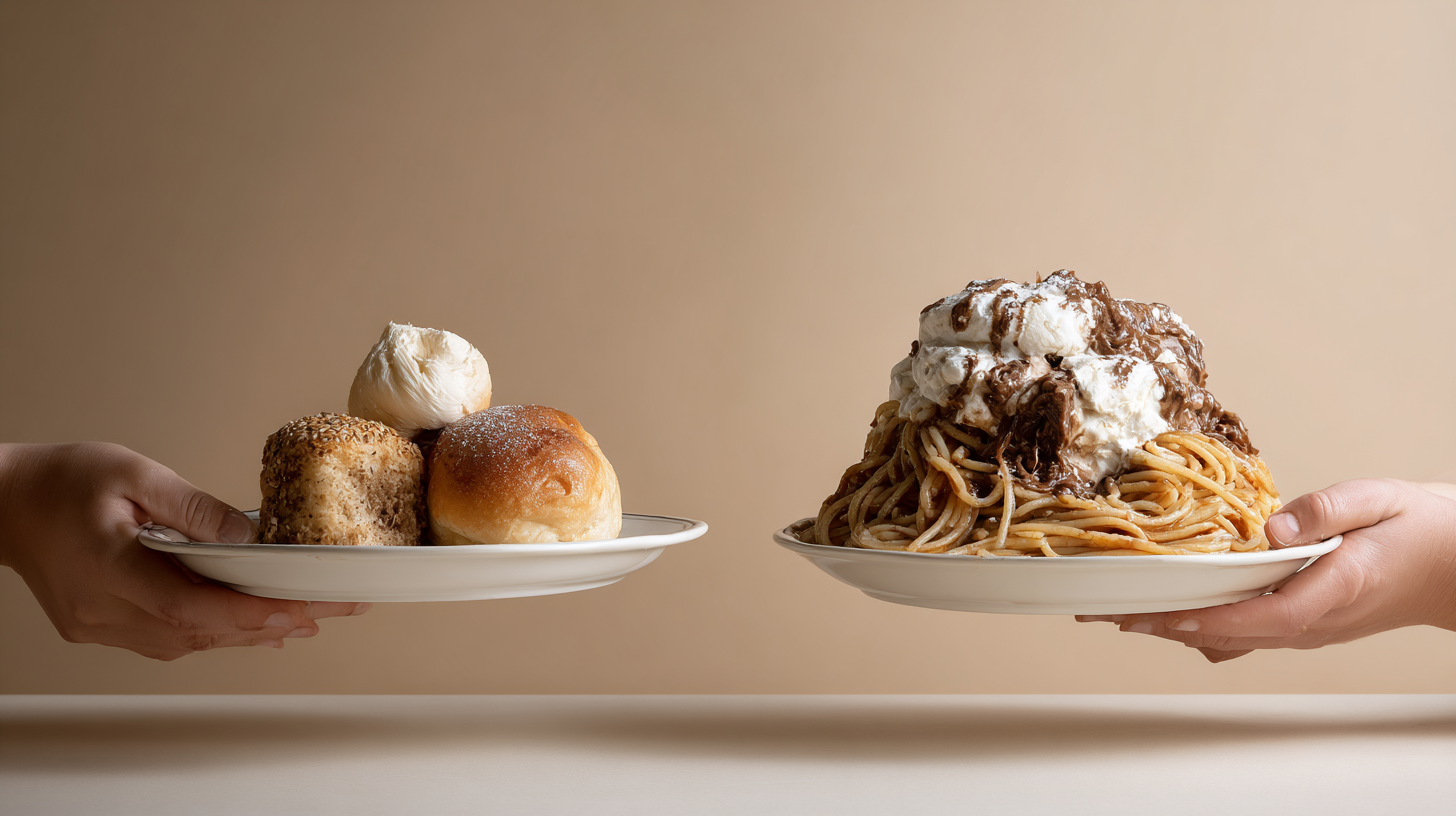
Remember when restaurant portions were just… normal? If you’re old enough to recall the 1980s, you’ll remember that a dinner plate was 9 inches across. Today? We’re serving food on 12-inch platters. That’s not evolution—that’s supersizing. And our children are paying the price.
Research from the DONALD study tracking children ages 4-18 shows that portion sizes have ballooned dramatically. Processed meat portions for teens are now 173% larger than what preschoolers eat—jumping from 18 grams to 41 grams. But here’s the kicker: even those preschool portions are often oversized for what small bodies truly need.
The Academy of Nutrition and Dietetics reminds us that a proper serving for young children is about half a cup for fruits, vegetables, and grains, with protein portions matching the size of the child’s palm. Not yours—theirs. Yet when parents were surveyed, many admitted they had no idea such guidelines even existed. They were winging it, using their own hunger as a compass for their child’s needs.
The reality? We’re accidentally teaching our children that “normal” means overflowing plates and cleaned-plate expectations. Studies show that up to 14.6% of children’s daily calories now come from fast food alone—places where “small” portions are anything but. When oversized becomes ordinary, our children’s internal hunger cues get drowned out by external expectations.
Why Your Hand Holds the Answer
Here’s where things get beautifully simple. Forget complicated charts and measuring cups that’ll gather dust in your drawer. The most accurate portion guide you need is attached to your child’s arm.
The hand-based method works because hands grow with children. A toddler’s palm is smaller than a preschooler’s, which is smaller than a school-aged child’s. It’s nature’s built-in portion calculator. Proteins should match the palm, grains and starches about a fist, vegetables two fists, and fats the size of a thumb tip.
The Palm Portion Game
Match each food to the correct hand measurement for a child’s portion. Click each card to reveal if you’re right!
But why does this work so well? Because it removes the guesswork. You don’t need to measure, weigh, or stress. You just need to look at your child’s hand. It’s portable, always available, and grows with them. When you’re at a friend’s house, at a restaurant, or packing lunch, you already have your portion guide with you.
Experts also recommend using smaller plates—7 inches or less for young children. Why? Because our brains are wired to fill whatever space we’re given. A child-sized plate filled with appropriate portions looks abundant and satisfying. The same amount on an adult plate looks sparse and sad, triggering parents to add “just a little more.”
This approach isn’t just practical—it’s backed by evidence. Researchers studying portion control in preschoolers found that using smaller dishware naturally regulates intake without children feeling deprived or parents feeling anxious. The plate does the portioning for you, letting everyone relax and enjoy the meal.
The Caribbean Kitchen Knows Best
Growing up Caribbean, there’s a beautiful wisdom in how we fed our children that modern nutritional science is only now catching up with. Portions weren’t measured by cups—they were measured by common sense and the child’s own signals.
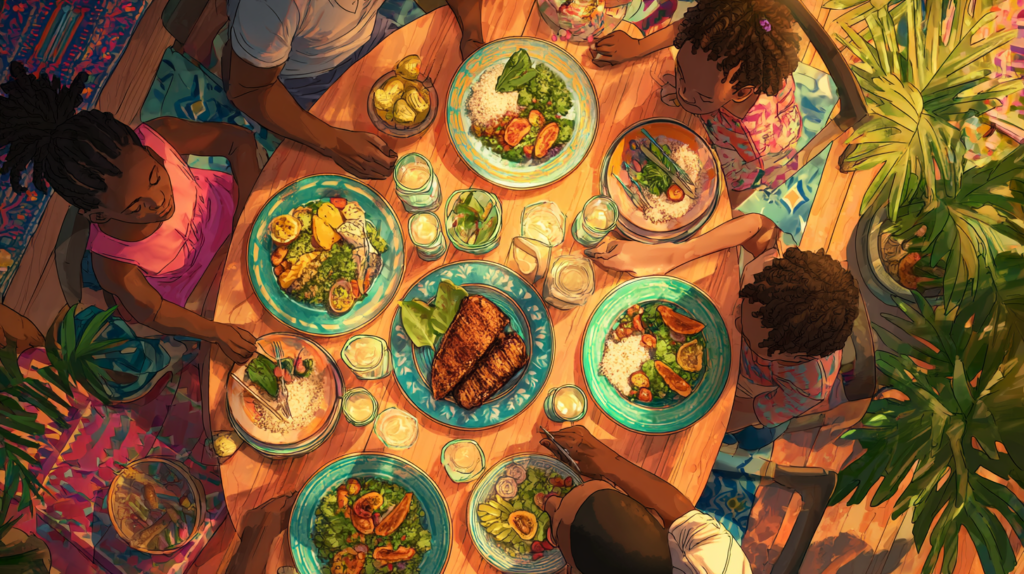
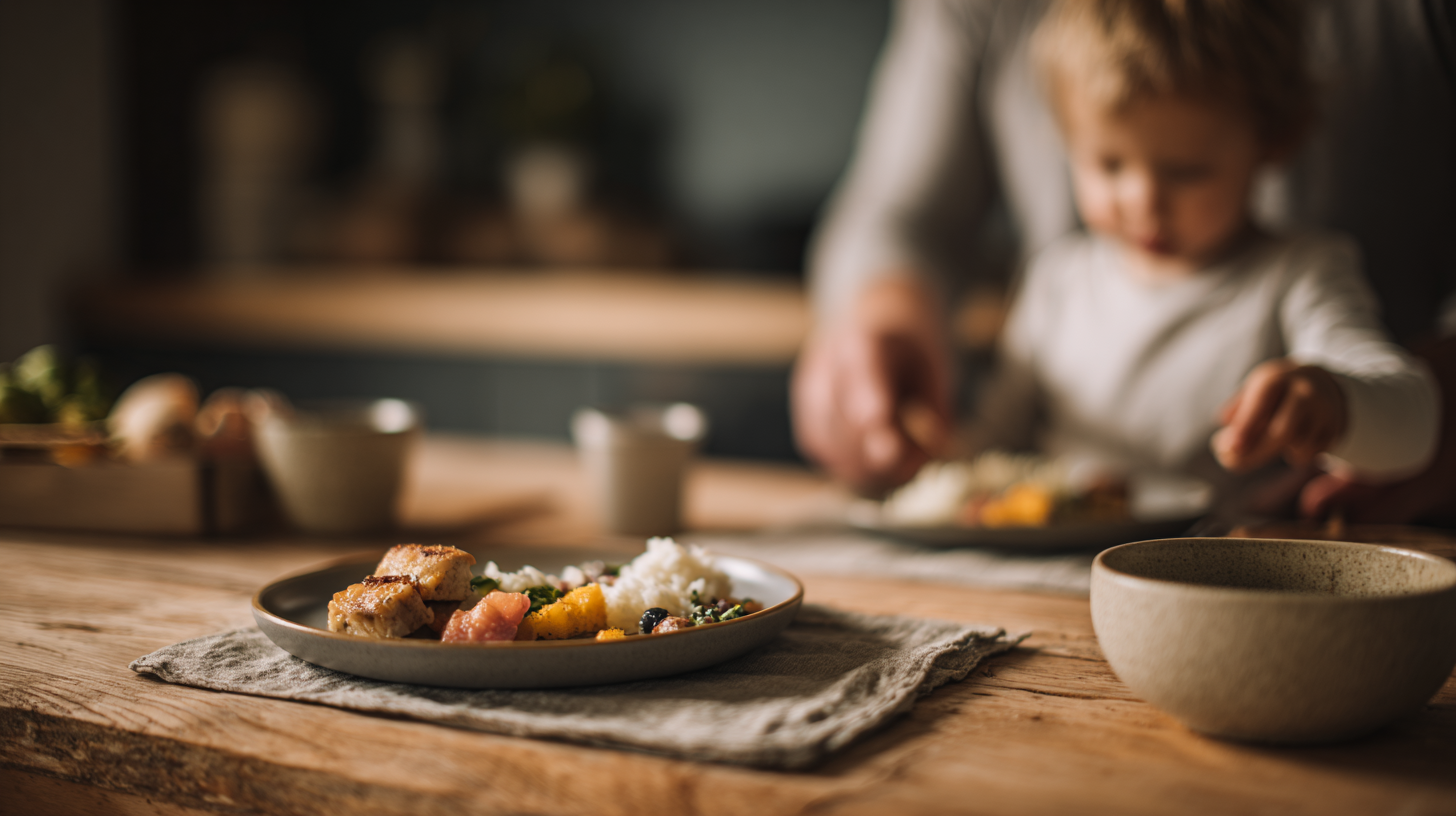
A small bowl of coconut rice and peas. A palm-sized piece of stewed chicken. A fist of steamed callaloo. These weren’t random amounts—they were sized to nourish without overwhelming. And here’s the secret ingredient: those meals were packed with nutrient-dense whole foods. A little went a long way because every bite mattered.
This approach aligns perfectly with what dietitians now recommend for introducing diverse, flavorful foods in appropriate portions. When you’re preparing meals with ingredients like sweet potato, plantain, beans, and fresh vegetables, you’re naturally creating dishes that satisfy without needing enormous quantities. If you’re looking to bring these authentic island flavors into your home while ensuring proper nutrition for your little one, the Caribbean Baby Food Recipe Book offers over 75 recipes designed specifically for ages 6+ months, helping you introduce rich flavors in age-appropriate portions from the very start.
Consider recipes like Coconut Rice & Red Peas, Calabaza con Coco, or Simple Metemgee Style Mash—these traditional dishes naturally portion themselves when you follow the child-sized serving approach. A small fist of rice cooked with kidney beans and coconut milk provides protein, healthy fats, and carbohydrates in one beautiful, flavorful dish. Compare that to oversized processed meals where children consume empty calories in quantities their bodies don’t need.
The Caribbean way teaches us that flavor doesn’t require quantity. When food tastes incredible—seasoned with thyme, garlic, ginger, and that touch of love—children don’t need mountains of it to feel satisfied. They taste, they savor, they nourish. And when the plate is empty, that’s enough.
Reading Your Child’s Hunger Compass
There’s something we’ve forgotten in our rush to finish dinner and move on to homework and bedtime: children are born knowing how to eat. They arrive in this world with an innate ability to recognize hunger and fullness. Then we, with the best intentions, teach them to ignore it.
“Finish your plate.” “No dessert until you eat your vegetables.” “Just two more bites.” Every one of these well-meaning phrases chips away at a child’s natural hunger compass. Research published in nutrients journals shows that children who are encouraged to listen to their internal cues—rather than external rules—develop healthier relationships with food that last into adulthood.
One study following parents and school-aged children found that both groups identified “my tummy tells me” as the most reliable indicator of appropriate portions. Children instinctively knew when they’d had enough. The problem? Parents often overrode those signals, worried about nutrition, waste, or simply wanting their child to be a “good eater.”
Build Your Hunger Awareness
Help your child tune into their hunger signals. Rate their hunger before a meal:
Teaching hunger-based portions means letting go of the clean plate club mentality. It means accepting that some nights your child will eat more, and some nights less. It means trusting that over the course of a week—not a single meal—their body will guide them to what they need.
Start by asking before serving: “Are you hungry? How hungry?” Let them show you with their hands—big hunger or small hunger. Then serve accordingly, knowing they can always ask for more. This simple practice empowers children to become partners in their own nourishment rather than passive recipients of whatever adults decide.
Experts note that children’s appetites fluctuate based on growth spurts, activity levels, and even emotional states. A child who devoured breakfast might pick at lunch. A preschooler who barely ate yesterday might be ravenous today. That’s normal. That’s healthy. That’s their body doing exactly what it should.
The Hidden Dangers of “Just One More Bite”
Let’s talk about what happens when we consistently override our children’s fullness signals. Because this isn’t just about one meal or one battle of wills—it’s about setting patterns that last a lifetime.
When we pressure children to eat beyond their comfort, we’re essentially teaching them that external cues (parent’s rules, plate size, social expectations) matter more than internal cues (hunger, fullness, satisfaction). Research shows this disconnect is a primary driver of disordered eating patterns later in life. Children who grow up ignoring their satiety signals are more likely to overeat as teens and adults, simply because they never learned to trust their own body.
Cultural attitudes compound this issue. The desire for children to be “good eaters,” fear of food waste, and outdated beliefs that bigger children are healthier children all push parents toward overserving and overpressuring. One qualitative study of first-time parents revealed that many felt anxious when their child didn’t finish a meal, interpreting it as failure rather than successful self-regulation.
Here’s the truth that nobody wants to say out loud: a child who leaves food on their plate isn’t wasting food—they’re honoring their body. The waste happens when we force them to eat past fullness, teaching their stomach to stretch, their brain to disconnect, and their relationship with food to become fraught with guilt and obligation.
The Age-Based Portion Calculator
Slide to your child’s age and see how portions scale:
Protein: 1-2 oz (child’s palm)
Grains: 1/4 – 1/2 cup (child’s fist)
Vegetables: 1/2 – 1 cup (two small fists)
Dairy: 1/2 cup
The alternative? Serve small, offer seconds. Start with portions you know are appropriate and let your child ask for more if they’re still hungry. This approach puts them in the driver’s seat while you remain the supportive guide. It transforms mealtime from a power struggle into a collaborative experience built on trust and communication.
Fighting the Supersized World
We’re raising our children in an environment specifically designed to make them overeat. Restaurant portions have exploded. Processed foods come in packages that contain multiple servings but look like single serves. School cafeterias offer “seconds” before some kids have finished their firsts. The food industry has normalized excess, and our children’s bodies are paying the price.
Data shows that away-from-home meals—particularly fast food—are a significant driver of excessive portion consumption in children. When 14.6% of a child’s daily calories come from fast food, and those meals typically contain 2-3 times appropriate portion sizes, the math becomes clear. We’re not just slightly overshooting—we’re dramatically overfeeding.
School nutrition programs are beginning to wake up to this reality. The 2024/25 School Nutrition Trends Report highlights efforts to right-size portions, limit oversized à la carte items, and promote healthier, smaller alternatives. But change is slow, and meanwhile, our children are navigating a food landscape that tells them bigger is always better.
So what’s a parent to do? Start by controlling what you can control—the home environment. Keep child-sized plates and bowls easily accessible. When eating out, plan to share or immediately portion half into a to-go container. Teach your child to recognize appropriate amounts using their hand guide, making it a game rather than a lecture.
Most importantly, model the behavior yourself. Children watch everything. If they see you piling your plate high and eating past fullness, that becomes their normal. But if they see you serving yourself reasonable portions, eating slowly, and stopping when satisfied—even if food remains—that becomes their blueprint.
Practical Strategies That Actually Work
Theory is lovely, but let’s get practical. How do you actually implement appropriate portioning in a real home with real children who have opinions and preferences and days when they’d happily eat nothing but crackers?
First, the visual approach. Invest in a set of child-sized dishes—7-inch plates, small bowls, and cups. These aren’t “baby” dishes; they’re appropriately sized tools that help portions look satisfying rather than stingy. Fill them using the hand guide: palm for protein, fist for grains, two fists for vegetables. Suddenly, portioning becomes visual and simple.
Second, the family-style approach. Instead of pre-plating meals, place serving dishes on the table and let children serve themselves (with guidance). This teaches them to assess their hunger, practice motor skills, and take ownership of their meal. Research shows children who serve themselves are more likely to eat what they take and less likely to waste food.
Third, the “you can always have more” rule. Make it clear that the initial serving is just the start. If they’re still hungry after finishing, seconds are available. This removes the scarcity mindset that causes children to overeat out of fear they won’t get enough. When food isn’t scarce, children naturally self-regulate.
The Portion Detective Challenge
You’re at a restaurant and they bring your 6-year-old’s meal. The chicken portion is the size of YOUR palm, not theirs. What do you do?
Fourth, the prep-ahead strategy. When bringing home larger packages, immediately portion them into child-appropriate servings. Those family-sized snack bags? Divide them into small containers or bags. That way, when your child asks for a snack, you hand them an appropriate portion without having to measure or negotiate in the moment.
Fifth, involve them in cooking. Children who help prepare meals have a better understanding of ingredients, effort, and appropriate amounts. Let them help measure, scoop, and portion. When they see that a serving of pasta is 1/2 cup before cooking, they develop an intuitive sense of what “enough” looks like. Plus, meals prepared with Caribbean-inspired ingredients like plantain, beans, or coconut milk teach them that nutrient-dense foods come in smaller, satisfying portions.
When Culture and Modern Nutrition Collide
If you grew up in a Caribbean household, you know the plate wasn’t just about nutrition—it was about love, heritage, and connection. Food was how grandmothers showed affection, how families gathered, how we celebrated and comforted. So when modern portion guidelines suggest serving less, it can feel like we’re serving less love.
But here’s the reframe: appropriate portions aren’t about deprivation. They’re about nourishment that honors the body. When you serve your child a perfectly portioned plate of food that reflects their actual needs, you’re showing love in the truest sense—love that prioritizes their lifelong health over short-term satisfaction.
Caribbean cuisine naturally lends itself to balanced, portioned meals when we return to traditional approaches. A small serving of rice and peas provides complete protein. A palm-sized piece of stewed fish with callaloo and provision offers diverse nutrients without overwhelming the system. These aren’t stingy meals—they’re thoughtfully composed plates where every element has purpose.
Many traditional Caribbean recipes for children already embrace appropriate portioning. Dishes like Simple Metemgee Style Mash, Cornmeal Porridge Dreams, or Yellow Yam & Carrot Sunshine were designed for small bodies—creamy, flavorful, and satisfying in modest amounts. When you’re ready to explore these time-tested recipes adapted for modern families, resources like the Caribbean Baby Food Recipe Book preserve cultural food heritage while respecting the nutritional needs of growing children.
The key is separating food quantity from emotional value. Your love isn’t measured in ounces. Your heritage isn’t diminished by smaller plates. In fact, when children eat appropriate amounts, they’re more likely to try diverse foods, develop sophisticated palates, and carry those food traditions forward with appreciation rather than obligation.
The Social Media Myth vs. The Science
Scroll through social media and you’ll see the extremes: influencer kids picking at minimalist plates on one end, and “eating challenges” for toddlers on the other. Both ends of the spectrum miss the point entirely. Appropriate portions aren’t about trends, aesthetics, or performance—they’re about physiology.
Social media campaigns by organizations like EatRight, HealthyChildren, and TrueSport regularly share visual portion guides and hand-based measurements. These efforts reach millions but compete with a constant stream of food porn celebrating excess. A child’s properly portioned meal doesn’t photograph as impressively as a loaded, overflowing plate. But here’s what doesn’t photograph: the long-term health outcomes, the positive relationship with food, the body that knows how to self-regulate.
Experts consistently emphasize that children should learn to eat based on hunger rather than external cues. Yet social media rewards the external—the aesthetic, the impressive, the “look how much my kid ate!” This creates a disconnect between what science recommends and what culture celebrates.
The antidote? Curate your feed intentionally. Follow registered dietitians, pediatricians, and evidence-based nutrition accounts. Unfollow accounts that make you feel anxious, inadequate, or push extreme approaches. Remember that what performs well on social media often performs poorly in real life, where consistency and sustainability matter more than viral moments.
Teaching the Next Generation
Here’s what I want you to know: teaching appropriate portions isn’t about restriction. It’s about liberation—freeing your child from the pressure to eat beyond comfort, from the confusion of oversized norms, from the disconnection between body and mind.
When you start this journey, your child might resist initially, especially if they’ve grown accustomed to larger portions. That’s normal. Change takes time. But what you’re building is a foundation that will serve them for decades. You’re teaching them to trust their body, to recognize hunger and fullness, to eat joyfully without guilt or anxiety.
Start small. Maybe this week, you focus just on using the hand guide for proteins. Next week, you introduce child-sized plates. The week after, you practice the “how hungry are you?” conversation before serving. Progress over perfection. Consistency over intensity.
Most importantly, extend grace—to your child and to yourself. There will be days when portions are off, when battles are lost, when fast food happens and everyone eats too much. That’s life. One meal doesn’t define a pattern. What matters is the general direction, the overall approach, the values you’re instilling over time.
Your 7-Day Portion Progress Tracker
Track your family’s portion awareness journey. How many meals this week featured appropriate, child-sized portions?
Remember that you’re not just feeding your child today—you’re shaping their relationship with food for a lifetime. Every appropriately portioned meal is a vote for their future health. Every time you honor their fullness, you’re teaching them that their body’s signals matter. Every conversation about hunger and satisfaction builds their nutritional literacy.
Your Kitchen, Your Rules, Your Love
At the end of the day, this comes down to something beautifully simple: you want what’s best for your child. You want them healthy, happy, and equipped with the tools to nourish themselves well throughout their life. Appropriate portions are part of that toolkit—not a rigid rule to stress over, but a guideline to empower you.
The hand guide gives you simplicity. The child-sized plates give you visual cues. The hunger-based approach gives you partnership with your child. And the knowledge that portions should reflect your child’s actual needs—not adult expectations or supersized norms—gives you confidence to stand firm when the food environment pushes excess.
You don’t need to be perfect. You don’t need to measure every meal. You don’t need expensive equipment or complicated charts. You just need awareness, intention, and consistency. Serve portions that match small bodies. Trust your child’s hunger signals. Offer seconds without pressure. Model healthy relationships with food yourself.
And when you’re preparing those meals—whether it’s a simple weeknight dinner or a special weekend breakfast—consider the power of nutrient-dense, culturally meaningful foods. When you’re cooking with ingredients like sweet potatoes, beans, plantains, and fresh vegetables, you’re creating meals where smaller portions satisfy deeply. If you’re looking for inspiration to blend traditional Caribbean flavors with modern nutritional wisdom, the Caribbean Baby Food Recipe Book offers a treasure trove of recipes that honor both heritage and health, helping you raise children who appreciate their food culture while developing healthy eating habits from the start.
Because here’s the final truth: the portion size isn’t what makes a meal special. It’s not what makes it loving. What makes a meal special is the intention behind it—the care you took to prepare it, the attention you give while sharing it, the conversation around the table, the laughter between bites. That’s what your child will remember. That’s what nourishes their soul while appropriate portions nourish their body.
So take a breath. Look at your child’s hand. Serve portions that honor their size. Trust their signals. And know that you’re doing something powerful—something that will ripple forward into their future, their health, their happiness. One appropriately portioned plate at a time, you’re teaching them that their body is trustworthy, that food is nourishment not punishment, and that love shows up in many ways—including the wisdom to serve just enough.

Kelley's culinary creations are a fusion of her Caribbean roots and modern nutritional science, resulting in baby-friendly dishes that are both developmentally appropriate and bursting with flavor. Her expertise in oral motor development and texture progression ensures that every recipe supports your little one's feeding milestones while honoring cultural traditions.
Join Kelley on her flavorful journey as she shares treasured family recipes adapted for tiny taste buds, evidence-based feeding guidance, insightful parenting anecdotes, and the joy of celebrating food, culture, and motherhood. Get ready to immerse yourself in the captivating world of Kelley Black and unlock the vibrant flavors of the Caribbean for your growing baby, one nutritious bite at a time.
- The Feeding Revolution: Why Your Everyday Meals Are Changing the World - October 13, 2026
- Your Feeding Story Matters More Than The “Perfect” One Online - October 12, 2026
- Looking Forward: Stepping Into Your Confident Feeding Future - October 11, 2026