
The Anxious Parent’s Guide to Starting Solids Without Panic
Three weeks before my daughter turned six months old, I sat in the pediatrician’s office and heard those words: “Time to start solids soon!” My heart immediately began racing. Not from excitement—from pure, paralyzing fear. That night, I went down a rabbit hole of worst-case scenarios, watching video after video of babies gagging, imagining every possible thing that could go wrong. I wasn’t alone in this fear, and if you’re reading this, neither are you.
Here’s what nobody tells you: your anxiety is valid. It’s not irrational, it’s not silly, and it’s not something you need to “just get over.” Approximately 61% of mothers experience feeding anxiety in the first three months after introducing solids, and for highly anxious parents, that number is even higher. Your fear comes from a place of deep love—you want to protect your baby from harm. That instinct is beautiful, even when it feels overwhelming.
But what if I told you there’s a way to honor your anxiety while still moving forward? What if you could start solids in a way that respects your fears, validates your concerns, and gives you concrete tools to build confidence—one tiny step at a time?
What’s Your Primary Feeding Fear?
Click the fear that resonates most with you:
Understanding Your Fear (And Why It’s Actually Protective)
Let me start by validating something crucial: choking is a real risk. Approximately 12,000 children visit emergency rooms annually in the United States for food-related choking injuries, and a child dies from choking every five days. These aren’t statistics meant to scare you more—they’re facts that explain why your brain is on high alert. Your anxiety isn’t broken; it’s your protective system working overtime.
But here’s the truth that changes everything: the vast majority of choking incidents involve inappropriate foods or inadequate supervision, not age-appropriate solid food introduction with proper safety measures. Research shows that when parents are educated on proper food preparation and supervision techniques, baby-led approaches to feeding show no increased choking risk compared to traditional spoon-feeding.
The difference between gagging and choking is the first thing you need to understand. Gagging is actually your baby’s safety mechanism—it happens forward in the mouth, makes noise, and allows babies to recover independently. Choking, on the other hand, is silent, happens deep in the throat, and requires intervention. Studies show that 64.8% of babies practicing baby-led weaning experience gagging as part of normal learning, but only 0.2% require medical intervention.

The Trauma-Informed Approach to Starting Solids
If you have personal trauma related to food, choking, or loss of control, your feeding journey requires extra compassion. Research shows that maternal trauma history, particularly PTSD, creates significant challenges in feeding interactions—but it’s rarely addressed in standard feeding education. You’re not being “difficult.” Your nervous system is responding to perceived threat based on past experience.
The trauma-informed approach means we start by acknowledging that education alone won’t eliminate your fear. Your body remembers what your mind tries to rationalize away. Instead of pushing through anxiety, we’re going to work with it using gradual exposure therapy adapted specifically for feeding.
Think of it this way: you wouldn’t expect someone with a fear of heights to immediately climb Mount Everest. You’d start with a step stool, then a ladder, slowly building tolerance. The same principle applies to feeding anxiety. We’re going to take this journey in the smallest, most manageable steps possible—and there’s no shame in going slowly.
✅ Your Safety Preparation Checklist
Click each item as you complete it:
Building Your Confidence Foundation
Before we even think about putting food in front of your baby, we need to build your confidence foundation. This is where most feeding guides get it wrong—they jump straight to “what to feed” without addressing “how to feel safe while feeding.”
Start with knowledge. Take an infant CPR class specifically designed for parents. Not just watching a video—actually practice on a dummy. Research shows that parents who have hands-on CPR training experience significantly less anxiety because they know they have a plan if something goes wrong. This isn’t pessimistic thinking; it’s preparedness, and preparedness reduces anxiety.
Next, observe without participating. Find videos of babies eating age-appropriate foods successfully. Watch for gagging responses and see how babies recover on their own. Your brain needs to see positive outcomes repeatedly to start rewiring the fear response. One mother in a feeding support group shared: “I watched 20 videos of babies eating before I felt ready to try. Some people thought I was obsessing, but I was actually desensitizing myself.”
Consider starting with foods that are physically impossible to choke on. Corn on the cob is one example—it’s too large to break off dangerous pieces, excellent for motor skill development, and allows your baby to practice without significant risk. These “training wheels” foods let you build tolerance while your baby learns the mechanics of eating. If you’re looking for more culturally rich options, consider Caribbean-inspired first foods like sweet potato and coconut milk purees or mashed ripe plantain, which offer familiar island flavors in safe, age-appropriate textures.
Gagging vs. Choking: Know The Difference
Click each card to reveal critical safety information:
Choking: Silent or very quiet—the airway is blocked
Choking: Skin turns red, then blue/purple
Choking: Immediate action required—begin back blows and chest thrusts
Choking: Happens deep in the throat, blocking the airway
The Gradual Exposure Method for Anxious Parents
This is where we honor your nervous system while still moving forward. Gradual exposure therapy is a proven technique for anxiety disorders, and we’re adapting it specifically for feeding anxiety. The goal isn’t to eliminate fear overnight—it’s to build tolerance incrementally until feeding feels manageable.
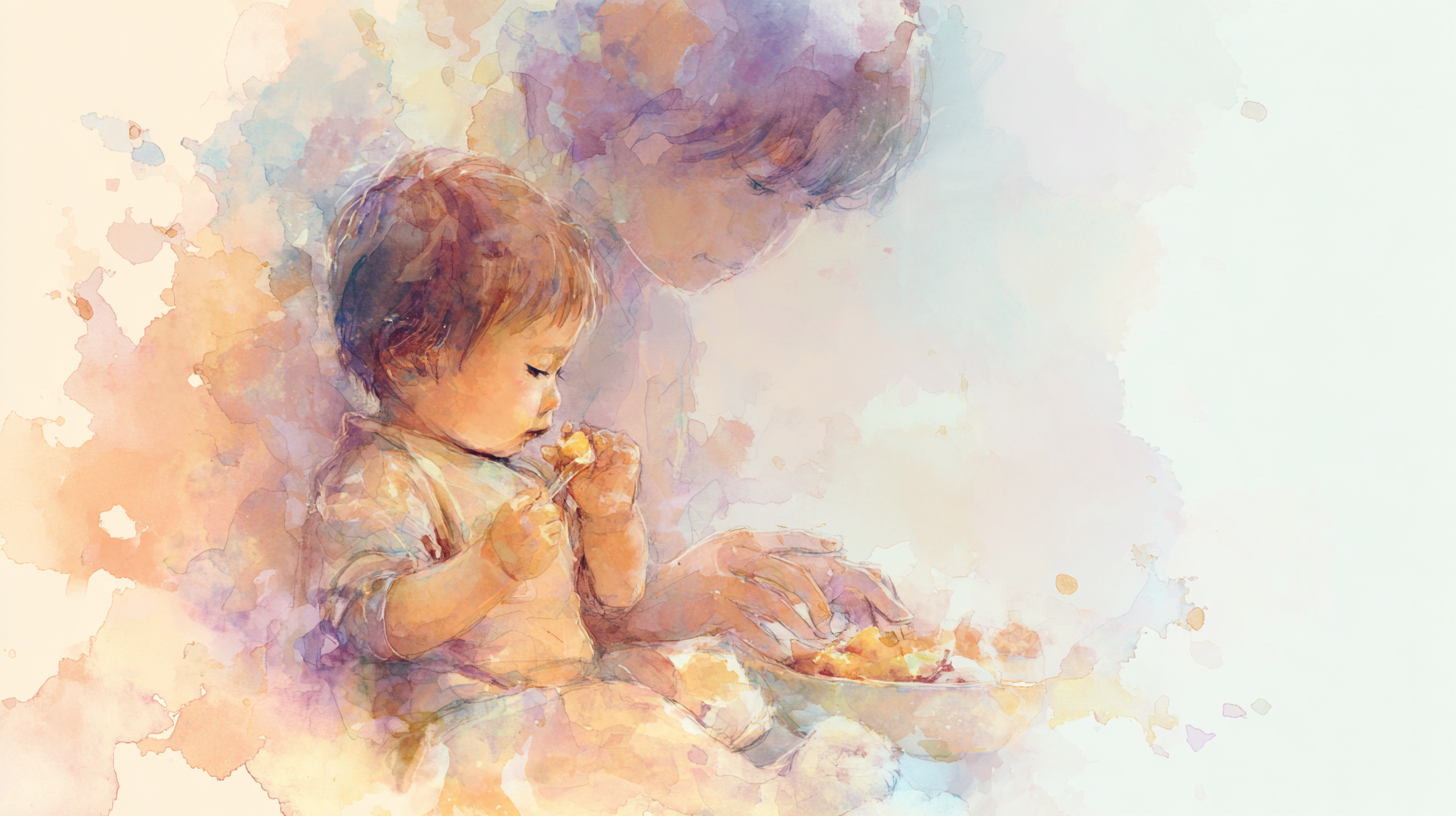
Your 7-Step Gradual Exposure Journey
Click each step as you complete it to track your progress:
Move through these steps at your own pace. There’s no timeline, no judgment, no “normal” speed. One mother took six weeks just to get through the education phase. Another needed her partner to handle all solid feedings for the first month while she built tolerance. Both approaches are valid. Both babies are thriving.
Choosing Your First Foods Strategically
For anxious parents, food selection matters more than for parents without feeding anxiety. You need foods that offer high developmental reward with minimal perceived risk—foods that let you succeed early and build momentum.
Low-risk starter foods include well-cooked sweet potato strips (soft enough to squish between your fingers), ripe avocado slices (naturally soft and slippery, easy to manage), mashed banana (can be spread on toast or offered on a spoon), and steamed carrot sticks (cooked until very soft). These foods give your baby valuable oral motor practice without triggering your highest fears.
Modified baby-led weaning approaches combine the best of both worlds. You can offer some foods on a spoon (like yogurt or oatmeal) while also allowing your baby to self-feed safe finger foods. Research shows that parents who use a combination approach experience less anxiety than strict baby-led weaning followers, while babies still develop excellent self-feeding skills.
Caribbean families have been using naturally safe, nutrient-dense first foods for generations. Calabaza (Caribbean pumpkin) with coconut milk creates a smooth, naturally sweet puree that babies love. Green plantain mashed with a touch of butter offers complex carbohydrates in a manageable texture. Yellow yam, cooked until soft and mashed, provides sustained energy without choking risk. These traditional foods honor your heritage while supporting your anxiety-management needs.
Your Personalized First Food Guide
Click on any food to see why it’s anxiety-friendly and how to prepare it safely:
Managing Anxiety During Actual Feeding
Now we’re at the moment that matters most: your baby is in the high chair, and there’s food in front of them. Your heart is racing, your palms are sweating, and every cell in your body is on high alert. This is where anxiety management techniques become essential.
First, practice grounding techniques before you start. The 5-4-3-2-1 method works beautifully: identify 5 things you can see, 4 things you can touch, 3 things you can hear, 2 things you can smell, and 1 thing you can taste. This brings you back to the present moment instead of spiraling into “what if” scenarios.
Create a mantra you can repeat when anxiety spikes. Something like: “Gagging is learning. Gagging is normal. I am prepared if something goes wrong.” Or: “My baby has reflexes to protect themselves. I am here and paying attention. We are safe.” Say it out loud if needed. Your nervous system responds to verbal reassurance.
Breathe differently. When we’re anxious, we tend to take shallow chest breaths that actually increase anxiety. Instead, practice belly breathing: inhale for 4 counts, hold for 4, exhale for 6. The longer exhale activates your parasympathetic nervous system—your body’s natural calming mechanism.
If you notice gagging (which you will, because it’s normal), resist the urge to intervene immediately. Count to 5 in your head. Most babies recover within 2-3 seconds. Your intervention can actually make things worse by startling them or inadvertently pushing food further back. Your job is to watch, stay calm, and only act if true choking signs appear (silent, turning blue, not recovering).

Trusting Your Instincts vs. Overcoming Fear
Here’s where things get nuanced: how do you know when your anxiety is protective intuition versus when it’s irrational fear holding you back? This is the question that keeps anxious parents up at night.
Protective instinct says: “This food is too hard and could break into sharp pieces.” Fear says: “All food is dangerous and my baby shouldn’t eat anything solid.” Protective instinct says: “My baby seems overtired right now, let’s try feeding later.” Fear says: “I can never feel safe during feeding times.”
The difference is specificity and solutions. Protective instincts point to specific, addressable problems with concrete solutions. Fear is global, vague, and offers no path forward except avoidance. When you feel anxiety rising, ask yourself: “What specifically am I worried about right now?” If you can name it specifically, you can address it. If the answer is “everything” or “I don’t know, just bad things,” that’s anxiety talking, not intuition.
Trust yourself when something feels genuinely wrong with a specific situation—if a food seems too hard, if your baby seems unwell, if the environment feels chaotic. Don’t trust anxiety when it tells you that feeding is inherently dangerous or that you’re incapable of keeping your baby safe. That’s the lie anxiety tells.
When to Seek Additional Support
Sometimes, despite your best efforts, feeding anxiety remains overwhelming and interferes with your ability to nourish your baby. This isn’t failure—it’s information that you need additional support. Consider reaching out to professionals when anxiety persists beyond the first few weeks of solid introduction, when you find yourself avoiding feeding times or delegating all feeding to others long-term, when you experience panic attacks related to feeding, or when your anxiety is affecting your baby’s nutrition or growth.
Pediatric occupational therapists specializing in feeding can provide hands-on support and desensitization protocols. They work with both your baby’s feeding skills and your emotional response, creating a comprehensive plan. Therapists trained in trauma-informed feeding approaches understand that your anxiety isn’t something to “fix” but rather something to work with compassionately.
Online support groups specifically for anxious parents offer community from people who truly understand. The validation alone can be incredibly healing. Platforms like “Other Parents Like Me” provide moderated daily support groups where you can discuss fears without judgment. Mental health apps designed for postpartum anxiety, such as specialized chatbots, now offer real-time support during anxiety-provoking feeding moments.
Don’t underestimate the power of peer support. Finding even one other parent who shares your fears and can text you during difficult feeding times makes an enormous difference. You’re not meant to do this alone.
Daily Confidence Affirmations
Click for a personalized affirmation to build your feeding confidence:
Your Journey Forward
Six months into our solid food journey, I still feel anxiety sometimes when my daughter tries a new food. But here’s what’s different: I can now sit through a meal without my heart pounding. I recognize gagging for what it is—a learning process, not an emergency. I’ve watched her work through hundreds of gagging episodes and come out fine every single time. The evidence my brain needed has accumulated, one meal at a time.
Your journey won’t look like mine, and that’s exactly how it should be. Maybe you’ll move faster, maybe slower. Maybe you’ll stick with purees for longer than “recommended.” Maybe you’ll need your partner to handle breakfast while you handle dinner. Maybe you’ll find that preparing familiar Caribbean recipes like cornmeal porridge or mashed callaloo helps you feel more grounded in the process. All of these adaptations are not only acceptable—they’re intelligent responses to your unique needs.
The goal isn’t fearlessness. The goal is confidence despite fear. It’s knowing you’re prepared, that you’re paying attention, that you have tools and support, and that your anxiety—while uncomfortable—doesn’t have to stop you from helping your baby develop a healthy relationship with food.
This is your permission slip to go slowly. To take breaks when you need them. To celebrate small victories like making it through one meal without a panic attack, or trying one new food this week instead of five. To honor your trauma if you have it. To acknowledge that feeding a baby when you have high anxiety is genuinely hard work that deserves recognition.
You’re not just teaching your baby to eat. You’re teaching yourself that you’re capable of hard things. That you can feel afraid and still show up. That you can protect your baby while also allowing them to grow and learn. That’s not just feeding—that’s courage. And your baby is lucky to have a parent who cares enough to work through this fear instead of letting it dictate their choices.
Moving Forward With Compassion
Starting solids with high anxiety isn’t the journey you probably imagined during pregnancy. But here you are, doing the work to give your baby safe, nourishing food while managing real, valid fears. That takes strength that shouldn’t be minimized.
Remember that your anxiety doesn’t make you a bad parent—it makes you a parent who loves fiercely and wants to protect completely. The challenge is learning to channel that protective love into preparation and presence rather than avoidance and panic. You’re already doing that work by reading this article, by learning the difference between gagging and choking, by considering gradual exposure techniques, by being willing to feel uncomfortable so your baby can thrive.
As you move forward, be as kind to yourself as you would be to a friend in your situation. Notice the progress you’re making, even when it feels slow. Trust that with each exposure, your nervous system is recalibrating—learning that feeding doesn’t always equal danger, that your baby has protective reflexes, that you are capable of handling this responsibility.
And on the hard days—because there will be hard days—remember that thousands of anxious parents have walked this path before you. They felt exactly what you’re feeling. They doubted themselves just like you’re doubting yourself. And they came out the other side with confident eaters and a deep sense of accomplishment. You will too. One breath, one meal, one small brave step at a time.
Your baby doesn’t need perfect confidence from you. They need your presence, your attention, your willingness to try. They need you to prepare their food safely, to stay nearby while they eat, to respond calmly to both gagging and actual emergencies. You’re already capable of all of that. The anxiety might be loud, but it doesn’t get to decide what you’re capable of. You do. And you’ve got this—even when it doesn’t feel like it.

Kelley's culinary creations are a fusion of her Caribbean roots and modern nutritional science, resulting in baby-friendly dishes that are both developmentally appropriate and bursting with flavor. Her expertise in oral motor development and texture progression ensures that every recipe supports your little one's feeding milestones while honoring cultural traditions.
Join Kelley on her flavorful journey as she shares treasured family recipes adapted for tiny taste buds, evidence-based feeding guidance, insightful parenting anecdotes, and the joy of celebrating food, culture, and motherhood. Get ready to immerse yourself in the captivating world of Kelley Black and unlock the vibrant flavors of the Caribbean for your growing baby, one nutritious bite at a time.
- The Feeding Revolution: Why Your Everyday Meals Are Changing the World - October 13, 2026
- Your Feeding Story Matters More Than The “Perfect” One Online - October 12, 2026
- Looking Forward: Stepping Into Your Confident Feeding Future - October 11, 2026