That Viral Baby Feeding Hack Almost Cost Us Everything (Here’s What Pediatricians Aren’t Telling You)
Last Tuesday at 2:47 AM, I found myself in the emergency room with my six-month-old niece, watching doctors work frantically while my sister sobbed into my shoulder. The culprit? A “genius sleep hack” she’d seen 847,000 times on her TikTok feed—one that promised longer sleep stretches and had thousands of comments cheering “This saved my sanity!”
That video had 3.2 million views. You know how many mentioned the choking risk? Zero.
Here’s what nobody tells you when that algorithm serves up those too-good-to-be-true feeding shortcuts: the same system that shows you baby hacks also showed my teenage cousin how to make candy that sent her to the burn unit. Those viral videos rack up millions of views not because they’re safe—but because they trigger something deep in every exhausted parent’s brain. The promise of an easier way. A magic solution. Five minutes of peace.
But I’m getting ahead of myself. Let me take you behind the screen of viral feeding culture, where 82% of parents now get health information, and show you exactly what’s happening when you scroll.
Your Viral Vulnerability Quiz
Which statement describes you best? (Tap to reveal your risk level)
The Algorithm Knows You’re Desperate (And It’s Counting On It)
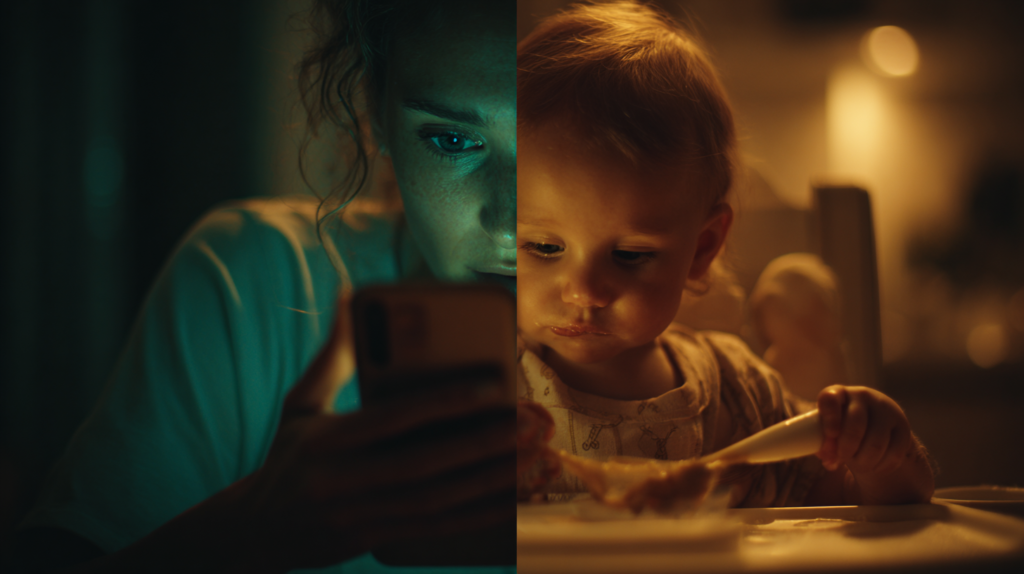
At 3 AM, when you’ve rocked your baby for two hours and your eyes are burning with exhaustion, your phone lights up. Just one scroll, you think. Just five minutes of distraction. And there it is—a video of a perfectly rested-looking mom holding a sleeping baby. “This ONE trick gave me my nights back,” the caption promises.
Your thumb hovers. You watch. 847,000 other parents did too.
Here’s the truth that social media platforms won’t advertise: their algorithms don’t prioritize safety. They prioritize engagement. A study analyzing TikTok’s recommendation system found that within 5-6 hours of use, nearly 1 in 2 videos became problematic in nature. The tanghulu candy trend? It accumulated 14 million views while children were being admitted to burn units with third-degree injuries from 300°F molten sugar.
The system works like this: emotional content gets shares. Shares fuel the algorithm. The algorithm spreads content further. Safety warnings? They don’t make people share. They don’t make people comment “OMG trying this tonight!” They don’t feed the beast.

I learned this the hard way. My sister didn’t see the 12 pediatrician videos explaining why cereal in bottles is dangerous. You know what she saw? A mom with 400,000 followers showing her “sleeping through the night at 3 months” baby. The algorithm had learned she was sleep-deprived. It fed her exactly what her exhausted brain wanted to believe.
Social comparison theory explains why we’re so vulnerable: when we see other parents looking put-together, sleeping well, managing it all, we feel inadequate. That inadequacy makes us susceptible to shortcuts. And when those shortcuts come wrapped in the authenticity of “lived experience” rather than medical jargon, our brains accept them as truth.
The Danger Detector: Test Your Instincts
Click each feeding hack to reveal its true danger level:
Tap cards above to see real medical data
The Hacks That Went Viral (And The Babies Who Paid The Price)
Let me walk you through the greatest hits of dangerous feeding trends, starting with the one that nearly took my niece from us.
The Sleep-Through-The-Night Cereal Hack: My sister added rice cereal to her evening bottle because a viral video with 2.1 million views promised it would help. What the video didn’t mention: the American Academy of Pediatrics has explicitly stated there is zero evidence this improves sleep. What it does increase? Choking risk, aspiration hazards, excessive weight gain, and constipation.
The science is clear: babies wake at night because their tiny stomachs need frequent feeding, not because they need more calories crammed into fewer feeds. Adding cereal changes the flow rate of the bottle, making it harder for babies to control milk intake. It can also delay learning to eat from a spoon—a critical developmental milestone.
The Formula Shortage “Solution”: During the 2022 formula crisis, DIY formula recipes went viral across every platform, accumulating millions of views and desperate shares. Recipes included evaporated milk, corn syrup, raw unpasteurized milk, and almond milk. A 2024 study analyzing these recipes found many included ingredients that could severely harm infants.
These homemade formulas are not FDA-regulated. They provide no evidence of safety or appropriate nutrition. One mother I spoke with used a viral recipe for three weeks before her baby was hospitalized with severe malnutrition. The comments on that video? “Worked great for us!” “Baby loves it!” “So much cheaper!” Zero mention of the nutritional deficits that were silently damaging her child.
The 2022 shortage disproportionately affected mothers with lower education levels, WIC recipients, residents of less populated counties, Medicaid recipients, and Black mothers. These vulnerable populations, already facing feeding disparities, became prime targets for dangerous DIY hacks when commercial options disappeared.
The Tanghulu Candy Catastrophe: This one hit close to home too. My teenage cousin saw the viral TikTok trend for making Chinese candied fruit by microwaving sugar to 300°F+. Within two weeks, Shriners Children’s Hospital in Boston treated multiple patients with severe scald burns from spilled hot sugar. Colleagues nationally and internationally reported similar cases.
Dr. Colleen Ryan, a burn surgeon who received the 2024 Harvey Stuart Allen Distinguished Service Award, explained why this trend is particularly dangerous: “Melted sugar has a high heat capacity, meaning it stores heat energy. If spilled, it can create a severe scald burn, much like spilling hot soup, but it can cause a much deeper burn because of sugar’s properties.” The sticky, heat-retaining nature causes burns that penetrate deeper than typical hot liquids.
The trend accumulated 14 million views. The medical warnings? Barely a fraction of that reach.
Myth vs. Reality Flip Cards
Hover or tap each card to flip and see the truth:
VIRAL CLAIM:
“Cereal in bottle = longer sleep”
MEDICAL REALITY: AAP confirms zero evidence of improved sleep. Actually increases choking risk and causes aspiration, obesity, and delays spoon-feeding skills.
VIRAL CLAIM:
“Honey is natural and healthy for babies”
MEDICAL REALITY: 6-10% of honey contains botulism spores. Infant digestive systems can’t fight it off—causes severe muscle paralysis. NEVER before 12 months.
VIRAL CLAIM:
“Food pouches are basically the same as spoon feeding”
MEDICAL REALITY: Speech therapists report delays in speech development, orthodontic issues, and oral aversions. Kids miss critical chewing experiences for jaw strength and tongue placement for “t,” “l,” “n,” “d” sounds.
VIRAL CLAIM:
“Prop the bottle so you can multitask”
MEDICAL REALITY: Increases choking risk by 200%, ear infections by 85%, causes dental problems and overfeeding. Babies can’t regulate milk flow or signal fullness when propped.
Why We Fall For It (The Psychology Behind The Click)
Here’s what I wish someone had told my sister before that 2:47 AM emergency room visit: the reason these hacks feel so compelling has nothing to do with their validity and everything to do with how our brains are wired.
When you’re running on four hours of broken sleep, your prefrontal cortex—the part of your brain responsible for critical thinking and risk assessment—is basically offline. You’re operating in survival mode. And in survival mode, your brain looks for the fastest route to relief, not the safest.
Social media platforms know this. Their algorithms are designed to detect engagement patterns. When you pause on a video about baby sleep, the algorithm notes it. When you watch it twice, the algorithm learns. Soon, your entire feed becomes an echo chamber of sleep solutions, each one more dramatic than the last, because dramatic content keeps you scrolling.
Research on social media food content shows that visual appeal and emotional resonance drive engagement far more than nutritional quality or medical accuracy. A video of a peacefully sleeping baby will always outperform a pediatrician explaining circadian rhythm development. One triggers hope and desire. The other triggers… well, boredom, if we’re being honest.
There’s also the power of social proof. When you see 12,000 comments saying “This worked for us!” your brain interprets that as validation. But here’s what you don’t see: the parents in emergency rooms don’t go back to comment on the video. The babies who develop feeding aversions from pouch overuse don’t show up in your algorithm. The success stories float to the top. The casualties sink into silence.
My grandmother, who raised seven children in Jamaica without the internet, once told me something profound: “The best advice is the advice that’s been tested by time, not by likes.” She fed her babies wholesome Caribbean ingredients like sweet potato, plantain, and coconut milk—simple foods that had nourished generations. No hacks. No shortcuts. Just real food, prepared with care.
What Actually Works (Evidence-Based Alternatives That Won’t Trend)
The problem with evidence-based feeding practices is they don’t make good content. “Feed your baby when they’re hungry, stop when they’re full” doesn’t have the same viral potential as “This ONE WEIRD TRICK changed everything!”
But here’s what actually works, backed by the American Academy of Pediatrics, World Health Organization, and decades of pediatric research:
Instead of Cereal in Bottles: Follow age-appropriate sleep training methods recommended by your pediatrician. Ensure adequate daytime feeding with responsive feeding practices. Around 6 months, introduce solid foods when developmentally ready—served by spoon, not through a bottle nipple. Address underlying sleep issues with medical guidance rather than feeding manipulations. One pediatrician told me: “Sleep problems are rarely hunger problems. They’re usually developmental, environmental, or routine-related.”
Instead of Homemade Formula: Use only FDA-regulated commercial formulas. During shortages, contact your pediatrician for samples, reach out to WIC for assistance, check multiple retailers, and consider hypoallergenic formulas under medical guidance. If absolutely necessary, pasteurized donor milk from licensed milk banks (not informal milk sharing) is an option. Follow package directions exactly—no diluting or concentrating.
Instead of Excessive Pouch Use: Limit pouches to occasional convenience situations like travel or backup options. Serve foods on plates and in bowls to promote self-feeding with hands. Progress textures appropriately from purees to mashed to soft pieces to family foods. Use pouches as a bridge, not the destination. Encourage spoon use and cup drinking by 12 months.
This is where cultural wisdom really shines. Traditional Caribbean baby feeding practices focus on wholesome, minimally processed foods served in developmentally appropriate ways. My grandmother’s Calabaza con Coco (pumpkin with coconut milk) taught babies to accept texture and flavor complexity. Her Yellow Yam and Carrot mash encouraged self-feeding. No pouches needed—just real food, real spoons, real connection.
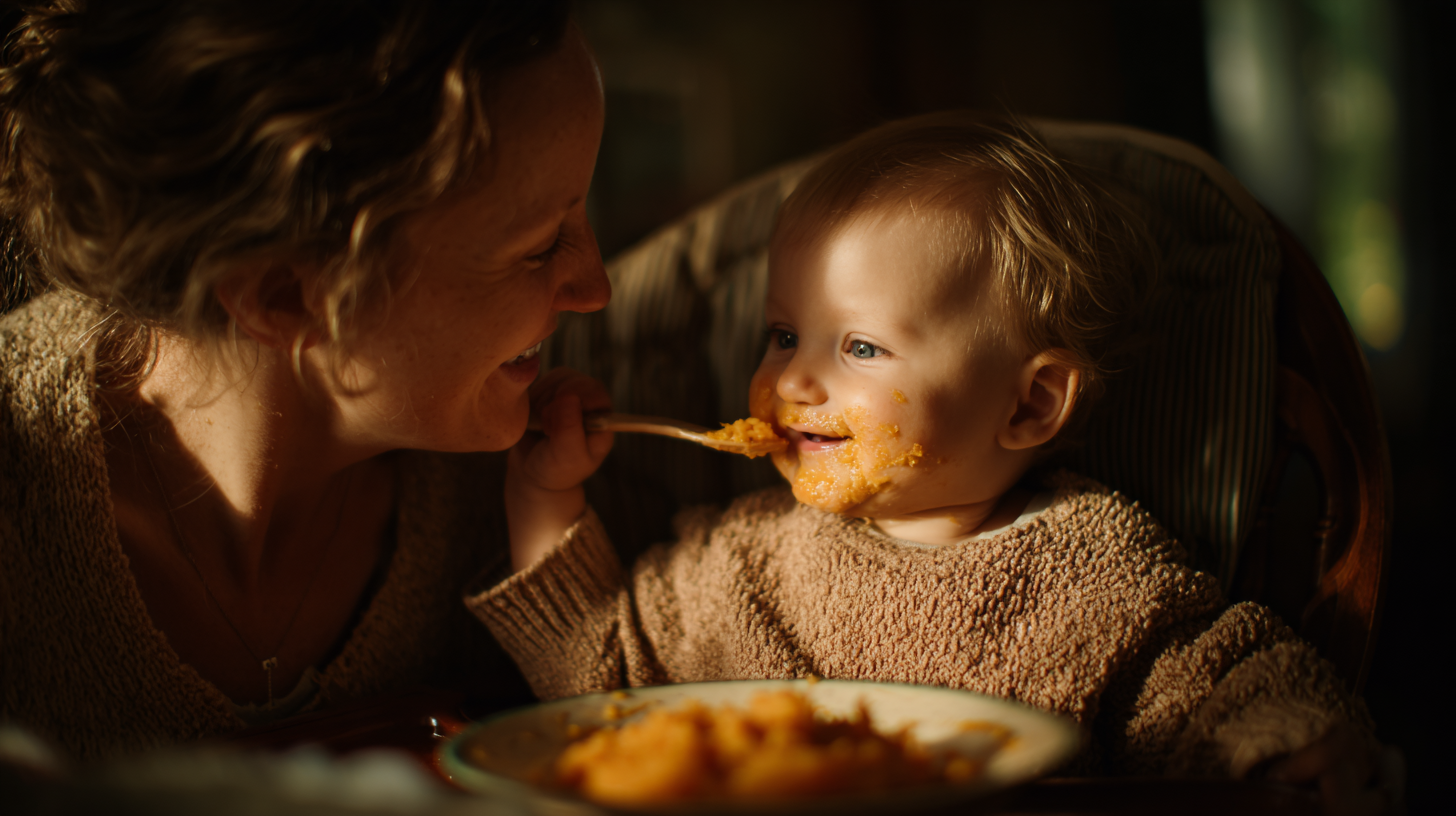
Instead of Bottle Propping: Always supervise feeding sessions, even if your baby can hold their own bottle. Hold baby in an upright position during feeds. Use feeding time for bonding and responsive interaction. Watch for fullness cues and never force feeding. The AAP is crystal clear: propped bottles double choking risk and increase ear infections by 85%.
Instead of Bumbo/Sitting Devices for Feeding: Wait until baby can sit independently without support before introducing solid foods. Use age-appropriate high chairs with proper positioning. Prioritize tummy time for natural core development. Feed only when baby is supervised and properly positioned to reduce choking risk. Pediatric physical therapists consistently warn that these devices restrict natural movement and can delay motor milestones.
Your Feeding Safety Progress Tracker
Check off evidence-based practices you’re already doing:
How To Spot Dangerous Advice Before It’s Too Late
That night in the emergency room, while doctors examined my niece, my sister kept saying, “But so many people said it worked.” I get it. I really do. When you see thousands of validating comments, it feels like proof.
But here’s your new filter system—the questions I now ask before my sister (or anyone I care about) tries anything from social media:
Red Flag #1: Does it promise something that sounds too good to be true? “Sleep through the night at 2 months!” “Never deal with picky eating again!” “Instant calm during meals!” If it sounds like magic, it probably is. Real feeding advice acknowledges that development takes time and every baby is different.
Red Flag #2: Does it contradict established medical organizations? If the AAP, WHO, CDC, or FDA says one thing and TikTok says another, trust the organizations with decades of pediatric research, not the influencer with a ring light.
Red Flag #3: Is the person sharing it selling something? Product promotions disguised as parenting advice are everywhere. If they’re pushing a specific bottle, device, or supplement, their priority is profit, not your baby’s safety.
Red Flag #4: Are there zero citations or references to research? Anecdotal evidence (“worked for my baby!”) is not the same as clinical evidence. Real medical advice references peer-reviewed studies, established guidelines, and expert consensus.
Red Flag #5: Does it use fear-based or guilt-inducing language? “If you don’t do this, your baby will fall behind!” “This is what GOOD mothers do!” Legitimate medical advice doesn’t manipulate your emotions to gain compliance.
Red Flag #6: Can you find the same information from credible sources? If only social media influencers are recommending it and you can’t find it on HealthyChildren.org, WHO.int, or CDC.gov, that’s a massive warning sign.
My cousin in Trinidad, a pediatrician, puts it simply: “If it’s truly revolutionary and safe, medical journals would have published it before TikTok discovered it.”
The Truth Bomb: What Social Media Doesn’t Want You To Know
Ready for the shocking reality? Click to reveal:
THE ALGORITHM’S DIRTY SECRET:
Social media platforms make money when you stay engaged, not when you’re informed.
Every minute you spend scrolling generates ad revenue. Controversial, emotional, and “too good to be true” content keeps you scrolling longer than boring but accurate medical advice.
The platform has zero financial incentive to show you safety warnings. In fact, warnings make people leave the app—which costs them money.
That’s why the tanghulu trend with 14 million views had barely any medical warnings in the algorithm. That’s why cereal-in-bottle videos get millions of views while pediatrician debunking videos get thousands.
Your engagement = their profit. Your baby’s safety = not factored into the equation.
Studies confirm: TikTok’s algorithm can create “rabbit holes” of harmful content within 5-6 hours, with nearly 1 in 2 videos becoming problematic. The system learns what keeps YOU watching, not what keeps your BABY safe.
Building Your Real-Life Safety Net (Beyond The Screen)
Here’s what changed after that emergency room visit. My sister deleted TikTok from her phone—not forever, but until she could approach it with new eyes. She joined a local parent group that meets face-to-face every Wednesday. She bookmarked HealthyChildren.org and the WHO infant feeding guidelines. And she called our grandmother.
Because here’s what I learned watching my grandmother raise healthy children: the best feeding advice doesn’t come from algorithms. It comes from trusted relationships with people who have your baby’s best interests at heart.
Build a real expert team: A pediatrician you trust, not just one you see once a year. A lactation consultant if you’re breastfeeding. A registered dietitian specializing in pediatric nutrition for complex questions. These are people with credentials, not just followers.
Find your community offline: Parent groups, baby classes, community centers. Real conversations with real parents who aren’t performing for an audience. When someone recommends something, you can look them in the eye and ask follow-up questions. You can see their baby thriving (or struggling) in real time.
Trust cultural wisdom—when it aligns with safety: My grandmother’s feeding practices weren’t evidence-based in the scientific sense, but they were safe, nutritious, and time-tested. Caribbean baby food traditions like introducing babies to Cornmeal Porridge, Stewed Peas, or Plantain Paradise gave children nutrient-dense foods served in developmentally appropriate ways. No viral hacks needed—just generations of mothers feeding their babies real food with real love.
Create your own decision-making framework: Before trying anything new, ask yourself: Would I do this if my pediatrician was standing next to me? If the answer is no, don’t do it.
One practice that’s been game-changing for the parents I know: the 24-hour rule. See something on social media that looks interesting? Wait 24 hours before implementing it. Use that time to research, consult your pediatrician, and check credible sources. If it’s truly valuable advice, it’ll still be valuable tomorrow. If it’s dangerous, that cooling-off period could save you from a 2:47 AM emergency room visit.
When Good Enough Is Actually Perfect
Three months after that emergency room visit, I watched my sister feed her daughter. No hacks. No shortcuts. Just a high chair, a spoon, some mashed sweet potato (my grandmother’s recipe, actually—the Batata y Manzana from our family’s traditional foods), and patience.
Her daughter made a mess. She spit some out. She grabbed the spoon and flung sweet potato into her own hair. It took 35 minutes for her to eat what probably amounted to three tablespoons of food.
And it was perfect.
Because here’s the truth that viral feeding culture doesn’t want you to know: there are no shortcuts to raising a healthy eater. There’s no hack that replaces responsive, attentive feeding. There’s no viral trend more powerful than simply showing up, day after day, offering nutritious food in safe ways, and letting your baby develop at their own pace.
The algorithm wants you to believe that other parents have figured out some secret you’re missing. But the only secret is this: they’re probably struggling too. They’re just not posting about it.
My niece is thriving now. She eats a variety of foods—real foods, not pouches. She sits in her high chair (no Bumbo, no inflatable seats). My sister feeds her with a spoon, holding her, making eye contact, talking to her. It’s slow. It’s messy. It’s exactly what it should be.
The viral video that started all this? It’s still up. Still getting views. Still collecting comments from desperate parents looking for that one weird trick.
But my sister isn’t one of them anymore.
Your Action Plan: 30 Days to Feeding Freedom
Choose ONE change you’ll make this week:
The Feed That Actually Matters
In the waiting room that night, while my sister’s baby was being monitored, I saw six other families. Every single one of them was scrolling their phones. Looking for answers, looking for reassurance, looking for something to make this easier.
And I realized: we’ve all been looking in the wrong place.
The feed that matters isn’t the one on your screen. It’s the one at the end of your spoon. It’s the real food you’re offering your real baby in real time. It’s the connection in their eyes when they try something new. It’s the trust they’re building that you’ll keep them safe and nourished.
That’s not content anyone can make go viral. But it’s the only thing that truly feeds your child.
So here’s my challenge to you: the next time a feeding hack crosses your feed, before you save it or share it or try it—pause. Take a breath. Ask yourself if it passes the grandmother test. Would the wisest, most loving parent you know recommend this? Or would they hand you a bowl of wholesome food and remind you that the best things in life can’t be hacked?
My grandmother never needed the internet to raise healthy children. She had something better: real food, real wisdom, and the understanding that feeding a child is about so much more than filling their belly. It’s about teaching them to trust, to explore, to develop at their own pace.
You can find that wisdom in time-tested recipes and feeding practices that have nourished generations. You can find it in conversations with your pediatrician. You can find it in watching your baby’s cues and responding with patience.
What you won’t find it in? A TikTok with 3.2 million views.
My sister’s daughter just turned one. Last week, she ate Cornmeal Porridge—the same recipe my grandmother made for my sister, who made it for her daughter. No viral hack. No shortcut. Just three generations of love in a bowl.
And that, more than any algorithm could ever deliver, is what feeding your baby is really about.

Kelley's culinary creations are a fusion of her Caribbean roots and modern nutritional science, resulting in baby-friendly dishes that are both developmentally appropriate and bursting with flavor. Her expertise in oral motor development and texture progression ensures that every recipe supports your little one's feeding milestones while honoring cultural traditions.
Join Kelley on her flavorful journey as she shares treasured family recipes adapted for tiny taste buds, evidence-based feeding guidance, insightful parenting anecdotes, and the joy of celebrating food, culture, and motherhood. Get ready to immerse yourself in the captivating world of Kelley Black and unlock the vibrant flavors of the Caribbean for your growing baby, one nutritious bite at a time.
- The Feeding Revolution: Why Your Everyday Meals Are Changing the World - October 13, 2026
- Your Feeding Story Matters More Than The “Perfect” One Online - October 12, 2026
- Looking Forward: Stepping Into Your Confident Feeding Future - October 11, 2026