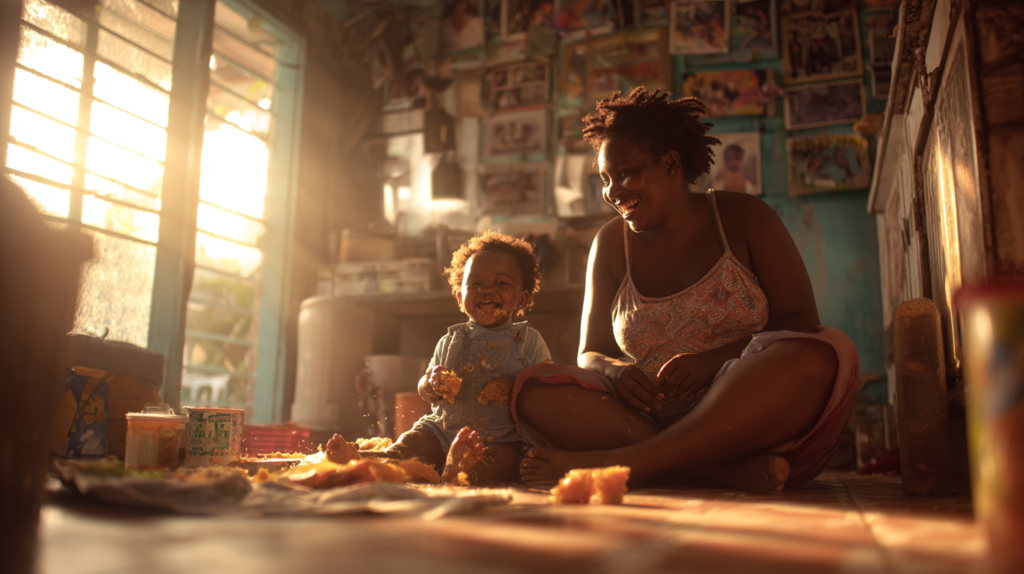
I Followed My BLW Baby for 48 Hours: Here’s The Mess They Don’t Show on Instagram
What if I told you that the thing parents regret most isn’t starting baby-led weaning—it’s believing the perfectly curated version they saw online?
Three months ago, I sat scrolling through Instagram at 2 AM during one of those inevitable night wakings. Every BLW account showed the same thing: smiling babies delicately holding cucumber spears, pristine white high chairs, and parents beaming at the camera. The floor? Spotless. The baby? Looking like they just stepped out of a Carter’s catalog. I thought to myself, “This is it. This is how we’re going to feed our baby.”
And then reality hit. Hard.
So I did something no one else seems to be doing—I documented every single moment of two full days of baby-led weaning. Not the highlights. Not the “camera-ready” meals. Every. Single. Thing. The avocado handprints on the walls. The sweet potato that somehow ended up in my hair. The moment I found myself crying in the pantry at 4 PM on Day One because I’d already done three outfit changes—and that was just me.
Because here’s the truth nobody tells you: we spend so much time waiting for the perfect feeding method, scrolling for the right approach, comparing ourselves to those Instagram highlight reels. But the magic isn’t in getting it perfect—it’s in knowing what you’re actually signing up for. And suddenly, when you understand the real process, the messy middle becomes not just manageable, but somehow beautiful in its chaos.
Your BLW Reality Check: What Are You Really In For?
Pick what you think happens in one typical BLW meal:
Day One, 7:00 AM: The “Optimistic Parent” Phase
I woke up ready to conquer BLW. I had my splat mat positioned perfectly under the high chair—one of those “easy-to-clean” ones everyone raves about. I prepped banana spears, steamed sweet potato wedges (because my Caribbean Baby Food Recipe Book promised these were crowd-pleasers), and perfectly cut avocado slices following the exact dimensions I’d seen in three different YouTube videos.
Total prep time: 22 minutes. I’d timed it.
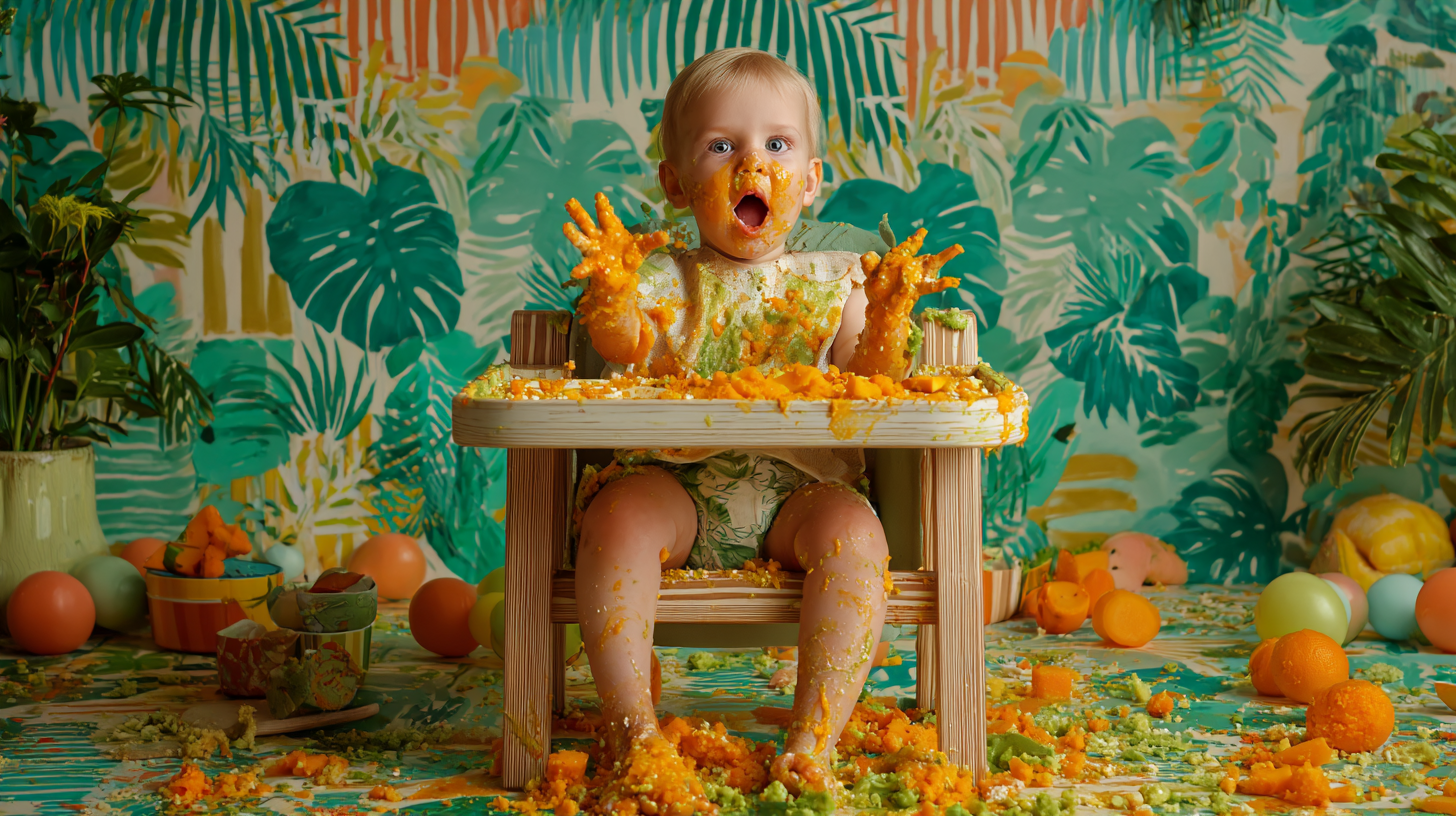
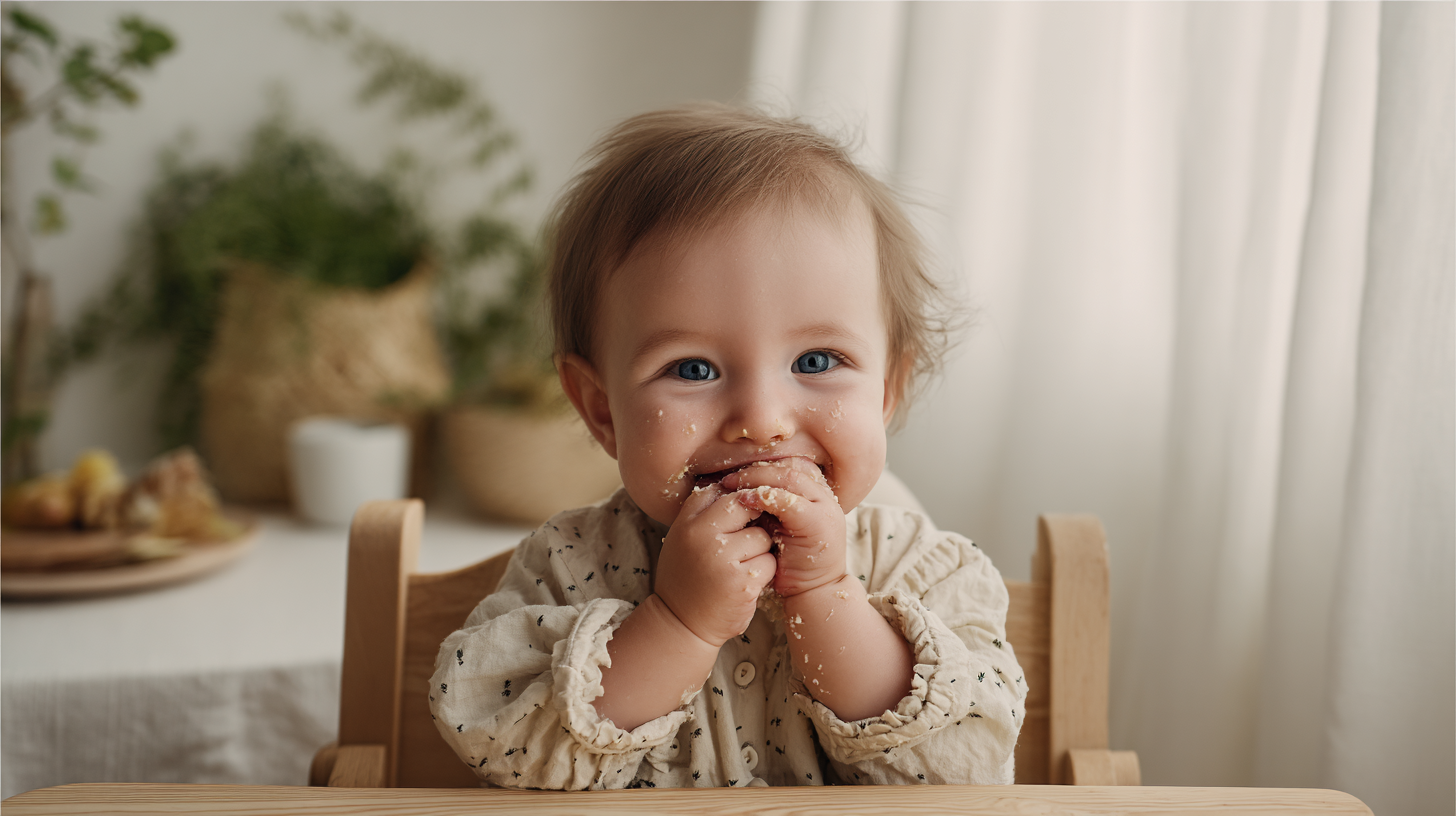
My baby looked at this beautiful spread with genuine curiosity. Then picked up the banana, squished it between tiny fingers, and smeared it directly into his eyebrow. The avocado? Launched with the precision of a tiny catapult. It stuck to the wall behind me. The sweet potato wedge got the squeeze treatment and exploded like orange toothpaste.
Cleanup time: 18 minutes. Actual eating time: maybe 4 minutes.
Nobody tells you that the first few BLW sessions feel like you’re running a food art installation where your baby is both the artist and the destroyer. And that’s before we even discuss what happens when they discover they can launch peas like tiny missiles.
The Time Investment Nobody Talks About
Here’s where it gets real. Between Day One 7 AM and Day Two 7 PM, I tracked every single minute spent on BLW-related activities. Not to discourage you—but because knowledge is power, and going in blind is how parents end up rage-posting at midnight in Facebook groups.
⏰ 48-Hour BLW Time Breakdown
Tap each category to reveal the shocking truth:
Day One, 12:30 PM: The Lunch That Broke Me
I thought I’d learned from breakfast. I was wrong.
For lunch, I made what I call “Caribbean comfort strips”—soft-steamed breadfruit fingers with a side of mashed pigeon peas (inspired by the Mayi ak Gwomanje recipe from the islands). I figured since this was lunch, maybe baby would be hungrier. Maybe more food would actually make it inside.
What actually happened: The breadfruit became a stress ball. The pigeon peas? My baby discovered they could be individually picked up and distributed across a three-foot radius with remarkable efficiency. By the time we were done, there were peas in the dog’s water bowl, two stuck to the window behind us, and one that I found later that evening in my own shoe. Don’t ask me how.
I sat on the kitchen floor—still covered in breakfast’s remnants because I’d only done a “quick wipe”—and I laughed. Then I cried. Then I laughed again. Because this is the part they don’t show on Instagram: the moment you realize this isn’t a phase that gets easier tomorrow. This is the process. This messy, chaotic, food-everywhere process is exactly what’s supposed to happen.
The BLW Mess-O-Meter: Rate Your Chaos Level
Select a meal scenario to see its REAL mess rating:
Actual Result: Some crumbs, possible nut butter hand prints on clothes, but overall one of your “winning” meals. Cleanup: 8 minutes. You might even get to finish your coffee while it’s still warm.
Actual Result: Tomato sauce EVERYWHERE. In hair, between toes, under high chair straps, somehow on the ceiling. One parent reported finding dried sauce behind their baby’s ear three days later. Cleanup: 25 minutes minimum. Bath mandatory.
Actual Result: This is the meal that makes parents reconsider their life choices. The combination of slippery avocado and sticky mango creates a substance that defies physics and standard cleaning products. Cleanup: 35-40 minutes. You’ll be finding evidence for days. Pro tip: do this meal before bath time or outside if weather permits.
Actual Result: The most mess, but also the most flavor development. Turmeric stains are eternal. That yellow glow on everything? That’s your new aesthetic. Cleanup: 45 minutes. But your baby is experiencing authentic Caribbean flavors that will shape their palate forever. Sometimes the biggest messes create the best memories—and the most adventurous eaters.
The Food Waste Reality Check
Let’s talk about the elephant in the room—or rather, the sweet potato on the floor. During my 48-hour documentation, I weighed every bit of food I prepared versus what actually got consumed. The results were sobering.
Day One total food prepared: approximately 680 grams across three meals and two snacks. Amount consumed: roughly 180 grams. That’s a 73% waste rate. On Day Two, it wasn’t much better—71% waste.
At first, this devastated me. I thought about my grandmother back in Trinidad, who never wasted a grain of rice. I felt guilty. Wasteful. Like I was failing at something fundamental.
Then I spoke to a pediatric feeding therapist who told me something that changed my entire perspective: “It’s not waste if they’re learning.” Every squished banana is teaching grip strength. Every launched pea is developing hand-eye coordination. Every rejected food is helping them understand they have autonomy over what goes in their body—a lesson that fights picky eating down the road.
Still, I adapted. I learned to compost what I could. To give truly floor-clean pieces to our dog. To prepare smaller portions and offer seconds if baby was actually eating. And most importantly, I learned to prep meals that could be repurposed—like making extra roasted plantain that could become tomorrow’s breakfast if it didn’t get eaten today.
Your BLW “Educational Investment” Calculator
Select your typical waste level to see the real numbers:
But here’s the shift: Research from 2024 shows that babies who do BLW are significantly less likely to become picky eaters by age 3-5. The financial “loss” now? It’s actually an investment preventing future battles where your toddler refuses everything except chicken nuggets. One study participant said: “I ‘wasted’ maybe $200 extra in food during BLW months. I’ve since saved thousands by not needing to make separate kids’ meals or deal with pickiness.”
Day One, 5:45 PM: The Dinner That Taught Me Everything
By dinner on Day One, I was exhausted. My back hurt from bending to pick up food. I’d already used a week’s worth of washcloths. I seriously considered just giving my baby a pouch and calling it a day.
But something in me said to try one more time. I made something simple—strips of rotisserie chicken (already cooked, because I’m not a superhero), steamed carrot sticks, and small pieces of rice mixed with coconut milk and thyme, inspired by the Coconut Rice & Red Peas from our family recipe traditions.
And something magical happened. Not Instagram-magical. Real magical.
My baby picked up a carrot stick and actually chewed it. Gummed it, really, since teeth are still sparse. But there was intention. Focus. Then came the chicken—squeezed at first, examined, then a tiny piece made it into the mouth. I watched my child’s face cycle through surprise, consideration, and then this beautiful moment of satisfaction.
The rice still ended up everywhere. I found grains in the high chair cracks for three days afterward. But in that moment, watching my baby actually engage with food, make choices, experience flavors—I got it. I understood why parents push through the mess.
This wasn’t about getting food into my baby efficiently. It was about building a relationship with food that would last a lifetime. And you can’t build that from a perfectly curated Instagram highlight reel. You build it from the messy, frustrating, beautiful process of letting your child explore.
Day Two: The Complications They Never Mention
Day Two started with something I didn’t expect—gagging. Not choking (I’d taken an infant CPR course and knew the difference), but that throat-clearing, eyes-watering gag that makes every parent’s heart stop.
It happened with a piece of steamed apple. My baby had been doing so well, confidently grabbing and munching. Then came the gag—that awful moment where time freezes and you’re not sure if you should intervene or wait.
I waited. Hands ready but not interfering. And within seconds, baby coughed, cleared it, and went right back to eating like nothing happened.
This happened three more times over Day Two with different foods. Each time, I died a little inside. Each time, my baby handled it independently. And each time, I understood a bit more why the research shows BLW doesn’t increase choking risk when done properly—because babies learn to manage food in their mouths from the start, unlike spoon-fed babies who are suddenly given finger foods at 9-10 months without that gradual practice.
But nobody prepares you for the emotional toll of watching your baby gag. Instagram doesn’t show the parent sitting on their hands, fighting every instinct to intervene, trusting the process while internally screaming. That’s the reality they skip.
The Survival Strategies I Discovered
By the afternoon of Day Two, I’d developed what I call my “Caribbean grandmother wisdom meets modern BLW” survival system. These weren’t things I found in books or blogs—these were born from necessity, tears, and a WhatsApp group with my cousin who’d survived this phase.
✅ Your BLW Survival Arsenal: How Many Do You Have?
Check off each survival strategy you’ve implemented (or plan to):
Your BLW Readiness Score: 0/8
Here’s the thing that saved my sanity: I stopped trying to do BLW “perfectly” and started doing it practically. Some meals were full exploratory experiences with multiple foods and textures. Other meals were simple strips of toast with mashed avocado because I had nothing left to give. Both are valid. Both are BLW.
I also learned to embrace our Caribbean food traditions in baby-safe ways. Soft-cooked dasheen instead of potato. Ripe plantain strips instead of banana. Gentle curries with minimal salt using recipes adapted from the Caribbean Baby Food Recipe Book—because flavor development matters, and I wanted my baby to know the tastes of our culture from the start.
The Emotional Roller Coaster
By Day Two evening, I was emotionally exhausted in ways I hadn’t anticipated. This wasn’t just physical tiredness from bending and cleaning. This was the mental load of constantly supervising, watching for choking signs, second-guessing every food choice, comparing my reality to those perfect Instagram feeds.
I posted a story to my Instagram—an honest one. No filter, no perfect lighting. Just my kitchen floor covered in sweet potato, my shirt stained with mango, and a caption that said: “This is BLW. All of it.”
The response shocked me. Within an hour, I had dozens of messages from parents saying, “THANK YOU. I thought I was doing something wrong.” One parent said, “I’ve been hiding how hard this is because every other parent makes it look easy.”
And that’s when I realized: the real problem isn’t BLW itself. It’s the gap between expectation and reality. It’s parents starting this journey thinking it should look like the Instagram version, then feeling like failures when their reality is messy, frustrating, and exhausting.
The truth is, we often wait for feeding to feel perfect before we admit it’s hard. We scroll through curated feeds expecting to find the “right way” that makes it easy. But the real magic? It’s in accepting that this process is supposed to be messy. The path forward isn’t something you can see from the start—you create it by doing, by surviving each meal, by learning what works for YOUR baby, not Instagram’s baby.
Instagram vs. Reality: Flip The Truth
Tap each card to reveal what Instagram doesn’t tell you:
What I Wish Someone Had Told Me
If I could go back to that pre-BLW version of myself, scrolling Instagram at 2 AM, here’s what I’d say:
The mess is not a sign you’re doing it wrong. The mess IS the process. Your baby smearing food everywhere isn’t failing to eat—it’s learning texture, temperature, consistency. That avocado in the hair? That’s sensory exploration. The peas launched across the room? Hand-eye coordination practice.
You don’t need to know every step from the beginning. Just the next meal. Just the next food. The clarity doesn’t come from watching more YouTube videos or reading another blog post. It comes from doing. From surviving that first disastrous breakfast and trying again at lunch.
The pain of seeing food wasted is real, but the pain of raising a picky eater who only accepts five foods is worse. Every parent I spoke to who pushed through the BLW mess phase said the same thing: “By age two, my kid eats everything. The investment was worth it.”
And here’s what nobody talks about: you don’t need fancy equipment. I started with expensive silicone plates, suction bowls, specialized spoons. Know what works best? A regular plate (baby will throw it anyway), foods placed directly on the high chair tray, and your supervision. Save your money for the extra laundry detergent you’ll need.
The Unexpected Benefits
By the end of my 48-hour documentation period, something shifted. I wasn’t counting minutes anymore. I wasn’t weighing food waste. I was watching my baby.
I noticed things I’d missed in my stress: The look of intense concentration when trying to pick up a slippery piece of mango. The genuine surprise and delight when a new flavor hit the taste buds. The growing confidence in bringing food to mouth—less dropping, more intentional movement.
I also noticed something about myself. I was sitting down for three meals a day, something I hadn’t done since before baby was born. I was eating the same foods as my baby (adult versions, properly seasoned). We were sharing meals as a family, even if baby’s version looked like abstract art by the end.
This is the benefit they don’t quantify in research studies: BLW forced me to slow down. To be present. To watch my child learn one of life’s most fundamental skills. Yes, it was messy. Yes, it was time-consuming. But it was also sacred in a way I hadn’t expected.
The Caribbean recipes from our family traditions added another layer—cultural connection. My baby was learning to love the same flavors I grew up with, the same foods my grandmother made. That’s not something you can buy in a baby food pouch.
Your Next Step
So where does this leave you? Maybe you’re reading this before starting BLW, terrified of the mess but curious about the benefits. Maybe you’re in the thick of it right now, covered in butternut squash and questioning your life choices. Maybe you gave up on BLW because it felt too hard and you’re wondering if you made the right call.
Here’s what I learned: there’s no perfect way to do this. You can combine BLW with some spoon-feeding (it’s called “modified BLW” and it’s completely valid). You can take breaks on hard days and serve pouches guilt-free. You can adapt this method to fit YOUR life, not Instagram’s version of what it should look like.
The only wrong way to do BLW is to make yourself miserable trying to do it “perfectly.”
What will your baby’s feeding journey look like if you weren’t worried about making it Pinterest-worthy? What would it look like if you went all in on the mess, accepted the chaos, and made it the most culturally-connected, joy-filled experience you could?
At the end of the day, your baby won’t remember if their first foods were served on an expensive bamboo plate or a regular high chair tray. They won’t remember if you cried in the pantry on Day One (but you’ll laugh about it later). What they will carry forward is the relationship with food you’re building right now—one messy, authentic, real meal at a time.
So go ahead. Prep those sweet potato wedges. Lay down that splat mat (even though food will escape it). Put your baby in the high chair. And embrace the beautiful chaos of baby-led weaning—all of it. The mess, the frustration, the food waste, the magical moments of connection. Because yesterday’s perfectly curated Instagram feed is gone, and tomorrow isn’t guaranteed.
All we have is this moment. This messy, imperfect, real moment. And honestly? That’s exactly where the magic lives.

Kelley's culinary creations are a fusion of her Caribbean roots and modern nutritional science, resulting in baby-friendly dishes that are both developmentally appropriate and bursting with flavor. Her expertise in oral motor development and texture progression ensures that every recipe supports your little one's feeding milestones while honoring cultural traditions.
Join Kelley on her flavorful journey as she shares treasured family recipes adapted for tiny taste buds, evidence-based feeding guidance, insightful parenting anecdotes, and the joy of celebrating food, culture, and motherhood. Get ready to immerse yourself in the captivating world of Kelley Black and unlock the vibrant flavors of the Caribbean for your growing baby, one nutritious bite at a time.
- The Feeding Revolution: Why Your Everyday Meals Are Changing the World - October 13, 2026
- Your Feeding Story Matters More Than The “Perfect” One Online - October 12, 2026
- Looking Forward: Stepping Into Your Confident Feeding Future - October 11, 2026