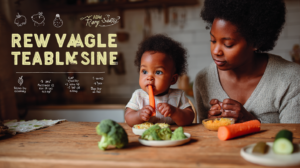
How Your Feeding Philosophy Evolved (And Why That Makes You a Stronger Parent)
If you’ve ever looked back at old feeding choices and cringed a little, you’re exactly the kind of thoughtful, evolving parent this world needs. The parents who care enough to course-correct are the same parents whose kids learn to trust their bodies, enjoy food, and feel safe at the table.
In this deep-dive, you’ll trace how your feeding philosophy has changed, discover the science that backs your growth, and learn how to stop translating “I do things differently now” into “I failed before.” By the end, you’ll see your journey not as a messy zigzag, but as a powerful story of becoming the parent your child actually needs.

What Is a Feeding Philosophy, Really?
Your feeding philosophy is the bundle of beliefs, stories, and rules you carry about how children “should” eat and how a “good” parent feeds them. It shows up in things like how you talk about dessert, whether you insist on “just three more bites,” how you set mealtime routines, and what you believe your job is versus your child’s job when it comes to eating.
Research on food parenting breaks this down into three big domains: coercive control (pressure, restriction, bribes), structure (routines, boundaries, predictable offerings), and autonomy support (responding to cues, allowing choice, involving kids in food decisions). Together, these shape how your child learns to read hunger and fullness, trust their body, and relate to food long term.
Many parents start with a more control-heavy philosophy (because that’s what they grew up with or what early advice sounded like) and gradually shift toward more structure plus autonomy—consistent routines, clear boundaries, but far less pressure and power struggle. That shift is exactly what this article helps you name and celebrate.
Mini Check-In: Where Are You Right Now?
Choose the option that feels closest to your current default at mealtimes: self-quiz
However you answered, your responses say more about your context and history than about your worth as a parent. They reflect what you were taught growing up, the advice you’ve absorbed, your stress level, and your child’s temperament—all of which naturally change over time, pulling your philosophy along with them.
How Feeding Advice Has Changed (You’re Not Imagining It)
A big reason your approach looks different from when you started is that the advice around you has changed dramatically. For decades, industrial baby food marketing, rigid scheduling, and “finish your bottle” culture encouraged parents to override infant cues in favor of clean plates and fixed timetables. Convenience and control were treated as the gold standard.
Over the last two decades, research has steadily highlighted the benefits of “responsive feeding”—noticing, interpreting, and appropriately responding to your child’s hunger and fullness signals. Instead of “I decide how much you eat,” the tone shifted toward “I decide what, when, and where; you decide whether and how much.”
Modern guidelines increasingly build responsive feeding into broader “responsive parenting” frameworks. That means tuning in to your child’s cues, providing consistent structure, and avoiding pressure or bribes. If you’ve ever felt pulled toward letting go of old rules that create more power struggle than peace, you’re aligning with these newer evidence-based recommendations.
The Numbers Behind Your “Gut Feelings”
When you stopped forcing “just one more bite” or eased up on dessert rules, it probably came from instinct: “This doesn’t feel good—for either of us.” Research backs that instinct. Studies consistently find that high-pressure tactics and strict restriction are linked with more eating struggles—like picky eating, overeating when adults aren’t around, or constant negotiating at the table.
On the flip side, parents who lean into structure plus responsiveness—regular meals and snacks, calm expectations, and trusting children to decide how much to eat—tend to see better self-regulation of hunger and fullness. Their kids are more willing to try new foods over time and are less likely to swing between chaotic snacking and battles over portions.
Newer work looks at feeding as something dynamic, not fixed. Instead of labeling parents as permanently “authoritarian” or “responsive,” researchers track how approaches shift across days and situations. The pattern is clear: even the most knowledgeable parents slide between supportive and controlling tactics depending on stress levels, time pressure, and child behavior. In other words, inconsistency doesn’t mean failure; it means you’re human.

Why Your Philosophy Shifts: Pivotal Moments That Change Everything
If you think back, your approach probably didn’t change in abstract; it changed because something happened. Maybe your baby refused bottles all day but nursed all night. Maybe your toddler gagged on a food you pushed. Maybe a doctor commented on growth charts, or you saw your child’s eyes fill with tears when you took a plate away.
Qualitative research with parents echoes this over and over: certain “oh no” and “oh wow” moments become turning points. A power struggle that ends in both of you crying. Realizing that hiding vegetables hasn’t made your child like them more. Watching a cousin’s child eat confidently because nobody is hovering over every bite. These lived moments often matter more than any article.
These inflection points often come with a swirl of shame and self-blame—especially when social media is shouting “do this, never that” at full volume. But from a growth perspective, each moment you say “this isn’t working, I want to try something healthier” is a powerful act of responsive parenting.
Experts Agree: Evolution Beats Perfection
Across child nutrition and developmental psychology, there’s strong agreement: the most protective feeding approaches look a lot like authoritative parenting—warm, connected, with clear structure but low pressure. Responsive feeding sits at the heart of this, inviting your child to listen to their internal signals while you hold the bigger container of routines, safety, and food offerings.
Experts also emphasize that feeding is a two-way street. How you feed shapes how your child eats, but your child’s temperament, appetite, and sensitivities also shape how you feed. If your child was picky, highly sensitive, or ravenous, it makes sense that you experimented and adjusted more than a parent of an easy-going eater. That’s not inconsistency; it’s appropriate adaptation.
Many clinicians now explicitly coach parents to expect their feeding philosophy to evolve. They frame shifts not as “admitting you were wrong,” but as what it looks like to parent in real time—integrating new evidence, your lived experience, and your child’s unfolding personality into something increasingly attuned.
When Social Media Makes You Doubt Your Growth
Of course, it’s hard to feel proud of your evolution when your feed is a loud mix of “strict sugar-free” accounts, colorful baby-led weaning plates, and weight-loss panic disguised as “wellness.” Parenting content online has exploded, and with it, opportunities for both support and social comparison.
Studies on social media and parenting show that heavy comparison can fuel anxiety, guilt, and a sense of inadequacy—especially around nutrition and body size. When you’re bombarded with highlight reels of “perfect eaters” and rigid rules, any change in your approach can feel like backpedaling instead of maturing.
The truth is, many of those curated plates and strong opinions leave out context: the tantrums before the photo, the financial realities, the grandparents who cook differently, or the second child who refuses everything the first one loved. Your messy, lived evolution may be far healthier and more sustainable than someone else’s staged perfection.
Real-Life Stories: How Parents Quietly Evolve
Think of a parent who started with a “clean plate club” mentality because that’s what they heard growing up. After months of tears and resistance, they notice that backing off—and calmly clearing the plate when their child says “I’m done”—actually leads to fewer battles and more bites over time. That’s feeding evolution in action.
Or the parent who once banned every sweet, only to see their child fixate on treats at parties and overload when finally given access. Over time, they experiment with serving a cookie alongside a snack plate of fruit and cheese, talking neutrally about all foods. Slowly, they watch sweets lose their forbidden glow and become just one part of the picture.
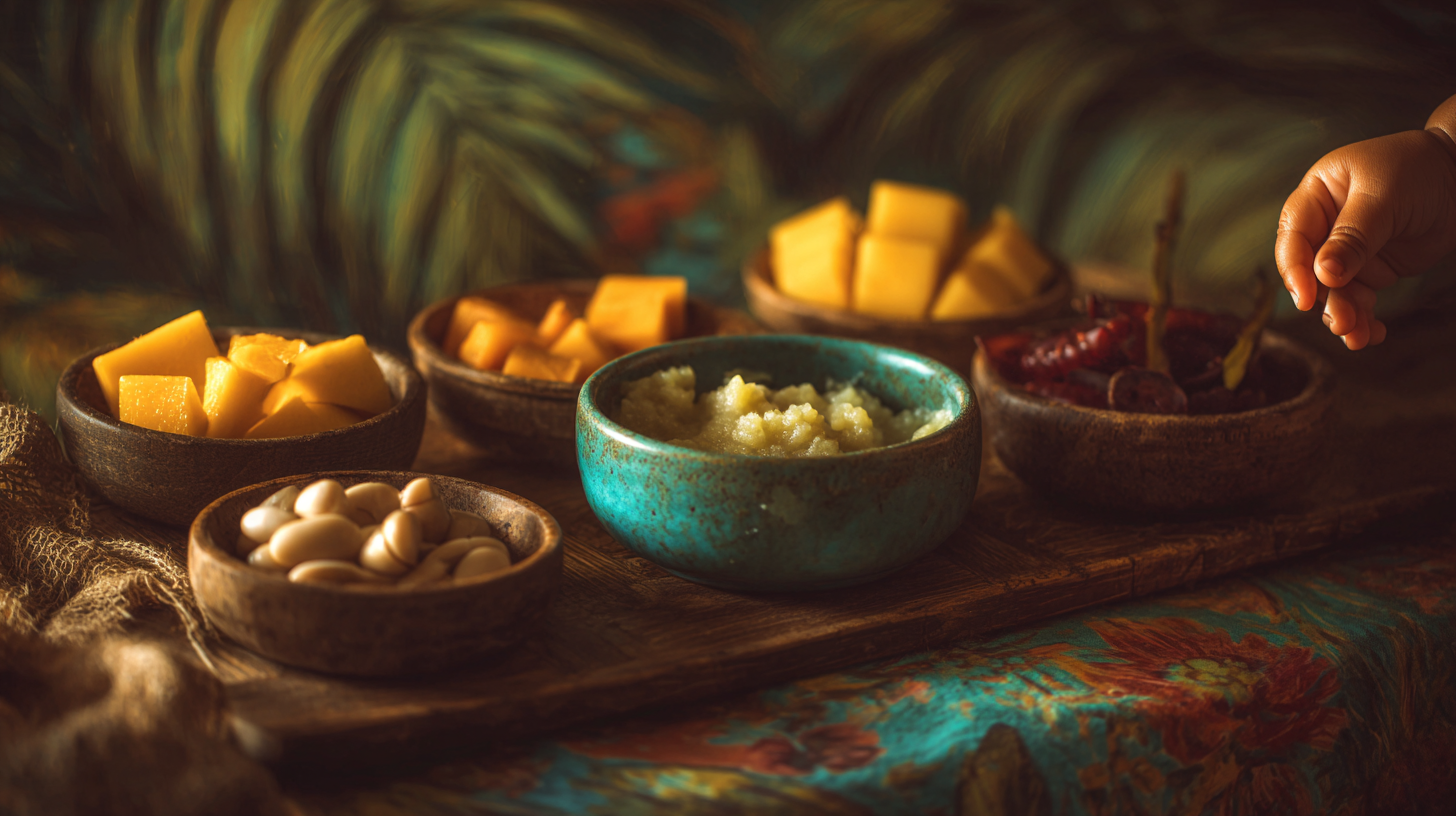
Another parent may recognize that endless grazing from the pantry is creating chaotic appetites. They shift to more structured, sit-down snacks—maybe a small bowl of mashed plantain and beans, or sliced mango with yogurt. The child starts arriving at meals hungry but not desperate, and everyone’s shoulders come down a little.
Your Feeding Style Tracker (Today Only)
Tap the option that feels closest for today in each row. You’ll get a personalized reflection at the bottom. live insight
These everyday adjustments are what long-term change actually looks like. It’s rarely one big decision and much more often a series of tiny, repeated choices: serving a safe food alongside something new, speaking neutrally about bodies, letting a child leave the table without drama, reintroducing a food calmly even after rejection.
Feeding Through Stress, Culture, and Real Life
It’s easier to be the parent you want to be when life is calm, groceries are stocked, and nobody is yelling. But studies show that momentary stress, money worries, time pressure, and food insecurity all make parents more likely to slip into pressure, bribes, or indulgence—even if they believe in responsive feeding.
In Caribbean and diaspora homes, there can be extra layers: elders encouraging “a big belly is a healthy baby,” cultural pride in finishing every grain of rice, or relatives who feel disrespected if a child refuses their cooking. It’s completely normal to feel pulled between honoring the wisdom you were raised with and embracing newer research that emphasizes internal cues and body respect.
The goal isn’t to reject your culture; it’s to weave it into a healthier pattern. That might look like keeping beloved dishes (cassava, plantain, callaloo, rice and peas) while adjusting portions, adding more vegetables, or restructuring the rhythm of meals so your child can both savor flavors and notice their body’s signals.
Practical Ways to Honor Your Evolution (Not Erase Your Past)
Instead of trying to forget your earlier approaches, use them as a map of how far you’ve come. One powerful practice is to literally write down the “old rules” you carried into parenthood—things like “good kids finish their plates” or “sugar must be banned completely”—and then write the gentler, more research-aligned version you’re growing into.
For example, “Good kids finish their plates” might become “My job is to offer balanced options; my child’s job is to decide how much to eat.” “No sugar ever” might soften into “We mostly serve nourishing foods at home and include fun foods in reasonable portions without shame.” These shifts turn rigid scripts into flexible, living guidelines.
You can also build small rituals that remind you of your new philosophy in the rush of daily life: a sticky note on the fridge (“My child’s body is not a project”), a quiet breath before responding to “I’m full,” or a simple question—“What would future-me be proud I chose right now?”
Feeding for the Future: Raising Kids Who Trust Their Bodies
The real impact of your evolving philosophy isn’t just fewer mealtime meltdowns; it’s the message your child carries into adolescence and adulthood about food and their body. Responsive, low-shame, structured feeding supports kids in learning to notice hunger, fullness, satisfaction, and emotional signals without turning every feeling into a reason to over- or undereat.
When you avoid using food as punishment or reward, and when you speak kindly about your own body in front of them, you’re planting seeds that protect them against diet culture, body shame, and extreme restriction later on. This protective effect is especially powerful when paired with meals that reflect your culture—showing them that their heritage foods belong in a balanced, joyful way of eating.
Building that kind of foundation does not require perfect plates. It asks for a pattern of curiosity (“How did that feel in your tummy?”), respect (“You said you’re full, I hear you”), and exposure (“Let’s try a spoon of this mango-coconut mash and see what you think”), repeated many times over years.
Bringing It All Together: Your Story Isn’t a Failure Arc
One day, you might look back at this chapter the way elders look back on their lives: not counting the number of perfect meals served, but remembering the tiny, ordinary moments that made it all matter. The way your child leaned into you when you stopped insisting on one last bite. The first time they tried a new food because they felt safe, not scared. The laughter around a bowl of mango and coconut that tasted like home.
Your feeding journey will never be a straight line, and that’s the point. You started with the tools you had, in the culture you knew, in a body and nervous system carrying its own history. Each time you adjusted your approach—letting go of pressure, easing up on restriction, adding more structure where chaos reigned—you voted for a different generational story.
If you remember anything from this article, let it be this: changing your feeding approach is not proof that you failed; it’s proof that you are paying attention. You are allowed to grow. You are allowed to say, “This isn’t working for us,” and choose a kinder, more connected way—tomorrow, and again next year, and again when your baby becomes a teenager with their own opinions and appetite.
And as you keep evolving, you don’t have to do it alone. Surround yourself with voices that honor both science and culture, that respect your baby’s body and your own limits. If you’d like a companion in that journey, especially if Caribbean flavors are part of your story, explore the Caribbean Baby Food Recipe Book: Easy & Healthy Homemade Meals for Infants & Toddlers for recipes that turn everyday meals into small, joyful acts of growth—for both you and your little one.
You don’t need to know every step of the journey. You just need the next one: maybe it’s one less “just three more bites,” one more deep breath before responding, or one new island-inspired puree on tomorrow’s plate. That’s how feeding philosophies evolve—one small, loving decision at a time.

Kelley's culinary creations are a fusion of her Caribbean roots and modern nutritional science, resulting in baby-friendly dishes that are both developmentally appropriate and bursting with flavor. Her expertise in oral motor development and texture progression ensures that every recipe supports your little one's feeding milestones while honoring cultural traditions.
Join Kelley on her flavorful journey as she shares treasured family recipes adapted for tiny taste buds, evidence-based feeding guidance, insightful parenting anecdotes, and the joy of celebrating food, culture, and motherhood. Get ready to immerse yourself in the captivating world of Kelley Black and unlock the vibrant flavors of the Caribbean for your growing baby, one nutritious bite at a time.
- The Feeding Revolution: Why Your Everyday Meals Are Changing the World - October 13, 2026
- Your Feeding Story Matters More Than The “Perfect” One Online - October 12, 2026
- Looking Forward: Stepping Into Your Confident Feeding Future - October 11, 2026