Food Science for Kids: Making Learning Delicious
What’s Your Kitchen Science Superpower?
Before we dive in, let’s discover what kind of food science explorer you are! Click your parenting style:
Here’s something nobody tells you about raising kids: the most powerful learning tool you own isn’t hidden in some expensive STEM kit or educational tablet. It’s sitting right there in your kitchen, between the sweet potatoes and the coconut milk. And the truth that’s about to change everything? Your child’s brain lights up more powerfully when learning through food than through almost any other medium.
I stumbled onto this revelation on a rainy Tuesday afternoon when my little one knocked over a bag of baking soda into a bowl of vinegar. Instead of the mess I expected to clean up, I witnessed something extraordinary: pure, unfiltered wonder. That fizzing, bubbling reaction captured her attention for twenty minutes straight—longer than any educational video ever had. That’s when it hit me. We’ve been looking for STEM education in all the wrong places when the best laboratory has been under our noses this whole time.
Recent research from North Carolina State University reveals something groundbreaking: food-based STEAM learning activities improved preschool children’s science knowledge scores by 34% and vocabulary development by 16% in just one program cycle. But here’s what really matters—these weren’t passive improvements measured on some abstract test. These were real children, ages 3-5, who suddenly started asking “why?” about everything they ate, who began connecting plant parts to the foods on their plates, who developed genuine scientific curiosity that extended far beyond mealtime.
The global STEM Education Market reached $68.38 billion in 2025 and is projected to hit $250.8 billion by 2035. Parents are desperately seeking ways to give their children educational advantages, often overlooking the most accessible and effective tool available. Food science education bridges a critical gap—it’s not about choosing between nutrition education and STEM learning. It’s about understanding that they’re the same thing, approached from different angles, both leading to the same destination: curious, capable, confident children who understand how their world works.
The Science Hidden in Your Pantry
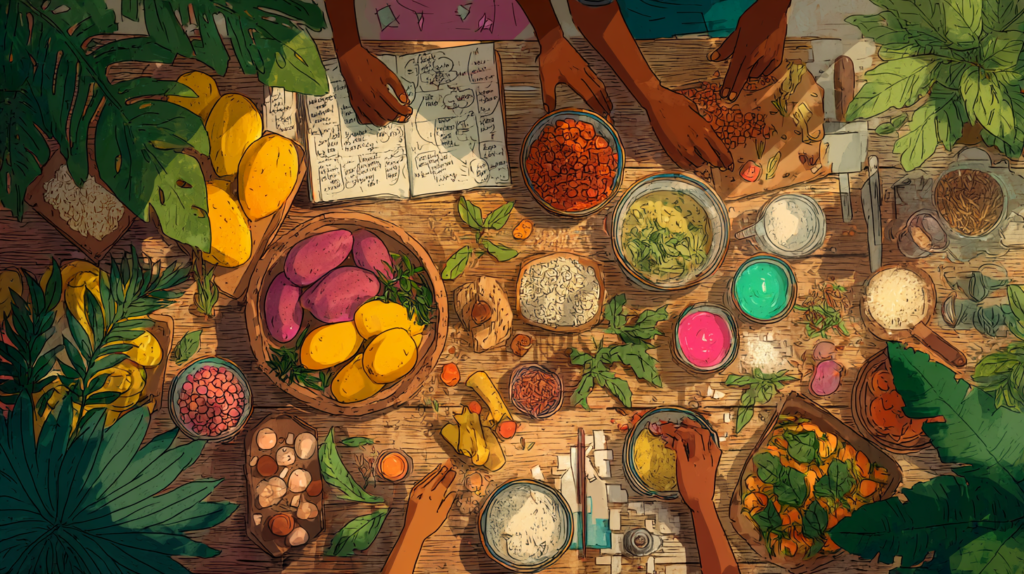
Walk into your kitchen right now and look around. Really look. That bag of rice? It’s a lesson in botany, agriculture, and cultural anthropology. The coconut milk? Chemistry, plant biology, and emulsification physics. The ripe plantains browning on your counter? They’re conducting a real-time experiment in enzymatic reactions and sugar conversion. Every single ingredient holds multiple lessons waiting to unfold.
The revelation that transformed how I approached food with my children came from understanding this: cooking isn’t just following recipes—it’s conducting experiments with immediate, often delicious, results. When you steam broccoli and watch it transform from dull green to vibrant emerald, you’re witnessing chlorophyll responding to heat. When you knead dough and feel it change texture under your hands, you’re experiencing gluten formation and protein bonding. These aren’t abstract concepts from textbooks; they’re tangible experiences that children can see, touch, taste, and truly understand.
Dr. Virginia C. Stage from North Carolina State University, who directed the groundbreaking “More PEAS Please!” intervention, discovered that food-based STEAM activities don’t just teach isolated science concepts—they create what she calls a “Cycle of Discovery.” Children begin asking: What do we know? What do we wonder? What do we want to know? What have we learned? This framework mirrors the scientific method itself, training young minds to approach the world with curiosity and systematic thinking.
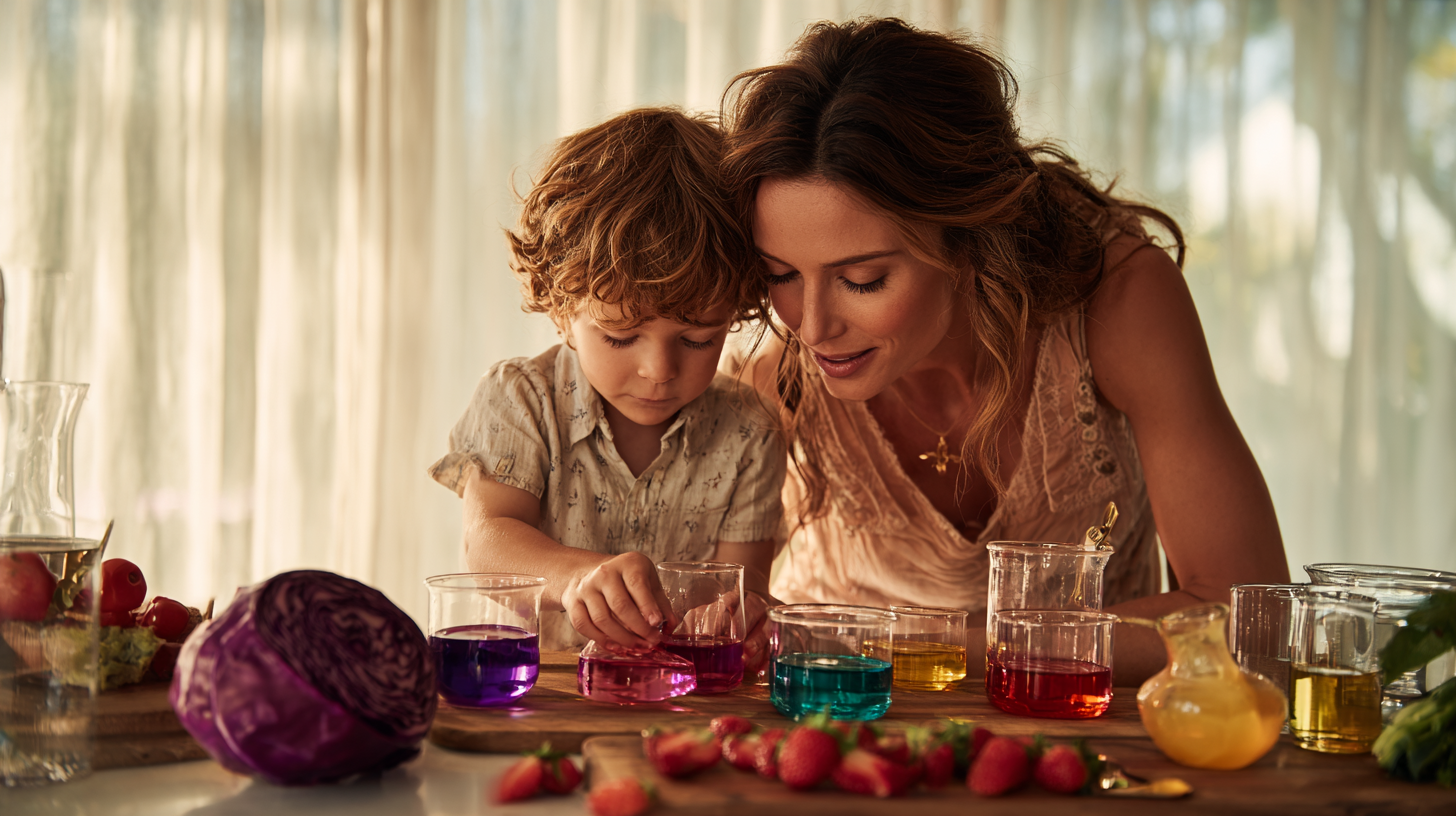
The beauty of kitchen science lies in its universality. Whether you’re working with calabaza and coconut milk or exploring the properties of cornmeal, the underlying principles remain constant. When I introduce my daughter to ingredients featured in our Caribbean Baby Food Recipe Book, like malanga or green fig (green bananas), we’re not just preparing meals—we’re investigating starch structures, observing oxidation, and discussing why some vegetables turn brown when cut while others don’t.
The Truth About Educational Food Experiences
Myth vs. Reality: What Everyone Gets Wrong
Let me share something that shifted my entire perspective: I used to think educational food experiences meant elaborate, time-consuming projects that would dirty every pot in my kitchen. The reality? The most profound learning happens during ordinary cooking moments when you pause to ask questions and encourage observation.
One evening while preparing a simple coconut rice and red peas dish (a staple you’ll find in many Caribbean households and in recipes like those in our cookbook), I involved my daughter in the process. As we opened the can of coconut milk, I asked her to predict what would happen when we stirred it. She noticed the thick cream separated from the liquid—an observation that led to a spontaneous discussion about emulsions, fat molecules, and why shaking helps mix things together. That five-minute interaction taught more about chemistry than any formal lesson could have.
Perfect Experiments for Your Child’s Age
Every age has its magic experiments. Select your child’s age range to discover ideal food science activities:
The Institute of Food Technologists reports that food technology and food science represent growing sectors within STEM education, with 22% of food companies investing in precision fermentation technologies and 21% in biochemical technologies for 2025. This creates unprecedented opportunities to connect children to real-world food innovation. Imagine explaining to your child that the same fermentation process that makes bread rise is being used to create sustainable proteins that could help feed the world. Suddenly, that bowl of bread dough becomes a window into future food systems.
Building Curiosity Through Hands-On Discovery
There’s a specific moment that happens during food science exploration—I call it the “aha moment”—when you see understanding literally dawn across your child’s face. It happened for us during what I now call the Great Mango Experiment. We had several mangoes at different ripeness stages, and instead of just eating them, we conducted a comparative analysis.
We examined the color, felt the texture, smelled the aroma, and finally tasted each one. My daughter documented her observations by drawing pictures. Through this simple activity, she learned about enzymatic ripening, sugar development, ethylene gas, and sensory evaluation—all concepts she can name and explain today. The experiment cost nothing beyond mangoes we were going to eat anyway, took thirty minutes including cleanup, and sparked weeks of follow-up questions about fruit ripening and plant biology.
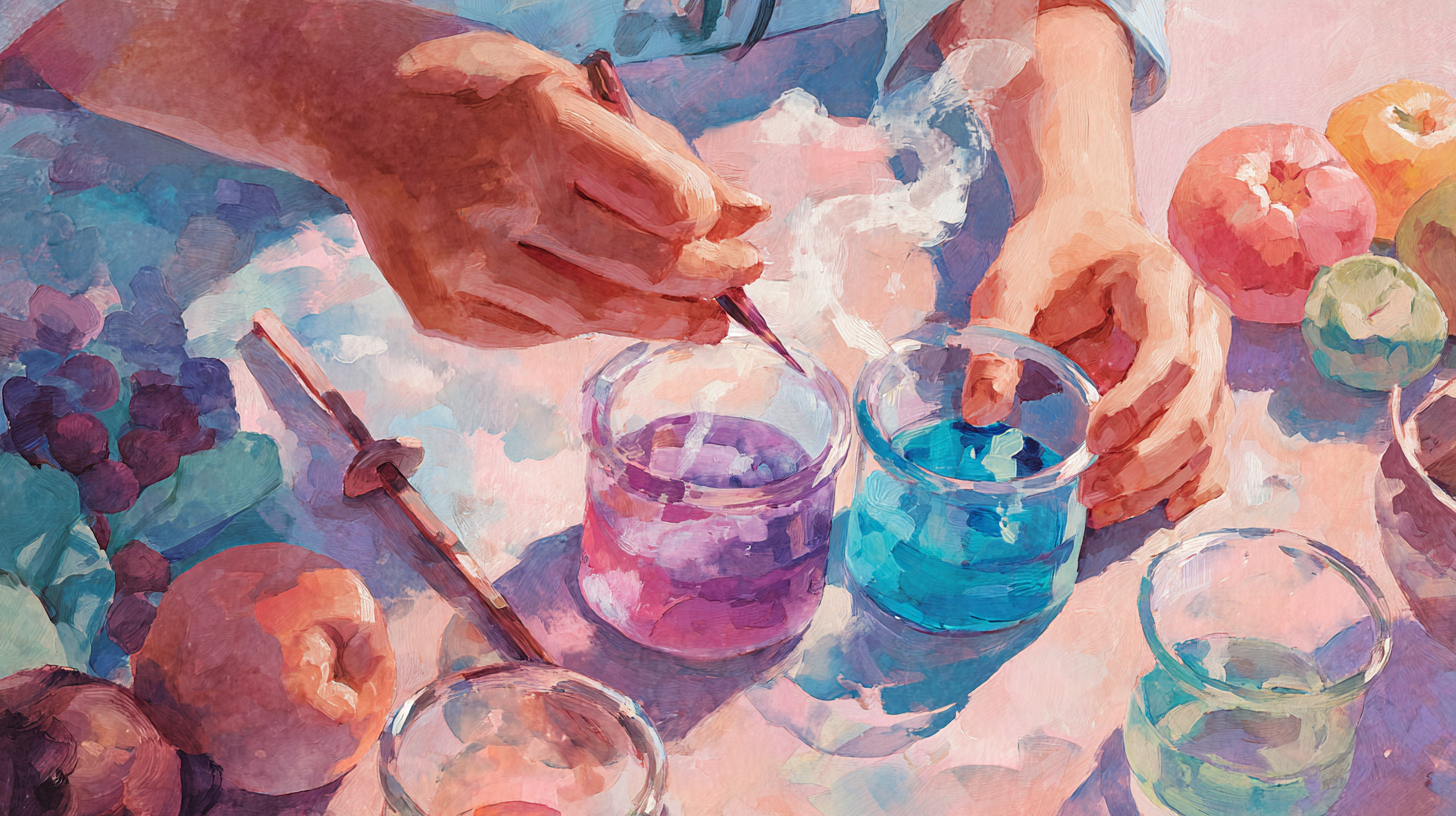
The FoodMASTER Initiative, which has sustained 20 years of STEM outreach programming, provides free online curricula demonstrating how food-based activities can be systematically integrated into mathematics and science education. Their research shows that these programs work precisely because they connect abstract concepts to tangible, multisensory experiences. Children don’t just learn about chemical reactions—they see, hear, smell, and sometimes taste them.
When preparing baby food using ingredients like sweet potato, callaloo, or plantain—staples featured throughout our Caribbean Baby Food Recipe Book—older siblings can participate in age-appropriate ways. A toddler might help wash vegetables, learning about cleanliness and food safety. A preschooler can observe how sweet potato changes color when cut and exposed to air, discovering oxidation. An elementary-aged child can measure ingredients, practicing fractions while understanding ratios and proportions.
The Social Media Revolution in Food Science
Something fascinating is happening on social media platforms that’s quietly revolutionizing how children learn about food science. TikTok and Instagram have become unexpected educational resources, with food science experiments going viral and reaching millions of young viewers. A 2024 study examining teenagers’ interactions with TikTok food videos found that viral content significantly influences real-life cuisine choices and food practices.
But here’s what makes this trend particularly powerful for parents: you can leverage this social media interest strategically. When children see engaging food science content online, they become motivated to recreate experiments at home. Educational organizations like KiwiCo have successfully used TikTok to share science experiments, with individual posts receiving over 18,000 likes and significant engagement from families.
The challenge parents face isn’t social media itself—it’s helping children develop the critical thinking skills to evaluate what they see. This is where food science education becomes crucial. When your child understands the real chemistry behind why a cake rises or why bread browns, they develop a framework for evaluating viral food videos with skepticism and curiosity rather than blind acceptance.
I’ve found that involving children in creating their own food science content—even if it’s just documenting experiments in a journal or taking photos for family—enhances learning retention. When my daughter “teaches” her experiments to her grandparents via video call, she consolidates her understanding while developing communication skills. This mirrors findings from educational research: teaching others is one of the most effective ways to deepen personal mastery of content.
Real Implementation Strategies
The barrier most parents describe isn’t lack of interest—it’s figuring out how to actually implement food science in the chaos of daily life. Katie Kimball, founder of Kids Cook Real Food, identifies the number one obstacle as the perception that teaching kids through cooking takes too much time. She advocates for a mindset shift: understanding that the time investment pays dividends in life skills, family bonding, and yes, educational development.
Let me walk you through how this works practically. Start small—ridiculously small. Your first food science activity might take five minutes during dinner preparation. As you cook, simply narrate what you’re doing scientifically: “Watch how the onions become translucent when heated—the cell walls are breaking down and releasing water.” That’s it. You’ve just conducted a food science lesson.
Your Food Science Journey Milestones
Click each milestone as you accomplish it. Watch your progress grow!
The “More PEAS Please!” program structure offers a proven framework: 16 hands-on activities organized into thematic units over several weeks. Each 15-20 minute activity follows the Cycle of Discovery—assessing prior knowledge, building wonder, investigating, and consolidating learning. This isn’t theoretical—this is what actually worked with 273 children aged 3-5, producing measurable improvements in science knowledge and language skills.
For families like mine who cook Caribbean food regularly, the opportunities are endless. When preparing dishes from our cookbook like coconut rice and red peas, geera pumpkin, or plantain-based meals, there are built-in teaching moments at every step. Soaking dried beans demonstrates water absorption and osmosis. Toasting spices releases volatile aromatic compounds. Cooking with coconut milk provides lessons in emulsions and fat suspension. These aren’t separate educational activities—they’re the science already happening in your cooking, now made visible and intentional.
Addressing the Challenges Nobody Talks About
Here’s where I need to be honest with you: food science education with kids isn’t always Instagram-worthy moments of wonder. Sometimes it’s spilled vinegar, sticky counters, and experiments that absolutely do not work as planned. And that’s precisely when the most valuable learning happens.
When our attempt to make fluffy bread completely failed, resulting in a dense, hard brick, my daughter was initially devastated. But that failure sparked our deepest scientific investigation yet. We researched what makes bread rise, learned about gluten development and yeast activation, tested different water temperatures, and understood the importance of kneading time. The failed bread taught more than a dozen successful loaves would have.
Research confirms this: food-based learning works best when it avoids moralizing about foods and instead focuses on exploration and sensory experiences. A 2023 investigation by CNN highlighted how well-intentioned nutrition education can inadvertently promote disordered eating when it uses black-and-white thinking about “good” and “bad” foods. The solution? Food science education that emphasizes curiosity, cultural food traditions, and understanding how ingredients work—not prescriptive dietary rules.
The safety concerns parents express are legitimate. Teaching children to cook involves sharp knives, hot surfaces, and electrical appliances. But Katie Kimball’s extensive work teaching thousands of children to cook demonstrates that with age-appropriate tasks, clear supervision, and consistent safety practices, children as young as two can safely participate in food preparation. A toddler stirring batter is learning about mixing while building motor skills. A five-year-old using a butter knife to cut soft foods develops coordination and confidence.
The time investment challenge is real, but it’s worth examining your perspective. Cooking takes time whether or not you involve children. Food science education doesn’t necessarily add time—it adds intentionality to time you’re already spending. That said, I won’t pretend that involving young children doesn’t sometimes slow things down. My strategy? Plan for it. On nights when we have more time, we do involved experiments. On rushed evenings, we stick to simple observation and narration.
The Future Your Kitchen Is Building
Something profound happens when you consistently engage children in food science: you’re not just teaching isolated facts about chemistry or biology. You’re fundamentally shaping how they approach learning itself. You’re demonstrating that questions have discoverable answers, that the world operates on understandable principles, and that they have the capability to investigate and comprehend complex phenomena.
The global STEM Education Market’s projected growth to $250.8 billion by 2035 reflects society’s recognition that STEM skills are increasingly crucial. But here’s what the statistics don’t capture: the child who learns to observe carefully while watching rice absorb water is developing attention to detail that will serve them in every academic subject. The child who practices predicting what will happen when ingredients combine is building hypothesis formation skills central to scientific thinking. The child who describes their observations is enhancing vocabulary and communication abilities.
Kitchen chemistry experiences significantly boost STEM identity and career interests, with particularly strong positive effects for girls, according to a 2024 study published in the Journal of Chemical Education. This matters because STEM identity—seeing oneself as capable of understanding and contributing to scientific fields—often determines whether young people persist in STEM education and careers. The earlier children develop this identity, the more likely they are to maintain it through challenging coursework later.
Caribbean Connection: Teaching food science using culturally familiar ingredients makes concepts more accessible and meaningful. When children see Caribbean staples like plantains, coconut milk, sweet potatoes, and malanga as worthy subjects of scientific investigation, they develop pride in their cultural food heritage while building STEM skills. Explore over 75 Caribbean-inspired baby food recipes that double as science lessons in our Caribbean Baby Food Recipe Book.
Dr. Virginia C. Stage’s research demonstrates that food-based STEAM learning produces a 7.3:1 annualized rate of return in long-term societal benefits when implemented in early childhood. This isn’t just about individual children learning science concepts—it’s about creating a generation of scientifically literate, curious, engaged citizens who understand the food systems that sustain us and can contribute to solving future challenges around nutrition, sustainability, and food security.
The Culinary Institute of America’s 2024 Game Changers are updating culinary curricula to “make the world better with food,” emphasizing diversity, sustainability, nutrition, and public health. This institutional shift recognizes what forward-thinking parents already know: food literacy is essential literacy. Teaching children to understand, prepare, and think critically about food is teaching them to navigate their world successfully.
What Tomorrow’s Meals Can Teach
Tonight, when you’re preparing dinner, pause for a moment. Look at your kitchen with fresh eyes—not as a place where you simply produce meals, but as a laboratory where profound learning happens daily. That pot of water coming to a boil? It’s demonstrating heat transfer and phase changes. The herbs you’re adding? They’re teaching about plant biology and the chemistry of flavor compounds. The dough you’re kneading? It’s a hands-on lesson in protein bonding and gluten development.
The magic isn’t in doing something dramatically different. The magic is in recognizing the extraordinary science happening in the ordinary moments, then making that science visible to your children through questions, observations, and shared wonder.
Start where you are. Start with what you’re cooking tonight. Start by asking one question: “What do you think will happen when we add this?” The science is already there, waiting in your pantry, hiding in your refrigerator, happening every time you cook. All you need to do is reveal it.
Here’s what I know with certainty after years of kitchen science with my children: you don’t need a degree in food science, a perfectly organized kitchen, or hours of free time. You need curiosity, a willingness to explore, and the understanding that every meal is an opportunity. The food you’re already preparing holds lessons in chemistry, biology, physics, mathematics, and cultural studies. Your kitchen is already a laboratory. Your ingredients are already experimental materials. You’re already teaching—you just might not have realized it yet.
The future food scientists, nutritionists, chefs, and informed eaters you’re raising aren’t being shaped by elaborate programs or expensive resources. They’re being shaped by the moments you pause to say, “Notice how this changes when we heat it,” by the times you encourage them to predict outcomes, by the questions you ask that spark their natural curiosity, and by the message you send that food is worthy of wonder, investigation, and respect.
That’s the truth hiding in your kitchen. That’s the delicious learning waiting to happen. And that’s the profound gift you can give your children, one meal, one question, one experiment at a time. The best part? You’re already equipped with everything you need. The learning starts the moment you decide to begin.

Kelley's culinary creations are a fusion of her Caribbean roots and modern nutritional science, resulting in baby-friendly dishes that are both developmentally appropriate and bursting with flavor. Her expertise in oral motor development and texture progression ensures that every recipe supports your little one's feeding milestones while honoring cultural traditions.
Join Kelley on her flavorful journey as she shares treasured family recipes adapted for tiny taste buds, evidence-based feeding guidance, insightful parenting anecdotes, and the joy of celebrating food, culture, and motherhood. Get ready to immerse yourself in the captivating world of Kelley Black and unlock the vibrant flavors of the Caribbean for your growing baby, one nutritious bite at a time.
- The Feeding Revolution: Why Your Everyday Meals Are Changing the World - October 13, 2026
- Your Feeding Story Matters More Than The “Perfect” One Online - October 12, 2026
- Looking Forward: Stepping Into Your Confident Feeding Future - October 11, 2026