The Shocking Truth About Edible Art: Why Your Kids Are Missing Out (And What To Do About It)
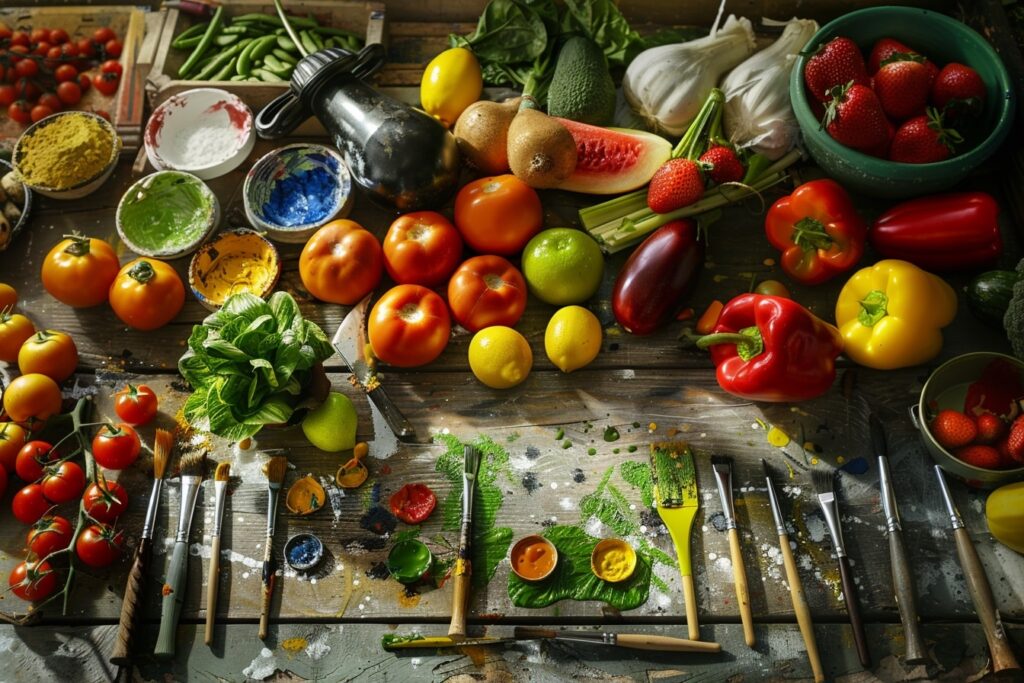
Most parents spend hours searching for “educational activities” online, scrolling through apps, and wondering if screen time is ruining their kids’ imaginations. But here’s what nobody talks about: the most transformative creative experiences happen with items you already own—humble fruits, colorful vegetables, and a little paint.
🎨 Quick Quiz: What’s Your Creative Personality?
Before we dive in, discover which type of creative parent you are—it will help you get the most out of this guide:
Why Edible Art Isn’t Just Child’s Play
Let me tell you something nobody expects to learn from fruit stamping: when your child presses a painted apple slice onto paper and watches it create a perfect star pattern, they’re not just making art. They’re learning cause-and-effect. They’re building muscle memory. They’re discovering that creation requires patience, practice, and a willingness to embrace imperfection.
But here’s where it gets really interesting…
Ten years ago, someone wise shared the deathbed regrets of people near the end of their lives. Not a single one mentioned wishing they’d made more money or worked harder. The regrets? They revolved around missed moments, unexpressed creativity, and relationships allowed to fade.
Edible art pulls your family into the present moment in ways that feel effortless. There’s no pressure for perfection. There’s only exploration, discovery, and the joy of making something together.
The Hidden Benefits Parents Don’t Talk About
Creativity Meets Culture Meets Nutrition
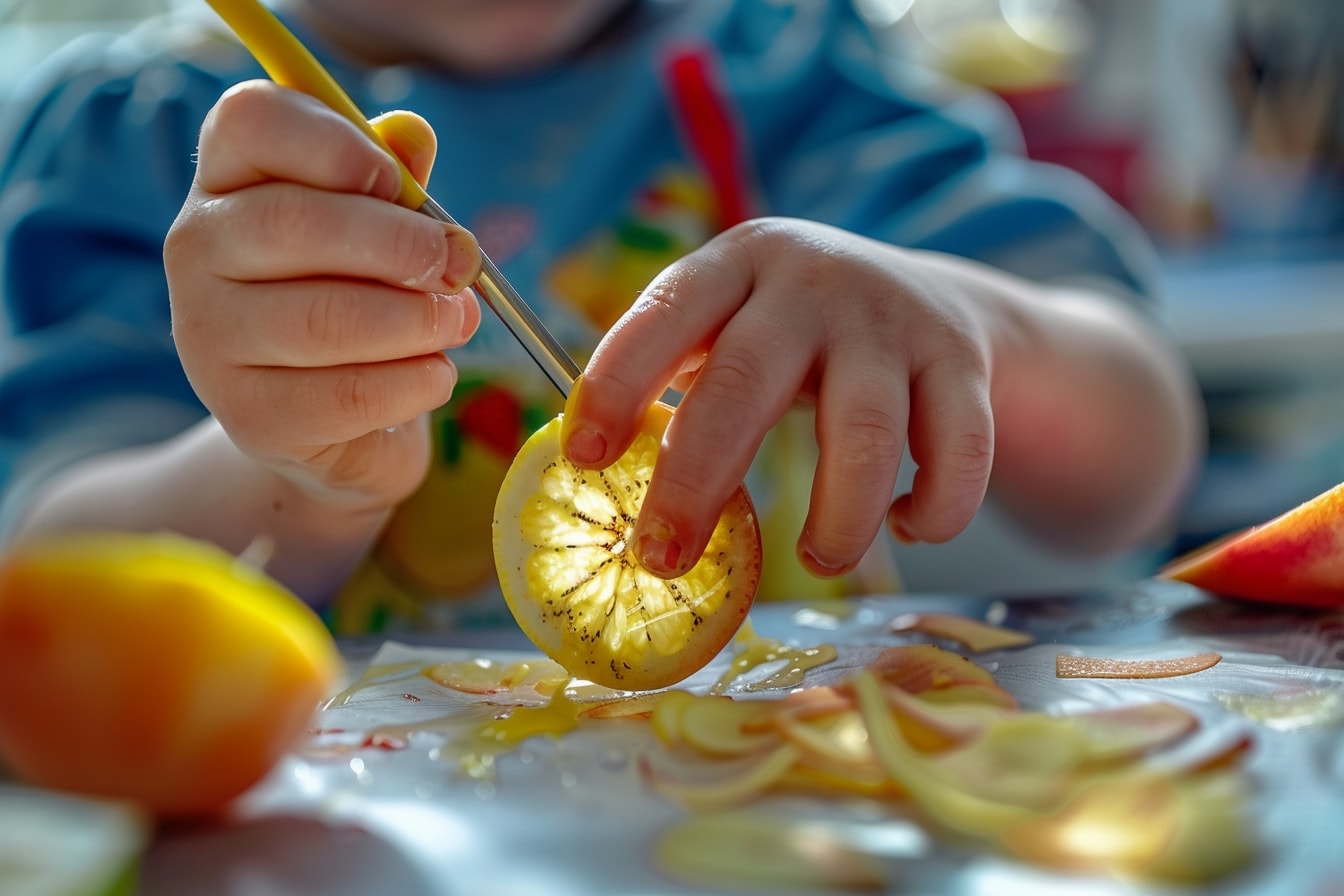
When you slice an apple horizontally and reveal the hidden star inside, something magical happens. Your child stops thinking of an apple as “something to eat” and starts seeing it as an artist’s tool. That shift in perspective—that’s where real creativity lives.
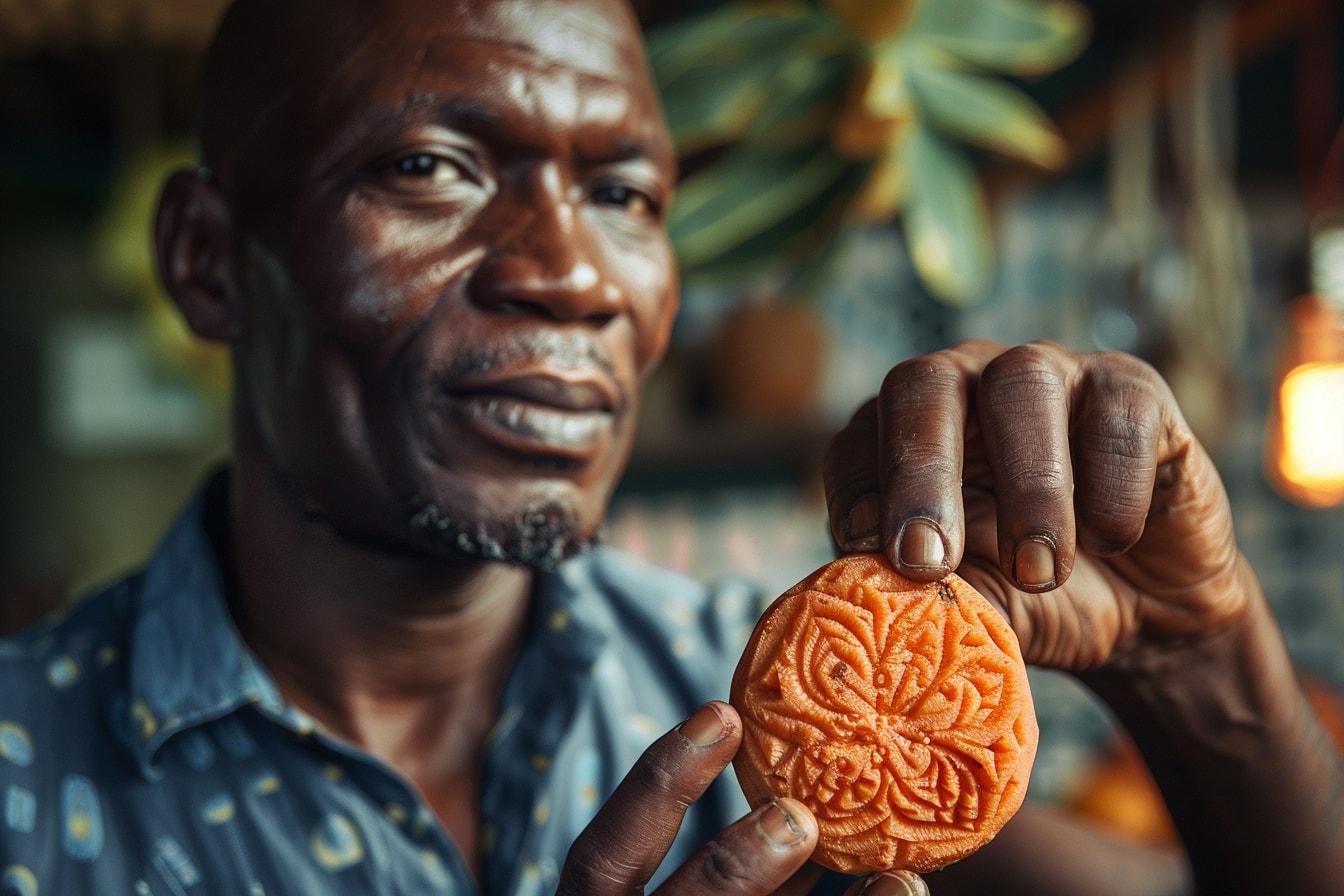
But it goes deeper. In many Caribbean and Latin American cultures, food isn’t just sustenance. It’s storytelling. It’s heritage. It’s love made visible. When your child stamps patterns inspired by their family’s cultural traditions, they’re inheriting something invaluable: the knowledge that they belong to something bigger than themselves.
Unleashing Creativity With Nature’s Canvas
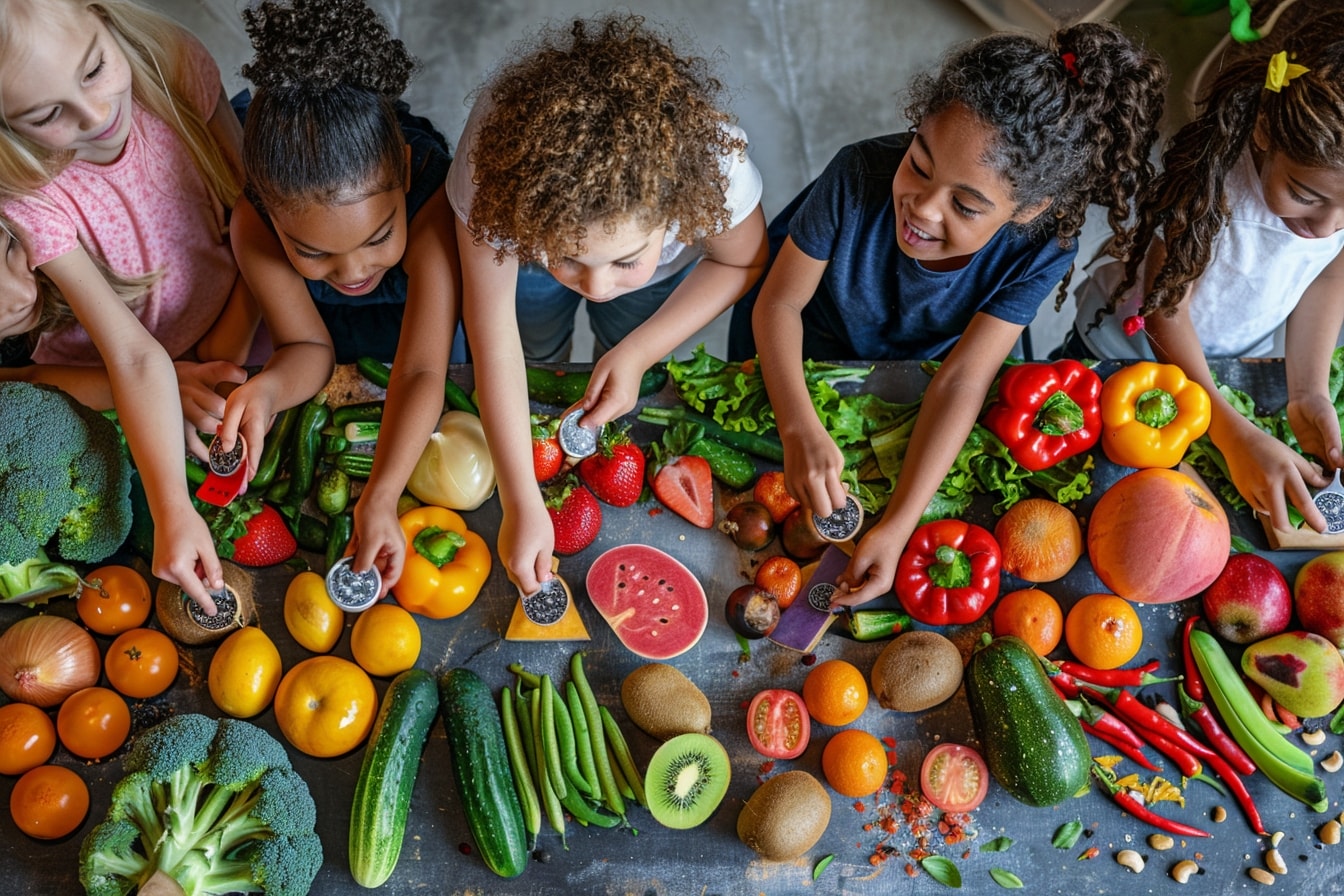
Let’s get practical. The difference between an edible art experience that falls flat and one that absolutely captivates your children comes down to one thing: choosing the right produce.
The Best Fruits & Vegetables for Stamping Success
- Apples: Slice horizontally to reveal the natural star pattern. Granny Smith and Fuji varieties work best because they’re firm and won’t disintegrate.
- Bell Peppers: Cut in half or quarters to reveal intricate seed patterns. The vibrant colors (red, yellow, green) are naturally inspiring.
- Potatoes: Medium-sized, smooth potatoes are perfect for carving custom shapes or creating geometric patterns.
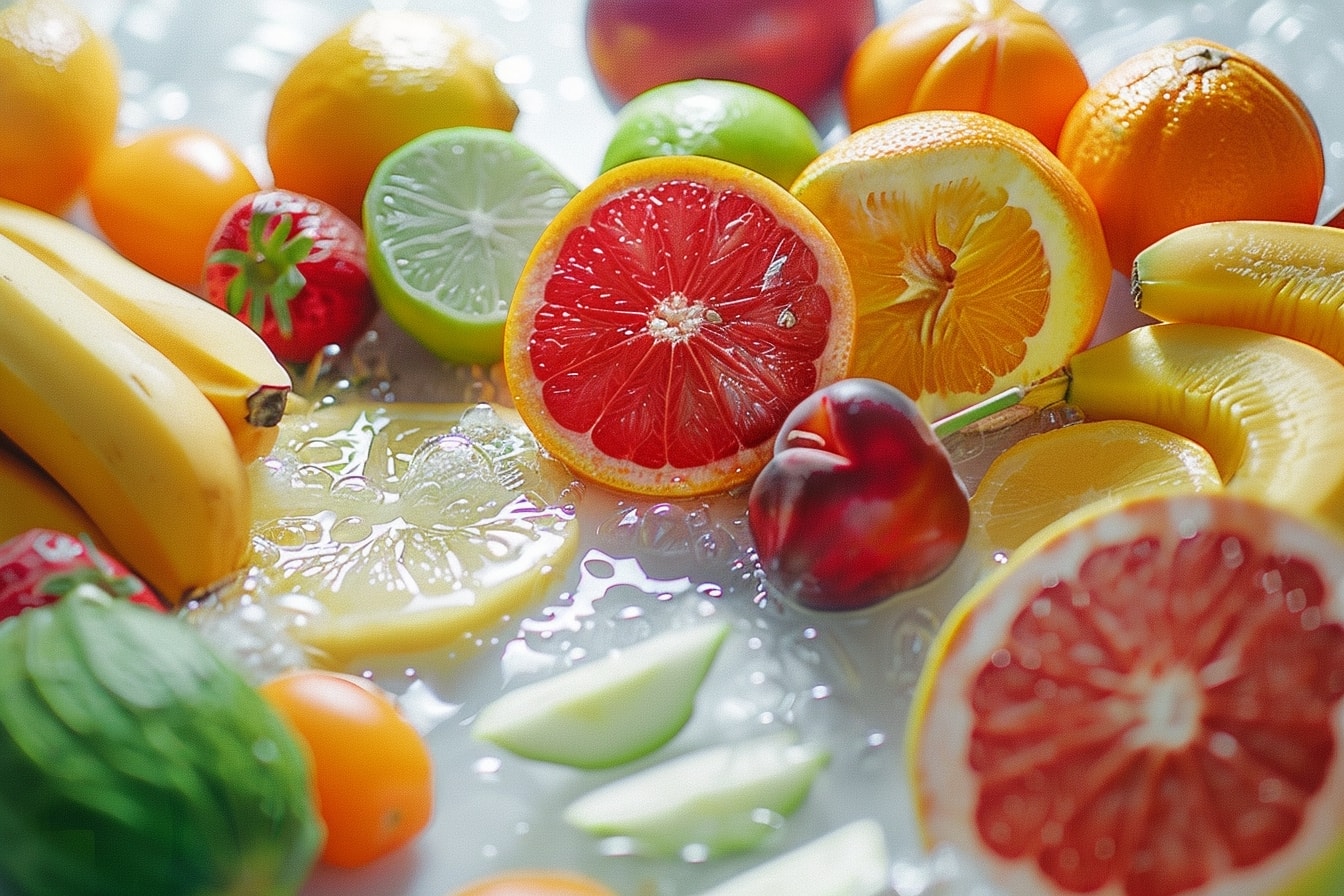
- Citrus Fruits: Oranges, lemons, and limes create beautiful circular patterns when cut in half.
- Mushrooms: The undersides reveal delicate gill patterns—nature’s ready-made stamps.
Step-By-Step Guide to Edible Art Magic
Step 1: Gather Your Materials
- Assorted fresh fruits and vegetables
- Non-toxic, washable paints in vibrant colors
- Paintbrushes or sponges
- Paper or fabric for stamping
- Cutting board and sharp knife
- Aprons or old clothing
Step 2: Prepare Your Produce
- Rinse all fruits and vegetables under cold water
- Pat completely dry with a clean kitchen towel
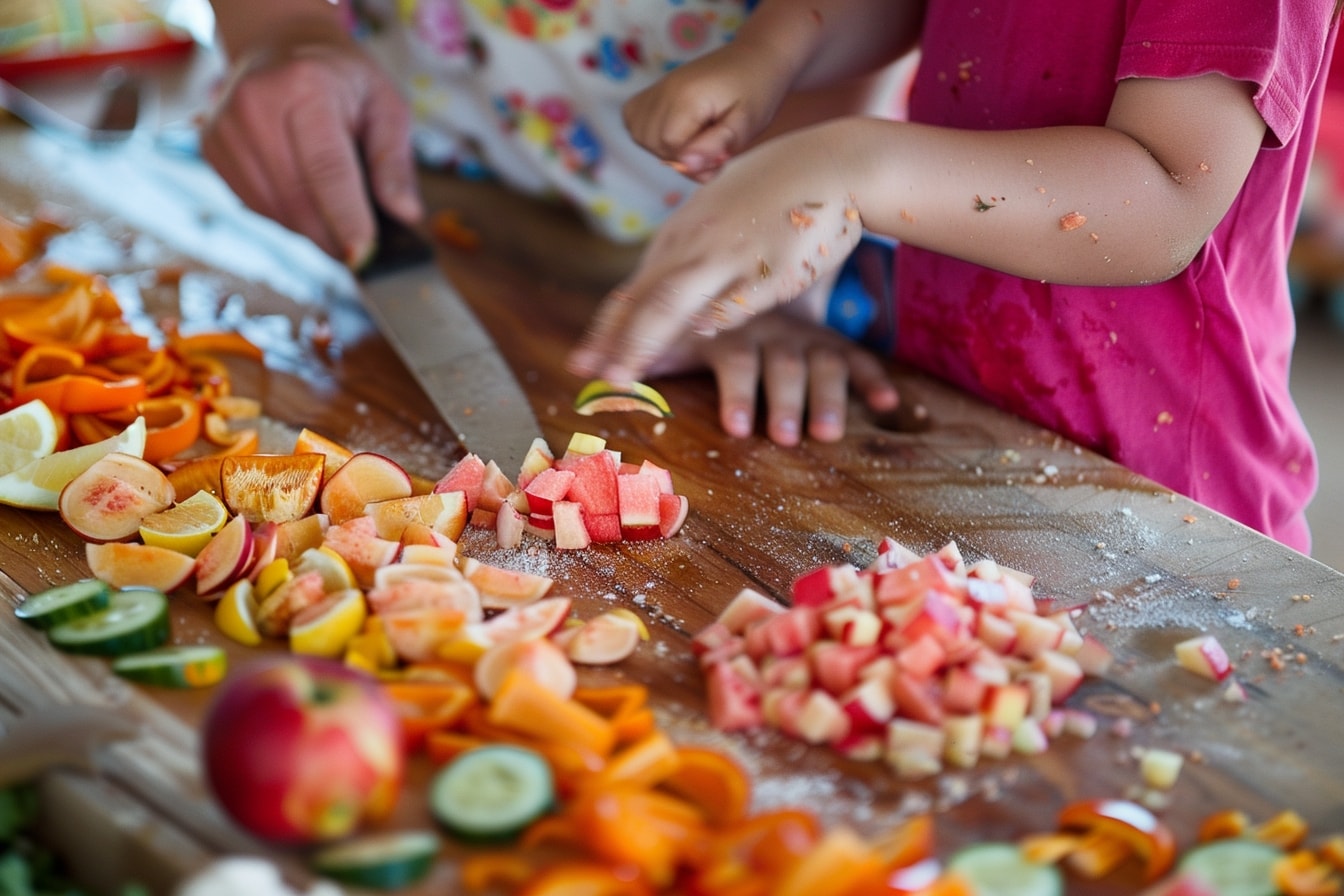
- Cut into slices, halves, or shapes using cookie cutters
- For extra-juicy fruits, blot the cut surface with paper towels
Step 3: Apply Paint Strategically
- Pour small amounts of paint onto shallow dishes or a palette
- Use brushes or sponges to coat the cut surface evenly
- Ensure complete coverage for crisp, clear impressions
- Experiment with color combinations for unique effects
Step 4: Stamp With Confidence
- Press painted produce firmly onto paper or fabric
- Use steady, even pressure across the entire surface
- Lift straight up (don’t slide or twist)
- Try different patterns: rows, circles, overlapping designs
Step 5: Dry and Display
- Allow creations to dry completely before moving
- Display proudly on your refrigerator or in a frame
- Take photos to preserve the memories
The Challenges Nobody Mentions (And How To Solve Them)
Challenge #1: Paint Consistency Disasters
The Problem: Paint that’s too thin creates smudges. Paint that’s too thick won’t adhere properly.
The Solution: Start with your paint as-is. Gradually add small amounts of water (not paint to water—always add water to paint) until you reach a consistency that coats without running. Test on scrap paper first.
Challenge #2: Excess Moisture Ruining Everything
The Problem: Juicy fruits like oranges and strawberries release moisture that causes paint to slide and blur.
The Solution: Blot the cut surface thoroughly with paper towels. For extra moisture, dust lightly with cornstarch or flour before painting—this creates a tacky surface that holds paint better.
Challenge #3: Inconsistent Pressure = Faint Impressions
The Problem: Young children (and adults!) often apply uneven pressure, resulting in unclear stamps.
The Solution: Practice on scrap paper first. Use a stamping motion where you press down firmly for 2-3 seconds, then lift straight up. Think of it as a slow, deliberate press rather than a quick tap.
Challenge #4: Paint Stains That Won’t Come Out
The Problem: Washable paint often doesn’t wash out as easily as advertised.
The Solution: Always use a pre-wash stain remover. Soak fabric in warm water with dish soap for 15 minutes before washing. For stubborn stains, use a soft brush to gently scrub the area.
Why This Trend Is Actually Changing Childhoods
We’re witnessing a remarkable shift in how families approach creativity and nutrition. Gone are the days of mindless screen time and processed entertainment. Parents everywhere are rediscovering something ancient: the power of making things together.
Edible art sits at the intersection of multiple movements:
- The Slow Parenting Movement: Intentional time with less stuff and more presence
- The Cultural Reclamation Movement: Honoring heritage through food and tradition
- The Healthy Creativity Trend: Combining nutrition with artistic expression
What makes this different from typical “crafts”? It’s rooted in reality. The materials are real. The process is tangible. The results can be eaten, displayed, or gifted.
Expert Insights: What Chefs and Artists Know
What Will Your Life Look Like If You Start Today?
Imagine this: Your child comes home from school frustrated. Instead of another screen, you say, “Let’s make something together.” Fifteen minutes later, you’re both laughing as an apple slice reveals its perfect star pattern. Your child’s frustration melts. The connection deepens.
That single moment of presence and creativity? That’s something they’ll remember.
The Real Magic: It’s not actually about the art. It’s not about the perfect stamp or the Instagram-worthy creation. It’s about the moments when your child realizes they have the power to create something from nothing. It’s watching them discover their own capacity for beauty.
That confidence? That sense of possibility? That carries into every area of their lives. They bring that creative courage to problems at school, to challenges with friends, to the big decisions they’ll face as they grow.
And you—you’ll have traded screen time for presence. Worry for wonder. Another fleeting day for a memory that lasts.
Your Creative Next Steps
- This week, gather one apple, one bell pepper, and one potato
- Pick up washable paint if you don’t have it already (dollar stores carry great options)
- Set aside 20 minutes with zero distractions
- Let your child take the lead—there’s no “wrong” way to stamp
- Take photos and share your creations (we’d love to see them!)
Ready to Transform Your Creative Practice?
You’ve learned the techniques. You understand the benefits. Now it’s time to step into the role of creative parent.
Start this week. Your future self—and your children—will thank you for choosing presence over perfection.
Transform your kitchen into a creative studio. Start your edible art journey today.

Step into Sue Brown's World of Baby Care, where you'll find a treasure trove of knowledge and wisdom waiting to be explored. Sue's dedication to providing accurate and up-to-date information on baby care shines through in every article, blog post, and resource she shares. From newborn essentials to sleep training tips, breastfeeding advice to nurturing your baby's development, Sue covers a wide range of topics that are essential for every parent to know. Her warm and compassionate approach creates a sense of community and reassurance, making her website a safe haven for parents seeking guidance and support. Let Sue Brown be your partner in this beautiful journey of parenthood, as she empowers you to create a loving, nurturing, and thriving environment for your little one.
- Indoor Air Quality for Infant Respiratory Health - October 20, 2025
- Positive Discipline Foundations: Setting the Stage From Infancy - October 18, 2025
- 2025’s Most Innovative Baby Products Worth the Investment - October 16, 2025