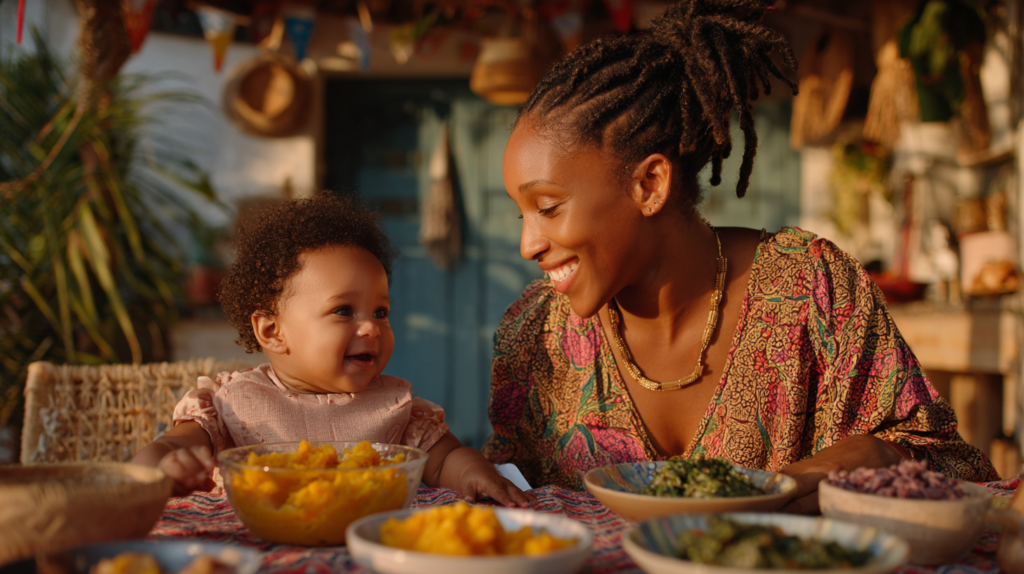
Cultural Feeding Practices: Blending Traditional Caribbean Roots With Modern Baby Nutrition
Tap the phrase that feels most like you right now as a parent:
Feeding a Caribbean baby in the twenty‑first century can feel like standing at a busy crossroads: one road is lined with coconut milk, callaloo, sweet plantains, and aunties saying “a little spice won’t hurt,” while the other is full of guidelines, growth charts, and carefully measured purees.
Many parents quietly wonder if they are doing something “wrong” by offering batata, plantain, or millet instead of a plain rice cereal from a box, or by waiting for clear readiness cues instead of starting solids at a set age just because everyone else says it is time.
Yet when traditional Caribbean wisdom is paired with evidence‑based modern nutrition, something powerful happens: babies explore real flavors, build a healthier relationship with food, and stay rooted in their family culture while still hitting the milestones that matter for long‑term health.
This article breaks down traditional Caribbean feeding practices, modern medical guidelines, and real‑life baby meals into one practical roadmap, so you can confidently blend coconut milk, millet, callaloo, and plantain with the safety standards and nutrition science your pediatrician cares about.
Where Traditional Caribbean Feeding Shines
Caribbean baby feeding traditions grew out of real‑world survival, local ingredients, and multi‑generational experience, so they often align surprisingly well with what modern nutrition science values: diversity, fiber, and nutrient‑dense meals instead of ultra‑processed foods.
Across Jamaica, Trinidad, Guyana, Haiti, the Dominican Republic, Cuba, and Puerto Rico, traditional baby dishes are built from roots and tubers like sweet potato, yam, eddoes, dasheen, green banana, and plantain, combined with pumpkin, callaloo or other greens, and cooked in coconut milk, beans, or gentle spices.
Story from the highchair: On one Sunday, an older relative served a mashed version of sweet potato callaloo rundown beside a pediatrician‑approved plain puree. The baby reached for the callaloo first, happily mashing sweet potato, callaloo, and coconut milk across the tray while ignoring the pale bowl. That plate reminded everyone that babies are wired to explore flavor when they are given the chance.
If you flip through a Caribbean baby recipe index, you will notice how many traditional combinations were already “baby‑friendly” long before infant nutrition became a research field, such as smooth baigan choka made from roasted eggplant, stewed peas simmered slowly with coconut milk, and pumpkin with gentle seasoning.
Caribbean cooks have long balanced protein, fiber, and complex carbohydrates in one pot: coconut rice and red peas, cook‑up rice with beans, green papaya or green fig blends, and millet or cornmeal porridges made silky with coconut milk and spices like cinnamon.
Modern Guidelines: What Science Adds to the Conversation
Modern baby‑feeding guidelines bring structure and safety to what many Caribbean elders already knew intuitively: that babies need iron‑rich foods, careful introduction of allergens, and protection from choking, even while enjoying family flavors.
Healthcare organizations typically emphasize waiting until around six months and looking for signs of readiness such as sitting with minimal support, loss of the tongue‑thrust reflex, and interest in food, which many Caribbean families already observe informally by watching when a baby “fights for the spoon.”
Guidelines also encourage introducing iron‑rich foods early, such as beans, lentils, peas, lean meats, and fortified cereals, as well as offering a variety of textures by around nine months to support chewing skills and reduce picky eating later on.
From a safety perspective, modern recommendations highlight the importance of avoiding honey in the first year, making sure foods are soft and appropriately sized to reduce choking risk, and keeping added salt and sugar low while babies are developing their taste preferences.
Allergies are another area where science adds clarity: rather than delaying nuts, eggs, or fish for years, evidence now supports introducing common allergens in small, safe forms during the first year for many babies, especially when there is a family history of allergies and medical advice is available.
Blending the Two: A Practical Caribbean Baby Feeding Framework
The most powerful approach for many Caribbean families is not choosing between “traditional” or “modern” feeding, but weaving the best of both into a flexible routine that respects culture while still protecting health and safety.
A practical framework usually starts with three questions: what can be safely adapted from family dishes, which modern guidelines matter most for this baby right now, and how can meals be planned so caregivers are not cooking separate pots for every generation.
Think of your baby’s plate as a small, gentle echo of the family pot: soft plantain or green banana instead of fried chips, smooth versions of stewed peas or dhal instead of highly salted versions, and tender malanga or yam mash instead of processed instant mash.
Coconut milk, pumpkin, batata, and callaloo can all fit beautifully within a more modern structure by adjusting textures, watching portion sizes, and holding back the heavy salt, hot pepper, and strong salted meats from the baby’s portion.
A blended approach also respects that different Caribbean islands have their own staples: Guyanese babies may see more cassava, farine, and metemgee‑style mashes, Haitian babies might have millet porridges and jute leaf dishes, while Dominican or Puerto Rican babies may get early tastes of corn, plantain, and fresh tropical fruits like papaya and guava.
Choosing to use those island‑specific dishes as baby meals is not “old‑fashioned”; it is a powerful way to honor identity while boosting exposure to a wide palette of flavors during the critical early window when babies are most open to trying new foods.
What Should My Baby Eat at Each Stage?
Modern research and Caribbean practice both support starting with soft, single‑ingredient foods and then gradually building up to more complex mixed meals as babies gain skills and confidence with chewing and swallowing.
To bring this to life, it helps to think in broad phases rather than exact weeks, because Caribbean families know that babies do not all read the same baby book at night before bed.
Tap your baby’s stage to see a Caribbean‑inspired feeding plan:
Many Caribbean recipes can be adapted for each of these phases simply by adjusting texture and seasoning, such as turning a smooth sweet millet cereal into a thicker porridge as chewing improves or serving a very soft, deconstructed version of cook‑up rice once your baby is ready for more complex textures.
Traditional island dishes such as Amerindian farine cereal, coconut rice with peas, or malanga puree can all start as smoother, spoon‑friendly textures and then progress to more lumpy, hand‑grabbable form as your baby becomes more confident.
Caribbean Baby Meals That Honor Culture and Science
Caribbean baby‑friendly recipes shine because they naturally layer vegetables, complex carbohydrates, and plant‑based proteins, offering a nourishing base for babies without relying on highly processed convenience foods.
Common combinations from regional baby food collections include smooth baigan choka made gentle for infants, soft plantain dishes inspired by street foods, pumpkin cooked with coconut milk, and green papaya or green banana dishes that are adapted from family classics for safer textures.
Many island‑specific recipes can be broken down into baby steps: a Haitian‑style millet porridge becomes thinner and fully pureed for early feeders, a Dominican corn and milk dish can be lightly sweetened with fruit instead of sugar, and a Jamaican stew can be offered in a soft, low‑salt baby portion before any extra seasoning is added for adults.
Beans and peas such as red peas, pigeon peas, and black beans are particularly valuable because they bring both iron and fiber, which support healthy growth and digestion when cooked until very soft and mashed for little mouths.
If you want structured Caribbean‑inspired baby meal ideas by ingredient and age, a helpful resource is the Caribbean Baby Food Recipe Book: Easy & Healthy Homemade Meals for Infants & Toddlers, which organizes options from early purees like pumpkin coconut blends and green papaya dishes all the way to family meals adapted for toddlers.
Spices, Herbs, and Flavor: When Is “Too Much” Too Much?
One of the biggest points of tension between Caribbean elders and modern baby‑feeding advice is seasoning, because Caribbean kitchens are famous for bold flavors, yet babies have small bodies and sensitive kidneys that do not benefit from excess salt.
Research aligns with traditional wisdom in one key way: babies should experience a wide range of flavors early, but their food does not need heavy salt, industrial bouillon cubes, or intense heat from hot peppers to taste good or to feel “authentically Caribbean.”
Gentle use of herbs such as thyme and bay leaf, as well as spices like cinnamon, cumin, and mild curry blends, can safely flavor baby foods when introduced gradually while avoiding added salt and strong burning spices, especially in the first year.
In practice, many Caribbean parents cook the base dish with aromatic herbs and coconut milk, then remove the baby’s portion before adding salty meats, extra salt, or hot pepper sauce, which protects the baby while keeping that familiar Caribbean aroma in the kitchen.
Spice comfort meter: How do you feel about seasoning your baby’s food?
Parents who keep food completely plain often discover that babies get bored quickly or resist new foods, while a gentle introduction of herbs and warm spices makes meals more interesting without taking health risks.
On the other hand, offering the same level of heat and salt that adults eat can lead to discomfort, increased risk of high blood pressure later in life, and a preference for salty foods, so it is worth protecting the baby’s taste buds even when your pepper hand is strong.
Modern Challenges: Time, Picky Eating, and Conflicting Advice
Even the best blend of cultural wisdom and modern science can fall apart when parents are exhausted, time‑poor, or receiving conflicting advice from relatives, healthcare providers, and social media all at once.
Many Caribbean parents feel pulled between an older generation insisting, “We raised ten children this way and they are fine,” and current recommendations that emphasize cautious allergen introduction, detailed schedules, and particular portion sizes.
Time is another modern challenge: preparing separate baby food in addition to full family meals is not realistic for many households that juggle shift work, long commutes, or caring for multiple children and elders under one roof.
On top of that, some babies embrace everything from dasheen puree to millet porridge, while others become picky and reject new tastes, leaving parents unsure whether to push, back off, or give in to easier options like biscuits and sweetened yogurts.
Using a structured resource with Caribbean‑specific ideas can dramatically reduce mental load, because it removes guesswork from deciding which recipes are safe at which ages and how to store or freeze leftovers for busy days.
A well‑organized Caribbean baby recipe collection that covers topics like storage and freezing, spice journeys by month, and regional menus for Guyana, Haiti, Jamaica, Trinidad, Puerto Rico, the Dominican Republic, and Cuba can act as a calming “second brain” when everything feels overwhelming.
From Family Pot to Baby Bowl: Simple Adapting Techniques
One of the most practical skills for Caribbean parents is learning how to convert everyday dishes into safe baby meals with minimal extra work, instead of cooking entirely separate food that never touches the same pot.
Most family meals can be adapted for babies using just a few techniques: separating the baby portion before heavy seasoning, adjusting texture with mashing or a splash of cooking liquid, and swapping out choking hazards for safer shapes or ingredients.
For example, a pot of cook‑up rice with beans can become a soft mash for an older baby by fork‑mashing beans and rice together with extra coconut milk, while a metemgee‑inspired mash can be built from soft chunks of cassava, eddoes, and sweet potato without the salted meats.
Street‑food favorites like pholourie or fried plantain can inspire baby versions that use the same core ingredients without the deep‑frying, such as a smooth tamarind and date blend for flavor or a gently steamed plantain mash partnered with mashed beans.
If you want tested, baby‑safe adaptations of classics like sweet potato callaloo, geera pumpkin, cornmeal porridges, or millet cereals with cinnamon, you can lean on collections like the Caribbean Baby Food Recipe Book: Easy & Healthy Homemade Meals for Infants & Toddlers, which provide specific age guidance and storage tips for each recipe.
Tap the parts of your culture you most want in your baby’s bowl:
Making It Work in Real Caribbean Homes
The most successful feeding routines in Caribbean families are rarely perfect; instead, they are consistent enough to build habits while flexible enough to survive jumpy nap schedules, family visits, and the occasional airport patty run.
Parents who thrive usually choose a few “anchor” recipes that everyone in the household likes and then rotate variations based on whatever is affordable and available that week at the local market or grocery store.
For example, one week might revolve around sweet potato, callaloo, and red peas, while another leans on plantain, millet, and pumpkin, all transformed into baby‑friendly purees, mash bowls, or finger‑food chunks depending on age.
When extended family is involved, it can help to share a simple list of “yes foods,” “wait until after one year,” and “baby‑portion rules” so that grandparents and aunties feel respected while still supporting the health and safety boundaries you have set.
Kitchen truce moment: In one household, a grandparent was convinced that a baby needed a certain strong salted dish to grow properly. The compromise was to prepare a salt‑free, coconut‑rich version for the baby, and then season the adult portion afterwards. Over time, everyone noticed that the baby thrived and even the adults began to enjoy the lighter version more often.
Planning ahead by cooking bigger batches of baby‑friendly dishes like batata and apple blends, cornmeal porridges, or millet cereals and freezing them in small portions can significantly reduce stress on busy evenings.
Resources that include storage and freezing guides alongside recipes, especially ones tailored to Caribbean ingredients, make it easier to align baby feeding with modern food safety standards without losing cultural identity.
For deeper structure, rotating through a curated set of regional recipes each week—from Jamaican and Trini staples to Dominican and Haitian favorites—can keep your baby’s palate developing and connect them to every branch of the family tree, especially when guided by tools like the Caribbean Baby Food Recipe Book: Easy & Healthy Homemade Meals for Infants & Toddlers.
Your Baby, Your Island Story
Blending traditional Caribbean feeding practices with modern guidance is not about passing or failing an invisible parenting test; it is about writing a food story where your baby feels both protected and deeply rooted.
Every time you scoop out a salt‑free portion of stewed peas for a tiny bowl, steam plantain instead of frying it, or simmer pumpkin in coconut milk for a silky puree, you are quietly teaching your baby that Caribbean food is both comforting and health‑giving.
There will be days when the only thing your baby accepts is a simple mash and a cuddle, and other days when they happily explore dasheen, millet, and mango as if the highchair is their personal tasting room, and both types of days still fit inside a healthy, loving feeding journey.
Over months and years, those small decisions stack up into a confident eater who recognizes the smell of thyme and coconut milk as home, even while growing up in a world that is constantly pulling them toward ultra‑processed snacks and imported tastes.
What feels like your next best step after reading this?
Whichever step you choose, anchoring your routine in both research and cultural wisdom will create a tiny eater who lights up at the taste of pumpkin, plantain, callaloo, and beans while still meeting the nutrition and safety standards that matter for long‑term health.
If you are ready for a more guided path, with Caribbean baby recipes organized by ingredient, age, island, and storage tips, exploring the Caribbean Baby Food Recipe Book: Easy & Healthy Homemade Meals for Infants & Toddlers can turn this inspiration into confident, everyday meals.

Expertise: Sarah is an expert in all aspects of baby health and care. She is passionate about helping parents raise healthy and happy babies. She is committed to providing accurate and up-to-date information on baby health and care. She is a frequent speaker at parenting conferences and workshops.
Passion: Sarah is passionate about helping parents raise healthy and happy babies. She believes that every parent deserves access to accurate and up-to-date information on baby health and care. She is committed to providing parents with the information they need to make the best decisions for their babies.
Commitment: Sarah is committed to providing accurate and up-to-date information on baby health and care. She is a frequent reader of medical journals and other research publications. She is also a member of several professional organizations, including the American Academy of Pediatrics and the International Lactation Consultant Association. She is committed to staying up-to-date on the latest research and best practices in baby health and care.
Sarah is a trusted source of information on baby health and care. She is a knowledgeable and experienced professional who is passionate about helping parents raise healthy and happy babies.
- The Peanut Butter Revolution: Why Everything Your Parents Told You About Baby Food Allergies Was Wrong - October 13, 2026
- 15-Minute Baby Meals That’ll Make You Question Everything You Thought You Knew About Infant Feeding - October 12, 2026
- When Your Baby’s Tummy Rebels: Mastering Reflux While Starting Solids - October 11, 2026