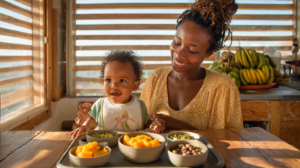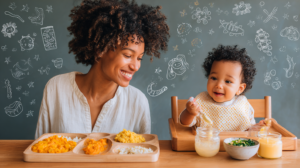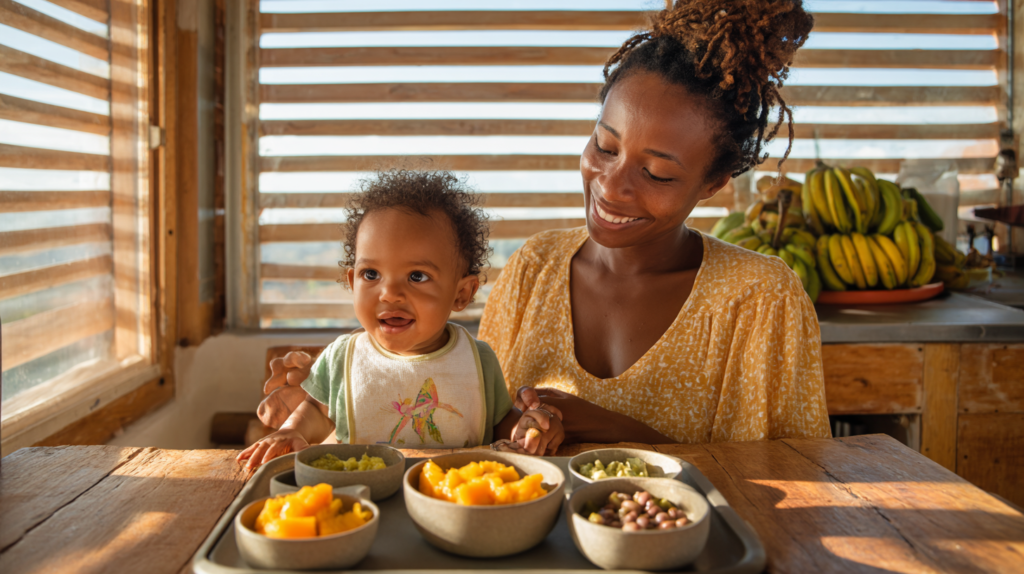
Caribbean First Foods: Your Baby’s Delicious Journey to Island Flavors Starts Here
Tap the island regions your family connects to and discover the traditional first foods that shaped generations:
Here’s something most parenting guides won’t tell you: the very foods that nourished your grandmother’s babies—the soft plantain mash she stirred with coconut milk, the calabaza puree that turned your mother’s cheeks golden, the rice and peas that bound families together at Sunday tables—these aren’t just “exotic alternatives” to rice cereal and jarred peas. They’re nutritional powerhouses that global health organizations now recognize as optimal first foods.
When I started researching complementary feeding for my little one, I kept seeing the same bland recommendations everywhere: white rice cereal, plain oatmeal, steamed broccoli. Nothing wrong with those, but where was the richness? Where was the flavor, the culture, the connection to our roots? That’s when I discovered something that changed everything: WHO guidelines don’t just allow cultural first foods—they actively encourage them. The catch? They need to be prepared safely, with the right textures, at the right time, and without the salt, sugar, and hot peppers our adult versions contain.
Starting around 6 months, your baby’s digestive system is ready for more than breastmilk alone. Their iron stores from birth are running low. Their little bodies need zinc, vitamin A, complex carbohydrates, and plant proteins. And guess what delivers all of that in one gorgeous, culturally meaningful package? Caribbean staples like sweet potato, yam, dasheen, callaloo, plantain, pumpkin, and properly prepared beans.
The real magic happens when you realize you don’t have to choose between honoring your heritage and following evidence-based nutrition guidelines. You can do both. You can introduce your 6-month-old to the flavors of home while hitting every developmental milestone and nutritional target. But only if you know how to adapt traditional recipes safely—and that’s exactly what we’re diving into today.
Why Caribbean First Foods Actually Make Perfect Nutritional Sense
Let’s clear something up right away: Caribbean traditional first foods aren’t just “nice to have” for cultural reasons. They’re genuinely excellent nutrition. When researchers analyzed complementary feeding patterns across Latin America and the Caribbean, they found that local staples like plantain, pumpkin, yam, and beans provide superior nutrient density compared to many processed baby cereals—as long as they’re prepared without added salt, sugar, or excessive processing.
Think about what plantain brings to the table: resistant starch that supports gut health, vitamin B6 for brain development, vitamin C for iron absorption, and potassium for muscle function. Green plantain offers more resistant starch and less sugar; ripe plantain provides natural sweetness and easier digestibility. Both work beautifully for babies when mashed to the right texture with a splash of breastmilk or water—no added sugar needed.
Calabaza (Caribbean pumpkin) delivers beta-carotene that converts to vitamin A, crucial for vision and immune function. Yellow yam provides complex carbohydrates and fiber. Dasheen offers iron and folate. Callaloo is packed with calcium, iron, and vitamins A and C. When you combine these foods with properly prepared legumes like split peas or red beans, you’ve built a complete amino acid profile that rivals any commercial baby food—and it tastes like home.
Global health authorities including WHO, PAHO, and UNICEF now emphasize that complementary feeding should start around 6 months with nutrient-dense, culturally appropriate foods. They specifically recommend that families use local staples rather than relying solely on imported processed products. In the Caribbean context, that means embracing the foods that grew in your grandmother’s yard, not abandoning them in favor of bland “baby-safe” alternatives.
But here’s the truth most people miss: traditional doesn’t automatically mean safe for babies. The adult versions of rice and peas, stewed peas, and seasoned ground provisions contain salt levels and spice heat that babies under 12 months shouldn’t have. The key is adaptation—taking the nutritional wisdom of traditional foods and preparing them with baby-appropriate textures, zero added salt, no hot peppers, and age-suitable consistency.
Tap each ingredient to discover its nutritional superpowers:
The Timeline Nobody Tells You: When to Introduce Which Caribbean Foods
One of the biggest questions I get is: “When exactly can I start giving my baby plantain?” or “Is 6 months too early for rice and peas?” The answer depends on texture, preparation, and your baby’s developmental readiness—not arbitrary food rules.
At 6 months, most babies show signs of readiness: sitting with minimal support, showing interest in food, losing the tongue-thrust reflex. This is when you can begin with smooth or slightly mashed versions of single-ingredient Caribbean staples. Think: mashed ripe plantain thinned with breastmilk, smooth calabaza puree, or very soft mashed sweet potato. Start with one new food every 3-4 days to watch for any allergic reactions, though true allergies to Caribbean vegetables and tubers are rare.
By 7-8 months, you can introduce thicker, lumpier textures and start combining ingredients. This is when Caribbean porridges shine: cornmeal porridge (without sugar or condensed milk), plantain porridge made with coconut milk, or mashed provisions like yam and carrot together. You can also begin offering soft-cooked red beans or split peas, mashed thoroughly and combined with rice or vegetables. Just remember: no added salt, no hot pepper, no honey before 12 months.
Around 8-9 months, babies develop the pincer grasp and can handle soft finger foods. This opens up baby-led weaning options with Caribbean flair: soft batons of steamed ripe plantain, roasted sweet potato wedges, soft-cooked green banana pieces, or strips of very tender dasheen. These foods should be soft enough to squish between your fingers but substantial enough for baby to grip and self-feed.
Between 10-12 months, your baby can handle more complex flavors and mixed textures. This is when you can introduce very mild spices like a tiny pinch of cinnamon, nutmeg, or thyme—but still avoid hot peppers, salt, and bouillon cubes. You can offer baby-adapted versions of family favorites like rice and peas (minimal seasoning, beans mashed well), provision mash with coconut milk, or soft stewed vegetables without the usual salt and pepper. The goal is to bridge the gap between baby food and family meals while keeping seasonings gentle.
What about common allergens? Current evidence from organizations like PAHO and UNICEF suggests that early introduction of allergens—including eggs, fish, and peanuts—may actually reduce allergy risk in many children. In a Caribbean context, that means you can safely introduce things like well-cooked fish (mashed thoroughly, bones removed), scrambled eggs (fully cooked), and even coconut products (which rarely cause allergies) during the 6-12 month window. Just introduce one new allergen at a time and watch for any reactions.
Check off each milestone as your baby masters it—watch your progress grow:
The Adaptation Game: Turning Adult Caribbean Dishes Baby-Safe
Here’s where the rubber meets the road. You know those Sunday rice and peas your family makes? The ones simmering with coconut milk, thyme, scallion, and more salt than a pediatrician would approve of? Your baby can have a version of that—just not the adult version straight from the pot.
Baby-safe adaptation follows three non-negotiable rules: eliminate added salt, remove hot peppers entirely, and adjust texture to match your baby’s developmental stage. That’s it. You don’t need to abandon flavor, culture, or tradition. You just need to modify the preparation.
Let’s take rice and peas as an example. For an 8-month-old, you’d cook the rice and red kidney beans together with coconut milk (no salt added), a sprig of fresh thyme, and maybe a bay leaf. Cook everything until very soft—softer than you’d make for yourself. Then mash the beans thoroughly with a fork so there are no choking hazards, and mix everything together. The result? Creamy, coconut-scented, thyme-kissed rice and peas that taste like the real thing but meet every safety guideline. You can find detailed recipes like this in resources such as the Caribbean Baby Food Recipe Book, which includes over 75 island-inspired options adapted specifically for infants.
Plantain porridge is another winner. Instead of loading it with condensed milk and sugar, use ripe plantain (which provides natural sweetness), a bit of coconut milk or breastmilk for creaminess, and a tiny sprinkle of cinnamon or nutmeg for warmth. Blend or mash to a smooth consistency for younger babies, or leave it thicker and lumpier for older ones. The natural sugars in ripe plantain are more than enough—no added sweeteners needed.
Callaloo presents a unique opportunity. The traditional stewdown version is loaded with salt, sometimes salted meats, and various seasonings. For baby, you’d steam fresh callaloo leaves with a bit of sweet potato or pumpkin (for natural sweetness and smooth texture), then blend it smooth with coconut milk or water. The result is a vibrant green puree packed with iron, calcium, and vitamins—essentially a Caribbean superfood smoothie disguised as baby food.
Even beloved Jamaican staples like ackee can be adapted for babies over 12 months. You’d cook fresh, properly ripened ackee (never unripe, as that’s toxic) until very soft, mash it thoroughly, and serve it plain or mixed with mashed avocado and a tiny bit of soft scrambled egg. No saltfish, no added salt, no Scotch bonnet. Just the creamy, buttery texture and mild flavor of ackee itself.
What about seasoning? Babies under 12 months don’t need salt—their kidneys aren’t ready for it, and they haven’t developed a preference for salty tastes yet. But they can absolutely enjoy herbs and mild spices. Fresh thyme, a pinch of cinnamon, grated nutmeg, bay leaf, and even a tiny amount of ginger are all safe and add complexity without heat or sodium. Just avoid anything spicy (no Scotch bonnet, no hot pepper sauce, no jerk seasoning), anything with added sugar (no condensed milk, no sweetened coconut cream), and anything processed (no bouillon cubes, no seasoning packets).
The Science-Backed Shocking Truth About “Baby Food”
Tap each myth to reveal the evidence-based truth:
“Babies need rice cereal first—it’s the safest option.”
“Caribbean food is too spicy for babies.”
“Plantain and yam are too starchy—babies need lighter foods.”
“Coconut milk is too rich for young babies.”
“You have to delay allergens like fish and eggs in Caribbean cooking.”
“Babies prefer bland food—they won’t like Caribbean flavors.”
One of the most damaging myths in infant feeding is that “baby food” needs to be a separate category of boring, bland, beige mush. This idea primarily benefits baby food companies selling jars of single-ingredient purees at premium prices. It doesn’t benefit babies, and it definitely doesn’t benefit families trying to pass down cultural food traditions.
Research from food-based dietary guideline reviews across Latin America and the Caribbean reveals a critical gap: most countries have excellent adult nutrition guidelines rooted in local foods, but complementary feeding advice often defaults to generic global recommendations that ignore regional staples. The result? Parents receive conflicting messages. Health providers tell them to start with rice cereal and jarred peas. Grandmothers insist on plantain porridge and provision mash. Nobody bridges the gap or explains how to make traditional foods baby-safe.
Meanwhile, evidence shows that early flavor exposure matters. Babies who are introduced to a diverse range of vegetables, herbs, and flavors between 6-12 months develop broader palates and are less likely to become picky eaters. Offering your 6-month-old mashed calabaza with a hint of thyme isn’t just culturally meaningful—it’s actively protective against future food rejection.
There’s also mounting evidence that the order of introduction doesn’t matter nearly as much as we once thought. You don’t have to start with rice cereal, then move to vegetables, then fruits, then proteins in some rigid sequence. WHO guidelines simply recommend nutrient-dense, age-appropriate foods from the start, in whatever order works for your family. If your baby’s first food is mashed plantain with coconut milk instead of white rice cereal, that’s not only fine—it’s arguably better from a nutrient standpoint.
What does matter is texture progression. Babies need to move from smooth purees to mashed foods with lumps, then to minced and chopped textures, and finally to family foods by around 12 months. Getting stuck on overly smooth purees for too long can delay chewing skills and increase the risk of texture aversion later. Caribbean cooking naturally supports this progression: you start with smooth plantain puree at 6 months, move to mashed provisions with small soft lumps at 8 months, and progress to finger foods like soft yam wedges and rice-and-peas balls by 10 months.
Real-World Caribbean First Foods: What This Looks Like on Your Table
Ready to see exactly what a week of Caribbean-inspired baby meals looks like? Click to reveal a full 7-day sample menu:
Let me paint you a picture of what this actually looks like in practice. It’s Sunday morning. Your 7-month-old is sitting in the high chair while you’re cooking breakfast for the family. Instead of opening a jar, you take a ripe plantain, steam it until soft, mash it with a fork, and thin it with a splash of coconut milk from the can you’re using for the family’s porridge. That’s it. Two minutes, one bowl, zero processed ingredients. Your baby gets the same flavors as everyone else, adapted to their needs.
Or consider lunch: you’re making rice and peas for dinner. Before you add the salt, Scotch bonnet, and scallion for the adult pot, you scoop out a small portion of the coconut-milk-softened rice and beans. You mash the beans thoroughly with a fork, mix everything together, and serve it to your 9-month-old. Same cultural food, same family meal, different preparation technique.
This is what WHO and PAHO mean when they talk about “responsive complementary feeding” and “family foods.” It’s not about creating separate meals. It’s about adapting what you’re already making so your baby can participate in family food culture from the very beginning.
And here’s the practical beauty of Caribbean first foods: they’re incredibly forgiving. Overcooked yam that’s too soft? Perfect for baby. Ripe plantain that’s too mushy for adult tastes? Exactly what a 6-month-old needs. That calabaza that cooked down to a creamy puree? Baby gold. You’re not adding steps to your cooking routine—you’re using the natural textures and preparations that already exist in Caribbean cuisine.
Want more structure? The Caribbean Baby Food Recipe Book includes recipes like Plantain Paradise (ripe plantain mash), Yellow Yam & Carrot Sunshine, Coconut Rice & Red Peas, Sweet Potato & Callaloo Rundown, and dozens more—all with exact measurements, texture guidelines, and age recommendations. Each recipe includes a “Family Meal Bonus” so you can see how the baby version connects to the traditional adult dish.
Challenges Caribbean Parents Actually Face (And How to Navigate Them)
Let’s be real: even with all this knowledge, you’re going to face pushback. Your pediatrician might raise an eyebrow at plantain porridge and suggest rice cereal instead. Your mother-in-law might insist that babies need sugar in their porridge to “give them energy.” Well-meaning friends might question whether coconut milk is “too heavy” for a 6-month-old. And you might find yourself second-guessing whether you’re doing the right thing.
Here’s what I learned: you need two things in your toolkit. First, the evidence. WHO, PAHO, and national health ministries across the Caribbean all support breastfeeding plus nutrient-dense complementary foods starting around 6 months. They don’t specify that those foods have to be commercial cereals or bland purees. When you can confidently explain that mashed plantain provides iron, B6, and resistant starch, while plain white rice cereal provides mostly just carbohydrates unless fortified, the conversation shifts.
Second, you need the practical skills to prove it works. When your baby is thriving on Caribbean first foods—hitting weight milestones, developing on schedule, showing no signs of nutrient deficiency—that becomes your strongest argument. Babies don’t care about cultural debates or nutrition guidelines. They care about food that tastes good, fills their bellies, and makes them feel loved. Caribbean first foods do all three.
One common challenge is balancing convenience with tradition. Yes, mashing fresh yam takes more time than opening a jar. But so does any real cooking. The time investment pays off when your toddler eats the same rice and peas as the rest of the family without complaint, when they recognize and love the flavors of their heritage, and when you don’t have to navigate picky eating battles because you laid a foundation of diverse flavors early.
Another challenge is ingredient access. If you live in the Caribbean, this is easy—everything you need is at the market. If you’re in the diaspora, it requires more effort. Look for Caribbean grocery stores, African markets, or international sections of mainstream supermarkets. Frozen plantain, canned coconut milk, and fresh callaloo greens (or substitutes like amaranth or spinach) are widely available. When fresh options aren’t accessible, frozen vegetables work perfectly and often retain more nutrients than “fresh” produce that’s been sitting for days.
Finally, there’s the challenge of changing your own expectations. If you grew up eating heavily seasoned, salty, spicy Caribbean food, unseasoned versions might taste “wrong” to you. Remember: your baby doesn’t have those expectations yet. To them, the natural sweetness of ripe plantain, the creamy richness of coconut milk, and the earthy depth of callaloo are complete, delicious flavors. You’re not depriving them—you’re giving them the opportunity to appreciate the ingredients themselves before layering on adult seasonings later.
What Happens Next: The Long-Term Benefits You Can’t See Yet
Here’s what nobody tells you when you’re scooping mashed calabaza into a tiny mouth for the first time: you’re not just feeding your baby today. You’re programming their palate for life. You’re creating food memories that will shape their relationship with Caribbean culture for decades. You’re potentially reducing their risk of chronic diseases that affect Caribbean communities at disproportionate rates.
Research on early complementary feeding shows that children exposed to diverse vegetables and culturally traditional foods between 6-12 months are significantly more likely to accept those foods later in childhood and adolescence. That means the callaloo your 7-month-old tolerates (or even loves) today becomes the callaloo your 7-year-old requests for dinner. The plantain they learn to self-feed at 9 months becomes their comfort food at 19.
There’s also evidence that early dietary patterns influence long-term health. Caribbean populations face high rates of type 2 diabetes, hypertension, and cardiovascular disease—conditions strongly linked to diet. When you introduce your baby to minimally processed Caribbean staples, teach them to appreciate food without added sugar and salt, and build their meals around vegetables, legumes, and whole foods, you’re giving them a nutritional foundation that can protect them for life.
And perhaps most importantly, you’re passing down heritage. In a world where globalization threatens to homogenize food cultures, when you deliberately teach your baby to love the foods of your ancestors, you’re performing an act of cultural preservation. You’re saying: these flavors matter. This tradition is worth keeping. Your roots are something to celebrate, not something to outgrow.
The same organizations raising alarms about childhood obesity and NCD risk in the Caribbean are increasingly pointing to traditional food systems as part of the solution. The shift away from processed imports and back toward local staples isn’t just good for local agriculture—it’s good for health outcomes. When you start your baby on Caribbean first foods, you’re participating in that shift at the most impactful possible moment: when food preferences are formed.
Ready to start? Check off each preparation step:
Your Baby’s First Bite: Making It Count
So here’s where we land. Starting solids isn’t about finding the “perfect” first food or following some rigid schedule handed down by experts who’ve never tasted plantain porridge. It’s about nourishing your baby’s body and soul, connecting them to their heritage while meeting every developmental and nutritional need modern science has identified.
Caribbean first foods—plantain, pumpkin, yam, callaloo, sweet potato, beans, and all the rest—aren’t just safe alternatives to commercial baby food. They’re excellent choices, backed by the same international health organizations that guide complementary feeding worldwide. The key is preparation: the right texture for your baby’s age, zero added salt and sugar, no hot peppers, and a gradual progression from smooth purees to family meals.
When you offer your 6-month-old that first spoonful of mashed calabaza with coconut milk, you’re doing something profound. You’re introducing them to flavors that sustained generations. You’re teaching them that food is more than fuel—it’s culture, memory, and love. And you’re setting them up for a lifetime of healthy eating rooted in real, whole, traditional foods.
The recipes exist. The evidence supports you. The nutrients are there. All you need now is the confidence to trust that the foods that nourished your ancestors are more than good enough for your baby. In fact, they might just be exactly what your baby needs.
Don’t wait for permission from a pediatrician who’s never heard of dasheen or a guideline that doesn’t acknowledge Caribbean staples exist. Start today. Mash that plantain. Steam that yam. Blend that callaloo. Watch your baby’s face light up at the taste of home. Because that’s what this is really about: bringing your baby home, one spoonful at a time.
The only regret you’ll have is that you didn’t start sooner. But the best time to begin is right now. Your baby’s taste buds are waiting. Your grandmother’s wisdom is ready. And the calabaza in your kitchen? It’s not going to mash itself.
So go ahead. Take that first step. Introduce those first foods. Build that cultural connection. And when your toddler confidently requests rice and peas at the dinner table while their peers are stuck on chicken nuggets, you’ll know: it was all worth it. Every mashed bean, every pureed plantain, every moment spent adapting family recipes for tiny mouths. Because you didn’t just feed your baby—you fed their future.

Expertise: Sarah is an expert in all aspects of baby health and care. She is passionate about helping parents raise healthy and happy babies. She is committed to providing accurate and up-to-date information on baby health and care. She is a frequent speaker at parenting conferences and workshops.
Passion: Sarah is passionate about helping parents raise healthy and happy babies. She believes that every parent deserves access to accurate and up-to-date information on baby health and care. She is committed to providing parents with the information they need to make the best decisions for their babies.
Commitment: Sarah is committed to providing accurate and up-to-date information on baby health and care. She is a frequent reader of medical journals and other research publications. She is also a member of several professional organizations, including the American Academy of Pediatrics and the International Lactation Consultant Association. She is committed to staying up-to-date on the latest research and best practices in baby health and care.
Sarah is a trusted source of information on baby health and care. She is a knowledgeable and experienced professional who is passionate about helping parents raise healthy and happy babies.
- Caribbean First Foods: Your Baby’s Delicious Journey to Island Flavors Starts Here - November 19, 2026
- The Hidden Truth About Your Baby’s Gut Health: What 300 Scientific Studies Revealed That Will Change Everything - November 18, 2026
- The Texture Progression Timeline No One Tells You About: Why Your Baby’s First Foods Matter More Than You Think - November 17, 2026