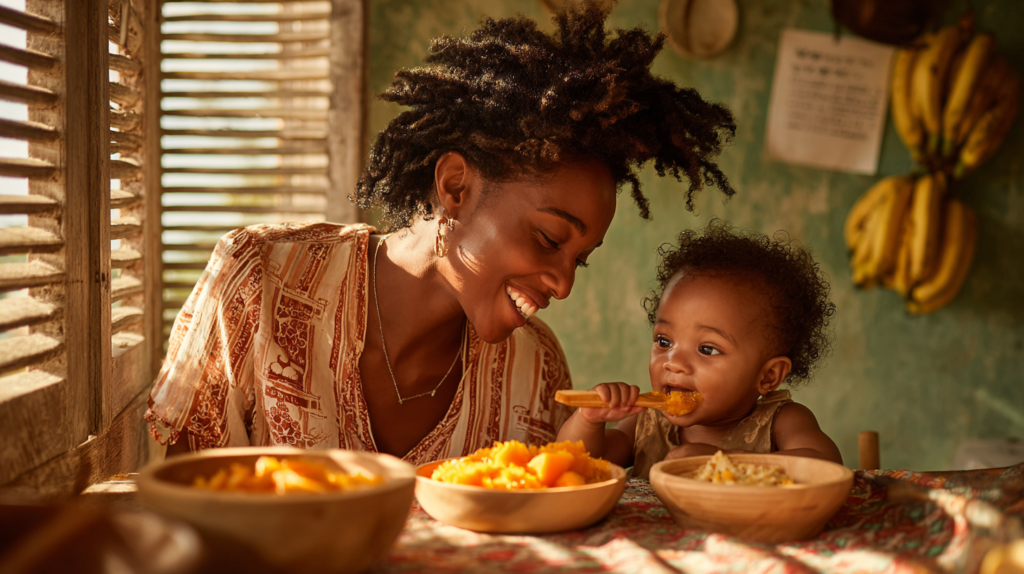
Papaya for Babies: The Gentle Digestive Hero Hiding in Your Fruit Bowl
One of the quiet revolutions of new parenthood is this: you will never look at fruit the same way again. Suddenly, a slice of ripe papaya is not just a snack for you, it is a question: will this help my baby’s digestion, or will I regret this at 2 a.m.?
In many Caribbean homes, papaya has long been the soft, sunny fruit that shows up when tummies feel off, when elders want to “cool down” the body, or when a baby is finally allowed a tiny taste of the family’s beloved tropical flavors. As a parent, you stand at the crossroads between that cultural wisdom and a scroll of modern feeding advice that warns you about everything from sugar to supplements.
This article is here to bridge that gap. We are going to zoom in on papaya as a baby food: what actually makes it gentle on digestion, how it fits into global complementary feeding guidelines, where the science stops and the myths begin, and how to use it in real baby meals that feel both Caribbean and confidently evidence-based. Along the way, you will see why papaya is best treated as a nourishing everyday ally, not a miracle medicine—and how to turn that into meals your baby genuinely enjoys.
The Story Behind Papaya and Baby Tummies
Papaya, or Carica papaya, is a soft, orange-fleshed tropical fruit that originally grew in Mesoamerica before traveling through the Caribbean, Africa, Asia, and the Pacific on colonial trade routes. As it spread, it picked up a double identity: everyday fruit on the breakfast table and herbal “stomach medicine” in backyard remedies. Ripe papaya is rich in water, fiber, vitamin C, provitamin A carotenoids, vitamin E, folate, potassium, magnesium, and other plant compounds that support general health and immunity. Unripe papaya, the peel, and the seeds contain higher levels of latex and enzymes, and these parts are often used in folk medicine rather than baby feeding.
Across the Caribbean and Latin America, elders may recommend papaya for constipation, “bad belly,” or after a viral illness, often alongside advice like “keep the food light” or “let the stomach rest.” In some households, a spoon of mashed ripe papaya is one of the first fruits a baby tastes, precisely because it is seen as easy to digest and gentle on the gut. In others, parents wait until the second half of the first year or later, especially if babies are prone to rashes or have a strong family history of allergies.
Modern complementary feeding guidelines from major health organizations now recommend introducing fruits and vegetables from around six months, once a baby shows readiness signs such as good head control, interest in food, and the ability to sit with support. Within that framework, papaya is not singled out as a special “treatment” fruit, but it fits comfortably in the group of soft, nutrient-rich, orange-colored fruits that help cover vitamin A and C needs while offering fiber for regular bowel movements.
What Makes Papaya Gentle on Digestion?
When parents talk about “tummy-friendly” foods, they are usually describing a mix of experiences: babies who strain less with stools, less gassiness, and meals that do not seem to sit heavily in little bellies. Ripe papaya lines up with those goals in several concrete ways. First, it contains both soluble and insoluble fiber, which help soften stools, add bulk, and support a healthy rhythm of bowel movements over time. Second, its high water content makes it naturally hydrating, which is especially useful once babies move from an all-milk diet to thicker, starchier solids that sometimes slow things down.
Third, papaya pulp contains enzymes like papain and chymopapain that can break down proteins into smaller pieces. Adult research on papain and related proteases shows effects on protein digestion and interactions with gut tissues and microbiota in animal and cell models, as well as in some small human trials using supplements or fermented papaya preparations. That research tells us these enzymes are biologically active, but it does not mean that everyday baby servings of papaya can or should be used as a medical treatment. For infants, the most realistic digestive benefit comes from the whole package: water, fiber, gentle texture, and the way papaya often replaces heavier, ultra-processed foods in the bowl.
This is an important reframe for parents. Instead of thinking “papaya will fix my baby’s constipation,” it is more accurate—and more empowering—to think, “Papaya is one of several soft, high-fiber fruits that can support regular digestion when combined with milk feeds, water (after six months), movement, and appropriate medical care when something seems off.”
Hint: it is not just the famous enzyme.
When Can Babies Start Papaya—and How Much Is Enough?
Most global guidelines agree on one point: solids should begin around six months for healthy, term infants, not at three or four months. Within that window, papaya can be one of the first fruits you offer, as long as your baby can sit with support, show good head control, lean forward to take food, and turn away when full. Papaya is usually introduced alongside other starter foods such as iron-fortified cereals, mashed beans or lentils, soft egg, and pureed meats, because iron-rich foods are crucial in the second half of the first year.
A reasonable starting portion for a six- or seven-month-old is about one to two tablespoons of mashed ripe papaya mixed into another soft food your baby already tolerates, like oat cereal, mashed sweet potato, or plain yogurt. For baby-led feeding, you might offer a few soft strips of ripe papaya thick enough to grasp but soft enough to mash easily between fingers. Over time, this can increase to a few tablespoons or a small handful of pieces at a meal, depending on your baby’s appetite and the balance of other foods on the plate.
Rather than aiming for a specific gram count, think of papaya as a frequent supporting player in the fruit category. If most days your baby gets one or two servings of fruit and vegetables spread across meals, and some of those servings are orange or dark green foods like papaya, pumpkin, or callaloo blends, you are already aligning with vitamin A and fiber guidelines in a very practical way.
Pick the option that sounds closest to what you are doing or planning.
Papaya in Caribbean Cultural Feeding: Honoring Heritage Safely
In Caribbean families, papaya often appears in two different forms: ripe and glowing on the breakfast table, and green and firm in savory dishes and curries. For babies, ripe papaya is the star. Grandparents might mash a little papaya into cornmeal porridge once the baby is big enough to “taste porridge like everybody else,” or offer a spoonful after a heavier meal to “help it go down easy.” In some Guyanese and Trinidadian households, papaya sits alongside plantain, pumpkin, and sweet potato as one of the core soft foods used to adapt family meals for babies.
The trick is that the same fruit used in gentle baby meals may also be used in more intense cultural remedies. Green papaya might be stewed in curries, combined with strong spices, or used in teas and tonics that are never meant for infants. Ripe papaya might be served with sweetened condensed milk, sugar, or alongside sugary drinks that parents grew up loving but now feel unsure about offering to their own babies. As a modern caregiver, you get to be the filter: keep the warmth and togetherness of those traditions, while quietly editing out the parts that do not fit current safety guidelines.
Practically, that can look like serving a baby-only bowl of mashed ripe papaya with finely ground oats, or a small side of papaya alongside a low-salt version of Saturday soup or cook-up rice. It can mean inviting grandparents to share their memories of papaya cures while also explaining that for your baby, you are sticking to ripe fruit and safe textures rather than teas, leaves, or latex-heavy preparations.
Tap each tradition you are keeping baby-friendly. Watch your “heritage-aligned” bar grow.
- ✔Using ripe papaya only for baby, not leaves, latex, or strong herbal teas.
- ✔Serving papaya without added sugar or sweetened condensed milk in the first two years.
- ✔Pairing papaya with iron-rich foods like lentils, beans, egg, or fish.
- ✔Adjusting textures so they are soft, mashable, and low-salt for baby.
The Science: What We Know (and Don’t) About Papaya Enzymes for Babies
Ask around online and you will see papaya tablets and “digestive enzyme” chews being marketed as a fix for bloating, gas, and heavy meals in adults. These products usually rely on papain, a protease that helps break down proteins. Laboratory and animal studies show that papain and related enzymes can influence protein digestibility, gut barrier function, and even the composition of gut bacteria under certain conditions. Some adult trials with fermented papaya preparations suggest subtle benefits for oxidative stress and immune markers.
However, there are several important caveats before translating any of this into infant feeding. First, most of these studies use concentrated supplements, not small servings of fresh fruit. Second, babies already have a developing but active set of digestive enzymes in their own gut and pancreas, and their needs are not the same as adults who are dealing with indigestion or heavy restaurant meals. Third, supplements may pose extra risks for people with latex allergies, those taking specific medications, or populations that are rarely included in safety trials—infants among them.
For these reasons, pediatric guidance leans toward a simple, conservative stance: papaya as a whole fruit is welcome once a baby is ready for solids, but papain supplements, high-dose enzyme tablets, and herbal papaya remedies are not recommended for infants. If a baby has significant reflux, chronic constipation, poor growth, or other digestive issues, the most important step is to work with a health professional rather than trying to “treat” the problem with fruit or over-the-counter enzyme products.
Tap a statement to see if it is aligned with current science and baby-feeding guidance.
Shocking Truths: Where Parents Accidentally Sabotage Papaya’s Benefits
Here is the part most parents are never told: the way papaya is served can completely flip its impact. The same fruit that should help your baby feel comfortable can end up adding extra sugar, displacing iron-rich foods, or even becoming a choking risk if it is served in hard, unripe chunks. None of this is about papaya being “bad”; it is about the choices wrapped around it.
One common pattern is using fruit to distract or “bribe” a baby to eat, especially when adults are anxious about intake. When papaya is always offered at the end of meals as a sweet reward, babies may start refusing the iron-rich main dish and holding out for fruit instead. Over time, that can work against the core goal of complementary feeding, which is to build a plate that covers nutrients a baby can no longer get from milk alone. Another hidden trap is turning papaya into juice, especially with added sugar. Juice delivers natural sugars without the fiber and can blunt appetite for solid foods; in the first two years, guidelines recommend skipping juice entirely.
A third, more subtle issue is the “fruit for every problem” habit. If every cry, fuss, or constipation episode is met with more papaya instead of checking feeding patterns, hydration, physical activity, and possible underlying conditions, parents may feel stuck and guilty when things do not improve. It is much more effective to use papaya as one of several supportive foods while keeping a clear eye on the bigger picture: is baby getting enough fluid, iron, fat, movement, and medical supervision when necessary?
Building a Papaya Digestive-Friendly Plate (With Caribbean Flair)
So what does a papaya-supporting, digestion-friendly plate actually look like? For a seven- or eight-month-old, one simple option is a bowl of mashed ripe papaya stirred into a small portion of iron-fortified oats with a drizzle of coconut milk for energy. As your baby gets used to this, you can fold in mashed beans or lentils—similar in spirit to the way Caribbean kitchens combine grains and legumes in dishes like coconut rice and peas or cornmeal porridges with pigeon peas, just in much softer, baby-appropriate textures and without salt.
Another pattern is to pair papaya with Caribbean staples like sweet potato, pumpkin, or plantain. Imagine a small tasting plate: a scoop of smooth sweet potato mash, a bit of soft mashed pumpkin, and a spoonful of mashed papaya, each offered separately so your baby can explore flavors. You can see echoes of recipes such as “Papaya Banana Sunshine” or green papaya dishes adapted in a baby-safe way, but with the focus firmly on ripe fruit, low salt, and simple spices like a hint of cinnamon for older babies.
If you want more ready-to-use, Caribbean-inspired combinations, a resource like the Caribbean Baby Food Recipe Book: Easy & Healthy Homemade Meals for Infants & Toddlers can give you dozens of age-tagged recipes that weave papaya alongside sweet potatoes, mangoes, coconut milk, plantains, and beans. That way, you are not guessing from scratch every week—you are plugging papaya into a larger, well-structured meal pattern.
Tap the combo you are most likely to try this week and get instant feedback.
Safety, Allergies, and Red-Flag Situations
Papaya allergies are relatively uncommon compared to dairy or egg, but they do exist. Because papaya latex shares features with natural rubber latex, people with strong latex allergies may be more likely to react to papaya. For babies with a strong family history of food or latex allergy, or with severe eczema, it is especially important to introduce new foods like papaya at home when your baby is well, in the morning or daytime so you can observe them. Watch for immediate signs such as hives, swelling, vomiting, or breathing difficulty, and seek emergency care if any occur.
Unripe papaya, papaya latex, and herbal papaya leaf or seed products should not be given to babies. These parts of the plant have been used in traditional remedies for everything from worms to menstrual pain, but they carry a higher risk of side effects and have not been studied for safety in infants. For lay caregivers, the simplest rule is this: if it is not just the ripe orange flesh, keep it off the baby’s menu. Similarly, enzyme supplements, chewable papaya tablets, and “digestive support” products are designed and tested for adults, not for children under two.
Also pay attention to texture and choking risk. Very hard or underripe papaya pieces, especially in cube form, can be difficult for young babies to manage. Instead, focus on mashed papaya, smooth purees, or very soft strips that squash between fingers. If your baby has ongoing vomiting, constipation that lasts more than a few days despite dietary changes, poor weight gain, blood in the stool, or extreme irritability, it is time to speak with a health professional rather than simply adding more fruit.
How Papaya Fits into the Bigger Picture of Gut Health
Papaya is one fruit in a much larger symphony that shapes your baby’s gut health. Breastmilk or formula is still the main source of nutrition in the first year, and it delivers not just calories and protein but also bioactive compounds that support gut lining, immunity, and the microbiome. On top of that foundation, complementary foods add fiber, plant compounds, and new textures that coax the digestive system toward toddlerhood.
From that perspective, papaya plays several roles. Its fiber and gentle texture support stool regularity as your baby’s body adapts to more complex foods. Its vitamin C helps the body absorb iron from plant sources, which is especially helpful when you are serving Caribbean-inspired meals built around beans, lentils, and grains. Its antioxidant carotenoids add another layer of protection against oxidative stress as your child encounters new microbes and environmental exposures.
Looking forward, researchers are increasingly interested in how fruit-rich patterns––including tropical fruits like papaya––shape the developing microbiome and metabolic health in children. While it is too early to say that papaya itself has a unique, proven microbiome effect in babies, it clearly belongs in the pattern of “mostly whole foods, plenty of plants, minimal ultra-processed products” that many pediatric nutrition experts now champion.
Real-Life Papaya Moments: A Parent’s Perspective
In our home, papaya first entered the baby bowl on a humid Sunday morning. My baby had been constipated for a few days after we enthusiastically overdid it with starchy favorites—breadfruit mash, sweet potato, and little tastes of rice and peas. An elder gently suggested, “Give the child a little pawpaw; it will help the belly.” I was skeptical, armed with my stack of guidelines, but I also knew the science on fiber and hydration was on her side if I kept things simple.
I mashed a small amount of ripe papaya into warm oats and breastmilk, kept the portion tiny, and watched. Nothing dramatic happened immediately—no overnight miracle, no instant fix. But over the next day or two, with more water sips, some belly massage, and plenty of floor time, the stool softened, and the strain eased. In my notebook, I wrote a quiet realization: papaya did not “cure” anything; it joined the team. It reminded me that sometimes the most powerful baby foods are not flashy or trendy. They are the ones our grandparents have been using for decades, gently updated to match what we now know about safety and nutrition.
That experience changed how I think about culturally rooted baby foods. Instead of choosing between “traditional” and “evidence-based,” I started asking, “How can I keep the soul of this dish and tune the details?” Papaya became a regular on our weekly menu—not as a hero or a crutch, but as a familiar, cheerful presence that linked my baby’s bowl to the tables I grew up around.
Turn Papaya Wisdom into a Weekly Habit
By now, you can see that the real magic is not in any one cube of fruit. It is in the rhythm you create: the mix of fruits and vegetables, the commitment to iron-rich foods, the decision to skip juice and added sugars, and the way you invite your baby into family flavors with baby-safe edits. Papaya fits into that rhythm beautifully, especially in Caribbean-inspired kitchens that already lean on plantains, yams, pumpkin, and beans.
One way to cement this knowledge is to pick one or two papaya-based meals and repeat them weekly until they feel like second nature. For example, you might rotate a bright papaya and banana mash for breakfast, a small side of papaya alongside soft lentils for lunch, and a papaya-sweet potato mix as part of a weekend family meal. If you enjoy having a clear roadmap, you can lean on resources like the Caribbean Baby Food Recipe Book: Easy & Healthy Homemade Meals for Infants & Toddlers, which organizes recipes like “Papaya Banana Sunshine,” coconut-based porridges, and bean blends by age and texture.
Over time, these habits accumulate into something much bigger than a single fruit choice. You are teaching your baby that Caribbean flavors belong in their everyday life, not just in holiday meals; that their body deserves food that is both comforting and nourishing; and that gentle, consistent choices beat extreme, quick-fix promises every time.
Tap each habit you already practice (or plan to start this month).
- ✔I offer papaya (or plan to) at least once a week in a baby-safe form.
- ✔I usually pair fruit with an iron-rich food at the same meal.
- ✔I avoid juice and sweetened drinks in the first two years.
- ✔I keep the cultural story of papaya alive while adjusting the recipe for baby.
Your Next Tiny Step as a Papaya-Confident Parent
If there is one takeaway from all of this, it is that papaya is not a miracle potion and it does not need to be. It is a gentle, nutrient-rich fruit that your baby can enjoy from around six months, especially when you stick to ripe flesh, safe textures, and portions that support—rather than replace—iron-rich foods. It carries generations of Caribbean comfort and care, and modern science mostly affirms what elders already suspected: fruits like papaya support digestion best as part of a varied, minimally processed diet, not as a single “cure.”
Your job is not to memorize enzyme pathways or nutrient tables. Your job is to notice how your baby responds, to protect them from unnecessary sugar and risky herbal products, and to keep showing up with bowls that are both familiar and thoughtfully updated. You can absolutely say yes to papaya for constipation support, as long as you remember that hydration, movement, and medical guidance where needed matter just as much. You can absolutely tell stories about how your parents or grandparents used papaya, while also gently drawing a line at teas, leaves, or unripe preparations for little ones.
If you are ready to go from “I should use papaya more” to “Papaya is a regular part of our baby meal rotation,” give yourself the gift of structure. Sketch a simple weekly plan, or let a resource like the Caribbean Baby Food Recipe Book: Easy & Healthy Homemade Meals for Infants & Toddlers do the heavy lifting with 75+ island-inspired recipes. Then pick one tiny action you can take today—buy a ripe papaya, prep a small batch of mash, or have a conversation with an elder about how they used it—and let that be your first step.
Years from now, your child will not remember the exact research papers behind your choices. They will remember the sweetness of breakfast at your table, the warmth of your voice telling them stories about “pawpaw” and island sun, and the way their body quietly learned what it felt like to be nourished, not just fed. That is the real digestive benefit papaya brings to your parenting journey: a chance to turn nutrition science and cultural memory into everyday comfort that starts in the gut and settles deep in the heart.
Choose the statement that best matches how you feel after reading this.

Expertise: Sarah is an expert in all aspects of baby health and care. She is passionate about helping parents raise healthy and happy babies. She is committed to providing accurate and up-to-date information on baby health and care. She is a frequent speaker at parenting conferences and workshops.
Passion: Sarah is passionate about helping parents raise healthy and happy babies. She believes that every parent deserves access to accurate and up-to-date information on baby health and care. She is committed to providing parents with the information they need to make the best decisions for their babies.
Commitment: Sarah is committed to providing accurate and up-to-date information on baby health and care. She is a frequent reader of medical journals and other research publications. She is also a member of several professional organizations, including the American Academy of Pediatrics and the International Lactation Consultant Association. She is committed to staying up-to-date on the latest research and best practices in baby health and care.
Sarah is a trusted source of information on baby health and care. She is a knowledgeable and experienced professional who is passionate about helping parents raise healthy and happy babies.
- Papaya for Babies: The Gentle Digestive Hero Hiding in Your Fruit Bowl - November 4, 2026
- The Mealtime Mistake That’s Secretly Making Your Baby a Pickier Eater - November 3, 2026
- Starting Solids Without Losing the Magic of Milk: A Real‑World Guide for New Parents - November 2, 2026