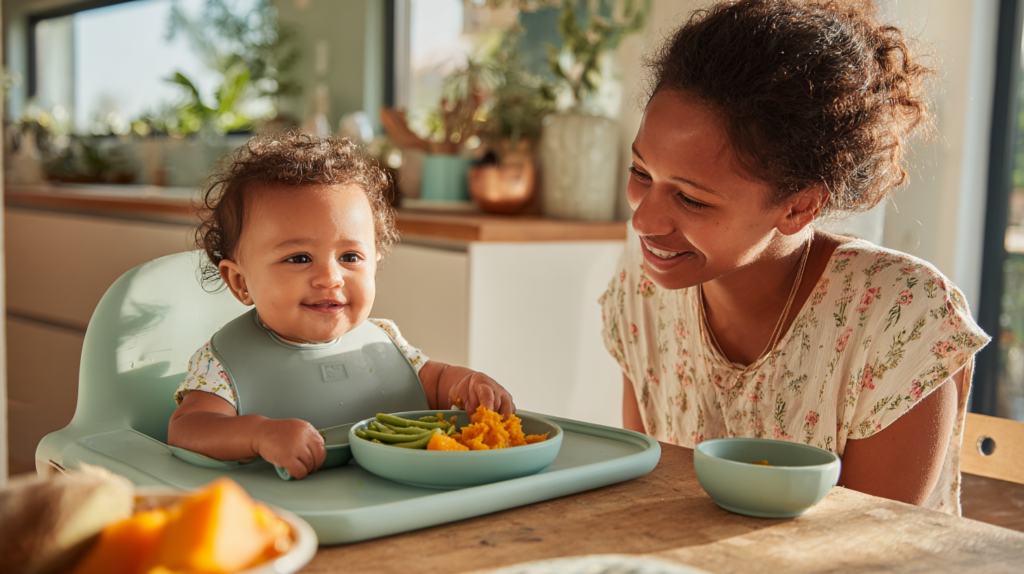
Starting Solids Without the Stress: The Truth No One’s Telling You
Before We Begin: What’s YOUR Biggest Feeding Fear?
Select what keeps you up at night, and we’ll address it head-on in this guide:
The journey from milk to meals is one of the most significant transitions in your baby’s first year. Around the world, organizations like WHO, AAP, and Health Canada have spent decades studying exactly when, what, and how to introduce solid foods. The consensus? Start around 6 months when your baby shows developmental readiness. But that simple guideline gets lost in a sea of conflicting advice from grandmothers, pediatricians, social media influencers, and that one friend whose baby was supposedly eating curry at 4 months.
The truth is, only about half of young children globally meet minimum dietary diversity standards during complementary feeding. In the US alone, recent data from 2016-2022 shows that early introduction of solids before 4 months remains stubbornly common despite clear recommendations against it. Meanwhile, parents are drowning in stress about doing it “right” when what babies actually need is surprisingly straightforward.
The Readiness Revolution
Let’s start with the most important question: when is your baby actually ready for solids? Forget what your mother-in-law says about starting at 3 months because “babies back then turned out fine.” Science has evolved, and so has our understanding of infant gut maturity, immune development, and oral-motor skills.
Your baby’s digestive system isn’t mature enough to handle solid foods before around 4 months. Their kidneys can’t process the higher protein and mineral load. Their tongue-thrust reflex—that adorable way they push everything back out of their mouth—doesn’t fade until closer to 6 months. Most critically, introducing solids too early is associated with higher risks of obesity, allergies, and digestive issues later on.
Your Baby’s Readiness Timeline (Click to Explore)
✓ Sitting with Support (Around 5-6 months)
Your baby can sit in a high chair or supported seat without slumping over. They don’t need to sit independently yet, but their trunk should be stable enough that they’re not falling sideways every few seconds. This matters because swallowing safely requires an upright position where gravity helps food move down the esophagus rather than triggering gagging reflexes.
✓ Head and Neck Control (Around 5-6 months)
Watch for steady head control—your baby should be able to hold their head up without wobbling and turn it away when they’re done eating. This is a crucial safety mechanism. Babies with poor head control can’t position themselves properly to manage food in their mouth or turn away from potential choking hazards.
✓ Interest in Food (Around 6 months)
Your baby watches you eat with intense focus, reaches for your plate, opens their mouth when food comes near, or gets excited during family meals. This curiosity isn’t just cute—it’s a developmental signal that their brain is ready to explore new textures and tastes. Forcing solids on an uninterested baby creates feeding battles you don’t need.
✓ Lost Tongue-Thrust Reflex (Around 6 months)
Try offering a small taste of something on your finger. If your baby automatically pushes it back out with their tongue every single time, the reflex is still active and they’re not quite ready. Once this reflex fades, they can move food from the front to the back of their mouth for swallowing—the foundational skill for eating solids.
Most babies hit these milestones around 6 months, though some might be ready a week or two earlier or later. The key is that all signs should be present—not just one or two. Recent Nordic nutrition recommendations and EFSA guidance emphasize this developmental readiness over strict age cutoffs, acknowledging that every baby develops at their own pace within a safe window.
The Method Madness
Here’s where things get unnecessarily complicated. Somewhere between “traditional purees” and “baby-led weaning,” parents have been made to feel like choosing the wrong approach will doom their child to a lifetime of chicken nuggets and food battles.
Let’s clear this up: both approaches work. A 2022 analysis comparing baby-led weaning (BLW), traditional spoon-feeding, and mixed methods found that when basic safety guidelines are followed, choking rates are similar across all approaches. The Baby-Led Introduction to SolidS (BLISS) study—a modified version of BLW that addresses concerns about iron intake and choking—showed that babies can absolutely thrive on finger foods from the start, provided parents offer energy-dense, iron-rich options.
Myth-Busting Session (Click to Reveal the Truth)
THE TRUTH: Multiple studies from 2022-2023, including research published in BMC Pediatrics, found no significant difference in choking incidents between baby-led and spoon-fed approaches when parents follow safety guidelines. What matters more is food preparation—avoiding hard, round, sticky foods and offering appropriately sized pieces. Gagging, which looks scary but is actually a protective reflex, happens frequently with both methods as babies learn to manage textures.
THE TRUTH: Rice cereal was marketed heavily in the mid-20th century, but there’s no nutritional or developmental reason it needs to be first. In fact, starting with iron-rich foods like meat, fish, eggs, legumes, or fortified foods makes more sense since iron stores from birth start depleting around 6 months. Many Caribbean families successfully introduce babies to soft-cooked provisions like sweet potato, plantain, or dasheen—nutrient-dense options that provide energy and minerals commercial cereals often lack.
THE TRUTH: This outdated advice was meant to identify allergies, but recent research shows it’s unnecessary for most families and can actually delay exposure to diverse nutrients. Current pediatric guidance suggests that unless your baby has severe eczema or an existing food allergy, you can introduce multiple foods more quickly—even on the same day. In fact, early and frequent exposure to common allergens like peanut, egg, and fish between 4-6 months is now proven to reduce allergy risk significantly.
THE TRUTH: Baby gums are surprisingly strong—they can mash soft foods effectively without teeth. Many babies don’t get their first tooth until 8-10 months but start solids successfully at 6 months. Teeth help with more advanced chewing of harder textures, but they’re not required for starting solids. Focus on offering foods that are soft enough to mash between your thumb and finger, and your baby’s gums will do the rest.
THE TRUTH: This is one of the most persistent myths, but multiple studies have found no consistent link between introducing solids and improved infant sleep. Babies wake at night for many reasons—developmental leaps, comfort needs, room temperature—and loading them up with cereal before bed won’t magically grant you a full night’s sleep. In fact, introducing solids before your baby is developmentally ready can cause digestive discomfort that makes sleep worse.
The real decision isn’t puree versus finger food—it’s responsive versus pressured feeding. Responsive feeding means you provide nutritious options, your baby decides how much to eat, and mealtimes stay low-pressure. Whether you’re spooning purees, offering strips of avocado, or doing a mix of both, this approach respects your baby’s hunger and fullness cues while building a healthy relationship with food.
The Allergen Awakening
If you’re terrified of allergies, you’re not alone. But here’s the plot twist that’s revolutionized pediatric nutrition in the past decade: the old advice to delay allergenic foods has been completely reversed. Studies like the LEAP (Learning Early About Peanut) trial proved that early introduction of peanut between 4-6 months reduced peanut allergy risk by up to 81% in high-risk infants.
A 2023 systematic review and meta-analysis of 23 randomized trials with nearly 14,000 participants found high-certainty evidence that introducing egg and peanut early reduces the risk of developing allergies to those specific foods. Moderate-certainty evidence suggests that introducing multiple allergenic foods from 2-12 months may reduce risk of developing any food allergy.
Allergen Introduction Knowledge Check
When should you introduce common allergens like peanut, egg, and fish?
What’s the best way to introduce peanut to a baby?
True or False: You should avoid giving your baby eggs if there’s eczema in the family.
Current guidance from organizations like Food Allergy Canada and the American Academy of Pediatrics is clear: actively offer common allergens around 6 months (but not before 4 months) in age-appropriate forms. For peanut, that means thinned smooth peanut butter or peanut powder mixed into purees—never whole nuts or chunky peanut butter, which are choking hazards. For eggs, start with well-cooked scrambled eggs or baked goods. For fish, offer flaky, boneless varieties.
If your baby has severe eczema or an existing food allergy, talk to your pediatrician or allergist before introducing major allergens. For most babies, though, early and regular exposure is protective. The key word is regular—offering peanut butter once and then not again for months won’t maintain tolerance. Aim for 2-3 times per week once introduced.
The Caribbean Advantage
Here’s where things get personal and practical. Growing up around Caribbean food culture, I watched families introduce babies to bold, flavorful, nutrient-dense foods that would make some Western pediatricians nervous—and guess what? Those babies thrived. There’s something powerful about starting solids with foods that mirror your family’s meals, flavors rooted in tradition and packed with nutrition.
Take provisions—starchy vegetables like sweet potato, yam, dasheen, eddoes, plantain, and cassava. These aren’t just filler foods. They’re energy-dense, provide complex carbohydrates for growing brains, and when prepared simply (steamed, boiled, or baked), they’re perfect first foods. A baby who starts with mashed yellow yam and coconut milk isn’t missing out compared to a baby eating bland rice cereal—they’re getting iron, fiber, healthy fats, and exposure to flavors they’ll eat for life.
Consider legumes: pigeon peas, red beans, lentils. These are staples in dishes like rice and peas, dhal, or stewed peas. When cooked until soft and mashed or pureed, they deliver protein, iron, zinc, and folate—nutrients many babies struggle to get enough of during complementary feeding. A 2022 WHO technical report emphasized that unfortified complementary foods often fail to meet iron and zinc needs for breastfed infants 6-11 months, making iron-rich foods like beans and lentils critically important.
Real Talk: If you’re raising a baby in the Caribbean diaspora or simply want to introduce authentic island flavors, you don’t need to choose between cultural foods and “baby-friendly” nutrition. The Caribbean Baby Food Recipe Book offers over 75 recipes specifically designed for infants 6+ months, featuring ingredients like sweet potatoes, mangoes, coconut milk, plantains, and beans—all adapted for baby’s developmental stage while keeping those bold, beloved flavors intact.
Coconut milk is another underrated gem. Rich in medium-chain triglycerides that provide quick energy and support brain development, coconut milk transforms simple provisions into creamy, satisfying meals. Think mashed sweet potato with a splash of coconut milk, or soft-cooked pumpkin blended smooth. These combinations appear in recipes like Calabaza con Coco and Sweet Potato & Callaloo Rundown—traditional preparations that babies across the Caribbean have enjoyed for generations.
And spices? Contrary to the bland-food myth, babies can handle gentle spices from the start. A touch of cinnamon in mashed banana, a hint of thyme in vegetable purees, even mild cumin in lentil mash—these flavors don’t harm babies. They expose little palates to the foods your family actually cooks, potentially reducing pickiness later. Just avoid added salt, sugar, and hot peppers until after 12 months, and introduce spices gradually to monitor for any sensitivities.
The Stress-Free Framework
Now that we’ve busted myths and covered the science, let’s talk about the real challenge: managing your own stress. Because here’s what I’ve learned—babies are remarkably resilient and adaptable. It’s us, the parents, who spiral into anxiety about whether we’re doing enough, doing it right, or permanently damaging our child’s palate.
♀️ Your Stress-Free Feeding Plan (Toggle What Applies to You)
The reality is that babies need to try foods 10-15 times before accepting them. Throwing food isn’t defiance—it’s exploration, experimentation, and learning cause-and-effect. Rejecting a food today doesn’t mean they’ll hate it forever. And those Instagram accounts showing babies delicately nibbling asparagus? They’re showing you a highlight reel, not the fifteen rejected meals that happened before that photo.
What actually matters is consistency, not perfection. Offer a variety of textures and tastes over time. Include one iron-rich food daily—whether that’s meat, fish, eggs, legumes, or fortified cereal. Continue breastmilk or formula as the primary nutrition source until 12 months; solids before that age are about practice and exposure more than calories. And most importantly, make mealtimes pleasant—not battles.
Research on responsive feeding shows that babies who are allowed to follow their hunger cues, rather than being pressured to finish portions, develop better self-regulation and healthier relationships with food. This doesn’t mean letting a 7-month-old dictate the menu. It means you decide what to offer and when; baby decides how much to eat. Some days they’ll devour half a sweet potato. Other days they’ll smear it in their hair and call it a day. Both are normal.
The Practical Roadmap
Let’s get specific. You’re ready to start solids—what does week one actually look like? First, ditch the idea that you need a fully stocked pantry of exotic baby foods. Start with what you have. Got a sweet potato? Steam it, mash it, done. Have some ripe avocado? Scoop it out, mash it with a fork, serve. Cooking rice and peas for dinner? Set aside a portion before adding salt, mash the peas and rice together with some liquid. Simple.
Days 1-3, offer one meal a day—ideally when your baby is alert and in a good mood, not hangry or exhausted. Mid-morning or early afternoon often works well. Let them explore the food, touch it, smear it, taste it. Expect most of it to end up on the floor. That’s fine. They’re learning.
Days 4-7, you might add a second meal or continue with one—whatever feels manageable. Introduce one or two new foods. Focus on iron-rich options: a bit of pureed chicken, mashed lentils, scrambled egg, or fortified oatmeal. Pair with a fruit or vegetable for variety. Keep offering breastmilk or formula on demand; solid food isn’t replacing milk yet.
By weeks 2-4, you can work up to 2-3 small meals daily. Start combining flavors: sweet potato with a touch of cinnamon, mashed banana with a thin spread of peanut butter, avocado mixed with mango. Introduce textures—move from super-smooth purees to slightly lumpy mashes, or offer soft finger foods like roasted carrot sticks or strips of ripe mango.
This is also when you can get creative with recipes from your own culture. If you’re exploring Caribbean flavors, dishes like Cornmeal Porridge (made with coconut milk and a hint of cinnamon), Yellow Yam & Carrot Sunshine, or Simple Eddoes Mash translate beautifully to baby-friendly versions. The Caribbean Baby Food Recipe Book breaks down traditional recipes like Stewed Peas, Plantain Paradise, and Coconut Rice & Red Peas into appropriate textures for different stages—so you’re not guessing whether that provision is safe or how much coconut milk to use.
The Texture Transition
Here’s a truth that catches many parents off-guard: the longer you stick with only smooth purees, the harder the transition to lumpy textures becomes. Research shows that babies who aren’t exposed to varied textures by 9-10 months may struggle more with chewing and accepting mixed textures later, potentially contributing to pickiness.
Texture progression doesn’t mean rushing—it means gradually increasing complexity as your baby masters each stage. Around 6-7 months, start with smooth purees or soft mashable foods. By 7-8 months, introduce slightly lumpy mashes and soft finger foods that dissolve easily (think puffs, teething wafers, or overcooked pasta). By 8-10 months, offer more variety—ground or finely chopped meats, shredded cheese, small pieces of soft-cooked vegetables, and fruits.
Around 9-12 months, babies are ready for family foods with minimal modification: softer versions of what you’re eating, cut into safe sizes. This is when dishes like Basic Mixed Dhal, Geera Pumpkin Puree (mildly spiced), or Cassareep Sweet Potato become options. Your baby can handle rice mixed with soft beans, small pieces of baked fish, or mashed callaloo with provisions.
Gagging will happen during this transition. It’s loud, it looks scary, but it’s protective. Gagging occurs when food touches the back of the tongue before baby’s ready to swallow, triggering a forward thrust that pushes the food back to the front of the mouth. As babies practice, the gag reflex moves farther back and they gag less frequently. Choking, on the other hand, is silent—the airway is blocked, and baby can’t make noise. Learn the difference, take an infant CPR class for peace of mind, and follow safe food preparation guidelines (avoid hard, round, sticky foods; always supervise meals).
The 12-Month Milestone and Beyond
Once your baby hits 12 months, eating dynamics shift. Now they’re toddlers, and food becomes their primary source of nutrition—milk transitions from main event to side dish. This is when you can introduce whole cow’s milk (if you choose), honey (safe after 12 months), and gradually more complex family meals.
By this stage, babies can handle spicier, more seasoned foods, though you’ll still want to moderate salt and avoid anything overwhelmingly hot. Recipes like Ackee Adventure (traditional ackee and saltfish adapted for toddlers), Pastelón Style (sweet plantain and beef casserole), Fricase de Pollo Puree, or Picadillo Suave bring authentic Caribbean flavors to the table in toddler-friendly forms. Even dishes that seem advanced—like Timbal de Malanga or Tamales de Maíz Tierno—can be adapted when you have guidance on preparation and portion sizes.
This is also the age when food battles can escalate or settle, depending on your approach. Toddlers assert independence through food refusal. It’s developmentally normal and incredibly frustrating. The key is to stay neutral. Don’t celebrate eating or punish rejection. Offer balanced meals, let them choose how much to eat, and trust that over the course of a week, their intake will balance out. Some days they’ll eat three bites of dinner. Other days they’ll demolish two bananas and a bowl of rice. Both are fine.
The Social Media Reality Check
We need to talk about the elephant in the room: social media has transformed how parents approach starting solids, and it’s not all helpful. Platforms like TikTok and Instagram are flooded with #babyledweaning videos showing adorable babies munching on perfectly cut finger foods, parents sharing “first week game plans,” and influencers positioning themselves as feeding experts.
Some of this content is genuinely educational—feeding therapists and pediatric dietitians explaining the difference between gagging and choking, demonstrating safe food prep, showing realistic messy meals. But much of it creates unrealistic expectations and anxiety. The algorithm rewards visually engaging content, which means you see the baby who ate an entire avocado on day one, not the ten babies who smeared it everywhere and ate nothing.
Recent research notes that parents now rely heavily on social media for feeding information, which can spread both evidence-based practices and myths at equal speed. That “must start solids at exactly 6 months or your baby will have nutritional deficiencies” urgency? Social media amplification. The fear that baby-led weaning is too risky? Also social media echo chambers, despite research showing it’s safe when guidelines are followed.
Use social media as one source of inspiration and ideas, but balance it with trusted sources—your pediatrician, registered dietitians, evidence-based websites like CDC, WHO, or AAP, and your own instincts. If a feeding trend feels overly complicated or stressful, it probably is. Your grandmother didn’t need a 50-page digital guide to feed her babies provisions and homemade meals, and neither do you.
Bringing It All Together
So here’s what this journey actually looks like when you strip away the stress and focus on what matters: Start around 6 months when your baby shows all readiness signs. Offer a variety of nutrient-dense foods, including iron-rich options daily. Introduce common allergens early and regularly. Progress textures gradually. Follow your baby’s hunger cues. Keep mealtimes pleasant and low-pressure. And trust that your baby will learn to eat—just like they learned to roll, sit, and babble.
The method you choose matters less than the consistency, variety, and responsiveness you bring to feeding. Whether you’re pureeing sweet potatoes or handing your baby a spear of steamed broccoli, whether you’re following traditional Caribbean recipes or experimenting with global flavors, your baby will be fine. Better than fine—they’ll be nourished, curious, and building a foundation for a lifetime of healthy eating.
One of the most freeing realizations I had during this research was understanding that there is no single “right” way. Across cultures, across centuries, babies have thrived on radically different first foods and feeding approaches. What they all had in common was caregivers who offered nourishment, responded to cues, and made eating a shared, positive experience.
If you’re looking for structure without rigidity, flavor without overwhelm, and culturally connected recipes that respect both tradition and modern nutrition science, resources like the Caribbean Baby Food Recipe Book can be game-changers. With options like Zaboca and Green Fig Blend, Karhee Curry Blend (for 12+ months), Majarete Cream, and over 70 other recipes, you’re not reinventing the wheel—you’re adapting meals you already know and love for your baby’s stage.
But even without a cookbook, even if you’re winging it with a steamed carrot and a prayer, you’re doing enough. Your baby doesn’t need Instagram-worthy bento boxes or a different puree for every meal. They need consistent exposure to real food, a caregiver who stays calm when things get messy, and the freedom to explore eating at their own pace.
The Gift You’re Actually Giving
When you look back on this phase a year from now, you won’t remember whether you started at exactly 6 months or 6.5 months, whether you chose purees or finger foods, or whether your baby threw sweet potato on the floor 47 times before finally tasting it. What you’ll remember is the moment they lit up at the taste of mango, the way they smeared avocado in their hair and laughed, the family meals where they sat in the high chair and felt like part of the table.
Starting solids isn’t just about nutrition—though that matters. It’s not just about preventing allergies or hitting milestones—though those are important. It’s about welcoming your baby into the social, cultural, and sensory experience of eating. It’s about building trust that food is safe, nourishing, and sometimes delicious. It’s about teaching them that meals are a time for connection, not stress.
The gift you’re giving isn’t a perfectly executed feeding plan. It’s the confidence that they can trust their bodies, that eating is something to enjoy rather than fear, and that they belong at the family table. That gift doesn’t require perfection. It requires presence, patience, and a willingness to let go of the idea that there’s one “right” way to do this.
So start when your baby’s ready. Offer the foods that feel right for your family—whether that’s roasted vegetables, traditional provisions, or a mix of both. Embrace the mess. Trust the process. And remember that thousands of years of human evolution have prepared your baby for this transition. They don’t need you to be perfect. They just need you to show up, offer nourishment, and stay calm when it gets messy.
Because it will get messy. And that’s exactly how it’s supposed to be.

Expertise: Sarah is an expert in all aspects of baby health and care. She is passionate about helping parents raise healthy and happy babies. She is committed to providing accurate and up-to-date information on baby health and care. She is a frequent speaker at parenting conferences and workshops.
Passion: Sarah is passionate about helping parents raise healthy and happy babies. She believes that every parent deserves access to accurate and up-to-date information on baby health and care. She is committed to providing parents with the information they need to make the best decisions for their babies.
Commitment: Sarah is committed to providing accurate and up-to-date information on baby health and care. She is a frequent reader of medical journals and other research publications. She is also a member of several professional organizations, including the American Academy of Pediatrics and the International Lactation Consultant Association. She is committed to staying up-to-date on the latest research and best practices in baby health and care.
Sarah is a trusted source of information on baby health and care. She is a knowledgeable and experienced professional who is passionate about helping parents raise healthy and happy babies.
- Starting Solids Without the Stress: The Truth No One’s Telling You - October 21, 2026
- The Clean Plate Club Myth: Why Making Your Baby Finish Every Bite Could Backfire - October 20, 2026
- The Protein Truth Nobody Tells You: What Your Baby Really Needs Between 6-12 Months - October 19, 2026