The Chewing Journey: How Your Baby Masters the Art of Eating (And Why Texture Timing Changes Everything)
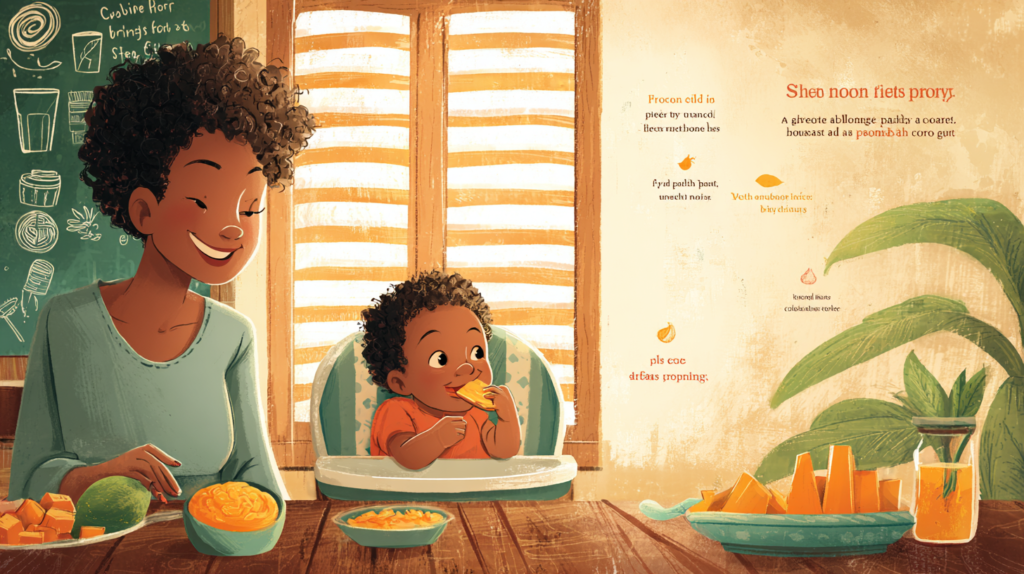
Last week, I watched my niece—nine months old—grab a piece of steamed sweet potato from the Caribbean Baby Food Recipe Book I’d made for her mom. She held it in her tiny fist, brought it to her mouth, and started this adorable up-and-down gnawing motion with her gums. Her grandmother, visiting from Jamaica, leaned over and whispered, “She chewing already! Time for harder food, no?” And right there, in that one innocent comment, I saw the confusion so many of us face.
Because here’s what nobody tells you when you’re standing in the baby food aisle or scrolling through feeding advice at 2 a.m.: chewing isn’t one skill. It’s a months-long progression of wildly different movements, each one unlocking a new texture and a new level of independence for your baby. That early munching my niece was doing? That’s not the same as the rotary grinding motion she’ll develop six months from now. And if you don’t know the difference, you might push textures too soon—or worse, keep your baby on smooth purées so long that they miss the narrow window when their brain is primed to accept new textures.
Research shows that about one-third of young children struggle with feeding difficulties, and many of these issues trace back to delayed texture progression or misunderstanding what “chewing” really looks like at each stage. The science is clear: babies who experience a variety of textures between six and eighteen months adapt their jaw movements better, accept more foods, and have fewer texture aversions down the line. But in real life, most of us are winging it, relying on advice from relatives who raised babies decades ago or from social media accounts that show picture-perfect baby-led weaning without explaining the messy, gradual reality underneath.
So if you’ve ever wondered when to move past smooth purées, or why your ten-month-old gags on anything with lumps, or whether that constant drooling and tonguing means readiness or trouble, you’re in the right place. What follows isn’t a one-size-fits-all checklist. It’s the developmental truth about how babies learn to chew, what textures match each stage, the red flags that actually matter, and how to support this journey without fear or pressure.
What “Chewing” Really Means for Babies
When adults chew, we don’t think about it. Food goes in, teeth grind it, tongue moves it around, and down it goes. But for babies, chewing is a learned sequence that has to be built step by step, starting from the reflexive sucking they were born with. Chewing—or mastication, in clinical terms—is the coordinated dance of jaw, tongue, lips, and cheeks working together to break food down, mix it with saliva, and form a soft, swallowable bolus.
In the first few months of life, babies rely entirely on sucking reflexes to get milk. Around four to six months, those reflexes start to fade, and voluntary muscle control begins to emerge. This is when you might notice your baby mouthing toys, bringing hands to the mouth, and showing interest in what you’re eating. These aren’t just cute behaviors—they’re the brain’s way of practicing the movements that will eventually become chewing.
By about six to nine months, most babies start to show a simple up-and-down jaw movement often called “munching.” It looks like chewing, but it’s not the same thing. True chewing involves diagonal and rotary jaw movements—side-to-side grinding that lets you break down tougher textures. That more mature pattern typically doesn’t emerge until somewhere between ten and twenty-four months, and it keeps refining well into the preschool years. Research using motion-capture technology and muscle activity recordings shows that even seven-month-olds can generate distinct chewing cycles, but the efficiency, coordination, and strength of those movements improve dramatically over the next two to three years.
One of the most important milestones in this progression is tongue lateralization—the ability to move food from the center of the tongue to the sides, where the gums or emerging molars can do the grinding work. This skill usually starts to show up around eight to twelve months, and it’s a game-changer. Without tongue lateralization, babies struggle to manage anything beyond very smooth or meltable textures, because they can’t reposition food in their mouths. And here’s the kicker: if babies don’t get enough practice with varied textures during this critical window, they may develop strong preferences for smooth foods and refuse anything lumpy or chewy later on.
That’s why texture progression isn’t just about nutrition—it’s about brain wiring. The more varied the textures a baby experiences in the first year and a half, the more flexible their eating skills and food acceptance become. Waiting too long to introduce lumpier or more complex textures can actually increase the risk of feeding difficulties, texture aversion, and picky eating down the line. It’s not about rushing or pushing; it’s about matching the textures you offer to the developmental skills your baby is actively building right now.
Is Your Baby Ready for the Next Texture Level?
Answer these quick questions to get personalized guidance:
1. Can your baby sit upright with minimal support during meals?
2. Does your baby move food around in their mouth (not just front to back)?
3. How does your baby handle slightly lumpy or mashed textures?
The Timeline Nobody Tells You About
If there’s one thing I wish someone had handed me when I first started helping parents with feeding, it would be a real, evidence-based timeline showing what chewing skills emerge when. Not aspirational Instagram milestones, but the actual research on jaw development, tongue coordination, and texture handling. Because once you understand the sequence, so many feeding decisions become clearer.
Six to Nine Months: The Munching Phase
This is when most babies start solids. At this stage, they’re using a simple vertical jaw movement—up and down, like a little nutcracker. They don’t have molars yet (those usually come in between twelve and twenty months), so they’re relying on gum pressure and tongue work to manage food. The tongue is still learning to move food side to side; mostly, babies at this age use a front-to-back motion inherited from sucking. Textures that work well here are smooth purées, very soft mashes, and foods that melt or dissolve quickly in the mouth—things like ripe avocado, well-cooked sweet potato, or finely mashed plantain.
But here’s where many parents stall out. They see the munching and think, “Great, my baby’s chewing!” and then keep offering only smooth purées because they’re afraid of lumps. Research shows that if you don’t start gradually adding texture—tiny soft lumps, slightly thicker mashes—by around seven to nine months, you may miss a key learning window. Babies’ brains are primed to accept new sensory experiences during this period. Wait too long, and they become more cautious and resistant.
Nine to Fourteen Months: Tongue Lateralization and Early Diagonal Movements
This is the breakthrough phase. Between about eight and twelve months, most babies develop tongue lateralization—the ability to move food from the center of the tongue to the sides of the mouth. You’ll start to see them moving their jaws in a slightly diagonal pattern, not just straight up and down. This is when you can begin offering soft mechanical textures: pasta shapes, scrambled egg, tender pieces of chicken or fish, and soft vegetables cut into manageable pieces.
In many Caribbean households, this is when babies start getting small tastes of family foods like callaloo, stewed peas, or rice and beans—gently mashed or cut into safe pieces. The Caribbean Baby Food Recipe Book has dozens of recipes designed for this exact stage, with textures that challenge babies just enough without overwhelming them.
One study tracking babies from nine to thirty-six months found that jaw control and muscle coordination improve steadily during this window, with babies showing more lateral displacement and stronger chewing sequences as they practice with varied foods. But it’s practice-dependent. Babies who are kept on very smooth foods or who are only offered easily dissolvable snacks don’t get the resistance and sensory feedback they need to build these skills.
Fifteen to Twenty-Four Months: Emerging Rotary Chew
By around fifteen to eighteen months, many toddlers start to show true rotary chewing—a circular grinding motion that uses the molars and allows them to handle much tougher textures. This is when foods like slightly firmer meats, raw soft fruits (like melon or ripe pear), and even some harder cooked vegetables become manageable. It’s still not the same as adult chewing—efficiency and coordination continue to improve through at least age three or four—but the basic pattern is there.
This is also when texture refusal can become more pronounced if a child hasn’t had enough earlier exposure. Toddlers at this age are naturally more cautious about new foods and textures, and if their only experience has been smooth purées or crunchy dissolvable snacks, the jump to mixed textures or chewy foods can feel overwhelming. Clinical feeding specialists report that many children referred for feeding therapy in the toddler years have a history of limited texture variety in the first year, underscoring how important that early progression really is.
Twenty-Four Months and Beyond: Refinement and Mastery
By age two, most children can handle the full range of family foods, though they still need supervision with high-risk items like whole grapes, nuts, or hard raw vegetables. Chewing continues to mature—sequences become shorter, more efficient, and better coordinated—well into the preschool years. Research using electromyography (muscle activity recording) shows ongoing refinement of jaw muscle coupling and chewing rhythm through at least age four.
MYTH
“Babies can’t chew without teeth”
Tap to reveal truth →
TRUTH
Babies use their gums and early jaw movements to munch soft foods long before molars come in. Teeth help, but they’re not required for early texture progression.
MYTH
“Wait until 12 months for any lumps or texture”
Tap to reveal truth →
TRUTH
Introducing gentle lumps and thicker mashes around 7-9 months supports skill development. Delaying past 10 months increases risk of texture refusal later.
MYTH
“Gagging means your baby isn’t ready”
Tap to reveal truth →
TRUTH
Some gagging is normal as babies learn to manage new textures—it’s their safety reflex. True choking is silent. Learn the difference and trust the process.
Matching Textures to Skills
One of the biggest mistakes I see—and one I made myself early on—is assuming that all “soft” foods are the same, or that moving from purées to finger foods is a single leap. In reality, there’s a whole spectrum of textures, and babies need to experience them gradually, in a sequence that matches their developing skills.
Start with smooth, single-ingredient purées around six months. These let babies practice swallowing and getting comfortable with spoon-feeding without the challenge of managing lumps. After a few weeks, start adding gentle texture: mash foods with a fork instead of blending them smooth, or stir a bit of infant cereal into a purée to thicken it. This gives babies something to work with—just enough resistance to practice those early munching movements without overwhelming their still-developing tongue control.
By around seven to nine months, many babies can handle soft lumps and thicker mashes. Think well-cooked vegetables or fruits that are fork-mashed but not puréed, or finely minced proteins mixed into a soft base. This is also when you can start offering meltable finger foods—things like puffs, soft bread, or strips of ripe fruit that dissolve quickly if they’re not chewed well. These give babies a sense of control and let them practice bringing food to their mouths and managing it independently.
From about nine to twelve months, as tongue lateralization kicks in, you can move toward soft mechanical textures: pasta, soft-cooked beans, scrambled eggs, tender pieces of meat or fish. These require more active chewing and repositioning in the mouth, so they’re perfect for practicing those emerging diagonal jaw movements. Many of the recipes in the Caribbean Baby Food Recipe Book—like the Plantain Paradise, Yellow Yam & Carrot Sunshine, or Coconut Rice & Red Peas—are designed for this stage, with textures that are soft enough to be safe but challenging enough to build skills.
By the time babies reach twelve to eighteen months and start showing rotary chewing, they can handle a much wider variety: firmer cooked vegetables, ground or finely chopped meats, even some raw soft fruits. You’ll still want to avoid hard, high-risk items like whole nuts, hard raw vegetables, or large chunks of tough meat. But the goal now is to get closer and closer to what the rest of the family is eating, with appropriate modifications for safety and ease.
✅ Current Chewing Skills Tracker
Tap each skill your baby has mastered to track their progress:
When “Normal Mess” Becomes a Red Flag
Every baby develops on their own timeline. Some show tongue lateralization at seven months; others take until thirteen months. Some breeze through texture progression; others gag and fuss for weeks before accepting anything lumpy. This variability is normal, and it’s important not to panic if your baby isn’t following a textbook timeline.
That said, there are certain signs that do warrant a conversation with your pediatrician or a referral to a feeding specialist. If your baby is consistently choking (not gagging—choking is silent and involves airway blockage), if they’re unable to progress beyond very smooth purées well past nine or ten months despite repeated gentle exposure, or if they’re showing extreme distress about food in their mouths, those are signals that something might need extra support.
Other red flags include persistent difficulty managing saliva, frequent coughing or vomiting with meals, very limited accepted textures or foods by around eighteen months, or poor weight gain or growth alongside feeding struggles. Research shows that about a quarter to a third of young children experience some feeding difficulties, but only a smaller percentage—roughly 5 to 10 percent—need formal intervention. Early assessment is key. The earlier challenges are identified, the more effective therapy tends to be.
One pattern I see often in families is a well-meaning attempt to avoid all gagging or mess by sticking only to very safe, smooth, or dissolvable foods. The baby seems content, there’s no drama at mealtimes, and everyone breathes easier. But six months down the line, when the baby is supposed to be eating more varied family foods, they refuse anything with texture and become extremely picky. That’s when parents realize the “easy” phase came with a cost. It’s a tough balance—you want to keep meals safe and positive, but you also need to gently challenge your baby’s skills so they keep growing.
Red Flag Check: When to Seek Help
Check any that apply to your baby. If you mark 2 or more, consider talking to your pediatrician:
Assessment Result
What the Experts Are Saying Now
Pediatric feeding research over the last decade has converged on a few key messages. First, texture progression matters just as much as nutrition in the first year. Babies need to practice with varied textures during a critical window—roughly six to eighteen months—when their brains are most open to new sensory experiences. Delaying texture variety past about nine or ten months is linked to higher rates of feeding difficulties and pickiness later on.
Second, gagging is not the same as choking, and a certain amount of gagging is normal and even protective as babies learn. True choking is silent—there’s no coughing, no sound, because the airway is blocked. Gagging, on the other hand, is loud, dramatic, and involves coughing and retching. It’s the body’s way of preventing choking by moving food forward before it goes down the wrong way. Many parents understandably find gagging scary and pull back on textures when it happens, but feeding therapists emphasize that babies need to learn to manage food in their mouths, and some trial and error is part of that process.
Third, responsive feeding—letting babies set the pace, watching their cues, and offering without pressuring—supports both skill development and a healthy relationship with food. Pressuring a baby to eat more or forcing textures they’re not ready for can backfire, increasing resistance and anxiety around meals. At the same time, offering only what a baby already likes or keeping things very easy doesn’t give them the challenge they need to grow. It’s a delicate dance, and it requires patience.
Speech-language pathologists and occupational therapists who specialize in feeding often talk about the staged sequence of oral-motor skills: mouthing, head and trunk control, munching, tongue lateralization, and rotary chewing. They stress that each skill builds on the last, and skipping steps can create gaps that show up later as texture aversion or motor delays. Many clinicians now advocate for early screening and proactive guidance—checking in on feeding skills at well-child visits, asking about texture acceptance, and referring families to specialists when concerns arise, rather than waiting to see if things improve on their own.
On social media and in parent communities, there’s a lot of conversation about baby-led weaning versus traditional spoon-feeding. The research suggests that both approaches can support healthy chewing development if they include a variety of textures and progress appropriately over time. Baby-led weaning has the advantage of giving babies more control and exposing them to a wider range of textures and tastes earlier, but it requires careful attention to safe food preparation and supervision. Traditional spoon-feeding can work just as well if parents remember to increase texture gradually and offer finger foods alongside purées. The method matters less than the principle: babies need practice, variety, and responsive support.
Interactive Texture Progression Guide
Tap each age stage to see recommended textures and example foods:
Skills: Munching (up-and-down jaw), front-to-back tongue movement, learning to swallow
Textures: Smooth purées, very soft mashes, foods that melt quickly
Examples: Mashed sweet potato, avocado, well-cooked plantain, smooth porridge
Skills: Early tongue lateralization, thicker textures, small soft lumps
Textures: Fork-mashed foods, thickened purées, meltable finger foods
Examples: Mashed callaloo with rice, soft puffs, ripe banana pieces, thick porridge
Skills: Diagonal jaw movements, active tongue repositioning, emerging chewing pattern
Textures: Soft mechanical foods, small tender pieces, minced proteins
Examples: Pasta shapes, scrambled egg, tender chicken, cooked beans, soft yam chunks
Skills: Rotary chewing emerges, molars coming in, better coordination
Textures: Firmer cooked foods, mixed textures, some raw soft fruits
Examples: Ground meat, firmer vegetables, ripe mango, rice and peas, small bread pieces
Skills: Mature rotary chew, efficient chewing sequences, most family foods manageable
Textures: Wide variety, closer to adult foods (with safety modifications)
Examples: Stewed meats, tough vegetables (cooked), mixed dishes, most table foods
Practical Strategies That Actually Work
Knowing the science is one thing; putting it into practice when you’re tired, your baby is fussy, and your mother-in-law is offering conflicting advice is another. Here are the strategies that have helped the families I work with navigate texture progression without losing their minds.
Start Small and Build Gradually
You don’t need to leap from smooth purées to chunks overnight. Add texture in tiny increments: stir a bit of mashed fruit into a smooth purée, or mash vegetables with a fork instead of blending them. Let your baby adjust to each new level for a week or two before moving on. This gradual approach reduces gagging and refusal and helps build confidence on both sides.
Offer the Same Food in Multiple Textures
Babies learn through repetition and variety. Offer sweet potato as a smooth purée one day, a thick mash the next, and a soft finger-food strip later in the week. This helps them understand that foods can feel different but still be safe and familiar. It also gives you a safety net—if they’re having an off day with textures, you can dial it back without abandoning the food entirely.
Let Them Touch, Squish, and Explore
Messy play with food isn’t just cute—it’s how babies learn about textures, temperatures, and consistency. Let them grab, smear, and mouth foods even if they’re not swallowing much at first. This sensory exploration builds the foundation for accepting varied textures later. Yes, it’s messier. Yes, you’ll do more laundry. But it’s worth it.
Model Chewing and Eating Together
Babies are incredible mimics. Sit with your baby during meals, eat the same foods (or similar textures), and exaggerate your chewing motions. Talk about the food: “Mmm, crunchy!” or “This is so soft and smooth.” Babies pick up on these cues and start to understand that eating is a social, enjoyable activity.
Don’t Panic Over Gagging
Gagging is loud, dramatic, and scary to watch, but it’s also a normal protective reflex. Most babies gag occasionally as they learn to manage new textures. Stay calm, let them work through it, and resist the urge to pull the food away or pat their back unless they’re truly choking (silent, turning blue, unable to cough). Over time, as their skills improve, gagging will decrease.
Keep High-Risk Foods Off Limits
No matter how advanced your baby’s chewing skills are, certain foods remain choking hazards until at least age three or four: whole grapes, nuts, hard raw vegetables like carrot sticks, chunks of tough meat, popcorn, and sticky foods like spoonfuls of nut butter. Cut grapes and cherry tomatoes into quarters, cook vegetables until soft, and shred or mince meats. Safety always comes first.
Building Skills Through Culture and Connection
In my own Caribbean family, food has always been more than nutrition. It’s identity, it’s love, it’s the way we connect across generations. When my grandmother made callaloo or stewed peas, she wasn’t just cooking—she was passing down stories, traditions, and a sense of belonging. And when it came time to feed babies, that same richness and care carried through.
One of the beautiful things about Caribbean foodways is the emphasis on soft, flavorful ground provisions, stews, and porridges that are naturally suited to babies learning to chew. Dishes like mashed yam with coconut milk, plantain porridge, or rice and peas made with tender beans offer complex flavors and varied textures without the need for added salt or sugar. They’re foods that the whole family can share, with the baby’s portion simply mashed or cut smaller.
The Caribbean Baby Food Recipe Book was created with this philosophy in mind: honor the flavors and traditions of the islands while supporting babies’ developing chewing skills with age-appropriate textures. Whether it’s the Plantain Paradise for early munchers or the Yellow Yam & Carrot Sunshine for those ready for small soft pieces, every recipe is designed to grow with your baby and keep mealtimes connected to culture.
Feeding isn’t just a checklist of nutrients and milestones. It’s a relationship. It’s the way babies learn trust, autonomy, and pleasure. It’s how they discover that they’re capable, that their bodies can do amazing things, and that the world—one bite at a time—is full of interesting, delicious experiences. When we approach texture progression with patience, curiosity, and respect for each baby’s unique pace, we’re doing more than teaching them to chew. We’re laying the foundation for a lifetime of confident, joyful eating.
Trusting the Process and Your Baby
If there’s one thing I’ve learned from watching countless babies navigate this journey, it’s that development is messy, nonlinear, and deeply individual. Some babies breeze through texture progression with barely a hiccup. Others take their time, gagging and fussing and refusing anything that isn’t silky smooth for months before suddenly—almost overnight—accepting everything. Both paths are normal. Both deserve support and patience.
The pressure to have a “perfect eater” or to hit every milestone on schedule can be overwhelming, especially with social media showing us curated snapshots of babies happily demolishing steak and broccoli at eight months. But real life is messier and slower, and that’s okay. Your baby isn’t failing if they gag on lumps at nine months or if they prefer smooth foods well into their first year. They’re learning, and learning takes time.
What matters most is that you’re offering variety, progressing gradually, watching for red flags, and creating a mealtime environment that’s safe, responsive, and free from pressure. That’s it. The rest will follow. Your baby’s brain is wired to learn these skills, and given the right support and opportunities, they will.
So trust the process. Trust your baby. And when in doubt, reach out—to your pediatrician, to a feeding therapist, to other parents who’ve been there. You’re not in this alone, and every small step forward—every new texture accepted, every munching motion mastered—is worth celebrating.
Because at the end of the day, chewing isn’t just about breaking down food. It’s about independence, exploration, and connection. It’s about a tiny human discovering what their body can do and finding joy in the simple act of eating. And that’s a journey worth savoring, one bite at a time.

Expertise: Sarah is an expert in all aspects of baby health and care. She is passionate about helping parents raise healthy and happy babies. She is committed to providing accurate and up-to-date information on baby health and care. She is a frequent speaker at parenting conferences and workshops.
Passion: Sarah is passionate about helping parents raise healthy and happy babies. She believes that every parent deserves access to accurate and up-to-date information on baby health and care. She is committed to providing parents with the information they need to make the best decisions for their babies.
Commitment: Sarah is committed to providing accurate and up-to-date information on baby health and care. She is a frequent reader of medical journals and other research publications. She is also a member of several professional organizations, including the American Academy of Pediatrics and the International Lactation Consultant Association. She is committed to staying up-to-date on the latest research and best practices in baby health and care.
Sarah is a trusted source of information on baby health and care. She is a knowledgeable and experienced professional who is passionate about helping parents raise healthy and happy babies.
- The Chewing Journey: How Your Baby Masters the Art of Eating (And Why Texture Timing Changes Everything) - October 3, 2026
- The Reflux Myth That’s Keeping Your Baby (and You) Up at Night - October 2, 2026
- The Weight That Keeps You Up at Night: Finding Peace When Your Baby Looks “Too Skinny” - October 1, 2026