Traditional Purees: Are They Still the Gold Standard for Starting Solids?
Here’s something that might surprise you: That Instagram-perfect jar of smooth puree you spent hours making? It might be doing less for your baby’s development than you think. And that pouch you’ve been reaching for during rushed mornings? Experts now say it could be quietly sabotaging your little one’s journey to becoming an adventurous eater.
After decades of pediatricians handing out those “start with rice cereal, then smooth purees” pamphlets, the conversation around baby’s first foods has completely shifted. The traditional path—months of spoon-feeding ultra-smooth purees before graduating to “real food”—is being challenged by new research, cultural wisdom from around the world, and a growing understanding of infant development.
But before you toss those baby food jars or feel guilty about the feeding approach you’ve chosen, take a breath. The truth is more nuanced and empowering than the polarized “purees vs. baby-led weaning” debates flooding parenting groups. What modern pediatrics is actually saying might change everything you thought you knew about starting solids.
Click on the statement that sounds most like you to discover your feeding approach style:
The Puree Revolution Nobody Saw Coming
Walk into any Caribbean home when feeding time arrives, and you’ll notice something immediately different from Western feeding norms. That grandmother carefully mashing yam and callaloo with coconut milk isn’t following any Instagram trend—she’s practicing generations of wisdom that modern research is only now validating. Traditional smooth purees were never meant to be a six-month feeding stage. They were always a brief, practical transition.
The commercial baby food industry—worth billions globally—built an empire on the idea that babies needed specially prepared, ultra-smooth foods for extended periods. Research from Nordic nutrition recommendations published in 2024 reveals that complementary foods should begin around six months, but the emphasis has dramatically shifted toward texture progression and family foods rather than prolonged puree feeding. Major pediatric organizations including the WHO, AAP, and ESPGHAN now recommend that babies transition to lumpier, mashed foods and soft finger foods by around eight to nine months—not the twelve to fifteen months that many pouch-feeding schedules suggest.
Here’s the shocking part that most parenting blogs won’t tell you: A 2024 study examining food texture experiences in Indian infants found that in India, soupy or liquidy bases are more common than traditional Western-style purees, and pureed foods were only introduced to a majority of infants from eight to nine months onwards—not as a starting point. Indian babies often begin with dal khichdi (lentils and rice) with mild spices like cumin and turmeric, moving quickly to family foods with varied textures.
What if we’ve been approaching this completely backward? The evidence suggests we have.
Real Talk from a Caribbean Mama: When my son reached six months, I dutifully bought the baby food maker and spent hours creating silky-smooth purees. Three weeks in, I watched my aunt casually hand her eight-month-old niece a piece of soft mango. “Why you making all that work?” she asked, eyebrow raised. “Baby need fi learn how fi eat real food, not drink smooth food for months.” She was right. Within days of offering my son mashed sweet potato with tiny soft lumps and letting him explore soft plantain pieces, his interest in eating skyrocketed. That expensive baby food maker? It became a very overpriced smoothie blender.
What the Data Actually Reveals About Purees
Population data from the United States covering 2016-2018 shows that feeding practices remain stubbornly out of sync with current recommendations. About one-third of infants are still introduced to solids before four months, while on the opposite end, many parents keep babies on ultra-smooth purees well past the critical developmental window for texture acceptance.
A comprehensive 2021 study examining food preparation practices for infants aged seven to thirteen months found that pureeing and mashing were common at month seven (57.8% and 59.6% respectively), but by month thirteen, chopping and dicing were most prevalent at 85.4%. This data tells us something crucial: texture progression is happening, but it’s often slower than developmental readiness would allow. Research on pediatric feeding consistently identifies a “sensitive period” from approximately four to nine months when babies are especially receptive to new textures and tastes. Miss this window by staying on ultra-smooth purees too long, and you risk feeding difficulties later.
European pediatric societies have issued position statements expressing concern about the over-reliance on commercial baby food pouches. A 2022 assessment of baby foods available in Italy found that the texture of too many commercial products remains puree for too long, potentially hindering the development of infants’ chewing abilities. When babies suck food directly from pouches—a practice becoming increasingly common—they miss crucial oral-motor practice, taste exposure variety, and self-feeding experiences compared with spoon feeding or exploring finger foods.
The allergy-prevention landscape has been revolutionized in recent years. Updated guidelines reinforced through 2024 now strongly advise that peanut and egg should be introduced between four to six months across all risk groups. Interestingly, these allergens can easily be delivered via purees or soft spoons—thinned peanut butter mixed into breast milk or well-cooked mashed egg stirred into vegetable purees. This is one area where traditional smooth purees excel: they provide a safe, controlled method for early allergen introduction.
The Texture Timeline: What Science Says Your Baby Actually Needs
One of the biggest disservices the traditional puree-heavy approach has done is creating the illusion that texture progression is optional or can be delayed indefinitely. Developmental science tells a different story. Your baby’s mouth, jaw, tongue, and swallowing mechanisms are on a biological timeline that doesn’t wait for your comfort level or the convenience of pouches.
The Hidden Dangers of Prolonged Puree Dependency
This is where the conversation gets uncomfortable, but it’s necessary. Therapists report that children who remain on thin purees and bottles well into the second year are over-represented in feeding clinic caseloads, often presenting with oral-motor delays, restricted diets, or texture aversions. When parents ask, “How did we get here?” the answer often traces back to missing that eight-to-nine-month texture progression window.
Research and expert opinion consistently suggest that missing the six-to-nine-month window for lumpier textures and chewing practice makes later transitions to family foods significantly harder, sometimes requiring professional feeding therapy. Think of it like language development: there are optimal windows when the brain is primed to acquire certain skills. Miss the window entirely, and the skill can still be learned, but it requires much more effort and intervention.
The pouch problem deserves special attention here. Those squeezable pouches—convenient, portable, seemingly perfect for busy parents—have exploded in popularity. But position statements from pediatric nutrition societies in Europe specifically call out concerns about over-reliance on pouch foods. When babies suck purees directly from pouches for months on end, they’re missing out on learning to eat from a spoon, experiencing food on a plate, seeing what they’re eating, and developing the oral-motor patterns needed for chewing. One feeding therapist described it perfectly: “It’s like teaching a child to read by only showing them audiobooks. They’re getting the story, but they’re not learning the fundamental skills.”
Purees also make it dangerously easy for well-meaning parents to override their baby’s satiety cues. With finger foods, when baby is full, they stop eating or start dropping food. With purees, especially from pouches or jars, adults can keep spooning or the baby can keep sucking long past fullness. This conflicts with responsive feeding principles used to support healthy appetite regulation and may contribute to overfeeding patterns that persist into childhood.
Select your baby’s age to see appropriate textures and get personalized suggestions:
Expert Voices: What Professionals Actually Recommend
When you cut through the noise of social media influencers and product marketing, professional voices in pediatric nutrition paint a surprisingly unified picture—one that validates multiple approaches while emphasizing key non-negotiables.
Pediatric nutrition reviews and AAP educational pieces published in 2025 state clearly that no single complementary feeding method (purees versus baby-led weaning) has demonstrated clear overall superiority for healthy term infants when safety and nutrition are optimized. What matters more than the specific method is hitting certain developmental milestones: timely introduction of allergens, adequate iron and zinc intake, appropriate texture progression, and responsive feeding practices that honor baby’s hunger and fullness cues.
Some gastroenterologists and dietitians acknowledge that spoon-fed purees can offer more precise control over delivering iron-rich foods and may feel easier for parents nervous about choking risks. Iron deficiency remains a significant concern in infancy, and iron-fortified cereals or pureed meats can be straightforward ways to ensure adequate intake. On the other hand, baby-led weaning proponents emphasize benefits like self-regulation, motor skill development, and natural integration into family mealtimes—all supported by emerging research.
The real wisdom comes from experts advocating for middle ground. Many contemporary pediatric dietitians and occupational therapists now promote what they call “responsive feeding” or “combo feeding”—an approach that combines spoon-feeding of iron-rich purees and mashes with opportunities for self-feeding finger foods, always following the baby’s developmental readiness and interest cues. This looks less like following a rigid method and more like responsive parenting: offering variety, watching your baby’s signals, and adjusting based on what you observe.
Social media has become a powerful force in shaping parent perceptions and anxieties around feeding. Influential clinicians and feeding specialists on platforms like Instagram and YouTube increasingly work to reassure parents that both spoon-fed purees and baby-led approaches can be safe and developmentally supportive when key principles are followed. The message: stop stressing about which “camp” you’re in and focus on the principles that matter—texture progression, nutrient density, safety practices, and responsive feeding.
Best for: Parents who need more control over nutrition intake, introducing early allergens, babies with certain medical needs.
Best for: Parents comfortable with messier eating, families who prioritize shared meals, babies showing strong interest in self-feeding.
Perfect for: Most families. Offer iron-rich purees/mashes alongside soft finger foods, follow baby’s cues, progress textures steadily, prioritize family foods.
Cultural Wisdom: What the World Has Known All Along
One of the most eye-opening aspects of researching infant feeding practices globally is discovering that the “purees for months” approach is largely a recent Western commercial invention. Across cultures—from India to the Caribbean to parts of Africa and Asia—traditional first foods often featured texture, family flavors, and quick progression to communal eating.
In many Indian households, babies’ first foods include dal khichdi—lentils and rice with mild spices like cumin and turmeric. This isn’t smooth puree; it’s a soupy, textured preparation. Spices are introduced from the beginning, believed to aid digestion and build immunity. Indian parents also commonly add ghee (clarified butter) to baby foods for healthy fats. The 2024 study examining texture experiences in Indian infants found that soupy or liquidy bases—not smooth purees—were more common textures, with pureed foods only becoming prevalent from eight to nine months onward as a thickening technique, not a starting point.
In Japan, babies often receive okayu (rice porridge) with gradually increasing texture. In many African communities, babies are introduced to mashed versions of family staples like yam, cassava, and millet porridge early on, with texture quickly progressing. In Ethiopia, babies may receive soft injera (fermented flatbread) with mild lentil stews. Korean babies might get small amounts of fermented foods like kimchi juice to introduce probiotics.
Throughout the Caribbean, traditional first foods have always been provisions—starchy vegetables like sweet potato, yam, dasheen, green banana, plantain—cooked until soft and mashed with coconut milk or a bit of family food liquid. Babies eating at the family table, tasting small amounts of what everyone else eats (with appropriate modifications for salt and spice), has been the norm for generations. The transition from breastfeeding or bottle to family meals was never meant to involve months of separate, specially prepared smooth foods.
This cultural context reveals something profound: the anxiety many Western parents feel about starting solids, the perceived need for specialized equipment and products, and the fear of “doing it wrong” are largely manufactured concerns. Babies have been successfully transitioning to family foods for millennia without baby food makers, pouches, or Instagram feeding accounts. What they need is nutrient-dense, appropriately prepared food; responsive caregivers; and gradual exposure to the textures and flavors of their cultural food heritage.
The Caribbean Baby Food Recipe Book was created precisely to bridge this gap—honoring traditional Caribbean feeding wisdom while incorporating modern food safety and nutrition science. Recipes like Coconut Rice & Red Peas, Plantain Paradise, and Sweet Potato & Callaloo Rundown aren’t “baby-fied” versions of family foods; they’re family foods prepared in baby-appropriate ways, helping your little one develop a palate for island flavors from the start.
The Allergen Introduction Game-Changer
If there’s one area where the infant feeding landscape has been completely revolutionized in recent years, it’s allergy prevention. The guidance has done a complete 180-degree turn, and it’s something every parent needs to understand because the window of opportunity is narrow.
For decades, parents were told to delay introducing allergenic foods—peanuts, eggs, fish, shellfish—until babies were older, sometimes not until after the first birthday or even later. The thinking was that delaying would prevent allergies. We now know this approach was completely wrong and likely contributed to the dramatic rise in food allergies in Western countries.
Current guidelines, updated and reinforced through 2024 by organizations including the American Academy of Pediatrics, National Institutes of Health, and Food Allergy Research & Education, now strongly recommend introducing peanut and egg between four to six months of age, once the baby shows readiness for solids. This applies across all risk groups, including babies with eczema or family history of allergies. Early introduction—not delayed introduction—reduces the risk of developing these allergies.
The landmark LEAP study (Learning Early About Peanut Allergy) showed that introducing peanut-containing foods to high-risk infants between four to eleven months reduced peanut allergy development by about 81% compared to avoidance. Similar research with eggs shows that early introduction reduces egg allergy risk.
Here’s where purees actually shine: they provide a safe, controlled method for introducing these allergens. Peanut butter can be thinned with breast milk, formula, or water and mixed into cereal or fruit puree. Well-cooked scrambled egg can be mashed and combined with vegetable purees. This makes the food easier to swallow while ensuring baby gets adequate exposure to the allergen protein.
The key points for allergen introduction:
Timing matters: Introduce between four to six months, after a few other foods have been successfully tried but well before seven months. Don’t delay.
Start at home: Introduce new allergens at home (not at daycare or a restaurant) when you can monitor for reactions, preferably earlier in the day.
Form matters less than exposure: Whether you offer peanut in a smooth puree, thinned peanut butter, or peanut puff snacks (for older babies), what matters is consistent exposure—at least three times per week once introduced.
One at a time: Introduce new allergens one at a time, waiting at least two to three days before introducing another new allergen, so you can identify any reactions.
Continue regular exposure: Once successfully introduced, these foods need to remain in baby’s diet regularly. One-time introduction isn’t enough—sustained exposure maintains tolerance.
How confident are you about introducing allergens? Choose your current feeling:
Practical Implementation: Making This Work in Real Life
All this research and expert opinion is valuable, but at 5:30 PM when your six-month-old is hungry, you’re exhausted, and you’re staring at your kitchen wondering what to actually feed this tiny human, theory needs to become practice. Let’s break down what a responsive, texture-progressive, culturally connected approach actually looks like day to day.
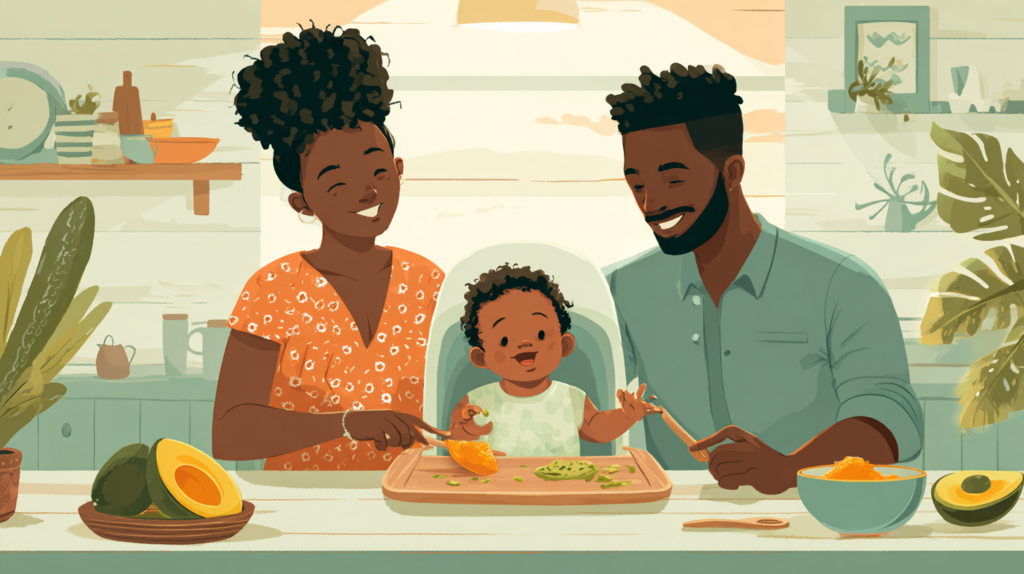
Week One (around 6 months, showing readiness signs): Start with one meal a day, mid-morning or lunchtime when baby is alert and happy, not overtired. Offer a small amount—one to two tablespoons—of a simple food. Good options: mashed avocado, mashed ripe banana, smooth sweet potato puree, or mashed ripe mango. The texture should be smooth but not watery—think thick Greek yogurt. Let baby explore. They might push it out with their tongue at first—this is normal tongue-thrust reflex fading. Some babies take to it immediately; others need several exposures. Both are normal.
Weeks Two-Three: Continue one meal daily, gradually introducing new single-ingredient foods every two to three days. Begin introducing iron-rich foods as a priority: pureed or mashed meats, iron-fortified cereal, pureed lentils or beans, pureed egg (fully cooked). Also start introducing allergenic foods during this period—thinned peanut butter mixed into banana, mashed well-cooked egg. Caribbean options: Start with mashed provisions like sweet potato, yam, or green banana with a bit of coconut milk. Recipe like Batata y Manzana (White Sweet Potato & Apple) from the cookbook works beautifully here.
Weeks Four-Six (moving toward 7 months): Increase to two meals daily. Start making purees slightly thicker and less smooth. Instead of blending until silky, use a fork to mash. Leave tiny soft lumps. Introduce soft finger foods alongside purees: thick strips of soft avocado, steamed carrot sticks (big enough to grip), soft pear slices, appropriately cooked sweet potato wedges. Let baby hold foods, bring them to their mouth, gnaw and explore. Expect mess—this is learning, not just eating. Caribbean families can introduce foods like soft plantain pieces, mashed callaloo, or soft-cooked pumpkin.
Months Seven-Eight: Move to three meals daily. Dramatically reduce smooth purees—most meals should now have visible texture. Mashed, not blended. Offer more variety of finger foods: soft cooked vegetables in pieces, small pieces of soft fruit, strips of toast with avocado or thinned nut butter, small pieces of pasta, shredded chicken or fish. Continue offering family foods in modified form. This is an excellent time for recipes like Cook-Up Rice & Beans Smooth or Yellow Yam & Carrot Sunshine—foods that can be mashed to appropriate texture but introduce baby to authentic Caribbean flavors and combinations.
Months Eight-Nine (critical period): This is the window experts emphasize most. By now, smooth purees should be rare. Most foods should be soft but require some chewing—think minced, shredded, or in small soft pieces. Baby should be practicing pincer grasp (picking up small items) and managing different textures confidently. Offer meals that look more like family food: rice with shredded meat and vegetables, pasta with sauce, beans and vegetables, eggy bread fingers, small meatballs. Continue ensuring iron-rich foods at most meals.
Months Ten-Twelve (approaching first birthday): Baby should be eating three meals plus one to two snacks daily, with breast milk or formula still provided but solid foods now contributing substantial nutrition. Meals should resemble modified family meals. Many Caribbean dishes work beautifully here with minor adaptations—Coconut Rice & Red Peas (reduce salt), Stewed Peas (ensure meat is soft and finely chopped), provision mash with vegetables, mild curries over rice. The goal is that by the first birthday, baby is eating at the family table, enjoying family foods, and the concept of separate “baby food” is fading away.
This progression isn’t rigid—every baby moves at their own pace. Some race ahead; others need more time at each stage. What matters is the general trajectory: starting around six months, brief period of very smooth if needed, quick move to texture, steady progression toward family foods, with most texture advancement happening between six and ten months. If you find yourself still doing majority smooth purees at nine or ten months, it’s time to actively push texture progression unless there’s a medical reason to delay.
The Meal That Changed Everything: I’ll never forget the Sunday my then-eight-month-old daughter sat with us at Sunday dinner. I’d been gradually moving away from smooth purees, but I was still making separate “baby versions” of everything. That Sunday, my mother-in-law looked at me like I’d grown two heads. “Why you mashing up that provision separate?” she asked. “Just give her from the pot, just less salt.” She took a small piece of the steamed dasheen we’d made, mashed it roughly with a fork, added a tiny bit of the callaloo (we go easy on salt in our cooking), and handed it to my daughter. Baby girl went to town on that food like she’d been waiting her whole life for real flavor. From that day forward, I stopped making separate baby food. I cooked family food with less salt and appropriate spices, and gave her from our plates with texture adjustments as needed. Mealtime became simpler, she became a more adventurous eater, and I got back an hour of my day. Sometimes grandmother wisdom trumps parenting books every single time.
When Purees Make Perfect Sense (And When They Don’t)
After everything we’ve covered, let’s be clear: purees aren’t evil, and using them doesn’t make you a bad parent. Like most things in parenting, context and application matter more than the tool itself.
Purees make sense when:
You’re just starting solids (around six months) and baby is getting used to non-milk foods—a brief period of smooth or semi-smooth foods can ease the transition.
You’re introducing allergens—thinning peanut butter or mashing well-cooked egg into purees provides safe, controlled exposure.
You need to deliver specific nutrients—purees can be an efficient vehicle for iron-rich foods like meat or iron-fortified cereal, especially if baby hasn’t yet mastered self-feeding enough to consume adequate amounts.
Your baby has specific medical conditions—some babies with certain developmental delays, oral-motor challenges, or medical conditions genuinely need modified textures for longer. This should be guided by your pediatrician or feeding therapist.
You’re traveling or in situations where finger foods aren’t practical—a pouch or jar of puree can be a reasonable convenience option when eating out or traveling, as long as it’s not the daily norm.
You’re combining with finger foods in a responsive approach—offering some spoon-fed mash alongside finger foods gives variety and ensures adequate intake while building self-feeding skills.
Purees become problematic when:
They remain the primary texture past eight to nine months—this is where developmental concerns arise.
They’re used to override baby’s fullness cues—spooning in “just one more bite” or letting baby suck pouches beyond satiety teaches them to ignore their body’s signals.
They replace opportunities for texture exploration—if every meal is smooth puree, baby isn’t learning to chew, manage lumps, or handle variety.
They’re chosen primarily for convenience at the expense of development—pouches every meal because they’re fast and clean, even though baby is ready for more challenging textures.
They delay family food integration—if you’re still making separate ultra-smooth baby food at twelve months when baby could be eating modified family meals, it’s time to transition.
The bottom line: purees are a tool, ideally a brief transitional one. Use them strategically in the early weeks, combine them with textured and finger foods as you progress, and actively work toward family foods by eight to ten months. They’re a starting point, not a destination.
Your Questions Answered: Real Parent Concerns
“My baby gags on anything with texture. Should I go back to smooth purees?”
Gagging is not choking—this is crucial to understand. Gagging is a protective reflex that pushes food forward in the mouth when baby encounters texture they’re not sure how to manage. It looks scary (coughing, red face, eyes watering), but it’s actually baby’s safety mechanism working correctly. True choking is silent. Gagging decreases with practice and exposure. If you retreat to smooth purees every time baby gags, they never get the practice needed to master texture. Instead, stay calm, let them work through it, and continue offering appropriate textures. If gagging is extreme or persistent beyond normal adjustment, consult your pediatrician or a feeding therapist, but don’t let normal gagging keep you stuck on smooth purees indefinitely.
“Don’t I have more control over nutrition with purees?”
This is partly true and partly illusion. Yes, with purees you can measure exactly how many ounces baby consumed. But feeding therapy research shows that this “control” can backfire, leading to overfeeding and teaching babies to ignore fullness cues. Baby-led and responsive feeding approaches teach babies to eat according to hunger and stop when full—skills that support healthy weight and eating behaviors lifelong. You can ensure adequate nutrition by offering iron-rich foods at most meals, whether pureed, mashed, or in finger-food form, and tracking general intake patterns rather than precise amounts. Trust that babies are biologically wired to eat what they need when offered appropriate variety.
“I’m terrified of choking. Isn’t smooth food safer?”
Understandable fear, but research shows similar choking rates between baby-led weaning and traditional spoon-feeding when safety guidelines are followed. What prevents choking isn’t avoiding texture forever—it’s following safety rules: supervise all eating, ensure baby is seated upright, avoid high-risk foods (whole grapes, nuts, hard raw vegetables, hot dogs, popcorn), prepare foods appropriately (steam hard vegetables until soft, cut grapes lengthwise, shred meats), and learn infant CPR so you’re prepared. Keeping baby on smooth purees past the developmental window doesn’t prevent choking risk—it actually increases it later because baby never learned to manage texture safely.
“My mother/mother-in-law says I’m feeding my baby wrong.”
Ah, the intergenerational feeding wars—a tale as old as time. Here’s your script: “Thank you for caring about baby’s nutrition. Our pediatrician recommended introducing textures progressively starting around six months, which is current medical guidance. We’re being supervised by baby’s doctor and following recommended practices.” Then change the subject. You don’t need to defend, argue, or prove yourself. If older generations fed differently and their kids survived, great—but survival isn’t the only goal. Current recommendations are based on developmental science and long-term feeding outcomes. You can respectfully honor their experience while following current evidence-based guidance.
“Is making homemade purees really better than store-bought?”
Not necessarily “better” but different. Commercial baby food has come under scrutiny for heavy metal content (naturally occurring from soil, not added) and texture concerns, but quality brands exist. Homemade gives you complete control over ingredients, texture, and taste—you can make it thicker, include appropriate seasonings, and introduce family flavors from the start. It’s also typically more cost-effective. But commercial foods can be convenient backups and are nutritionally adequate. The key is not relying exclusively on ultra-smooth commercial pouches past the early weeks. Whether homemade or store-bought, prioritize texture progression and variety. The Caribbean Baby Food Recipe Book makes homemade approachable with simple recipes using ingredients you already have for family cooking—no special equipment required for most recipes.
Your Path Forward: Making Peace with Your Feeding Journey
If you’ve made it this far, you’re probably experiencing a mix of emotions. Maybe relief that there’s more flexibility than you thought. Maybe guilt if you’ve been stuck on smooth purees longer than ideal. Maybe overwhelm about changing your approach. Maybe validation that your instinct to offer family foods was right all along.
Here’s what you need to hear: wherever you are right now is your starting point, not a judgment on your parenting. Maybe you’ve been doing smooth purees for four months and just learned about texture progression—that’s okay. Starting today, you can begin thickening purees and introducing soft lumps. Maybe you’ve been stressed about choosing between purees and baby-led weaning—you don’t have to choose. You can do both. Maybe you’ve felt pressure to make everything from scratch but need the convenience of some store-bought options—that’s completely fine as long as you’re progressing texture.
The feeding approach that works is the one that feeds your actual baby (not the theoretical perfect baby in your mind), fits your actual family (not the Instagram version), and moves steadily toward the goal: an adventurous eater enjoying family foods by the first birthday. Whether you get there via purees, baby-led weaning, or a mixture of both matters far less than that you get there.
What we know from research and expert consensus: Start around six months when baby shows readiness. Introduce allergens early, between four to six months. Ensure iron-rich foods regularly. Progress texture steadily, with significant advancement by eight to nine months. Follow responsive feeding—watch baby’s cues, don’t force, allow self-feeding opportunities. Incorporate family foods and cultural flavors. By around twelve

Expertise: Sarah is an expert in all aspects of baby health and care. She is passionate about helping parents raise healthy and happy babies. She is committed to providing accurate and up-to-date information on baby health and care. She is a frequent speaker at parenting conferences and workshops.
Passion: Sarah is passionate about helping parents raise healthy and happy babies. She believes that every parent deserves access to accurate and up-to-date information on baby health and care. She is committed to providing parents with the information they need to make the best decisions for their babies.
Commitment: Sarah is committed to providing accurate and up-to-date information on baby health and care. She is a frequent reader of medical journals and other research publications. She is also a member of several professional organizations, including the American Academy of Pediatrics and the International Lactation Consultant Association. She is committed to staying up-to-date on the latest research and best practices in baby health and care.
Sarah is a trusted source of information on baby health and care. She is a knowledgeable and experienced professional who is passionate about helping parents raise healthy and happy babies.
- Traditional Purees: Are They Still the Gold Standard for Starting Solids? - September 26, 2026
- Baby Myths & Facts: 10 “Rules” About Baby Food That Are Quietly Holding You Back - September 25, 2026
- The Daycare Feeding Truth No One Talks About (And How to Fix It Today) - September 24, 2026