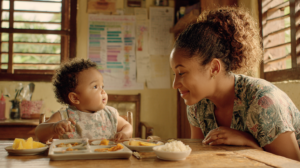
The Airplane Spoon Myth: What Science Really Says About Getting Your Baby to Eat
Here’s what nobody tells you: That adorable airplane game you’re doing with the spoon? The one your mother-in-law swears by? The one that made your baby giggle and open wide yesterday?
It might be working against everything you’re trying to build.
I know. Trust me, I know. Because six months ago, I was that parent—zooming spoons through the air, making engine noises that would put a NASCAR race to shame, convinced I’d cracked the code to successful feeding.
⚡ Quick Reality Check: Test Your Feeding Beliefs
Which statement do you believe? (Click to reveal the truth)
Let me take you back to that moment when everything changed. It was a Tuesday afternoon—one of those humid Caribbean days where even the ceiling fan feels like it’s moving through honey. My daughter Maya sat in her high chair, sweet potato purée smeared across her cheek like war paint. She’d eaten maybe three spoonfuls before starting to turn her head away.
That’s when I pulled out my signature move: “Here comes the airplane! Vroooom! Open the hangar!” And you know what? It worked. She opened. She ate. I felt like I’d won the parenting lottery.
Until her pediatrician asked me a question that stopped me cold: “When Maya turns her head away, what is she telling you?”
I didn’t have an answer. Because I’d been too busy being the air traffic controller to listen.
The Cultural Legacy We’ve All Inherited
The “here comes the airplane” game didn’t just appear out of nowhere. It’s woven into the fabric of how we were raised—a hand-me-down trick passed from generation to generation like a family recipe. In the 1950s and 60s, when commercial baby food hit the market in glass jars with exact measurements, parenting advice centered on one goal: get the baby to finish the jar.
The thinking was simple. More food in equals better baby. Airplane games, train noises, puppet shows with the spoon—these weren’t just entertainment. They were tools in the arsenal of “good” parenting. Our grandmothers did it. Our mothers did it. And when we became parents, we picked up that spoon and started our own flight patterns without questioning why.
But here’s what changed: the science caught up. And what researchers discovered turned the airplane upside down.
The uncomfortable truth: Modern feeding guidance has shifted from “how do we get more food in” to “how do we help babies learn to regulate their own intake.” That playful airplane? It’s on the wrong side of that line.
Responsive feeding—the approach recommended by pediatric nutrition experts, the CDC, and feeding therapists worldwide—emphasizes watching for hunger and fullness cues, letting the child pace the meal, and keeping distractions to a minimum. When you fly that spoon through the air making vrooming sounds, you’re not responding to your baby’s cues. You’re overriding them.
The Science Behind the Myth
Let’s talk about what actually happens in your baby’s brain and body during mealtime. Infants are born with an incredible ability to self-regulate their food intake. They know when they’re hungry. They know when they’re full. It’s instinctive—the same way they know to cry when they need something or sleep when they’re tired.
But this self-regulation skill needs practice. It needs to be honored and strengthened, not bypassed.
Your Baby’s Hunger & Fullness Signal Decoder
Click each signal to discover what your baby is really telling you:
Research on responsive feeding consistently shows that children who are allowed to follow their internal hunger and fullness cues develop healthier eating patterns, better self-regulation of food intake, and lower obesity risk as they grow. A comprehensive review of feeding guidelines for infants and toddlers emphasizes creating calm, low-distraction environments where babies can focus on their body’s signals—not on a circus performance happening in front of their face.
When you use games and distractions to get “just one more bite,” you’re teaching your child to ignore what their stomach is telling them. You’re replacing their internal wisdom with external pressure. And here’s the kicker: even “positive” pressure—the fun, playful kind—still teaches kids to eat past fullness.
of parents report using prompting strategies like games to encourage eating
higher risk of eating issues in children regularly pressured to eat
is when babies typically begin showing clear hunger and satiety cues
What Feeding Experts Actually Recommend
I spent weeks diving into the research after that pediatrician appointment. I read studies on sensitive feeding approaches. I watched webinars from pediatric dietitians. I joined online groups where feeding therapists broke down the science in plain English. And a pattern emerged that I couldn’t ignore.
Every single expert—from speech-language pathologists specializing in feeding to behavior analysts working with aversive eaters—said the same thing: minimize distractions, maximize cue-reading.
Dr. Ellyn Satter’s Division of Responsibility framework, widely considered the gold standard in child feeding, is crystal clear: parents decide what food is offered, when it’s offered, and where it’s offered. The child decides whether to eat and how much. There’s no room in that model for airplane games designed to manipulate a “yes” out of a child who’s signaling “no.”
The Pressure Scale: Where Do Your Feeding Tactics Fall?
Drag the slider to see examples at each pressure level:
Responsive feeding guidance from health organizations worldwide—including the CDC, American Academy of Pediatrics, and World Health Organization—all emphasize the same core principles: follow the child’s lead, respect their cues, minimize mealtime distractions, and avoid pressure tactics. The airplane spoon, when used to coax more food into a turning-away baby, violates every single one of those principles.
But here’s where it gets nuanced: experts aren’t saying mealtime should be silent and solemn. Connection and warmth are crucial. The difference is in intention. Are you narrating the meal, describing the food, making gentle conversation? That’s connection. Are you performing a Broadway show to get your baby to ignore their fullness? That’s pressure.
The Hidden Cost of the Airplane Game
The most heartbreaking part of all this research? The short-term success of distraction feeding actually makes it harder to stop. Maya would open her mouth for the airplane. She’d eat more than she would have otherwise. And I’d think, “See? It works!”
But what I didn’t see was the learning opportunity I was stealing from her. Every time I flew that spoon past her turning head, I was teaching her that her “no” didn’t matter. That the adult knew better than her belly. That eating was about entertainment, not nourishment.
❌ MYTH: “If my baby slows down or looks away, I should use distractions to keep them eating.”
✅ FACT: Turning away, slowing pace, and environmental interest are normal fullness or fatigue cues. Responsive feeding means pausing, checking in, and ending the meal—not pushing through with games.
❌ MYTH: “Airplane games make mealtime fun and positive.”
✅ FACT: Fun and connection come from calm presence and narration. Games that override “no” signals teach children to distrust their own hunger and fullness.
❌ MYTH: “My baby won’t eat enough without encouragement.”
✅ FACT: Healthy babies are hardwired to eat enough for their needs. Trust in self-regulation, combined with regular meal offerings, supports optimal intake better than pressure.
Feeding therapists who work with children with genuine feeding disorders—kids who have sensory issues, oral motor delays, or aversion from medical trauma—report that games and distractions can actually increase anxiety and avoidance in hesitant eaters. When a child feels chased or overwhelmed by an incoming spoon (even a “fun” one), they may shut down further. The very tool we think is helping can be the thing making it worse.
Reveal: What Happens When We Remove the Airplane
Week 1-2: Baby may eat less. Parents panic. This is normal—your baby is recalibrating.
Week 3-4: Baby starts showing clearer cues. Opens mouth when hungry. Turns away when done. Parents start trusting the signals.
Month 2-3: Mealtimes become calmer. Less stress for everyone. Baby’s intake evens out. Self-regulation strengthens.
Long-term: Child grows up trusting their body, eating a variety of foods, and having a healthier relationship with eating. The exact opposite of what pressure feeding creates.
Making the Shift: What Responsive Feeding Actually Looks Like
So if we’re not supposed to do the airplane game, what are we supposed to do when our baby seems disinterested, distracted, or like they’ve barely eaten anything?
This is where I had to completely rewire my thinking. Because the answer isn’t another trick or tactic. The answer is trust.
Here’s what my mealtimes with Maya look like now:
- Before the meal: I check that she’s in a comfortable, upright position in her high chair. No toys on the tray. No screens anywhere in sight. Just her, me, and the food.
- Offering food: I put small portions on her tray or offer a pre-loaded spoon. I describe what we’re eating. “This is mashed plantain with a little cinnamon—smells sweet, doesn’t it?” No pressure. No performance.
- During eating: I watch her. I notice when she leans forward (interested). When she opens her mouth (ready). When she slows down (getting full). When she looks away (done or needing a break).
- When she signals done: I pause. I might offer one more time, calmly. If she turns away again or pushes the food, I say, “Okay, you’re telling me you’re done. Let’s clean up.” And we do.
The first week of this approach nearly broke me. Maya ate what felt like nothing. Half a banana. Three spoonfuls of rice and beans. A quarter of an avocado. My anxiety was through the roof. But I reminded myself: She’s learning to listen to her body. Trust the process.
By week three, something shifted. Maya’s cues became clearer. She’d lean in eagerly when hungry. Turn away decisively when done. And her overall intake? Exactly the same as before—just distributed differently across meals and days.
Want to introduce authentic Caribbean flavors without pressure tactics? My Caribbean Baby Food Recipe Book features over 75 recipes designed for baby-led and responsive feeding approaches—from Cornmeal Porridge Dreams to Sweet Potato & Callaloo Rundown.
The Caribbean Twist: Culture Meets Science
Growing up in a Caribbean household, food was love. Food was celebration. Food was how my grandmother showed affection, how my aunties welcomed you, how we marked every occasion. The idea of not encouraging a child to eat felt like betraying that cultural legacy.
But here’s what I’ve learned: responsive feeding doesn’t mean disconnection. It means connection without pressure.
I still cook the recipes from my childhood for Maya. The difference is in how I offer them. When I make that silky smooth Calabaza con Coco (pumpkin with coconut milk) or Yellow Yam & Carrot Sunshine purée, I’m not just feeding her nutrients. I’m sharing my heritage. But I let her decide how much of that heritage she’s ready to take in on any given day.
Some days she devours the Plantain Paradise purée like it’s her job. Other days she takes two bites and signals done. Both are okay. Both honor her body and our culture simultaneously.
Real talk: Responsive feeding is harder in cultures where showing love through food is paramount. It requires us to separate our emotional needs (“I need you to eat this because I made it with love”) from our child’s physical needs (“My body is telling me I’m full”). That separation is uncomfortable. But it’s necessary.
I’ve found ways to honor both. I involve Maya in food prep when possible—she “helps” mash avocado, watches me stir porridge, smells the spices before they go in. The Caribbean Baby Food Recipe Book includes family meal bonus recipes alongside baby versions, so even if Maya only eats a few bites, the whole family gets to enjoy Stewed Peas Comfort or Coconut Rice & Red Peas together. That’s connection. That’s culture. No airplane required.
Addressing the “But What If” Fears
I know what you’re thinking. Because I thought it too. But what if my baby doesn’t eat enough? What if they lose weight? What if I’m being neglectful?
These fears are real, valid, and worth addressing head-on.
The Worry Wheel: Click Your Biggest Fear
Here’s what the evidence actually shows:
Healthy babies, when offered appropriate foods at regular intervals and allowed to self-regulate, consume adequate calories for their individual needs. Some babies are naturally smaller. Some are naturally bigger. Some eat like birds at one meal and vacuum up food at the next. This variability is normal, not a crisis.
The role of growth charts isn’t to ensure every baby hits the 50th percentile. It’s to track individual trends. As long as your baby is following their own curve (even if that curve is lower), gaining skills, hitting milestones, and showing energy, they’re eating enough. Full stop.
The “missing nutrients” fear is often overblown. Babies need variety over time, not perfection at every meal. Your job is to offer nutrient-dense options repeatedly (research shows it can take 15-20 exposures before a baby accepts a new food). Their job is to decide what and how much goes in.
And the picky eating concern? Research actually suggests the opposite. Children who experience high mealtime pressure and control are more likely to develop picky eating and food aversions. Responsive feeding, with its emphasis on low-pressure exposure and honoring preferences, supports broader acceptance long-term.
When to Worry (And When Professional Help Makes Sense)
Responsive feeding works beautifully for neurotypical babies without medical complications or feeding disorders. But it’s important to acknowledge when additional support is needed.
You should consult a pediatrician or feeding specialist if:
- Your baby is losing weight or falling off their growth curve
- Mealtimes consistently involve gagging, coughing, or distress
- Your baby refuses entire food groups or textures for extended periods
- There’s a history of prematurity, reflux, oral motor delays, or sensory processing challenges
- Your parental gut is telling you something is genuinely wrong
For babies with true feeding difficulties, therapists use specific interventions that might look like “pressure” from the outside but are actually carefully structured exposure therapy. That’s different from everyday distraction tactics. Those interventions are evidence-based, supervised, and targeted to specific diagnoses.
For the vast majority of typically developing babies, though? The airplane game isn’t helping. It’s hindering.
Your Responsive Feeding Journey Progress
Track where you are in letting go of pressure tactics:
Still using games sometimes → Pausing when baby signals → Fully trusting cues
Real Stories from Parents Who Made the Shift
I’m not alone in this journey. When I started sharing my responsive feeding experiments on social media, messages flooded in from other parents experiencing the same transformation.
One mom told me: “I thought I was helping my son by making mealtime ‘fun’ with games. Turns out I was teaching him to eat when distracted instead of when hungry. Now that we’ve stopped, he actually tells me when he wants more. It’s wild.”
Another parent shared: “My daughter used to clench her mouth shut until I brought out the toy. I thought it meant she needed the toy to eat. My feeding therapist helped me see it meant she didn’t want to eat right then. Respecting that changed everything.”
These stories matter because they counter the dominant narrative we’ve all internalized: that babies need to be tricked into eating. They don’t. They need to be trusted.
Building Better Mealtime Habits (Without the Airplane)
So what does positive, connected, pressure-free feeding look like in practice? Here’s the framework I wish someone had handed me on day one:
1. Structure without pressure: Offer meals and snacks at predictable times. Babies thrive on routine. But within that structure, let them decide whether and how much to eat.
2. Safe exploration: Let your baby touch, squish, smell, and play with food. Yes, it’s messy. Yes, it’s slower. But sensory exploration is how babies learn about food without the pressure of having to eat it immediately.
3. Model, don’t coerce: Eat with your baby when possible. Describe your food. Show enjoyment. Let them watch you eat a variety of things. Modeling is powerful. Pressure is counterproductive.
4. Narrate, don’t perform: Talk about the food. “This is soft and orange. It smells a little sweet.” Simple, calm narration keeps you connected without turning mealtime into a show.
5. Honor the “no”: When your baby turns away, closes their mouth, pushes food, or gets fussy, believe them. They’re communicating. Your job is to listen, not override.
Need recipe inspiration that works with responsive feeding? Check out baby-friendly options like Papaya & Banana Sunshine, Basic Mixed Dhal Purée, and Ackee Adventure in the Caribbean Baby Food Recipe Book—designed for trust-based, cue-led feeding.
These practices work whether you’re doing traditional spoon-feeding, baby-led weaning, or a combination. The method matters less than the mindset: I trust my baby to know their body.
What This Means for Your Family, Starting Today
Here’s the truth I’ve come to accept: Letting go of the airplane game isn’t just about feeding. It’s about control. It’s about trust. It’s about recognizing that our babies are whole people with valid signals, not empty vessels we need to fill.
It’s uncomfortable because it requires us to sit with uncertainty. What if they don’t eat enough today? What if they reject the food I spent an hour making? What if I’m doing it wrong?
But here’s the alternative: What if we keep teaching them to ignore their bodies? What if they grow up never trusting their hunger or fullness? What if our need for control today creates their disordered relationship with food tomorrow?
That discomfort you feel when you put down the airplane spoon and your baby eats less than you expected? That’s not failure. That’s growth. Yours and theirs.
✨ Your Commitment: Choose One Shift to Start Today
Small changes create lasting impact. Pick one:
Maya is almost two now. Mealtimes are calmer. She eats a wide variety of foods—not because I tricked her into it, but because I offered them repeatedly without pressure. Some days she eats like a teenager. Other days she nibbles like a bird. I no longer panic. I trust her.
And here’s the most surprising part: I enjoy feeding her now. I’m not stressed about getting food in. I’m present for the connection. I watch her explore Cornmeal Porridge Dreams with her fingers, giggle when she tries the tangy Tambran Ball Inspired blend, reach for more of the Zaboca and Green Fig mash I grew up eating.
That’s what responsive feeding gave us. Not perfection. Not Instagram-worthy meals where she finishes every bite. Just trust, connection, and the space for her to grow into someone who knows her own body.
The airplane can stay grounded. Your baby’s internal compass is more than enough to guide them.
The Path Forward: Building Trust at Every Meal
If you take nothing else from this article, take this: You don’t have to do it perfectly. You don’t have to never slip up and make an airplane noise again. This isn’t about rigid rules. It’s about a gradual shift in how you see your role.
You’re not the controller of how much food goes in. You’re the provider of safe, nourishing options and a calm environment. You’re the interpreter of cues. You’re the steady presence that says, “I trust you to know what you need.”
That might be the hardest job of all. Because it requires you to sit with the discomfort of not knowing if they ate “enough.” It requires you to believe that their body’s wisdom is real, even when it doesn’t align with the serving size on the package or the advice from your well-meaning relatives.
But I promise you: It’s worth it. For their long-term relationship with food. For your sanity at mealtimes. For the trust you’re building between you.
The airplane spoon myth is just one example of how cultural norms can drift away from what science and child development actually recommend. It’s a gentle reminder to question the “that’s just how we’ve always done it” narratives and ask: Is this serving my child’s growth, or my need for control?
Ready to embrace responsive feeding with delicious, culturally meaningful recipes? The Caribbean Baby Food Recipe Book gives you 75+ options across Jamaica, Trinidad, Guyana, Haiti, Cuba, Puerto Rico, and the Dominican Republic—each designed to honor your baby’s autonomy and your heritage.
So the next time you reach for that spoon and feel the urge to launch it into flight, pause. Take a breath. Look at your baby. What are they telling you with their body, their gaze, their pace?
Listen to that. Trust that. It’s more powerful than any game you could play.
Because at the end of the day, feeding isn’t about tricks. It’s about nourishment, connection, and teaching our children to trust the most important voice they’ll ever hear: their own.

Expertise: Sarah is an expert in all aspects of baby health and care. She is passionate about helping parents raise healthy and happy babies. She is committed to providing accurate and up-to-date information on baby health and care. She is a frequent speaker at parenting conferences and workshops.
Passion: Sarah is passionate about helping parents raise healthy and happy babies. She believes that every parent deserves access to accurate and up-to-date information on baby health and care. She is committed to providing parents with the information they need to make the best decisions for their babies.
Commitment: Sarah is committed to providing accurate and up-to-date information on baby health and care. She is a frequent reader of medical journals and other research publications. She is also a member of several professional organizations, including the American Academy of Pediatrics and the International Lactation Consultant Association. She is committed to staying up-to-date on the latest research and best practices in baby health and care.
Sarah is a trusted source of information on baby health and care. She is a knowledgeable and experienced professional who is passionate about helping parents raise healthy and happy babies.
- Do You Really Need to Count Calories for Your Baby? - September 20, 2026
- The Shocking Truth About Lumpy Foods (And Why Your Baby’s Future Depends On Getting This Right) - September 19, 2026
- First Molars, Big Leaps: How to Unlock New Food Possibilities Safely - September 18, 2026