
What My Child Taught Me at the Table: Hidden Lessons from the Feeding Journey
Somewhere between the first latch that did not work, the spoon your baby swatted away, and the toddler who suddenly decided rice is “too spicy,” you probably quietly asked yourself: “Am I failing at this?”
Here is the twist most parents never get told in the hospital discharge notes: your feeding journey is not just about how your child eats, it is about who you become while you figure it out together. The same moments that left you googling at 2 a.m. can also be the moments that teach you courage, flexibility, and a kind of everyday gratitude you did not know you were capable of.
This article takes you behind the scenes of the research on feeding, parent mental health, and posttraumatic growth and weaves it together with real‑life, Caribbean‑flavored, nap‑time‑typed truth. By the end, you will not only see your child’s feeding story differently, you will see yourself differently too.

Why Feeding Hits So Deep
Feeding is one of the earliest ways you and your child communicate long before words, you are reading hunger cues, watching tiny faces, and learning the rhythm of their body. Research on caregiver responsiveness shows that the way you respond at the table is tightly linked to your child’s emotional development, not just their weight or growth chart line. In other words, that 20‑minute feed is doing double duty: it nourishes the body, but it is also quietly shaping trust, attachment, and how safe your child feels bringing their needs to you.
Modern parents, especially mothers, are also navigating an intense swirl of expectations. Programs and campaigns still heavily idealize “perfect” breastfeeding or “perfect” weight outcomes, and many parents internalize the idea that being a “good” parent is measured in ounces pumped, portions eaten, or where their child lands on a percentile curve. Studies on breastfeeding pressure and parental feeding stress show that this pressure can seriously strain mental health and make parents more likely to fall into controlling or anxious feeding patterns instead of responsive ones.
At the same time, psychologists studying posttraumatic growth and benefit‑finding in parents of medically fragile children keep noticing something remarkable. Even in the middle of hospital stays, feeding tubes, or slow weight gain, many parents later describe a deeper appreciation of ordinary moments, stronger relationships, and a more grounded sense of what actually matters. The same stress that feels like it might break you often becomes the doorway into a truer, kinder version of yourself.
The Numbers Behind Your Late‑Night Worries
The feelings you have about feeding are not random; they are echoed in data across many countries. Studies with hundreds of breastfeeding mothers show that feeling pressured to breastfeed a certain way or for a certain length of time is closely linked with higher anxiety and emotional strain, especially when that pressure clashes with going back to work, medical complications, or mental health needs. Parents in these studies often talk about shame when they use formula or change their feeding plan, even when that shift clearly protects both parent and baby.
Large reviews of parental feeding practices tell a similar story for older babies and toddlers. When parents feel stressed, guilty, or judged, they are more likely to fall into non‑responsive feeding patterns: pressure to finish the plate, restriction of “treat” foods, or using food as a reward or to soothe any big emotion. Over time, those patterns are linked with higher emotional eating, stronger food preoccupation, and more symptoms of disordered eating in adolescence rather than the balanced, relaxed relationship with food that parents actually want.
Researchers following families over years also highlight how wider realities like neighborhood food environments, financial stress, and cultural expectations shape feeding. Caregivers living in more deprived neighborhoods with limited access to fresh foods often juggle financial pressure, safety concerns, and time poverty, making home cooking and relaxed family meals much harder. When statistics later show higher child BMI or less varied diets, it is easy to blame parents and miss the bigger forces shaping what is even possible in a given kitchen.
Social media adds another layer. Studies of digital communities and Instagram narratives from parents of young children describe a double‑edged sword. On one side, parents find comfort, tips, and a sense of “Oh, it is not just me,” which can reduce isolation. On the other side, carefully curated photos of perfect plates and effortless breastfeeding can intensify self‑doubt and feed the belief that everyone else is nailing this while you are barely keeping your eyes open.
From “Am I Failing?” to “What Are We Learning?”
Here is where the story starts to shift. Psychologists who study parents going through serious child health events notice that distress and growth often travel together. After a child’s critical illness or long hospitalization, many parents report high levels of anxiety and a stronger appreciation of life, more intentional priorities, and a deeper sense of inner strength. Instead of asking, “Why did I fall apart?” the more useful question becomes, “Who did I become in the middle of all this?”
You do not need an ICU stay for this to apply. Feeding struggles picky eating, slow weight gain, reflux, allergies, tongue‑tie, cultural clashes with extended family can feel just as consuming when you are living them. When those experiences are processed with support and compassion, they often become turning points. Parents describe learning to advocate, to say no to unhelpful advice, to stay present with their child instead of pleasing the room, or to let go of the idea that a clean plate equals love.
Responsive feeding models capture this shift in a practical way. Instead of focusing on how much your child eats at every meal, they invite you to focus on your role (offering structure, predictable meals, and a variety of foods) and your child’s role (deciding what and how much to eat from what is offered). This change does not just protect your child’s relationship with food; it also gently teaches you that your worth as a parent does not live in every bite swallowed.
Shocking Truth #1: Control Often Backfires (But You Can Pivot)
Many parents start their feeding journey with tightly held rules: no sweets for years, every meal perfectly balanced, never wasting food. Then a real, live child arrives with their own temperament, sensory preferences, appetite swings, and growth patterns, and suddenly those rules start to crack. Research consistently shows that high pressure to eat, strict restriction of certain foods, or using food as a bargaining chip are linked with more emotional eating, more power struggles, and more anxiety around food in the long run, even though they are usually coming from a place of love and fear.
This does not mean you were wrong to care. It means your child is a human, not a project, and they are wired to push back when they feel controlled. Studies on parent self‑regulation and emotional eating highlight that parents who feel overwhelmed or who learned to use food for comfort themselves are more likely to repeat those patterns with their children. The hopeful part is that once you notice this, you can start to shift the script: from “My job is to make them eat” to “My job is to provide, invite, and stay calmly present, even if they say no.”
In many Caribbean homes, there is also a strong tradition of finishing your plate and showing respect through eating what is served. You might hear, “You cannot leave the table until that food done,” or have aunties comment on your child’s size at every family gathering. Honoring culture while protecting your child’s autonomy is a delicate dance. One small shift is to keep the flavors and ingredients callaloo, plantain, pumpkin, millet, coconut milk but let go of the pressure tactics. Let the food carry the culture, not the fear.
This is exactly where playful flavors can help. Offering baby‑friendly versions of dishes like sweet potato callaloo puree, papaya banana blends, or cornmeal porridge with a hint of cinnamon lets your child experience the comfort of home cooking without forcing adult‑sized plates or spice levels. If you want ideas already road‑tested for little tummies, you can explore the Caribbean‑inspired meals in the Caribbean Baby Food Recipe Book: Easy & Healthy Homemade Meals for Infants & Toddlers, which shows you exactly how to adapt island favorites from six months onward.
Shocking Truth #2: Your Mental Health Is a Feeding Tool
Another powerful finding from recent studies is that parent mental health is not just a background detail, it is a central ingredient in the feeding relationship. Parents who are more anxious, depressed, or chronically stressed are more likely to feel overwhelmed by mealtimes and to fall back on short‑term strategies like bribes, threats, or giving in to keep the peace. Those same emotions can also make it harder to notice subtle hunger and fullness cues or to stay patient when a child refuses a new food for the tenth time.
On the flip side, parents who have support and space to process their feelings around feeding are more likely to adopt responsive patterns, even in tough circumstances. Studies linking emotional clarity and feeding show that when parents can name their own feelings frustration, fear, guilt, shame without drowning in them, they are better able to respond warmly to their child instead of reacting from panic. This might look like pausing to breathe, lowering your voice instead of raising it, or remembering that this one meal is just one frame in a much longer film.
This is where the “growth through struggle” research becomes deeply practical. Parents of children who went through critical illness, feeding tubes, or complex medical diets often describe becoming more grounded and selective about whose voices they listen to. They talk about learning to advocate, trusting their intuition, and finding joy in a small smile during a difficult feed rather than in numbers alone. Your nervous system is learning too, and every time you choose to re‑center instead of explode, you are building a different legacy around food for your child.
Every time you use one of these strategies this week, tap it. Watch your “growth bar” fill up, not because you were perfect, but because you showed up.
What Social Media Gets Wrong (and How Your Child Corrects It)
Scroll through your feed and it can feel like everyone else is feeding their baby perfectly portioned rainbow plates while you are scraping mashed plantain off the floor. Research on digital narratives from mothers of young children and on social networking among parents shows that these online spaces strongly shape how you judge yourself. Idealized images of breastfeeding, baby‑led weaning, or “sugar‑free from day one” can make you feel like the only parent whose baby just wants plain rice and air.
But when researchers actually interview parents deeply, a different picture emerges. Behind every “highlight” photo there are usually nights of cluster feeding, pumps that broke, family members pushing conflicting advice, and children who went through phases of preferring only bread or only breast. Many parents say that what helped them most was finding communities where people shared the whole story—struggle, adjustment, and the quiet wins—rather than only the polished, shareable bits.
Your child, in their stubborn honesty, keeps correcting the myth that parenting is about performance. When they refuse the Pinterest‑worthy plate and instead happily eat a humble bowl of pumpkin and coconut mash, they are teaching you that the “likes” that matter most are in their eyes, not on a screen. Curating who you follow, muting accounts that spark shame, and seeking voices that respect diverse feeding paths are modern acts of self‑care that ripple straight into your kitchen.

Lessons from Medical and High‑Risk Feeding Journeys
For some families, feeding is not just emotionally intense; it is medically complex. Tube feeds, fortified bottles, slow weight gain, allergies, reflux, or time in the NICU can turn every feed into a calculation. Studies of parents whose children experienced critical illness or long hospital stays reveal high levels of distress alongside surprising levels of reported growth. These parents often talk about discovering strength they did not know they had, reordering their priorities, and developing a fierce ability to advocate for their child.
Importantly, researchers emphasize that growth does not cancel out pain. Many parents still carry anxiety, grief, or trauma long after their child is medically stable. What changes is often the story they tell themselves about who they are now. Instead of seeing themselves only as the parent who panicked over every millilitre, they begin to see themselves as someone who learned to navigate complex information, hold onto hope, and find joy in the smallest signs of progress.
If your child’s feeding journey includes medical twists, you might recognize this. You know the weight of waiting for a consultant to call back. You know what it is like to memorize ingredient lists, track reactions, and still try to show up with a smile so your child associates feeding with safety, not fear. The research on benefit‑finding suggests that taking time to notice what you have learned about resilience, patience, and love in this process is not selfish; it is a powerful way of honoring both your effort and your child’s.
Caribbean Kitchen, Gentle Table: Practical Ways to Grow Together
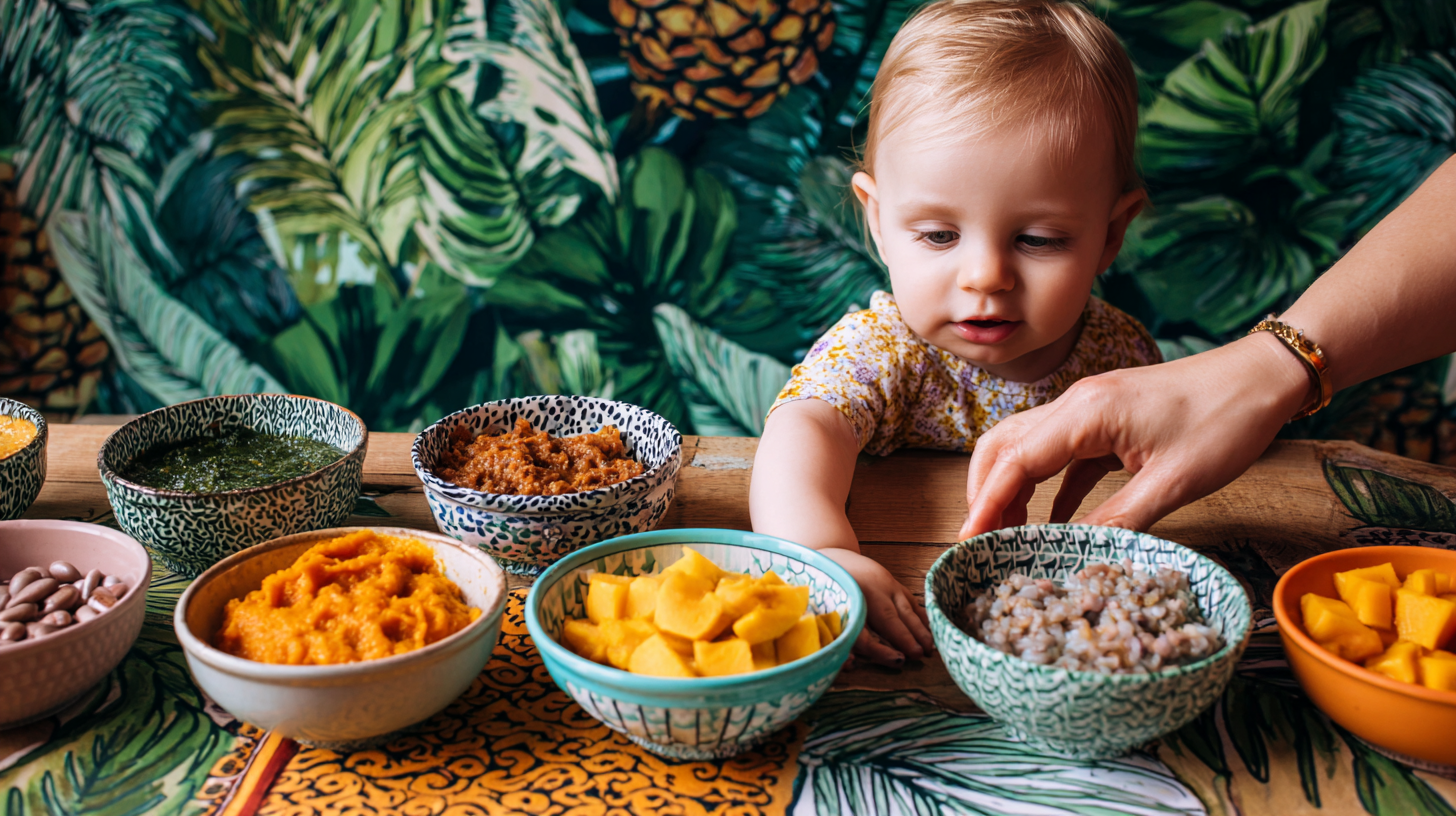
Let us bring this into your actual kitchen for a moment the one with the half‑chopped yam on the board and the tiny spoon on the floor. Many Caribbean families carry a rich heritage of fresh ingredients and slow‑cooked dishes: pumpkin simmered in coconut milk, callaloo cooked down with thyme, sweet plantain, beans with rice, millet porridge scented with cinnamon, and ripe mango blended into smoothies. These foods are not just delicious; they are nutrient‑dense, comforting, and powerful tools for shaping your child’s taste buds early.
One way to turn feeding challenges into growth opportunities is to experiment with baby‑friendly versions of the dishes you already love. For example, a silky pumpkin and coconut puree, a smooth sweet potato and callaloo mash, or a gentle papaya and banana blend can become stepping stones for toddlers who will eventually enjoy the full family pots. Recipes like “Sweet Potato Callaloo Rundown,” “Papaya Banana Sunshine,” “Coconut Rice Red Peas,” or “Ti Pitimi Dous” (sweet millet cereal) adapt beautifully for little mouths while keeping the soul of the dish.
If thinking of how to tweak recipes is just one more thing on your mental load, it is okay to borrow a roadmap. The Caribbean Baby Food Recipe Book: Easy & Healthy Homemade Meals for Infants & Toddlers pulls together over 75 recipes using staples like sweet potato, plantain, mango, coconut milk, beans, and more. It shows you which ingredient combinations work for different ages and how to gently introduce spices like cinnamon, thyme, or pimento so your baby grows up loving the same flavors that feel like home to you.
As you cook, notice the quieter lessons your child is offering. Maybe they teach you to slow down and let them explore mashed calabaza with their hands instead of rushing to wipe every smear. Maybe they teach you to laugh when the carefully prepared “Amerindian Farine Cereal” ends up on the highchair tray instead of in their mouth. Or maybe they teach you to listen to your own hunger and sit down with a bowl of dhal or cook‑up, so feeds become shared meals instead of one‑sided tasks.
Gratitude, but Make It Real
Talk of “gratitude for the journey” can feel hollow when you are scraping cold porridge off a onesie at 3 a.m. Researchers who study growth after difficult experiences are very clear: no one is obligated to feel grateful for hardship, and not every painful thing becomes a blessing. The goal is not to sugarcoat trauma or pretend that feeding challenges are somehow “worth it” because you learned something. The goal is to notice that, alongside the stress, some surprising changes in you might be worth honoring.
Parents in long‑term studies of pediatric illness and stress often mention specific shifts: appreciating small, everyday joys; letting go of other people’s approval; feeling more confident in their ability to handle uncertainty; and deepening their relationships. You might see echoes of that in much quieter ways every time your child surprises you at the table. The first time they voluntarily taste a new food, the day they sign “more” or say “mummy soup good,” or the moment they sit next to you sharing a bowl of rice and peas instead of needing you to spoon‑feed every bite.
Gratitude in this context is not about saying, “I am glad we struggled.” It is about saying, “We went through something hard, and here is what it woke up in me: patience I did not know I had, boundaries I had never set before, tenderness for my own body after pregnancy or birth.” When you name those things, you are not excusing the lack of support you might have had; you are marking the parts of you that deserve to come forward as you move into the next chapters of parenting.
Tap the button to receive one small, concrete thing you can appreciate about your feeding story today even if everything feels messy.
Carrying the Lessons Forward
One day, the phase you are in right now will be just one chapter in your family’s story. The research on posttraumatic growth and benefit‑finding suggests that the way you make sense of this chapter matters more than whether every feed looked like the parenting books. You might remember the months of cluster feeds, the toddler who lived on three safe foods, or the long wait for allergy test results. Alongside that, you might remember the strength it took to advocate, the softness you learned to offer yourself, and the patience you built one messy meal at a time.
The feeding lessons you are learning now will shape how you approach homework struggles, teenage boundaries, and even how you care for yourself when life gets busy. Every time you choose connection over control at the table, you are practicing the muscles you will need when your child is crying over exams instead of carrots. Every time you protect your mental health and ask for help, you are modeling for them that their needs matter too.
As you move forward, you do not have to reinvent everything alone. Evidence‑based guidance on responsive feeding, culturally grounded, baby‑friendly recipes, and communities that share the full story are all part of your support team. If Caribbean flavors are part of your family’s roots or simply part of your curiosity, adding one new island‑inspired meal a week from the Caribbean Baby Food Recipe Book: Easy & Healthy Homemade Meals for Infants & Toddlers can turn “What do I cook now?” into a moment of creativity rather than stress.
Most of all, remember this: your child will not remember how many ounces they drank today, but they will feel, deep in their bones, whether mealtimes were places of pressure or places of safety. You are allowed to learn as you go. You are allowed to change your mind. You are allowed to say, “That old rule stops here with me.” And you are absolutely allowed to look back, years from now, and whisper to the younger version of yourself at the highchair, “You did so much better than you knew.”

Kelley's culinary creations are a fusion of her Caribbean roots and modern nutritional science, resulting in baby-friendly dishes that are both developmentally appropriate and bursting with flavor. Her expertise in oral motor development and texture progression ensures that every recipe supports your little one's feeding milestones while honoring cultural traditions.
Join Kelley on her flavorful journey as she shares treasured family recipes adapted for tiny taste buds, evidence-based feeding guidance, insightful parenting anecdotes, and the joy of celebrating food, culture, and motherhood. Get ready to immerse yourself in the captivating world of Kelley Black and unlock the vibrant flavors of the Caribbean for your growing baby, one nutritious bite at a time.
- What My Child Taught Me at the Table: Hidden Lessons from the Feeding Journey - September 24, 2026
- Reflecting on Your Feeding Journey: How Far You’ve Really Come - September 23, 2026
- The Feeding Journey Continues: A Research-Backed, Future-Focused Guide for Confident Parents - September 22, 2026