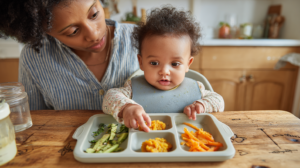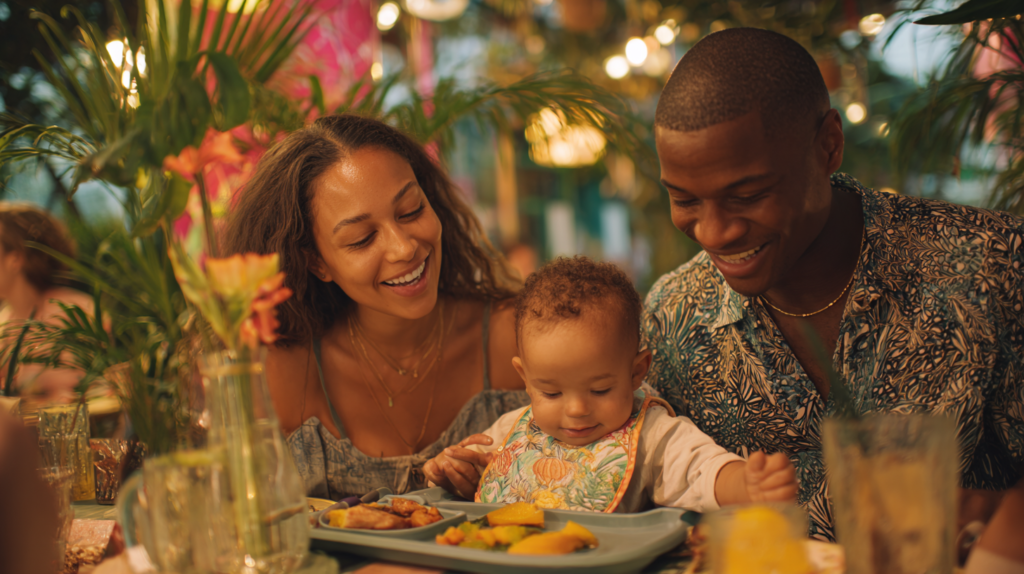
Restaurant Survival Guide: How to Take Your Baby Out to Eat Without Losing Your Mind (Or Your Dignity)
Here’s what nobody tells you about having a baby: you’ll spend the first six months convinced they’ll starve if you look away for five seconds. Then, just when you’re getting the hang of feeding them at home, someone suggests meeting at a restaurant. And suddenly, your brain produces a highlight reel of every possible disaster—food flying across tables, ear-piercing meltdowns, judgmental stares from couples sipping their lattes in peace.
I remember the first time my sister-in-law invited us to Sunday brunch when my little one was eight months old. I spent three days catastrophizing. What if she choked? What if she screamed? What if I became that parent everyone rolls their eyes at?
But here’s the truth that changed everything: 74% of families are dining out MORE in 2025 than ever before, and it’s not because they have perfectly behaved children or some secret parenting superpower. They’ve just learned what works. And after talking to pediatric feeding specialists, reading the research, and yes—surviving plenty of restaurant outings with sweet potato smeared in places sweet potato should never be—I’m here to share exactly how you can join them.
Because the magic isn’t in having a “perfect” baby. It’s in having a plan.
What’s Your Restaurant Anxiety Level?
Let’s figure out where you’re starting from. Click your biggest worry:
Why Restaurant Anxiety Is Real (And Why It’s Actually Holding You Back)
Let’s talk about what’s really happening when you avoid restaurants. Research from 2024 shows that 55% of parents with young children identify stress as their most prevalent mental health challenge. When that stress centers around feeding and public spaces, it creates what psychologists call an “avoidance cycle”—the more you avoid, the scarier it becomes.
And here’s the kicker: when parents avoid restaurants due to anxiety, children miss critical opportunities to develop social skills and distress tolerance. You’re not just denying yourself a break from cooking (though heaven knows you deserve one). You’re also delaying your child’s exposure to new foods, social situations, and the beautiful chaos of family dining.
The research on anxiety transmission is eye-opening: parents’ fearful reactions and avoidance behaviors literally pass anxiety down to their children. But flip the script—show your baby that restaurants are no big deal—and you’re building their confidence along with yours.
One of my neighbors, let’s call her Maria, avoided restaurants for eighteen months after a disastrous brunch where her son threw a full bowl of oatmeal. Eighteen months! When she finally tried again (at my gentle insistence and with a solid plan), she couldn’t believe what she’d been missing. Not perfection—but definitely manageable family time.
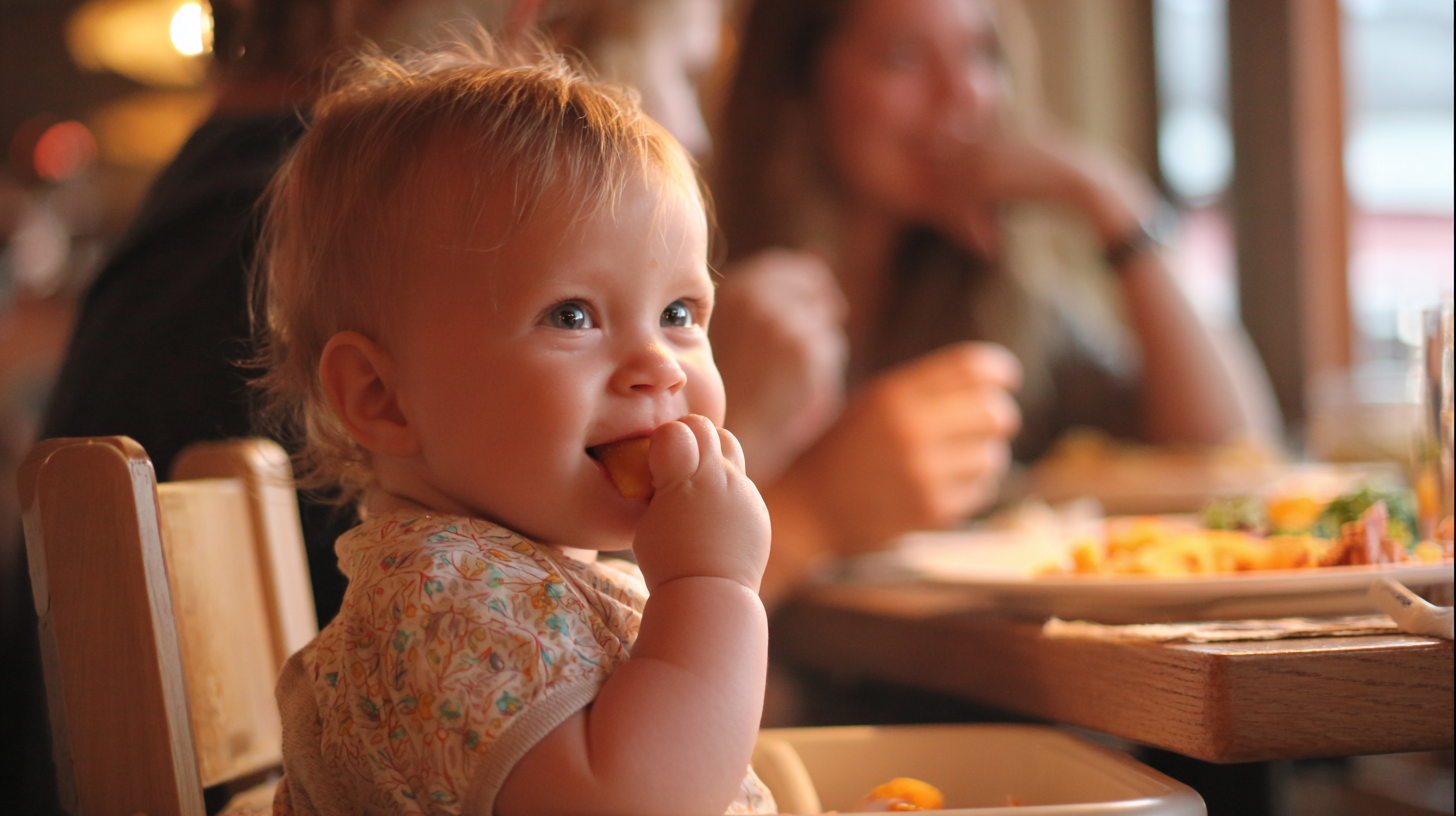
The Restaurant Selection Secret: It’s Not About “Kid-Friendly” Menus
Here’s where most parents get it wrong. They think “kid-friendly” means chicken nuggets and crayons. But pediatric feeding specialist Katie Ferraro—who literally wrote the baby-led weaning playbook—says you should never order from the kids’ menu.
Wait, what?
She’s right. Your baby doesn’t need processed nuggets. They need what you’re eating, modified safely. Which means your restaurant selection criteria should look totally different than you think.
Choose restaurants based on:
- Whole food options: Can you get real vegetables, properly cooked proteins, and fruits? A place serving roasted sweet potato beats a place serving only fried everything.
- Noise level: Paradoxically, slightly louder casual restaurants work better than hushed fine dining. Your baby’s squeals won’t stand out at a busy brunch spot.
- Spacing between tables: You need room to maneuver, especially when your little one decides to test their throwing arm.
- Wait time reputation: Check Google reviews. If people complain about 45-minute waits, that’s not your spot (yet).
- Outdoor seating option: Game changer. Fresh air, room to move, and if things go sideways, you’re already halfway to the parking lot.
My go-to strategy? Caribbean and Latin restaurants often nail this. Places serving rice and beans, plantains, roasted meats, and fresh vegetables naturally offer baby-safe options. If you’re looking for inspiration on what these foods can do for your baby’s nutrition, the Caribbean Baby Food Recipe Book breaks down over 75 recipes featuring ingredients like sweet potatoes, plantains, coconut milk, and beans—all foods you’ll find on restaurant menus that adapt beautifully for babies.
Your Restaurant Survival Kit Checklist
Click each item as you pack it. Your “prepared parent” status will update!
(or clip-on seat if needed)
(familiar eating surface)
(what baby uses at home)
(or 2-3 disposables)
(their regular cup from home)
(makes cleanup simple)
(washable teethers work great)
(for cleanup and disposal)
(major spills happen)
Your Preparedness Level
Timing Is Everything (And I Mean Everything)
You know how they say “timing is everything”? With babies and restaurants, it’s not a cliché—it’s the difference between a pleasant meal and calling your partner from the bathroom in tears.
The research backs this up. Parents who time restaurant visits during their children’s alert, content windows report significantly fewer behavioral incidents. But here’s what most people don’t realize: you’re not just timing around naps. You’re orchestrating a symphony of hunger, energy, restaurant crowds, and your own sanity.
The Golden Window Strategy:
- Baby should be fed but not full: Give them a small snack 30-45 minutes before you leave. Hangry babies are restaurant kryptonite, but stuffed babies won’t eat what you offer.
- Energy level matters more than you think: That post-nap window when they’re awake but not yet overstimulated? That’s your target. The cranky pre-nap time? Absolutely not.
- Off-peak hours are your best friend: 11:30 AM for lunch or 5:00 PM for early dinner means faster service, more attentive staff, and fewer judgmental eyes.
- Duration matters: For babies under one year, plan for 30-45 minutes max. This isn’t a leisurely three-course affair (yet).
I learned this the hard way when I took my daughter to a 7 PM dinner reservation. She’s normally asleep by 7:30. What was I thinking? The entire restaurant got a live performance of her bedtime protests. Now? We’re the 5 PM early-bird special crowd, and I’m not even sorry.
⏰ Best Time to Dine: Your Personalized Schedule
Click on different time slots to see why they work (or don’t!)

Menu Navigation: Order Like a Pro, Not Like a Panicked Parent
Here’s where the magic happens. You sit down, the server approaches, and instead of frantically scanning for “kids’ meals,” you’re going to do something revolutionary: order what you actually want to eat.
The key is knowing how to modify adult menu items into baby-safe bites. This is where parents who practice baby-led weaning at home have a massive advantage—they’re already comfortable with texture, size, and safety guidelines.
Smart Menu Modifications for 6+ Month Olds:
- French fries: Yes, really. Thick-cut fries work as fantastic finger foods. The slightly higher sodium? Not ideal, but not the end of the world for occasional restaurant visits.
- Bacon strips: Cut into 2-3 inch pieces, these are perfect for the palmar grasp.
- Avocado: Order as a side or from appetizers. Instant baby food.
- Roasted vegetables: Sweet potato, regular potato, carrots—ask for them unsalted or request they go easy on seasoning.
- Burger patty: Cut into strips or appropriate-sized pieces. Skip the bun if they’re not ready for it yet.
- Rice and beans: A Caribbean and Latin restaurant staple that babies love. The combination provides complete protein and fiber.
- Plantain: Whether fried (tostones) or sweet (maduros), plantains are naturally baby-friendly when cut appropriately. They’re also featured in numerous recipes in the Caribbean Baby Food Recipe Book because they’re nutrient-dense and versatile.
- Scrambled eggs: Perfect for breakfast or brunch outings.
- Pasta: Ask for it plain or with just olive oil and vegetables.
Pro tip: Order as soon as you sit down. Don’t wait to browse. Time is precious, and you want food arriving while your baby is still in their golden window. Tell your server, “We’re dining with a baby, so we’d love to order right away.”
Most restaurants are surprisingly accommodating. Ask them to prepare your baby’s portion first, or request items without sauce/seasoning. The worst they can say is no, and in my experience, they usually say yes.
Managing the Mess (Without Losing Your Mind)
Let’s be real: babies eating is messy. Babies eating in public is messy spectator sport. And you know what? That’s completely fine.
The number one mistake I see parents make is trying to keep everything pristine. They spend the entire meal wiping hands, catching flying food, and anxiety-cleaning. Meanwhile, their baby senses the tension and acts out more.
Katie Ferraro, the baby-led weaning expert, says it perfectly: “Embrace the mess and tip generously.” That’s it. That’s the whole philosophy.
Mess Management Strategies That Actually Work:
- Use disposable placemats: They create a defined eating space, and cleanup is as simple as rolling and tossing.
- Bring your suction plate: Familiar equipment means your baby focuses on eating, not exploring the restaurant’s dishes (which they’ll 100% throw).
- Long-sleeved bibs are non-negotiable: They protect clothes and make you feel less frantic about stains.
- Let food hit the floor: Yes, you read that right. Pick up big pieces after the meal, but don’t interrupt eating to clean. You’ll clean it all at the end.
- Have wet wipes ready for the finale: When your baby signals they’re done, that’s when you swoop in with cleanup mode.
- Leave a generous tip: Seriously. 25-30% if there’s significant cleanup. Your server will remember you kindly, and you’ll feel better about the tornado you’re leaving behind.
My friend Keisha has a great strategy: she brings a small bag specifically for “floor trash.” As she cleans up, everything goes in there—not the restaurant’s regular trash, not left scattered. The whole aftermath is contained and portable.
Meltdown Manager: Your Action Plan
Click on the meltdown scenario you’re facing for immediate solutions:
The Meltdown Reality Check
Here’s what nobody wants to tell you, but I will: sometimes, your baby is going to lose it in a restaurant. Full nuclear meltdown. And it’s not your fault.
The research on toddler temperament and public spaces is fascinating. Some babies are just more sensitive to overstimulation, noise, and new environments. That doesn’t mean you avoid restaurants forever—it means you need strategies for when (not if) things escalate.
The Meltdown Protocol:
- Spot the early warning signs: Fidgeting, whining, food throwing, rubbing eyes—these are your red flags. Don’t ignore them hoping they’ll pass.
- Intervene immediately but calmly: Take baby out of the high chair. Offer comfort. Change the situation before it escalates.
- Have an exit buddy: If you’re with another adult, one takes the baby outside for fresh air while the other handles logistics (boxing food, paying).
- Use the bathroom as a reset space: Sometimes a change of scenery and quiet moment in the bathroom is enough to reset their nervous system.
- Know when to call it: If your baby is overtired or genuinely sick, no amount of strategy will work. Ask for boxes, pay quickly, and leave without guilt.
- The 10-minute rule: If you can’t calm them within 10 minutes of trying, it’s time to go.
Expert Harold Meyer from the ADD Resource Center emphasizes immediate, calm intervention. “You can’t let a child leverage your own sense of embarrassment in public to get what they want,” he notes. But also—and this is crucial—you have to be realistic about developmental stages. A genuinely overwhelmed baby isn’t manipulating you. They need help.
Last month, my nephew had an absolute breakdown at a family dinner. His mom tried everything for about 15 minutes, then quietly boxed her food and left. No drama, no extended struggle. She texted later: “He fell asleep in the car in 3 minutes. He was just done.” That’s wisdom.
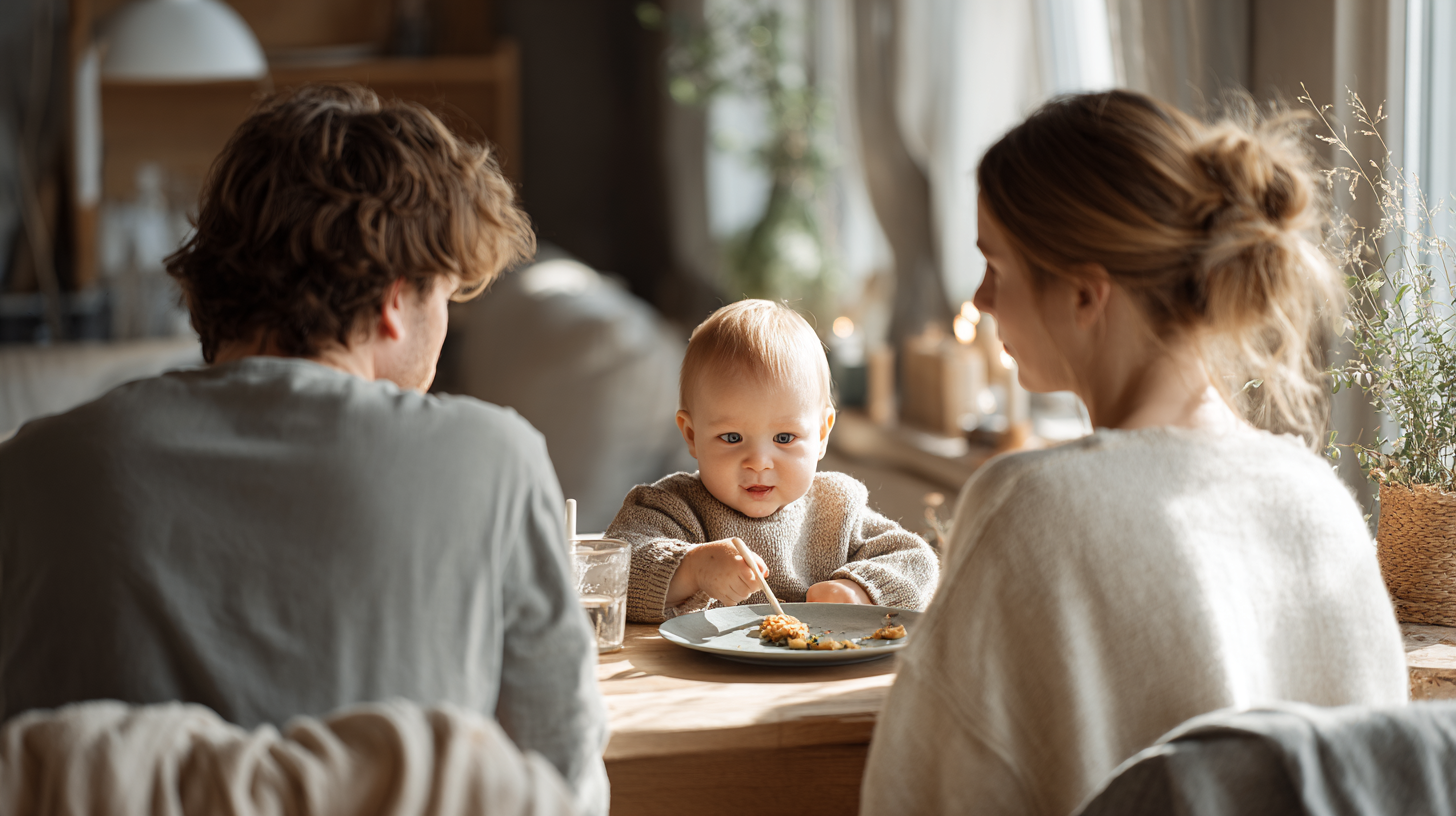
Building Confidence Over Time
Remember how I said clarity comes from doing, not waiting? This is where that becomes real. You don’t build restaurant confidence by reading articles (though this one is a great start). You build it by actually going, even when it’s imperfect.
The “restaurant training” movement among millennial and Gen Z parents is fascinating. Parents are taking babies to restaurants from early ages—not for Instagram moments, but to normalize the experience. One parent interviewed for a 2025 study takes her two-year-old to some of London’s finest establishments. No screens, no kids’ menus, just early exposure and clear expectations.
Sound intimidating? Start smaller.
Your 10-Week Restaurant Confidence Builder
Click each level to unlock your progression plan (complete them in order!)
What to Do: Bring a simple snack they love (banana, avocado). Let them eat in familiar high chair or on your lap. Keep it short and pressure-free.
Success Metric: You stayed for your entire coffee without leaving early.
What to Do: Choose somewhere loud and family-friendly. Order immediately. Let baby try 2-3 foods from your plate.
Success Metric: Baby ate something, you ate something, nobody cried (much).
What to Do: Bring backup entertainment (2-3 small toys). Practice managing restlessness with a mid-meal walk.
Success Metric: You handled one minor challenge without immediately leaving.
What to Do: Order dishes with baby-safe components (rice, vegetables, proteins). Look for places with naturally baby-friendly foods like plantains, rice and beans, or curries you can modify.
Success Metric: Baby tried at least one new food they don’t eat at home.
What to Do: Pick a regular day/time. Rotate between 2-3 favorite spots. Start building rapport with staff who see you regularly.
Success Metric: You feel confident enough to invite friends to join you.
The beauty of this progression is that each step builds genuine confidence, not fake it till you make it bravado. By week 10, restaurants feel normal because they are normal for your family.
And here’s the unexpected benefit: research shows that parents of children with higher temperamental negativity actually use restaurants MORE frequently as a stress management tool. When you stop seeing restaurants as stress triggers and start seeing them as brief escapes from meal planning, cleanup, and cooking, the entire dynamic shifts.
The Truth About Judgment (And Why You Should Care Less Than You Think)
Let’s address the elephant in the restaurant: judgment from other diners.
The research on parental shame and public spaces is depressing. Nearly one-third of parents felt judged by other parents based on their children’s food choices. Documented incidents include strangers yelling at families, directly confronting small children having tantrums, and even threatening violence.
That’s horrifying. And also? Those people are the problem, not you.
Most judgment comes from people without young children or people who’ve forgotten what having young children is like. The parents who’ve been there? They’re silently rooting for you, remembering their own disasters with empathy.
A K-State parenting expert puts it perfectly: “You can’t let a child leverage your own sense of embarrassment in public to get what he or she wants.” But let’s extend that to adults, too: you can’t let judgmental strangers keep you from living your life.
Your mantra: “My baby is learning. I am doing my best. Anyone who has a problem with that can pay my therapy bills.”
Pro tip? Caribbean and Latin restaurants tend to be incredibly family-friendly culturally. Multi-generational dining is the norm, and babies at the table aren’t just tolerated—they’re expected. The cultural acceptance removes so much of the judgment anxiety.
Cultural Connection: If you’re curious about Caribbean ingredients and why they’re so baby-friendly, the Caribbean Baby Food Recipe Book includes detailed guides to ingredients like coconut milk, plantains, sweet potatoes, and beans—all commonly found on restaurant menus and naturally suited for babies 6+ months.
What the Experts Actually Say
I’ve spent weeks diving into research and expert recommendations, and here are the most important takeaways:
From Pediatric Feeding Specialists: Katie Ferraro emphasizes bringing your own equipment, ordering regular menu items and modifying them, and most importantly: “I’ve never known a baby to die from eating a french fry at a restaurant.” Translation: relax about perfect nutrition. One meal won’t derail anything.
From Occupational Therapists: Sensory integration specialists focus on graduated exposure to new textures and environments. Restaurants provide valuable sensory experiences—different sounds, smells, temperatures, and social interactions. These are good for development.
From Child Psychologists: The research on anxiety transmission emphasizes that parental avoidance creates more problems than occasional difficult experiences. Kids need to see you navigate challenges calmly.
From Industry Experts: Restaurants are actively trying to win families back. A 2025 restaurant industry report warns of “losing a generation of diners” if they don’t make dining irresistible to kids. This means you have power—restaurants need you more than you need them.
Looking Forward: Your Restaurant Future
Here’s what the future of family dining looks like, based on current trends:
Restaurants will get better: More places are moving away from chicken nugget kids’ menus and toward customizable, healthier options. Just Salad introduced a Sesame Street collaboration menu in 2023 featuring avocado toast and oat milk smoothies. Legal Sea Foods revamped their kids’ offerings with family-friendly pricing and build-your-own structures.
Technology will help (sometimes): Digital menus that let you review and order in advance will become standard. But balance is key—screens at the table remain controversial.
Cultural expectations are shifting: Gen Z parents are leading a “restaurant training” movement that prioritizes early exposure without devices. The pendulum is swinging away from entertainment-dependent dining and toward genuine family interaction.
Community support is growing: More parents are seeking advice on social media, sharing tips, and normalizing imperfect restaurant experiences. You’re not alone in this journey.
Your Fresh Start Begins Now
Remember that story my dad told about the mother whose favorite moment was “right now”? That applies here too.
You can spend months researching perfect restaurant strategies, waiting until your baby is “old enough,” convincing yourself next month will be easier. Or you can pick a casual spot, pack your bag, and go tomorrow.
Will it be perfect? Absolutely not. Will there be mess? Definitely. Will your baby throw food, make noise, and possibly require an early exit? Quite possibly. But you know what else will happen? You’ll have taken the first step.
And that first step—uncomfortable as it is—creates momentum. Every restaurant visit after that becomes a little easier. Every new food your baby tries expands their palate. Every time you handle a challenge calmly, you model resilience for your child.
The magic isn’t in waiting for the perfect moment. It’s in creating the moment by walking through your fear.
So here’s my challenge to you: within the next week, book that reservation. Pack that bag with your equipment checklist. Choose a restaurant from your selection criteria. Order with confidence. Embrace the mess. Tip generously. And give yourself credit for showing up.
Because at the end of the day, the goal isn’t Instagram-worthy family dinners or perfect behavior. The goal is building confidence—yours and theirs—one slightly chaotic, mostly manageable restaurant visit at a time.
Your baby won’t remember these early restaurant experiences. But they’ll grow up in a family where trying new foods, exploring new places, and adapting to different situations is simply… normal. And that confidence? That’s the real gift you’re giving them.
Ready to expand your baby’s flavor profile? The Caribbean Baby Food Recipe Book features 75+ recipes using many of the same ingredients you’ll find on restaurant menus—plantains, sweet potatoes, coconut milk, beans, and more. Practice at home with familiar Caribbean flavors, then confidently order similar ingredients when dining out. It’s the perfect companion to your restaurant confidence journey.
Now stop reading, start planning, and I’ll see you at the early-bird special. I’ll be the one with sweet potato in my hair, a huge tip on the table, and a smile on my face.
Because clarity doesn’t come from waiting—it comes from doing. And you’re ready.

Kelley's culinary creations are a fusion of her Caribbean roots and modern nutritional science, resulting in baby-friendly dishes that are both developmentally appropriate and bursting with flavor. Her expertise in oral motor development and texture progression ensures that every recipe supports your little one's feeding milestones while honoring cultural traditions.
Join Kelley on her flavorful journey as she shares treasured family recipes adapted for tiny taste buds, evidence-based feeding guidance, insightful parenting anecdotes, and the joy of celebrating food, culture, and motherhood. Get ready to immerse yourself in the captivating world of Kelley Black and unlock the vibrant flavors of the Caribbean for your growing baby, one nutritious bite at a time.
- The Feeding Revolution: Why Your Everyday Meals Are Changing the World - October 13, 2026
- Your Feeding Story Matters More Than The “Perfect” One Online - October 12, 2026
- Looking Forward: Stepping Into Your Confident Feeding Future - October 11, 2026