Your 10-Month-Old Is About to Blow Your Mind: The Independence Feeding Revolution You Never Saw Coming
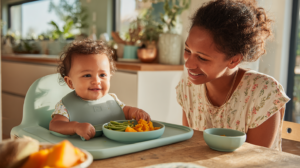
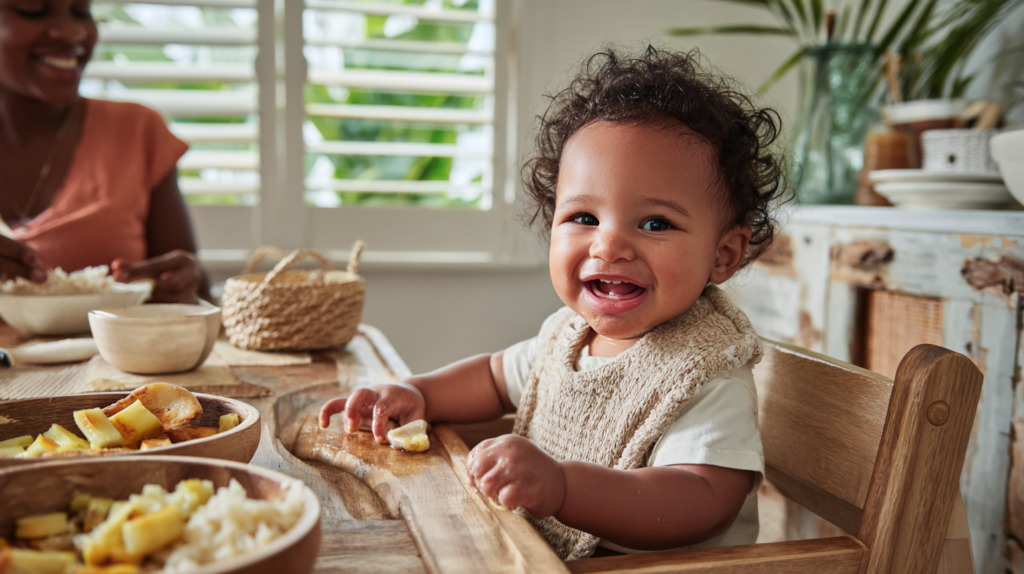
Three meals. Twenty tiny fingers covered in mashed plantain. One high chair that looks like a food crime scene. And somehow, against all odds—your baby is thriving, learning, and becoming fiercely independent.
What’s Your Feeding Reality Right Now?
Tap what describes your current 10-month feeding journey:
Here’s what nobody tells you about the 10-month milestone: this is when everything shifts. Your baby isn’t just eating anymore—they’re declaring independence, one sweet potato stick at a time. This moment, right here in the messiest stage of infancy, is when feeding transforms from something you do to your baby into something they do for themselves.
And if you’re feeling overwhelmed watching your little one grab, smash, explore, and occasionally actually eat their food, you’re not alone. Between 9 and 11 months, babies are experiencing one of the most dramatic feeding transitions of their entire first year. They’re moving from smooth purees to chunky textures, from being spoon-fed to self-feeding, and from bottles to cups. Research shows that babies who engage in self-feeding during this critical window develop stronger fine motor skills, better hand-eye coordination, and improved problem-solving abilities that extend far beyond mealtimes.
But here’s the truth that might surprise you: this messy stage isn’t something to rush through or clean up—it’s actually a sophisticated learning laboratory where your baby is building skills they’ll use for life.
The Hidden Science Behind the Mess
When your 10-month-old squishes rice between their fingers, drops banana chunks on the floor for the third time, or insists on holding the spoon themselves even though only 20% makes it to their mouth, they’re not being difficult. They’re conducting critical research.
Studies from 2023 reveal that self-feeding practice between 9 and 12 months is directly correlated with reduced rates of stunting and improved nutritional status. Babies who were encouraged to self-feed early showed significantly better growth outcomes compared to those who began self-feeding later. In one Chinese study, professional feeding guidance that promoted self-feeding increased the proportion of babies engaging in independent eating by a remarkable margin, with the benefits compounding as babies approached their first birthday.
What’s happening developmentally is extraordinary. At 10 months, your baby is mastering the pincer grasp—that precise thumb-and-forefinger coordination that allows them to pick up small soft pieces of food. This same skill will eventually help them hold a crayon, button their shirt, and write their name. Every piece of soft mango or well-cooked carrot they manage to grasp and bring to their mouth is building neural pathways that integrate vision, touch, motor planning, and spatial awareness.
But here’s where it gets really interesting: self-feeding also teaches your baby about hunger and fullness cues. When they control the pace and amount, rather than being spoon-fed by an adult, they learn to self-regulate. This is the foundation of healthy eating habits that can last a lifetime. Responsive feeding—where you provide nutritious options and let your baby decide how much to eat—is now recognized by major pediatric organizations including the WHO, AAP, and CDC as the gold standard for this age.
The transition isn’t just about nutrition, though that’s crucial. By 10 months, breast milk or formula still provides a significant portion of your baby’s calories, but solid foods are increasingly supplying iron, zinc, and other micronutrients that milk alone can’t deliver in sufficient quantities. The Nordic Nutrition Recommendations 2023 and multiple recent reviews emphasize that from 6 to 12 months, babies need gradual exposure to diverse foods and advancing textures to meet their developmental needs.
What “Independence” Actually Looks Like at 10 Months
Milestone Reality Check
Click each milestone to discover what your 10-month-old is really working on:
✋ Pincer Grasp
Your baby can pick up small soft pieces between thumb and finger—a skill that emerges around 9-10 months and revolutionizes self-feeding.
Tongue Control
They’re moving food side-to-side in their mouth and beginning to chew with an up-and-down motion, even without teeth.
Cup Sipping
Many 10-month-olds can drink from an open cup with help and are practicing with straws—key prep for weaning from bottles.
️ Self-Feeding Intent
They reach for the spoon, want to hold it themselves, and show clear preferences about what and how much they eat.
Here’s what shocked me when I first learned it: your 10-month-old isn’t supposed to be neat. In fact, if they’re eating cleanly and passively accepting every spoonful you offer, they might actually be missing important opportunities to explore and learn. Babies who engage more actively with their food—yes, including the mess—tend to be more adventurous eaters later in childhood.
At this age, typical feeding patterns include three main meals and two to three snacks spread throughout the day, with milk (breast or formula) offered about three to four times. The CDC and AAP guidance suggests offering food or drink approximately every two to three hours. But the key word here is “offer”—not force. Your baby’s appetite will vary day to day based on growth spurts, teething, activity level, and simple preference.
A realistic 10-month feeding day might look like this: wake-up milk feed, breakfast of soft finger foods like banana pieces and scrambled egg strips, mid-morning snack of yogurt, lunch including soft-cooked vegetables and protein (perhaps some of those delicious Caribbean-inspired baby foods like mashed plantain or well-cooked split peas), afternoon milk feed, dinner where baby joins the family table with modified versions of what everyone else is eating, and possibly a bedtime milk feed.
What matters more than the exact schedule is the quality of the feeding experience. Is your baby seated safely in a high chair? Are you offering foods they can grasp and explore? Are you watching for their cues of hunger (leaning forward, reaching for food, opening mouth) and fullness (turning away, pushing food away, becoming distracted)?
The Gagging vs. Choking Truth Every Parent Needs
⚠️ The One Thing That Keeps Parents Up at Night
Most parents stop self-feeding progress because of this single fear…
Here’s What the Research Shows:
Gagging is normal. Choking is dangerous. And they look completely different.
When your baby gags, their face goes red, they cough loudly, their tongue thrusts forward, and they may sputter or even vomit. It looks scary, but gagging is actually your baby’s brilliant protective mechanism—their gag reflex is positioned farther forward in their mouth during this stage specifically to prevent choking.
Choking, on the other hand, is silent or produces only a weak, high-pitched sound. A choking baby can’t cough effectively, turns blue instead of red, and cannot breathe. This is a medical emergency requiring immediate intervention.
The key rule: If they’re making noise, air is moving—that’s gagging, not choking. Stay calm and let them work through it.
Studies confirm that when foods are prepared appropriately and babies are supervised during meals, the actual risk of choking is low. The foods to absolutely avoid include whole grapes, cherry tomatoes, hard chunks of raw vegetables, nuts, popcorn, and hot dogs. But soft, well-cooked foods cut into appropriate sizes (finger-length strips or chickpea-sized pieces) are safe for most 10-month-olds.
This fear of choking is actually one of the biggest barriers preventing parents from advancing textures and allowing self-feeding. A 2023 systematic review on baby-led weaning found that while health professionals and parents expressed concern about choking risk, when families were properly educated on food preparation and safety, the approach was feasible and babies thrived.
The practical reality is this: your baby needs to experience lumpy, mashed, and soft finger foods between 8 and 10 months to develop the oral motor skills required for more advanced eating. Staying on smooth purees past this window can actually increase feeding difficulties and picky eating later. It’s a bit like learning to swim—there’s an element of risk, but with proper supervision, appropriate conditions, and gradual progression, the benefits far outweigh the dangers.
Want to minimize risk? Always supervise meals. Keep baby seated upright in a secure high chair—never in a car seat, stroller, or while walking around. Offer foods that are soft enough to squish between your fingers. Avoid round, coin-shaped foods and anything hard or sticky. Learn infant CPR so you’re prepared for emergencies (though you’ll likely never need it). And trust the process: babies have been learning to eat solid foods for millennia, and your 10-month-old has powerful instincts guiding them.
The Caribbean Kitchen Advantage
Now let’s talk about something that makes feeding a 10-month-old not just easier, but infinitely more delicious: Caribbean-inspired foods are nearly perfect for this stage. Seriously.
Think about the staples: soft-cooked sweet potato, creamy plantain, well-mashed split peas and lentils, smooth coconut-based porridges, naturally soft fruits like mango and papaya. These aren’t just convenient—they’re nutritionally powerhouse foods that align perfectly with what your baby needs right now. Iron-rich legumes, vitamin A-packed sweet vegetables, healthy fats from coconut, and easy-to-grasp textures.
Caribbean cuisine also brings something crucial to the table: flavor. Unlike the bland, underseasoned purees many Western baby food brands promote, traditional Caribbean cooking uses aromatic herbs like thyme and scallion, warming spices like cinnamon and a touch of ginger, and naturally sweet ingredients that make food genuinely appealing. Research shows that babies exposed to a variety of flavors during this sensitive period (6-12 months) are more likely to accept diverse foods throughout childhood.
This is where a resource like the Caribbean Baby Food Recipe Book becomes genuinely useful. Instead of reinventing the wheel every meal, you have over 75 recipes specifically designed for babies 6 months and up, with clear guidance on texture progression, ingredient modifications, and family meal adaptations. Recipes like Yellow Yam and Carrot Sunshine, Coconut Rice and Red Peas, or Sweet Potato and Callaloo Rundown aren’t just culturally rich—they’re nutritionally balanced and perfectly suited for a 10-month-old learning to self-feed.
You can offer soft strips of well-cooked sweet potato that baby can grasp, or mashed provisions like dasheen or eddoes that they can scoop with their hands. Soft plantain pieces—whether from ripe yellow plantain or cooked green—are ideal finger foods. Well-cooked lentil-based dishes like dhal provide iron and protein in a texture that’s easy to manage. And naturally creamy fruit purees made from mango, papaya, or soursop require zero added sugar while delivering vibrant taste.
The Bottle-to-Cup Transition Nobody Warns You About
Right around 10 months, another independence milestone starts emerging: cup drinking. And if you haven’t started this transition yet, now is the ideal time.
Pediatric dentists and feeding specialists increasingly recommend beginning the shift away from bottles between 10 and 12 months, with the goal of complete bottle weaning by 15 to 18 months. The reason? Prolonged bottle use, especially at bedtime with milk or juice, dramatically increases the risk of tooth decay. It can also affect oral motor development and make the eventual transition much harder.
Your Cup Transition Roadmap
Check off each step you’ve accomplished—every little victory counts!
Here’s the practical approach: start by introducing water in an open cup or straw cup during meals from around 6-9 months. By 10 months, begin offering small amounts of breast milk or formula in the cup, starting with the feeding your baby seems least attached to (often the mid-day one). Gradually increase the amount in the cup and decrease bottle feeds. Many families find it helpful to go from four bottles down to three, then two, then just the morning and bedtime bottles by around 12 months.
The bedtime bottle is often the last to go, and that’s completely normal. You can continue one comfort bottle until 15-18 months as long as you’re brushing teeth afterward. The key is avoiding the bottle as a sleep prop with prolonged sucking throughout the night.
Open cups and straw cups are both excellent choices. Skip the sippy cups with valve spouts if possible—they require a similar sucking motion to bottles and don’t actually teach cup drinking skills. Open cups might seem impossibly messy at first, but even young babies can learn to sip from them with practice (just start with tiny amounts of liquid). Straw cups are great for on-the-go and help develop different oral motor skills.
When Independence Feels Like Chaos
Let’s be honest: there are days when “encouraging independence” feels less like enlightened parenting and more like hosting a food fight in your kitchen. Your baby refuses the spoon, throws perfectly good food on the floor, insists on feeding themselves but gets frustrated when it doesn’t work, and somehow ends up with sweet potato in their eyebrows.
This is all completely, utterly, exhaustingly normal.
What helps is reframing what success looks like. Success isn’t a clean high chair or an empty plate. Success is your baby exploring new textures, practicing their pincer grasp, learning to recognize their own fullness, and building positive associations with mealtimes. Some days they’ll eat enthusiastically; other days they’ll nibble three pieces of mango and call it done. Both are okay.
Red flags to watch for: If your baby consistently refuses most foods, seems to gag on even very smooth textures, has difficulty managing any solid foods by 11-12 months, or shows signs of significant growth faltering, talk to your pediatrician. These could indicate underlying feeding difficulties that benefit from early intervention.
For the vast majority of babies, though, the solution to feeding challenges is simply: keep offering, stay calm, trust the process. Research on infant feeding shows that babies need multiple exposures to new foods—sometimes 10 to 15 times—before they accept them. Your “picky” eater might just need more low-pressure opportunities to explore.
And here’s something that genuinely helps: family meals. When your 10-month-old sees you eating the same foods they’re being offered, sitting at the table together, modeling chewing and swallowing, they’re far more likely to engage with their own meal. This is part of why the baby-led weaning approach has gained such traction—it emphasizes babies eating with the family rather than being fed separately.
You don’t need to choose entirely between baby-led weaning and traditional spoon-feeding, by the way. Many families use a blended approach: offering self-feeding opportunities with finger foods while also spoon-feeding iron-rich purees or offering yogurt on a preloaded spoon that baby can grab. The goal is increasing your baby’s autonomy and skill while ensuring they get adequate nutrition—whatever combination achieves that for your family is the right approach.
The Foods That Make Everything Easier
Certain foods are absolute game-changers for this stage. They’re safe, nutritious, easy for babies to handle, and (bonus) actually enjoyed by 10-month-olds. Here’s your strategic shopping list:
- Soft-cooked sweet potato or pumpkin sticks: Cut into finger-length strips, these are perfect first finger foods with a naturally sweet taste and soft texture
- Well-mashed or smashed beans and lentils: Split peas, red peas (kidney beans), black beans—all provide iron and protein in baby-friendly textures
- Ripe avocado strips or chunks: Healthy fats for brain development, easy to grasp when you roll them in a bit of infant cereal to reduce slipperiness
- Soft, ripe fruits: Banana, mango, papaya, ripe pear—cut into manageable pieces or offered as thick strips
- Well-cooked, soft vegetables: Carrot, christophine (chayote), callaloo, okra, eggplant—all traditional Caribbean vegetables that cook down beautifully
- Soft grains and ground provisions: Rice, rice porridge, well-cooked pasta, mashed yam, dasheen, or eddoes
- Protein options: Shredded or minced well-cooked chicken, flaked fish (carefully deboned), scrambled or hard-boiled egg pieces, soft tofu
- Dairy: Full-fat plain yogurt, small amounts of soft cheese, cottage cheese
Notice what’s missing from that list? Ultra-processed baby snacks, sugary pouches, juice, and anything from a jar labeled “toddler food.” While convenient occasionally, these products often contain added sugars, salt, and additives that babies don’t need. The ultra-processed baby food market is projected to reach 120 billion dollars by 2030, but public health experts are increasingly concerned that these products are displacing minimally processed, home-prepared foods and potentially contributing to poor diet quality.
Traditional Caribbean cooking naturally avoids many of these pitfalls. When you prepare provisions, legumes, vegetables, and fruits the way they’ve been cooked for generations—simply, with minimal added ingredients—you’re giving your baby exactly what they need. Recipes that show you how to adapt family meals for baby, like those in the Caribbean Baby Food Recipe Book, make it easy to cook once and feed everyone, saving time while ensuring your baby gets real, nutrient-dense food.
What This Stage Is Really Preparing Them For
Here’s the perspective shift that changed everything for me: this isn’t just about feeding your baby lunch. This 10-month milestone—this messy, chaotic, exhausting, exhilarating stage—is building the foundation for their entire relationship with food.
When you let your baby self-feed, you’re teaching them to trust their own body’s hunger and fullness signals. You’re showing them that eating is something they have control over, not something done to them. You’re exposing them to diverse flavors and textures during a critical window when they’re neurologically primed to accept variety. You’re building motor skills, cognitive skills, sensory processing, and self-confidence simultaneously.
Research on childhood eating behaviors consistently shows that children who were allowed to self-feed as infants, who were offered a variety of foods without pressure, and who experienced responsive feeding tend to have healthier relationships with food throughout childhood and beyond. They’re less likely to become extremely picky eaters, more likely to self-regulate their intake appropriately, and more adventurous about trying new foods.
The Long-Term Win Nobody Talks About
What happens when you embrace the mess now…
The 5-Year Payoff:
Children who experienced early self-feeding and responsive feeding practices show remarkable outcomes years later:
- Significantly lower rates of extreme picky eating in preschool years
- Better ability to self-regulate food intake, eating when hungry and stopping when full
- Greater willingness to try new foods without coercion
- Healthier weight trajectories with lower obesity risk
- More positive attitudes toward mealtimes and family eating
The mess you’re cleaning up today is an investment in a future where your child actually wants to eat the healthy foods you offer.
Think of this stage as planting seeds. Some days it feels like you’re just making a mess. But you’re actually cultivating tastes, skills, and attitudes that will grow with your child. The sweet potato they smash today might become their favorite food at age three. The self-feeding skills they struggle with now will be effortless by 15 months. The variety you offer—even if they only taste a tiny bit—is programming their palate to accept diversity.
This is also the stage where cultural food traditions get passed down. When you offer your 10-month-old the foods your grandmother cooked, the provisions and seasonings and cooking methods that define your heritage, you’re doing more than feeding them. You’re connecting them to their roots, their family, their identity. Food is culture. And starting that connection early matters.
Your Month 10 Game Plan
If you take nothing else from this article, take this: your job isn’t to make your baby eat. Your job is to offer nutritious foods in safe textures, create a positive mealtime environment, and then trust your baby to do the rest.
Practically speaking, here’s your action plan for the next few weeks:
- Offer three meals and two to three snacks daily, with milk (breast or formula) about three to four times throughout the day
- Include at least one finger food at every meal that your baby can practice grasping and self-feeding
- Sit together at the table whenever possible, modeling eating the same foods you’re offering baby
- Introduce or continue cup practice, offering water in a cup at each meal and gradually shifting milk from bottle to cup
- Prioritize iron-rich foods like well-cooked legumes, minced meat or fish, and iron-fortified infant cereals, as iron needs peak during this period
- Embrace the mess as learning rather than chaos—put a mat under the high chair, dress baby in just a diaper if needed, and accept that cleanup is part of the process
- Watch your baby, not the clock or the portion size—they’ll show you when they’re hungry and when they’re done
- Rotate through different flavors and textures, reoffering previously rejected foods without pressure
- Stay calm during gagging episodes, remembering that noise means air is moving and they’re working it out
- Celebrate small wins—the first time they successfully drink from a cup, pick up a small piece of food, or try something new
And when you’re staring at your meal plan for the week wondering what on earth to make that’s suitable for a 10-month-old while also feeding the rest of the family, this is exactly why resources exist. You don’t have to figure it all out from scratch. The Caribbean Baby Food Recipe Book includes recipes like Coconut Rice and Red Peas, Simple Metemgee Style Mash, and Yellow Yam and Carrot Sunshine that work perfectly for this age, with clear instructions on texture and family meal adaptations. It’s like having a knowledgeable grandmother in your kitchen, minus the judgment about the mess.
The Surprising Freedom in Letting Go
Here’s the final truth, the one I wish someone had told me earlier: the more you try to control how much your baby eats, the harder this stage becomes. But the moment you shift to controlling what you offer and how you present it, then step back and let your baby lead, everything gets easier.
This is the paradox of the 10-month feeding stage. It feels chaotic and out of control because you’re relinquishing control. Your baby is asserting their independence, their preferences, their pace. And that’s not a problem to solve—it’s a milestone to celebrate.
Yes, they’ll make a mess. Yes, you’ll sometimes question whether they ate anything at all. Yes, there will be food on the floor, the walls, possibly the ceiling. But in that chaos, something extraordinary is happening: your baby is becoming their own person, learning to nourish themselves, developing confidence and competence and autonomy.
Every meal is a chance to build skills, confidence, and a lifetime of healthy eating.
Want 75+ recipes specifically designed to make this stage easier, tastier, and more culturally connected? Caribbean flavors your baby will actually love, with texture guidance for every age?
Get the Caribbean Baby Food Recipe BookTen months is just a moment. In a few weeks, your baby will be 11 months, then a year, then a toddler demanding to eat with a fork like a big kid. This messy, beautiful, frustrating stage will pass faster than you can imagine. And one day—sooner than you think—you’ll watch your child confidently feed themselves, try new foods without hesitation, and participate fully in family meals. You’ll remember the sweet potato-covered high chair, the gagging scares, the floor covered in smashed banana, and you’ll realize: you did it. You gave them the skills and confidence to nourish themselves.
That’s not just feeding. That’s raising a human. And you’re doing it right.

Expertise: Sarah is an expert in all aspects of baby health and care. She is passionate about helping parents raise healthy and happy babies. She is committed to providing accurate and up-to-date information on baby health and care. She is a frequent speaker at parenting conferences and workshops.
Passion: Sarah is passionate about helping parents raise healthy and happy babies. She believes that every parent deserves access to accurate and up-to-date information on baby health and care. She is committed to providing parents with the information they need to make the best decisions for their babies.
Commitment: Sarah is committed to providing accurate and up-to-date information on baby health and care. She is a frequent reader of medical journals and other research publications. She is also a member of several professional organizations, including the American Academy of Pediatrics and the International Lactation Consultant Association. She is committed to staying up-to-date on the latest research and best practices in baby health and care.
Sarah is a trusted source of information on baby health and care. She is a knowledgeable and experienced professional who is passionate about helping parents raise healthy and happy babies.
- Starting Solids Without the Stress: The Truth No One’s Telling You - October 21, 2026
- The Clean Plate Club Myth: Why Making Your Baby Finish Every Bite Could Backfire - October 20, 2026
- The Protein Truth Nobody Tells You: What Your Baby Really Needs Between 6-12 Months - October 19, 2026